![Can I remove a stuck prostate chip myself? | Get medical help immediately [OK Prostate Chip]](/img/a/T0329/eyecatch.svg)
This page is based on entries from "ok-lab's diary" (https://ok-lab.hatenablog.com/), the Japanese development diary written by Mr. Okada, founder of OK Lab, a small company in Japan (Okada Comfortable Life Laboratory). Only the entries about "self-removal with tweezers, water, or jelly" are summarized here, in order of publication. Past prices and sizes are as written at the time. Current prices come from the official product list (retrieved September 4, 2026). Quotations are translated from Japanese.
Note: This page is a personal reading log by someone with no connection to the maker or the seller. It reflects the source entries as of their publication dates and makes no guarantee of accuracy or safety. The product is not a medical device; talk to a doctor about any health decision. Check the official site for current information. This page contains advertising.
In short
- The diary records stuck chips, missing retrieval threads, failed home attempts, and cases requiring hospital treatment.
- Mr. Okada proposed several approaches, acknowledged limitations, and also advised medical consultation.
- Current listings include the single glass chip and preventive stoppers; the latest supplied removal case has no recorded outcome.
If you see blood in your urine, even a small amount or for the first time, do not wait and see. See a urologist right away. If you suddenly cannot urinate, or the device cannot be removed, do not try to fix it yourself. Go to a medical facility, including emergency care, immediately.
About this product
The OK Prostate Chip is a small device that is placed in the urethra (the urine passage) so that it acts on the prostate; the maker sells it in several shapes, sizes and materials. It is made and sold by OK Lab (Okada Comfortable Life Laboratory), a small company in Japan, through its own online store, and prices are in Japanese yen (JPY). The maker's development diary, "ok-lab's diary", is written in Japanese. This page is an English summary of it, and every quotation is translated. OK Lab ships internationally, so readers outside Japan can order (see "Buying from outside Japan" below). Product names on this page are plain-English descriptions. The official Japanese product name is shown once in the product table so you can find the same item in the store.
Before you read: key terms
| Term | Plain-English meaning |
|---|---|
| Urethra | The urine passage; the chip sits inside it to act on the prostate, according to the maker. |
| Retrieval thread | A line attached to the chip, intended to provide a means of removal. |
| Safety chip | A small part on the thread; the March 2019 reply discussed it as a possible retrieval point. |
| Lubricant | A liquid or gel intended to reduce friction; Mr. Okada discussed it in connection with stuck chips. |
| Forceps | Grasping instruments used by doctors in the diary's hospital removal accounts. |
| Endoscope | An internal viewing instrument; the diary discusses it for locating a chip during hospital removal. |
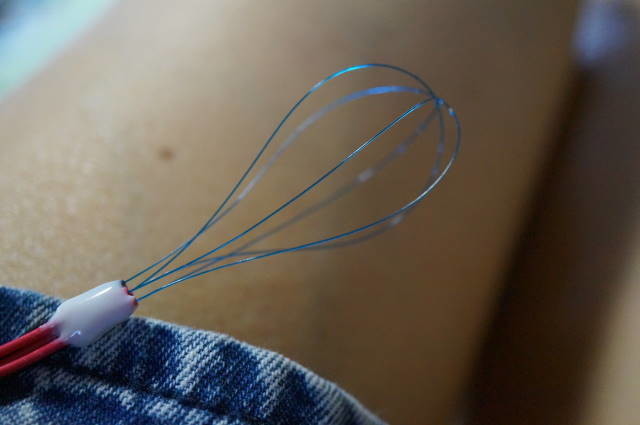
| Retrieval basket | An experimental cage of threads intended to capture a chip inside the bladder. |
| External stopper | A part intended to keep the retrieval thread outside the body if the chip moves inward. |
| Internal stopper | An additional part the March 2019 reply proposed to help prevent the chip entering the bladder. |
What happens: prostate chip removal
The OK Prostate Chip is a small urethral device intended by its maker to act on the prostate. Its retrieval thread (the line attached for removal) can become inaccessible when it moves inside the body. This topic concerns recovery when the thread disappears, parts overlap, or the device moves into the bladder. The diary discusses tweezers, fluids, and special tools in that setting, alongside accounts requiring hospital treatment.
Chip removal became difficult when rotation pulled the thread inward
In an entry published in May 2018, a customer described the single glass chip turning halfway around after 6–7 hours. The safety chip (a small part on the thread) had also moved inside, and urination did not free the device. The customer eventually reported removal with tweezers and requested a thread change from 20cm to 25cm.
Mr. Okada said this was his first reported case of rotation in that part of the urethra. He offered thread replacement for ¥1,080 (about $7 at ¥156 = $1, rate as of 2026-09-04), as published in May 2018, and asked the customer to return the product for that service. The diary does not record whether the thread replacement was completed.
(Source: ok-lab's diary, published May 2018)
https://ok-lab.hatenablog.com/entry/20180505/1525509161
An exposed thread did not prevent trouble with chip removal
In an entry published in September 2020, a customer sought help with a sea-slug-shaped chip (Sea Slug ver.4) stuck after ejaculation. The thread remained outside, but attempted removal caused some bleeding. Mr. Okada suggested that the thread's attachment near one end made the direction of force unhelpful.
He mentioned lubricant (liquid or gel intended to reduce friction), while acknowledging no experience with that proposal. The customer's confirmed follow-up reported removal the next day. Mr. Okada advised consulting a urologist if the device remained stuck.
(Source: ok-lab's diary, published September 2020)
https://ok-lab.hatenablog.com/entry/2020/09/05/095734
A broken cable led to hospital care before chip removal
Entries published in November 2020 describe a custom wired chip whose exposed cable broke, leaving the device in the bladder. Hospital forceps (grasping instruments) could not grip it; a confirmed follow-up reported removal at home involving warmed drinking jelly. The customer described about 5 attempts and roughly 10 minutes for the final stage.
The customer warned against continuing through injury, pain, or other symptoms, and raised possible jelly entry into sperm-carrying ducts. Mr. Okada warned against cables with exposed metal, which he said would break through repeated stress or corrosion. In the follow-up, he put consultation with a doctor first.
(Source: ok-lab's diary, published November 2020)
https://ok-lab.hatenablog.com/entry/2020/11/14/131426
(Source: ok-lab's diary, published November 2020)
https://ok-lab.hatenablog.com/entry/2020/11/21/130647
Overlapping parts caused repeated trouble with prostate chip removal
In an entry published in August 2022, a customer reported a short M resin chip stuck against its companion chip. Around 10 syringe attempts involving water, lubricant, and air failed; hospital removal took place on the 5th day. Clinicians separated the parts, and the customer reported about ¥8,000 (about $51 at ¥156 = $1, rate as of 2026-09-04) under Japanese health insurance.
A confirmed September 2022 follow-up clarified that the parts appeared parallel, without rotation; Mr. Okada accepted that correction. The customer also reported a later episode involving extensive lubricant and massage, ending in removal after 3 hours. Mr. Okada emphasized moisture and warned against forceful pulling when the urethra was dry.
(Source: ok-lab's diary, published August 2022)
https://ok-lab.hatenablog.com/entry/2022/08/20/122920
(Source: ok-lab's diary, published September 2022)
https://ok-lab.hatenablog.com/entry/2022/09/17/123057
A dedicated wire addressed small loop fit during chip removal
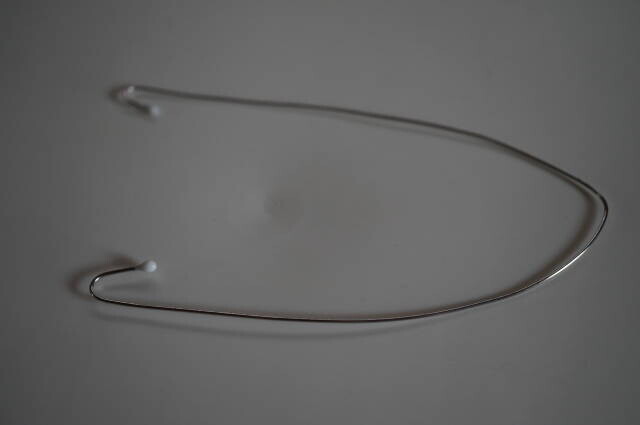
In an entry published in April 2025, Mr. Okada introduced a dedicated wire because the multipurpose hook was too large for certain loops. The new tool used 0.7mm stainless steel, measured 20cm, and cost ¥500 (about $3 at ¥156 = $1, rate as of 2026-09-04) excluding tax, as published then. He offered it free to existing purchasers of the 0.2mm wire loop products.
The entry describes a tool for those loops. Mr. Okada recommended purchasing it with future orders of the relevant loop products.
(Source: ok-lab's diary, published April 2025)
https://ok-lab.hatenablog.com/entry/2025/04/19/122913
Tweezers failed before hospital surgery for a stuck chip
In an entry published in June 2025, a customer outside Japan reported the sea-slug-shaped version 4 entering the bladder during sleep. The customer had previously shortened its cord; the diary does not establish why the whole cord later disappeared. Attempts involving forceful urination and tweezers failed.
The customer reported worsening difficulty urinating and frequent urination, followed by hospital surgery the next day. Mr. Okada speculated about how clinicians retrieved it, but the diary does not confirm the hospital's exact technique.
(Source: ok-lab's diary, published June 2025)
https://ok-lab.hatenablog.com/entry/2025/06/14/122936
The maker's answer to prostate chip removal
Mr. Okada's proposals ranged from fluid-based ideas to special tools, with explicit warnings and gaps in testing.
A tangled cord complicated the maker's early thinking about chip removal
In an entry published in October 2017, Mr. Okada proposed that a bladder fuller with urine could let a tangled cord float more freely. He thought this might reduce friction between sections of cord and allow it to come free. He also warned that a knot inside the bladder could prevent removal.
(Source: ok-lab's diary, published October 2017)
https://ok-lab.hatenablog.com/entry/20171027/1509077491
An early chip removal proposal carried an explicit bladder warning
In an entry published in March 2018, Mr. Okada discussed air pressure and a 5mm straw as an approach to adhesion. His idea was that pressure might separate a stuck chip from the urethral wall. He also proposed water or non-sticky jelly for adhesion that air alone did not resolve.
These were Mr. Okada's proposed measures, and the entry did not present a confirmed customer outcome for them. He warned that excessive air could reach and expand the bladder, potentially causing rupture.
(Source: ok-lab's diary, published March 2018)
https://ok-lab.hatenablog.com/entry/20180304/1520151387
The retrieval basket for stuck chips had no bladder test
In an entry published in July 2021, Mr. Okada described a retrieval basket (an experimental cage of threads for capturing a chip). Its 6 threads were intended to improve the chance of capturing a slippery device. He explicitly said that bladder insertion testing had not happened.
He planned custom manufacture on request, with no regular commercial release planned. Mr. Okada proposed hospital use with an endoscope (an internal viewing instrument), warning that retrieval without seeing the chip would be difficult.
(Source: ok-lab's diary, published July 2021)
https://ok-lab.hatenablog.com/entry/2021/07/31/125702
If you see blood in your urine, even a small amount or for the first time, do not wait and see. See a urologist right away. If you suddenly cannot urinate, or the device cannot be removed, do not try to fix it yourself. Go to a medical facility, including emergency care, immediately.
How prostate chip removal changed over time
| Published | What the diary said then |
|---|---|
| Mar 2018 | Mr. Okada acknowledged that his removal discussion did not cover infection precautions. |
| Sep 2020 | Mr. Okada reported easier removal in his test of an additional independent thread. |
| Jul 2021 | The draft manual listed dryness and semen adhesion as possible causes of sticking. |
| Jul 2021 | Mr. Okada expected thread-attachment holes in some materials to help hospital forceps grip. |
| Aug 2022 | The supplier reported 3mm (±1mm) spacing between the main and companion chips. |
| Mar 2024 | Mr. Okada considered a tool for delivering lubricant closer to the stuck chip. |
| Apr 2026 | A proposed retrieval tool still awaited manufacture and testing. |
The diary does not say what the current state is.
OK Prostate Chip products related to prostate chip removal
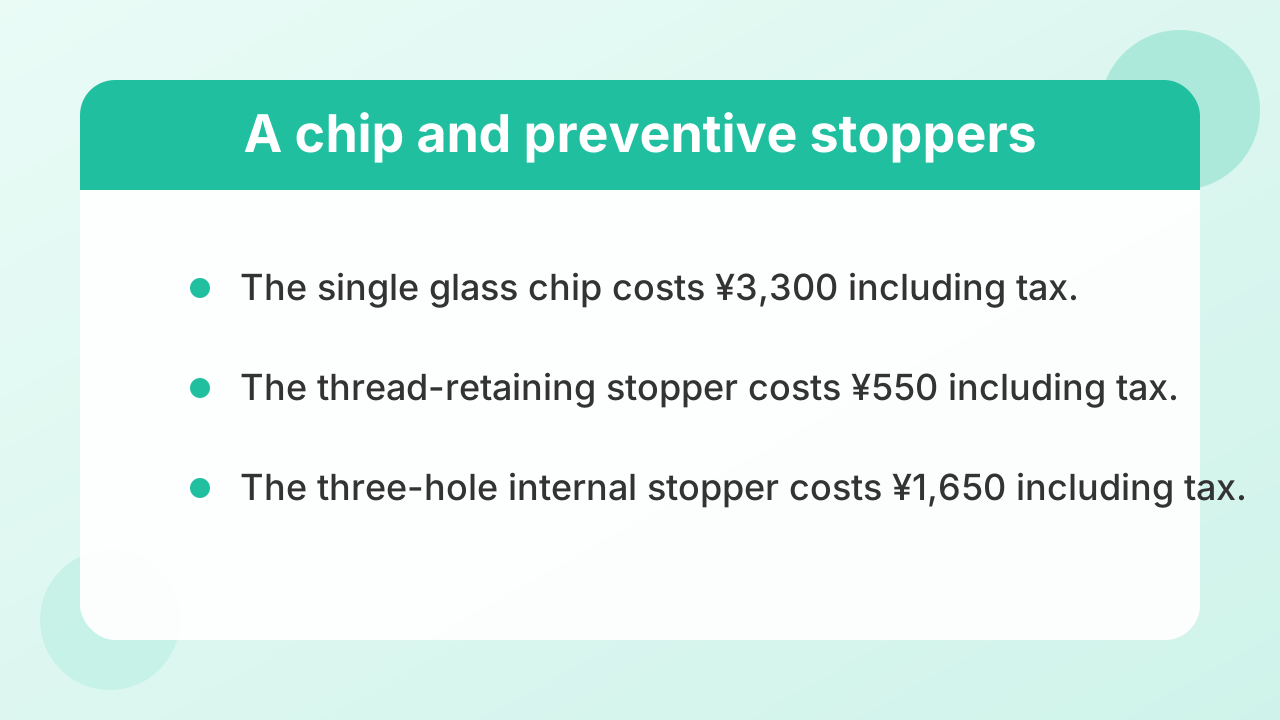
The current list includes a chip involved in an accident and stoppers mentioned for preventing inward movement.
Products that appear in these entries
| Product (official name) | Price incl. tax | Relation to this topic |
|---|---|---|
| Single glass chip (OKプロステートチップ ガラス素材1チップタイプ) | ¥3,300 (about $21 at ¥156 = $1, rate as of 2026-09-04) | In May 2018, this model appeared in the customer's report of rotation and an inaccessible thread. |
(Source: ok-lab's diary, published May 2018)
https://ok-lab.hatenablog.com/entry/20180505/1525509161
Products the diary mentioned as alternatives
| Product (official name) | Price incl. tax | Relation to this topic |
|---|---|---|
| Thread-retaining stopper (OKプロステートチップ用糸飲み込み防止ストッパーチップ) | ¥550 (about $4 at ¥156 = $1, rate as of 2026-09-04) | For recurrence prevention in March 2019, OK Lab proposed this external stopper to keep the thread outside. |
| Three-hole external stopper (三穴方式オプションチップ(亀頭外側ストッパーチップ)) | ¥1,100 (about $7 at ¥156 = $1, rate as of 2026-09-04) | For the prevention question in March 2019, OK Lab named this external stopper as another thread-retaining option. |
| Three-hole internal stopper (三穴方式オプションチップ(括約筋ストッパーチップ)) | ¥1,650 (about $11 at ¥156 = $1, rate as of 2026-09-04) | In March 2019, OK Lab proposed this internal stopper instead when the concern was preventing the chip itself entering the bladder. |
(Source: ok-lab's diary, published March 2019)
https://ok-lab.hatenablog.com/entry/2019/03/23/173222
The entries also describe historical resin assemblies, custom wired devices, sea-slug-shaped version 4, an experimental basket, and a dedicated small-loop removal wire. No matching product can be confirmed on the current list.
Common worries about prostate chip removal
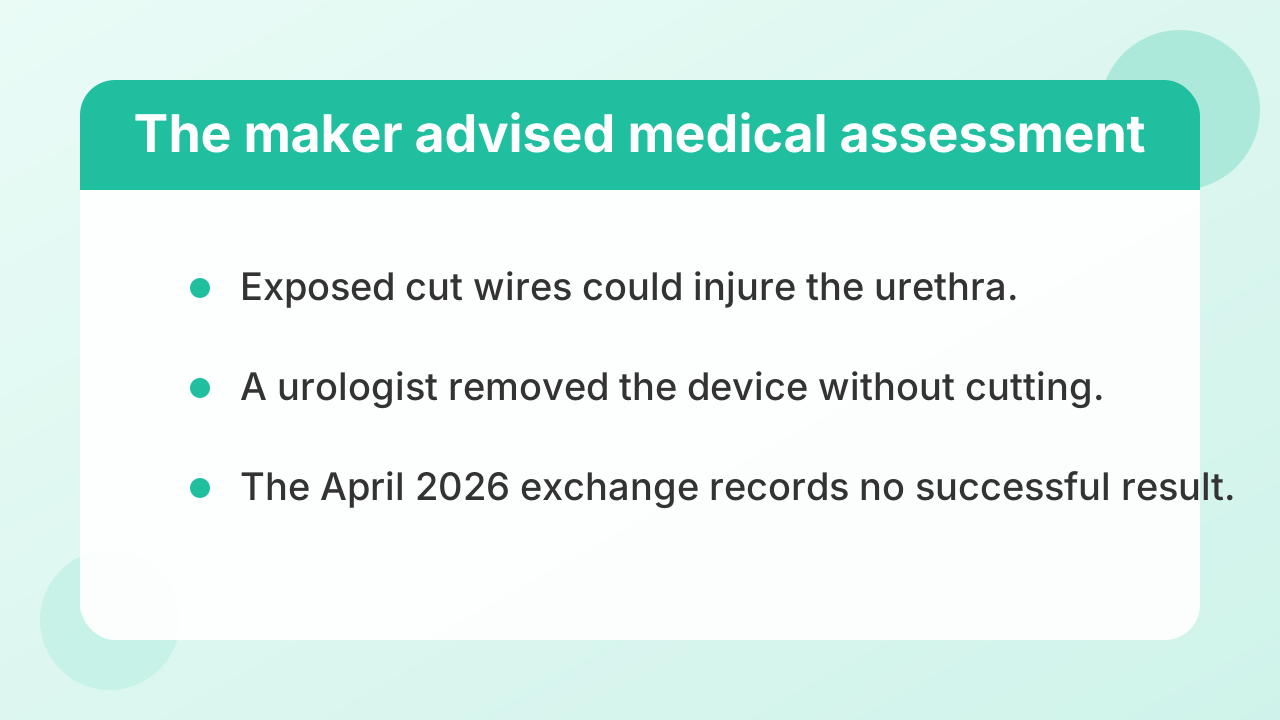
Readers asked about missing threads, overlapping parts, cutting cables, and whether other tools could help.
"Can tweezers help with chip removal after the thread disappears?"
In an entry published in March 2019, a customer with a cross-jointed resin chip asked whether hospital care was necessary. Mr. Okada discussed tweezers conditionally, depending on the location of the safety chip; he also raised possible hospital retrieval. A confirmed follow-up reported that the chip came out during urination.
The customer then asked about preventing a repeat. OK Lab's sales reply recommended an external stopper to keep the thread accessible, or an internal stopper to limit inward movement.
(Source: ok-lab's diary, published March 2019)
https://ok-lab.hatenablog.com/entry/2019/03/23/173222
"Would cutting the cable solve a stuck chip?"
In an entry published in December 2022, a customer with a custom linked chip asked about cable cutting after the parts became trapped. Mr. Okada accepted the idea in theory but warned that exposed cut wires could injure the urethra.
The customer's follow-up said a urologist rejected cutting because a broken thread could complicate retrieval, and removed the device without cutting. The customer reported a small injury and ¥1,760 (about $11 at ¥156 = $1, rate as of 2026-09-04) in treatment costs under Japanese national health insurance. Mr. Okada's advice had been that medical assessment was safer.
(Source: ok-lab's diary, published December 2022)
https://ok-lab.hatenablog.com/entry/2022/12/24/122944
"Can a screw-shaped add-on make chip removal harder?"
In an entry published in January 2023, a customer asked about rotation after a custom chip with a screw-shaped companion became stuck. Home attempts initially failed; eventual removal was followed by about 2 days of high fever. The customer later reported recovery.
Mr. Okada thought the companion might have tilted and the thread become trapped between the parts. He advised against rushing removal, but the diary does not establish the internal position or the fever's cause.
(Source: ok-lab's diary, published January 2023)
https://ok-lab.hatenablog.com/entry/2023/01/07/123115
"Could a multipurpose wire solve a stuck chip?"
In an entry published in April 2026, a customer reported a broken thread, about a week without passage, and pain during urination. The customer asked about a multipurpose wire; staff warned that its hook could slip and movement could send the chip into the bladder. Staff suggested a lubricant-based approach might carry less risk, but the exchange records no successful result.
Mr. Okada also discussed a different, untested tool concept and explicitly said it would not ensure removal. The diary does not record whether this customer's device was subsequently removed.
(Source: ok-lab's diary, published April 2026)
https://ok-lab.hatenablog.com/entry/2026/04/04/122916
Buying from outside Japan
OK Lab ships internationally to countries covered by Japan Post's EMS courier service. Overseas orders are paid in advance by PayPal. Each order carries a ¥400 (about $3 at ¥156 = $1, rate as of 2026-09-04) handling fee, and EMS shipping is charged on top. These terms come from OK Lab's official sales-terms page (written here as plain text, not a link: ok-lab.net/docs/law), checked on September 7, 2026; confirm them on the official store before you order, because they can change.
Summary of this article
| What you wanted to know | The answer |
|---|---|
| What is the immediate concern? | A chip that cannot be removed calls for immediate medical care. |
| What is this product? | A urethral device made and sold by OK Lab in Japan. |
| What do the terms mean? | Threads connect to the chip; stoppers and retrieval tools serve different purposes. |
| What happened in the accounts? | Outcomes included home removal, failed attempts, and hospital treatment. |
| What did the maker suggest? | Fluid-based ideas and tools, with warnings and acknowledged limits. |
| What changed over time? | Reports of trouble prompted thread changes, draft guidance, and proposed tools. |
| Which current products relate? | The single glass chip and the preventive stoppers listed above. |
| What worried customers? | Missing threads, overlapping parts, cable cutting, and uncertain tool suitability. |
| How does overseas buying work? | Advance PayPal payment, a ¥400 (about $3 at ¥156 = $1, rate as of 2026-09-04) handling fee, and additional EMS shipping. |
Source: ok-lab's diary (Okada Comfortable Life Laboratory). The original entries are in Japanese; quotations on this page are translated. Photos and videos are on the original entries.
This article is a summary of the maker's development diary. The product is not a medical device and no result is guaranteed. If anything feels wrong or worries you, see a doctor. Prices, specifications and cautions change, so confirm the latest information on the official blog and the official site. Questions about ordering and shipping go to the seller.