![Can a stainless steel wire retrieve a chip? | The diary records limits [OK Prostate Chip]](/img/a/T0228/eyecatch.svg)
This page is based on entries from "ok-lab's diary" (https://ok-lab.hatenablog.com/), the Japanese development diary written by Mr. Okada, founder of OK Lab, a small company in Japan (Okada Comfortable Life Laboratory). Only the entries about "multipurpose stainless steel wire" are summarized here, in order of publication. Past prices and sizes are as written at the time. Current prices come from the official product list (retrieved September 4, 2026). Quotations are translated from Japanese.
Note: This page is a personal reading log by someone with no connection to the maker or the seller. It reflects the source entries as of their publication dates and makes no guarantee of accuracy or safety. The product is not a medical device; talk to a doctor about any health decision. Check the official site for current information. This page contains advertising.
In short
- The diary describes retrieval wires, custom pushing tools, and thinner stainless steel attachment thread.
- Mr. Okada reports limitations involving stiffness, exposed ends, and unwanted inward movement.
- The current product list includes the standard wire at ¥550 (about $4 at ¥156 = $1, rate as of 2026-09-04) including tax.
If you see blood in your urine, even a small amount or for the first time, do not wait and see. See a urologist right away. If you suddenly cannot urinate, or the device cannot be removed, do not try to fix it yourself. Go to a medical facility, including emergency care, immediately.
About this product
The OK Prostate Chip is a small device that is placed in the urethra (the urine passage) so that it acts on the prostate; the maker sells it in several shapes, sizes and materials. It is made and sold by OK Lab (Okada Comfortable Life Laboratory), a small company in Japan, through its own online store, and prices are in Japanese yen (JPY). The maker's development diary, "ok-lab's diary", is written in Japanese. This page is an English summary of it, and every quotation is translated. OK Lab ships internationally, so readers outside Japan can order (see "Buying from outside Japan" below). Product names on this page are plain-English descriptions. The official Japanese product name is shown once in the product table so you can find the same item in the store.
Before you read: key terms
| Term | Plain-English meaning |
|---|---|
| Urethra | The urine passage, where the diary describes the chip and wire being placed. |
| Stainless steel thread | Thin metal attachment for ceramic chips, discussed as a replacement for nylon thread. |
| Retrieval wire | A separate metal tool intended to retrieve a chip from the urethra. |
| J-hook | A J-shaped wire end intended to catch part of a chip assembly for retrieval. |
| Resin | Material forming the wire's end coverings and shaped heads; the diary does not explain its composition. |
| Recess | A hollow in a custom wire head, intended to help it contact the chip's rear. |
| Three-hole safety stop | A component mounted on the thread; the diary does not explain its purpose. |
| External stopper | A part outside the penis, intended to prevent the whole assembly from moving inward. |
What happens: stainless steel retrieval wire
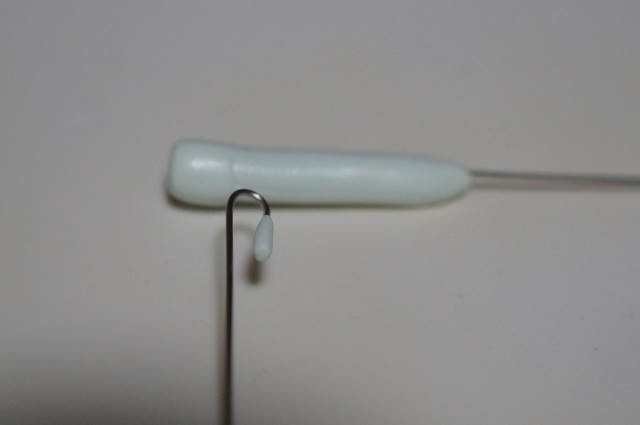
The OK Prostate Chip is a small device placed inside the urethra, with the diary describing positioning near the prostate. The stainless steel retrieval wire is a separate tool intended to reach a chip inside that passage. Its J-hook (a J-shaped end intended for retrieval) and opposite rounded head have resin (the material covering the wire ends) coverings. The entries also discuss custom pushing tools and much thinner stainless steel thread attached directly to ceramic chips.
Stainless steel thread brought different limitations from the nylon version
In an entry published in September 2019, Mr. Okada tested stainless steel thread attached to ceramic chips. It measured 0.29 mm, compared with about 0.25 mm for the nylon thread then used. He reported no break after nearly 2,000 bends made by hand.
He nevertheless suspected that repeated bending could limit its durability. Stainless thread cost the same as nylon; customers requested it through the ceramic-chip order comments. Mr. Okada cautioned that its attachment points were harder to reposition than nylon ones.
(Source: ok-lab's diary, published September 2019)
https://ok-lab.hatenablog.com/entry/2019/09/14/143710
A recessed custom pushing wire helped, but occasional overlap remained
In an entry published in February 2022, a customer reported results from a custom pushing wire. Its recess (a hollow intended to contact the chip's rear) helped the customer, although the wire and chip still sometimes overlapped. The customer reported easier positioning overall.
Mr. Okada welcomed that feedback but did not describe a shape suitable for every chip. He said the best recess would depend on the chip's size and shape.
(Source: ok-lab's diary, published February 2022)
https://ok-lab.hatenablog.com/entry/2022/02/19/123621
The two-purpose pushing wire addressed threaded chips and wired vibrating models
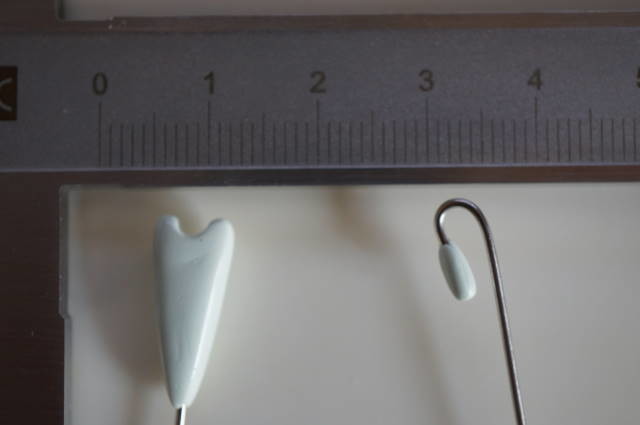
An entry published in February 2022 introduced a pushing-only design with different ends for different attachments. One end was intended for chips with nylon thread, and the other for vibrating chips with an electrical cord. This was a separate custom design from the hooked retrieval tool.
Mr. Okada's demonstration used an artificial passage made from plastic, where the wire slipped free easily. He expected pressure from the real urethral wall to make slipping less likely. However, he warned that this pressure could also make the wire tug the chip's thread during withdrawal.
(Source: ok-lab's diary, published February 2022)
https://ok-lab.hatenablog.com/entry/2022/02/26/123231
Retrieval wire dispatch preceded the customer's later report of surgery
An entry published in September 2022 revisited an older customer's report of severe pain during urination. The customer described overlapping screw-shaped chips and requested a retrieval wire. Mr. Okada arranged urgent dispatch.
The later message confirmed surgery to remove a screw-shaped chip (Tornado), reportedly lodged sideways in the urethra above the testicles. The diary does not give the surgery date. The diary does not record whether the dispatched wire was used before the operation.
(Source: ok-lab's diary, published September 2022)
https://ok-lab.hatenablog.com/entry/2022/09/10/122847
J-hook retrieval wire succeeded throughout Mr. Okada's later personal trials
In an entry published in April 2025, Mr. Okada reported successful retrieval on the first attempt in each of 3 trials. The wire caught at a different point each time. He reported almost no tendency for the wire to push the chip farther inward during those tests. For retrieval alone, Mr. Okada favored the simple J-hook over the more elaborate loop tools.
(Source: ok-lab's diary, published April 2025)
https://ok-lab.hatenablog.com/entry/2025/04/05/122932
Loop tools offered functions beyond the stainless steel retrieval wire
The April 2025 entry also compared new single-loop and double-loop tools. The single-loop prototype used flexible wire and tubing, while the double-loop design had a larger catching structure. Mr. Okada considered the larger design better at catching the chip, but the smaller version better suited to positioning.
He priced them at ¥3,000 (about $19 at ¥156 = $1, rate as of 2026-09-04) excluding tax for the single-loop tool and ¥5,000 (about $32 at ¥156 = $1, rate as of 2026-09-04) excluding tax for the double-loop tool. He explicitly said the single-loop tool's proposed positioning uses had not been tested in practice. Mr. Okada nevertheless favored that design for its proposed positioning function.
(Source: ok-lab's diary, published April 2025)
https://ok-lab.hatenablog.com/entry/2025/04/05/122932
The maker's answer to stainless steel retrieval wire
Mr. Okada's responses address exposed wire, stiffness, and separately priced custom shapes.
Stainless steel thread raised concerns about exposed ends and inward movement
An entry published in September 2019 described problems with the thin stainless steel thread. Mr. Okada warned that exposed ends at the three-hole safety stop (a component on the thread) could puncture skin painfully. He said protective finishing was necessary.
He said sharp bends were hard to reverse and could leave the thread bunched up; prolonged wear raised further concerns about deformation. He considered wire potentially more irritating to the bladder than nylon. Mr. Okada proposed an external stopper (a part outside the penis intended to prevent inward movement) as a final guard.
(Source: ok-lab's diary, published September 2019)
https://ok-lab.hatenablog.com/entry/2019/09/14/143710
The J-hook wire diameter involved competing concerns in early tests
In the January 2021 entry, Mr. Okada compared 0.5 mm, 0.7 mm, and 1 mm stainless steel wire. He reported that strong pulling could straighten the bend in the thinnest wire.
He considered the thickest wire less gentle on the urethra. Mr. Okada favored the middle diameter for that design.
(Source: ok-lab's diary, published January 2021)
https://ok-lab.hatenablog.com/entry/2021/01/09/130022
Custom pushing wire carried a separate price for shaped resin work
In an entry published in January 2022, Mr. Okada explained why specially shaped wire ends cost more. He had priced the basic wire at ¥500 (about $3 at ¥156 = $1, rate as of 2026-09-04) excluding tax because its resin ends required little shaping. He would not accept custom work at that price and had previously declined requests for 10 mm ends.
After making a separate customer's wire instead of issuing a refund, he established a custom price of ¥2,000 (about $13 at ¥156 = $1, rate as of 2026-09-04) excluding tax. That matched his resin short-chip category, which then covered chips under 40 mm long. Mr. Okada offered custom orders only on that separate pricing basis.
(Source: ok-lab's diary, published January 2022)
https://ok-lab.hatenablog.com/entry/2022/01/29/123455
If you see blood in your urine, even a small amount or for the first time, do not wait and see. See a urologist right away. If you suddenly cannot urinate, or the device cannot be removed, do not try to fix it yourself. Go to a medical facility, including emergency care, immediately.
How stainless steel retrieval wire changed over time
| Published | What the diary said then |
|---|---|
| Sep 2019 | Stainless attachment thread was initially limited to ceramic chips and a single strand. |
| Jan 2021 | A longer retrieval-wire version, up to 30cm, was planned. |
| Jan 2022 | A separate completed custom order specified a 6mm end and 25mm length. |
| Feb 2022 | A customer reported the original wire slipping beyond the chip's rear. |
| Feb 2022 | The pushing-only two-purpose wire cost ¥2,000 (about $13 at ¥156 = $1, rate as of 2026-09-04) excluding tax and remained a custom item. |
| Sep 2022 | An older case's follow-up confirmed surgical removal of a sideways chip. |
| Apr 2025 | Mr. Okada favored the J-hook for simple retrieval after his latest trials. |
OK Prostate Chip products related to stainless steel retrieval wire
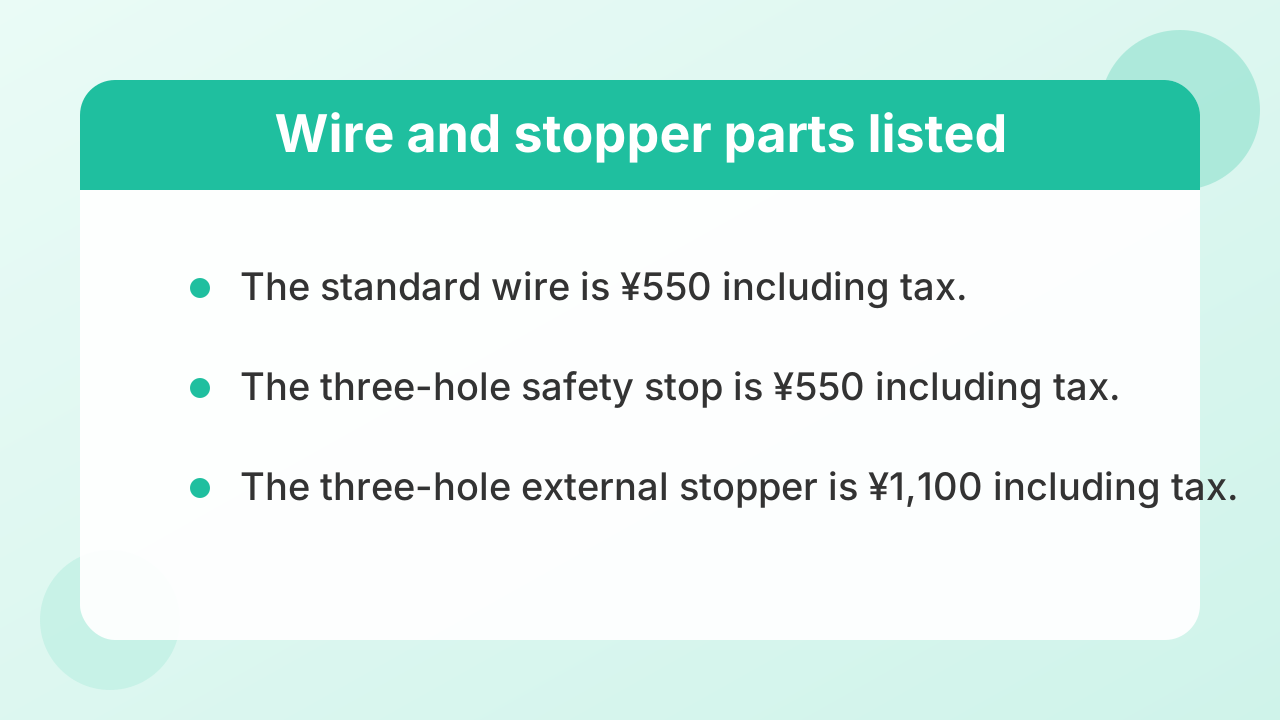
The standard wire and the stopper parts discussed in these entries appear on the current product list.
Products that appear in these entries
| Product (official name) | Price incl. tax | Relation to this topic |
|---|---|---|
| Multipurpose stainless steel wire (多目的ステンレスワイヤー) | ¥550 (about $4 at ¥156 = $1, rate as of 2026-09-04) | January 2022 distinguishes the standard wire from separately priced custom work. |
| Three-hole safety stop (三穴方式オプションチップ(セーフティチップ)) | ¥550 (about $4 at ¥156 = $1, rate as of 2026-09-04) | September 2019 identifies painful exposed wire ends beside this part. |
| Three-hole external stopper (三穴方式オプションチップ(亀頭外側ストッパーチップ)) | ¥1,100 (about $7 at ¥156 = $1, rate as of 2026-09-04) | September 2019 proposes this part as a guard against the whole assembly moving inward. |
The multipurpose stainless steel wire is listed in OK Lab's own online store.
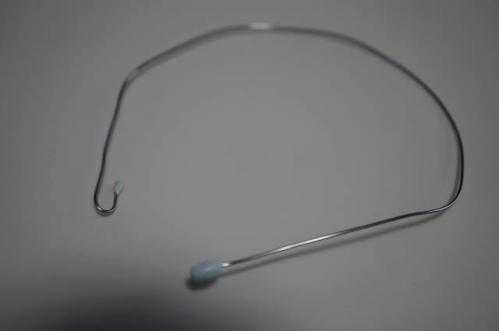
(Source: ok-lab's diary, published September 2019)
https://ok-lab.hatenablog.com/entry/2019/09/14/143710
(Source: ok-lab's diary, published January 2022)
https://ok-lab.hatenablog.com/entry/2022/01/29/123455
Products the diary mentioned as alternatives
The diary names no alternative.
Custom pushing wires and loop-tool prototypes: No matching product can be confirmed on the current list. The thin attachment thread and historical screw-shaped chip (Tornado): No matching product can be confirmed on the current list.
Common worries about stainless steel retrieval wire
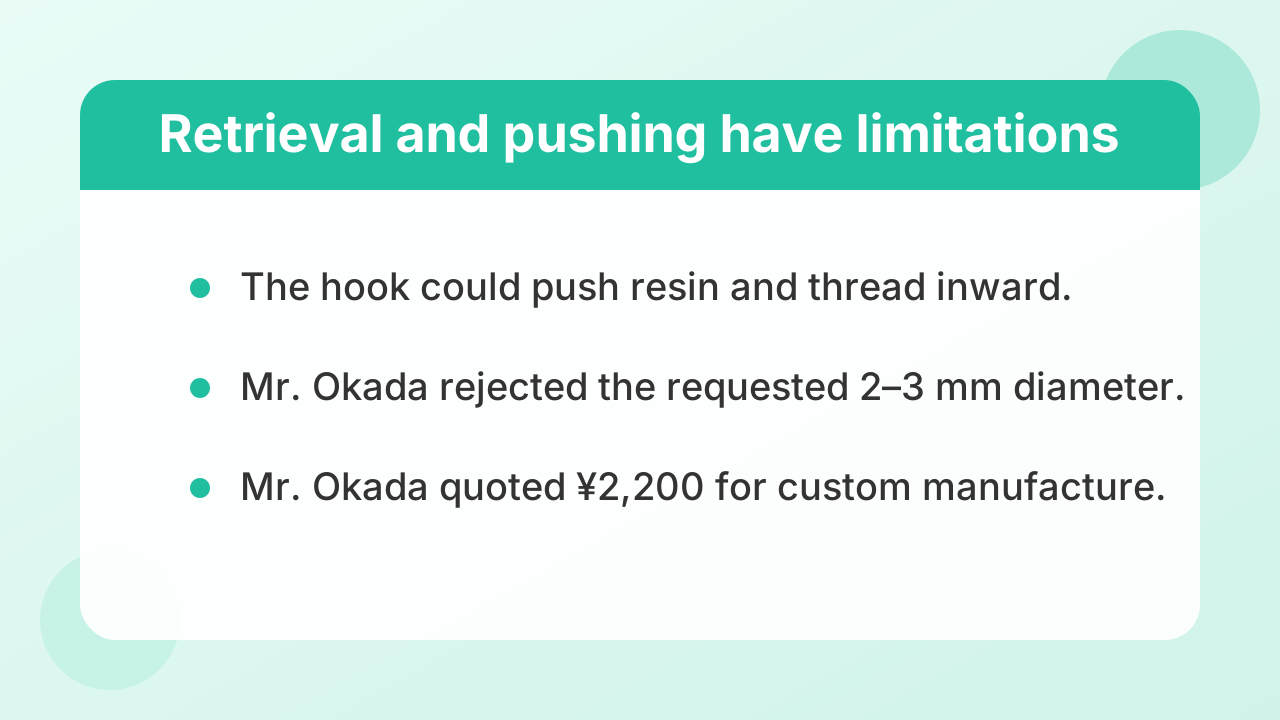
The diary records questions about fully internal chips, thicker wire, and slipping pushing heads.
"Can retrieval wire support a fully internal chip?"
In an entry published in January 2021, a customer requested a fully internal chip assembly, prompting Mr. Okada to test retrieval. Mr. Okada used a smaller test assembly; the diary does not record that customer's result. He reported catching the thread loop in only 10% of attempts, then shifted attention to the resin portion.
The proposed tool had a resin-covered J-hook and rounded resin-covered head, a 25cm length, and 0.7 mm wire diameter. Its published price was ¥500 (about $3 at ¥156 = $1, rate as of 2026-09-04) excluding tax. Mr. Okada warned that the hook could push the resin and thread farther inward.
(Source: ok-lab's diary, published January 2021)
https://ok-lab.hatenablog.com/entry/2021/01/09/130022
"Can a custom pushing wire be thicker?"
In an entry published in January 2022, a customer wanted a stiffer wire because the existing one felt too flexible. The requested diameter was 2–3 mm. Mr. Okada rejected that thickness, saying it would be too stiff to bend with fingers and was dangerous.
He also corrected the customer's description of the standard wire's diameter. The diary does not record whether that customer's revised order was completed. Mr. Okada limited his offer to a maximum diameter of 1 mm.
(Source: ok-lab's diary, published January 2022)
https://ok-lab.hatenablog.com/entry/2022/01/29/123455
"Can a custom pushing wire stop slipping past the chip?"
In an entry published in February 2022, a customer said the original wire repeatedly slipped beyond the chip's rear. The customer requested an earlier custom shape while acknowledging uncertainty about whether it would suit them. Mr. Okada quoted ¥2,200 (about $14 at ¥156 = $1, rate as of 2026-09-04), matching the short resin chip's price at that time.
The diary does not record how this customer's custom wire performed. Mr. Okada's response offered custom manufacture at that quoted price.
(Source: ok-lab's diary, published February 2022)
https://ok-lab.hatenablog.com/entry/2022/02/12/123441
Buying from outside Japan
OK Lab ships internationally to countries covered by Japan Post's EMS courier service. Overseas orders are paid in advance by PayPal. Each order carries a ¥400 (about $3 at ¥156 = $1, rate as of 2026-09-04) handling fee, and EMS shipping is charged on top. These terms come from OK Lab's official sales-terms page (written here as plain text, not a link: ok-lab.net/docs/law), checked on September 7, 2026; confirm them on the official store before you order, because they can change.
Summary of this article
| What you wanted to know | The answer |
|---|---|
| In short: what does the wire offer? | The maker describes retrieval and positioning functions, with specific limitations. |
| About this product: who makes it? | OK Lab is a small company in Japan making urethral devices. |
| Key terms: are thread and retrieval wire identical? | The entries describe a thin attachment strand and a separate tool. |
| What happens: what results were reported? | Personal trials and customer reports differed; one historical case ended in surgery. |
| Maker's answer: what changed? | He addressed exposed ends, selected wire diameters, and introduced separate custom pricing. |
| Changes over time: what developed? | Attachment-thread trials preceded retrieval tools and custom pushing designs. |
| Related products: what is listed now? | The standard wire and relevant stopper parts appear in the supplied current list. |
| Common worries: what did customers ask? | Questions concerned fully internal assemblies, thicker wire, and slipping heads. |
| Buying internationally: what terms apply? | Advance PayPal payment, a ¥400 (about $3 at ¥156 = $1, rate as of 2026-09-04) handling fee, and additional EMS shipping. |
| Summary: how do the accounts fit together? | Historical results and prices belong to the designs described in those dated entries. |
Source: ok-lab's diary (Okada Comfortable Life Laboratory). The original entries are in Japanese; quotations on this page are translated. Photos and videos are on the original entries.
This article is a summary of the maker's development diary. The product is not a medical device and no result is guaranteed. If anything feels wrong or worries you, see a doctor. Prices, specifications and cautions change, so confirm the latest information on the official blog and the official site. Questions about ordering and shipping go to the seller.