![Is the tube too thick, or the wire too exposed? | Different parts need different covers [OK Prostate Chip]](/img/a/T0223/eyecatch.svg)
This page is based on entries from "ok-lab's diary" (https://ok-lab.hatenablog.com/), the Japanese development diary written by Mr. Okada, founder of OK Lab, a small company in Japan (Okada Comfortable Life Laboratory). Only the entries about "tube sizes and wire covers" are summarized here, in order of publication. Past prices and sizes are as written at the time. Current prices come from the official product list (retrieved September 4, 2026). Quotations are translated from Japanese.
Note: This page is a personal reading log by someone with no connection to the maker or the seller. It reflects the source entries as of their publication dates and makes no guarantee of accuracy or safety. The product is not a medical device; talk to a doctor about any health decision. Check the official site for current information. This page contains advertising.
In short
- The diary records discomfort with both bulky tubes and exposed wire.
- Mr. Okada changed covers and connections, while reporting limits on strength, cleaning and repair.
- The current list includes the short twisted ceramic chip; the latest reply limits covered cables to two wires.
If you see blood in your urine, even a small amount or for the first time, do not wait and see. See a urologist right away. If you suddenly cannot urinate, or the device cannot be removed, do not try to fix it yourself. Go to a medical facility, including emergency care, immediately.
About this product
The OK Prostate Chip is a small device that is placed in the urethra (the urine passage) so that it acts on the prostate; the maker sells it in several shapes, sizes and materials. It is made and sold by OK Lab (Okada Comfortable Life Laboratory), a small company in Japan, through its own online store, and prices are in Japanese yen (JPY). The maker's development diary, "ok-lab's diary", is written in Japanese. This page is an English summary of it, and every quotation is translated. OK Lab ships internationally, so readers outside Japan can order (see "Buying from outside Japan" below). Product names on this page are plain-English descriptions. The official Japanese product name is shown once in the product table so you can find the same item in the store.
Before you read: key terms
| Term | Plain-English meaning |
|---|---|
| Inner diameter | Width of the tube's opening, determining space for wire, thread or cable. |
| Outer diameter | Width across the tube's outside, describing the size of its covering surface. |
| Connector pins | Electrical contacts joining a cable to a power plug. |
| Silicone tube | Flexible hollow covering used around connections, wire, cable or thread. |
| Resin | Material used for chip bodies and reinforcement around connections. |
| Parallel cable | Electrical wires running side by side, carrying power or forming part of a supporting connection. |
| Nitinol | Nickel–titanium shape-memory wire used for flexible connections and loops. |
| Stopper | An attached part intended to limit movement of the chip, tube or thread. |
What happens: prostate chip tube sizes
The OK Prostate Chip is a small device placed in the urethra near the prostate. These entries describe silicone tubes around its connecting threads, wires and electrical cables, as well as covers at the power plug. Depending on the design, the tube provides cushioning, supports a connection or encloses a cable. Some covered sections lie inside the urethra, while connector-pin covers belong at the electrical plug.
Connector-pin tube covers addressed skin irritation at the power plug
In an entry published in May 2022, Mr. Okada reported that connector pins (electrical contacts for the power plug) sometimes irritated skin. The cover belonged at the plug connection.
Its dimensions were 4mm inner diameter (width of the opening) and 6mm outer diameter (width across the outside). Mr. Okada specified the tube cover in response to irritation from the thin pins.
(Source: ok-lab's diary, published May 2022)
https://ok-lab.hatenablog.com/entry/2022/05/07/123013
A smaller tube size reduced cable space after the original hurt
In an entry published in July 2022, a customer requested a narrower tube because the 6mm version sometimes hurt. Staff could not find a tube retaining the 4mm opening with a 5mm outer diameter.
Mr. Okada then tested an internal mounting arrangement with a 4mm outer diameter and 3mm opening. The thinner arrangement was made, but the diary does not record how it felt for this customer. Mr. Okada excluded configurations carrying 2 separate cable systems because their connector pins needed more room.
(Source: ok-lab's diary, published July 2022)
https://ok-lab.hatenablog.com/entry/2022/07/09/123142
Early wire-covered tube prices separated chip connections from tube length
An entry published in August 2022 priced the first wire-filled tube through separate connection and length charges. Connection work cost ¥1,000 (about $6 at ¥156 = $1, rate as of 2026-09-04) for ceramic chips and ¥1,500 (about $10 at ¥156 = $1, rate as of 2026-09-04) for blue resin chips.
The tube cost ¥1,000 (about $6 at ¥156 = $1, rate as of 2026-09-04) up to 20cm, with ¥500 (about $3 at ¥156 = $1, rate as of 2026-09-04) for each additional 10cm. These published prices excluded tax. Mr. Okada advised treating eventual wire breakage as the end of that product's life.
(Source: ok-lab's diary, published August 2022)
https://ok-lab.hatenablog.com/entry/2022/08/06/123150
A smaller tube size required extra reinforcement around the connection
Another entry published in August 2022 reduced the wire-filled tube's outer diameter from 3mm to 2mm, with a 1mm opening. Mr. Okada explained that the smaller connection would otherwise lack sufficient strength. The revised design therefore included additional layers of resin (the material reinforcing the connection).
Published connection charges rose to ¥2,000 (about $13 at ¥156 = $1, rate as of 2026-09-04) for ceramic chips and ¥2,500 (about $16 at ¥156 = $1, rate as of 2026-09-04) for blue resin chips, excluding tax. Mr. Okada limited the tube to 40cm because longer assemblies were harder for him to make.
(Source: ok-lab's diary, published August 2022)
https://ok-lab.hatenablog.com/entry/2022/08/13/122909
The 1mm tube looked neater but resisted folding less strongly
In an entry published in September 2022, the tube supporting connections between chips changed from 2mm to 1mm outside diameter. Its opening measured 0.5mm.
Mr. Okada preferred the closer fit around the threads and the neater appearance, but reported weaker resistance to folding. He made the thinner tube standard while offering the thicker version to customers who prioritized that resistance.
(Source: ok-lab's diary, published September 2022)
https://ok-lab.hatenablog.com/entry/2022/09/03/122644
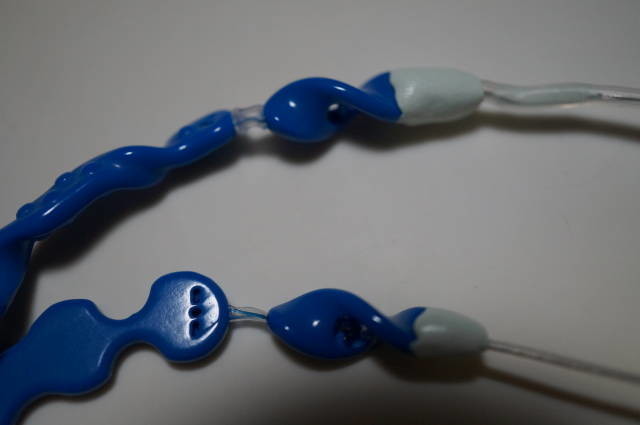
Wire-covered tube designs changed after reports of broken connections
In an entry published in January 2023, Mr. Okada discussed reports of wire breakage or signs of possible breakage. He abandoned direct wire attachment to the chip or cable for the proposed replacement arrangement.
OK Lab would supply tubes, including versions alongside electrical cable, with wire fitting and replacement left to customers. The concept treated the wire as replaceable rather than permanently bonded into the assembly. Mr. Okada made customer-managed replacement a condition of this arrangement.
(Source: ok-lab's diary, published January 2023)
https://ok-lab.hatenablog.com/entry/2023/01/07/123115
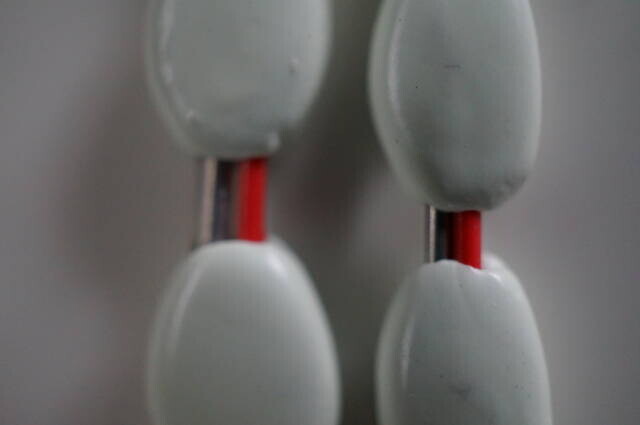
A 4mm tube cover enclosed the standard parallel cable
An entry published in October 2023 introduced a silicone-covered parallel cable (electrical wires running side by side). The design enclosed the cable in tubing with a 4mm outer diameter. It was presented for both powered chips and unpowered supporting connections.
The published surcharge was ¥2,000 (about $13 at ¥156 = $1, rate as of 2026-09-04), excluding tax, for enclosing and sealing the cable. Mr. Okada capped the covered section at 25cm, followed by ordinary cable.
(Source: ok-lab's diary, published October 2023)
https://ok-lab.hatenablog.com/entry/2023/10/14/122718
Pain from bare wire prompted thicker tube covers for loop attachments
In an entry published in October 2024, Mr. Okada reported pain while testing bare 0.3mm nitinol (nickel–titanium shape-memory wire). He suspected the thin wire was pressing into the urethral lining. He chose fully covered wire for the standard loop attachment.
The cover changed from 1mm to 2mm, reflecting his concerns about strength and cushioning. He nevertheless completed previously requested bare-wire custom orders. For the standard product, Mr. Okada specified complete silicone-tube coverage.
(Source: ok-lab's diary, published October 2024)
https://ok-lab.hatenablog.com/entry/2024/10/19/122847
The maker's answer to prostate chip tube sizes
Mr. Okada's responses addressed separate problems: cushioning, connection strength, repair limits and the space available inside a tube.
Wire-covered tube repairs fell outside the ordinary thread replacement service
An entry published in August 2022 distinguished ordinary thread replacement from rebuilding bonded wire connections. OK Lab generally declined replacement of wire-filled silicone tubes and 4-wire or 6-wire assemblies.
Mr. Okada explained that separating the hardened connection could damage the chip, making the work uneconomic. The standard replacement service covered nylon thread only. He invited customers with specially modified, personally valued chips to discuss individual exceptions.
(Source: ok-lab's diary, published August 2022)
https://ok-lab.hatenablog.com/entry/2022/08/06/123150
Replaceable wire-covered tubes left cleaning and assembly problems unresolved
In an entry published in January 2023, Mr. Okada described assembly difficulties with doubled 0.3mm wire inside tubing with a 1mm opening. At 30cm, assembly required substantial force. He also said the replaceable-wire tube could neither be cleaned internally nor sealed.
The same entry mentioned a report of a blue resin chip breaking during boiling. He accepted custom requests only with these limitations understood. Mr. Okada did not recommend this arrangement for customers without facilities for boiling.
(Source: ok-lab's diary, published January 2023)
https://ok-lab.hatenablog.com/entry/2023/01/14/122952
Wire covers increased the planned support charge for paired chips
In an entry published in June 2023, Mr. Okada showed covered wire supports for a flexible two-chip design. Tube-covered wire was intended to become the standard construction.
The extra work led him to propose raising the support charge per chip from ¥1,000 (about $6 at ¥156 = $1, rate as of 2026-09-04) to ¥2,000 (about $13 at ¥156 = $1, rate as of 2026-09-04), excluding tax. Mr. Okada presented the revised amount as the planned charge for formal sales.
(Source: ok-lab's diary, published June 2023)
https://ok-lab.hatenablog.com/entry/2023/06/24/123110
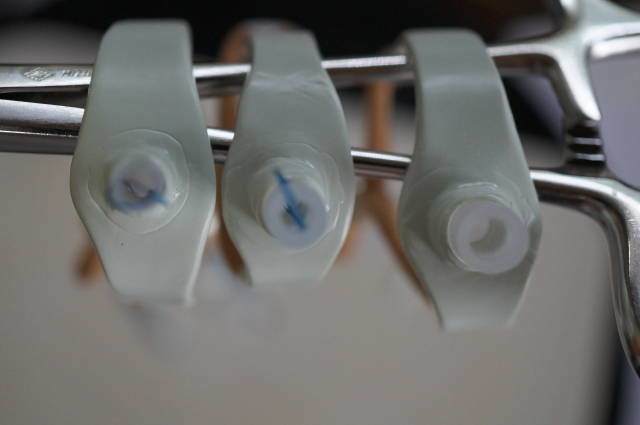
A tube cover limited how tightly adjustable wire loops could close
An entry published in August 2025 changed an adjustable-loop design after Mr. Okada found that excessively small loops could lose their original shape. The loop gained about 40mm of tubing and a dedicated adjusting part priced at ¥1,000 (about $6 at ¥156 = $1, rate as of 2026-09-04), excluding tax.
Short, separate covers also became part of the straight-wire design, leaving the wire accessible for cleaning. These covers differed from the earlier sealed attachments. Mr. Okada made the loop's protective tube mandatory in that design.
(Source: ok-lab's diary, published August 2025)
https://ok-lab.hatenablog.com/entry/2025/08/16/122934
Tube covers were removed from a separate twin-wire vibrating design
In an entry published in February 2026, Mr. Okada attributed reduced vibration partly to tubing pressing against a long connecting wire. He developed a separate vibrating design without tube covers, using parallel 0.3mm or 0.4mm wires.
This design connected a ceramic chip and motor through exposed wire. Mr. Okada described it as unsuitable for people with metal allergies.
(Source: ok-lab's diary, published February 2026)
https://ok-lab.hatenablog.com/entry/2026/02/21/122935
If you see blood in your urine, even a small amount or for the first time, do not wait and see. See a urologist right away. If you suddenly cannot urinate, or the device cannot be removed, do not try to fix it yourself. Go to a medical facility, including emergency care, immediately.
How prostate chip tube sizes changed over time
| Published | What the diary said then |
|---|---|
| May 2022 | Connector pins gained covers after reports of skin irritation. |
| Jul 2022 | A 5mm outer-diameter tube was added because the 4mm version lacked stiffness. |
| Aug 2022 | Smaller wire-filled tubing required reinforced chip connections. |
| Sep 2022 | Thinner connection supports became standard, with weaker resistance to folding. |
| Jan 2023 | Breakage reports had ended sales of earlier fixed-wire designs. |
| Jun 2023 | Covering paired-chip supports increased the planned manufacturing charge. |
| Oct 2023 | Sealed parallel-cable covers appeared with a defined maximum length. |
| Nov 2024 | The corrected loop-design report specified 2.5mm tubing and no prickling in Mr. Okada's test. |
| Feb 2026 | A separate twin-wire vibrating design omitted tubing. |
| Aug 2026 | Four-wire covered cables were declined because they required larger tubing. |
OK Prostate Chip products related to prostate chip tube sizes
The short twisted ceramic chip appears in both a dated tube-size case and the current product list.
Products that appear in these entries
| Product (official name) | Price incl. tax | Relation to this topic |
|---|---|---|
| Short twisted ceramic chip (OKプロステートチップ 陶器素材ショートタイプ ツイスト) | ¥4,400 (about $28 at ¥156 = $1, rate as of 2026-09-04) | An October 2022 entry identifies a customer's 2mm connection-support request as the first such request after thinner tubing became standard. |
(Source: ok-lab's diary, published October 2022)
https://ok-lab.hatenablog.com/entry/2022/10/01/122944
Products the diary mentioned as alternatives
The diary names no alternative.
An entry published in January 2023 explicitly reports that the old 4-wire supports, looped wire-in-tube attachments and 6-wire supports had been discontinued. Mr. Okada attributed those decisions to reports of breakage or possible breakage.
(Source: ok-lab's diary, published January 2023)
https://ok-lab.hatenablog.com/entry/2023/01/07/123115
Historical tube mounts, custom covered-cable assemblies, replaceable-wire designs and loop prototypes are also discussed above. No matching product can be confirmed on the current list.
Common worries about prostate chip tube sizes
Answers about covers depend on the cable, the attachment and the date of the reply.
"Can a tube cover help with cable rubbing?"
An entry published in November 2024 records a customer's question about severe rubbing pain from an uncovered vibrating-chip cable. Mr. Okada offered rubber coating for short sections and tubing for longer sections. He said sealing both ends of covered sections could make complex, multiple-motor arrangements costly.
The diary does not record a completed repair or the customer's later comfort. Mr. Okada also cautioned that an extra thread hole requested by this customer could itself cause rubbing.
(Source: ok-lab's diary, published November 2024)
https://ok-lab.hatenablog.com/entry/2024/11/02/122858
"Can another tube cover make a stopper compatible?"
In an entry published in February 2026, a customer asked whether a thin nylon-filled tube could support a stopper (a part limiting movement). Staff initially said the thin version could not accommodate one, while electrical-cable covers were too thick. They offered to investigate an additional cover.
Mr. Okada then produced a prototype with a 1mm tube inside a 2mm tube and reported greater stiffness than the outer tube alone. The diary does not record a customer trial or confirm how securely a stopper remained attached.
(Source: ok-lab's diary, published February 2026)
https://ok-lab.hatenablog.com/entry/2026/02/07/122919
"Why can't a tube cover contain four cable wires?"
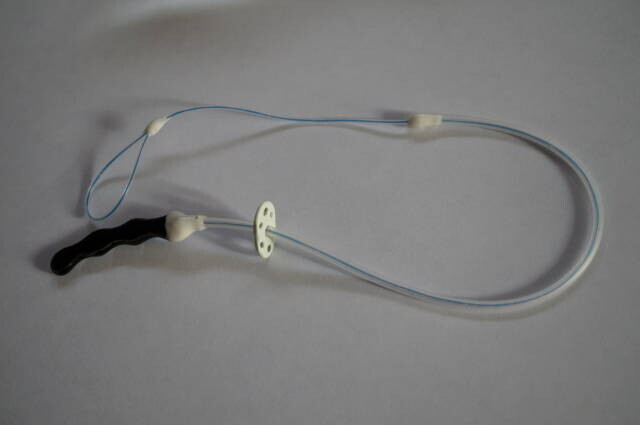
In an entry published in August 2026, a customer requested a ceramic chip with a covered cable and an end stopper. Mr. Okada said 2-wire parallel cable was standard; 4-wire cable required larger tubing and was not accepted.
He had not tested the requested stopper connection, and the diary does not record whether the order was completed. Mr. Okada suggested a large resin bead as a possible alternative for limiting inward travel.
(Source: ok-lab's diary, published August 2026)
https://ok-lab.hatenablog.com/entry/2026/08/29/122931
Buying from outside Japan
OK Lab ships internationally to countries covered by Japan Post's EMS courier service. Overseas orders are paid in advance by PayPal. Each order carries a ¥400 (about $3 at ¥156 = $1, rate as of 2026-09-04) handling fee, and EMS shipping is charged on top. These terms come from OK Lab's official sales-terms page (written here as plain text, not a link: ok-lab.net/docs/law), checked on September 7, 2026; confirm them on the official store before you order, because they can change.
Summary of this article
| What you wanted to know | The answer |
|---|---|
| In short: what is the concern? | Both bulky tubing and exposed wire prompted discomfort reports. |
| About this product: who makes it? | OK Lab in Japan makes the urethral device; prices are in JPY. |
| Key terms: which measurement matters? | Inner diameter describes cable space; outer diameter describes the covering's width. |
| What happens: does thinner mean better? | Thinner versions sometimes lost stiffness, connection strength or cable capacity. |
| The maker's answer: what changed? | Covers, reinforcement and replaceable-wire designs addressed different problems, with stated limitations. |
| Changes over time: was there one standard? | Specifications changed across dates and separate product designs. |
| Related products: what is currently listed? | The short twisted ceramic chip is listed at ¥4,400 (about $28 at ¥156 = $1, rate as of 2026-09-04) including tax. |
| Common worries: can every cable receive the same cover? | Replies depended on cable layout, stopper compatibility and manufacturing limits. |
| Buying abroad: what are the stated terms? | Advance PayPal payment, a ¥400 (about $3 at ¥156 = $1, rate as of 2026-09-04) handling fee and additional EMS shipping. |
Source: ok-lab's diary (Okada Comfortable Life Laboratory). The original entries are in Japanese; quotations on this page are translated. Photos and videos are on the original entries.
This article is a summary of the maker's development diary. The product is not a medical device and no result is guaranteed. If anything feels wrong or worries you, see a doctor. Prices, specifications and cautions change, so confirm the latest information on the official blog and the official site. Questions about ordering and shipping go to the seller.