![Can I replace the thread with a cable? | The maker described several designs, each with limits [OK Prostate Chip]](/img/a/T0216/eyecatch.svg)
This page is based on entries from "ok-lab's diary" (https://ok-lab.hatenablog.com/), the Japanese development diary written by Mr. Okada, founder of OK Lab, a small company in Japan (Okada Comfortable Life Laboratory). Only the entries about "replacing thread with a cable" are summarized here, in order of publication. Past prices and sizes are as written at the time. Current prices come from the official product list (retrieved September 4, 2026). Quotations are translated from Japanese.
Note: This page is a personal reading log by someone with no connection to the maker or the seller. It reflects the source entries as of their publication dates and makes no guarantee of accuracy or safety. The product is not a medical device; talk to a doctor about any health decision. Check the official site for current information. This page contains advertising.
In short
Cable replacement was offered for ordinary chips, but thinner designs brought concerns about strength and electrical failure.
Mr. Okada proposed different cables for thread discomfort, positioning difficulties, and electrical connections.
The current list includes an additional-cable option, while several custom designs have no confirmed matching listing.
If you see blood in your urine, even a small amount or for the first time, do not wait and see. See a urologist right away. If you suddenly cannot urinate, or the device cannot be removed, do not try to fix it yourself. Go to a medical facility, including emergency care, immediately.
About this product

The OK Prostate Chip is a small device that is placed in the urethra (the urine passage) so that it acts on the prostate; the maker sells it in several shapes, sizes and materials. It is made and sold by OK Lab (Okada Comfortable Life Laboratory), a small company in Japan, through its own online store, and prices are in Japanese yen (JPY). The maker's development diary, "ok-lab's diary", is written in Japanese. This page is an English summary of it, and every quotation is translated. OK Lab ships internationally, so readers outside Japan can order (see "Buying from outside Japan" below). Product names on this page are plain-English descriptions. The official Japanese product name is shown once in the product table so you can find the same item in the store.
Before you read: key terms
| Term | Plain-English meaning |
|---|---|
| Thread | Nylon line attached to the chip for retrieval. |
| Parallel cable | Paired electrical leads used to carry electricity or replace the chip's thread. |
| Electrode | An electrical contact on a chip, used to conduct electricity. |
| Locked cable | A cable held in place, which Mr. Okada proposed to prevent outward movement. |
| USB connector | An electrical connector fitted to a cable end for connection to powered equipment. |
| Nylon-reinforced cable | Fine electrical wires twisted together with nylon thread, proposed for electrical connection or thread replacement. |
| AWG32 | The designation attached to the thin current-carrying wire in the August 2023 prototype. The diary does not explain this. |
| Stopper | A small attachment intended to limit movement of a chip or cable. |
| Silicone-covered cable | Parallel cable inside silicone tubing, offered as a thread substitute; the May 2026 description specified a 4 mm tube. |
What happens: replacing thread with a cable
The OK Prostate Chip is a device placed in the urethra (urine passage) near the prostate. Its attached thread provides a retrieval connection, with an end outside the body. A parallel cable (paired electrical leads) can replace that thread, although the diary describes several designs with different purposes. Some carry electricity to a motor or electrode (an electrical contact), while others serve as a connection without electrical power.
A cable instead of thread was proposed for chips slipping outward
In an entry published in April 2019, a customer asked about a screw-shaped chip moving outward during urination. Mr. Okada claimed motor or electrode chips could not be expelled with a locked cable (a cable held in place).
The diary does not record whether his proposed change solved this customer's problem. Mr. Okada suggested cable instead of thread for the customer's screw-shaped chip.
(Source: ok-lab's diary, published April 2019)
https://ok-lab.hatenablog.com/entry/2019/04/27/153239
Linked ceramic chips adopted cable replacement after an attachment redesign
In an entry published in January 2020, Mr. Okada announced cable connections for his linked ceramic design (Rei). He cited improved safety and appearance as his reasons, after earlier concerns about reliable attachment had halted glass versions.
The ceramic design initially became too thick where cable ran alongside it. A thinner section containing metal wire without its cable covering resolved that thickness problem, according to Mr. Okada. He formally adopted the revised connection after testing it and retained an additional nylon connection.
(Source: ok-lab's diary, published January 2020)
https://ok-lab.hatenablog.com/entry/2020/01/18/132849

Cable replacement with two leads followed another failure after repair
In an entry published in February 2020, a customer reported renewed partial wire failure at a repaired vibrating chip's base. The customer also wanted an extra cable because thin nylon thread hurt under tension.
Mr. Okada first rejected the proposed connection position, then accepted two powered cables with USB connectors (electrical plugs). He made the new chip; additional USB work cost ¥550 (about $4 at ¥156 = $1, rate as of 2026-09-04), bringing the published quote to ¥9,750 (about $62 at ¥156 = $1, rate as of 2026-09-04).
He thought the motor's fine wires were more likely to fail than the parallel cable itself. Mr. Okada warned that home repair was difficult and could damage those fine wires further.
(Source: ok-lab's diary, published February 2020)
https://ok-lab.hatenablog.com/entry/2020/02/08/151653
Softer cable replacement carried an explicit warning about electrical failure
In an entry published in August 2023, Mr. Okada introduced nylon-reinforced cable (fine electrical wires twisted with nylon thread). He warned that its AWG32 wire could break electrically, despite the remaining nylon support.
The proposed surcharge was ¥4,000 (about $26 at ¥156 = $1, rate as of 2026-09-04) for motor or electrode chips, or ¥3,000 (about $19 at ¥156 = $1, rate as of 2026-09-04) for unpowered thread replacement. Each dedicated stopper (a movement-limiting attachment) cost ¥2,000 (about $13 at ¥156 = $1, rate as of 2026-09-04); all these prices excluded tax.
Long-term results were unknown, and he thought electrical failure might occur sooner than with conventional parallel cable. Mr. Okada planned to accept orders only after a one-week trial without problems.
(Source: ok-lab's diary, published August 2023)
https://ok-lab.hatenablog.com/entry/2023/08/19/123214
Tube-covered cable replacement was suggested for one customer's positioning difficulty
In an entry published in July 2024, a customer outside Japan wanted a tube instead of thread to make placement easier. The request concerned a resin chip; the country was not specified.
The quoted addition cost ¥2,200 (about $14 at ¥156 = $1, rate as of 2026-09-04), with a maximum length of 25 cm. Mr. Okada recommended red-and-black cable with tube covering for that request, but the diary does not record the customer's experience afterward.
(Source: ok-lab's diary, published July 2024)
https://ok-lab.hatenablog.com/entry/2024/07/13/123018
Parallel cable replacement became possible for a stainless electrode design
In an entry published in December 2024, a customer requested a stainless electrode chip with a cable-based retaining structure. Previously, Mr. Okada had considered only twisted cable reliable for electrical connection to stainless electrodes.
He reported a firm electrical connection using an intermediate wire and announced that parallel-cable requests could now be accepted. Electrical connection work carried an additional charge beyond an ordinary, unpowered cable attachment. Mr. Okada said staff would provide individual quotes based on the requested configuration.
(Source: ok-lab's diary, published December 2024)
https://ok-lab.hatenablog.com/entry/2024/12/07/122832
A cable replacement inquiry followed bleeding and hospitalization in one case
In an entry published in May 2026, a 65-year-old reported bleeding after repeated placement attempts and manual manipulation. 2 days later, the customer developed a fever recorded as 39.4 degrees.
Doctors diagnosed acute kidney-pelvis inflammation and acute prostate inflammation, and the customer reported 3 days in hospital. After discharge, the customer asked about an option that avoided manual manipulation.
The diary does not record whether the customer tried another device after this exchange. Mr. Okada mentioned silicone-covered cable, but said he could not determine which product suited the customer.
(Source: ok-lab's diary, published May 2026)
https://ok-lab.hatenablog.com/entry/2026/05/16/122906
The maker's answer to replacing thread with a cable
Mr. Okada's replies distinguish cable strength, electrical reliability, and the limits of each custom design.
Thin cable replacement felt soft, but Mr. Okada required two cables
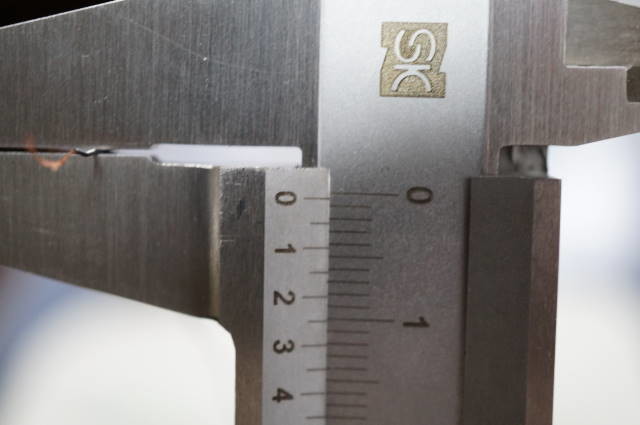
In an entry published in July 2020, Mr. Okada evaluated a customer's unusually thin cable. It measured about 0.4 mm, possibly 0.5 mm because its covering could flatten; the nylon thread measured 0.24 mm.
He described the cable as extremely soft but expressed no confidence in its strength. Tests gave weak rotation with newer 10 mm motors, while an older 10 mm motor and linked 8 mm motors worked.
Mr. Okada suspected insufficient current capacity after trying 3 of the newer motors with the same result. Because breakage seemed likely, he limited his proposal to designs using 2 cables.
(Source: ok-lab's diary, published July 2020)
https://ok-lab.hatenablog.com/entry/2020/07/04/130440
Double-cable replacement was offered after the six-wire arrangement was discontinued
An entry published in November 2022 records a customer struggling to position a ceramic vibrating chip. The entry lists the resulting order but does not report how the change felt in use. Mr. Okada said the 6-wire arrangement was discontinued and proposed 2 cables instead.
(Source: ok-lab's diary, published November 2022)
https://ok-lab.hatenablog.com/entry/2022/11/19/122516
Adjustable cable replacement used separate stopper plates because of manufacturing limits
In an entry published in July 2026, a customer requested a cylindrical stopper for a chip with two electrode sections. Mr. Okada said a single 10 mm resin sleeve was impractical because of cable friction.
His prototype used separate resin plates, and he reported that the resulting cable assembly could curve. He described compatibility with motor chips, electrode chips, and ordinary chips carrying double parallel cable. Mr. Okada cautioned that cable length could add cost, and very short versions might be impossible to make.
(Source: ok-lab's diary, published July 2026)
https://ok-lab.hatenablog.com/entry/2026/07/25/123012
If you see blood in your urine, even a small amount or for the first time, do not wait and see. See a urologist right away. If you suddenly cannot urinate, or the device cannot be removed, do not try to fix it yourself. Go to a medical facility, including emergency care, immediately.
How replacing thread with a cable changed over time

| Published | What the diary said then |
|---|---|
| Apr 2019 | Thread replacements using silicone-coated, 24-strand parallel cable entered prototype testing. |
| Jul 2019 | Mr. Okada believed embedded ceramic cable attachments would not pull free. |
| Apr 2022 | Four-wire support became chargeable; a 12 cm version added ¥3,300 (about $21 at ¥156 = $1, rate as of 2026-09-04). |
| Aug 2023 | Nylon-reinforced prototypes had an outside diameter of about 1 mm. |
| Feb 2026 | Twisted cable was successfully fitted to a linked-chip design usually supplied with parallel cable. |
| Jul 2026 | Minimum adjustable assembly: ¥5,000 (about $32 at ¥156 = $1, rate as of 2026-09-04) excluding tax, including stoppers and cable connection. |
| Aug 2026 | Stopper widths: S 6–7 mm, M 7–8 mm, L 8–9 mm; thickness 2.5–3 mm. |
| Aug 2026 | The adjustable lock-on design required total cable length to be specified because its loop shape could vary. |
OK Prostate Chip products related to replacing thread with a cable

The current list includes chips and cable options named in these orders.
Products that appear in these entries
| Product (official name) | Price incl. tax | Relation to this topic |
|---|---|---|
| Ceramic vibrating stimulation chip (OKプロステート核振チップ 陶器素材覚醒タイプ) | ¥7,700 (about $49 at ¥156 = $1, rate as of 2026-09-04) | In February 2020, this was the ordered chip in the discussion that led to two powered cables. |
| USB connector option (USB端子付け加工(核振チップオプション)) | ¥550 (about $4 at ¥156 = $1, rate as of 2026-09-04) | In February 2020, an additional USB connection was included in the customer's double-cable specification. |
| Medium-length ceramic vibrating chip (OKプロステート核振チップ 陶器素材セミロングタイプ) | ¥6,600 (about $42 at ¥156 = $1, rate as of 2026-09-04) | In November 2022, this chip appeared in the order following Mr. Okada's double-cable proposal. |
| Resin chip (OKプロステートチップ 凶悪ゾロ(生体適合樹脂)) | ¥5,500 (about $35 at ¥156 = $1, rate as of 2026-09-04) | In July 2024, a customer outside Japan requested a tube-covered thread replacement for this chip. |
(Source: ok-lab's diary, published February 2020)
https://ok-lab.hatenablog.com/entry/2020/02/08/151653
(Source: ok-lab's diary, published November 2022)
https://ok-lab.hatenablog.com/entry/2022/11/19/122516
(Source: ok-lab's diary, published July 2024)
https://ok-lab.hatenablog.com/entry/2024/07/13/123018
Products the diary mentioned as alternatives
| Product (official name) | Price incl. tax | Relation to this topic |
|---|---|---|
| Additional cable option (ケーブル追加(核振チップオプション)) | ¥1,100 (about $7 at ¥156 = $1, rate as of 2026-09-04) | In November 2022, Mr. Okada proposed two cables instead of the discontinued six-wire arrangement for a customer's positioning difficulty. |
(Source: ok-lab's diary, published November 2022)
https://ok-lab.hatenablog.com/entry/2022/11/19/122516
For the linked ceramic design, thin-cable prototypes, and custom tube-covered or adjustable cable assemblies: No matching product can be confirmed on the current list.
Common worries about replacing thread with a cable

The diary's answers give different prices and length limits for different cable designs.
"Did cable replacement originally cost more than thread?"
In an entry published in July 2019, a customer requested a non-vibrating ceramic chip with cable and asked about alternative end fittings. Mr. Okada said thread and parallel cable cost the same.
The quote was ¥7,000 (about $45 at ¥156 = $1, rate as of 2026-09-04) excluding tax with an extra chip, or ¥5,000 (about $32 at ¥156 = $1, rate as of 2026-09-04) excluding tax without it. The diary does not record whether this particular quoted order was completed. Mr. Okada proposed retaining a nylon retrieval thread in his compromise design.
(Source: ok-lab's diary, published July 2019)
https://ok-lab.hatenablog.com/entry/2019/07/27/130537
"Could cable replacement be ordered without an extra charge?"
An entry published in August 2020 records a request to replace thread on two custom ceramic chips with cable used on vibrating models. The customer selected 35 cm; the diary does not record how the finished arrangement felt in use. Mr. Okada approved the change at no extra charge and asked for a cable length no greater than that limit.
(Source: ok-lab's diary, published August 2020)
https://ok-lab.hatenablog.com/entry/2020/08/15/125150
"What did silicone-covered cable replacement cost in a later quote?"
An entry published in February 2026 records a silicone-covered cable request for a custom ceramic chip (sea-slug ver.2). The diary does not record whether the requested conversion was completed or how it felt in use. Mr. Okada's reply offered that particular cable conversion for ¥2,200 (about $14 at ¥156 = $1, rate as of 2026-09-04) extra.
(Source: ok-lab's diary, published February 2026)
https://ok-lab.hatenablog.com/entry/2026/02/28/122912
"Does cable replacement always allow the same maximum length?"
In an entry published in June 2026, a customer requested the longest possible cable for a resin electrode chip. The customer specified 25 cm of silicone-covered cable, while Mr. Okada set the cable's overall length at 35 cm. He explained that manufacturing limits restricted the length possible for this conversion.
(Source: ok-lab's diary, published June 2026)
https://ok-lab.hatenablog.com/entry/2026/06/13/122909
Buying from outside Japan

OK Lab ships internationally to countries covered by Japan Post's EMS courier service. Overseas orders are paid in advance by PayPal. Each order carries a ¥400 (about $3 at ¥156 = $1, rate as of 2026-09-04) handling fee, and EMS shipping is charged on top. These terms come from OK Lab's official sales-terms page (written here as plain text, not a link: ok-lab.net/docs/law), checked on September 7, 2026; confirm them on the official store before you order, because they can change.
Summary of this article
| What you wanted to know | The answer |
|---|---|
| What is the short answer? | The maker offered cable replacements, with different limits and unresolved questions about durability. |
| What is the product? | A urethral device made and sold by OK Lab in Japan, with prices in Japanese yen. |
| What do the cable terms mean? | Thread, electrical cable, reinforced cable, and tube-covered cable serve different connection purposes. |
| What happened in the recorded cases? | Requests involved slipping, thread discomfort, electrical failure, positioning difficulty, and an inquiry after hospitalization. |
| What did the maker propose? | Different cable structures, including double cables, with limits on strength, manufacturing, and availability. |
| What changed over time? | The diary records prototypes, new charges, changed connections, and adjustable stopper designs. |
| Which related products remain listed? | Named chips, a USB connector option, and an additional-cable option appear on the supplied current list. |
| What did customers ask about? | Historical surcharges, free conversions, silicone-covered options, and maximum cable length. |
| How does overseas buying work? | Advance PayPal payment, a handling fee, and separate EMS shipping charges apply under the stated terms. |
Source: ok-lab's diary (Okada Comfortable Life Laboratory). The original entries are in Japanese; quotations on this page are translated. Photos and videos are on the original entries.
This article is a summary of the maker's development diary. The product is not a medical device and no result is guaranteed. If anything feels wrong or worries you, see a doctor. Prices, specifications and cautions change, so confirm the latest information on the official blog and the official site. Questions about ordering and shipping go to the seller.