![Sore after wearing a prostate chip? | The diary reports strain from shape and prolonged wear [OK Prostate Chip]](/img/a/T0166/eyecatch.svg)
This page is based on entries from "ok-lab's diary" (https://ok-lab.hatenablog.com/), the Japanese development diary written by Mr. Okada, founder of OK Lab, a small company in Japan (Okada Comfortable Life Laboratory). Only the entries about "sphincter fatigue and strain" are summarized here, in order of publication. Past prices and sizes are as written at the time. Current prices come from the official product list (retrieved September 4, 2026). Quotations are translated from Japanese.
Note: This page is a personal reading log by someone with no connection to the maker or the seller. It reflects the source entries as of their publication dates and makes no guarantee of accuracy or safety. The product is not a medical device; talk to a doctor about any health decision. Check the official site for current information. This page contains advertising.
In short
- The diary records muscle soreness and urine leakage after prolonged pressure from some chip designs.
- Mr. Okada favors less pressure, room between components, and separating comfortable wear from stronger stimulation.
- Current products include designs discussed here; the latest custom revision has no recorded comfort outcome.
If you see blood in your urine, even a small amount or for the first time, do not wait and see. See a urologist right away. If you suddenly cannot urinate, or the device cannot be removed, do not try to fix it yourself. Go to a medical facility, including emergency care, immediately.
About this product
The OK Prostate Chip is a small device that is placed in the urethra (the urine passage) so that it acts on the prostate; the maker sells it in several shapes, sizes and materials. It is made and sold by OK Lab (Okada Comfortable Life Laboratory), a small company in Japan, through its own online store, and prices are in Japanese yen (JPY).
The maker's development diary, "ok-lab's diary", is written in Japanese. This page is an English summary of it, and every quotation is translated. OK Lab ships internationally, so readers outside Japan can order (see "Buying from outside Japan" below).
Product names on this page are plain-English descriptions. The official Japanese product name is shown once in the product table so you can find the same item in the store.
Before you read: key terms
| Term | Plain-English meaning |
|---|---|
| Urethra | The urine passage; the chip occupies part of this passage. |
| Urinary sphincter | A muscle involved in closing the urine passage; the diary discusses pressure on it. |
| Inner urinary sphincter | The sphincter between the prostate and bladder, discussed in relation to urine flow and chip pressure. |
| Outer urinary sphincter | The sphincter outside the prostate; the diary describes it gripping a chip or its connector. |
| Chip groove | A narrowed part of the chip intended to help it stay in place. |
| Screw support | A screw-shaped extra component intended to help limit chip movement. |
| Tube-covered tail | A covered thread behind the chip, intended to reduce pressure from exposed thread. |
| Mesh stopper | A mesh component intended to resist movement toward the bladder. |
| Urologist | A doctor consulted about urinary problems; Mr. Okada asks one about sphincter strain. |
What happens: soreness after wearing a prostate chip
The OK Prostate Chip occupies the urethra, where the maker intends it to press on the prostate. The urinary sphincter (a muscle involved in closing the urine passage) grips a chip or connector in these accounts. A chip groove (the narrowed section intended to help hold it in place) changes what the muscle grips. Mr. Okada repeatedly connects discomfort with the shape, bulk, or spacing of those parts during prolonged wear.
A deeper chip groove brought concerns about sphincter strain
In an entry published in April 2018, a customer wanted stronger grip from a custom resin chip with a pronounced groove. The customer reported unexpected friction and pressure compared with glass of similar maximum width.
Mr. Okada replied that resin could feel different depending on the day's conditions. The diary does not record the result of a smaller replacement. Mr. Okada's separate trial prompted a warning about sphincter strain during prolonged wear with pronounced grooves.
(Source: ok-lab's diary, published April 2018)
https://ok-lab.hatenablog.com/entry/20180407/1523090115
Muscle soreness followed Mr. Okada’s test lasting two consecutive days
In an entry published in June 2018, Mr. Okada asked a urologist about an extremely grooved chip. He reported muscle soreness around the following day after wearing a similar design for 2 consecutive days.
According to his account, the doctor initially said the sphincter could relax when overloaded. Mr. Okada reports that, after hearing the duration, the doctor warned that two consecutive days were unreasonable.
(Source: ok-lab's diary, published June 2018)
https://ok-lab.hatenablog.com/entry/20180630/1530342059
Mr. Okada reported sphincter strain with rigid paired-chip connections
In an entry published in October 2019, Mr. Okada reported strain with paired chips whose connections could not bend. He found this with both stainless steel and nylon connections.
His revised connection combined two 0.45mm wires, nylon thread, and a thin resin covering. The proposed spacing choices were approximately 2mm, 5mm, and 8mm. Mr. Okada favored longer spacing for comfort during prolonged wear.
(Source: ok-lab's diary, published October 2019)
https://ok-lab.hatenablog.com/entry/2019/10/26/145539
Chip pressure was suspected after bleeding during a sharply curved prototype test
In an entry published in November 2019, Mr. Okada reported bleeding during a trial of a sharply curved paired-chip prototype. He stopped when blood appeared and suspected pressure injury.
He found the linked design stimulating briefly but burdensome during longer wear. Mr. Okada wrote that he intended to avoid larger chips for a while.
(Source: ok-lab's diary, published November 2019)
https://ok-lab.hatenablog.com/entry/2019/11/16/154802
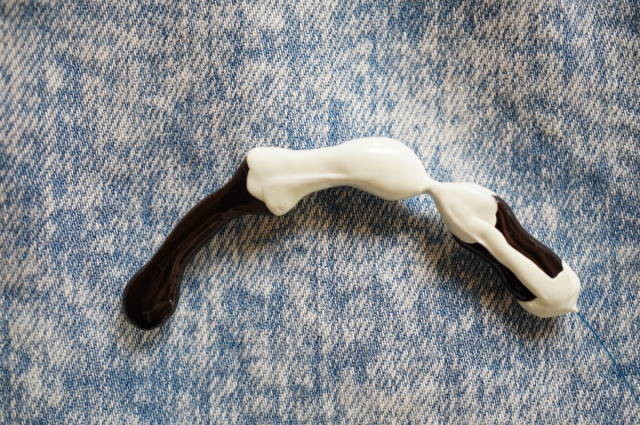
Mr. Okada suspected sphincter strain after leakage followed horn-chip testing
In an entry published in November 2020, Mr. Okada initially praised the stability of horn-chip prototype (4). Its projecting connector was fixed directly to a sphincter stopper.
After approximately 10 hours, he reported difficulty closing the sphincter and slight urine leakage lasting about a full day. He suspected fatigue or injury. Mr. Okada favored separating the connector and stopper after reporting a better experience with prototype (5).
(Source: ok-lab's diary, published November 2020)
https://ok-lab.hatenablog.com/entry/2020/11/07/121125
Muscle soreness developed during a customer's trial with 0mm spacing
In an entry published in June 2021, a customer wanted several days of wear from a short ceramic twist chip. Their screw support (a movement-limiting component) had a 0mm gap; soreness developed after about 3 hours.
Mr. Okada described the sphincter's thickness as 5-6mm and considered that arrangement too tight, possibly tolerable for only a few hours. The diary does not record whether a revised design resolved the soreness. His reply advises treating comfortable wear and stronger sensations as separate design aims.
(Source: ok-lab's diary, published June 2021)
https://ok-lab.hatenablog.com/entry/2021/06/26/125926
Mr. Okada reported sphincter strain with a 25mm petal prototype
In an entry published in May 2025, Mr. Okada tested a wire-loop device with a 25mm petal-shaped component. He reported excessive sphincter stimulation when it acted as a stopper and ended that trial after about 3 hours.
A subsequent prototype with petals around 18mm did not feel damaging to him. Mr. Okada considered approximately 20mm the upper size suitable for petals around the sphincter, while acknowledging differences between users.
(Source: ok-lab's diary, published May 2025)
https://ok-lab.hatenablog.com/entry/2025/05/24/122958
Sphincter strain prompted a customer’s request for wider component spacing
In an entry published in July 2026, a customer reported extremely high pressure from a short custom chip connected to an apple-shaped stopper. The complaint concerned the outer urinary sphincter (outside the prostate).
The customer requested greater spacing and wire intended to reduce pressure on the inner urinary sphincter (between prostate and bladder). Mr. Okada showed the completed revised build. The diary does not record how the revised chip felt in use.
(Source: ok-lab's diary, published July 2026)
https://ok-lab.hatenablog.com/entry/2026/07/25/123012
The maker's answer to soreness after wearing a prostate chip
Mr. Okada's design responses focused on reducing local pressure and allowing more freedom between components.
Twisted cable contact raised concerns about chip pressure near the sphincter
In an entry published in March 2020, Mr. Okada described a vibrating device whose twisted cable section served as a stopper. He warned that prolonged contact between that twist and the prostate or sphincter could cause discomfort.
His preferred design separated the twist from the sphincter, near the start of the penile section of the urine passage. Mr. Okada's advice centered on avoiding sustained contact with the sensitive sphincter.
(Source: ok-lab's diary, published March 2020)
https://ok-lab.hatenablog.com/entry/2020/03/07/152901
Mr. Okada reported little sphincter strain with his titanium prototype
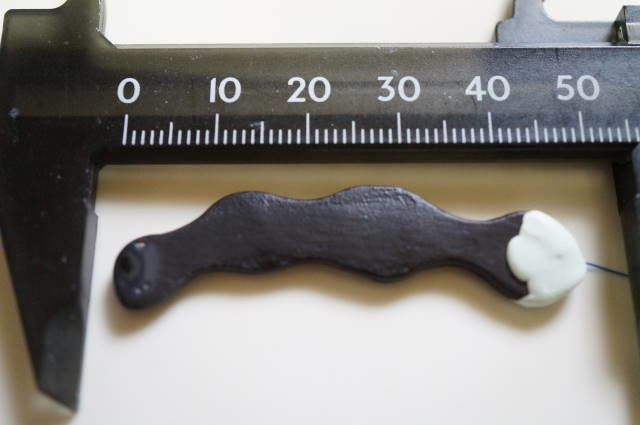
In an entry published in June 2021, Mr. Okada reported almost no fatigue during nearly 1 week with a titanium test chip. Its narrow sphincter section measured 2mm.
He distinguished that thin section from the groove's opening, which also affected comfort. He associated an opening around 4mm with stronger pleasant sensations and 6-7mm with stable wear. Mr. Okada favored a thinner sphincter section to reduce the burden of longer wear.
(Source: ok-lab's diary, published June 2021)
https://ok-lab.hatenablog.com/entry/2021/06/26/125926
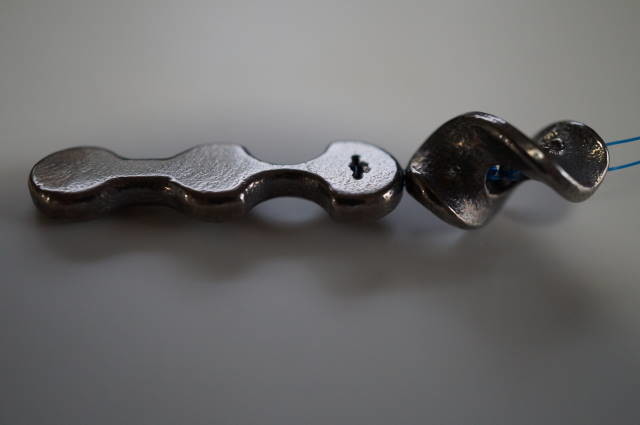
Mr. Okada reported less chip pressure with a tube-covered tail
In an entry published in November 2023, Mr. Okada described a tube-covered tail (covered thread extending behind the chip). He said 2.5mm tubing almost eliminated thread pressure around the sphincter and the urethral bend he described as 90 degrees.
He reported no sphincter discomfort in his short trial, while acknowledging unresolved questions about stability. Mr. Okada planned further testing before offering the design for sale.
(Source: ok-lab's diary, published November 2023)
https://ok-lab.hatenablog.com/entry/2023/11/18/122841
Persistent mesh contact led Mr. Okada to reconsider sphincter strain
In an entry published in April 2024, Mr. Okada discussed a mesh stopper (a component intended to resist movement toward the bladder). He considered prolonged close contact with the sphincter excessively burdensome.
His proposed arrangement gave the screw support the primary stopping role, with mesh as a backup. He considered the screw's shape gentler during contact. Mr. Okada also advised stopping use if the outer resin covering broke.
(Source: ok-lab's diary, published April 2024)
https://ok-lab.hatenablog.com/entry/2024/04/13/123053
If you see blood in your urine, even a small amount or for the first time, do not wait and see. See a urologist right away. If you suddenly cannot urinate, or the device cannot be removed, do not try to fix it yourself. Go to a medical facility, including emergency care, immediately.
How soreness after wearing a prostate chip changed over time
| Published | What the diary said then |
|---|---|
| May 2018 | Mr. Okada reported problems after several days with hole-based or glass-loop thread attachments. |
| May 2019 | Stable ceramic trials prompted Mr. Okada to pause development of curved, bead-shaped chips. |
| Mar 2020 | A March 14 update set the standard cable-twist position at 3.5cm from the body. |
| Jul 2021 | Mr. Okada found a 6.5mm groove opening more comfortable than 9mm. |
| Apr 2022 | A customer associated a bulky chip-to-cable junction with difficult-to-tolerate urinary urgency. |
| Dec 2024 | Mr. Okada reported equally mild sphincter load from loop-supported short ceramic and entirely wire-loop designs. |
| May 2025 | Double tubing added strength without extra cost, but Mr. Okada warned of increased sphincter load. |
| Dec 2025 | Mr. Okada described less burden with separate apple-shaped stoppers, accepting less complete fixation. |
The diary does not say what the current state is.
OK Prostate Chip products related to soreness after wearing a prostate chip
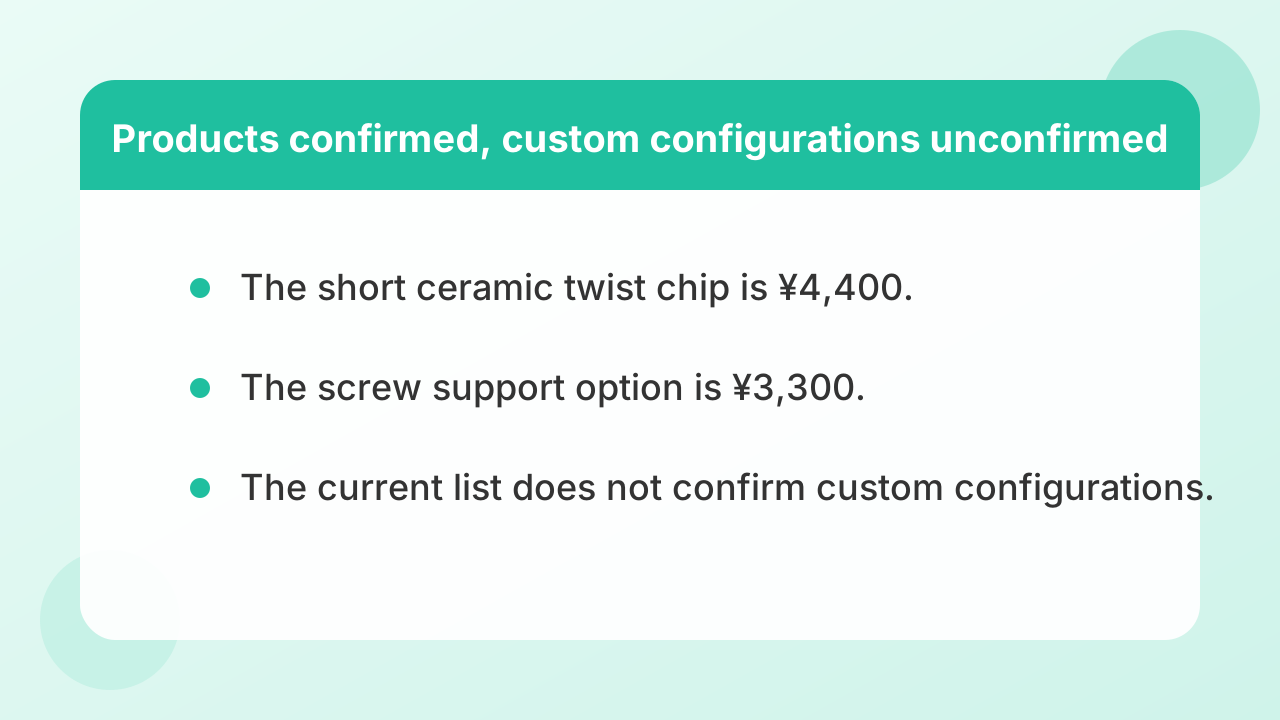
The current list confirms these products, but not their historical custom configurations.
Products that appear in these entries
| Product (official name) | Price incl. tax | Relation to this topic |
|---|---|---|
| Semi-long glass chip (OKプロステートチップ ガラス素材セミロングタイプ) | ¥4,400 (about $28 at ¥156 = $1, rate as of 2026-09-04) | In May 2018, a customer asked about this chip slipping after previously using resin. |
| Short ceramic twist chip (OKプロステートチップ 陶器素材ショートタイプ ツイスト) | ¥4,400 (about $28 at ¥156 = $1, rate as of 2026-09-04) | In June 2021, a customer reported soreness with this chip and a screw support. |
| Screw support option (スクリュー型補助チップ追加オプション) | ¥3,300 (about $21 at ¥156 = $1, rate as of 2026-09-04) | In June 2021, the customer's screw support had no gap from the chip. |
| Resin screw support option (スクリュー型補助チップ追加オプション(生体適合樹脂)) | ¥3,300 (about $21 at ¥156 = $1, rate as of 2026-09-04) | In January 2022, a customer reported discomfort with this support close to the chip. |
(Source: ok-lab's diary, published May 2018)
https://ok-lab.hatenablog.com/entry/20180519/1526708081
(Source: ok-lab's diary, published June 2021)
https://ok-lab.hatenablog.com/entry/2021/06/26/125926
(Source: ok-lab's diary, published January 2022)
https://ok-lab.hatenablog.com/entry/2022/01/15/124252
Products the diary mentioned as alternatives
| Product (official name) | Price incl. tax | Relation to this topic |
|---|---|---|
| Long glass chip (OKプロステートチップ ロングタイプ) | ¥6,600 (about $42 at ¥156 = $1, rate as of 2026-09-04) | In May 2018, Mr. Okada identified this glass shape as stable when discussing the slipping semi-long chip. |
(Source: ok-lab's diary, published May 2018)
https://ok-lab.hatenablog.com/entry/20180519/1526708081
Historical custom builds and prototypes: No matching product can be confirmed on the current list.
Common worries about soreness after wearing a prostate chip
"Can better grip prevent soreness after wearing a prostate chip?"
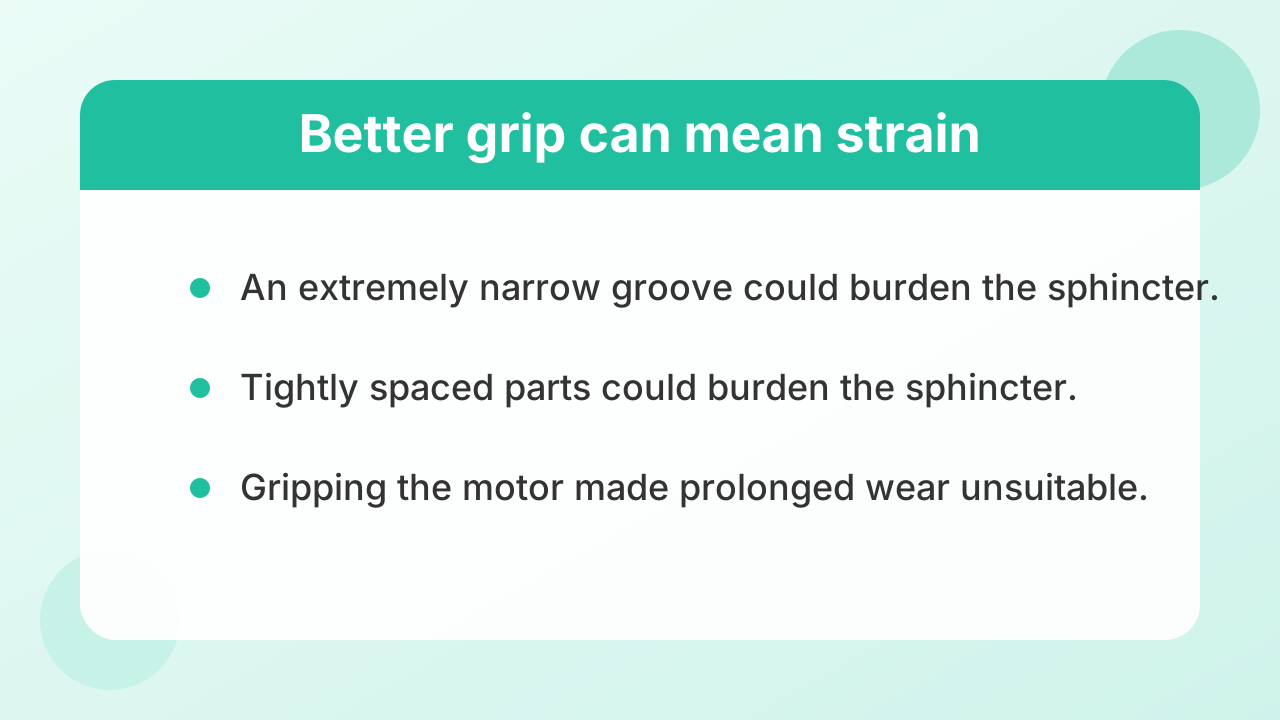
In an entry published in May 2018, a customer wanted the semi-long glass chip to stay in place more reliably. Mr. Okada said an extremely narrow groove could improve retention but burden the sphincter, describing about half a day as its limit.
The diary does not record whether this customer found a comfortable solution. Mr. Okada also suggested a custom longer resin chip if resin already suited the customer.
(Source: ok-lab's diary, published May 2018)
https://ok-lab.hatenablog.com/entry/20180519/1526708081
"Does screw-related chip pressure mean my body is unusual?"
In an entry published in January 2022, a customer asked about discomfort and slight pain with a resin screw support close to the chip. It also passed inward more readily than their older support of the same stated size.
Mr. Okada considered the newer resin more slippery and agreed that tightly spaced parts could burden the sphincter. The diary does not record a later comfort result. For the customer's interest in prostate stimulation, Mr. Okada favored a smaller screw and cautioned against forcing the fit.
(Source: ok-lab's diary, published January 2022)
https://ok-lab.hatenablog.com/entry/2022/01/15/124252
"Can a vibration motor cause sphincter strain during longer wear?"
In an entry published in June 2022, a customer asked whether a sphincter gripping the motor would become tired. OK Lab's staff replied that this arrangement imposed a load.
They explained that some diary photographs showed approximate relationships, not actual positions. The diary does not record this customer's subsequent experience. Staff considered prolonged wear unsuitable when the sphincter gripped the motor.
(Source: ok-lab's diary, published June 2022)
https://ok-lab.hatenablog.com/entry/2022/06/11/123420
Buying from outside Japan
OK Lab ships internationally to countries covered by Japan Post's EMS courier service. Overseas orders are paid in advance by PayPal. Each order carries a ¥400 (about $3 at ¥156 = $1, rate as of 2026-09-04) handling fee, and EMS shipping is charged on top. These terms come from OK Lab's official sales-terms page (written here as plain text, not a link: ok-lab.net/docs/law), checked on September 7, 2026; confirm them on the official store before you order, because they can change.
Summary of this article
| What you wanted to know | The answer |
|---|---|
| What is the short answer? | The diary associates some shapes and prolonged pressure with soreness or leakage. |
| What is this product? | A urethral device from OK Lab in Japan. |
| Which terms matter? | The sphincter is the muscle; grooves, supports, and stoppers change what presses against it. |
| What happened in the cases? | Reports include soreness, bleeding, leakage, and a revision without reported results. |
| What did the maker propose? | Thinner sections, less direct pressure, and more freedom between components. |
| What changed over time? | Development moved through grooves, connectors, tubing, loops, and separate stoppers. |
| Which current products appear? | Glass chips, a ceramic twist chip, and screw supports; custom specifications remain unconfirmed. |
| What did customers ask? | Whether grip, screw spacing, or motor contact explain discomfort. |
| How do overseas orders work? | Advance PayPal payment, a ¥400 (about $3 at ¥156 = $1, rate as of 2026-09-04) handling fee, and additional EMS shipping. |
Source: ok-lab's diary (Okada Comfortable Life Laboratory). The original entries are in Japanese; quotations on this page are translated. Photos and videos are on the original entries.
This article is a summary of the maker's development diary. The product is not a medical device and no result is guaranteed. If anything feels wrong or worries you, see a doctor. Prices, specifications and cautions change, so confirm the latest information on the official blog and the official site. Questions about ordering and shipping go to the seller.