![What changes if I leave a prostate chip in for days? | Comfort, sensation, and stability can change [OK Prostate Chip]](/img/a/T0162/eyecatch.svg)
This page is based on entries from "ok-lab's diary" (https://ok-lab.hatenablog.com/), the Japanese development diary written by Mr. Okada, founder of OK Lab, a small company in Japan (Okada Comfortable Life Laboratory). Only the entries about "changes after leaving a chip in for several days" are summarized here, in order of publication. Past prices and sizes are as written at the time. Current prices come from the official product list (retrieved September 4, 2026). Quotations are translated from Japanese.
Note: This page is a personal reading log by someone with no connection to the maker or the seller. It reflects the source entries as of their publication dates and makes no guarantee of accuracy or safety. The product is not a medical device; talk to a doctor about any health decision. Check the official site for current information. This page contains advertising.
In short
- Prolonged wear brought reports of greater comfort, weaker sensation, slipping, and health concerns.
- Mr. Okada changed thread junctions and discussed fit, without guaranteeing stable placement.
- Some solid-chip models remain listed; matching current products cannot be confirmed for the historical wire prototypes.
If you see blood in your urine, even a small amount or for the first time, do not wait and see. See a urologist right away. If you suddenly cannot urinate, or the device cannot be removed, do not try to fix it yourself. Go to a medical facility, including emergency care, immediately.
About this product
The OK Prostate Chip is a small device that is placed in the urethra (the urine passage) so that it acts on the prostate; the maker sells it in several shapes, sizes and materials. It is made and sold by OK Lab (Okada Comfortable Life Laboratory), a small company in Japan, through its own online store, and prices are in Japanese yen (JPY). The maker's development diary, "ok-lab's diary", is written in Japanese. This page is an English summary of it, and every quotation is translated. OK Lab ships internationally, so readers outside Japan can order (see "Buying from outside Japan" below). Product names on this page are plain-English descriptions. The official Japanese product name is shown once in the product table so you can find the same item in the store.
Before you read: key terms
| Term | Plain-English meaning |
|---|---|
| Urethra | The urine passage; the diary describes chips placed inside it to stimulate the prostate. |
| Sphincter | A muscle that closes the passage; the diary discusses how it grips a chip's narrower section. |
| Stopper | An added part intended to limit unwanted device movement. |
| Thread junction | Where the attached thread meets the chip; it provides the connection discussed in the rubber-cover reports. |
| Chipless device | A flexible wire-and-loop design without a solid chip, intended to provide internal stimulation. |
| Shape-memory wire | Wire intended to maintain a set shape; the diary uses it in devices that support placement. |
What happens: leaving a prostate chip in for days
The OK Prostate Chip is a small device placed inside the urethra to stimulate the prostate. Leaving it in for days means keeping it inside during ordinary activities and overnight, as described in these diary reports. Customers sought continuing stimulation, while Mr. Okada used prolonged wear to assess prototype comfort and stability over time. The accounts describe changing sensations and fit, alongside problems with urination, sleep, movement, and physical discomfort.
Long-term prostate chip use disrupted sleep for one customer
In an entry published in November 2019, a customer described difficulty taking breaks from a curved, twisted chip. They reported weaker responses to continuous stimulation and a growing sense of insufficient sleep. Earlier in the same account, changes in the chip's position had awakened them.
The customer decided to pause use and reconsider their habits. Mr. Okada acknowledged the message, but his reply did not provide a chip-specific schedule. The diary does not record whether the break restored their earlier sensations.
(Source: ok-lab's diary, published November 2019)
https://ok-lab.hatenablog.com/entry/2019/11/16/154802
One customer reported stronger sensations during prolonged prostate chip wear
In an entry published in December 2019, a customer reported approximately 1 week of uninterrupted wear with a resin screw chip measuring about 10.5mm. They described increasingly strong sensations at night and sensations beginning during daytime relaxation. They also reported that the chip stayed in place during urination.
Mr. Okada welcomed the feedback but expressed concern about a trouble-free week of continuous wear. His reply did not establish that duration as safe.
(Source: ok-lab's diary, published December 2019)
https://ok-lab.hatenablog.com/entry/2019/12/07/162608
Prolonged prostate chip wear exposed slipping and painful thread junctions
In an entry published in August 2020, a customer described a recurring pattern across previously tested chips. Stimulation peaked on day 1, weakened around day 3, and accompanied easier slipping after 1 week and instability after 1 month. Their modified short chip (Umiushi V3 revision 2) then caused unbearable urinary pain; they stopped using it and blamed hardened resin at the thread junction.
Mr. Okada made rubber junction covers standard, in principle, on version 4 and two-thread chips. An August 2020 follow-up reported no further junction stinging, but severe slipping with their double-twist chip (Rabuka) after its fit settled. Mr. Okada asked for reports of cover separation.
(Source: ok-lab's diary, published August 2020)
https://ok-lab.hatenablog.com/entry/2020/08/08/130037
(Source: ok-lab's diary, published August 2020)
https://ok-lab.hatenablog.com/entry/2020/08/15/125150
Metal prototypes produced different experiences during prolonged prostate chip wear
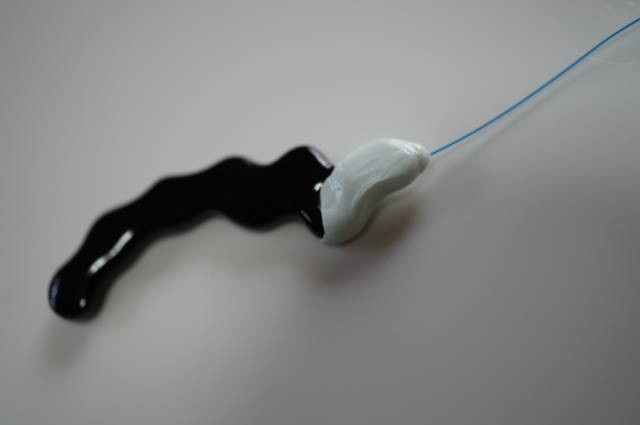
In an entry published in October 2021, Mr. Okada reported discomfort after about 48 hours with a stainless-steel long M prototype. He attributed the difficulty to its fit within his own urethra. Consequently, his titanium long-chip trial was brief.
He also described approximately 3 days with a medium-length titanium prototype. It initially moved during urination but barely moved by day 3, when he sometimes forgot it was present. He said he could not reliably compare it with his earlier resin-chip experience.
(Source: ok-lab's diary, published October 2021)
https://ok-lab.hatenablog.com/entry/2021/10/02/125825
Chills interrupted Mr. Okada's long-term prostate chip test
In an entry published in February 2022, Mr. Okada described chills and a temperature of 36.8 degrees Celsius, which he considered elevated for himself. He suspected inflammation of the urethra but also acknowledged that another cause was possible. He paused his continuous vibration experiment for 3 days.
He also considered possible device contamination or irritation, without establishing either as the cause. The diary does not record a confirmed diagnosis for the chills.
(Source: ok-lab's diary, published February 2022)
https://ok-lab.hatenablog.com/entry/2022/02/19/123621
A broken wire undermined overnight prostate chip stability
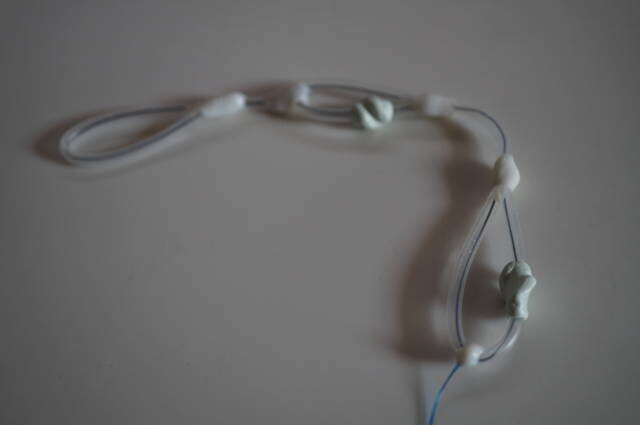
In an entry published in December 2024, Mr. Okada described a deliberately broken chipless device (a flexible design without a solid chip). After 1 night, it slipped out during urination. He concluded that the severed wire could not adequately maintain the bend against urine pressure.
He abandoned that test and returned to his device with a bladder loop. He described initial discomfort with that loop becoming pleasurable sensations after several days.
(Source: ok-lab's diary, published December 2024)
https://ok-lab.hatenablog.com/entry/2024/12/14/122948
Mr. Okada ended a three-day prostate chip test after feeling unwell
In an entry published in July 2025, Mr. Okada reported about 3 days with a prototype secured by a wire retainer. It used shape-memory wire (wire intended to maintain a set shape). He stopped after feeling unwell, describing his condition as resembling heart failure and his prostate as tired.
These were his descriptions; the diary does not record a medical diagnosis of that episode. He suspected that the rigid fixation maintained pressure too continuously for him. His account ended with the test discontinued.
(Source: ok-lab's diary, published July 2025)
https://ok-lab.hatenablog.com/entry/2025/07/05/122905
The maker's answer to leaving a prostate chip in for days
Mr. Okada's responses focused on individual fit, contact points, and the limits of movement-control parts.
A smaller stopper brought tradeoffs for prolonged prostate chip wear
In an entry published in September 2021, Mr. Okada described a long S model (Blue Chip) as comfortable throughout that week. He attributed the reduced burden to its narrow width. A small stopper (an added part intended to limit movement) also felt less affected by urination, but he thought its stopping effect could weaken. Mr. Okada did not recommend that smaller stopper for someone whose device frequently moved too far inward.
(Source: ok-lab's diary, published September 2021)
https://ok-lab.hatenablog.com/entry/2021/09/18/130132
Shape mattered more than expected for one customer's prolonged prostate chip wear
In an entry published in January 2022, a customer sought a better fit after smaller chips had proved uncomfortable. They reported 4 days without pain using the large, widely spaced resin model, compared with a 2-day limit previously. The chip's 12mm width had nevertheless made initial placement difficult.
Mr. Okada suggested that the longer narrow section between its bumps reduced pressure on the sphincter (the muscle that closes the passage). In his explanation, that section allowed movement without bringing a wider bump against the muscle. He asked for reports from customers with similar experiences, emphasizing differences in individual anatomy.
(Source: ok-lab's diary, published January 2022)
https://ok-lab.hatenablog.com/entry/2022/01/15/124252
Thicker wire changed the fit concerns surrounding prolonged prostate chip wear
In an entry published in February 2025, Mr. Okada compared 0.3mm and 0.4mm wire designs. He reported roughly 4 days of comfortable wear with his thicker-wire prototype, while noting greater difficulty passing its tip through the sphincter. He explained that the thicker loop did not flatten as readily.
If part of that loop lay within the sphincter, he thought the muscle might not close completely. For that reason, he favored the customer's request for a shorter prostate-side loop.
(Source: ok-lab's diary, published February 2025)
https://ok-lab.hatenablog.com/entry/2025/02/15/122943
If you see blood in your urine, even a small amount or for the first time, do not wait and see. See a urologist right away. If you suddenly cannot urinate, or the device cannot be removed, do not try to fix it yourself. Go to a medical facility, including emergency care, immediately.
How leaving a prostate chip in for days changed over time
| Published | What the diary said then |
|---|---|
| Aug 2018 | One customer nearly lost the chip into their bladder on the first night. |
| Oct 2019 | A customer reported urinary difficulty with a short ceramic chip. |
| Nov 2019 | Continuous stimulation brought weaker responses and interrupted sleep for one customer. |
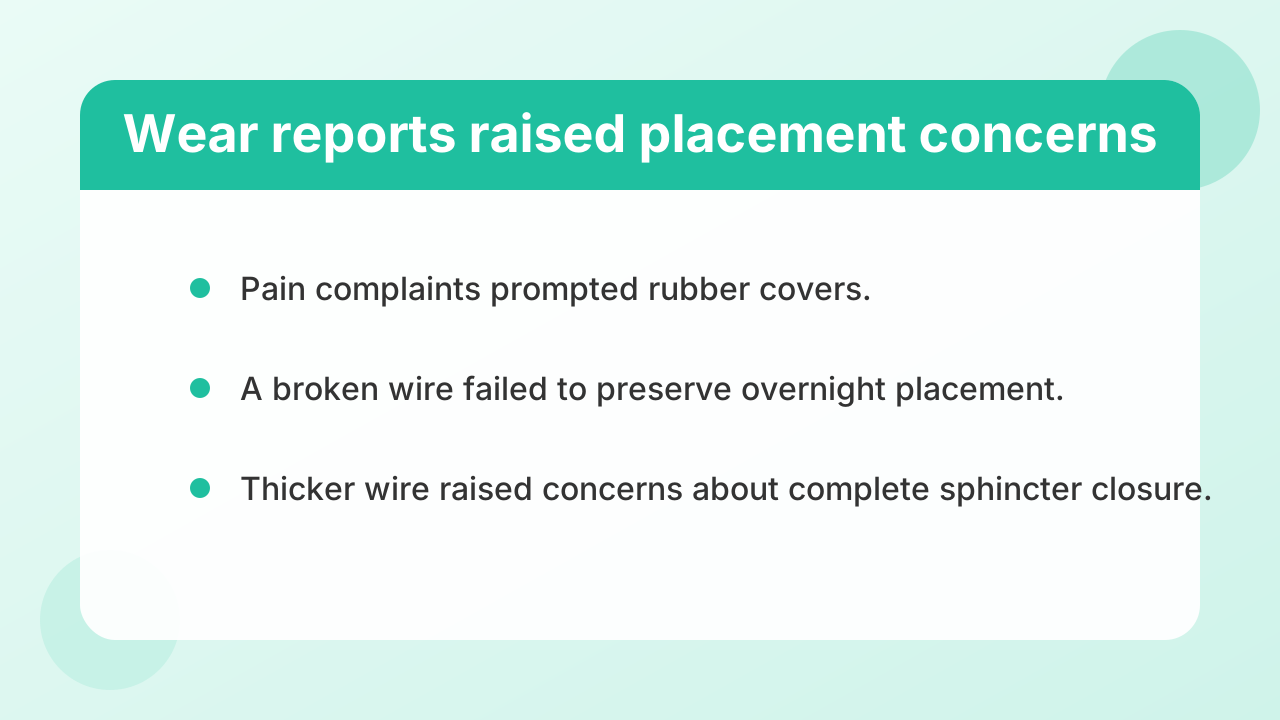
| Aug 2020 | Pain complaints prompted rubber covers at specified thread junctions. |
| May 2021 | Mr. Okada reported less discomfort with a new resin prototype than with epoxy. |
| Oct 2021 | A stainless long prototype proved uncomfortable during continuous wear. |
| Feb 2022 | Chills interrupted Mr. Okada's continuous vibration experiment. |
| Dec 2024 | A broken wire failed to preserve overnight placement. |
| Feb 2025 | Thicker wire raised concerns about complete sphincter closure. |
| Jul 2025 | Mr. Okada stopped a rigidly secured test after feeling unwell. |
OK Prostate Chip products related to leaving a prostate chip in for days
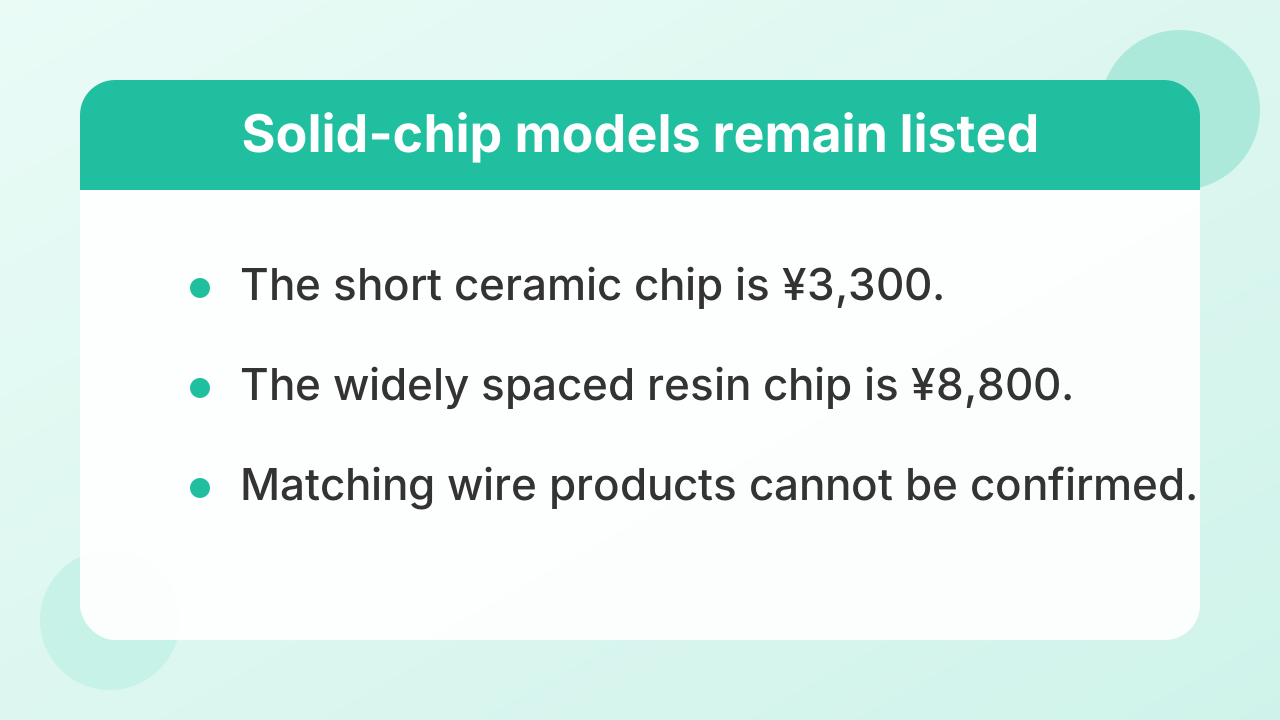
The supplied current list includes solid-chip models from these reports, including products associated with discomfort.
Products that appear in these entries
| Product (official name) | Price incl. tax | Relation to this topic |
|---|---|---|
| Single-chip resin screw model (OKプロステートチップ 樹脂素材1チップタイプ スクリュー) | ¥4,400 (about $28 at ¥156 = $1, rate as of 2026-09-04) | In October 2019, a customer compared its urination experience with the short ceramic chip. |
| Short ceramic chip (OKプロステートチップ 陶器素材ショートタイプ) | ¥3,300 (about $21 at ¥156 = $1, rate as of 2026-09-04) | In October 2019, this was the chip associated with difficult urination and accidental breakage. |
| Short twisted ceramic chip (OKプロステートチップ 陶器素材ショートタイプ ツイスト) | ¥4,400 (about $28 at ¥156 = $1, rate as of 2026-09-04) | In January 2022, a customer named this among earlier chips with unsatisfactory size or fit. |
| Medium-length resin chip (OKプロステートチップ セミロングタイプ(生体適合樹脂)) | ¥5,500 (about $35 at ¥156 = $1, rate as of 2026-09-04) | In January 2022, this was another earlier chip the customer found unsatisfactory in size or fit. |
| Widely spaced resin chip (OKプロステートチップ 覚醒タイプ(生体適合樹脂)) | ¥8,800 (about $56 at ¥156 = $1, rate as of 2026-09-04) | In January 2022, the customer reported comfortable prolonged wear with its L size. |
(Source: ok-lab's diary, published October 2019)
https://ok-lab.hatenablog.com/entry/2019/10/05/141806
(Source: ok-lab's diary, published January 2022)
https://ok-lab.hatenablog.com/entry/2022/01/15/124252
Products the diary mentioned as alternatives
The diary names no alternative.
Historical nicknames, the custom paired-chip proposal, metal prototypes, and wire test devices:
No matching product can be confirmed on the current list.
Common worries about leaving a prostate chip in for days
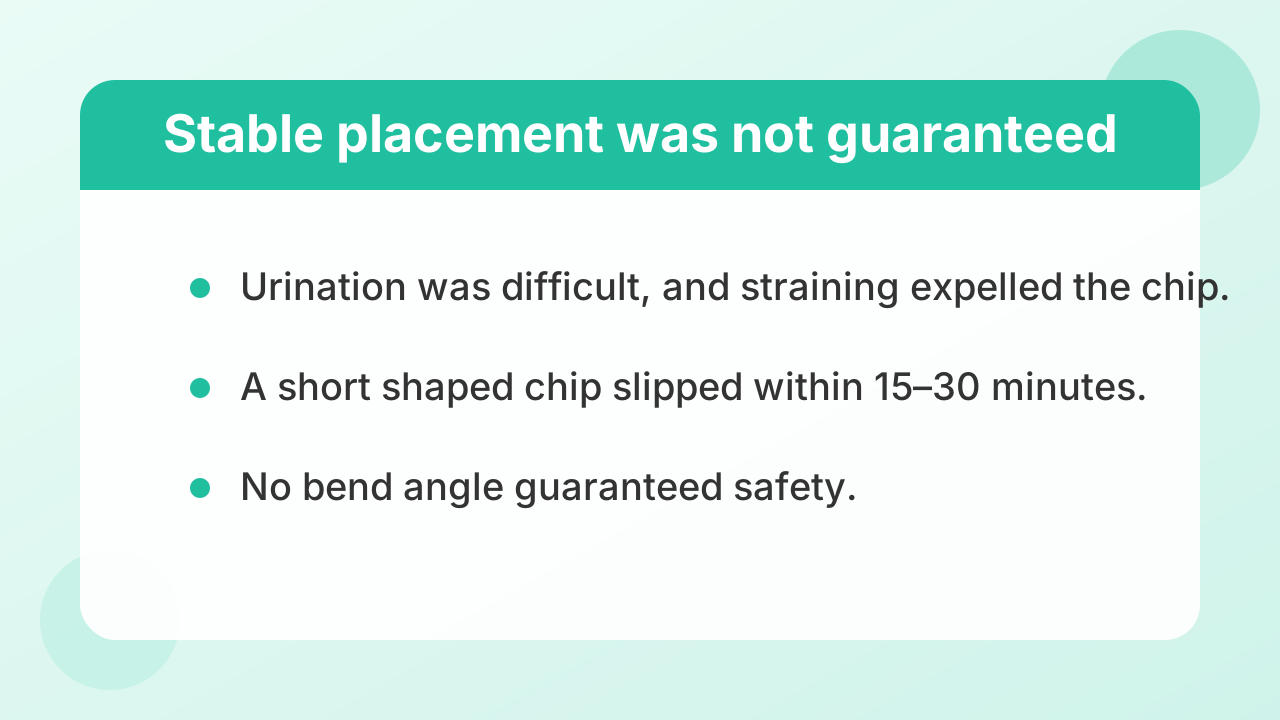
The questions concerned difficult urination, slipping, and whether prolonged placement could remain stable.
"Can a prostate chip make urination harder after one day?"
In an entry published in October 2019, a customer asked whether to ignore feeling incompletely emptied after 1 day with a short ceramic chip. Urination was difficult, and straining expelled the chip. Their single-chip resin screw model allowed what they described as normal urination.
That customer also reported breakage when the ceramic chip struck a toilet. Mr. Okada said that week's revised ceramics were stronger, while acknowledging limited impact testing. The diary does not record an answer to the incomplete-emptying question or subsequent improvement in urination.
(Source: ok-lab's diary, published October 2019)
https://ok-lab.hatenablog.com/entry/2019/10/05/141806
"Why does a prostate chip slip before prolonged wear begins?"
In an entry published in December 2020, a customer sought longer stimulation with a short shaped chip (Umiushi version 4). It slipped within 15–30 minutes, preventing the prolonged placement they wanted. Mr. Okada suspected that it was short of its intended position.
He proposed a second chip as a stopper against movement toward the bladder. His illustrated option was unfinished, so he instead suggested a custom paired-chip design. The diary does not record whether that customer obtained the alternative or experienced better stability.
(Source: ok-lab's diary, published December 2020)
https://ok-lab.hatenablog.com/entry/2020/12/05/130257
"Can a prostate chip stay stable for weeks without stoppers?"
In an entry published in December 2024, a reader asked about wire angles and an optional mesh stopper. Mr. Okada said a settled chipless device could maintain its position for 1 week or 2 weeks. He also claimed that satisfaction increased with continued wear.
However, he explicitly denied any guarantee against expulsion or movement into the bladder. He thought a mesh stopper could prevent inward movement but would compromise the device's gentle feel. His answer stressed that no bend angle guaranteed safety.
(Source: ok-lab's diary, published December 2024)
https://ok-lab.hatenablog.com/entry/2024/12/14/122948
Buying from outside Japan
OK Lab ships internationally to countries covered by Japan Post's EMS courier service. Overseas orders are paid in advance by PayPal. Each order carries a ¥400 (about $3 at ¥156 = $1, rate as of 2026-09-04) handling fee, and EMS shipping is charged on top. These terms come from OK Lab's official sales-terms page (written here as plain text, not a link: ok-lab.net/docs/law), checked on September 7, 2026; confirm them on the official store before you order, because they can change.
Summary of this article
| What you wanted to know | The answer |
|---|---|
| In short | Reported comfort sometimes improved; sensation, stability, and health concerns also changed. |
| About this product | OK Lab makes this urethral device in Japan and prices it in yen. |
| Key terms | The diary distinguishes the passage, gripping muscle, movement-limiting parts, and flexible wire designs. |
| What happens | Dated accounts include sleep disruption, painful junctions, slipping, and interrupted prototype tests. |
| The maker's answer | Mr. Okada discussed shape and contact points, with reservations about fit and stability. |
| Changes over time | Later flexible designs introduced different placement and breakage questions. |
| Related products | The table identifies listed solid-chip models and their tax-inclusive prices. |
| Common worries | Replies did not establish a guaranteed stable or safe duration. |
| Buying from outside Japan | The stated terms use EMS delivery, advance PayPal payment, and additional charges. |
Source: ok-lab's diary (Okada Comfortable Life Laboratory). The original entries are in Japanese; quotations on this page are translated. Photos and videos are on the original entries.
This article is a summary of the maker's development diary. The product is not a medical device and no result is guaranteed. If anything feels wrong or worries you, see a doctor. Prices, specifications and cautions change, so confirm the latest information on the official blog and the official site. Questions about ordering and shipping go to the seller.