![What should I check before using the chip? | Cleaning cannot rule out damage [OK Prostate Chip]](/img/a/T0091/eyecatch.svg)
This page is based on entries from "ok-lab's diary" (https://ok-lab.hatenablog.com/), the Japanese development diary written by Mr. Okada, founder of OK Lab, a small company in Japan (Okada Comfortable Life Laboratory). Only the entries about "pre-use inspection, cleaning, and personal limits" are summarized here, in order of publication. Past prices and sizes are as written at the time. Current prices come from the official product list (retrieved September 4, 2026). Quotations are translated from Japanese.
Note: This page is a personal reading log by someone with no connection to the maker or the seller. It reflects the source entries as of their publication dates and makes no guarantee of accuracy or safety. The product is not a medical device; talk to a doctor about any health decision. Check the official site for current information. This page contains advertising.
In short
Cleaning and a normal-looking surface did not prevent every reported breakage.
Mr. Okada emphasizes damage checks, hygiene, thread condition, and limits on force.
Related glass and ceramic models appear on the current list; historical reports do not confirm today's size options.
If you see blood in your urine, even a small amount or for the first time, do not wait and see. See a urologist right away. If you suddenly cannot urinate, or the device cannot be removed, do not try to fix it yourself. Go to a medical facility, including emergency care, immediately.
About this product
The OK Prostate Chip is a small device that is placed in the urethra (the urine passage) so that it acts on the prostate; the maker sells it in several shapes, sizes and materials. It is made and sold by OK Lab (Okada Comfortable Life Laboratory), a small company in Japan, through its own online store, and prices are in Japanese yen (JPY).
The maker's development diary, "ok-lab's diary", is written in Japanese. This page is an English summary of it, and every quotation is translated.
OK Lab ships internationally, so readers outside Japan can order (see "Buying from outside Japan" below). Product names on this page are plain-English descriptions. The official Japanese product name is shown once in the product table so you can find the same item in the store.
Before you read: key terms
| Term | Plain-English meaning |
|---|---|
| Urethra | The urine passage, where the chip is placed to act on the prostate. |
| Retrieval thread | A line attached to the chip, intended to help bring it out. |
| Lubricant | Lotion discussed for reducing friction; the maker also raises concerns about contamination. |
| Epoxy resin | Material used to form attachments and cover connections; the diary discusses cracking and sharp projections. |
| Nitrile gloves | Hand coverings named in the manual as an option for clean handling. |
| Endoscopic removal | A hospital procedure reported for retrieving retained chips; the diary describes clinicians using viewing instruments. |
| General anesthesia | Part of the hospital care reported alongside removal. The diary does not explain this. |
| Electrode | An electrical contact on a chip, used for electrical stimulation. |
| Tail-specific screw attachment | An add-on for the chip's tail. The diary does not explain this. |
What happens: chip cleaning and safety checks
The OK Prostate Chip is a small device placed in the urethra (the urine passage) to act on the prostate. Pre-use inspection concerns its surface, attached thread, and connecting parts that may enter the body. Cleaning concerns the device, hands, and urethral opening; Mr. Okada also raises contamination from lubricant (lotion intended to reduce friction). Customers' personal limits concern when, where, or how long they use the chip.
Thread inspection mattered when retrieval lines tangled around their connection
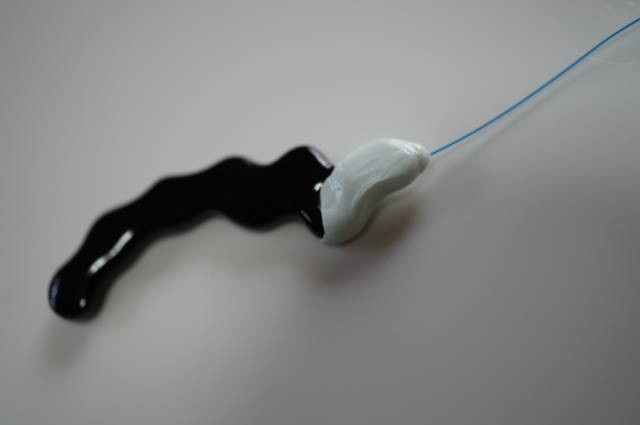
In an entry published in March 2018, Mr. Okada discussed a retrieval thread (the line intended to help bring the chip out). The concern involved the long line catching backward around the shorter connection between linked chips. He explained that this could change where pulling force acted and make retrieval difficult.
Mr. Okada's concern included tangles already present before insertion. He advised visual inspection of the thread arrangement before use.
(Source: ok-lab's diary, published March 2018)
https://ok-lab.hatenablog.com/entry/20180312/1520844839
Chip safety reports included hospital removal after a stopper failure
In an entry published in January 2019, a customer described a strongly curved chip with sections over 10 mm. Following a stopper problem, it entered the bladder and required endoscopic removal (a hospital procedure to retrieve the device). Mr. Okada apologized and reported that its attached thread helped the clinician retrieve it.
No matching product can be confirmed on the current list. Mr. Okada emphasized the importance of a retrieval thread remaining accessible outside the body.
(Source: ok-lab's diary, published January 2019)
https://ok-lab.hatenablog.com/entry/2019/01/26/152042
Glass chip inspection failed to prevent breakage during the second use
In an entry published in January 2019, a customer requested a plain glass replacement after a semi-long twisted glass chip broke internally. Mr. Okada apologized; the customer reported widespread damage to the bladder lining. In the confirmed February 2019 follow-up, the customer reported breakage on the second use, despite finding no cracks and using thorough alcohol disinfection.
The later examination found no retained fragment, although the customer never recovered the broken tip. The diary does not record whether the replacement request was completed. Mr. Okada warned that glass breakage could not be ruled out and advised against use if that risk was unacceptable.
(Source: ok-lab's diary, published January 2019)
https://ok-lab.hatenablog.com/entry/2019/01/26/152042
(Source: ok-lab's diary, published February 2019)
https://ok-lab.hatenablog.com/entry/2019/02/02/153358
Thread inspection exposed sharp resin and prompted protective rubber covers
In an entry published in August 2020, a customer reported a sharp resin projection on the thread of a sea-slug-shaped version 4 chip. The customer found the projection before insertion and said it felt sharp against a finger. Mr. Okada acknowledged difficulty finishing the narrow connection and announced protective rubber covers there.
He extended that change to chips with two threads after related complaints. No matching product can be confirmed on the current list. His response favored covering the connection to address the sharpness customers had reported.
(Source: ok-lab's diary, published August 2020)
https://ok-lab.hatenablog.com/entry/2020/08/08/130037
Personal safety limits followed hospital treatment costing ¥110,000 (about $704 at ¥156 = $1, rate as of 2026-09-04) with insurance
In an entry published in June 2024, a customer answered staff questions about hospital removal of an L-size device after its thread broke. The customer reported endoscopic removal under general anesthesia (not explained in the diary). The stay lasted 2 nights and 3 days, with a cost of ¥110,000 (about $704 at ¥156 = $1, rate as of 2026-09-04) after insurance.
The customer suspected forceful use had damaged the thread over about 30 uses. Afterward, the customer planned stricter size limits; Mr. Okada acknowledged that OK Lab could not judge which hospital treatment was correct. He advised considering the doctor's explanation when deciding about treatment.
(Source: ok-lab's diary, published June 2024)
https://ok-lab.hatenablog.com/entry/2024/06/01/123036
Ceramic chip inspection revealed breakage after bubbles appeared during cleaning
In an entry published in September 2025, a customer reported bubbles from a short twisted ceramic chip during boiling. The chip then separated inside its resin-covered thread connection during inspection. The customer reported about 4 months of use and roughly 10 uses.
Mr. Okada suspected air was escaping from a break hidden under resin. He acknowledged that resin-covered ceramic could break, contrary to his earlier expectation. Mr. Okada regarded unexpected bubbles as useful evidence during chip safety checks.
(Source: ok-lab's diary, published September 2025)
https://ok-lab.hatenablog.com/entry/2025/09/20/122912
The maker's answer to chip cleaning and safety checks
Mr. Okada's replies address cleanliness, hidden damage, thread condition, and excessive force as separate concerns.
Chip cleaning advice extended beyond device surfaces to surrounding contact points
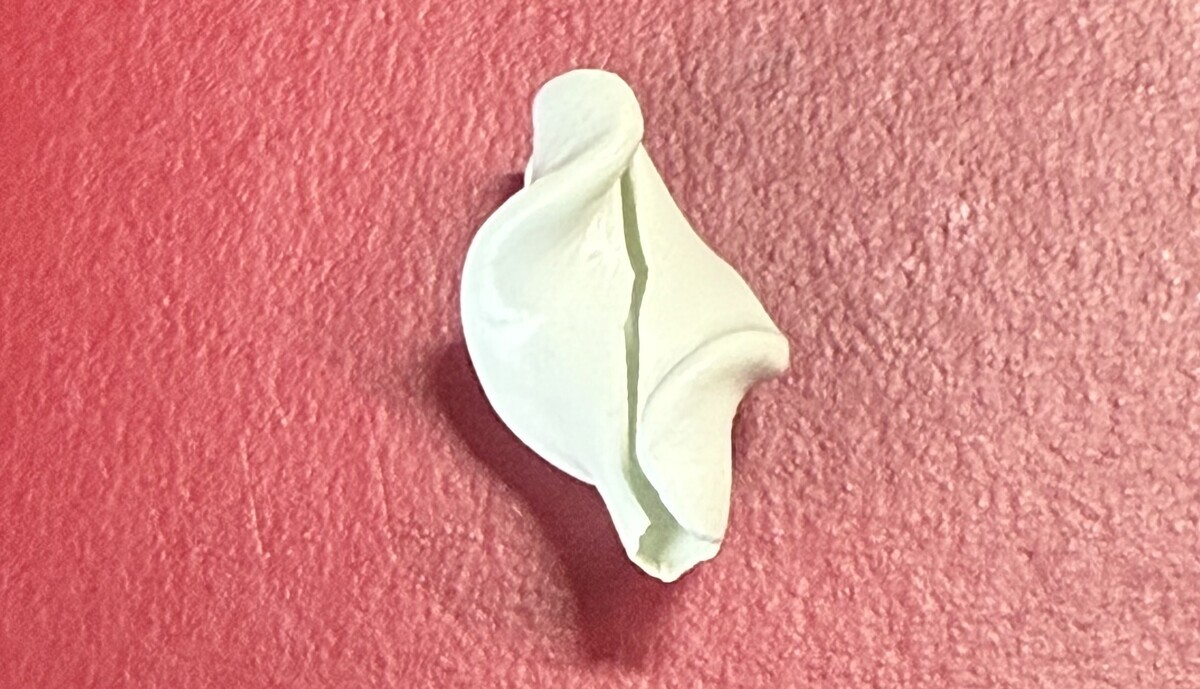
In an entry published in October 2017, Mr. Okada addressed hygiene around the urethral opening before insertion and after urination. He discussed damp tissues or napkins in that context.
Another October 2017 entry described his nearly daily personal testing for almost 1 year, using water washing without reported bladder or prostate inflammation. He explicitly said that experience offered no guarantee for anyone else. Mr. Okada urged attention to cleanliness and considered alcohol disinfection cleaner than water washing alone.
(Source: ok-lab's diary, published October 2017)
https://ok-lab.hatenablog.com/entry/20171017/1508206021
(Source: ok-lab's diary, published October 2017)
https://ok-lab.hatenablog.com/entry/20171026/1508989298
Pre-use inspection advice rejected damaged chips despite apparently minor scratches
In an entry published in October 2017, Mr. Okada warned that fingers could miss tiny scratches. He considered lips and tongue more sensitive to such flaws. His concern was damage that might seem insignificant during an ordinary check.
He also wrote that discomfort could become apparent after friction had already occurred. Mr. Okada advised against using a chip with even a small scratch.
(Source: ok-lab's diary, published October 2017)
https://ok-lab.hatenablog.com/entry/20171019/1508375473
Written chip safety checks added thread strength alongside hand hygiene
In an entry published in July 2021, Mr. Okada presented a draft manual combining device checks with hygiene. It covered scratches, dirt, and the retrieval thread's resistance to breaking. Its hygiene topics included the urethral opening, clean cloths, running water, urination, washed hands, and fresh nitrile gloves (hand coverings).
The manual covered hot-water or chemical disinfection, while warning that sterilization equipment could shrink the thread. Mr. Okada also raised possible contamination from lubricant and favored disposable or contact-free supplies. The manual advised against user repairs and modifications.
(Source: ok-lab's diary, published July 2021)
https://ok-lab.hatenablog.com/entry/2021/07/24/125923
Personal safety rules failed to prevent another reported chip entanglement
In an entry published in September 2022, a customer described personal rules adopted after an earlier hospital incident involving linked chips. The customer did not know whether those rules were effective. A later episode still involved overlapping chips that remained stuck for several hours; the customer reported release after 3 hours.
Mr. Okada accepted the customer's clarification that the earlier problem involved overlapping chips, rather than a reversed chip. He wrote that forcing inward or outward movement through a dry urethra would cause damage. His advice cautioned against force when dryness or resistance made movement difficult.
(Source: ok-lab's diary, published September 2022)
https://ok-lab.hatenablog.com/entry/2022/09/17/123057
Attachment inspection gained urgency after a cracked screw piece remained inside
In an entry published in June 2025, a cracked tail-specific screw attachment remained inside after the customer's main chip came out. The customer reported blood in the urine and passage of the detached piece after 2–3 hours. Checks of other attachments bought around the same time found similar cracks.
Mr. Okada suspected separation along joined layers of epoxy resin (the hardened material used to form the attachment). No matching product can be confirmed on the current list. He requested pre-use inspection and cautioned that epoxy could break under strong pressure.
(Source: ok-lab's diary, published June 2025)
https://ok-lab.hatenablog.com/entry/2025/06/07/122954
If you see blood in your urine, even a small amount or for the first time, do not wait and see. See a urologist right away. If you suddenly cannot urinate, or the device cannot be removed, do not try to fix it yourself. Go to a medical facility, including emergency care, immediately.
How chip cleaning and safety checks changed over time
| Published | What the diary said then |
|---|---|
| Oct 2017 | Tiny surface scratches prompted advice against use. |
| Mar 2018 | Backward thread tangles became an explicit pre-use concern. |
| Feb 2019 | A follow-up confirmed breakage despite inspection and alcohol disinfection. |
| Nov 2019 | A customer reported sleep disruption and adopted a break from prolonged use. |
| Jan 2020 | A customer limited use to home after finding driving distracting. |
| Aug 2020 | Sharp thread connections prompted protective rubber covers. |
| Jul 2021 | A draft manual combined damage checks, thread condition, and hygiene. |
| Sep 2021 | Accidental dry heating damaged thread, resin, and glass. |
| Sep 2025 | Bubbles drew attention to a break concealed by resin. |
| Nov 2025 | Exposed electrode edges were identified as manufacturing defects requiring return. |
OK Prostate Chip products related to chip cleaning and safety checks
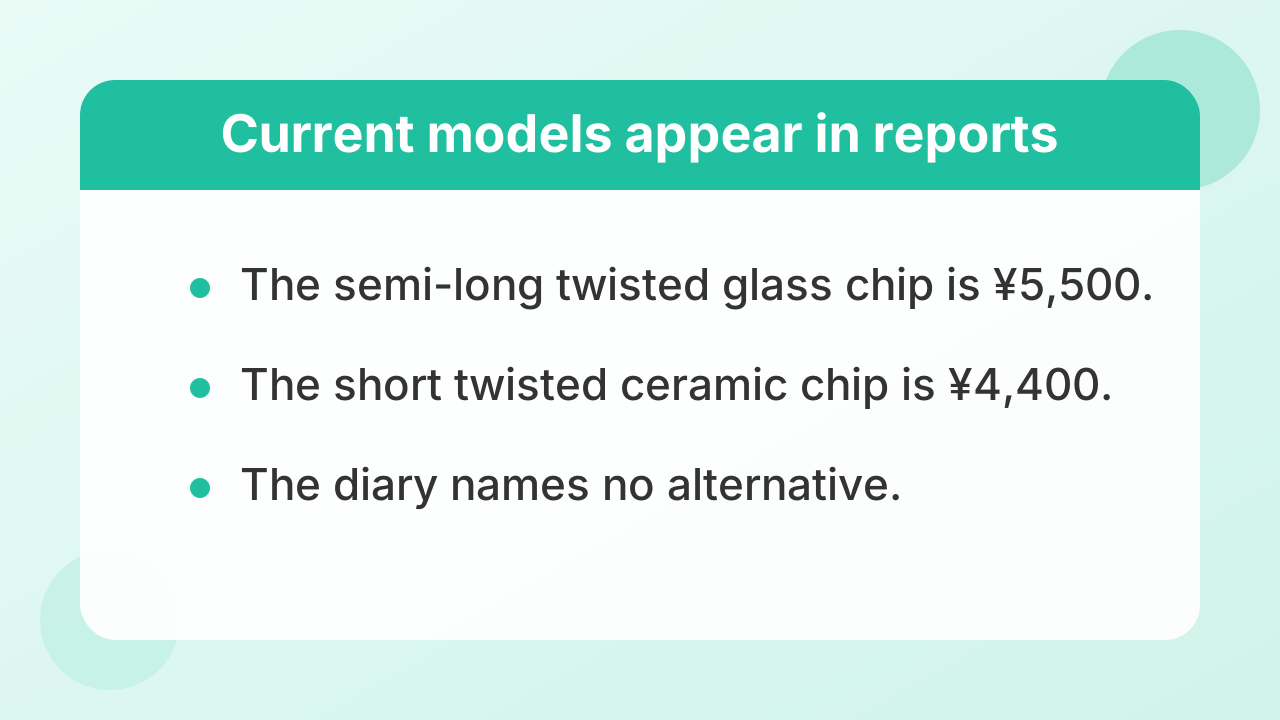
Current glass and ceramic models appear in these reports; no specific current alternative is named.
Products that appear in these entries
| Product (official name) | Price incl. tax | Relation to this topic |
|---|---|---|
| Semi-long twisted glass chip (OKプロステートチップ ガラス素材セミロングタイプ コブラツイスト) | ¥5,500 (about $35 at ¥156 = $1, rate as of 2026-09-04) | January and February 2019 entries describe internal breakage and subsequent bladder-lining injury involving this model. |
| Short twisted ceramic chip (OKプロステートチップ 陶器素材ショートタイプ ツイスト) | ¥4,400 (about $28 at ¥156 = $1, rate as of 2026-09-04) | A September 2025 customer reported bubbles during cleaning and breakage within the covered thread connection. |
(Source: ok-lab's diary, published January 2019)
https://ok-lab.hatenablog.com/entry/2019/01/26/152042
(Source: ok-lab's diary, published February 2019)
https://ok-lab.hatenablog.com/entry/2019/02/02/153358
(Source: ok-lab's diary, published September 2025)
https://ok-lab.hatenablog.com/entry/2025/09/20/122912
Products the diary mentioned as alternatives
The diary names no alternative.
Common worries about chip cleaning and safety checks
Customer questions distinguish surface concerns, heat damage, and possible manufacturing defects.
"Does a rough ceramic surface fail pre-use inspection?"

In an entry published in October 2019, a customer questioned rough edges on a custom short ceramic chip. Earlier breakage during inspection had made the customer reluctant to use it. Mr. Okada considered its coating intact and said corners could feel rougher than flat faces.
No matching product can be confirmed on the current list. The diary does not record whether the customer returned it. Mr. Okada offered a return and refund if the customer remained concerned.
(Source: ok-lab's diary, published October 2019)
https://ok-lab.hatenablog.com/entry/2019/10/05/141806
"Can chip cleaning damage make thread replacement insufficient?"
In an entry published in September 2021, a customer asked whether thread replacement could save a glass chip after boiling went wrong. At least 10 minutes of dry heating left the thread degraded and the resin discolored. Staff initially quoted ¥1,100 (about $7 at ¥156 = $1, rate as of 2026-09-04) for thread replacement plus a ¥400 (about $3 at ¥156 = $1, rate as of 2026-09-04) handling fee, with the price depending on attached options.
A follow-up then reported cracked glass, so thread replacement was no longer possible. The diary does not record whether the customer obtained another device. Staff advised against using thread altered by heat.
(Source: ok-lab's diary, published September 2021)
https://ok-lab.hatenablog.com/entry/2021/09/18/130132
"Does a prickly electrode fail pre-use inspection without symptoms?"
In an entry published in November 2025, a customer questioned a prickly spot between an electrode (an electrical contact) and resin. Staff identified an exposed aluminum cut edge as a manufacturing error. The customer reported 2 uses without pain or bleeding, but remained unsure whether a cut edge was exposed.
Mr. Okada described 2 earlier exposed-edge reports and said those areas now received thicker resin. No matching product can be confirmed on the current list. He advised contacting OK Lab about suspected exposed edges, while staff requested return if the aluminum cut surface was exposed.
(Source: ok-lab's diary, published November 2025)
https://ok-lab.hatenablog.com/entry/2025/11/15/122921
Buying from outside Japan
OK Lab ships internationally to countries covered by Japan Post's EMS courier service. Overseas orders are paid in advance by PayPal. Each order carries a ¥400 (about $3 at ¥156 = $1, rate as of 2026-09-04) handling fee, and EMS shipping is charged on top. These terms come from OK Lab's official sales-terms page (written here as plain text, not a link: ok-lab.net/docs/law), checked on September 7, 2026; confirm them on the official store before you order, because they can change.
Summary of this article
| What you wanted to know | The answer |
|---|---|
| In short | Cleaning and inspection did not prevent every reported accident. |
| About this product | OK Lab makes this urethral device in Japan and prices it in JPY. |
| Key terms | The thread, connecting materials, and electrical contacts each feature in different reports. |
| What happens | Reports include hidden cracks, sharp connections, internal breakage, and hospital removal. |
| The maker's answer | Mr. Okada emphasizes cleanliness, damage checks, sound connections, and avoiding force. |
| Changes over time | Later entries added written checks, protective covers, and attention to concealed defects. |
| Related products | Listed glass and ceramic models appear in accident reports; appearance is not a recommendation. |
| Common worries | Roughness, heat damage, and exposed aluminum received different replies. |
| Buying outside Japan | The stated terms use PayPal, EMS shipping, and a ¥400 (about $3 at ¥156 = $1, rate as of 2026-09-04) handling fee. |
Source: ok-lab's diary (Okada Comfortable Life Laboratory). The original entries are in Japanese; quotations on this page are translated. Photos and videos are on the original entries.
This article is a summary of the maker's development diary. The product is not a medical device and no result is guaranteed. If anything feels wrong or worries you, see a doctor. Prices, specifications and cautions change, so confirm the latest information on the official blog and the official site. Questions about ordering and shipping go to the seller.