![My chip won't go in | The maker links resistance to dryness [OK Prostate Chip]](/img/a/T0069/eyecatch.svg)
This page is based on entries from "ok-lab's diary" (https://ok-lab.hatenablog.com/), the Japanese development diary written by Mr. Okada, founder of OK Lab, a small company in Japan (Okada Comfortable Life Laboratory). Only the entries about "prostate chip insertion problems linked to low lubrication" are summarized here, in order of publication. Past prices and sizes are as written at the time. Current prices come from the official product list (retrieved September 4, 2026). Quotations are translated from Japanese.
Note: This page is a personal reading log by someone with no connection to the maker or the seller. It reflects the source entries as of their publication dates and makes no guarantee of accuracy or safety. The product is not a medical device; talk to a doctor about any health decision. Check the official site for current information. This page contains advertising.
In short
- Mr. Okada links insertion problems to dryness, while acknowledging other possible causes.
- His recurring answer is lubrication and avoiding force when resistance increases.
- By April 2026, he reported that purchased gel helped repeated prototype testing.
If you see blood in your urine, even a small amount or for the first time, do not wait and see. See a urologist right away.
If you suddenly cannot urinate, or the device cannot be removed, do not try to fix it yourself. Go to a medical facility, including emergency care, immediately.
About this product
The OK Prostate Chip is a small device that is placed in the urethra (the urine passage) so that it acts on the prostate; the maker sells it in several shapes, sizes and materials. It is made and sold by OK Lab (Okada Comfortable Life Laboratory), a small company in Japan, through its own online store, and prices are in Japanese yen (JPY). The maker's development diary, "ok-lab's diary", is written in Japanese. This page is an English summary of it, and every quotation is translated. OK Lab ships internationally, so readers outside Japan can order (see "Buying from outside Japan" below). Product names on this page are plain-English descriptions. The official Japanese product name is shown once in the product table so you can find the same item in the store.
Before you read: key terms
| Term | Plain-English meaning |
|---|---|
| Urethra | The urine passage; the chip occupies this passage to act on the prostate. |
| Prostate | The body part targeted for stimulation. The diary does not explain this. |
| Lubrication | Moisture or added liquid discussed as reducing friction between the device and surrounding lining. |
| Mucosa | The lining contacted by the chip. The diary does not explain this. |
| Sphincter | A muscle that opens during urination; the diary discusses its role in holding or releasing the chip. |
| Bulbar urethra | A section before the sphincter where displaced chips can rest. The diary does not explain this. |
| Support cable | A cord intended to transmit pushing force to the chip. |
| Stopper | An additional part intended to help hold the chip in place. |
| Pessary-style support cord | An older cord for supporting chip movement. The diary does not explain this. |
| Double-tube tail | Nested silicone tubes supporting the chip connection; proposed to resist folding more than the earlier tail. |
What happens: prostate chip insertion problems
The OK Prostate Chip is a small device placed inside the urethra to stimulate the prostate. Here, lubrication means the moisture or added liquid between the chip and the urethra's lining. The diary links that moisture to lower friction along the passage and near the sphincter (a muscle that opens during urination). Mr. Okada describes resistance changing with both the material and the conditions inside the urethra.
Mr. Okada linked low lubrication to resistance after 5 cm
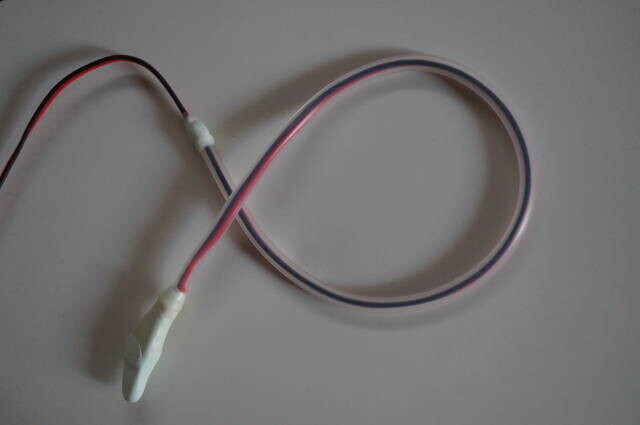
In an entry published in October 2017, Mr. Okada explained why a small chip could lose lubricant before reaching its intended position. He described chips about 25 mm long slowing after 5 cm because, in his view, the lining had absorbed nearly all their lubricant.
His silicone and resin trials had also disappointed him during longer placement, while he reported smoother movement with glass after urination. Mr. Okada nevertheless cautioned that glass could break and that complete safety was impossible.
(Source: ok-lab's diary, published October 2017)
https://ok-lab.hatenablog.com/entry/20171005/1507210406
A linked resin pair changed Mr. Okada's low lubrication trial results
In an entry published in January 2018, Mr. Okada described earlier resin trials failing in dry conditions. A linked pair, comprising two connected resin chips, progressed without added lubricant in his own test, prompting a launch decision. Its gap was limited to 2 mm.
The proposed price was ¥4,000 (about $26 at ¥156 = $1, rate as of 2026-09-04) excluding tax: two ¥1,000 (about $6 at ¥156 = $1, rate as of 2026-09-04) resin chips and two ¥1,000 (about $6 at ¥156 = $1, rate as of 2026-09-04) thread connections. Mr. Okada recommended resin for shorter use when customers were concerned about glass breakage.
(Source: ok-lab's diary, published January 2018)
https://ok-lab.hatenablog.com/entry/20180121/1516504265
A chip stuck inside required hospital removal and prompted longer designs
In an entry published in March 2018, an anonymous customer reported that a linked pair became stuck and required hospital removal. Mr. Okada could not establish exactly what happened from the report.
He suspected reversal of a chip and changed the planned leading-chip length from 25–28 mm to at least 30 mm. His diagrams explored possible mechanisms; they did not document the customer's actual device position. Mr. Okada cautioned that even 30 mm might still allow reversal in some people.
(Source: ok-lab's diary, published March 2018)
https://ok-lab.hatenablog.com/entry/20180310/1520672565
Low lubrication remained Mr. Okada's concern even after urination
In an entry published in May 2021, a customer reported bleeding after repeatedly repositioning a fourth-version sea-slug-shaped chip. Mr. Okada considered several explanations, including friction or tissue caught between parts, without confirming a cause.
Describing his own experience, he suspected dry areas could create strong resistance even after urination. The diary does not record a clinical assessment of the customer's bleeding. Mr. Okada cautioned that forcing movement because a chip had fitted before could cause bleeding.
(Source: ok-lab's diary, published May 2021)
https://ok-lab.hatenablog.com/entry/2021/05/29/125928
Mr. Okada linked dry urethra resistance to damaged supporting wires
In an entry published in July 2022, a customer reported pain and exposed wire in a 4-wire support cable (a cord transmitting pushing force). The customer had stopped using it and asked about replacement.
Mr. Okada thought force against a chip stalled in a dry urethra could buckle the wire and lead to exposure or breakage. He said the wire itself could not be repaired, although replacement of the assembly was possible.
The diary does not record whether that replacement was completed. Mr. Okada advised against force when the body was not accepting further movement.
(Source: ok-lab's diary, published July 2022)
https://ok-lab.hatenablog.com/entry/2022/07/09/123142
A silicone-covered cable still faced low lubrication problems after earlier discontinuations
In an entry published in October 2023, Mr. Okada said 4-wire, 6-wire and pessary-style support cords had been discontinued because of durability problems. Only the jointed 2-wire design continued from that group.
He introduced a silicone-covered parallel cable: a supporting cord enclosed in tubing. He reported complete sticking against dry mucosa (the urethral lining), but easy movement when both tube and urethra were moist.
The supplement was ¥2,000 (about $13 at ¥156 = $1, rate as of 2026-09-04) excluding tax, with tubing up to 25 cm and total length no more than 40 cm. Mr. Okada's advice emphasized moisture at both contacting surfaces.
(Source: ok-lab's diary, published October 2023)
https://ok-lab.hatenablog.com/entry/2023/10/14/122718
Repeated tests brought chip sticking problems into Mr. Okada's removal research
In an entry published in March 2024, Mr. Okada reported removal difficulties during repeated comparisons of multiple chips. He attributed the change to the urethra drying during frequent trials, even when the chip shape stayed the same.
He also thought worry and stress could worsen the loss of moisture. Mr. Okada cautioned that panic about a chip not coming out could compound the difficulty.
(Source: ok-lab's diary, published March 2024)
https://ok-lab.hatenablog.com/entry/2024/03/02/123027
A double-tube tail addressed stiffness without eliminating dry urethra insertion problems
In an entry published in June 2024, a customer asked for a push-capable attachment for a wire-supported chip. Staff first said the existing tail lacked sufficient stiffness; the customer then asked about other options.
Mr. Okada developed a double-tube tail (nested silicone tubes supporting the chip connection) and reported greater resistance to folding. The published supplement was ¥3,000 (about $19 at ¥156 = $1, rate as of 2026-09-04) excluding tax up to 15 cm, or ¥4,500 (about $29 at ¥156 = $1, rate as of 2026-09-04) excluding tax up to 25 cm.
The diary does not record the customer's experience with this attachment. Mr. Okada cautioned that a dry urethra could still prevent progress.
(Source: ok-lab's diary, published June 2024)
https://ok-lab.hatenablog.com/entry/2024/06/01/123036
The maker's answer to prostate chip insertion problems
The diary's measures focus on lubrication and material differences, with limits that became clearer during later testing.
For low lubrication, Mr. Okada distinguished resin from glass
In an entry published in October 2017, a staff beginner described failing to advance even 5 mm during an initial attempt. The account then described easier progress with added lubricant.
Mr. Okada's accompanying reply considered lubricant safer for resin in dry conditions and residual rinse water a possible substitute for glass. His advice distinguished the materials and rested on his own experience.
(Source: ok-lab's diary, published October 2017)
https://ok-lab.hatenablog.com/entry/20171019/1508375473
A lubrication prototype for chip sticking remained an experimental offer
In an entry published in March 2024, Mr. Okada described a prototype intended to carry liquid deeper into the urethra. Its main tube measured 4 mm outside and 2 mm inside.
He offered a 4 mm tube section up to 25 cm for ¥500 (about $3 at ¥156 = $1, rate as of 2026-09-04) excluding tax, as published that month. Mr. Okada explicitly stopped short of recommending this experimental device.
(Source: ok-lab's diary, published March 2024)
https://ok-lab.hatenablog.com/entry/2024/03/09/122635
By April 2026, purchased gel changed Mr. Okada's low lubrication tests
In an entry published in April 2026, Mr. Okada reported buying gel during work on a retrieval-tool prototype. He said relying on his own secretions had led to increasing friction until repeated tests became impossible.
With the purchased gel, he reported being able to repeat his tests. The retrieval tool remained unfinished, and he had no reliable method for recovering a device that had entered the bladder. Mr. Okada still thought a thinner liquid might suit tubing better.
(Source: ok-lab's diary, published April 2026)
https://ok-lab.hatenablog.com/entry/2026/04/11/122913
If you see blood in your urine, even a small amount or for the first time, do not wait and see. See a urologist right away.
If you suddenly cannot urinate, or the device cannot be removed, do not try to fix it yourself. Go to a medical facility, including emergency care, immediately.
How prostate chip insertion problems changed over time
| Published | What the diary said then |
|---|---|
| Oct 2017 | Small chips reportedly lost lubricant before reaching their intended position. |
| Jan 2018 | A linked resin pair prompted a launch despite earlier dry-condition failures. |
| Mar 2018 | Hospital removal led to a longer leading chip. |
| May 2021 | A bleeding report prompted warnings about forcing movement despite resistance. |
| Jul 2022 | A damaged support cable exposed limits of wire reinforcement. |
| Oct 2023 | Durability problems ended older support cords; a silicone-covered cable appeared. |
| Mar 2024 | A liquid-delivery tube was offered as an experiment. |
| Jun 2024 | A double-tube attachment increased stiffness but retained a dryness limitation. |
| Apr 2025 | A beginner's worsening progress drew attention to repeated attempts and dryness. |
| Apr 2026 | Gel helped repeated tests; retrieval work remained unfinished. |
The diary does not say what the current state is.
OK Prostate Chip products related to prostate chip insertion problems
The current list includes glass and curved resin models from customers' difficulty reports.
Products that appear in these entries
| Product (official name) | Price incl. tax | Relation to this topic |
|---|---|---|
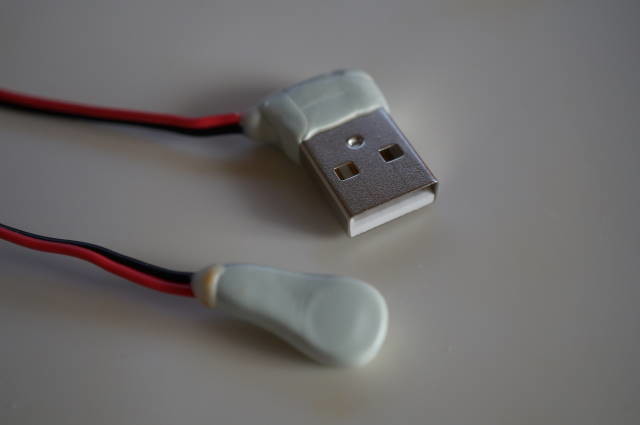
| Single glass chip (OKプロステートチップ ガラス素材1チップタイプ) | ¥3,300 (about $21 at ¥156 = $1, rate as of 2026-09-04) | In November 2019, its user asked about longer placement after displacement during urination. |
| Curved semi-long resin chip (OKプロステートチップ フラット面カーブ型 セミロングタイプ(生体適合樹脂)) | ¥6,050 (about $39 at ¥156 = $1, rate as of 2026-09-04) | In February 2022, its user reported sticking despite lubricant on the chip. |
(Source: ok-lab's diary, published November 2019)
https://ok-lab.hatenablog.com/entry/2019/11/09/132111
(Source: ok-lab's diary, published February 2022)
https://ok-lab.hatenablog.com/entry/2022/02/26/123231
Products the diary mentioned as alternatives
The diary names no alternative.
The exact historical linked-pair configurations and fourth-version sea-slug-shaped chip are discussed above. No matching product can be confirmed on the current list.
The silicone-covered cable, double-tube tail and liquid-delivery prototype are historical configurations. No matching product can be confirmed on the current list.
Common worries about prostate chip insertion problems
The replies identify possible explanations without establishing why any individual reader's chip has stopped.
"Why won't my chip go in again after urination?"
In an entry published in November 2019, a customer wanted longer placement after a single glass chip came out during urination. Mr. Okada explained that displacement could happen with any chip and that dryness could make return difficult.
His reply discussed the bulbar urethra (the section before the sphincter) as the temporary location of a displaced chip. The diary does not record which replacement the customer chose. Mr. Okada advised against forcing a return before moisture recovered.
(Source: ok-lab's diary, published November 2019)
https://ok-lab.hatenablog.com/entry/2019/11/09/132111
"Could low lubrication explain why my chip won't go in?"
In an entry published in February 2020, a customer asked whether forcing a chip that had stalled inside was a bad idea. Mr. Okada described insufficient lubrication as the most common explanation in his view, while acknowledging possible individual differences.
The diary does not record whether that customer's insertion problem was resolved. Mr. Okada recommended addressing lubrication and warned that forcing a chip against dry lining could cause bleeding.
(Source: ok-lab's diary, published February 2020)
https://ok-lab.hatenablog.com/entry/2020/02/29/155031
"Why won't my chip go in despite lubricant?"
In an entry published in February 2022, an older customer using a curved resin chip reported less natural secretion and sticking despite lubricant. The customer asked whether lubrication could reach further into the passage.
Mr. Okada's answer focused on moisture reaching beyond the chip's initially coated surface. The diary does not record whether this resolved the problem. His suggested approach centered on renewing lubrication, without recommending a different chip for this particular concern.
(Source: ok-lab's diary, published February 2022)
https://ok-lab.hatenablog.com/entry/2022/02/26/123231
"Can repeated attempts worsen prostate chip insertion problems?"
In an entry published in April 2025, a beginner said repeated attempts had made even earlier progress difficult. Mr. Okada linked this to drying during repeated attempts and suggested insufficient relaxation could contribute near the sphincter. He also considered the added stopper (a part intended to hold the chip in place) a possible obstacle.
The customer raised separate concerns about a hard area and a possible prostate problem. The diary does not record a later insertion result or medical assessment. Mr. Okada advised consulting a urologist about the suspected prostate problem.
(Source: ok-lab's diary, published April 2025)
https://ok-lab.hatenablog.com/entry/2025/04/26/122909
Buying from outside Japan
OK Lab ships internationally to countries covered by Japan Post's EMS courier service. Overseas orders are paid in advance by PayPal. Each order carries a ¥400 (about $3 at ¥156 = $1, rate as of 2026-09-04) handling fee, and EMS shipping is charged on top. These terms come from OK Lab's official sales-terms page (written here as plain text, not a link: ok-lab.net/docs/law), checked on September 7, 2026; confirm them on the official store before you order, because they can change.
Summary of this article
| What you wanted to know | The answer |
|---|---|
| What is the short answer? | Mr. Okada linked resistance to dryness and opposed force. |
| What is the product? | OK Lab's urethral device, made in Japan for prostate stimulation. |
| Which terms matter? | Lubrication, the urethra and the sphincter explain the locations discussed. |
| What happened in the diary? | Resistance, bleeding, wire damage and hospital removal were reported. |
| What measures did the maker discuss? | Lubrication, different materials and experimental attachments, all with limitations. |
| What changed over time? | Revised designs, discontinued cords and later testing with purchased gel. |
| Which current products appear? | The single glass and curved semi-long resin models. |
| What do the reader questions reveal? | Prior progress and added lubricant did not always prevent difficulty. |
| How does overseas buying work? | Advance PayPal payment, ¥400 (about $3 at ¥156 = $1, rate as of 2026-09-04) handling and additional EMS shipping. |
Source: ok-lab's diary (Okada Comfortable Life Laboratory). The original entries are in Japanese; quotations on this page are translated. Photos and videos are on the original entries.
This article is a summary of the maker's development diary. The product is not a medical device and no result is guaranteed. If anything feels wrong or worries you, see a doctor. Prices, specifications and cautions change, so confirm the latest information on the official blog and the official site. Questions about ordering and shipping go to the seller.