![Will a chip that goes in easily stay put? | The maker reports a trade-off [OK Prostate Chip]](/img/a/T0085/eyecatch.svg)
This page is based on entries from "ok-lab's diary" (https://ok-lab.hatenablog.com/), the Japanese development diary written by Mr. Okada, founder of OK Lab, a small company in Japan (Okada Comfortable Life Laboratory). Only the entries about "easy insertion versus staying in place" are summarized here, in order of publication. Past prices and sizes are as written at the time. Current prices come from the official product list (retrieved September 4, 2026). Quotations are translated from Japanese.
Note: This page is a personal reading log by someone with no connection to the maker or the seller. It reflects the source entries as of their publication dates and makes no guarantee of accuracy or safety. The product is not a medical device; talk to a doctor about any health decision. Check the official site for current information. This page contains advertising.
In short
- The maker reports that features resisting slipping can also make insertion or removal harder.
- His responses include flexible connections, protective covers, and warnings against excessive curvature.
- Current listings include supporting chips; later experiments still report trade-offs between easy movement and retention (staying in place).
If you see blood in your urine, even a small amount or for the first time, do not wait and see. See a urologist right away. If you suddenly cannot urinate, or the device cannot be removed, do not try to fix it yourself. Go to a medical facility, including emergency care, immediately.
About this product
The OK Prostate Chip is a small device that is placed in the urethra (the urine passage) so that it acts on the prostate; the maker sells it in several shapes, sizes and materials. It is made and sold by OK Lab (Okada Comfortable Life Laboratory), a small company in Japan, through its own online store, and prices are in Japanese yen (JPY). The maker's development diary, "ok-lab's diary", is written in Japanese. This page is an English summary of it, and every quotation is translated. OK Lab ships internationally, so readers outside Japan can order (see "Buying from outside Japan" below). Product names on this page are plain-English descriptions. The official Japanese product name is shown once in the product table so you can find the same item in the store.
Before you read: key terms
| Term | Plain-English meaning |
|---|---|
| Urethra (urine passage) | The passage carrying urine; the chip is placed within it. |
| Coil (spring-shaped part) | A shape tested as a chip, intended to grip and resist movement. |
| Retention (staying positioned) | How firmly a chip stays in place; intended to limit unwanted movement. |
| Friction (resistance to sliding) | Contact resistance between a device and tissue; discussed as providing grip while making movement harder. |
| Urinary sphincter (urine-controlling muscle) | A muscle discussed as controlling urine flow and holding parts of the device in position. |
| Retrieval thread (removal line) | Thread attached to the chip so it can be retrieved. |
| Auxiliary chip (additional supporting part) | An extra chip intended to help hold the main chip in position. |
| Fully internal (thread kept inside) | A configuration keeping the retrieval thread inside the body; the term describes thread placement, not guaranteed retention. |
| Resin (body or coating material) | Material used for chips and thread connections; its surface resistance was discussed as contributing to grip. |
| Joint (bendable connection) | A connection between parts, intended to let them change angle. |
What happens: prostate chip insertion and retention
The OK Prostate Chip is a device placed in the urethra (the urine passage) to act on the prostate. Here, retention means how well a chip stays at its intended position instead of moving during urination. The diary links this behavior to size, curves, surface friction, and connections between parts. Mr. Okada discusses designs held around the urinary sphincter, with some extending into the bladder.
Stronger curves can make a prostate chip hard to remove
In an entry published in April 2019, Mr. Okada linked stability to curvature and the size of the chip's base. He also warned that greater curvature could make a chip harder to recover after it entered the bladder. His preference was a relatively small tip, at most about 8 mm, rather than an enlarged bladder end.
(Source: ok-lab's diary, published April 2019)
https://ok-lab.hatenablog.com/entry/2019/04/20/144337
Chip slipping prompted questions about length, alongside warnings against extreme curves
In an entry published in May 2019, a customer wanted different curves because their curved chip kept slipping back. Mr. Okada could not identify the cause; he thought length might also matter.
He said the S size slipped in his own use because the prostate did not fit between its ends. The diary does not record the customer's comparison results. He cautioned that excessive curvature could make removal impossible.
(Source: ok-lab's diary, published May 2019)
https://ok-lab.hatenablog.com/entry/2019/05/25/144939
Force during chip insertion or removal was blamed for bleeding
In an entry published in January 2020, a customer reported pale pink bleeding after first use. The diary does not record whether the bleeding stopped or a doctor assessed it. Mr. Okada attributed the bleeding to force during insertion or removal.
(Source: ok-lab's diary, published January 2020)
https://ok-lab.hatenablog.com/entry/2020/01/18/132849
Coil friction made chip insertion painful and removal difficult
In an entry published in May 2020, Mr. Okada tested a coil about 9.5 mm in diameter. He reported severely painful insertion without lubricant and difficult removal because it dug into the tissue lining. A later prototype, about 7 mm in diameter, bent without stretching or compressing; he reported a better experience. He said further strength testing and improvements were planned.
(Source: ok-lab's diary, published May 2020)
https://ok-lab.hatenablog.com/entry/2020/05/16/131332
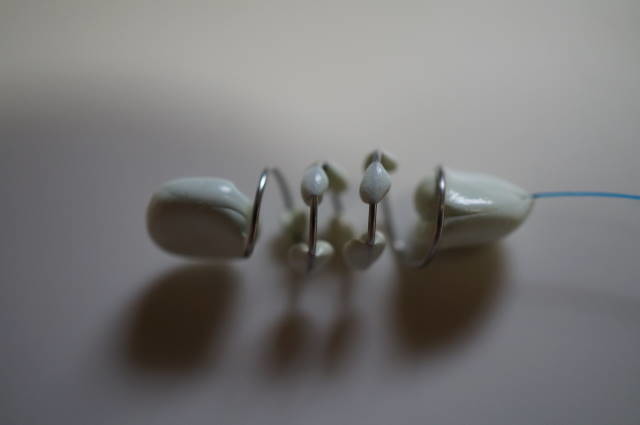
Fully internal construction did not guarantee reliable chip retention
In an entry published in March 2021, a customer found a fully internal steel-spring chip harder to insert than other materials. They warned that force could injure the urethra, yet the chip still came out during urination. Mr. Okada explained that fully internal meant its retrieval thread stayed inside the body. He cautioned that retention still depended on the leading chip and how slippery conditions were.
(Source: ok-lab's diary, published March 2021)
https://ok-lab.hatenablog.com/entry/2021/03/06/125456
Extreme curves raised concerns about a chip stuck inside the bladder
In an entry published in June 2023, Mr. Okada described a wire-core bead chip (Cool Beads) with adjustable curvature. At roughly 90 to 110 degrees in his tests, it barely moved during urination, but insertion became harder. He warned that an extremely curved chip entering the bladder might not come out through ordinary retrieval or urination. Mr. Okada warned that hospital treatment could then be necessary.
(Source: ok-lab's diary, published June 2023)
https://ok-lab.hatenablog.com/entry/2023/06/24/123110
Arrowhead designs made chip removal difficult despite comfortable placement
In an entry published in February 2024, Mr. Okada reported difficult bladder removal with arrowhead-shaped prototypes. He found them comfortable in position, but reported pain after difficult removal. He thought smaller, less curved tips would come out more easily, while also becoming easier to dislodge. Mr. Okada warned that the design could cause bleeding.
(Source: ok-lab's diary, published February 2024)
https://ok-lab.hatenablog.com/entry/2024/02/10/123023
The maker's answer to prostate chip insertion and retention
Mr. Okada explored flexible connections and protected contact points, while warning that stronger grip could complicate removal.
An unreliable friction anchor was withheld as a chip retention solution
In an entry published in May 2019, a customer asked to test an anchor-style prototype. Mr. Okada declined because he was not satisfied with its reliability. He said its friction-based grip failed when bodily fluid made conditions very slippery. His decision was to pause development.
(Source: ok-lab's diary, published May 2019)
https://ok-lab.hatenablog.com/entry/2019/05/25/144939
A revised design addressed cracking concerns without settling chip retention
In an entry published in January 2020, Mr. Okada announced a revised chip spanning the sphincter (Rei), intended to eliminate cracking concerns. He rated it easier to insert than the screw-shaped auxiliary chip, but thought the accessory held position better. He also said the screw accessory did not prevent inward migration. His advice was to choose according to the required function.
(Source: ok-lab's diary, published January 2020)
https://ok-lab.hatenablog.com/entry/2020/01/18/132849
Sharp thread connections prompted covers, beyond the chip retention problem
In an entry published in August 2020, a customer reported sharp resin at the thread connection on a sea-slug-shaped version 4 chip. He proposed rubber covers. After similar reports, he made covers standard in principle for version 4 and chips with 2 retrieval threads. He acknowledged neglecting earlier reports and committed to this change for future shipments.
(Source: ok-lab's diary, published August 2020)
https://ok-lab.hatenablog.com/entry/2020/08/08/130037
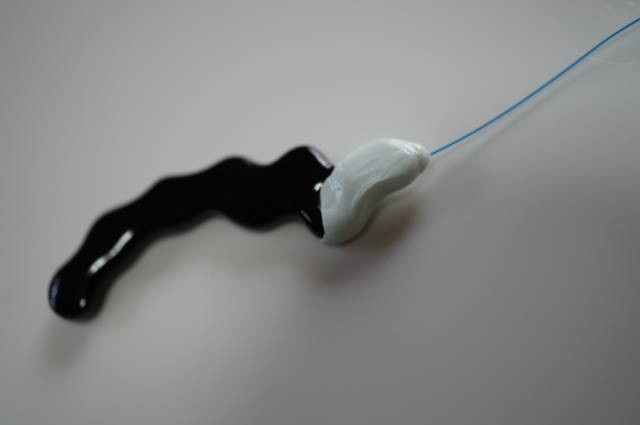
Thinner joint covers eased chip insertion and removal in later tests
In an entry published in February 2026, Mr. Okada introduced a more flexible jointed prototype after reports of difficult insertion and removal. Its thinner rubber covering allowed easier bending. He reported much easier placement and removal, with milder pressure and little change in retention. He proposed this version after customer feedback revealed difficulties absent from his own experience.
(Source: ok-lab's diary, published February 2026)
https://ok-lab.hatenablog.com/entry/2026/02/07/122919
If you see blood in your urine, even a small amount or for the first time, do not wait and see. See a urologist right away. If you suddenly cannot urinate, or the device cannot be removed, do not try to fix it yourself. Go to a medical facility, including emergency care, immediately.
How prostate chip insertion and retention changed over time
| Published | What the diary said then |
|---|---|
| Mar 2020 | Mr. Okada thought resin's poorer sliding made insertion harder but slipping less likely. |
| Nov 2020 | A 90-degree connection was offered for ¥1,000 (about $6 at ¥156 = $1, rate as of 2026-09-04) excluding tax. |
| Nov 2024 | A shaped-wire attachment cost the chip price plus ¥4,000 (about $26 at ¥156 = $1, rate as of 2026-09-04) excluding tax. |
| Nov 2025 | A jointed wire-and-nylon design reportedly combined easier insertion and removal with weaker retention. |
| Mar 2026 | A short SS jointed chip reportedly slipped more readily than the semi-long S version. |
The diary does not say what the current state is.
OK Prostate Chip products related to prostate chip insertion and retention
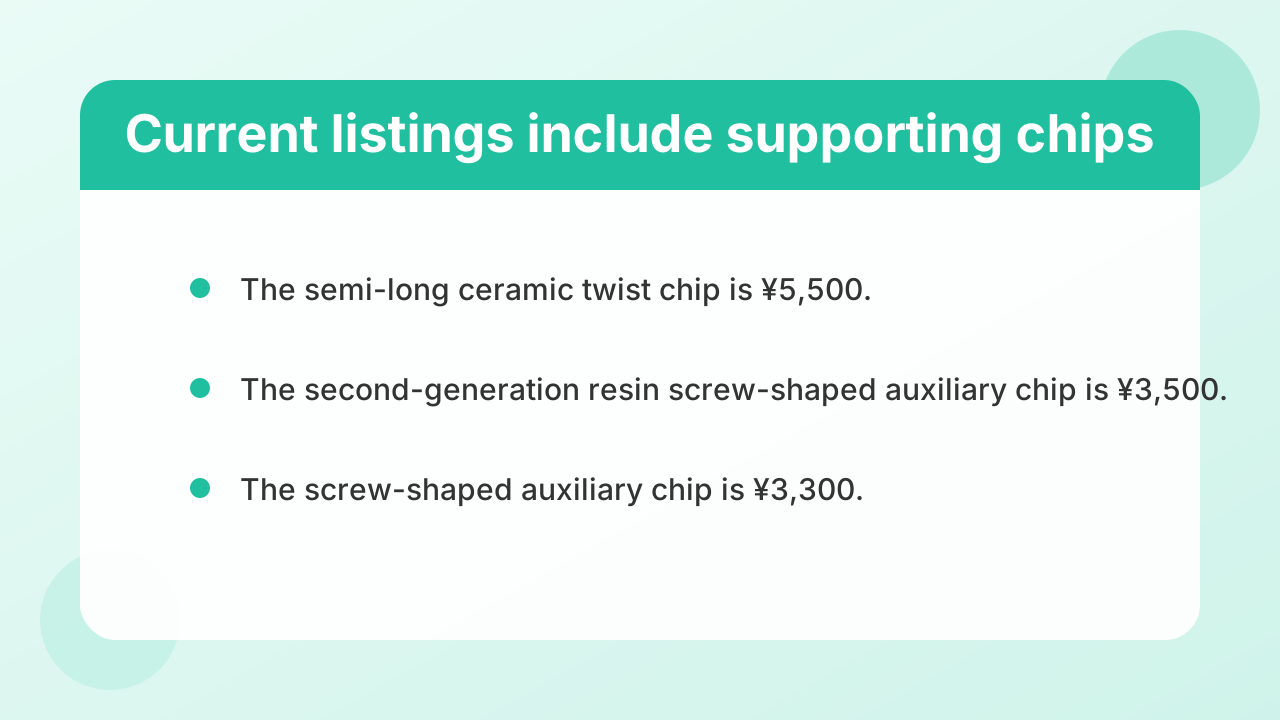
The current list includes a ceramic twist chip and screw-shaped accessories discussed in these entries.
Products that appear in these entries
| Product (official name) | Price incl. tax | Relation to this topic |
|---|---|---|
| Semi-long ceramic twist chip (OKプロステートチップ 陶器素材セミロングタイプ コブラツイスト) | ¥5,500 (about $35 at ¥156 = $1, rate as of 2026-09-04) | In June 2026, this was the requested main chip in a customer's questions about multiple auxiliary chips. |
| Second-generation resin screw-shaped auxiliary chip (スクリュー型補助チップ追加オプション(第二世代生体適合樹脂)) | ¥3,500 (about $22 at ¥156 = $1, rate as of 2026-09-04) | In June 2026, a customer asked whether several of these accessories would improve retention while making removal difficult. |
The second-generation resin screw-shaped auxiliary chip is listed in the company's own online store.

(Source: ok-lab's diary, published June 2026)
https://ok-lab.hatenablog.com/entry/2026/06/06/122905
Products the diary mentioned as alternatives
| Product (official name) | Price incl. tax | Relation to this topic |
|---|---|---|
| Screw-shaped auxiliary chip (スクリュー型補助チップ追加オプション) | ¥3,300 (about $21 at ¥156 = $1, rate as of 2026-09-04) | In March 2020, Mr. Okada favored this accessory over simply lengthening a rigid chip, because its connection could bend. |
The screw-shaped auxiliary chip is listed in the company's own online store.
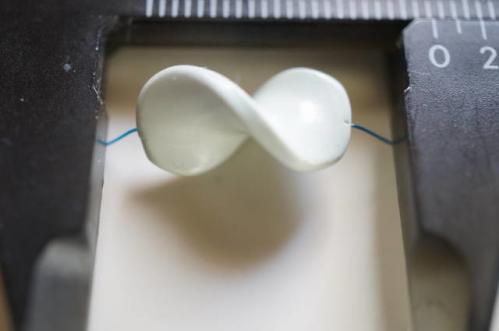
(Source: ok-lab's diary, published March 2020)
https://ok-lab.hatenablog.com/entry/2020/03/07/152901
Historical designs include Rei, Cool Beads, sea-slug-shaped version 4, the long hooked-rear build, and spring, arrowhead, jointed, or wire-loop prototypes.
An entry published in January 2026 recalls the discontinuation of earlier thread-linked glass pairs. Mr. Okada said their threads had tangled.
(Source: ok-lab's diary, published January 2026)
https://ok-lab.hatenablog.com/entry/2026/01/10/122922
Common worries about prostate chip insertion and retention
The replies connect retention with removal difficulty, but do not establish a size or design that will suit everyone.
"Will a bigger chip stop slipping?"
In an entry published in February 2020, a customer asked about larger sizes after their semi-long curved-rear chip moved inward. Mr. Okada answered yes, then described his own large long-twist chip as difficult to remove. The diary does not record whether the customer changed sizes or how that worked. His caution was that larger chips could require considerably more force to remove.
(Source: ok-lab's diary, published February 2020)
https://ok-lab.hatenablog.com/entry/2020/02/01/151232
"Could better chip retention mean bleeding or getting stuck?"
In an entry published in March 2021, a customer considered steel rings because their ceramic chip would not stay positioned. They wanted firmer retention without bleeding or becoming unable to remove it.
Mr. Okada expected removal to remain possible, but acknowledged his own bleeding episode and said steel rings gripped more than ceramic. The diary does not record whether the customer bought the proposed chip. His warning was that resistance to slipping and difficulty with removal were essentially the same trade-off.
(Source: ok-lab's diary, published March 2021)
https://ok-lab.hatenablog.com/entry/2021/03/20/130148
"Why does chip removal keep causing bleeding?"
In an entry published in October 2021, a customer reported bleeding whenever their sea-slug-shaped version 4 chip was removed. They asked whether ejaculation affected its position and whether anything could address the problem. Staff mentioned an additional retrieval-thread option.
Mr. Okada discussed the catching shape and changes after ejaculation as possible contributors to removal difficulty. The diary does not record whether the suggested option resolved the bleeding. His caution was that force during removal could contribute to bleeding.
(Source: ok-lab's diary, published October 2021)
https://ok-lab.hatenablog.com/entry/2021/10/23/125707
"Can easy insertion still leave a chip stuck?"
In an entry published in May 2023, a customer reported that a long curved chip with a hooked rear initially could not be removed. It came out the next morning; the customer asked whether its angle explained the difficulty. Staff said both joined shapes were designed to resist slipping, and deeper placement could make removal harder.
Mr. Okada described a rigid combination measuring 6 cm plus about 2 cm, with 8 cm overall. His caution concerned the rigid length and severe curve, which could prevent the chip returning at its original angle.
(Source: ok-lab's diary, published May 2023)
https://ok-lab.hatenablog.com/entry/2023/05/06/123024
"Could extra auxiliary chips make chip removal harder?"
In an entry published in June 2026, a customer asked whether 3 screw-shaped auxiliary chips could make removal too difficult. Staff expected added friction to reduce slipping, then referred the personal-fit questions to Mr. Okada. He would not predict suitability or removal difficulty, saying personal dimensions and slipperiness mattered.
He said no problems from multiple screws had been reported to him. The diary does not record whether the order was completed. Mr. Okada advised settling open questions before payment, because production begins after payment.
(Source: ok-lab's diary, published June 2026)
https://ok-lab.hatenablog.com/entry/2026/06/06/122905
Buying from outside Japan
OK Lab ships internationally to countries covered by Japan Post's EMS courier service. Overseas orders are paid in advance by PayPal. Each order carries a ¥400 (about $3 at ¥156 = $1, rate as of 2026-09-04) handling fee, and EMS shipping is charged on top. These terms come from OK Lab's official sales-terms page (written here as plain text, not a link: ok-lab.net/docs/law), checked on September 7, 2026; confirm them on the official store before you order, because they can change.
Summary of this article
| What you wanted to know | The answer |
|---|---|
| Does easy entry ensure grip? | The maker reports trade-offs. |
| What is it? | A urethral device from OK Lab in Japan. |
| What is retention? | Staying at the intended position. |
| Why can removal become difficult? | Curves, size, friction, and rigidity feature in the diary. |
| What changes did the maker explore? | Flexible connections, protective covers, and revised shapes. |
| Did later designs solve it? | Experiments continued to report compromises. |
| Which prices apply today? | The product table gives current list prices. |
| What about personal fit? | Mr. Okada declined to confirm individual suitability in June 2026. |
| Overseas ordering? | Advance PayPal payment, EMS shipping, and stated fees. |
Source: ok-lab's diary (Okada Comfortable Life Laboratory). The original entries are in Japanese; quotations on this page are translated. Photos and videos are on the original entries.
This article is a summary of the maker's development diary. The product is not a medical device and no result is guaranteed. If anything feels wrong or worries you, see a doctor. Prices, specifications and cautions change, so confirm the latest information on the official blog and the official site. Questions about ordering and shipping go to the seller.