![Are urethral electrodes safe together? | The maker’s rules changed, and harm was reported [OK Prostate Chip]](/img/a/T0065/eyecatch.svg)
This page is based on entries from "ok-lab's diary" (https://ok-lab.hatenablog.com/), the Japanese development diary written by Mr. Okada, founder of OK Lab, a small company in Japan (Okada Comfortable Life Laboratory). Only the entries about "electrode combinations and safety" are summarized here, in order of publication. Past prices and sizes are as written at the time. Current prices come from the official product list (retrieved September 4, 2026). Quotations are translated from Japanese.
Note: This page is a personal reading log by someone with no connection to the maker or the seller. It reflects the source entries as of their publication dates and makes no guarantee of accuracy or safety. The product is not a medical device; talk to a doctor about any health decision. Check the official site for current information. This page contains advertising.
In short
Electrode chips (devices with electrical contacts) drew reports of uneven sensation, pain, bleeding, and heart problems during testing.
Mr. Okada favored separating contacts, but changed his restrictions and could not confirm compatibility or safety.
Today’s list confirms a rectal base chip, but no matching complete electrode assembly.
If you see blood in your urine, even a small amount or for the first time, do not wait and see. See a urologist right away. If you suddenly cannot urinate, or the device cannot be removed, do not try to fix it yourself. Go to a medical facility, including emergency care, immediately.
About this product
The OK Prostate Chip is a small device that is placed in the urethra (the urine passage) so that it acts on the prostate; the maker sells it in several shapes, sizes and materials. It is made and sold by OK Lab (Okada Comfortable Life Laboratory), a small company in Japan, through its own online store, and prices are in Japanese yen (JPY). The maker's development diary, "ok-lab's diary", is written in Japanese. This page is an English summary of it, and every quotation is translated. OK Lab ships internationally, so readers outside Japan can order (see "Buying from outside Japan" below). Product names on this page are plain-English descriptions. The official Japanese product name is shown once in the product table so you can find the same item in the store.
Before you read: key terms
| Term | Plain-English meaning |
|---|---|
| Electrode / pole | A conductive contact on a chip or pad, used to carry electrical stimulation. |
| Controller | An external device supplying the electrical signal to the electrodes. |
| Short circuit | An unintended connection between poles; the diary raises it as a possible reason stimulation changes. |
| Resistance | Opposition to electrical current, used in Mr. Okada’s reasoning about contact separation. |
| Capacitor | A component Mr. Okada credited with electrical protection in his explanation of skin pads. |
| USB connection | The earlier connector format, intended to provide an external electrical connection for the chip cable. |
| Snap connector | A button-style electrical connector joining a chip cable to a controller cable. |
| Twisted nylon cable | Cable incorporating nylon thread, developed to combine electrical conduction with mechanical strength. |
What happens: urethral electrode safety
The OK Prostate Chip is a small device placed in the urethra (the urine passage) to act on the prostate. Electrode versions add conductive contacts (parts that carry electricity), linked by cables to a controller (an external device supplying electrical stimulation). The diary discusses contacts on urethral chips, rectal chips, and pads worn on the skin. Its central question is whether two contacts share one internal location or involve a separate internal or external contact.
Two internal electrodes raised moisture concerns before safety rules were settled
In an entry published in December 2018, Mr. Okada discussed a requested rectal chip containing two electrical poles. He thought moisture inside the bowel could change the current between them. He also considered a short circuit (an unintended connection between poles) possible if the rectum contained enema fluid.
OK Lab could supply electrode chips, but Mr. Okada said it could not determine compatibility with the customer’s electrical equipment. He placed responsibility for safety on the customer and refused requests from people without experience of such equipment. He warned that the amount of electricity could be life-threatening.
(Source: ok-lab's diary, published December 2018)
https://ok-lab.hatenablog.com/entry/20181208/1544250742
Two urethral electrodes restored sensation in one report, but pain followed
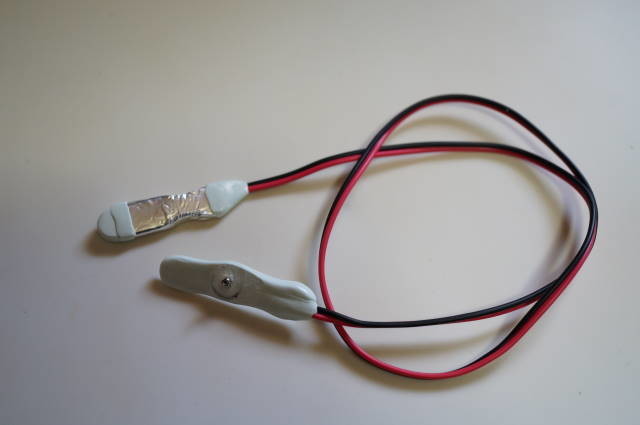
In an entry published in May 2019, a tester wanted electrical stimulation without the inconvenience of a rectal chip. They reported bleeding during their first attempt with a wired urethral chip; a later attempt produced sensation only at the skin pad. Mr. Okada offered an additional urethral electrode instead of altering the earlier combined device.
A follow-up published later in May 2019 explicitly identifies the same tester and records sensation with two urethral electrodes. The tester reported that sensation became pain at level 8 (10) or above, using the entry’s notation. Mr. Okada offered cancellation to customers whose pending electrode orders worried them after the initial report.
(Source: ok-lab's diary, published May 2019)
https://ok-lab.hatenablog.com/entry/2019/05/04/162111
(Source: ok-lab's diary, published May 2019)
https://ok-lab.hatenablog.com/entry/2019/05/25/144939
Electrode safety testing caused heart problems, according to Mr. Okada
In an entry published in May 2019, Mr. Okada wrote about testing despite his existing heart disease. He reported heart failure during an earlier electrical test, followed by about 3 hours lying down. After receiving a report of absent sensation, he tried testing again.
He reported an irregular heartbeat around controller level 2, with effects that prevented work for about 2 hours. He concluded that he could not personally conduct further electrode tests. Mr. Okada questioned whether he could commercialize something he could not test himself.
(Source: ok-lab's diary, published May 2019)
https://ok-lab.hatenablog.com/entry/2019/05/04/162111
A separate urethral electrode trial ended with bleeding and urinary symptoms
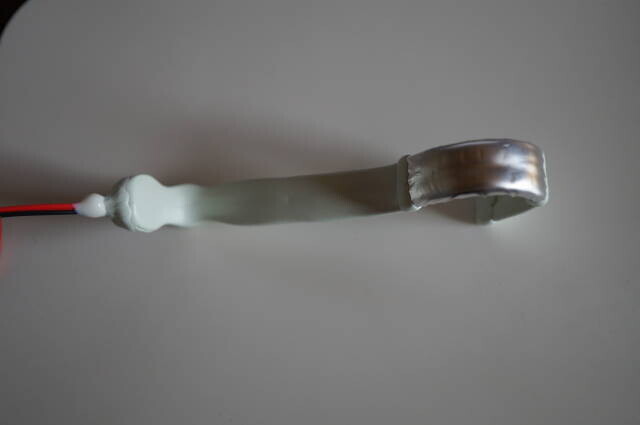
A different tester’s first trial of a large contoured electrode chip appeared in an entry published in May 2019. Their account emphasized the aluminum surface’s greater resistance compared with glass and its need for lubrication. They reported bleeding after use and pain during urination.
Later, the tester suspected a bladder infection; the material does not record a medical diagnosis. Mr. Okada thanked them and acknowledged learning about their controller’s separate adjustment of the poles. He suggested that an electrode chip might not need to be large.
(Source: ok-lab's diary, published May 2019)
https://ok-lab.hatenablog.com/entry/2019/05/25/144939
Stainless urethral electrodes gained a new cable and connector in August 2023
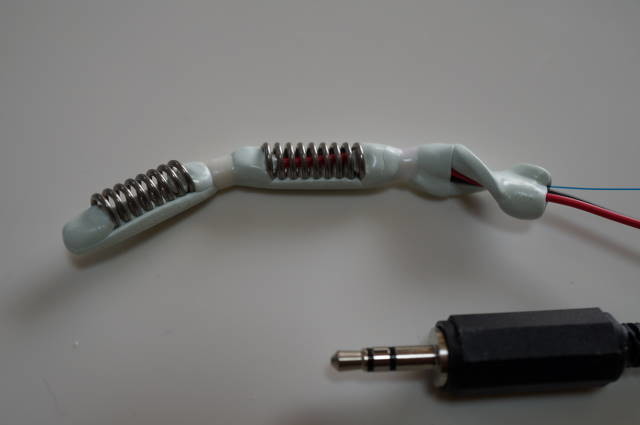
In an entry published in August 2023, Mr. Okada revisited requests previously declined because of cable strength and connection difficulties. He reported establishing a reliable connection between stainless steel and twisted nylon cable (electrical cable incorporating nylon thread). He replaced USB (the previously proposed connector format) with a snap connector (a button-style electrical connection), finding USB too bulky.
The trial-sale specification included 25 cm of cable, a snap connection, and 10 cm of doubled thread. Its historical price was the ordinary stainless chip price plus ¥4,000 (about $26 at ¥156 = $1, rate as of 2026-09-04) excluding tax, as published in August 2023. Mr. Okada cautioned that cable strength depended on the accompanying nylon threads.
(Source: ok-lab's diary, published August 2023)
https://ok-lab.hatenablog.com/entry/2023/08/26/122534
The maker's answer to urethral electrode safety
Mr. Okada’s precautions addressed contact arrangements and cable strength, while his diary continued to record serious limits.
One electrode per opening became the maker’s stated principle in April 2019
In an entry published in April 2019, Mr. Okada adopted one pole per body opening as his working principle. He wanted resistance (opposition to current) from body tissue between the poles, citing 500 Ω as his minimum assumption. He presented this as protection against controller failure, rather than reporting a failure test.
An entry published later in April 2019 described the rule as a compromise built around ordinary massage-device controllers. Mr. Okada acknowledged that OK Lab could not develop the dedicated controller an experienced correspondent wanted. His preferred provision was single-pole internal chips, with the equipment maker’s own pads for skin contacts.
(Source: ok-lab's diary, published April 2019)
https://ok-lab.hatenablog.com/entry/2019/04/13/150233
(Source: ok-lab's diary, published April 2019)
https://ok-lab.hatenablog.com/entry/2019/04/20/144337
Cable weakness ended an earlier plan for paired internal electrodes
In an entry published in May 2022, a customer requested electrical conversion of a two-bump rectal resin chip. Mr. Okada explained that an older urethral-and-rectal arrangement had been abandoned because a single thin cable raised strength concerns. He had refused another request for that reason.
The newer request concerned two poles on one rectal chip, which he said he could accept. His reply distinguished that construction from the rejected cable arrangement.
(Source: ok-lab's diary, published May 2022)
https://ok-lab.hatenablog.com/entry/2022/05/07/123013
Two internal electrodes still carried a controller-failure warning in August 2023
In an entry published in August 2023, Mr. Okada described a skin pad as a capacitor (a component he credited with electrical protection). He warned that two internal electrodes formed a direct circuit without that protection, risking a strong shock if the controller failed. His belief that a pad protected the circuit was his explanation, not a reported safety test.
Elsewhere in the same entry, he reported another episode he called heart failure during testing at levels 2–3. He said recovery took about 1 hour. He favored a skin-pad arrangement as gentler, although his own account still recorded harm during that work.
(Source: ok-lab's diary, published August 2023)
https://ok-lab.hatenablog.com/entry/2023/08/26/122534
A rectal electrode request became feasible after the cable design changed
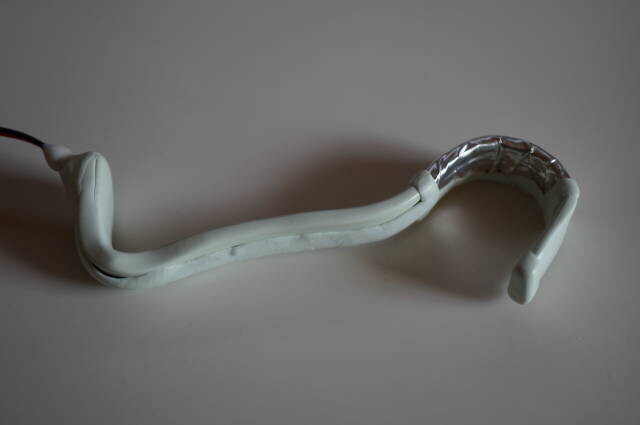
In an entry published in February 2024, a customer requested one electrode on the single-bump U-shaped rectal resin chip. Mr. Okada had previously avoided rectal single-pole builds because a single wire seemed too weak. He accepted this request after identifying a construction with two wires running together and a snap connection.
The diary presents the completed custom item and discusses a urethral-and-rectal pairing. Mr. Okada explicitly said he could not test it and placed responsibility for safety on the customer.
(Source: ok-lab's diary, published February 2024)
https://ok-lab.hatenablog.com/entry/2024/02/10/123023
If you see blood in your urine, even a small amount or for the first time, do not wait and see. See a urologist right away. If you suddenly cannot urinate, or the device cannot be removed, do not try to fix it yourself. Go to a medical facility, including emergency care, immediately.
How urethral electrode safety changed over time
| Published | What the diary said then |
|---|---|
| Feb 2019 | Electrode work: ¥8,000 (about $51 at ¥156 = $1, rate as of 2026-09-04) for two poles; ¥5,000 (about $32 at ¥156 = $1, rate as of 2026-09-04) for one, excluding tax. |
| Mar 2019 | New attachment: fees per chip fell to ¥3,000 (about $19 at ¥156 = $1, rate as of 2026-09-04)/one pole or ¥5,000 (about $32 at ¥156 = $1, rate as of 2026-09-04)/two poles, excluding tax. |
| Aug 2019 | Mr. Okada said the customer’s Omron arrangement required matching snap connections at both poles. |
| Jan 2021 | Unproven rubber joints prompted a continuous nylon thread through all three connected chips. |
| Dec 2021 | Thicker paired cables enabled a revised three-motor, two-electrode custom build. |
| Sep 2023 | Twin assembly: two single-pole prices, plus a joining fee of ¥1,000 (about $6 at ¥156 = $1, rate as of 2026-09-04) excluding tax. |
| Nov 2023 | Mr. Okada explained that touching steel chips form one pole; separate poles require insulation. |
| Dec 2024 | A new connection method opened stainless electrode builds to parallel cables, with individual quotations. |
| Feb 2026 | Four twisted strands were used across two completed two-pole builds, both with tube coatings. |
(Source: ok-lab's diary, published February 2019)
https://ok-lab.hatenablog.com/entry/2019/02/23/142754
(Source: ok-lab's diary, published March 2019)
https://ok-lab.hatenablog.com/entry/2019/03/16/165528
(Source: ok-lab's diary, published September 2023)
https://ok-lab.hatenablog.com/entry/2023/09/02/122918
The diary does not say what the current state is.
OK Prostate Chip products related to urethral electrode safety
The current list confirms the rectal base product named below; its listed price does not identify a complete electrode assembly.
Products that appear in these entries
| Product (official name) | Price incl. tax | Relation to this topic |
|---|---|---|
| Single-bump U-shaped rectal resin chip (OKプロステートお尻チップ 樹脂素材1コブUターン型) | ¥5,500 (about $35 at ¥156 = $1, rate as of 2026-09-04) | The February 2024 customer named this base product when requesting a custom single-pole rectal electrode. |
(Source: ok-lab's diary, published February 2024)
https://ok-lab.hatenablog.com/entry/2024/02/10/123023
Products the diary mentioned as alternatives
The diary names no alternative.
Complete custom electrode assemblies
No matching product can be confirmed on the current list.
Common worries about urethral electrode safety
"Does electrode safety mean all two-pole requests are refused?"
In an entry published in May 2019, an experienced customer proposed separate parts because they believed same-opening two-pole requests were no longer accepted. Mr. Okada clarified that he had not intended to refuse knowledgeable, experienced customers. He offered a 2 mm gap if the customer remained confident in that specification.
The customer withdrew the initial proposal and requested a linked resin design instead. Mr. Okada reported completing a gap within 10 mm, but expressed concern about cable durability. He asked the customer to weigh spacing against strength.
(Source: ok-lab's diary, published May 2019)
https://ok-lab.hatenablog.com/entry/2019/05/11/152432
"Can resin electrodes have thinner cables and snap connectors?"
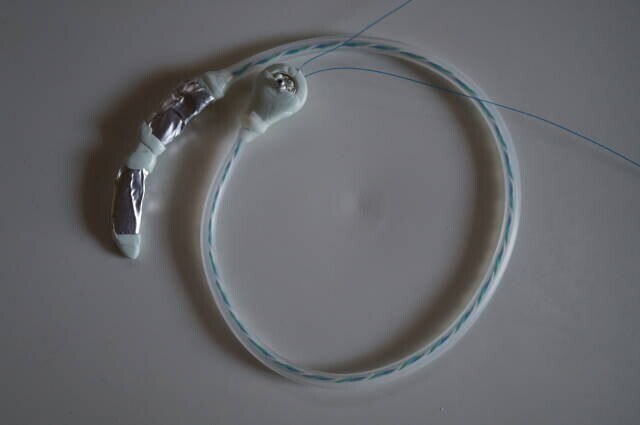
In an entry published in July 2024, a customer requested twisted nylon cable and snap connections for a resin two-pole chip. Staff initially said this combination was untested and warned that thinner cable increased the risk of breakage. The customer then asked about a version with tube coating and a combined connector assembly.
Mr. Okada reported a successful electrical connection on a tester after fabrication. The diary does not record how this build felt in use. Staff favored tube coating and combined connectors because of strength concerns.
(Source: ok-lab's diary, published July 2024)
https://ok-lab.hatenablog.com/entry/2024/07/20/123059
"Can small flat parts support three urethral electrodes?"
In an entry published in July 2024, a customer proposed a slimmer, three-pole stainless arrangement using small flat auxiliary parts. Mr. Okada said he could not fully understand or fulfill the proposed design. He explained that a part about 15 mm long needed roughly 5 mm of resin coverage at each end.
Its central opening would leave little steel available for contact. He rejected the flat auxiliary part for that role, while considering a larger alternative feasible. Mr. Okada suggested parts at least as large as a short chip.
(Source: ok-lab's diary, published July 2024)
https://ok-lab.hatenablog.com/entry/2024/07/27/122927
Buying from outside Japan
OK Lab ships internationally to countries covered by Japan Post's EMS courier service. Overseas orders are paid in advance by PayPal. Each order carries a ¥400 (about $3 at ¥156 = $1, rate as of 2026-09-04) handling fee, and EMS shipping is charged on top. These terms come from OK Lab's official sales-terms page (written here as plain text, not a link: ok-lab.net/docs/law), checked on September 7, 2026; confirm them on the official store before you order, because they can change.
Summary of this article
| What you wanted to know | The answer |
|---|---|
| In short: is an arrangement proven safe? | The diary records changing precautions alongside adverse reports. |
| About the product: what is it? | A urethral device made by OK Lab in Japan; electrode versions add electrical contacts. |
| Key terms: what are the poles? | The electrical contacts on chips or skin pads. |
| What happens: what went wrong? | Reports included absent sensation, pain, bleeding, urinary symptoms, and Mr. Okada’s heart problems. |
| The maker’s answer: what did he change? | His contact restrictions, cable designs, and preferred pad arrangements evolved. |
| Changes over time: did development stop? | The material reaches completed custom two-pole builds in February 2026. |
| Products: what price is current? | The listed rectal base chip costs ¥5,500 (about $35 at ¥156 = $1, rate as of 2026-09-04) including tax; historical electrode fees are separate. |
| Common worries: were requests always accepted? | Acceptance depended on the requested construction, strength concerns, and the maker’s capabilities. |
| Overseas buying: what are the stated terms? | Advance PayPal payment, a ¥400 (about $3 at ¥156 = $1, rate as of 2026-09-04) handling fee, and additional EMS shipping. |
Source: ok-lab's diary (Okada Comfortable Life Laboratory). The original entries are in Japanese; quotations on this page are translated. Photos and videos are on the original entries. Unused facts: F09 (operating-level advice omitted to avoid instructions for internal electrical stimulation).
This article is a summary of the maker's development diary. The product is not a medical device and no result is guaranteed. If anything feels wrong or worries you, see a doctor. Prices, specifications and cautions change, so confirm the latest information on the official blog and the official site. Questions about ordering and shipping go to the seller.