![Why does the vibration get weaker? | The maker links strength to voltage [OK Prostate Chip]](/img/a/T0052/eyecatch.svg)
This page is based on entries from "ok-lab's diary" (https://ok-lab.hatenablog.com/), the Japanese development diary written by Mr. Okada, founder of OK Lab, a small company in Japan (Okada Comfortable Life Laboratory). Only the entries about "vibration strength and voltage" are summarized here, in order of publication. Past prices and sizes are as written at the time. Current prices come from the official product list (retrieved September 4, 2026). Quotations are translated from Japanese.
Note: This page is a personal reading log by someone with no connection to the maker or the seller. It reflects the source entries as of their publication dates and makes no guarantee of accuracy or safety. The product is not a medical device; talk to a doctor about any health decision. Check the official site for current information. This page contains advertising.
In short
The maker links weakening vibration to falling battery voltage, while higher voltage can bring heat and discomfort.
Mr. Okada favors lower power for longer periods and warns against prolonged 6V use.
Today's list includes the low-tech controller option, with prices supplied separately from the historical diary.
About this product
The OK Prostate Chip is a small device that is placed in the urethra (the urine passage) so that it acts on the prostate; the maker sells it in several shapes, sizes and materials. It is made and sold by OK Lab (Okada Comfortable Life Laboratory), a small company in Japan, through its own online store, and prices are in Japanese yen (JPY).
The maker's development diary, "ok-lab's diary", is written in Japanese. This page is an English summary of it, and every quotation is translated.
OK Lab ships internationally, so readers outside Japan can order (see "Buying from outside Japan" below). Product names on this page are plain-English descriptions. The official Japanese product name is shown once in the product table so you can find the same item in the store.
Before you read: key terms
| Term | Plain-English meaning |
|---|---|
| Voltage (V) | The electrical supply level, stated in volts; the diary discusses changing it to alter motor operation. |
| Motor | The moving component that produces the chip's vibration; different entries discuss single motors and combinations. |
| Controller | An external unit supplying power to motors; some also provide different vibration patterns. |
| Manganese and alkaline batteries | Battery types supplying the motor; a customer compared how long they maintained noticeable vibration. |
| Low-tech controller | The maker's battery-box controller; its purpose was to offer different voltage levels. |
| 0V dummy cell | A battery-shaped part contributing no voltage; it formed part of the low-tech controller's voltage selection system. |
| USB | The connection used for charging or linking components; a USB socket receives the matching plug. |
| Attachment-recognition hardware | Part of the third-party controller's cable system; it lets the controller recognize its intended attachment. |
What happens: vibration strength
The OK Prostate Chip is a small device placed in the urethra, the urine passage, to act on the prostate. The vibrating versions contain motors (the components producing vibration), with cables leading to external controllers or battery boxes. These supply voltage (the electrical supply level, stated in volts), which the diary links to motor speed and felt vibration. The entries also distinguish continued operation from noticeable sensation: a motor may keep running after its vibration becomes harder to feel.
Vibration strength fell with battery voltage in January 2019
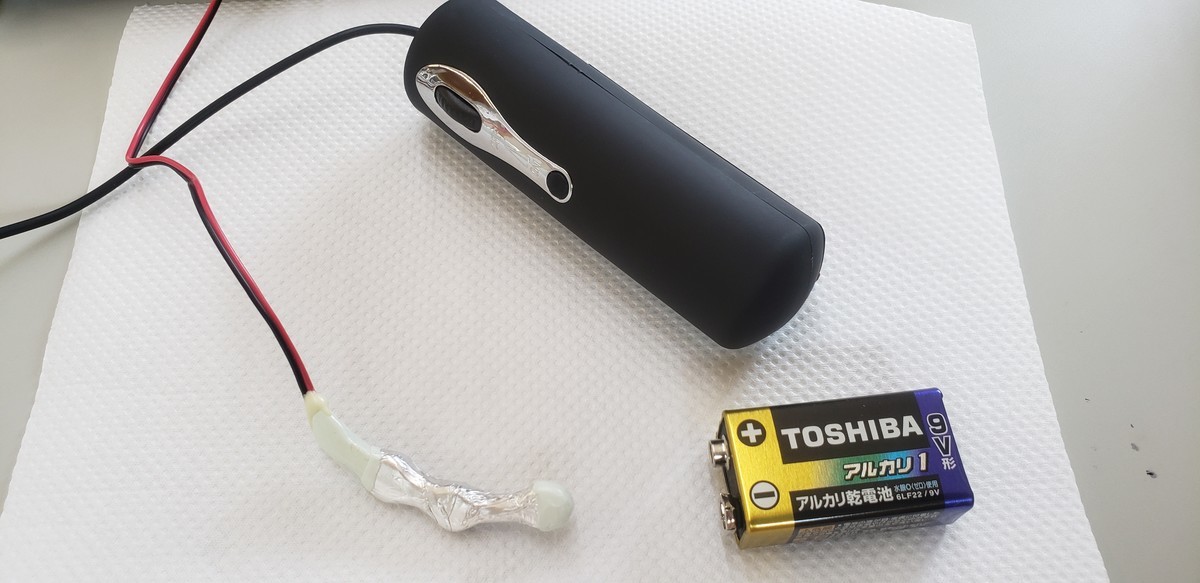
In an entry published in January 2019, Mr. Okada reported that a vibrating chip still worked with a 1V battery. He explained that falling voltage reduced the motor's rotation speed, even while the device continued running.
He contrasted this with other electrical devices, which he said stopped around 1.4–1.35V. Mr. Okada recommended viewing the vibration as gentle assistance to prostate sensation, rather than forceful shaking.
(Source: ok-lab's diary, published January 2019)
https://ok-lab.hatenablog.com/entry/20190119/1547879323
Fading vibration strength was also reported with manganese batteries
In an entry published in March 2019, a customer reported that stimulation from a curved vibrating chip faded after the first experience. The customer wanted independent electronic control of its motors and also identified a battery issue. Manganese batteries (a disposable battery type) lost vibration strength quickly, while alkaline batteries reportedly maintained the sensation longer.
Mr. Okada acknowledged that declining voltage contributed alongside the familiarity he had previously suspected. The diary does not record how a revised controller felt in use. His response discussed customization, while cautioning that independent motor control would be more complicated.
(Source: ok-lab's diary, published March 2019)
https://ok-lab.hatenablog.com/entry/2019/03/02/151104
June 2019 tests linked greater vibration strength with fatigue and heat
In an entry published in June 2019, Mr. Okada described his own single-motor tests at higher voltage. He felt greater force at 4.5V, but no dramatic change; about 2 hours at 6V left him fatigued.
Separate tests in air reached about 40°C at 4.5V and about 65°C within 5 minutes at 6V. The higher temperature rose no further during 10 hours of continued rotation. His proposed cooling effect inside the body was an assumption, rather than a reported internal temperature measurement. Mr. Okada concluded that prolonged 6V use carried risks.
(Source: ok-lab's diary, published June 2019)
https://ok-lab.hatenablog.com/entry/2019/06/29/143536
One customer's increased vibration strength at 9V came with intense heat
In an entry published in August 2019, a customer described a custom three-motor chip requested in hopes of stronger vibration. Closer motor spacing had not produced the expected difference, but the customer's subsequent 9V experiment felt much stronger.
Continuous vibration became so hot that the customer feared a burn, despite the cooling effect they expected from bodily fluids. The diary does not record whether a clinician assessed any injury. Mr. Okada explicitly rejected 9V use and suspected that heat damage to the urethra had already occurred.
(Source: ok-lab's diary, published August 2019)
https://ok-lab.hatenablog.com/entry/2019/08/10/125102
Rechargeable power brought higher vibration strength and a new price
In an entry published in December 2019, Mr. Okada introduced a 4.5V rechargeable controller alongside the existing battery-powered 3V unit. The new controller cost ¥2,500 (about $16 at ¥156 = $1, rate as of 2026-09-04) excluding tax, including a USB socket (a receiving connector) for linking it to the vibrating chip.
Published charging time was 60–90 minutes, with continuous operation lasting 5 hours with an 8mm motor or 3 hours with a 10mm motor. The entry listed about 2 hours when two motors ran together. Mr. Okada reported warmth around body temperature during a heating test. Because component supply was uncertain, he advised requesting the rechargeable version as a custom order.
(Source: ok-lab's diary, published December 2019)
https://ok-lab.hatenablog.com/entry/2019/12/07/162608
A corded miniature chip gained vibration strength with a revised battery box
In an entry published in March 2020, Mr. Okada introduced a corded variation of the tiny vibrating chip. Its switched 3V battery box replaced the original model's switchless 1.5V box. He said the change was intended to make ordinary vibration noticeable to more users.
This was a specification change for the corded variation, rather than a report that every earlier chip had changed. Mr. Okada also warned that people particularly sensitive to prostate stimulation might develop headaches. His advice favored lower voltage for extended periods.
(Source: ok-lab's diary, published March 2020)
https://ok-lab.hatenablog.com/entry/2020/03/07/152901
An external motor system addressed vibration strength and short battery life
In an entry published in April 2023, Mr. Okada described an external vibrator system developed around his own experience. He said its motors were stronger than the chip's motors, exhausted disposable or rechargeable batteries quickly, and lacked power with typical 3V controllers.
The resulting system supported a three-battery box or USB power and offered 120 vibration modes. It included a cylindrical motor intended for the external support device discussed in that entry. Mr. Okada proposed this dedicated system to address the power supply, adjustment, and mounting problems he had identified.
(Source: ok-lab's diary, published April 2023)
https://ok-lab.hatenablog.com/entry/2023/04/29/123107
The maker's answer to vibration strength
Mr. Okada offered adjustable controllers while repeatedly warning that stronger vibration could make prolonged use dangerous.
The low-tech controller offered variable vibration strength at a stated price
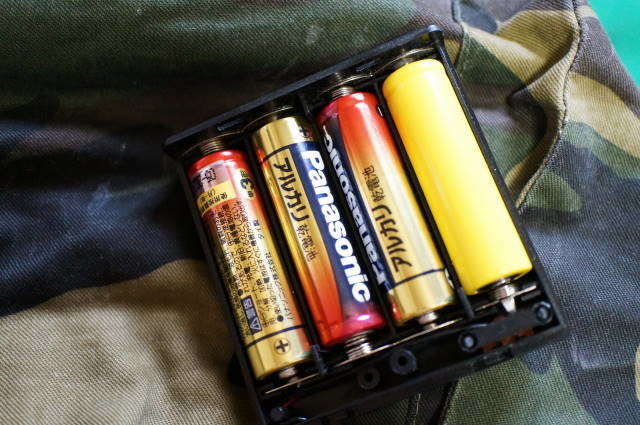
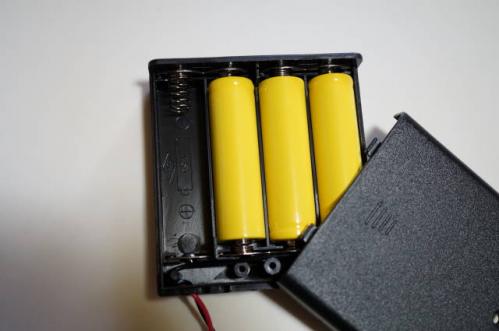
In an entry published in June 2019, Mr. Okada released a low-tech controller with 1.5V, 3V, 4.5V, and 6V settings. The published price was ¥1,000 (about $6 at ¥156 = $1, rate as of 2026-09-04) excluding tax, including three 0V dummy cells. These battery-shaped parts contributed no voltage and formed part of the controller's voltage selection system.
The package included a box designed for four batteries, but those batteries were not included. This was the release price and package described then. Mr. Okada's own preference in that entry was the gentler 1.5V setting.
(Source: ok-lab's diary, published June 2019)
https://ok-lab.hatenablog.com/entry/2019/06/29/143536
Mr. Okada proposed lower vibration strength for longer sessions
In an entry published in January 2020, a customer requested adaptation of a third-party variable-output controller for a vibrating chip. Mr. Okada accepted the request and tested the controller. He compared its lower setting with about 3V vibration and its maximum with about 6V.
The diary does not record the customer's subsequent experience with that controller. Mr. Okada tentatively suggested around 3V for extended periods, reserving 6V for climax.
(Source: ok-lab's diary, published January 2020)
https://ok-lab.hatenablog.com/entry/2020/01/11/151714
Multiple motors prompted another warning about high vibration strength
In an entry published in June 2022, a customer asked about further equipment after finding existing vibrating chips insufficiently stimulating. Mr. Okada replied that reports involving multiple motors had encouraged his interest in those designs.
He said several motors at 4.5V or above produced much greater vibration than at 3V. The diary does not record whether this customer's proposed purchase produced the desired result. Mr. Okada again warned that prolonged 6V use was dangerous.
(Source: ok-lab's diary, published June 2022)
https://ok-lab.hatenablog.com/entry/2022/06/04/123036
How vibration strength changed over time
| Published | What the diary said then |
|---|---|
| Jan 2019 | Mr. Okada reported about 3 days from trial batteries, 2 from worn batteries. |
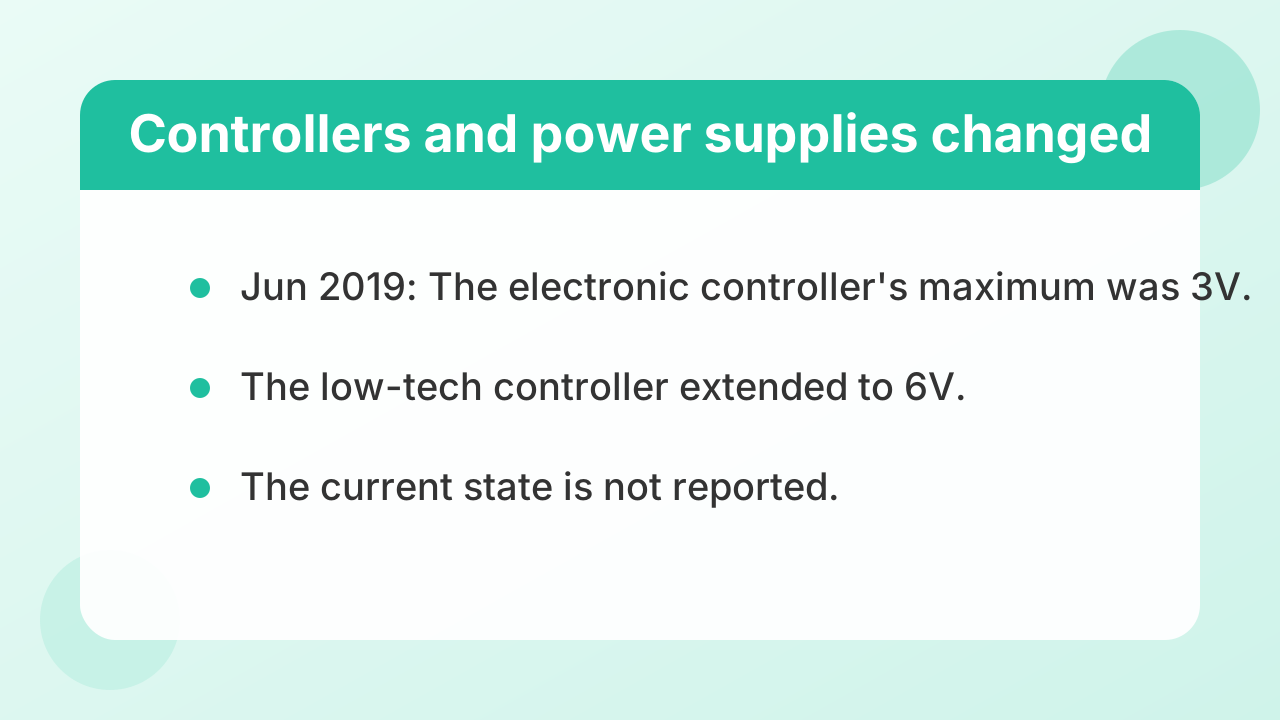
| Jun 2019 | The electronic controller's maximum was 3V; the newly introduced low-tech controller extended to 6V. |
| Jul 2019 | Mr. Okada reported wave-like movement from three oppositely rotating motors at 4.5V or above. |
| Aug 2019 | Tiny vibrating chip planned at ¥3,000 (about $19 at ¥156 = $1, rate as of 2026-09-04) excluding tax, with battery box but no battery. |
| Dec 2019 | Mr. Okada preferred the rechargeable controller's 20 patterns and simpler repeating rhythms. |
| Mar 2020 | Corded miniature chip priced at ¥3,000 (about $19 at ¥156 = $1, rate as of 2026-09-04); USB option added ¥500 (about $3 at ¥156 = $1, rate as of 2026-09-04). |
| May 2022 | An external prototype gave separate motor pairs about 3V and 5V. |
| Apr 2023 | External system: ¥5,000 (about $32 at ¥156 = $1, rate as of 2026-09-04); extension: ¥1,000 (about $6 at ¥156 = $1, rate as of 2026-09-04); splitter: ¥1,500, (about $10 at ¥156 = $1, rate as of 2026-09-04) all excluding tax. |
The diary does not say what the current state is.
OK Prostate Chip products related to vibration strength
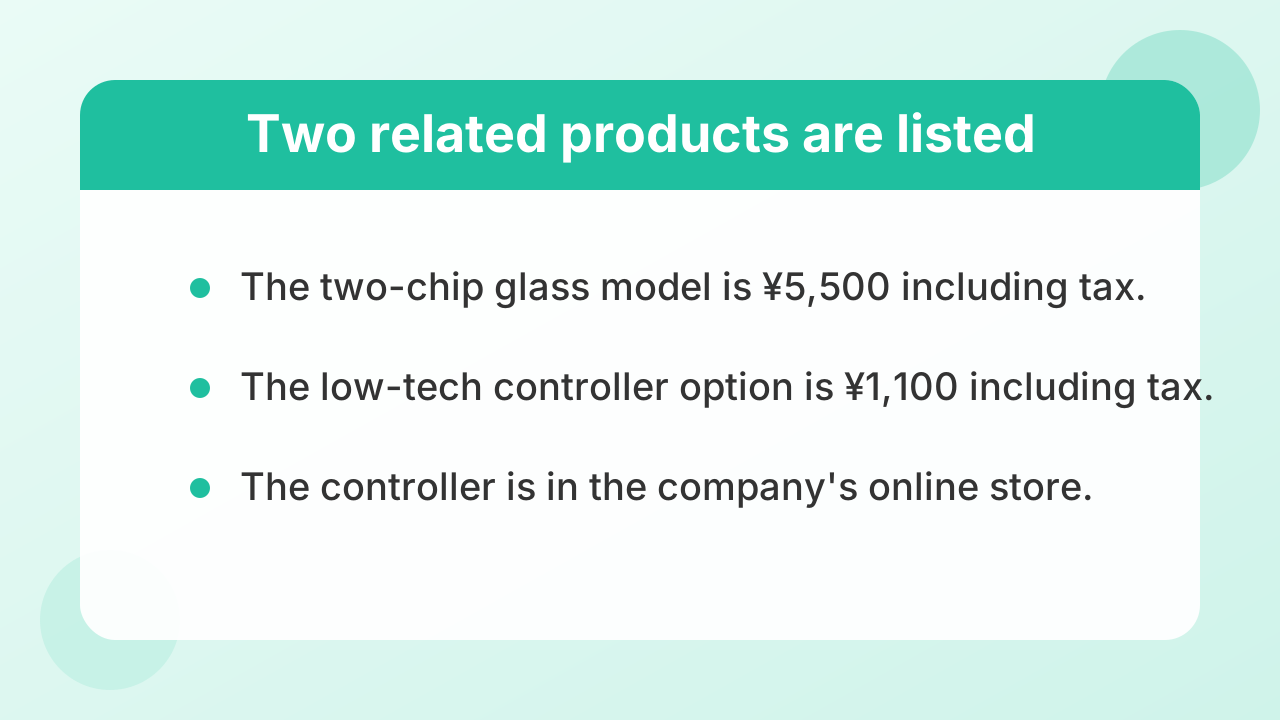
The current list includes the glass model discussed by a customer and the low-tech controller Mr. Okada proposed.
Products that appear in these entries
| Product (official name) | Price incl. tax | Relation to this topic |
|---|---|---|
| Two-chip glass model (OKプロステートチップ ガラス素材2チップタイプ) | ¥5,500 (about $35 at ¥156 = $1, rate as of 2026-09-04) | In June 2019, its owner asked about vibrating alternatives because the existing chip's sensation was difficult to recognize. |
(Source: ok-lab's diary, published June 2019)
https://ok-lab.hatenablog.com/entry/2019/06/29/143536
Products the diary mentioned as alternatives
| Product (official name) | Price incl. tax | Relation to this topic |
|---|---|---|
| Low-tech controller option (ローテクコントローラに変更(核振チップオプション)) | ¥1,100 (about $7 at ¥156 = $1, rate as of 2026-09-04) | In June 2019, Mr. Okada recommended this controller with a short vibrating chip for that glass-model customer's faint sensation, while noting individual differences. |
The low-tech controller option is listed in the company's own online store.
(Source: ok-lab's diary, published June 2019)
https://ok-lab.hatenablog.com/entry/2019/06/29/143536
Historical custom rechargeable controllers, multi-motor builds, and the corded miniature variation: No matching product can be confirmed on the current list.
Common worries about vibration strength
The replies distinguish noticing vibration, controller compatibility, and the voltage actually supplied to the motor.
"Can vibration strength make the chip easier to feel?"
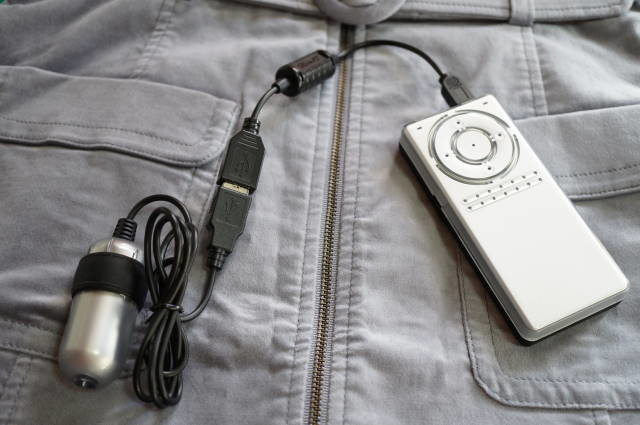
In an entry published in June 2019, a customer who owned a two-chip glass model wanted a more noticeable sensation. The customer asked about a vibrating version because the existing chip's presence became difficult to detect.
Mr. Okada first said there was no single reliable recommendation because experiences differed. The diary does not record whether the customer bought his proposed combination or how it felt. He nevertheless recommended a short vibrating chip with the low-tech controller, saying vibration would make its presence apparent.
(Source: ok-lab's diary, published June 2019)
https://ok-lab.hatenablog.com/entry/2019/06/29/143536
"Does the R-1 controller provide greater vibration strength?"
In an entry published in November 2019, a customer wanted a third-party R-1 controller adapted for a vibrating chip. Direct connection had failed; Mr. Okada then identified required attachment-recognition hardware (parts allowing the controller to recognize its attachment). Subsequent testing worked, and the customer placed an order; the diary does not record delivery in this passage.
Mr. Okada described vibration strength as proportional to voltage. He ranked R-1 above the 3V electronic controller and below the 6V low-tech controller, even with its boost feature. His proposed solution retained the manufacturer's required recognition hardware.
(Source: ok-lab's diary, published November 2019)
https://ok-lab.hatenablog.com/entry/2019/11/30/164020
"Can household input voltage change vibration strength?"
In an entry published in November 2021, a customer wanted remote on/off control through a phone-operated power switch. Mr. Okada replied that an arrangement using a 100V-to-5V adapter was possible.
His separate adapter test found no change in motor rotation when input rose from 100V to 130V or fell to 50V. He attributed this to the adapter maintaining its 5V output. The diary does not record the customer's later remote-control experience. Mr. Okada's answer ruled out changing household input voltage as a means of adjusting vibration strength.
(Source: ok-lab's diary, published November 2021)
https://ok-lab.hatenablog.com/entry/2021/11/06/125812
Buying from outside Japan
OK Lab ships internationally to countries covered by Japan Post's EMS courier service. Overseas orders are paid in advance by PayPal. Each order carries a ¥400 (about $3 at ¥156 = $1, rate as of 2026-09-04) handling fee, and EMS shipping is charged on top. These terms come from OK Lab's official sales-terms page (written here as plain text, not a link: ok-lab.net/docs/law), checked on September 7, 2026; confirm them on the official store before you order, because they can change.
Summary of this article
| What you wanted to know | The answer |
|---|---|
| Why might vibration weaken? | The maker and a customer linked weaker vibration to falling battery voltage. |
| What is the product? | A device made by OK Lab in Japan, placed in the urethra to act on the prostate. |
| What do the electrical terms describe? | Supply voltage, vibrating motors, controllers, and the connections between components. |
| What happened in the reported tests? | Stronger vibration sometimes came with fatigue or substantial heat. |
| What did the maker suggest? | Lower power for longer periods, with explicit warnings about stronger settings. |
| What changed over time? | Controllers, power supplies, motor combinations, and historical prices developed across successive entries. |
| Which related products are listed today? | The two-chip glass model and low-tech controller option appear in the supplied current list. |
| Will any controller behave the same way? | The R-1 required recognition hardware; changing adapter input voltage did not change its tested output. |
| How do overseas purchases work? | Advance PayPal payment, a ¥400 (about $3 at ¥156 = $1, rate as of 2026-09-04) handling fee, and additional EMS shipping charges. |
Source: ok-lab's diary (Okada Comfortable Life Laboratory). The original entries are in Japanese; quotations on this page are translated. Photos and videos are on the original entries.
This article is a summary of the maker's development diary. The product is not a medical device and no result is guaranteed. If anything feels wrong or worries you, see a doctor. Prices, specifications and cautions change, so confirm the latest information on the official blog and the official site. Questions about ordering and shipping go to the seller.