![Can I order custom electrode chips? | Some designs were made; others needed changes [OK Prostate Chip]](/img/a/T0064/eyecatch.svg)
This page is based on entries from "ok-lab's diary" (https://ok-lab.hatenablog.com/), the Japanese development diary written by Mr. Okada, founder of OK Lab, a small company in Japan (Okada Comfortable Life Laboratory). Only the entries about "custom electrode chips" are summarized here, in order of publication. Past prices and sizes are as written at the time. Current prices come from the official product list (retrieved September 4, 2026). Quotations are translated from Japanese.
Note: This page is a personal reading log by someone with no connection to the maker or the seller. It reflects the source entries as of their publication dates and makes no guarantee of accuracy or safety. The product is not a medical device; talk to a doctor about any health decision. Check the official site for current information. This page contains advertising.
In short
- Custom electrode chips (chips with electrical contacts) were made to request, with limits on materials, dimensions, and wiring.
- Mr. Okada proposed specific designs, while declining requests he could not make or support.
- Current listings include components used in past projects; complete custom electrode builds have no confirmed match.
About this product
The OK Prostate Chip is a small device that is placed in the urethra (the urine passage) so that it acts on the prostate; the maker sells it in several shapes, sizes and materials. It is made and sold by OK Lab (Okada Comfortable Life Laboratory), a small company in Japan, through its own online store, and prices are in Japanese yen (JPY).
The maker's development diary, "ok-lab's diary", is written in Japanese. This page is an English summary of it, and every quotation is translated. OK Lab ships internationally, so readers outside Japan can order (see "Buying from outside Japan" below).
Product names on this page are plain-English descriptions. The official Japanese product name is shown once in the product table so you can find the same item in the store.
Before you read: key terms
| Term | Plain-English meaning |
|---|---|
| Electrode chip | A chip with electrical contacts, intended to provide electrical stimulation. |
| Pole | One electrically connected contact area, forming one side of the stimulation arrangement. |
| Low-frequency stimulator | An external electrical unit that supplies stimulation through connected electrodes. |
| Rectal chip | A chip intended for the rectum, discussed as another location for an electrode. |
| Short circuit | An unintended connection between poles, discussed as a possible explanation for interrupted stimulation. |
| Electrode conversion | Custom work adding electrical contacts to a chip. |
| Parallel cable | Paired wires running side by side, used for electrical connections. |
| Snap-button connector | A press-together electrical fitting, used to connect electrode wiring to compatible equipment. |
| Nitinol | A wire material used in the stopper and locking designs. The diary does not explain this. |
| USB connector | An electrical connection format, used in the May 2026 custom assembly. |
What happens: custom electrode chips
The OK Prostate Chip is a device placed in the urethra to act on the prostate. Custom electrode chips add electrical contacts for stimulation from a low-frequency stimulator (an external electrical unit). The diary describes urethral versions, rectal versions, and designs with one pole (one electrically connected contact area) or separate poles. These entries concern custom builds whose materials, wiring, and contact layout differed between requests.
Custom electrode chips came with an early heart-disease warning
In an entry published in December 2018, Mr. Okada describes adding electrodes to a urethral chip. He showed it alongside a rectal chip (a chip intended for the rectum). The idea followed a customer's report about combining the two kinds of chip.
Mr. Okada's comments about stronger electrical effects were speculation. He also wrote that he had heart disease. He recalled that the stimulator's manual prohibited use by people with heart disease.
(Source: ok-lab's diary, published December 2018)
https://ok-lab.hatenablog.com/entry/20181208/1544250742
An electrode chip request linked wider contacts with less unpleasant stimulation
An entry published in February 2019 records a renewed request after an earlier design had raised concerns about an unpleasant electrical sensation. The customer claimed that electrode widths of 18 mm or more had solved that problem. The requested chip was about 55 mm long.
Mr. Okada raised concerns about a short circuit (an unintended connection between poles) through urine. He said wiring prevented full coverage at the rear; the diary does not record how the completed build felt to the customer. Mr. Okada proposed approximately 10 mm between poles, despite the customer's reassurance about the stimulator.
(Source: ok-lab's diary, published February 2019)
https://ok-lab.hatenablog.com/entry/2019/02/23/142754
Custom electrode chips were deferred while Mr. Okada awaited recovery
In an entry published in June 2020, a customer asked whether a chip's tip, or its separate sections, could become electrodes. The response deferred this work because fabrication was difficult and Mr. Okada was waiting for his health to recover. The diary does not record whether that electrode order was eventually completed. Mr. Okada asked for the electrode request to remain on hold until his health recovered.
(Source: ok-lab's diary, published June 2020)
https://ok-lab.hatenablog.com/entry/2020/06/27/120614
Flexible electrode chips gained reinforced links because rubber strength was unproven
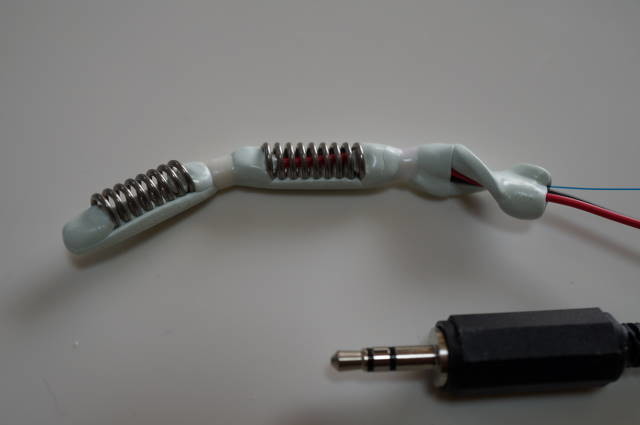
An entry published in January 2021 describes a flexible electrode prototype prompted by comments about metal rings and more durable connections. Mr. Okada combined two ring chips with a screw-shaped support to explore connections that could bend. Electrical cable formed the core of the rubber-covered links.
He reported that rigid filling would have made the joined assembly inconveniently long. The diary does not record a customer's experience with this prototype. Mr. Okada specified a nylon thread through all three sections because the rubber links lacked established strength.
(Source: ok-lab's diary, published January 2021)
https://ok-lab.hatenablog.com/entry/2021/01/02/123619
Stainless-steel electrode chips became feasible after an initial technical refusal
An entry published in August 2023 reproduces a customer's request for a solid stainless-steel electrode chip. Staff initially rejected attaching electrodes and accompanying wiring to hard stainless steel. The customer clarified that a simple connection making the entire chip one pole would be sufficient.
Staff still considered attachment difficult and reported restocking several months or more away, so neither approach was available then. Later in the same entry, Mr. Okada judged an ultrafine cable containing nylon thread suitable for connection and possible sale. He required the nylon thread as a condition of his assurance about cable strength.
(Source: ok-lab's diary, published August 2023)
https://ok-lab.hatenablog.com/entry/2023/08/26/122534
A five-section electrode chip was proposed, subject to further design details
In an entry published in March 2025, a customer requested an electrode product covering internal and external areas. Staff first asked for time to consider the unfamiliar design. Mr. Okada then said the company lacked techniques for attaching conductive material to a silicone-like shaft or making externally attached or wrapped products.
He proposed a possible 15cm design with 5 linked sections instead. He suggested either one shared pole or separate poles covering the inner four sections and the remaining outer section. Mr. Okada requested a drawing specifying the proposed sections and electrical arrangement before further consideration.
(Source: ok-lab's diary, published March 2025)
https://ok-lab.hatenablog.com/entry/2025/03/15/122925
The maker's answer to custom electrode chips
The maker's responses depended on the requested contact area, finished thickness, connection strength, and available fabrication techniques.
One custom electrode chip used almost its entire surface as a pole
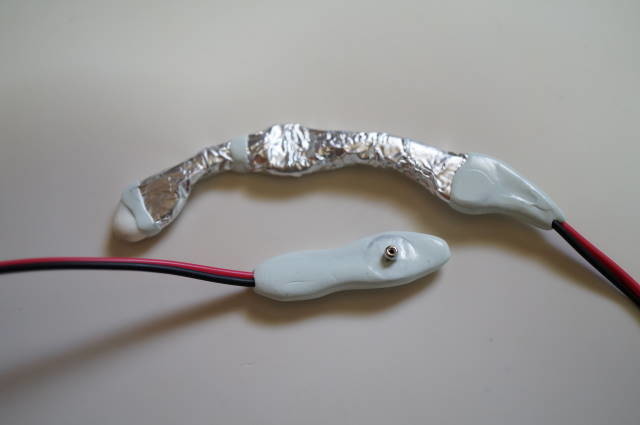
An entry published in April 2019 records a request for the L-size single-bump chip with electrodes and a 30cm cable. Mr. Okada made almost the entire chip surface one pole. He explained that this reflected the model's single central bump.
The entry shows the custom item, but does not record the customer's experience of electrical stimulation. Mr. Okada selected paired flat wires for the cable because he considered their flexibility suitable.
(Source: ok-lab's diary, published April 2019)
https://ok-lab.hatenablog.com/entry/2019/04/20/144337
Adding motors made combined electrode chips considerably thicker than ordinary models
In an entry published in April 2022, Mr. Okada addresses requests for combined electrode chips and models containing several vibration motors. He explains that the electrode wiring added considerable thickness over the completed motor assembly.
The diary does not record the outcome of each enquiry or supply a universal finished size. Mr. Okada cautioned that the combined design would likely be difficult for someone who could only just accommodate an ordinary vibrating chip.
(Source: ok-lab's diary, published April 2022)
https://ok-lab.hatenablog.com/entry/2022/04/02/123050
An integrated stopper became possible for electrode chips with parallel cables
In an entry published in October 2025, a customer requested an integrated stopper for electrode chips using parallel cables (paired wires running side by side). Mr. Okada describes a completed two-chip, two-pole assembly with the stopper supported between two cables.
He reports that the resin secured the nitinol (a wire material named in the diary) firmly at the electrode end. He suggested that a comparable stopper might also suit a single resin chip carrying two poles.
(Source: ok-lab's diary, published October 2025)
https://ok-lab.hatenablog.com/entry/2025/10/18/122911
Custom electrode chips gained another connection after staff warned about breakage
In an entry published in May 2026, a customer wanted a locking connection using two parallel cables because earlier wiring had broken easily. Staff warned that the requested locking arrangement itself put substantial stress on the cable and was prone to breakage. They pointed instead to an earlier prototype combining silicone and nitinol.
Mr. Okada reports making an electrode version based on that prototype's cable arrangement. He judged it stable and less likely to strain its wires; the entry does not record the customer's later experience. The staff recommended the earlier prototype as the closest arrangement they could support at that time.
(Source: ok-lab's diary, published May 2026)
https://ok-lab.hatenablog.com/entry/2026/05/16/122906
How custom electrode chips changed over time
| Published | What the diary said then |
|---|---|
| Feb 2019 | Unpowered prototype: 70mm long, with 10mm tip, 12mm bumps, and 10mm rear. |
| Feb 2019 | A combined vibration-and-electrode prototype was priced at ¥19,000 (about $122 at ¥156 = $1, rate as of 2026-09-04) excluding tax. |
| Apr 2019 | Two aluminum pieces formed one electrically continuous electrode. |
| Aug 2019 | A paired snap-button quote totalled ¥15,520, (about $99 at ¥156 = $1, rate as of 2026-09-04) including the stated fee and discount. |
| Jan 2021 | Cable and nylon-thread lengths were each limited to 30cm because fabrication was difficult. |
| Mar 2025 | The proposed linked design would have nonconductive connecting sections. |
| May 2026 | A boilable USB connector (electrical connection) addressed the lack of a boilable plug. |
OK Prostate Chip products related to custom electrode chips
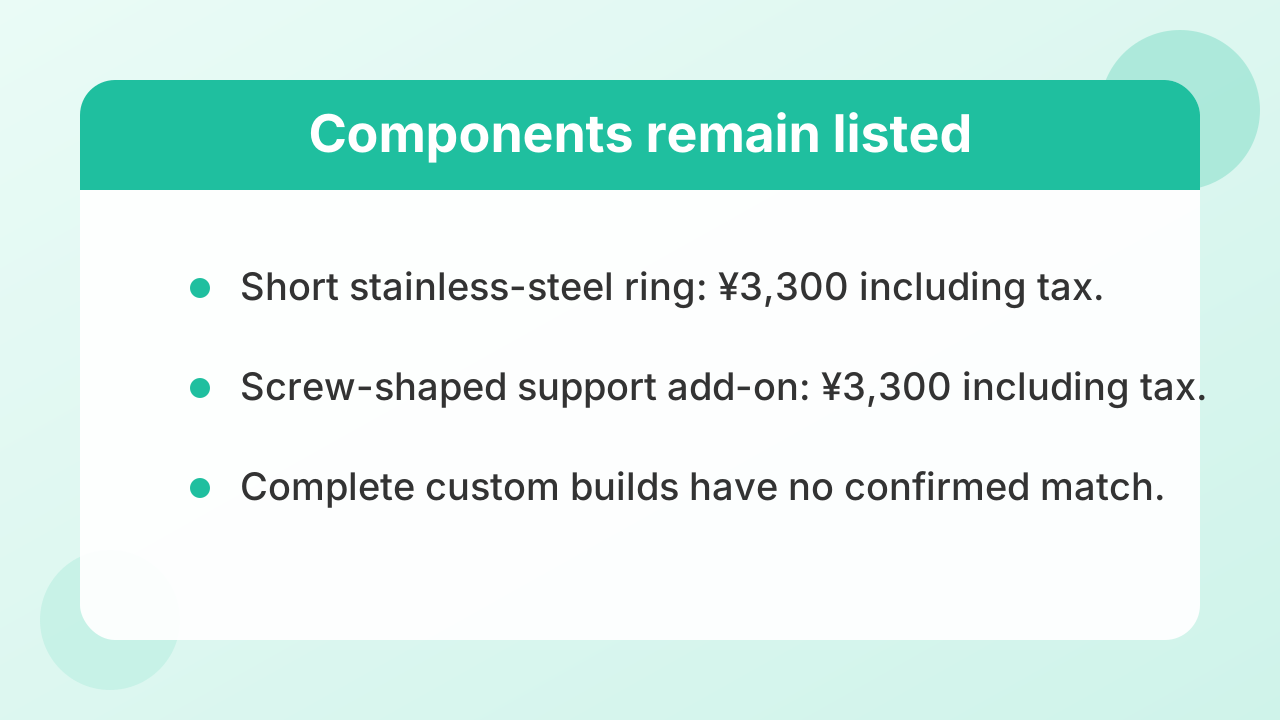
The short stainless-steel ring and screw-shaped support add-on remain on the supplied current list.
Products that appear in these entries
| Product (official name) | Price incl. tax | Relation to this topic |
|---|---|---|
| Short stainless-steel ring (OKプロステートチップ ステンレスリング ショートタイプ) | ¥3,300 (about $21 at ¥156 = $1, rate as of 2026-09-04) | January 2021: this ring appeared in the customer order whose accompanying suggestion helped prompt the flexible electrode prototype. |
| Screw-shaped support add-on (スクリュー型補助チップ追加オプション) | ¥3,300 (about $21 at ¥156 = $1, rate as of 2026-09-04) | January 2021: this add-on appeared in that order and as the rear supporting component of the electrode prototype. |
(Source: ok-lab's diary, published January 2021)
https://ok-lab.hatenablog.com/entry/2021/01/02/123619
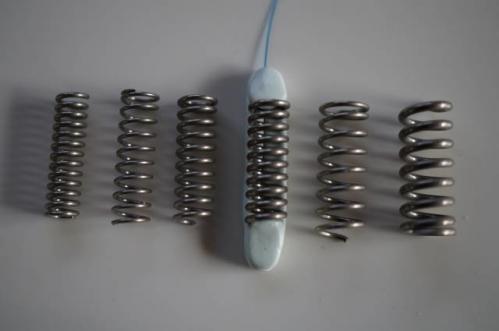
The short stainless-steel ring is listed in the company's own online store.
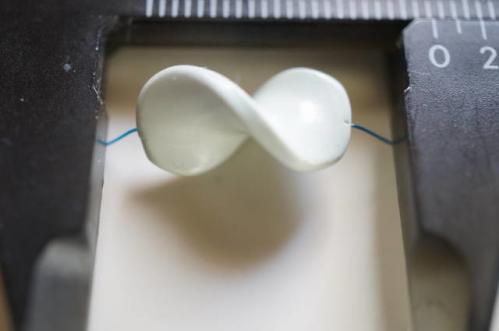
The screw-shaped support add-on is listed in the company's own online store.
Products the diary mentioned as alternatives
The diary names no alternative.
Complete custom electrode builds described above
No matching product can be confirmed on the current list.
Common worries about custom electrode chips
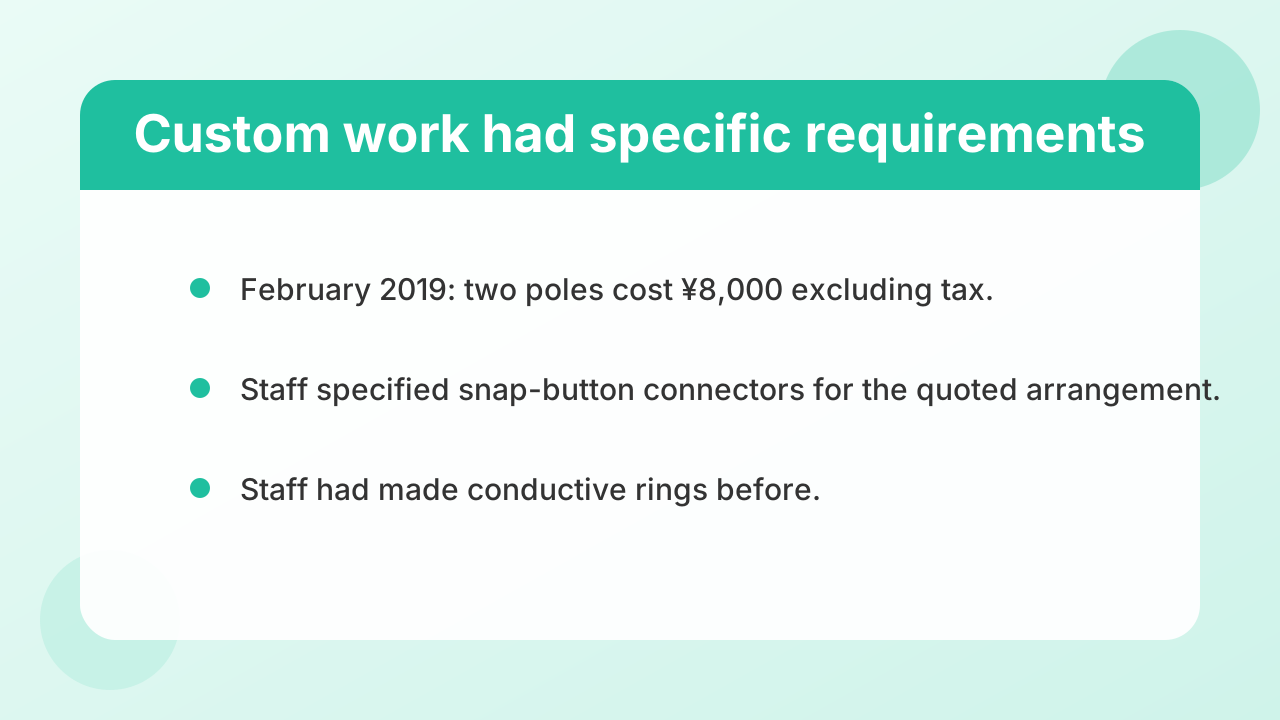
The recorded questions concern conversion charges, connector restrictions, heat tolerance, and whether particular materials could become electrodes.
"What did custom electrode chips cost in the diary?"
An entry published in February 2019 gives resin-chip electrode conversion prices (charges for adding electrical contacts). Two poles cost ¥8,000 (about $51 at ¥156 = $1, rate as of 2026-09-04) excluding tax, while one pole cost ¥5,000 (about $32 at ¥156 = $1, rate as of 2026-09-04) excluding tax.
Each pole was limited to 30 mm, and these were conversion charges rather than prices for every component of a finished order. Mr. Okada described the single-pole option as intended for arrangements with one electrode on a urethral chip and another on a rectal chip.
(Source: ok-lab's diary, published February 2019)
https://ok-lab.hatenablog.com/entry/2019/02/23/142754
"Were custom electrode chips considered suitable for boiling?"
In an entry published in August 2019, a customer requested paired urethral and rectal electrode chips and asked whether they could tolerate boiling. The quote charged ¥2,160 (about $14 at ¥156 = $1, rate as of 2026-09-04) for electrode work on each chip. The customer had specified a snap-button connector (a press-together electrical fitting) for the urethral chip.
The reply said the 2 poles could not have different connector arrangements under the specifications of the customer's Omron equipment. On heat tolerance, the maker answered that boiling was possible; the diary does not record whether this order was completed. Staff specified snap-button connectors on both chips for this quoted arrangement.
(Source: ok-lab's diary, published August 2019)
https://ok-lab.hatenablog.com/entry/2019/08/31/131337
"Could custom electrode chips include a stainless-steel ring?"
An entry published in April 2024 reports feedback from a customer using a stainless-steel electrode chip. The customer described stimulation varying with body movement when a rectal electrode formed the other pole. The same customer reported a better experience with an external coil electrode, then asked about converting a stainless-steel ring.
Staff replied that they had made conductive rings before and believed another could be made. Mr. Okada considered a ring-and-chip combination possible, while noting unresolved questions about wire arrangements. He asked for specific requirements before considering that custom combination.
(Source: ok-lab's diary, published April 2024)
https://ok-lab.hatenablog.com/entry/2024/04/27/122924
Buying from outside Japan
OK Lab ships internationally to countries covered by Japan Post's EMS courier service. Overseas orders are paid in advance by PayPal. Each order carries a ¥400 (about $3 at ¥156 = $1, rate as of 2026-09-04) handling fee, and EMS shipping is charged on top. These terms come from OK Lab's official sales-terms page (written here as plain text, not a link: ok-lab.net/docs/law), checked on September 7, 2026; confirm them on the official store before you order, because they can change.
Summary of this article
| What you wanted to know | The answer |
|---|---|
| In short: were custom requests accepted? | Some resulted in builds; others required redesign or were deferred. |
| About the product: who makes it? | OK Lab, a small company in Japan, makes the urethral device. |
| Key terms: what makes an electrode chip different? | Electrical contacts connect it to a separate stimulator. |
| What happens: could any requested design be made? | The diary records limits involving materials, fabrication, and the maker's health. |
| The maker's answer: what influenced the design? | Contact coverage, finished thickness, and cable strength shaped the responses. |
| Changes over time: what developed? | The entries describe different electrode surfaces, flexible links, and connector arrangements. |
| Related products: what is currently listed? | The short stainless-steel ring and screw-shaped support add-on are each ¥3,300 (about $21 at ¥156 = $1, rate as of 2026-09-04) including tax. |
| Common worries: what did customers ask? | Questions covered prices, boiling tolerance, connectors, and metal-ring conversion. |
| Buying abroad: what payment and delivery terms apply? | Advance PayPal payment, a ¥400 (about $3 at ¥156 = $1, rate as of 2026-09-04) handling fee, and additional EMS shipping charges. |
Source: ok-lab's diary (Okada Comfortable Life Laboratory). The original entries are in Japanese; quotations on this page are translated. Photos and videos are on the original entries.
This article is a summary of the maker's development diary. The product is not a medical device and no result is guaranteed. If anything feels wrong or worries you, see a doctor. Prices, specifications and cautions change, so confirm the latest information on the official blog and the official site. Questions about ordering and shipping go to the seller.