![Which prostate chip should a beginner choose? | The maker favors shorter designs and caution [OK Prostate Chip]](/img/a/T0373/eyecatch.svg)
This page is based on entries from "ok-lab's diary" (https://ok-lab.hatenablog.com/), the Japanese development diary written by Mr. Okada, founder of OK Lab (Okada Comfortable Life Laboratory). Only the entries about "beginner cautions and choosing a first product" are summarized here, in order of publication. Past prices and sizes are as written at the time. Current prices come from the official product list (retrieved September 4, 2026). Quotations are translated from Japanese.
Note: This page is a personal reading log by someone with no connection to the maker or the seller. It reflects the source entries as of their publication dates and makes no guarantee of accuracy or safety. The product is not a medical device; talk to a doctor about any health decision. Check the official site for current information. This page contains advertising.
In short
- The diary records beginner difficulties, bleeding, infection concerns, and devices that became difficult or impossible to remove.
- Mr. Okada of OK Lab, a small company in Japan, favors shorter designs and cautions against advanced models.
- The current list includes standard glass models; newer diary designs do not all have confirmed matches.
If you see blood in your urine, even a small amount or for the first time, do not wait and see. See a urologist right away.
If you suddenly cannot urinate, or the device cannot be removed, do not try to fix it yourself. Go to a medical facility, including emergency care, immediately.
About this product
The OK Prostate Chip is a small device that is placed in the urethra (the urine passage) so that it acts on the prostate; the maker sells it in several shapes, sizes and materials. It is made and sold by OK Lab (Okada Comfortable Life Laboratory), a small company in Japan, through its own online store, and prices are in Japanese yen (JPY). The maker's development diary, "ok-lab's diary", is written in Japanese. This page is an English summary of it, and every quotation is translated. OK Lab ships internationally, so readers outside Japan can order (see "Buying from outside Japan" below). Product names on this page are plain-English descriptions. The official Japanese product name is shown once in the product table so you can find the same item in the store.
Before you read: key terms
| Term | Plain-English meaning |
|---|---|
| Urethra | The passage urine travels through; it is also where these devices are placed. |
| Urinary sphincter | A muscle that opens or closes the urine passage; the diary discusses pressure on it. |
| Bulbar urethra | A wider section before the urinary sphincter; it served as Mr. Okada's early boundary for beginners. |
| Linked glass chip | Glass chip sections joined together; the diary discusses their combined reach and movement. |
| Acute prostatitis | The diagnosis reported in the June 2018 illness case. The diary does not explain this. |
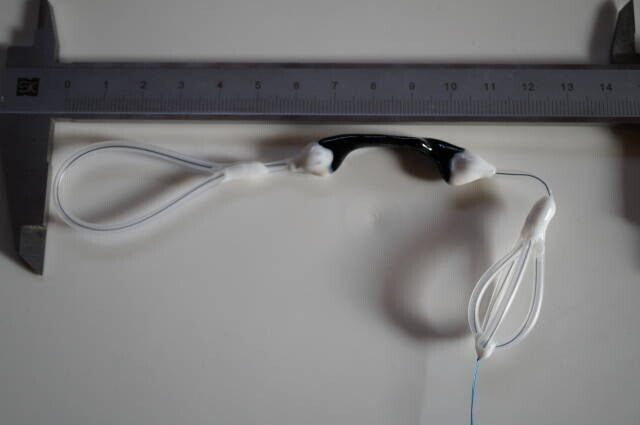
| Chipless device | Wire loops for urethral placement; the diary discusses their thickness, bends, and pressure. |
| Gatekeeper | An accessory discussed as a tube-holding device; its retaining pin appears in a failure report. |
What happens: prostate chips for beginners
The OK Prostate Chip is a small device placed in the urethra to act on the prostate. Beginner choice concerns its length, shape, and whether the diary treats that design as suitable for someone without experience. The early short design reached partway along the passage through the prostate, while the long design extended into the bladder. Mr. Okada linked that difference to distinct cautions about deeper placement.
Short designs shaped the maker's first prostate chip proposal
In an entry published in October 2017, Mr. Okada proposed an initial single-bump short chip about 3cm long. He described it as comparatively safe for beginners, expressing his judgment about that early design. He also described a narrowing 2-3cm from the urethral opening where beginners could encounter resistance. He advised that stopping was acceptable, without treating immediate progress as necessary.
(Source: ok-lab's diary, published October 2017)
https://ok-lab.hatenablog.com/entry/20171007/1507362243
Long chips for beginners remained discouraged when the maker reversed cancellation
In an entry published in January 2018, Mr. Okada reversed his earlier cancellation of the long chip. He still feared damage to urinary sphincters (muscles controlling the urine passage). He reported two testing incidents when a long chip nearly became stuck, though both incidents ended with removal.
Linked short-chip items 1–3 and long-chip item 6 were each planned at ¥6,000 (about $38 at ¥156 = $1, rate as of 2026-09-04) excluding tax, as published in January 2018. Mr. Okada restricted the long design to brief use because he feared injury. He advised beginners and intermediate users against purchasing it.
(Source: ok-lab's diary, published January 2018)
https://ok-lab.hatenablog.com/entry/20180111/1515662782
Linked chips for beginners raised concerns about unintended bladder entry
In a further entry published in January 2018, Mr. Okada discussed linked glass chips (joined glass sections) with a 0-2mm gap. Their overall length exceeded 5cm, and he warned that they could reach the bladder easily. Although he considered this arrangement easier to handle, he did not equate easier handling with suitability for a first purchase. He advised against it for beginners with limited knowledge of the urethra.
(Source: ok-lab's diary, published January 2018)
https://ok-lab.hatenablog.com/entry/20180114/1515943724
A stuck prostate chip remained inside the bladder for one week
In an entry published in April 2018, a customer seeking stronger stimulation reported a failed bond in a personally modified long-chip assembly. The long chip remained in the bladder, with dull pain during urination, before passing after 1 week. Mr. Okada replied that the report reinforced his concern about the long design. He advised against purchasing it without accepting that a complication could require hospital care.
(Source: ok-lab's diary, published April 2018)
https://ok-lab.hatenablog.com/entry/20180407/1523090115
Long chip safety reports included blood after extended use
In an entry published in April 2018, Mr. Okada cited a report of blood coating a long chip after 10 days inside. That customer had not noticed the bleeding during that period. Mr. Okada said he had received repeated reports of bleeding with prolonged use and suspected excessive friction. He cautioned against casually ordering a long chip.
(Source: ok-lab's diary, published April 2018)
https://ok-lab.hatenablog.com/entry/20180421/1524299808
Beginner chip risks included fever and a reported prostate diagnosis
In an entry published in June 2018, a customer described illness after using a single glass chip overnight for 6–7 hours with Menturm ointment. The customer reported 39°C fever and blood in urine after 4 days. After 16 days, the diagnosis was acute prostatitis (a condition the diary does not explain).
The customer suspected hygiene, ointment, prolonged use, and excessive stimulation; the account did not establish which factor caused the illness. Mr. Okada added a medically knowledgeable reader's warning that even ointments claiming germ-killing effects could greatly increase infection risk. The diary's added advice opposed combining such ointments with the chip.
(Source: ok-lab's diary, published June 2018)
https://ok-lab.hatenablog.com/entry/20180609/1528523953
Arrowhead chip safety warnings focused on difficult removal and bleeding
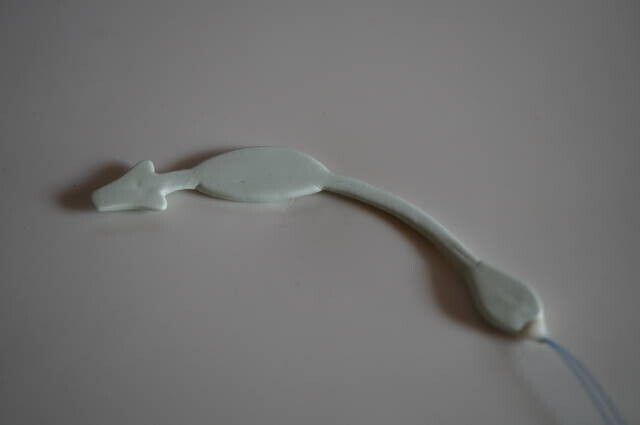
In an entry published in February 2024, Mr. Okada described an arrowhead-shaped chip designed to resist slipping out of the bladder. He reported considerable difficulty removing it and pain afterward, although he said his tests had not caused bleeding. He nevertheless described it as very dangerous and warned that bleeding was possible. His advice restricted it to people with extensive relevant experience who could judge the shape's suitability.
(Source: ok-lab's diary, published February 2024)
https://ok-lab.hatenablog.com/entry/2024/02/10/123023
The maker's answer to prostate chips for beginners
Mr. Okada's beginner advice emphasized safety knowledge, restrained choices, and caution about stronger or longer designs.
Beginner chip advice initially placed safety knowledge before deeper use
In an entry published in October 2017, Mr. Okada connected his beginner advice with confidence in safety and hygiene management. His initial boundary was the bulbar urethra (the wider section before the urinary sphincter). He treated deeper placement beyond the sphincter as a later consideration. His advice prioritized familiarity with safety management before that progression.
(Source: ok-lab's diary, published October 2017)
https://ok-lab.hatenablog.com/entry/20171022/1508644866
First prostate chip decisions later emphasized understanding the body
In an entry published in February 2025, Mr. Okada discussed a photograph of a chip that had entered the bladder. He used it to underline the device's dangers and objected to casual interest driven by a trend. He wanted prospective users to understand the urethra, prostate, and bladder. His advice called for especially careful judgment from beginners.
(Source: ok-lab's diary, published February 2025)
https://ok-lab.hatenablog.com/entry/2025/02/22/122939
Beginner chip wire advice favored the thinner option
In an entry published in February 2025, Mr. Okada described planned choices for the chipless device, a wire-based design for urethral placement. Wire thicknesses were 0.3mm and 0.4mm, with finished bends of approximately 75°, 90°, 105°, and 130°. He said customers could specify these choices and expected a small initial supply the following week.
He described 0.4mm wire as producing substantial pressure on the urethra. His personal preferences about bend angles remained tentative until further testing with the supplied wires. For beginners, he favored 0.3mm throughout the device.
(Source: ok-lab's diary, published February 2025)
https://ok-lab.hatenablog.com/entry/2025/02/22/122939
If you see blood in your urine, even a small amount or for the first time, do not wait and see. See a urologist right away.
If you suddenly cannot urinate, or the device cannot be removed, do not try to fix it yourself. Go to a medical facility, including emergency care, immediately.
How prostate chips for beginners changed over time
| Published | What the diary said then |
|---|---|
| Oct 2017 | Short designs were generally described as about 30-35mm long. |
| Jan 2018 | Mr. Okada reported irritation developing after days with silicone-coated glass prototypes. |
| Aug 2018 | The twist series was initially restricted to custom orders for advanced users. |
| Dec 2018 | A vibrating prototype's rear measured about 11mm wide and 5mm thick, raising beginner concerns. |
| Dec 2023 | Mr. Okada judged his five-screw arrangement unsuitable for general recommendation. |
| Mar 2024 | His flexible ceramic pair unexpectedly reached the urethral opening after about a day. |
OK Prostate Chip products related to prostate chips for beginners
The current list includes products discussed in these warnings; their appearance here does not establish beginner suitability.
Products that appear in these entries
| Product (official name) | Price incl. tax | Relation to this topic |
|---|---|---|
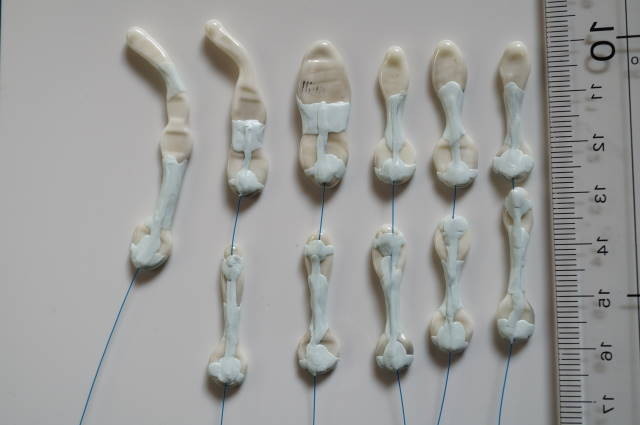
| Single glass chip (OKプロステートチップ ガラス素材1チップタイプ) | ¥3,300 (about $21 at ¥156 = $1, rate as of 2026-09-04) | June 2018: the customer reporting fever and a prostate diagnosis identified this product type. |
| Linked glass chips (OKプロステートチップ ガラス素材2連結タイプ) | ¥6,600 (about $42 at ¥156 = $1, rate as of 2026-09-04) | January 2018: the maker discussed this linked design while explaining his advanced-model release. |
| Long chip (OKプロステートチップ ロングタイプ) | ¥6,600 (about $42 at ¥156 = $1, rate as of 2026-09-04) | March 2018: a surprised buyer was asked to return this product after questioning its shape. |
(Source: ok-lab's diary, published January 2018)
https://ok-lab.hatenablog.com/entry/20180111/1515662782
(Source: ok-lab's diary, published March 2018)
https://ok-lab.hatenablog.com/entry/20180331/1522485734
(Source: ok-lab's diary, published June 2018)
https://ok-lab.hatenablog.com/entry/20180609/1528523953
Products the diary mentioned as alternatives
| Product (official name) | Price incl. tax | Relation to this topic |
|---|---|---|
| Short comma-shaped ceramic chip (OKプロステートチップ 陶器素材ショート勾玉タイプ) | ¥4,400 (about $28 at ¥156 = $1, rate as of 2026-09-04) | November 2022: Mr. Okada considered this for a longer-chip request, while maintaining his warning against longer designs for beginners. |
(Source: ok-lab's diary, published November 2022)
https://ok-lab.hatenablog.com/entry/2022/11/12/122932
For the early proposal, modified assembly, and silicone-coated or vibrating prototypes: No matching product can be confirmed on the current list. For the five-screw assembly, flexible ceramic pair, arrowhead chip, and chipless device: No matching product can be confirmed on the current list.
Common worries about prostate chips for beginners
The diary's replies distinguish a first purchase from advanced requests and unresolved accessory problems.
"Should a first prostate chip look this long?"
In an entry published in March 2018, a customer questioned the long chip's unexpected shape after ordering without reading its description. Mr. Okada asked for its immediate return because he considered it dangerous. The diary does not record whether the return was completed. He again advised beginners and intermediate users against buying the long chip.
(Source: ok-lab's diary, published March 2018)
https://ok-lab.hatenablog.com/entry/20180331/1522485734
"Would a longer beginner chip solve problems with reach?"
In an entry published in November 2022, a reader proposed a longer, thinner chip for beginners struggling with shorter designs. Mr. Okada considered the long, thin, minimally curved shape the most dangerous, explicitly presenting this as his experience-based judgment. He considered existing curved or flexible alternatives but remained reluctant about the requested shape.
He forwarded the proposal to a maker and left further consideration dependent on a prototype. The diary does not record a test result for that proposal. Mr. Okada advised against chips 40mm or longer for beginners who had not yet managed placement near the prostate.
(Source: ok-lab's diary, published November 2022)
https://ok-lab.hatenablog.com/entry/2022/11/12/122932
"Can adhesive fix a loose gatekeeper pin?"
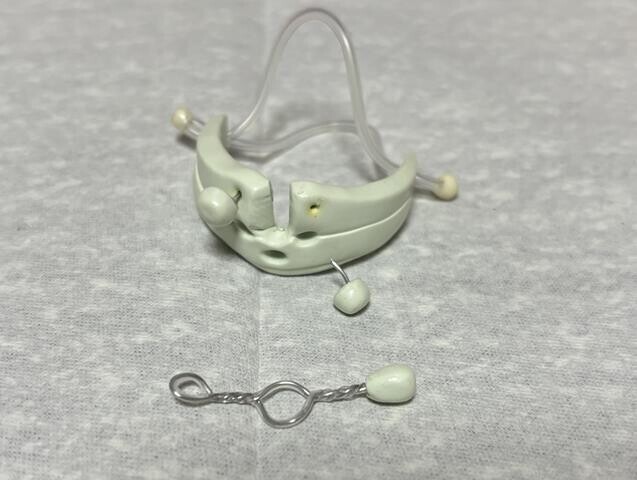
In an entry published in December 2024, a customer reported a loose gatekeeper pin around the 8th or 9th use. The gatekeeper (an accessory for holding tubing in place) was the subject of the customer's adhesive question. The customer reported that a repair had also failed.
Mr. Okada acknowledged that the glued pin could loosen under strong force. No matching product can be confirmed on the current list. His proposed remedy was a U-shaped pin in future production.
(Source: ok-lab's diary, published December 2024)
https://ok-lab.hatenablog.com/entry/2024/12/07/122832
"Should a first prostate chip come before an anal product?"
In an entry published in December 2024, an older beginner asked whether to start with an anal or penile product. OK Lab staff replied that they considered urethral hygiene harder to manage and anal products more suitable as a starting point. They also said OK Lab's own anal products were not aimed at beginners.
Staff mentioned another maker, Aneros, while acknowledging limited information about its products. The customer replied that they intended to start with an anal product; no experience afterward was reported. Staff advised considering urethral products only after becoming familiar with anal products.
(Source: ok-lab's diary, published December 2024)
https://ok-lab.hatenablog.com/entry/2024/12/07/122832
Buying from outside Japan
OK Lab ships internationally to countries covered by Japan Post's EMS courier service. Overseas orders are paid in advance by PayPal. Each order carries a ¥400 (about $3 at ¥156 = $1, rate as of 2026-09-04) handling fee, and EMS shipping is charged on top. These terms come from OK Lab's official sales-terms page (written here as plain text, not a link: ok-lab.net/docs/law), checked on September 7, 2026; confirm them on the official store before you order, because they can change.
Summary of this article
| What you wanted to know | The answer |
|---|---|
| What is the central beginner concern? | The diary reports complications and repeatedly limits which designs the maker considers suitable. |
| What is this product? | A urethral device made by a small company in Japan, with prices in Japanese yen. |
| What do the terms mean? | They distinguish parts of the urine passage, chip designs, and supporting accessories. |
| What happened in the diary? | Reports included difficult removal, bleeding, illness, and warnings about advanced shapes. |
| What did the maker advise? | Safety knowledge, cautious judgment, and less demanding design choices. |
| What changed over time? | New shapes and accessories brought additional testing results and cautions. |
| Which current products are relevant? | Standard glass designs appear in the cases; a curved ceramic option appeared in a qualified reply. |
| What did readers ask? | Questions concerned unexpected size, reach, accessory failure, and where beginners should start. |
| How does overseas buying work? | Advance PayPal payment, a handling fee, and separate EMS shipping charges apply. |
Source: ok-lab's diary (Okada Comfortable Life Laboratory). The original entries are in Japanese; quotations on this page are translated. Photos and videos are on the original entries.
This article is a summary of the maker's development diary. The product is not a medical device and no result is guaranteed. If anything feels wrong or worries you, see a doctor. Prices, specifications and cautions change, so confirm the latest information on the official blog and the official site. Questions about ordering and shipping go to the seller.