![Can I safely use an electrode chip? | The diary gives no universal safe setting [OK Prostate Chip]](/img/a/T0366/eyecatch.svg)
This page is based on entries from "ok-lab's diary" (https://ok-lab.hatenablog.com/), the Japanese development diary written by Mr. Okada, founder of OK Lab, a small company in Japan (Okada Comfortable Life Laboratory). Only the entries about "limits on electrical stimulation and electrodes" are summarized here, in order of publication. Past prices and sizes are as written at the time. Current prices come from the official product list (retrieved September 4, 2026). Quotations are translated from Japanese.
Note: This page is a personal reading log by someone with no connection to the maker or the seller. It reflects the source entries as of their publication dates and makes no guarantee of accuracy or safety. The product is not a medical device; talk to a doctor about any health decision. Check the official site for current information. This page contains advertising.
In short
Customers reported pain and lingering sensations from electrode chips, sometimes at their controller's lowest setting.
Mr. Okada restricted some designs and later urged a ZEUS user to stop.
No matching product can be confirmed on the current list.
If you see blood in your urine, even a small amount or for the first time, do not wait and see. See a urologist right away. If you suddenly cannot urinate, or the device cannot be removed, do not try to fix it yourself. Go to a medical facility, including emergency care, immediately.
About this product
The OK Prostate Chip is a small device that is placed in the urethra (the urine passage) so that it acts on the prostate; the maker sells it in several shapes, sizes and materials. It is made and sold by OK Lab (Okada Comfortable Life Laboratory), a small company in Japan, through its own online store, and prices are in Japanese yen (JPY).
The maker's development diary, "ok-lab's diary", is written in Japanese. This page is an English summary of it, and every quotation is translated. OK Lab ships internationally, so readers outside Japan can order (see "Buying from outside Japan" below).
Product names on this page are plain-English descriptions. The official Japanese product name is shown once in the product table so you can find the same item in the store.
Before you read: key terms
| Term | Plain-English meaning |
|---|---|
| Electrode | An electrical contact attached to a chip or pad to carry stimulation from a controller. |
| Controller | The external electrical unit supplying the stimulation used with an electrode chip. |
| Short circuit | An unintended electrical connection between contacts, discussed as a moisture-related fault. |
| One electrode per opening | Mr. Okada's proposed design rule, intended to limit each internal lining to one electrical contact. |
| Electrical resistance | Opposition to current flow, used in the diary to explain the maker's proposed design limits. |
| Microcurrent | Very weak electrical current discussed by Mr. Okada for proposed muscle training. |
| Sphincter | A muscle that closes an opening; the maker's training prototypes targeted these muscles. |
What happens: electrode chip safety
The OK Prostate Chip is a device placed in the urethra to act on the prostate. These entries discuss custom versions with electrodes (electrical contacts), intended to add stimulation from a controller (an external electrical unit). The diary describes contacts on urethral chips, anal chips, and external adhesive pads, with different designs proposed over time. Customers reported different sensations, while Mr. Okada questioned compatibility, moisture effects, and injuries that might go unnoticed.
Electrode chip safety was not settled by shorter, less painful sessions
In an entry published in March 2019, a customer reported pain lasting almost a day after an estimated 40 minutes or less of electrical stimulation. Mr. Okada worried about burns or other injury that the customer might not notice.
The same customer's follow-up described weaker stimulation for 30 minutes, followed by almost no pain. The customer believed their extensive earlier experience made burns unlikely.
Mr. Okada replied that this experience reassured him about safety, although he could not test the chip himself. His initial caution concerned injuries that urethral sensations might fail to reveal.
(Source: ok-lab's diary, published March 2019)
https://ok-lab.hatenablog.com/entry/2019/03/09/150813
Historical custom prices accompanied the maker's electrode chip safety restriction
In an entry published in April 2019, Mr. Okada published prices for electrode fittings with snap-button connectors. The fitting surcharge was ¥4,000 (about $26 at ¥156 = $1, rate as of 2026-09-04), excluding tax; for urethral versions, it applied to the chip's thread-free price.
His examples were ¥9,000 (about $58 at ¥156 = $1, rate as of 2026-09-04) for a single-bulge anal model and ¥7,000 (about $45 at ¥156 = $1, rate as of 2026-09-04) for a medium-length glass model. The short resin example was ¥5,000 (about $32 at ¥156 = $1, rate as of 2026-09-04).
These were April 2019 prices, all excluding tax. Mr. Okada accepted these custom requests only under his design restriction described below.
(Source: ok-lab's diary, published April 2019)
https://ok-lab.hatenablog.com/entry/2019/04/13/150233
Electrode chip safety remained uncertain when stronger stimulation became painful
In an entry published in May 2019, a customer reported no useful sensation from the earlier one electrode per opening arrangement. Mr. Okada had supplied another electrode and requested a test of the alternative.
The customer reported stimulation with two urethral contacts, but pain at level 8 (10) or above. They said they were pausing chip use after a piercing.
The diary does not record longer-term effects from this test. Mr. Okada's reply favored the two-contact arrangement for that particular customer.
(Source: ok-lab's diary, published May 2019)
https://ok-lab.hatenablog.com/entry/2019/05/25/144939
Electrode chip safety concerns included bleeding alongside otherwise favorable feedback
A separate report published in May 2019 described a customer's first experience with an electrode chip identified as "覚醒L". They reported blood during removal and a dull ache when urinating.
Subsequent symptoms seemed like a bladder infection to the customer, who reported improvement after several days. The diary does not record a confirmed diagnosis or whether electrical stimulation caused those symptoms.
Mr. Okada acknowledged learning about the controller's separate adjustments for its electrical contacts from this report. His reply suggested that an electrode chip might not need to be large.
(Source: ok-lab's diary, published May 2019)
https://ok-lab.hatenablog.com/entry/2019/05/25/144939
The ZEUS controller report prompted an explicit request to stop
In an entry published in April 2022, a customer reported using a custom electrode chip with a ZEUS controller. They described power 1 as their limit, 2 or above as excessive, and 3 minutes as their longest tolerable session.
They also reported lingering electrical sensations afterward; Mr. Okada called this too dangerous and suspected unseen urethral injury or burns. A follow-up published in April 2022 said they planned to stop using ZEUS and reported no symptoms about 2 weeks afterward.
Mr. Okada's follow-up warned that sensations varied and that use could be life-threatening for someone with severe heart failure. He urged the customer to stop using that controller.
(Source: ok-lab's diary, published April 2022)
https://ok-lab.hatenablog.com/entry/2022/04/02/123050
(Source: ok-lab's diary, published April 2022)
https://ok-lab.hatenablog.com/entry/2022/04/09/123458
The maker's answer to electrode chip safety
Mr. Okada imposed design and ordering limits, while acknowledging that he could not personally verify safe use.
Heart disease limited Mr. Okada's ability to assess electrode chip safety
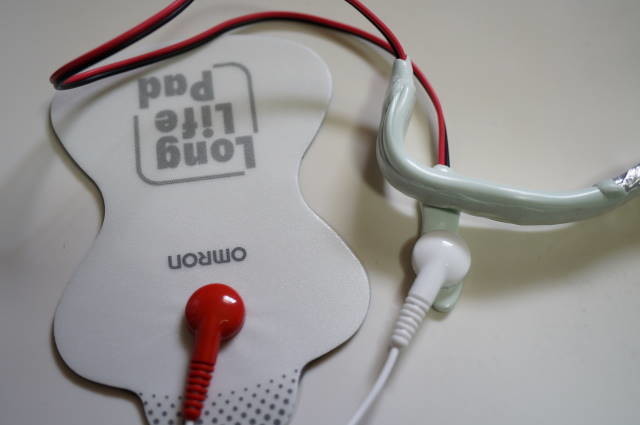
In an entry published in December 2018, Mr. Okada recalled a stimulation-unit manual prohibiting use by people with heart disease. He described his own serious heart condition as the reason he would not perform powered, on-body tests.
He limited his checks to whether electricity passed through the device, using a test meter. He warned that the amount of current could be life-threatening.
His offer was to manufacture requested electrode chips for people with relevant knowledge. Mr. Okada urged particular caution about the amount of current.
(Source: ok-lab's diary, published December 2018)
https://ok-lab.hatenablog.com/entry/20181208/1544250742
Proposed muscle training brought another limit into electrode chip safety discussions
In an entry published in March 2019, Mr. Okada described prototypes intended to train sphincters (muscles that close openings). The urethral design was about 40mm long, while the anal design was about 60mm long.
He said the urethral design also considered female users. His stated aim was muscle training through microcurrent (very weak electrical current).
He also relayed a television discussion acknowledging unknown long-term effects, despite reported short-term safety in the work discussed. Mr. Okada advised that strong current was unnecessary for the proposed training purpose.
(Source: ok-lab's diary, published March 2019)
https://ok-lab.hatenablog.com/entry/2019/03/16/165528
One electrode per opening became an explicit ordering condition
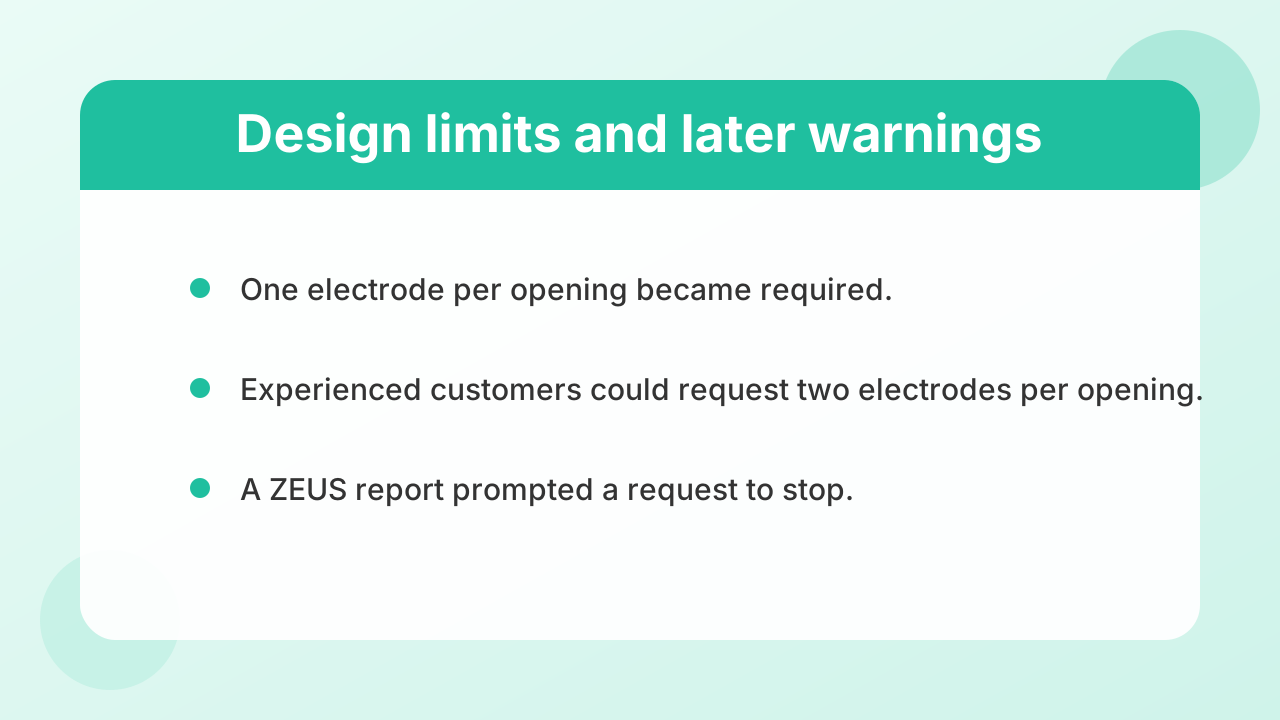
An entry published in April 2019 introduced Mr. Okada's one electrode per opening rule. He wanted at least 500Ω of internal electrical resistance (opposition to current flow) between contacts in case a controller malfunctioned.
He also cited a theory that two contacts on the same internal lining concentrated current near its surface. He wrote that urine could short together two urethral contacts, while one contact could instead carry more current to the wet lining.
Mr. Okada regarded that increased contact with the wet lining as potentially more comfortable. At that point, he required custom requests to follow his one electrode per opening rule.
(Source: ok-lab's diary, published April 2019)
https://ok-lab.hatenablog.com/entry/2019/04/13/150233
Controller limitations shaped Mr. Okada's approach to electrode chip safety
In an entry published in April 2019, an experienced reader challenged the maker's preferred design. The reader believed stimulation between different tissues could feel unpleasant and wanted a controller with more complete electrical control.
Mr. Okada acknowledged the objection and said he could not produce the dedicated controller the reader described. He characterized his rule as a compromise based on adapting a commercial massage unit.
He also acknowledged that his proposal might not satisfy customers seeking stronger sensations. Mr. Okada continued to favor his limited design approach under that commercial-controller constraint.
(Source: ok-lab's diary, published April 2019)
https://ok-lab.hatenablog.com/entry/2019/04/20/144337
A broken wire reinforced Mr. Okada's concerns about electrode chip safety
In an entry published in April 2022, Mr. Okada described his own experience with a broken wire. He could feel a protruding wire end with his fingers, yet had felt only pulling inside the urethra. Mr. Okada warned against treating urethral sensations as a reliable safety check.
(Source: ok-lab's diary, published April 2022)
https://ok-lab.hatenablog.com/entry/2022/04/02/123050
If you see blood in your urine, even a small amount or for the first time, do not wait and see. See a urologist right away. If you suddenly cannot urinate, or the device cannot be removed, do not try to fix it yourself. Go to a medical facility, including emergency care, immediately.
How electrode chip safety changed over time
| Published | What the diary said then |
|---|---|
| Dec 2018 | Compatibility was unverified, and inexperienced customers' requests were refused. |
| Mar 2019 | A customer reported prolonged pain, then less pain after a shorter, weaker session. |
| Mar 2019 | Muscle-training prototypes introduced a different intended purpose. |
| Apr 2019 | One electrode per opening became an ordering condition. |
| Apr 2019 | Mr. Okada described the rule as a compromise around commercial controllers. |
| May 2019 | Experienced customers could still request two electrodes within one opening. |
| May 2019 | Separate reports described painful stimulation and bleeding. |
| Jun 2019 | Mr. Okada acknowledged the stimulation-unit manual's prohibition on genital use. |
| Apr 2022 | A ZEUS report prompted a request to stop using that controller. |
| Apr 2022 | The customer planned to abandon ZEUS; Mr. Okada emphasized individual differences and heart risks. |
The diary does not say what the current state is.
OK Prostate Chip products related to electrode chip safety
No current product is directly tied to this topic.
Common worries about electrode chip safety
The maker distinguished manufacturing a custom chip from confirming safe use with a particular controller.
"Can OK Lab confirm electrode chip safety with my controller?"
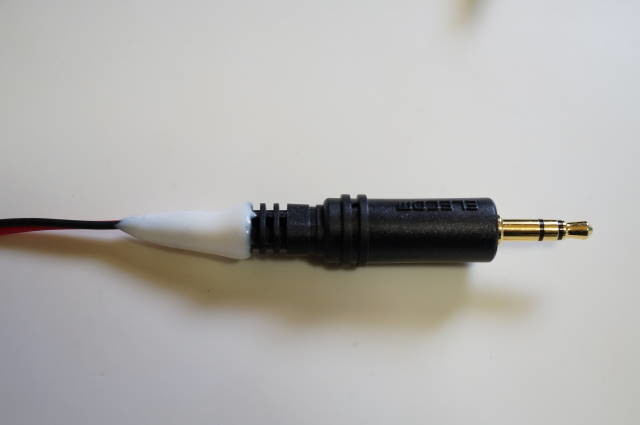
In an entry published in December 2018, a customer wanted two electrical contacts within an anal chip. Mr. Okada warned that rectal moisture could change the amount of current between them.
He considered a short circuit (an unintended electrical connection) possible in the presence of enema fluid. He could supply electrode chips but could not judge controller compatibility, leaving responsibility for safety with the customer.
The diary does not record how that requested arrangement performed in use. Mr. Okada refused requests from people without prior experience of electrical stimulation devices.
(Source: ok-lab's diary, published December 2018)
https://ok-lab.hatenablog.com/entry/20181208/1544250742
"Does electrode chip safety policy rule out two contacts?"
In an entry published in May 2019, a customer proposed a different custom design because they thought two-contact requests were no longer accepted. Mr. Okada clarified that his one electrode per opening proposal was aimed at beginners.
He said he would still accept requests from people with electrode knowledge and experience. The customer withdrew the initial proposal and requested a linked resin design; Mr. Okada produced a prototype but expressed concern about its cable's durability.
The diary does not record how that completed prototype felt in use. Mr. Okada asked the customer to weigh the requested spacing against durability and function.
(Source: ok-lab's diary, published May 2019)
https://ok-lab.hatenablog.com/entry/2019/05/11/152432
"Which controller did the maker discuss for electrode chip safety?"
In an entry published in June 2019, a customer unfamiliar with electrode equipment asked which controller it required. Mr. Okada named an Omron Elepuls low-frequency stimulation unit and mentioned models costing about ¥3,000 (about $19 at ¥156 = $1, rate as of 2026-09-04) at that time.
He explained that the electrode chip repurposed equipment intended for external skin contact for contact with internal moist tissue. He also stated that Omron's manual prohibited genital use.
The diary does not record whether this customer proceeded with an electrode-chip order. Mr. Okada directed the customer to the manufacturer's instructions.
(Source: ok-lab's diary, published June 2019)
https://ok-lab.hatenablog.com/entry/2019/06/08/144200
Buying from outside Japan
OK Lab ships internationally to countries covered by Japan Post's EMS courier service. Overseas orders are paid in advance by PayPal.
Each order carries a ¥400 (about $3 at ¥156 = $1, rate as of 2026-09-04) handling fee, and EMS shipping is charged on top. These terms come from OK Lab's official sales-terms page (written here as plain text, not a link: ok-lab.net/docs/law), checked on September 7, 2026; confirm them on the official store before you order, because they can change.
Summary of this article
| What you wanted to know | The answer |
|---|---|
| What is the short answer? | The diary supplies warnings and individual reports, without establishing a universally safe setting. |
| What is the product? | A urethral device made by OK Lab in Japan, with prices in Japanese yen. |
| What do the electrical terms mean? | Electrodes are contacts; the controller supplies stimulation; resistance features in the maker's design reasoning. |
| What problems were reported? | Pain, bleeding, and lingering sensations appear in separate customer accounts. |
| What did the maker advise? | He imposed design limits, questioned sensation as a safety check, and urged stopping ZEUS use. |
| Did the policy change? | An April 2019 restriction was followed by a May clarification allowing experienced customers' requests. |
| Is a matching current product listed? | No current product is directly tied to this topic. |
| Can the maker confirm controller compatibility? | His December 2018 reply said he could not judge compatibility. |
| How does overseas buying work? | Advance PayPal payment, a ¥400 (about $3 at ¥156 = $1, rate as of 2026-09-04) handling fee, and additional Japan Post EMS shipping. |
| What remains unresolved? | These entries do not establish current custom-order terms or safe settings for every user. |
Source: ok-lab's diary (Okada Comfortable Life Laboratory). The original entries are in Japanese; quotations on this page are translated. Photos and videos are on the original entries.
This article is a summary of the maker's development diary. The product is not a medical device and no result is guaranteed. If anything feels wrong or worries you, see a doctor. Prices, specifications and cautions change, so confirm the latest information on the official blog and the official site. Questions about ordering and shipping go to the seller.