![My chip arrived broken | The diary records replacement and refund options [OK Prostate Chip]](/img/a/T0364/eyecatch.svg)
This page is based on entries from "ok-lab's diary" (https://ok-lab.hatenablog.com/), the Japanese development diary written by Mr. Okada, founder of OK Lab, a small company in Japan (Okada Comfortable Life Laboratory). Only the entries about "shipping damage" are summarized here, in order of publication. Past prices and sizes are as written at the time. Current prices come from the official product list (retrieved September 4, 2026). Quotations are translated from Japanese.
Note: This page is a personal reading log by someone with no connection to the maker or the seller. It reflects the source entries as of their publication dates and makes no guarantee of accuracy or safety. The product is not a medical device; talk to a doctor about any health decision. Check the official site for current information. This page contains advertising.
In short
- Glass and ceramic chips have arrived broken, sometimes inside packaging with no visible damage.
- Mr. Okada offered replacement, refund, stronger packaging, or a thicker chip, depending on the case.
- The diary does not say what the current state is.
About this product

The OK Prostate Chip is a small device that is placed in the urethra (the urine passage) so that it acts on the prostate; the maker sells it in several shapes, sizes and materials. It is made and sold by OK Lab (Okada Comfortable Life Laboratory), a small company in Japan, through its own online store, and prices are in Japanese yen (JPY). The maker's development diary, "ok-lab's diary", is written in Japanese. This page is an English summary of it, and every quotation is translated. OK Lab ships internationally, so readers outside Japan can order (see "Buying from outside Japan" below). Product names on this page are plain-English descriptions. The official Japanese product name is shown once in the product table so you can find the same item in the store.
Before you read: key terms
| Term | Plain-English meaning |
|---|---|
| Urethra | The urine passage; the base device is placed here to act on the prostate. |
| Semi-long | A shape label used to distinguish certain chips from the short and long types. |
| Size L, M, or S | Lettered size labels distinguishing versions of a chip; the July 2019 entry compares their proportions. |
| Kakushin | The diary's nickname for the chip in the overseas delivery case. Its function: The diary does not explain this. |
| Customs | Border checks mentioned in the overseas shipment account; Mr. Okada suspected the parcel had been opened for inspection. |
What happens: shipping damage
The OK Prostate Chip is a device placed in the urethra (the urine passage) to act on the prostate. These shipping damage reports describe products arriving broken, including cases where the cardboard outside them appeared undamaged. The packing surrounds the product for delivery; the material describes stiff cardboard sheets, small boxes, and film containing a chip. The packaging discussed here protects the shipment and is outside the device.
Glass shipping damage reports led Mr. Okada to remake affected products
In an entry published in November 2017, Mr. Okada described shipping glass chips sandwiched between sheets of stiff cardboard. Numerous customers then contacted him to report that the glass had broken. He writes that these reports left him busy making the affected products again, although the passage gives no number of damaged orders. His response included remaking the chips and changing how subsequent shipments were packed.
(Source: ok-lab's diary, published November 2017)
https://ok-lab.hatenablog.com/entry/20171129/1511963864
Shipping damage was reported before the chip's bag had been opened
An entry published in June 2019 includes a customer's report that the contents arrived damaged while the chip's bag remained unopened. Mr. Okada expressed surprise, saying the cardboard containers had been associated with just one transport accident over a year and a half. He compared the appearance to something being stepped on, but did not establish what had happened. The diary does not record whether this customer received a replacement or refund.
(Source: ok-lab's diary, published June 2019)
https://ok-lab.hatenablog.com/entry/2019/06/01/155432

Shipping damage affected both an original ceramic chip and its replacement
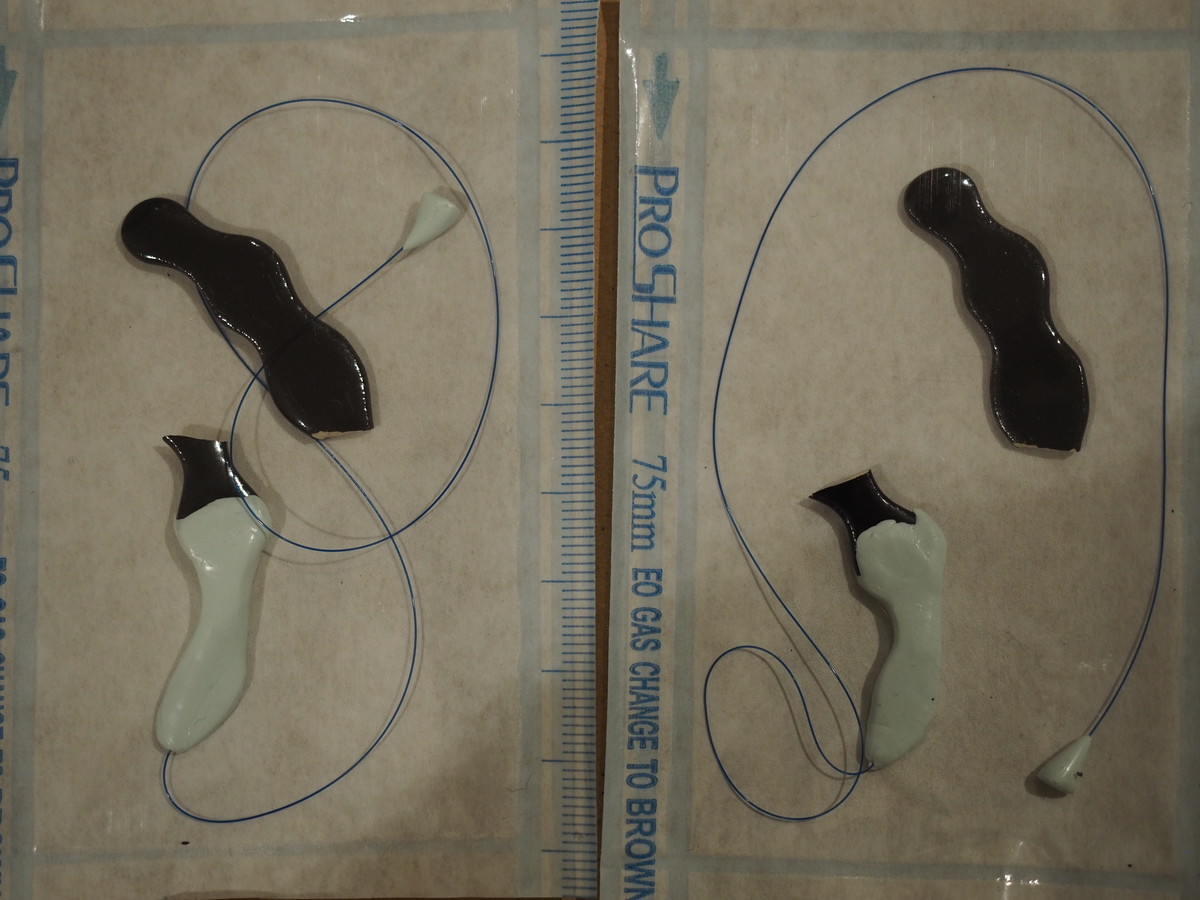
An entry published in July 2019 describes a broken semi-long ceramic chip, size L, inside cardboard without visible folds or damage. Other products were intact; Mr. Okada apologized and arranged a replacement. The replacement arrived broken near the same point, again without obvious packaging damage.
Before resending, Mr. Okada had checked its strength with slightly firmer finger pressure at the previous break point, then used the same shipping method. No matching product can be confirmed on the current list. Mr. Okada then offered a refund, stronger packing, a thicker chip, or a change to another product.
(Source: ok-lab's diary, published July 2019)
https://ok-lab.hatenablog.com/entry/2019/07/20/151609
An overseas shipping damage report described a broken chip inside its film
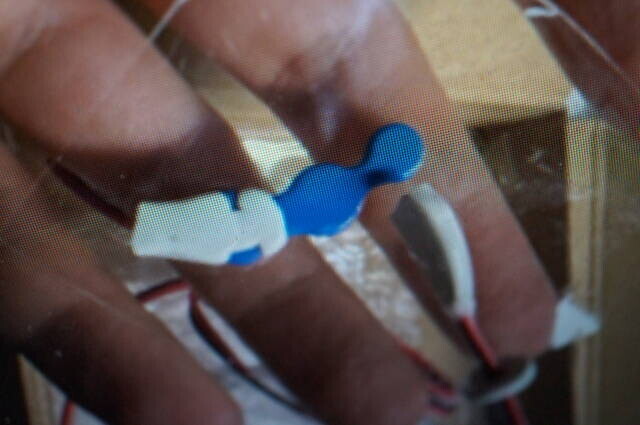
An entry published in March 2024 describes a customer's chip (Kakushin) arriving broken outside Japan after shipment in a cardboard box. The photograph showed the broken product still inside its film, while other photographs appeared to show an undamaged box. Mr. Okada traced the shipment and found that it had stopped at customs (border checks) for more than a week.
He described this as the first reported transport breakage for that named chip, across both domestic and overseas deliveries. No matching product can be confirmed on the current list. Mr. Okada offered either a replacement shipment or a refund.
(Source: ok-lab's diary, published March 2024)
https://ok-lab.hatenablog.com/entry/2024/03/23/122837
The maker's answer to shipping damage
The recorded responses included changing the packaging, offering customer choices, and requesting a thicker version of one ceramic shape.
Miniature cardboard boxes replaced stiff sheets after glass shipping damage reports
In the entry published in November 2017, Mr. Okada says he had switched to miniature cardboard boxes for shipping. He considered the new arrangement satisfactory at that point, after the problems with glass sent between stiff sheets. The passage supplies no dimensions for these boxes and no detailed description of their internal packing. Mr. Okada presented the move to boxed packaging as his response to the broken-delivery reports.
(Source: ok-lab's diary, published November 2017)
https://ok-lab.hatenablog.com/entry/20171129/1511963864
Repeated shipping damage prompted a request for thicker semi-long ceramic chips
In an entry published in July 2019, Mr. Okada explains that thickness for semi-long ceramic chips had been based on size M. He thought the larger L size might have insufficient thickness for its proportions. He noted that semi-long L and long S were nearly equal in length, while semi-long L was wider and thinner.
The customer chose a newly made, thicker chip from the options offered after the failed replacement. The diary does not record whether that thicker replacement arrived intact. Mr. Okada asked the ceramic craftsperson to make future semi-long L chips slightly thicker.
(Source: ok-lab's diary, published July 2019)
https://ok-lab.hatenablog.com/entry/2019/07/20/151609
Replacement or refund was offered for the overseas shipping damage case
The entry published in March 2024 does not identify a confirmed cause for the overseas customer's broken delivery. Mr. Okada suspected that the parcel had been opened for inspection and that the chip broke during that process. He based this suspicion partly on the separated pieces inside the film and the apparently undamaged cardboard box.
He also acknowledged another possibility: vibration during shipping could have broken the chip and moved the pieces apart inside the film. The diary does not record which explanation was correct or which remedy the customer selected. Mr. Okada's stated response was to offer a replacement shipment or a refund.
(Source: ok-lab's diary, published March 2024)
https://ok-lab.hatenablog.com/entry/2024/03/23/122837
How shipping damage changed over time
| Published | What the diary said then |
|---|---|
| Nov 2017 | Glass breakages prompted a switch from stiff cardboard sheets to miniature cardboard boxes. |
| Jun 2019 | A chip arrived damaged while its bag remained unopened. |
| Jul 2019 | A replacement broke too; the customer chose a thicker ceramic chip. |
| Feb 2020 | Mr. Okada recalled about 1–2 shipping breakages each for glass and ceramic. |
| Mar 2024 | An overseas chip arrived broken; replacement or refund was offered. |
The diary does not say what the current state is.
OK Prostate Chip products related to shipping damage
No current product is directly tied to this topic.
Common worries about shipping damage
The July 2019 customer questioned the chip's shape, the delivery area, and whether changing shapes was possible.
"Could the chip's shape explain repeated shipping damage?"
In the entry published in July 2019, the customer questioned the shape because the original chip and replacement broke at nearly identical points. The customer also considered ceramic strength and transport handling, without claiming those possibilities had been ruled out. Mr. Okada agreed that the proposed explanations were possible, but said he could only speculate about the cause.
He thought ceramic was fairly uniform throughout, so an applied force might cause it to break at its weakest point. This was his explanation for the matching break locations, rather than a confirmed finding about the shipment. Mr. Okada said he would discuss increasing the chip's thickness with the ceramic craftsperson.
(Source: ok-lab's diary, published July 2019)
https://ok-lab.hatenablog.com/entry/2019/07/20/151609
"Could shipping damage depend on the delivery area?"
In the entry published in July 2019, the customer wondered whether something about the delivery area made these transport problems more likely. Neither the customer nor Mr. Okada identified evidence confirming a regional cause. Mr. Okada described the existing packaging as thin cardboard and said a localized bending force could break the chip.
He recalled 3–4 breakage incidents over about 20 months with that cardboard packaging, while expressing surprise that this customer experienced consecutive failures. His explanation acknowledged the packing's limits without establishing which force, handling event, or location caused the reported damage. Mr. Okada offered more protective packing if the customer wanted the same product made and sent again.
(Source: ok-lab's diary, published July 2019)
https://ok-lab.hatenablog.com/entry/2019/07/20/151609
"Is changing shapes possible after repeated shipping damage?"
In the entry published in July 2019, the customer asked about changing to a shape that had reached other buyers without problems. Mr. Okada replied that he had sent the semi-long L shape to other customers and had received no trouble reports from them then. He nevertheless offered a change to another product, without naming a particular alternative.
For the other replacement choices, he estimated about 10 days to remake the same item and about 5 weeks for a thicker chip. Those were waiting times quoted for this complaint, and the entry does not establish present-day turnaround times. Mr. Okada asked the customer to state a preference among the offered remedies.
(Source: ok-lab's diary, published July 2019)
https://ok-lab.hatenablog.com/entry/2019/07/20/151609
Buying from outside Japan

OK Lab ships internationally to countries covered by Japan Post's EMS courier service. Overseas orders are paid in advance by PayPal. Each order carries a ¥400 (about $3 at ¥156 = $1, rate as of 2026-09-04) handling fee, and EMS shipping is charged on top. These terms come from OK Lab's official sales-terms page (written here as plain text, not a link: ok-lab.net/docs/law), checked on September 7, 2026; confirm them on the official store before you order, because they can change.
Summary of this article
| What you wanted to know | The answer |
|---|---|
| What is the immediate answer? | Broken deliveries are recorded, including repeated breakage inside apparently undamaged packaging. |
| What is the product? | A device placed in the urethra, made and sold by OK Lab in Japan. |
| What do the terms mean? | Semi-long is a shape label; Kakushin names the overseas chip whose function is not explained here. |
| What happened in the delivery reports? | Glass breakages, unopened-bag damage, a broken ceramic replacement, and an overseas broken chip were reported. |
| What did the maker do? | He changed packing, offered remedies, and requested extra thickness for one ceramic shape. |
| What changed over time? | Boxed packing appeared in November 2017; a July 2019 complaint prompted a request for thicker semi-long L chips. |
| Which current product is directly tied to these cases? | No current product is directly tied to this topic. |
| Were the causes established? | Shape, handling, packing forces, and customs inspection were discussed; the specific causes remained unconfirmed. |
| How do overseas orders work? | Advance PayPal payment, Japan Post's EMS courier service, a handling fee, and additional shipping charges. |
| What does the article establish overall? | Historical responses to broken deliveries; the diary does not say what the current state is. |
Source: ok-lab's diary (Okada Comfortable Life Laboratory). The original entries are in Japanese; quotations on this page are translated. Photos and videos are on the original entries.
This article is a summary of the maker's development diary. The product is not a medical device and no result is guaranteed. If anything feels wrong or worries you, see a doctor. Prices, specifications and cautions change, so confirm the latest information on the official blog and the official site. Questions about ordering and shipping go to the seller.