![Can a glass chip break inside me? | The diary reports breaks and injuries [OK Prostate Chip]](/img/a/T0351/eyecatch.svg)
This page is based on entries from "ok-lab's diary" (https://ok-lab.hatenablog.com/), the Japanese development diary written by Mr. Okada, founder of OK Lab, a small company in Japan (Okada Comfortable Life Laboratory). Only the entries about glass chip breaking are summarized here, in order of publication. Past prices and sizes are as written at the time. Current prices come from the official product list (retrieved September 4, 2026). Quotations are translated from Japanese.
Note: This page is a personal reading log by someone with no connection to the maker or the seller. It reflects the source entries as of their publication dates and makes no guarantee of accuracy or safety. The product is not a medical device; talk to a doctor about any health decision. Check the official site for current information. This page contains advertising.
In short
- The diary records glass chips cracking or breaking inside the body, including a case involving bladder injury.
- Mr. Okada acknowledged no certain prevention and advised people concerned about glass to avoid it.
- Glass models remain on the current product list; the later diary entries still describe breakage risks.
If you see blood in your urine, even a small amount or for the first time, do not wait and see. See a urologist right away. If you suddenly cannot urinate, or the device cannot be removed, do not try to fix it yourself. Go to a medical facility, including emergency care, immediately.
About this product

The OK Prostate Chip is a small device that is placed in the urethra (the urine passage) so that it acts on the prostate; the maker sells it in several shapes, sizes and materials. It is made and sold by OK Lab (Okada Comfortable Life Laboratory), a small company in Japan, through its own online store, and prices are in Japanese yen (JPY). The maker's development diary, "ok-lab's diary", is written in Japanese. This page is an English summary of it, and every quotation is translated. OK Lab ships internationally, so readers outside Japan can order (see "Buying from outside Japan" below). Product names on this page are plain-English descriptions. The official Japanese product name is shown once in the product table so you can find the same item in the store.
Before you read: key terms
| Term | Plain-English meaning |
|---|---|
| Urethra | The passage that carries urine out of the body; the chip sits within it. |
| Resin | A plastic material used for protective coatings and for chip bodies made without glass. |
| Retrieval thread | Thread attached to the chip for retrieval; the early coated design also used it to connect broken sections. |
| Electronic controller | A control unit used with the vibrating chip. The diary does not explain this. |
| Gatekeeper | A fitting connected to the hook prototype, intended to help keep the penis drawn inward. |
What happens: glass chip breaking
The OK Prostate Chip is a small device placed in the urethra (the urine passage) for prostate stimulation. Here, glass chip breaking means the glass body cracking, shedding a surface piece, or snapping while being worn or handled. The diary describes glass shapes positioned along that passage, with a retrieval thread attached to bring the device back out. An early design used resin (a plastic material) around its narrow middle, with embedded thread intended to keep broken sections connected.
Glass chip cracks can begin outside the coated middle
In an entry published in October 2017, Mr. Okada described an early glass microchip with protective resin around its narrow middle. Embedded nylon thread was intended to keep broken sections connected. He warned that dropping it could crack an uncoated area, allowing sudden breakage inside the urethra.
He claimed fragments left behind would pass with urine, but acknowledged possible injury. No matching product can be confirmed on the current list. For people worried about glass, he proposed an entirely resin product.
(Source: ok-lab's diary, published October 2017)
https://ok-lab.hatenablog.com/entry/20171006/1507295400
Glass chip cracks went unnoticed despite discomfort during wear
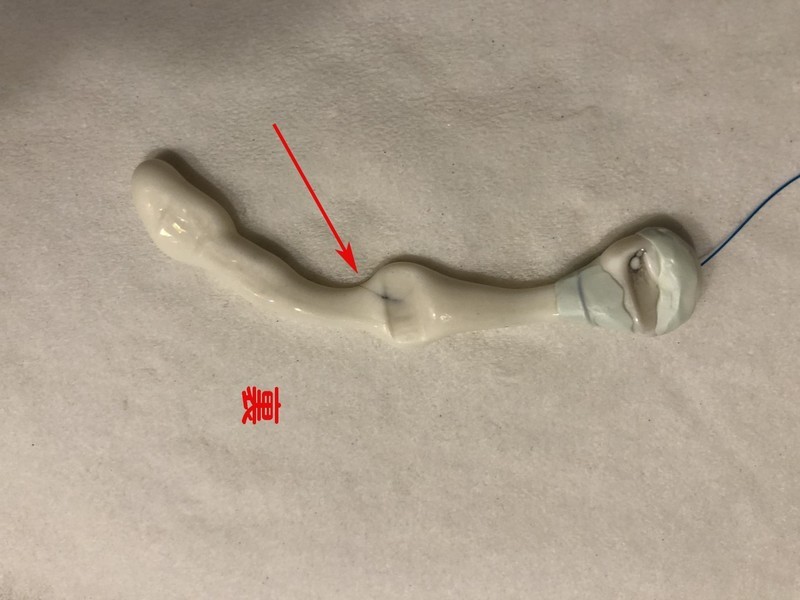
In an entry published in September 2018, a customer reported finding a central crack after about 1 week of continuous wear. The sides had shifted by approximately 0.2mm. The customer believed the raised edge had repeatedly scratched the urethra, without visible bleeding.
They had not recognized the crack while wearing the awakening glass chip, and reported that the urethral wounds were healing after switching back to their previous chip. Mr. Okada asked customers to inspect for cracks before every use and avoid using any cracked chip.
(Source: ok-lab's diary, published September 2018)
https://ok-lab.hatenablog.com/entry/20180922/1537592180
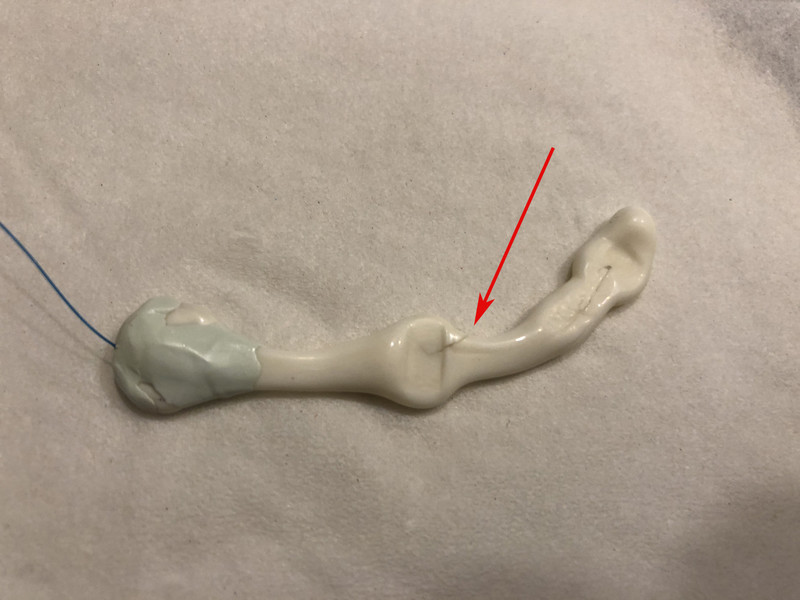
A broken glass chip fragment passed, but bladder injury remained
In an entry published in January 2019, a customer reported that their semi-long twisted glass chip broke at its enlarged tip. The fragment fell into the bladder and reportedly passed about 1 week later. A subsequent examination found widespread injury to the bladder lining.
The customer wanted a pending order changed to a plain single-chip glass model; Mr. Okada apologized, but the order change is not confirmed. He repeated his warning about checking glass chips for cracks before use.
(Source: ok-lab's diary, published January 2019)
https://ok-lab.hatenablog.com/entry/2019/01/26/152042
Continued vibration preceded glass chip cracks in a thin section
In an entry published in May 2019, a customer linked cracks in a vibrating glass chip to continued motor vibration. They reported cracking in a thin section, followed by a break when force was applied during maintenance. Mr. Okada distinguished this report from the earlier incident involving glass flaking.
The diary does not record whether a replacement was completed. Mr. Okada apologized and offered replacement of the glass section as the response to the damage.
(Source: ok-lab's diary, published May 2019)
https://ok-lab.hatenablog.com/entry/2019/05/25/144939
A glass chip broke beneath resin during its second use
In an entry published in February 2020, a customer requested a refund after a glass chip broke inside the urethra. It broke on its 2nd use, at the narrowest point beneath the resin, where no crack had been visible. The customer reported that it passed 4 hours later, during the 2nd urination, after an anxious wait.
They explained that they did not want to risk another attempt. Mr. Okada treated the break as an initial defect and offered a refund by bank transfer. The customer thanked him for that response; the diary does not record whether the refund was completed.
(Source: ok-lab's diary, published February 2020)
https://ok-lab.hatenablog.com/entry/2020/02/15/144151
The maker's answer to glass chip breaking
Mr. Okada described protective measures and alternatives, but repeatedly acknowledged that glass breakage could not be ruled out.
Glass chip cracks prompted a material change for anal prototypes
In an entry published in September 2018, Mr. Okada described an anal-use glass prototype that cracked about 1 week after apparently problem-free testing. He decided to abandon glass for those anal devices. He noted that this personal prototype had not undergone the slow cooling used for glass chips.
He said hidden strain from manufacturing temperature differences could still cause sudden cracking, even after kiln-assisted slow cooling. No matching product can be confirmed on the current list. His warning was that no certain measure prevented this kind of glass breakage.
(Source: ok-lab's diary, published September 2018)
https://ok-lab.hatenablog.com/entry/20180922/1537592180
Glass chip breakage led to a conditional warning about future sales
In an entry published in January 2019, Mr. Okada discussed future sales after a separate customer report involving hospital removal. He said future litigation could force him to stop selling prostate chips; he did not announce that sales had stopped. Because he could not guarantee against glass breaking, he advised concerned customers to avoid using the device or choose resin.
(Source: ok-lab's diary, published January 2019)
https://ok-lab.hatenablog.com/entry/2019/01/26/152042
Glass chip flaking led a customer to request resin instead
In an entry published in April 2019, a customer reported glass flaking from a custom vibrating chip fitted with an electronic controller. After about 1 hour of use, the broken piece came out attached to the chip; the customer reported no injury. Mr. Okada examined the returned chip and offered a remake, but the customer requested resin instead.
The diary does not record whether that replacement was delivered. No matching product can be confirmed on the current list. He asked the customer to reconsider glass orders, describing resin as the only safe choice then; this was his own safety assessment.
(Source: ok-lab's diary, published April 2019)
https://ok-lab.hatenablog.com/entry/2019/04/27/153239
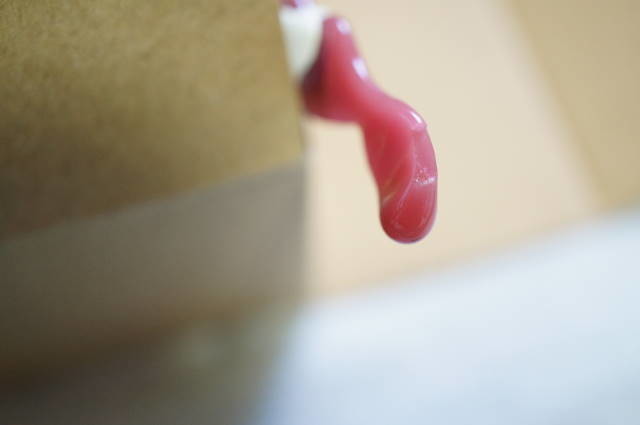
Glass chip breakage risks ruled out recommending the swan-shaped prototype
In an entry published in February 2023, Mr. Okada discussed a swan-shaped hook intended to help keep the penis drawn inward. Its direct connection to a gatekeeper (an external support fitting) changed how force acted on it, according to his explanation. He reported unresolved problems with the resin prototype and was considering ceramic instead.
No matching product can be confirmed on the current list. Because he could not guarantee that glass would remain intact, he said he could not recommend the glass hook to customers.
(Source: ok-lab's diary, published February 2023)
https://ok-lab.hatenablog.com/entry/2023/02/04/122938
If you see blood in your urine, even a small amount or for the first time, do not wait and see. See a urologist right away. If you suddenly cannot urinate, or the device cannot be removed, do not try to fix it yourself. Go to a medical facility, including emergency care, immediately.
How glass chip breaking changed over time
| Published | What the diary said then |
|---|---|
| Oct 2017 | Resin and embedded thread protected the narrow middle, leaving other glass areas exposed. |
| Sep 2018 | Unexpected cracking prompted Mr. Okada to abandon glass for anal-use prototypes. |
| Jan 2019 | Mr. Okada said future litigation could force an end to prostate-chip sales. |
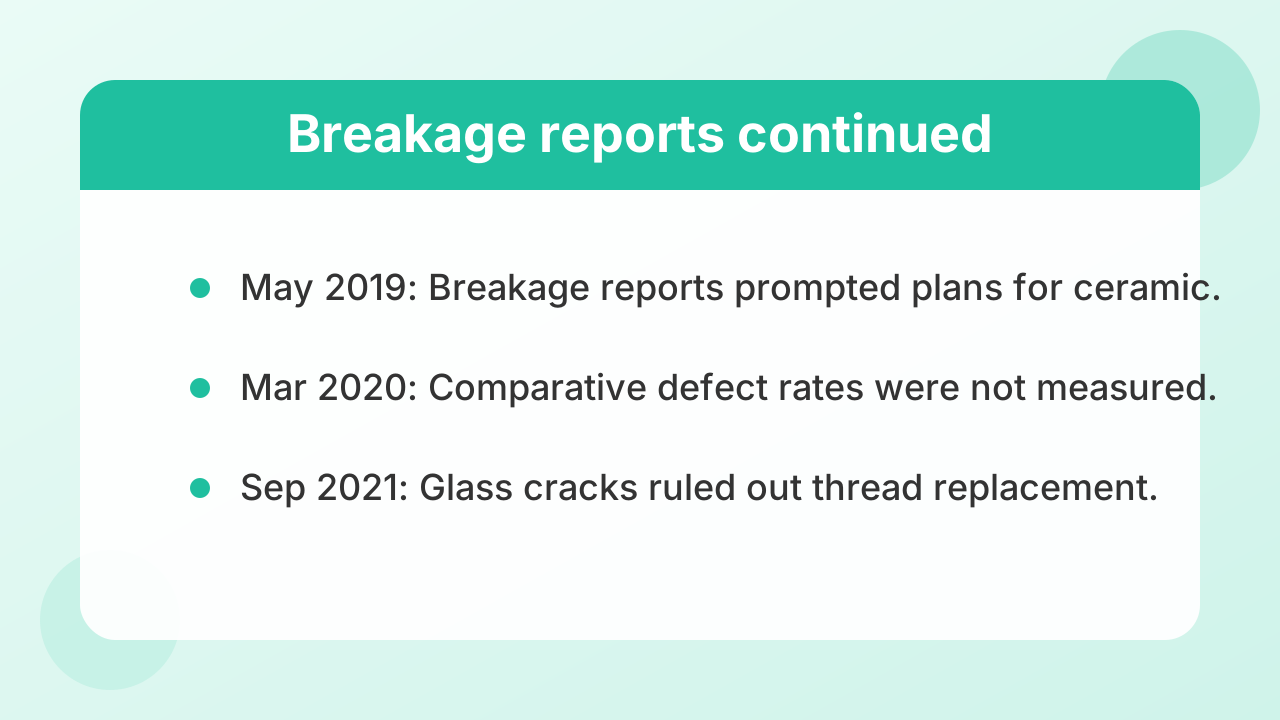
| May 2019 | Further breakage reports prompted plans to accelerate the move toward ceramic. |
| May 2019 | A single-chip glass model arrived with a central mark; replacement was offered. |
| Oct 2019 | A limited repair offer distinguished localized surface damage from widespread cracking. |
| Feb 2020 | An early break was treated as an initial defect, with a refund offered. |
| Mar 2020 | Mr. Okada said comparative defect rates had not been measured. |
| Sep 2021 | Heat-related glass cracks ruled out a proposed thread replacement. |
| Feb 2023 | Different forces in the hook prototype led Mr. Okada to reject recommending glass. |
OK Prostate Chip products related to glass chip breaking
Glass models from these reports remain listed; the resin suggestions do not identify a specific current product.
Products that appear in these entries
| Product (official name) | Price incl. tax | Relation to this topic |
|---|---|---|
| Single-chip glass model (OKプロステートチップ ガラス素材1チップタイプ) | ¥3,300 (about $21 at ¥156 = $1, rate as of 2026-09-04) | In May 2019, a customer reported a central mark on arrival, and Mr. Okada offered replacement. |
| Awakening glass chip (OKプロステート覚醒チップ) | ¥5,500 (about $35 at ¥156 = $1, rate as of 2026-09-04) | In September 2018, a customer reported a central crack discovered after continuous wear. |
| Semi-long twisted glass chip (OKプロステートチップ ガラス素材セミロングタイプ コブラツイスト) | ¥5,500 (about $35 at ¥156 = $1, rate as of 2026-09-04) | In January 2019, a customer reported a broken tip entering the bladder and subsequent injury. |
| Semi-long glass chip (OKプロステートチップ ガラス素材セミロングタイプ) | ¥4,400 (about $28 at ¥156 = $1, rate as of 2026-09-04) | In October 2019, a customer requested repair after part of the surface glass came away. |
(Source: ok-lab's diary, published September 2018)
https://ok-lab.hatenablog.com/entry/20180922/1537592180
(Source: ok-lab's diary, published January 2019)
https://ok-lab.hatenablog.com/entry/2019/01/26/152042
(Source: ok-lab's diary, published May 2019)
https://ok-lab.hatenablog.com/entry/2019/05/25/144939
(Source: ok-lab's diary, published October 2019)
https://ok-lab.hatenablog.com/entry/2019/10/12/125944
Products the diary mentioned as alternatives
The diary names no alternative.
Common worries about glass chip breaking
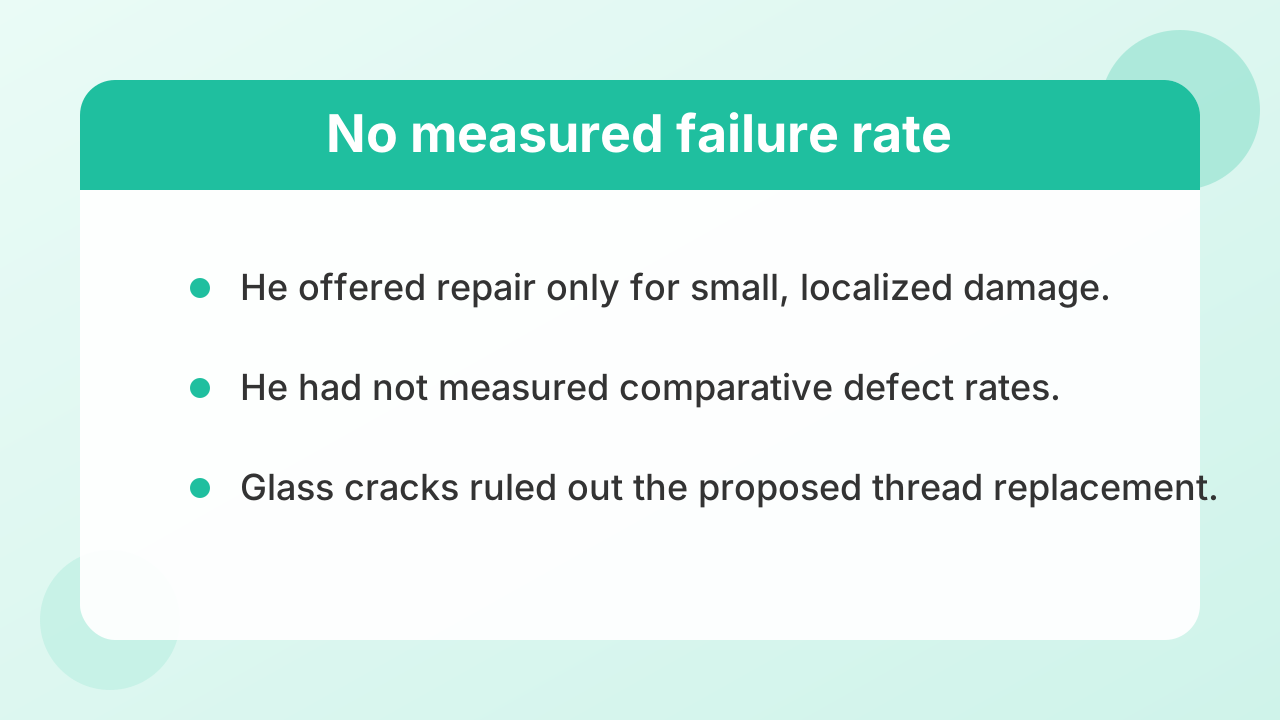
The diary records repair requests and safety questions, but gives no measured failure rate.
"Can glass chip flaking be repaired?"
In an entry published in October 2019, a customer requested repairs after their semi-long glass chip shed a surface layer. They reported about 4 uses and a rough damaged area. Mr. Okada offered a resin repair only if the damage was small and localized.
The resin work was free; thread replacement carried a charge because he said the workshop's treatment would shrink the thread. The diary does not record whether the repair went ahead. He advised stopping use if cracks appeared to extend throughout the glass.
(Source: ok-lab's diary, published October 2019)
https://ok-lab.hatenablog.com/entry/2019/10/12/125944
"How common is a glass chip breaking compared with ceramic?"
In an entry published in March 2020, a customer asked for comparative defect rates before choosing another model. Mr. Okada said he had not measured those rates, so he could not provide a numerical comparison. He attributed delayed glass breakage to strain trapped during manufacture.
He also said ceramic could break from impact. He declined to identify a universally suitable next model because individual experiences differed.
(Source: ok-lab's diary, published March 2020)
https://ok-lab.hatenablog.com/entry/2020/03/21/143802
"Can new thread rescue a cracked glass chip?"
In an entry published in September 2021, a customer asked whether thread replacement could rescue a heat-damaged glass chip. The pot had boiled dry for at least 10 minutes, leaving the thread brittle and the resin discolored. OK Lab staff initially quoted ¥1,100 (about $7 at ¥156 = $1, rate as of 2026-09-04) plus ¥400 (about $3 at ¥156 = $1, rate as of 2026-09-04), with option-dependent pricing and shipping paid by the customer.
Later, reported cracks in the glass ruled out that proposed thread replacement. Staff advised against using the heat-damaged thread.
(Source: ok-lab's diary, published September 2021)
https://ok-lab.hatenablog.com/entry/2021/09/18/130132
Buying from outside Japan

OK Lab ships internationally to countries covered by Japan Post's EMS courier service. Overseas orders are paid in advance by PayPal. Each order carries a ¥400 (about $3 at ¥156 = $1, rate as of 2026-09-04) handling fee, and EMS shipping is charged on top. These terms come from OK Lab's official sales-terms page (written here as plain text, not a link: ok-lab.net/docs/law), checked on September 7, 2026; confirm them on the official store before you order, because they can change.
Summary of this article
| What you wanted to know | The answer |
|---|---|
| What is the main warning? | The diary reports glass breaking inside the body, including an injury case. |
| What is the product? | A urethral device made and sold by OK Lab in Japan. |
| What do the parts mean? | Resin provides coating or a glass-free body; retrieval thread is attached to the chip. |
| What happened in the reports? | Cracks, surface loss, and complete breaks appeared under different circumstances. |
| What did the maker propose? | Protection, inspection, material changes, and case-specific remedies, without a guarantee against glass breakage. |
| How did the discussion change? | Early protective designs were followed by injury reports, ceramic development, and later glass-related cautions. |
| What do related current products cost? | The listed glass models cost ¥3,300, (about $21 at ¥156 = $1, rate as of 2026-09-04) ¥4,400, (about $28 at ¥156 = $1, rate as of 2026-09-04) or ¥5,500, (about $35 at ¥156 = $1, rate as of 2026-09-04) including tax. |
| What remains uncertain? | Comparative defect rates were not measured; several repair or refund completions were not recorded. |
| How do overseas purchases work? | Advance PayPal payment, a ¥400 (about $3 at ¥156 = $1, rate as of 2026-09-04) handling fee, and additional EMS shipping charges. |
Source: ok-lab's diary (Okada Comfortable Life Laboratory). The original entries are in Japanese; quotations on this page are translated. Photos and videos are on the original entries.
This article is a summary of the maker's development diary. The product is not a medical device and no result is guaranteed. If anything feels wrong or worries you, see a doctor. Prices, specifications and cautions change, so confirm the latest information on the official blog and the official site. Questions about ordering and shipping go to the seller.