![Could the chip break inside me? | Breakage and hospital removal have been reported [OK Prostate Chip]](/img/a/T0354/eyecatch.svg)
This page is based on entries from "ok-lab's diary" (https://ok-lab.hatenablog.com/), the Japanese development diary written by Mr. Okada, founder of OK Lab, a small company in Japan (Okada Comfortable Life Laboratory). Only the entries about "a chip broken inside" are summarized here, in order of publication. Past prices and sizes are as written at the time. Current prices come from the official product list (retrieved September 4, 2026). Quotations are translated from Japanese.
Note: This page is a personal reading log by someone with no connection to the maker or the seller. It reflects the source entries as of their publication dates and makes no guarantee of accuracy or safety. The product is not a medical device; talk to a doctor about any health decision. Check the official site for current information. This page contains advertising.
In short
Broken tips and connections have caused injuries, with some cases requiring hospital removal.
Mr. Okada changed materials and connections, but acknowledged that breakage could not be ruled out.
Glass and ceramic curved twist models remain on the current product list.
If you see blood in your urine, even a small amount or for the first time, do not wait and see. See a urologist right away.
If you suddenly cannot urinate, or the device cannot be removed, do not try to fix it yourself. Go to a medical facility, including emergency care, immediately.
About this product

The OK Prostate Chip is a small device that is placed in the urethra (the urine passage) so that it acts on the prostate; the maker sells it in several shapes, sizes and materials. It is made and sold by OK Lab (Okada Comfortable Life Laboratory), a small company in Japan, through its own online store, and prices are in Japanese yen (JPY).
The maker's development diary, "ok-lab's diary", is written in Japanese. This page is an English summary of it, and every quotation is translated.
OK Lab ships internationally, so readers outside Japan can order (see "Buying from outside Japan" below). Product names on this page are plain-English descriptions. The official Japanese product name is shown once in the product table so you can find the same item in the store.
Before you read: key terms
| Term | Plain-English meaning |
|---|---|
| Urethra | The urine passage; the chip is placed here to act on the prostate. |
| Retrieval thread | Thread attached to a chip for retrieval; nylon thread also links chips in the April 2019 case. |
| Resin | A plastic material used for chips, connections, and coverings. |
| Shape-memory wire | Wire used to hold a designed shape or reinforce parts; the diary discusses straight and pre-curved versions. |
| Petal loop | A small side loop used as a stopping component on the wire devices discussed here. |
What happens: chip broken inside
The OK Prostate Chip is a device placed in the urethra (the urine passage) for prostate stimulation. This article concerns pieces breaking inside that passage or reaching the bladder, including glass tips, ceramic tips, and connecting wires. These are parts of devices intended to provide stimulation or hold components together. The diary records both fragments that passed and cases requiring hospital removal.
A glass chip broken inside left severe bladder injuries
In a January 2019 entry, a customer requested a straight glass replacement after a semi-long curved twist chip broke inside their bladder. Mr. Okada apologized; the diary does not record whether that requested change was completed. That account suggested the tip passed after about 1 week, leaving widespread damage to the bladder lining.
The February 2019 follow-up clarified that the fragment was never found. A bladder examination after 1 week found no foreign object but severe lining damage. Mr. Okada advised avoiding glass altogether if the possibility of breakage caused concern.
(Source: ok-lab's diary, published January 2019)
https://ok-lab.hatenablog.com/entry/2019/01/26/152042
(Source: ok-lab's diary, published February 2019)
https://ok-lab.hatenablog.com/entry/2019/02/02/153358
A chip stuck inside required surgery without breaking first
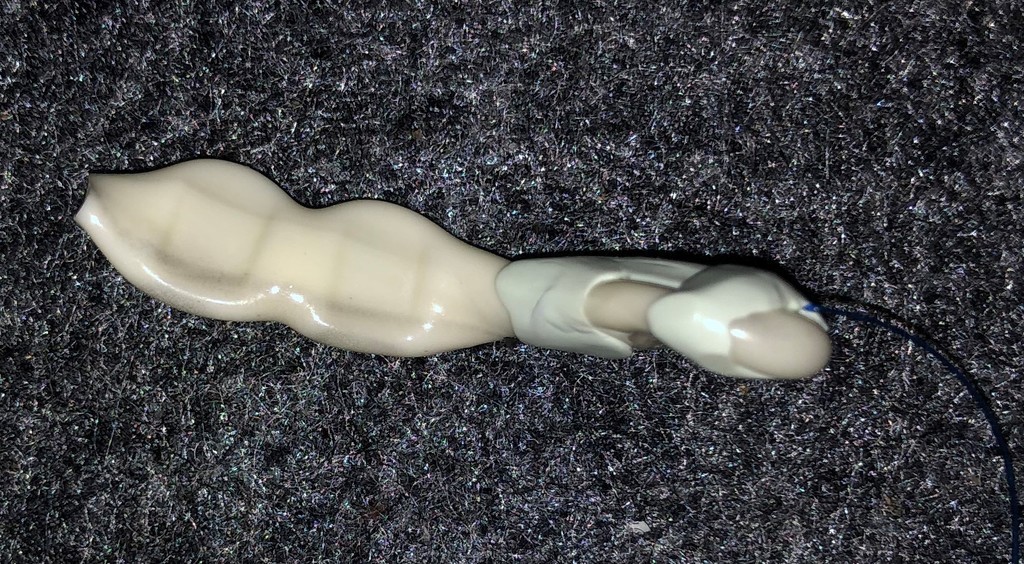
A separate January 2019 report concerned a strongly curved chip with a section over 10mm, which entered the bladder after a stopper problem. The customer reported no sign of natural passage and described removal through a medical scope. Mr. Okada said the attached retrieval thread (thread for removing the chip) helped the hospital complete the procedure quickly.
He treated an externally retained retrieval thread as essential. For readers worried about glass breaking, he named resin (a plastic material) as the alternative.
(Source: ok-lab's diary, published January 2019)
https://ok-lab.hatenablog.com/entry/2019/01/26/152042
A ceramic chip broken inside was treated as an initial defect
In a March 2020 entry, a customer's ceramic semi-long curved twist chip lost its tip after the second insertion. The missing piece subsequently passed, but the customer could not recover it. The customer considered buying again and asked about larger versions.
Mr. Okada suspected a crack might have existed before shipping; the cause remained uncertain. The diary does not record delivery of a replacement. His offer was to remake the chip as an initial-defect replacement.
(Source: ok-lab's diary, published March 2020)
https://ok-lab.hatenablog.com/entry/2020/03/14/141804
A broken chip connection ended one stainless-steel mounting option
In a September 2022 entry, a customer asked about repair after the wire connecting a stainless-steel chip broke. Staff offered to handle it as an initial defect. Mr. Okada suspected that the heavy chip exceeded what the existing wire connection could support.
He stopped accepting stainless-steel chips with that wire mounting arrangement. He offered other connection arrangements for affected products, including orders already placed and products already used.
(Source: ok-lab's diary, published September 2022)
https://ok-lab.hatenablog.com/entry/2022/09/24/122837
A ceramic chip broken inside led to difficult hospital removal
March 2024 entries describe a ceramic curved chip (sea-slug 2) breaking in half, leaving about 25mm in the bladder. After 1 week without passage, a clinic lacking grasping tools referred the customer to a university hospital. The hospital reportedly proposed special surgery with the patient fully asleep, or open abdominal surgery, judging retrieval with grasping tools impossible.
Later that month, Mr. Okada reported successful removal. His June 2025 retrospective clarified that a skilled doctor had ultimately removed the piece with grasping tools. Mr. Okada judged his own improvised retrieval tool unsuitable for safe removal.
(Source: ok-lab's diary, published March 2024)
https://ok-lab.hatenablog.com/entry/2024/03/09/122635
(Source: ok-lab's diary, published March 2024)
https://ok-lab.hatenablog.com/entry/2024/03/16/123023
(Source: ok-lab's diary, published March 2024)
https://ok-lab.hatenablog.com/entry/2024/03/23/122837
(Source: ok-lab's diary, published June 2025)
https://ok-lab.hatenablog.com/entry/2025/06/07/122954
A broken wire connection was reported with lining injury
In an August 2025 entry, a customer's petal loop (a small stopping loop) came loose at its attachment. Staff arranged repair, and the customer later confirmed receiving the repaired device. The same customer also reported failure on a separate device: both loops in the 2nd pair detached, and exposed wire cut the lining.
Mr. Okada attributed the failures to repeated bending where the wire had been permanently reshaped. He said the rubber covering had not prevented strong bending. His immediate offer was repair with thicker rubber around the connection.
(Source: ok-lab's diary, published August 2025)
https://ok-lab.hatenablog.com/entry/2025/08/30/122943
The maker's answer to chip broken inside
The diary records material changes, refunds, restricted specifications, and reinforcement, without establishing that breakage has been eliminated.
Larger glass chips broken inside prompted a change of material
An April 2019 customer reported damage to a custom vibrating glass chip after about 1 hour; the fragment remained attached during removal. Mr. Okada suspected larger glass chips were more likely to crack and said there was no fundamental solution. Ceramic prototypes existed, but he was still seeking a practical production method.
He described resin chips as the only safe option at that time; this was his assessment. He first offered a replacement, but the customer then requested resin instead of glass. Mr. Okada advised considering those material limitations when deciding about the pending order.
(Source: ok-lab's diary, published April 2019)
https://ok-lab.hatenablog.com/entry/2019/04/27/153239
Ceramic fracture tests shaped advice about chips broken inside
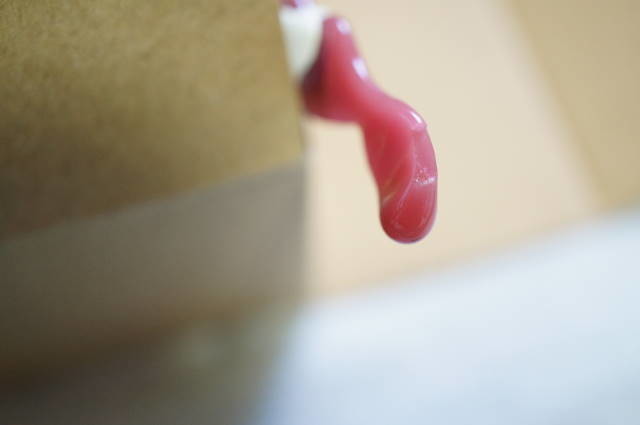
In a February 2020 entry, Mr. Okada recalled breaking glass inside his urethra about 5 times during early testing. He said 1 break produced a pointed edge. He reported no sharp fracture surfaces in his numerous ceramic breakage tests.
He also acknowledged reports of both glass and ceramic chips breaking inside the urethra. Mr. Okada favored ceramic because of the broken surfaces he had observed.
(Source: ok-lab's diary, published February 2020)
https://ok-lab.hatenablog.com/entry/2020/02/15/144151
A wire broken inside brought a lower bend limit
A December 2024 entry described a wire-and-tube device failing after 2 days, with slight pain but no bleeding. Its 120-degree specification required roughly 150 degrees of bend in the internal wire, according to Mr. Okada. He identified the likely failure point as a spot permanently bent almost 90 degrees.
He offered a refund or replacement, and the customer chose replacement. He temporarily limited finished devices to 90 degrees. For concerned buyers, he suggested waiting for a version using wire pre-curved by its manufacturer.
(Source: ok-lab's diary, published December 2024)
https://ok-lab.hatenablog.com/entry/2024/12/14/122948
Reinforcement targeted separation after a ceramic chip broke inside
In a June 2025 entry, Mr. Okada introduced ceramic reinforcement using shape-memory wire (wire intended to retain its designed shape) and a resin covering. He said ceramic could still crack but believed the reinforcement would prevent broken sections separating inside the body. His drop tests used samples without the final resin covering.
The published surcharge was ¥2,000 (about $13 at ¥156 = $1, rate as of 2026-09-04) excluding tax, added to the normal ceramic chip price, regardless of shape. He described flat standard chips as allowing the most stable reinforcement. Mr. Okada proposed reinforced ceramic for the problem of detached tips.
(Source: ok-lab's diary, published June 2025)
https://ok-lab.hatenablog.com/entry/2025/06/07/122954
If you see blood in your urine, even a small amount or for the first time, do not wait and see. See a urologist right away.
If you suddenly cannot urinate, or the device cannot be removed, do not try to fix it yourself. Go to a medical facility, including emergency care, immediately.
How chip broken inside changed over time
| Published | What the diary said then |
|---|---|
| Nov 2019 | Mr. Okada recalled bleeding from broken glass during tests before the product's release. |
| Jan 2021 | A customer proposed internal-defect imaging; Mr. Okada considered it beyond the company's capabilities. |
| Sep 2022 | Mr. Okada warned that repeated extreme bending could also break other wire connections. |
| Dec 2024 | Mr. Okada added rejection of abnormally bending wires to his production precautions. |
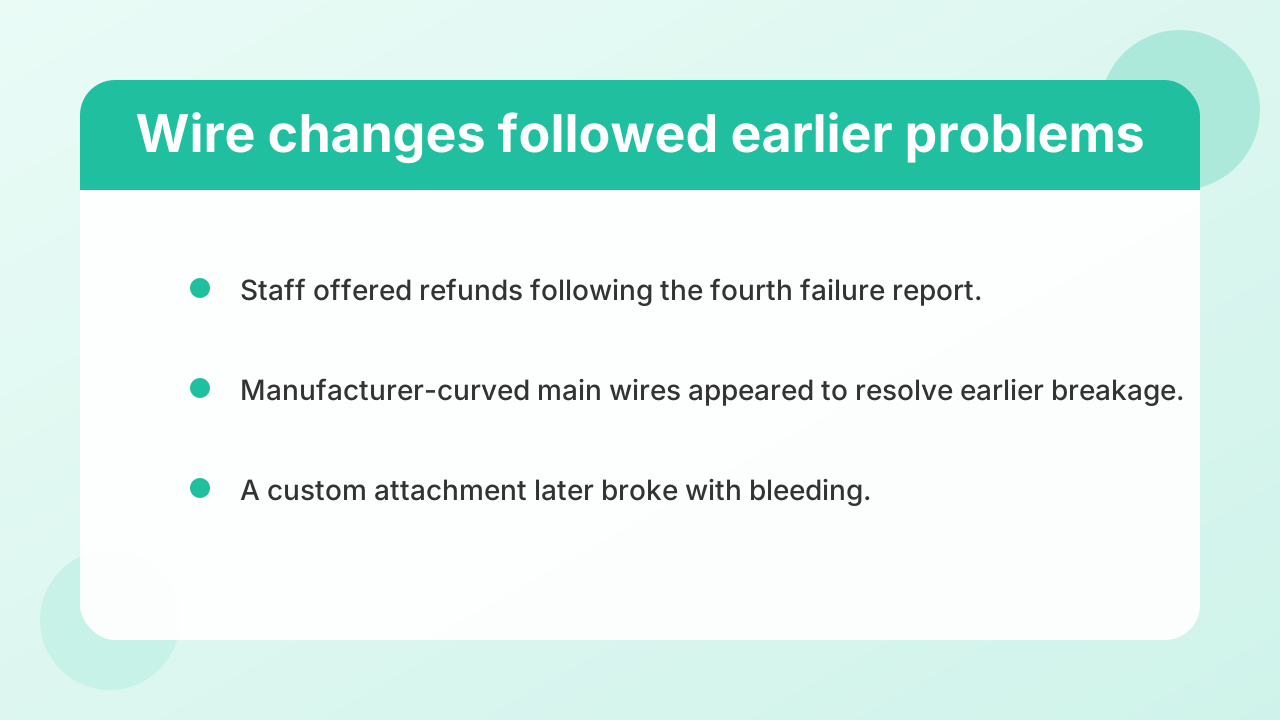
| Mar 2025 | Following the fourth failure report, staff offered refunds because repairs would not resolve the cause. |
| Jun 2025 | Rubber coating alone was rejected as an adequate solution for ceramic breakage. |
| Aug 2025 | Mr. Okada said manufacturer-curved main wires appeared to have resolved their earlier breakage problem. |
| Sep 2025 | A custom attachment broke with bleeding; staff offered repair and acknowledged its relative weakness. |
OK Prostate Chip products related to chip broken inside
The current list includes both curved twist models involved in reported breakage.
Products that appear in these entries
| Product (official name) | Price incl. tax | Relation to this topic |
|---|---|---|
| Glass semi-long curved twist chip (OKプロステートチップ ガラス素材セミロングタイプ コブラツイスト) | ¥5,500 (about $35 at ¥156 = $1, rate as of 2026-09-04) | January–February 2019 reports describe this model's broken tip and bladder lining injuries. |
| Ceramic semi-long curved twist chip (OKプロステートチップ 陶器素材セミロングタイプ コブラツイスト) | ¥5,500 (about $35 at ¥156 = $1, rate as of 2026-09-04) | March 2020 records tip breakage in this model; the list does not confirm the historical M size. |
(Source: ok-lab's diary, published January 2019)
https://ok-lab.hatenablog.com/entry/2019/01/26/152042
(Source: ok-lab's diary, published February 2019)
https://ok-lab.hatenablog.com/entry/2019/02/02/153358
(Source: ok-lab's diary, published March 2020)
https://ok-lab.hatenablog.com/entry/2020/03/14/141804
Products the diary mentioned as alternatives
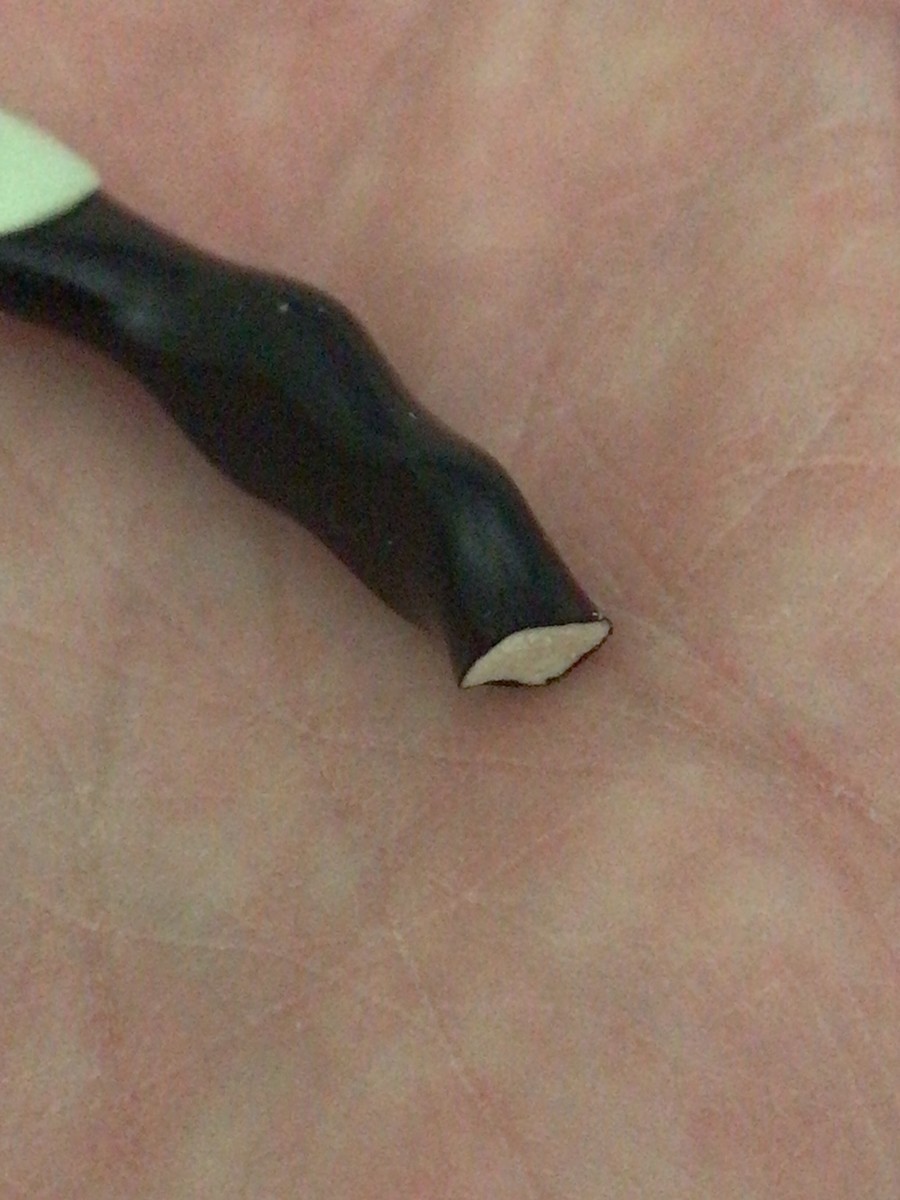
The diary names no alternative.
Historical custom versions discussed here include the enlarged curved chip, vibrating glass build, curved ceramic model (sea-slug 2), reinforced ceramics, and wire assemblies. No matching product can be confirmed on the current list.
Common worries about chip broken inside
"Can a chip broken inside qualify for a refund?"
In a February 2020 entry, a customer requested a refund after a glass chip broke during its second use. The break was at the narrowest section beneath resin, where the customer could not check for cracks.
The fragment passed 4 hours later, during the second urination. Staff treated the failure as an initial defect and agreed to refund; the customer accepted that response.
(Source: ok-lab's diary, published February 2020)
https://ok-lab.hatenablog.com/entry/2020/02/15/144151
"Can a resin chip break inside too?"
An April 2019 customer asked whether a retained resin tip could pass after the thread between linked chips broke. The retained tip measured 35mm. Staff initially expected passage, but the diary does not confirm whether the tip was recovered or remained inside.
Mr. Okada explained that damaged nylon thread could break easily despite its resistance to pulling. He advised medical assessment if there was discomfort.
(Source: ok-lab's diary, published April 2019)
https://ok-lab.hatenablog.com/entry/2019/04/20/144337
"How likely is a chip to break inside?"
In a June 2020 entry, a prospective buyer from South Korea asked about internal breakage. OK Lab's staff described the risk as low but not zero, without supplying a numerical rate. Their reply acknowledged several previous cases. For that concern, staff recommended ceramic or resin instead of glass.
(Source: ok-lab's diary, published June 2020)
https://ok-lab.hatenablog.com/entry/2020/06/27/120614
Buying from outside Japan

OK Lab ships internationally to countries covered by Japan Post's EMS courier service. Overseas orders are paid in advance by PayPal. Each order carries a ¥400 (about $3 at ¥156 = $1, rate as of 2026-09-04) handling fee, and EMS shipping is charged on top. These terms come from OK Lab's official sales-terms page (written here as plain text, not a link: ok-lab.net/docs/law), checked on September 7, 2026; confirm them on the official store before you order, because they can change.
Summary of this article
| What you wanted to know | The answer |
|---|---|
| In short | Internal breakage, injury, and hospital removal appear in the diary. |
| About the product | A Japan-made urethral device sold by OK Lab, with prices in JPY. |
| Key terms | Tips, threads, and wire connections have different roles and reported failures. |
| What happens | Cases include injured bladder linings, detached loops, and fragments requiring hospital removal. |
| The maker's answer | Responses included material changes, refunds, restricted bends, and reinforcement. |
| Changes over time | Later wire changes followed earlier glass and ceramic problems. |
| Related products | The listed glass and ceramic curved twist models each cost ¥5,500 (about $35 at ¥156 = $1, rate as of 2026-09-04) including tax. |
| Common worries | Replies discuss breakage risk, retained resin tips, and a refund for early failure. |
| Buying abroad | Advance PayPal payment, a ¥400 (about $3 at ¥156 = $1, rate as of 2026-09-04) handling fee, and additional EMS shipping apply. |
Source: ok-lab's diary (Okada Comfortable Life Laboratory). The original entries are in Japanese; quotations on this page are translated. Photos and videos are on the original entries.
This article is a summary of the maker's development diary. The product is not a medical device and no result is guaranteed. If anything feels wrong or worries you, see a doctor. Prices, specifications and cautions change, so confirm the latest information on the official blog and the official site. Questions about ordering and shipping go to the seller.