![My OK Prostate Chip motor stopped working | The cause depends on the motor and controller [OK Prostate Chip]](/img/a/T0360/eyecatch.svg)
This page is based on entries from "ok-lab's diary" (https://ok-lab.hatenablog.com/), the Japanese development diary written by Mr. Okada, founder of OK Lab, a small company in Japan (Okada Comfortable Life Laboratory). Only the entries about "motors that stop working or break" are summarized here, in order of publication. Past prices and sizes are as written at the time. Current prices come from the official product list (retrieved September 4, 2026). Quotations are translated from Japanese.
Note: This page is a personal reading log by someone with no connection to the maker or the seller. It reflects the source entries as of their publication dates and makes no guarantee of accuracy or safety. The product is not a medical device; talk to a doctor about any health decision. Check the official site for current information. This page contains advertising.
In short
A stopped motor could reflect an intermittent fault, insufficient power, or an incompatible controller.
Mr. Okada offered assessment and replacement, with conditions that varied between dated entries.
Related vibrating chips remain on the current list; the supplied failure reports end in October 2024.
About this product

The OK Prostate Chip is a small device that is placed in the urethra (the urine passage) so that it acts on the prostate; the maker sells it in several shapes, sizes and materials. It is made and sold by OK Lab (Okada Comfortable Life Laboratory), a small company in Japan, through its own online store, and prices are in Japanese yen (JPY). The maker's development diary, "ok-lab's diary", is written in Japanese. This page is an English summary of it, and every quotation is translated. OK Lab ships internationally, so readers outside Japan can order (see "Buying from outside Japan" below). Product names on this page are plain-English descriptions. The official Japanese product name is shown once in the product table so you can find the same item in the store.
Before you read: key terms
| Term | Plain-English meaning |
|---|---|
| Vibration motor | A small powered part attached to a chip to produce vibration. |
| Controller | The unit connected to the motor by cable, used to power and regulate vibration. |
| IC controller | An electronic controller used to provide different vibration patterns. |
| Flat motor | A small, flat motor used to add vibration to a chip. |
| Bluetooth controller | An app-linked controller used to control vibration; the diary describes restrictions for different motors. |
What happens: motor failure
The OK Prostate Chip is a small device placed in the urethra (the urine passage) to act on the prostate. The vibrating versions add a motor attached to the chip, bringing vibration to the area where the chip sits. A cable connects that motor to a controller (the unit that powers and regulates vibration). The diary describes both motors that stop during operation and motors that fail to start.
An 8 mm motor would not start at certain stopping positions
In an entry published in February 2019, Mr. Okada described an 8 mm motor that sometimes failed to start. He linked this to its stopping position and observed that slight outside vibration could restart it. An IC controller (an electronic unit offering vibration patterns) reproduced the fault, while other 8 mm motors tested then did not stop. Mr. Okada offered individual support for similar failures.
(Source: ok-lab's diary, published February 2019)
https://ok-lab.hatenablog.com/entry/2019/02/16/171153
A motor could stop working as battery voltage fell
In entries published in July 2019, Mr. Okada described stopping in 1.5V mode when battery voltage fell to about 1.3V. He attributed restarts to vibration reaching the motor, while noting that batteries could recover after resting. He also reported considerable differences between motors, including some that were difficult to restart. He wrote that battery replacement had previously been his response to this low-voltage behavior.
(Source: ok-lab's diary, published July 2019)
https://ok-lab.hatenablog.com/entry/2019/07/13/150108
(Source: ok-lab's diary, published July 2019)
https://ok-lab.hatenablog.com/entry/2019/07/20/151609
A motor stopped working alongside its power light after minutes
In an entry published in March 2020, a customer said vibration and the power light stopped after about 2 minutes. Fresh batteries did not help; operation returned the next day, and this happened on 2 consecutive days. Mr. Okada treated it as an initial defect, although he could not identify the cause.
The customer later confirmed that it was running again. The diary does not record whether this customer's motor was eventually replaced. Mr. Okada identified cable contact faults and stopping-position failures, offering replacement for initial defects within about 2 weeks of delivery.
(Source: ok-lab's diary, published March 2020)
https://ok-lab.hatenablog.com/entry/2020/03/21/143802
A newer 10 mm motor would not start before shipping
In an entry published in November 2020, Mr. Okada reported an intermittent fault in a 10 mm motor from a Japanese manufacturer. Earlier checks had passed, but it failed just before packing and worked again after a pause. This was his first such finding with that newer motor. He said he would remake the customer's device and strengthen checks before shipping.
(Source: ok-lab's diary, published November 2020)
https://ok-lab.hatenablog.com/entry/2020/11/07/121125
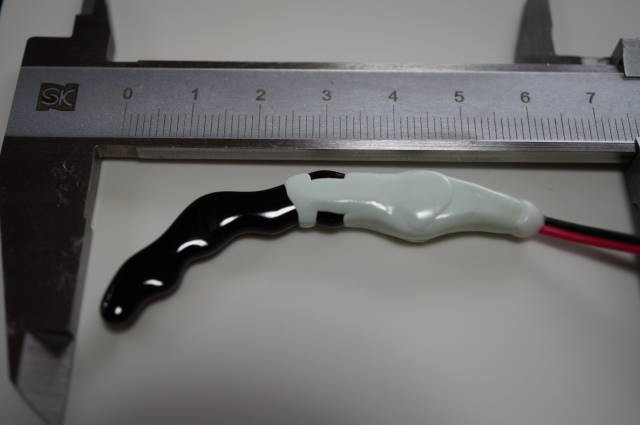
Fresh batteries briefly revived one motor that stopped working
An entry published in October 2024 recounts an August complaint about a motor stopping after roughly 1 hour. Fresh batteries restored operation for perhaps 5 minutes, but further battery changes did not restart the motor after it stopped again.
Longer testing eventually produced an overnight stop, but the device later worked again. Mr. Okada's final account says a new device was sent, while the returned unit stayed with OK Lab for investigation. For assessment, OK Lab requested the device and a detailed account of its stopping behavior.
(Source: ok-lab's diary, published October 2024)
https://ok-lab.hatenablog.com/entry/2024/10/05/122923
A separate lock-on motor stopped working, then ran again
Another customer in the October 2024 entry described a lock-on vibrating chip that gradually weakened and stopped after 2–3 hours. Fresh batteries and another controller did not restore operation. The customer later reported that it worked again after a pause. OK Lab offered motor replacement after return if it remained unresponsive or stopped frequently.
(Source: ok-lab's diary, published October 2024)
https://ok-lab.hatenablog.com/entry/2024/10/05/122923
The maker's answer to motor failure
Mr. Okada's responses depended on the motor, controller, operating voltage, and when the failure appeared.
Separate controllers could help explain why a motor would not start
In an entry published in December 2019, a customer ordered separate standard and USB-rechargeable controllers for a ceramic vibrating chip. The diary does not record whether the order was completed. Mr. Okada said some apparent motor failures could instead reflect a voltage problem. His recommendation was to have separate controllers available so their behavior could be compared when investigating a fault.
(Source: ok-lab's diary, published December 2019)
https://ok-lab.hatenablog.com/entry/2019/12/28/131319
Reports of motor failure accompanied warnings about higher voltage
In an entry published in November 2021, a customer reported an 8 mm motor in a glass vibrating chip failing during 3V–6V operation. The customer requested a three-motor build; Mr. Okada could not identify the failure's cause and deferred details of that order. The diary does not record whether the new build was completed. He warned that motors became very hot above 5V, with earlier failures reported at 6V or higher.
(Source: ok-lab's diary, published November 2021)
https://ok-lab.hatenablog.com/entry/2021/11/13/123751
6 mm motor failure prompted strict voltage and controller limits
An entry published in January 2022 described tests of a flat motor (a small, flat vibration motor) measuring 6 mm. Its specified operating range was 2.7V–3.3V; Mr. Okada described it as less tolerant of voltage changes than earlier motors. Mr. Okada reported no rotation at 2.5V or below, followed by damage when voltage rose again.
He also reported failures with depleted batteries in a basic controller. Tests using the standard IC controller had found no problem during prolonged operation or complete battery depletion. He limited compatibility to the standard IC controller and the USB-rechargeable IC controller.
(Source: ok-lab's diary, published January 2022)
https://ok-lab.hatenablog.com/entry/2022/01/22/123342
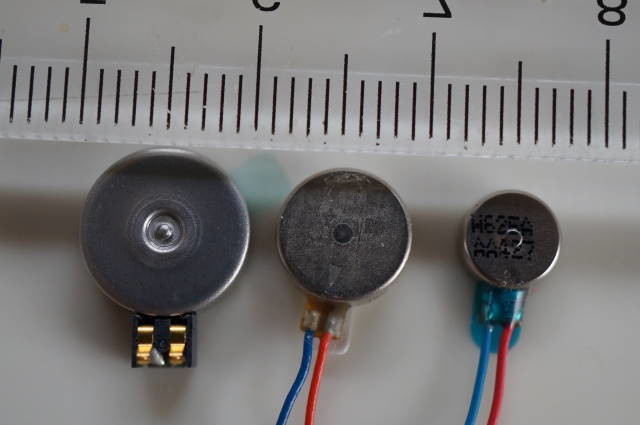
A Bluetooth controller caused 6 mm motor failure instead of vibration
In another part of the entry published in January 2022, a customer asked about buying a separate Bluetooth controller (an app-linked vibration controller). Mr. Okada first asked for time to consider this, then announced separate controller sales. However, the German controller drove only 8 mm motors: 10 mm motors did not run, and 6 mm motors broke after one use.
The diary does not record whether the customer later bought a controller. Mr. Okada warned specifically against pairing that controller with a 6 mm motor.
(Source: ok-lab's diary, published January 2022)
https://ok-lab.hatenablog.com/entry/2022/01/22/123342
Frequent motor failure qualified for replacement under dated terms
In an entry published in May 2022, a customer asked whether stopping during controller pattern changes was normal. Mr. Okada said some imported flat motors could pass shipping checks yet later stop intermittently. The diary does not record how that customer's fault was resolved. His stated terms allowed replacement for frequent stopping within 1 week of purchase; later motor faults carried the regular replacement charge.
(Source: ok-lab's diary, published May 2022)
https://ok-lab.hatenablog.com/entry/2022/05/21/124217
How motor failure changed over time
| Published | What the diary said then |
|---|---|
| Feb 2019 | Stopping position prevented an 8 mm motor from starting. |
| Jul 2019 | Restarts at low voltage were attributed to vibration reaching the motor. |
| Aug 2019 | Failures during 6V use were excluded from coverage; initial defects remained eligible. |
| Mar 2020 | Cable faults and stopping-position failures qualified for replacement within about 2 weeks. |
| Nov 2020 | A newer 10 mm motor failed before shipping. |
| Jan 2022 | The 6 mm motor introduced narrower voltage limits and controller restrictions. |
| May 2022 | Frequent stopping within 1 week qualified for replacement; later repairs carried a charge. |
| Dec 2023 | Mr. Okada reported over a year without delivered-device failure reports before this complaint. |
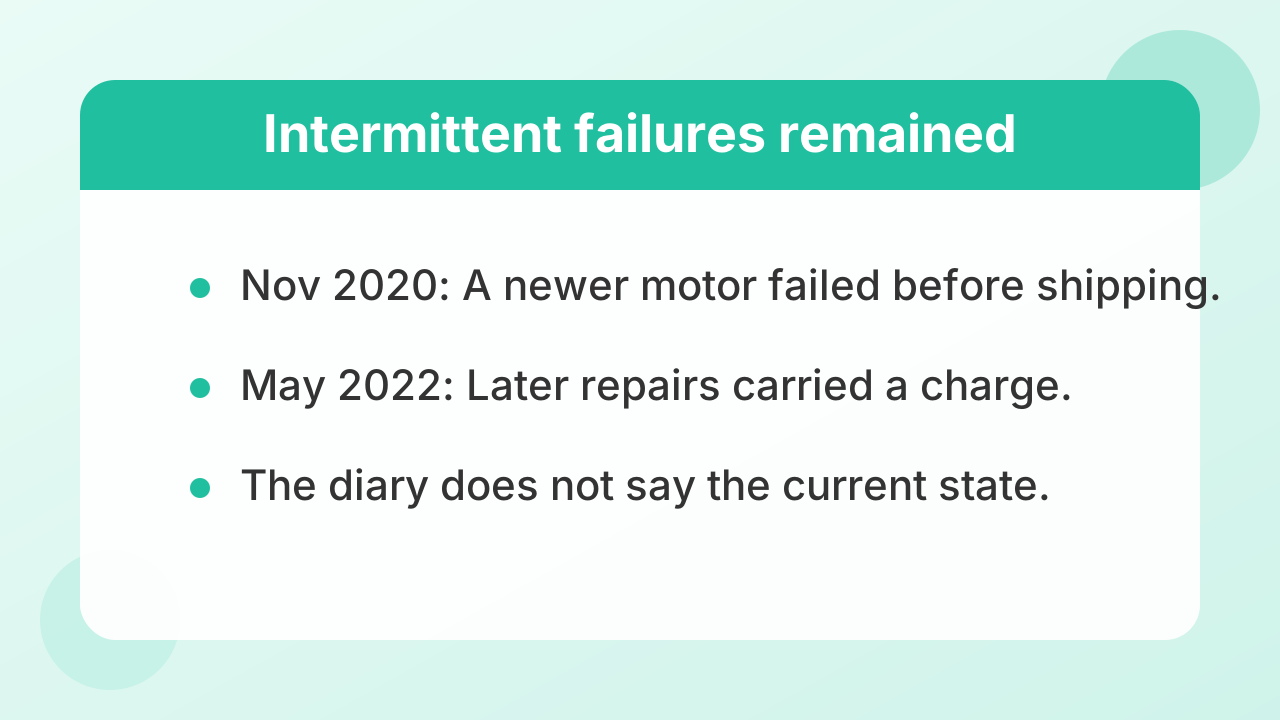
| Oct 2024 | About 4 initial defects were reported over roughly half a year; intermittent failures remained. |
The diary does not say what the current state is.
OK Prostate Chip products related to motor failure
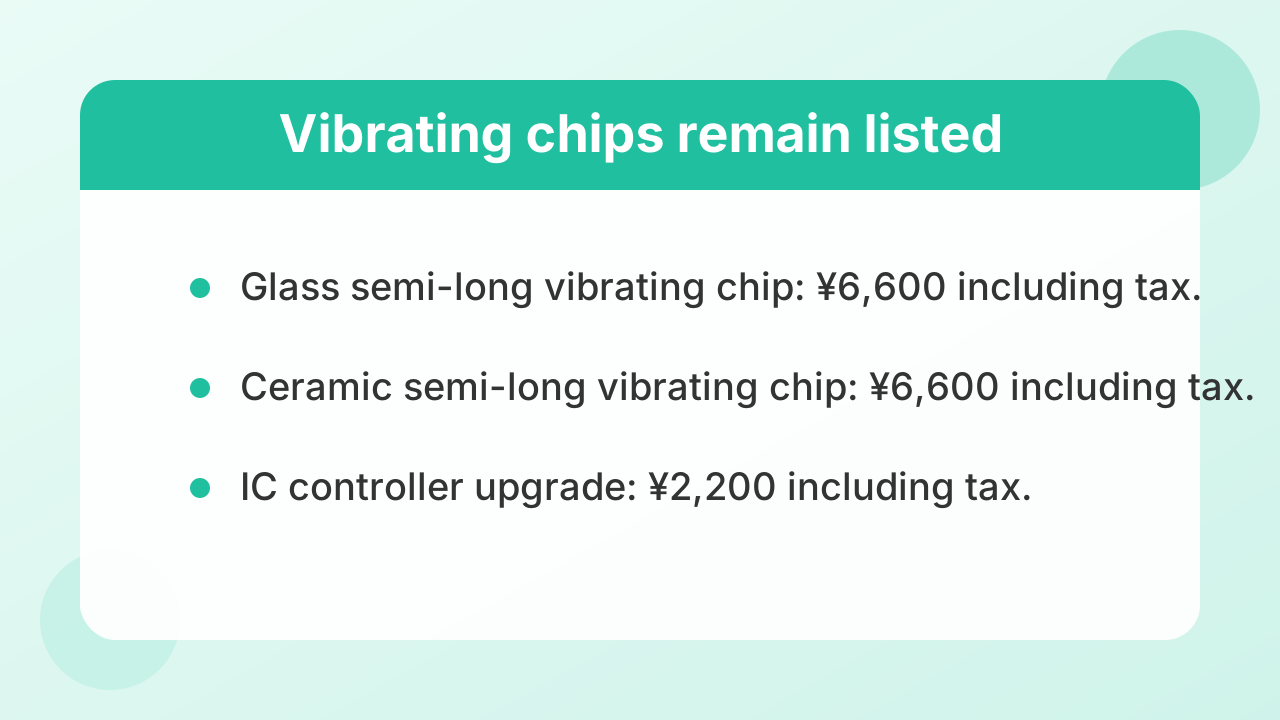
The current list includes the glass and ceramic semi-long vibrating chips, plus an IC controller upgrade.
Products that appear in these entries
| Product (official name) | Price incl. tax | Relation to this topic |
|---|---|---|
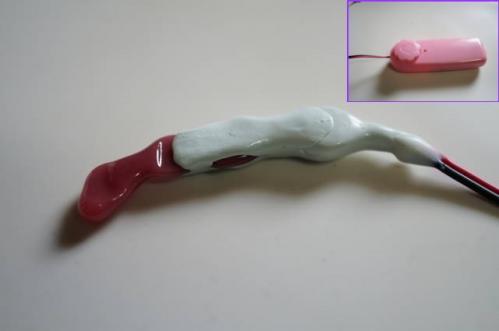
| Glass semi-long vibrating chip (OKプロステート核振チップ ガラス素材セミロングタイプ) | ¥6,600 (about $42 at ¥156 = $1, rate as of 2026-09-04) | An August 2019 customer requested help after this model stopped working following 6V operation. |
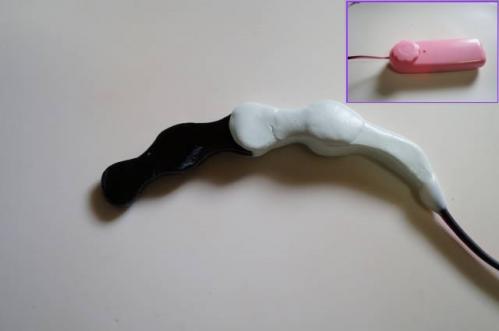
| Ceramic semi-long vibrating chip (OKプロステート核振チップ 陶器素材セミロングタイプ) | ¥6,600 (about $42 at ¥156 = $1, rate as of 2026-09-04) | A February 2020 customer reported another failure after this model had been inspected and returned. |
OK Lab's own online store lists the glass semi-long vibrating chip.
The ceramic semi-long vibrating chip is listed in the same store.
(Source: ok-lab's diary, published August 2019)
https://ok-lab.hatenablog.com/entry/2019/08/24/125858
(Source: ok-lab's diary, published February 2020)
https://ok-lab.hatenablog.com/entry/2020/02/15/144151
Products the diary mentioned as alternatives
| Product (official name) | Price incl. tax | Relation to this topic |
|---|---|---|
| IC controller upgrade (ICコントローラに変更(核振チップオプション)) | ¥2,200 (about $14 at ¥156 = $1, rate as of 2026-09-04) | In December 2019, Mr. Okada recommended separate IC controllers instead of relying on one when investigating why a motor would not run. |
The IC controller upgrade is listed in OK Lab's own online store.

(Source: ok-lab's diary, published December 2019)
https://ok-lab.hatenablog.com/entry/2019/12/28/131319
Custom builds mentioned in November 2020 and November 2021, and the lock-on vibrating chip mentioned in October 2024:
No matching product can be confirmed on the current list.
Common worries about motor failure
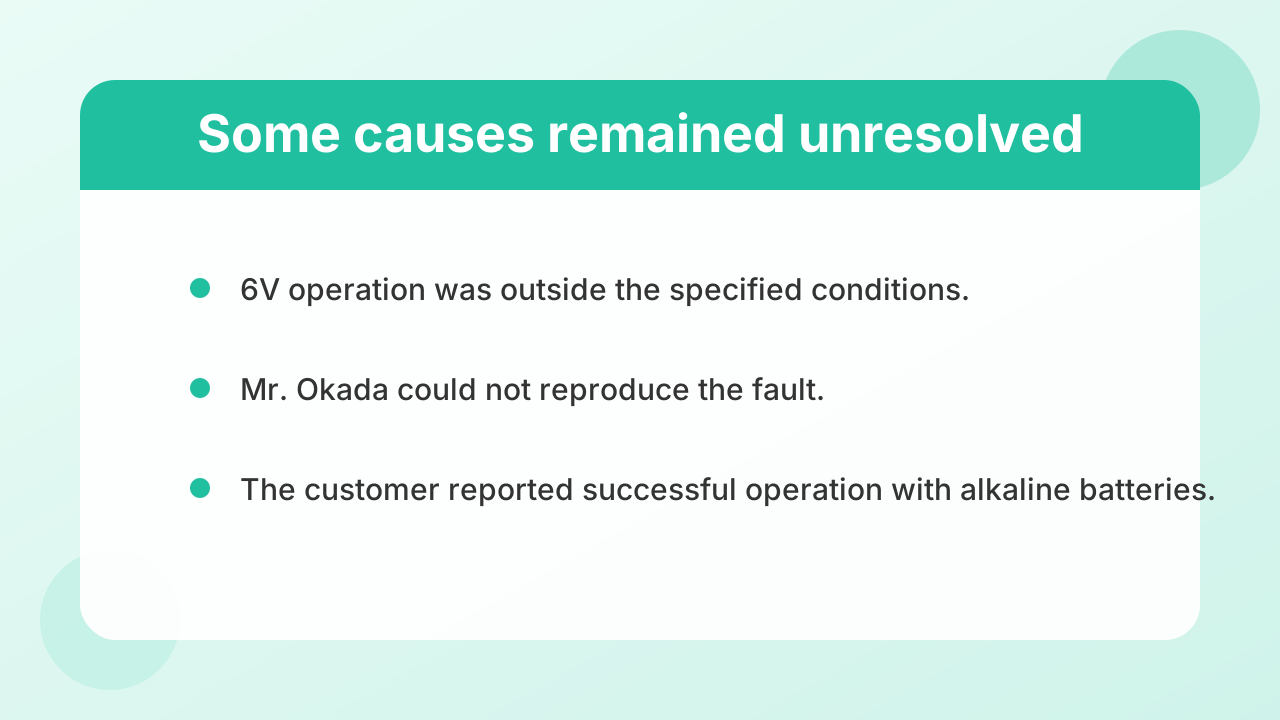
The diary's replies distinguish confirmed outcomes from suspected causes and unresolved faults.
"Can a motor failure after 6V use qualify for replacement?"
In an entry published in August 2019, a customer asked whether 6V had broken the 8 mm motor in a glass semi-long vibrating chip. Mr. Okada reported 10 hours of continuous 6V testing without failure, mostly using 8 mm motors. He still allowed for differences between individual motors.
6V operation was outside the specified conditions, so he excluded resulting failures from coverage. The diary does not record whether this customer's repair was completed. Mr. Okada offered replacement for initial motor defects.
(Source: ok-lab's diary, published August 2019)
https://ok-lab.hatenablog.com/entry/2019/08/24/125858
"Can a motor stop working despite passing the maker's tests?"
In an entry published in February 2020, a customer said a ceramic semi-long vibrating chip had failed again after inspection. The motor gradually slowed inside the body, then ran again after time outside it. The customer suspected a connection or heat problem, but the diary does not establish either cause.
Mr. Okada could not reproduce the fault; he nevertheless considered the motor defective. He offered motor replacement after another return.
(Source: ok-lab's diary, published February 2020)
https://ok-lab.hatenablog.com/entry/2020/02/15/144151
"Why won’t the motor start when its controller lights up?"
In an entry published in April 2022, a customer reported a lit controller but no vibration. Operation with another power supply led the customer to suspect the controller. Staff initially explained that starting requirements differed between motors.
The customer then reported continued stopping, even at maximum output, especially during patterns with pauses. The diary does not record the inspection result. Mr. Okada then suspected the motor and offered to inspect both parts after return.
(Source: ok-lab's diary, published April 2022)
https://ok-lab.hatenablog.com/entry/2022/04/02/123050
"Can battery choice explain why a motor won't start?"
In an entry published in December 2023, a customer reported a controller that did not work. Staff identified insufficient battery power or controller damage following reversed batteries as possible explanations. The customer reported successful operation with alkaline batteries and attributed the earlier failure with rechargeable batteries to insufficient voltage. OK Lab offered assessment of returned equipment when neither explanation applied.
(Source: ok-lab's diary, published December 2023)
https://ok-lab.hatenablog.com/entry/2023/12/30/122243
Buying from outside Japan

OK Lab ships internationally to countries covered by Japan Post's EMS courier service. Overseas orders are paid in advance by PayPal. Each order carries a ¥400 (about $3 at ¥156 = $1, rate as of 2026-09-04) handling fee, and EMS shipping is charged on top. These terms come from OK Lab's official sales-terms page (written here as plain text, not a link: ok-lab.net/docs/law), checked on September 7, 2026; confirm them on the official store before you order, because they can change.
Summary of this article
| What you wanted to know | The answer |
|---|---|
| In short: why did vibration stop? | The diary describes motor faults, power problems, and controller incompatibility. |
| About this product: what is it? | A urethral device made by OK Lab in Japan, with motor-equipped versions. |
| Key terms: what controls vibration? | A controller powers the motor; the combination matters. |
| What happens when the motor stops? | Some failures persisted; others disappeared during inspection or after a pause. |
| What was the maker's answer? | Assessment, compatibility restrictions, and replacement under the terms stated at the time. |
| What changed over time? | Later reports added voltage restrictions and further intermittent failures. |
| Which related products are listed today? | Glass and ceramic semi-long vibrating chips: ¥6,600 (about $42 at ¥156 = $1, rate as of 2026-09-04) each; IC controller upgrade: ¥2,200, (about $14 at ¥156 = $1, rate as of 2026-09-04) all including tax. |
| What do the common worries show? | A light, fresh batteries, or successful inspection did not explain every failure. |
| How can someone outside Japan buy? | Advance PayPal payment, a ¥400 (about $3 at ¥156 = $1, rate as of 2026-09-04) handling fee, and additional EMS shipping charges. |
Source: ok-lab's diary (Okada Comfortable Life Laboratory). The original entries are in Japanese; quotations on this page are translated. Photos and videos are on the original entries.
This article is a summary of the maker's development diary. The product is not a medical device and no result is guaranteed. If anything feels wrong or worries you, see a doctor. Prices, specifications and cautions change, so confirm the latest information on the official blog and the official site. Questions about ordering and shipping go to the seller.