![Is my chip cable broken? | Intermittent power can signal a wire fault [OK Prostate Chip]](/img/a/T0363/eyecatch.svg)
This page is based on entries from "ok-lab's diary" (https://ok-lab.hatenablog.com/), the Japanese development diary written by Mr. Okada, founder of OK Lab, a small company in Japan (Okada Comfortable Life Laboratory). Only the entries about "electrode cords and cable breakage" are summarized here, in order of publication. Past prices and sizes are as written at the time. Current prices come from the official product list (retrieved September 4, 2026). Quotations are translated from Japanese.
Note: This page is a personal reading log by someone with no connection to the maker or the seller. It reflects the source entries as of their publication dates and makes no guarantee of accuracy or safety. The product is not a medical device; talk to a doctor about any health decision. Check the official site for current information. This page contains advertising.
In short
Cable faults have caused intermittent power, stopped vibration, and a reported trapped-device incident.
Mr. Okada describes reinforced connections and backup thread, and warns against using cables with exposed wires.
The current list includes relevant glass vibrating models; historical custom cable specifications remain unconfirmed.
If you see blood in your urine, even a small amount or for the first time, do not wait and see. See a urologist right away. If you suddenly cannot urinate, or the device cannot be removed, do not try to fix it yourself. Go to a medical facility, including emergency care, immediately.
About this product

The OK Prostate Chip is a small device that is placed in the urethra (the urine passage) so that it acts on the prostate; the maker sells it in several shapes, sizes and materials. It is made and sold by OK Lab (Okada Comfortable Life Laboratory), a small company in Japan, through its own online store, and prices are in Japanese yen (JPY). The maker's development diary, "ok-lab's diary", is written in Japanese. This page is an English summary of it, and every quotation is translated. OK Lab ships internationally, so readers outside Japan can order (see "Buying from outside Japan" below). Product names on this page are plain-English descriptions. The official Japanese product name is shown once in the product table so you can find the same item in the store.
Before you read: key terms
| Term | Plain-English meaning |
|---|---|
| Electrode | A metal contact connected to a wire, used to deliver electrical stimulation. |
| Controller | The external unit that supplies and controls power for a vibrating chip. |
| Parallel cable | Two insulated wires joined side by side, used for electrical connections and sometimes physical support. |
| Strands | The individual metal wires inside a cable, which carry electricity. |
| Metal fatigue | Damage from repeated bending, discussed as a cause of broken internal wires. |
| Support cable | A reinforced cable assembly intended to support the device and, in some versions, carry electricity. |
| AWG30 | A designation for larger auxiliary wires used to carry current. The diary does not explain this. |
| Lock-on | A named connection arrangement intended to hold the chip in place. The diary does not explain this. |
| Nylon thread | A separate thread used for retrieval or as an additional connection between chip sections. |
What happens: chip cable breakage
The OK Prostate Chip is a small device placed in the urethra to act on the prostate. An electrode (a metal electrical contact) receives current through a cable, while vibrating models have cables powering embedded motors. These cables extend from the chip through the urethra toward an external controller (the power-control unit). The diary records faults at connections and inside cables, sometimes while their outer covering remains intact.
Chip cable breakage appeared at every motor connection tested
In an entry published in December 2018, Mr. Okada described destructive testing of approximately 100 small vibrating units. Every failure occurred where the wires joined the motor. He identified another weakness: metal fatigue (damage from repeated bending) could break wires inside their covering, especially near the device connection.
His proposed reinforcement joined the wires and their covering within protective resin, a material that hardens around the connection. He also proposed a flexible covering to reduce abrupt bending at that junction.
(Source: ok-lab's diary, published December 2018)
https://ok-lab.hatenablog.com/entry/20181229/1546064791
Chip cable breakage prompted thicker wires with more strands
An entry published in March 2019 described bending tests that broke 1 mm cable containing 6 strands (individual metal wires). The replacement used 1.2 mm cable with 24 strands and a silicone covering. Mr. Okada expected improved strength, but this was his assessment of the revised design.
The redesigned connection also protected about 8–10 mm beyond the chip's end with resin. He presented its curved shape as a way to let the cable bend more gradually.
(Source: ok-lab's diary, published March 2019)
https://ok-lab.hatenablog.com/entry/2019/03/23/173222
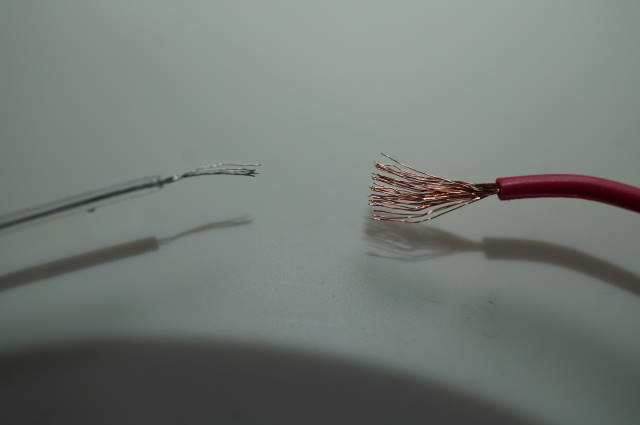
Chip cable breakage left one damaged device inside the bladder
An entry published in November 2020 reported a customer unable to retrieve a chip after its cable broke. Previous coating repairs had repeatedly failed, and Mr. Okada had concluded that further repair was impractical. The chip reached the bladder, where an attempted medical removal was unsuccessful.
An update published the following day reported that the customer had removed it themselves. Mr. Okada regretted not warning more clearly against continued use after the covering peeled away. He warned against using exposed wires, which he said would inevitably break through metal fatigue or corrosion.
(Source: ok-lab's diary, published November 2020)
https://ok-lab.hatenablog.com/entry/2020/11/14/131426
Chip cable breakage also occurred midway along reinforced wiring
An entry published in July 2022 described an upgraded 6-line assembly stopping during its 2nd use. The customer requested an improvement after intermittent power appeared near the middle of its 20 cm cable. Mr. Okada inspected the returned device and confirmed the fault was there, rather than at the motor connection.
A follow-up published in August 2022 described a workshop repair that preserved the cable's length. The diary does not record how the repaired cable performed afterward. Mr. Okada had said he expected the repair to be chargeable, without giving a price.
(Source: ok-lab's diary, published July 2022)
https://ok-lab.hatenablog.com/entry/2022/07/30/122933
(Source: ok-lab's diary, published August 2022)
https://ok-lab.hatenablog.com/entry/2022/08/06/123150
Chip cable breakage away from the motor allowed one repair
In an entry published in August 2024, a customer sought help after a custom linked vibrating chip failed after about 10 uses. Inspection located the break 15 mm from the resin boundary, away from the motor. The workshop repair shortened the cable by 3 cm.
In a follow-up published in September 2024, the customer reported clearer vibration and no further problems at that point. Mr. Okada considered an original manufacturing fault plausible, without establishing its cause. He described repairs away from motors as sometimes possible, while stressing that repairs near the motor were generally impractical.
(Source: ok-lab's diary, published August 2024)
https://ok-lab.hatenablog.com/entry/2024/08/31/122909
(Source: ok-lab's diary, published September 2024)
https://ok-lab.hatenablog.com/entry/2024/09/21/122907
The maker's answer to chip cable breakage
The diary describes several protections, each aimed at a particular source of strain or failure.
A detachable connector was proposed to reduce chip cable breakage
In an entry published in December 2018, a customer proposed a rectal electrode chip with a detachable connection. They wanted an intermediate socket that would separate during a sudden pull, which they believed would reduce cable breakage. Mr. Okada built a prototype but had not tested its electrical operation by publication. He had made acceptance conditional on successful tests of the wire covering's bond with resin.
(Source: ok-lab's diary, published December 2018)
https://ok-lab.hatenablog.com/entry/20181208/1544250742
Backup thread addressed chip cable breakage without an electrical warning
An entry published in January 2020 discussed a cable used only to connect two chip sections physically. Mr. Okada recognized that it could snap without an earlier loss of electrical operation revealing a problem. His proposed safeguard was an additional nylon-thread connection between the 2 chips.
(Source: ok-lab's diary, published January 2020)
https://ok-lab.hatenablog.com/entry/2020/01/11/151714
Ultrathin wiring raised chip cable breakage concerns despite its softness
An entry published in June 2020 records a customer's request for glass vibrating models with unusually thin cables. Mr. Okada initially withheld approval until he could inspect the supplied wire and assess its attachment. After receiving it, he described it as no thicker than 0.6 mm.
He considered its resistance to pulling almost nonexistent, and bonding tests were still underway. He also expected repeated sharp bends to cause internal breaks. His acceptance condition assigned 100% of the retrieval load to nylon thread, rather than the electrical cable.
(Source: ok-lab's diary, published June 2020)
https://ok-lab.hatenablog.com/entry/2020/06/27/120614
Larger auxiliary wires addressed chip cable breakage in powered assemblies
An entry published in June 2022 discussed a 6-line support cable (a reinforced assembly supporting the device). Mr. Okada considered internal wire breakage possible after prolonged use. For powered auxiliary leads, he recommended the upgraded six-line version with AWG30 wires (a wire-size designation).
(Source: ok-lab's diary, published June 2022)
https://ok-lab.hatenablog.com/entry/2022/06/11/123420
A revised lock-on electrode design addressed chip cable breakage concerns
An entry published in May 2026 records a request for a lock-on electrode design (a named support arrangement). The customer wanted doubled parallel cable (joined, insulated wires), but staff rejected it because they considered the arrangement too stressful for the cable. They instead proposed an earlier lock-on prototype.
Mr. Okada built an electrode prototype and thought it reduced cable strain, making breakage less likely. The diary does not record the customer's experience with it. Staff recommended the alternative structure rather than the requested cable arrangement.
(Source: ok-lab's diary, published May 2026)
https://ok-lab.hatenablog.com/entry/2026/05/16/122906
If you see blood in your urine, even a small amount or for the first time, do not wait and see. See a urologist right away. If you suddenly cannot urinate, or the device cannot be removed, do not try to fix it yourself. Go to a medical facility, including emergency care, immediately.
How chip cable breakage changed over time

| Published | What the diary said then |
|---|---|
| Jul 2019 | Mr. Okada reported motor contacts failing during assembly, including heat-related loosening. |
| Mar 2020 | Cable-contact faults qualified for initial-defect replacement until approximately 2 weeks after delivery. |
| Apr 2023 | Jointed two-wire cable failed after 3 months of daily use; maker previously estimated 6 months. |
| Dec 2023 | Mr. Okada reported over a year without delivery-time malfunction reports. |
| Mar 2024 | An electrode's apparent power fault resolved; no cable break was established. |
| Aug 2024 | Mr. Okada restricted separated single wires to fully resin-embedded applications because of weakness. |
(Source: ok-lab's diary, published April 2023)
https://ok-lab.hatenablog.com/entry/2023/04/29/123107
OK Prostate Chip products related to chip cable breakage

The current list includes glass vibrating models named in the ultrathin-cable request.
Products that appear in these entries
| Product (official name) | Price incl. tax | Relation to this topic |
|---|---|---|
| Glass vibrating chip (OKプロステート核振チップ ガラス素材覚醒タイプ) | ¥7,700 (about $49 at ¥156 = $1, rate as of 2026-09-04) | The June 2020 customer requested this model with custom ultrathin wiring, whose durability Mr. Okada questioned. |
| Long glass vibrating chip (OKプロステート核振チップ ガラス素材ロングタイプ) | ¥8,800 (about $56 at ¥156 = $1, rate as of 2026-09-04) | The same June 2020 request included this model with an unusually thin cable and additional nylon thread. |
The long glass vibrating chip is listed in the company's own online store.
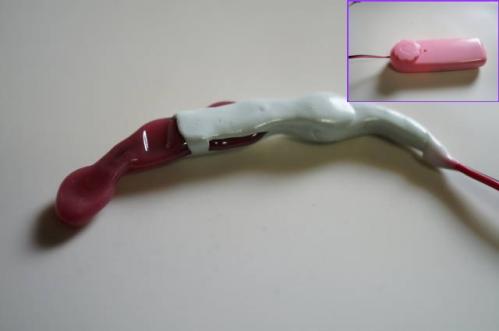
(Source: ok-lab's diary, published June 2020)
https://ok-lab.hatenablog.com/entry/2020/06/27/120614
Products the diary mentioned as alternatives
The diary names no alternative.
Historical custom builds and cable assemblies discussed above: No matching product can be confirmed on the current list.
Public sales of the 4-line support cable ended in June 2022 after pain reports and concerns about eventual breakage under repeated extreme bending. Mr. Okada still accepted special requests, so this was not an absolute end to custom production.
(Source: ok-lab's diary, published June 2022)
https://ok-lab.hatenablog.com/entry/2022/06/11/123420
Common worries about chip cable breakage
The replies distinguish repair costs, backup wiring, and faults that require individual assessment.
"How much did chip cable breakage repairs cost?"
An entry published in May 2019 records a customer asking about a fault near a vibrating chip's motor. Mr. Okada quoted ¥1,080 (about $7 at ¥156 = $1, rate as of 2026-09-04) for reconnecting a faulty cable and adding a resin cover. Damage within 3 cm of the chip required motor-and-cable replacement, quoted at ¥3,240 (about $21 at ¥156 = $1, rate as of 2026-09-04).
These were the prices published in May 2019. The diary does not record whether this customer's repair was completed. Mr. Okada offered free repair if the fault was inside the resin-covered connection and qualified as an initial defect.
(Source: ok-lab's diary, published May 2019)
https://ok-lab.hatenablog.com/entry/2019/05/18/150144
"Will doubling the wires prevent chip cable breakage?"
An entry published in February 2020 records a reader asking whether two parallel cables would resist breakage better. Mr. Okada replied that failures were more likely in the motor's thin wires, which doubling the external cable did not strengthen.
A second electrical path could help when the external cable itself failed. He quoted an additional ¥1,500 (about $10 at ¥156 = $1, rate as of 2026-09-04) excluding tax for the arrangement discussed. His recommendation remained provisional because his testing had lasted only a few days.
(Source: ok-lab's diary, published February 2020)
https://ok-lab.hatenablog.com/entry/2020/02/15/144151
"Does intermittent electrode power mean chip cable breakage?"
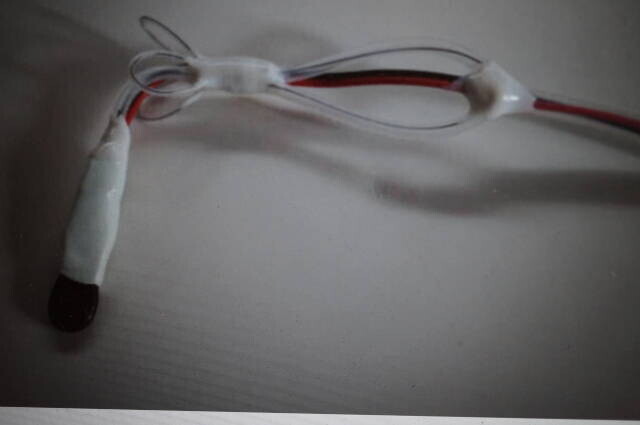
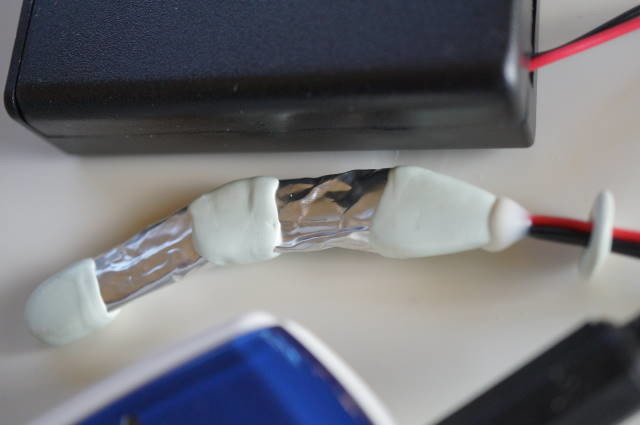
An entry published in May 2022 records a customer reporting intermittent electrode power near the cable's base. The customer requested a replacement combined motor-and-electrode chip and asked for reinforced wiring. Mr. Okada suspected a broken cable because the electrode itself consisted of copper wire held against aluminum tape.
He did not establish why the cable had failed. He considered the requested doubled four-line support impractical. He instead proposed investigating six-line support, while explaining that suitable materials were still under development.
(Source: ok-lab's diary, published May 2022)
https://ok-lab.hatenablog.com/entry/2022/05/28/123218
Buying from outside Japan

OK Lab ships internationally to countries covered by Japan Post's EMS courier service. Overseas orders are paid in advance by PayPal. Each order carries a ¥400 (about $3 at ¥156 = $1, rate as of 2026-09-04) handling fee, and EMS shipping is charged on top. These terms come from OK Lab's official sales-terms page (written here as plain text, not a link: ok-lab.net/docs/law), checked on September 7, 2026; confirm them on the official store before you order, because they can change.
Summary of this article
| What you wanted to know | The answer |
|---|---|
| What is the immediate concern? | Broken wiring can interrupt power; complete cable failure has also left a device trapped. |
| What is this product? | A device from Japan's OK Lab, placed in the urethra to act on the prostate. |
| Which distinction matters? | A wire can stop carrying electricity before the cable separates physically. |
| Where have faults occurred? | At motor connections, near chip ends, and partway along cables. |
| What protections did the maker discuss? | Reinforced connections, backup thread, larger auxiliary wires, and alternative support structures. |
| What changed over time? | Assembly methods, defect handling, and restrictions on weak cable arrangements. |
| What is listed today? | Relevant glass vibrating models cost ¥7,700 (about $49 at ¥156 = $1, rate as of 2026-09-04) and ¥8,800, (about $56 at ¥156 = $1, rate as of 2026-09-04) including tax; custom cable versions remain unconfirmed. |
| What did repair replies establish? | Repairability depended on location, and historical repair prices were not universal promises. |
| How are overseas orders handled? | Advance PayPal payment, a ¥400 (about $3 at ¥156 = $1, rate as of 2026-09-04) handling fee, and additional EMS shipping. |
| What lifespan is established? | The material does not establish a dependable lifespan for every cable design. |
Source: ok-lab's diary (Okada Comfortable Life Laboratory). The original entries are in Japanese; quotations on this page are translated. Photos and videos are on the original entries.
This article is a summary of the maker's development diary. The product is not a medical device and no result is guaranteed. If anything feels wrong or worries you, see a doctor. Prices, specifications and cautions change, so confirm the latest information on the official blog and the official site. Questions about ordering and shipping go to the seller.