![Can the wire break? | Yes, and reported failures prompted redesigns [OK Prostate Chip]](/img/a/T0357/eyecatch.svg)
This page is based on entries from "ok-lab's diary" (https://ok-lab.hatenablog.com/), the Japanese development diary written by Mr. Okada, founder of OK Lab, a small company in Japan (Okada Comfortable Life Laboratory). Only the entries about "wire breakage and metal fatigue" are summarized here, in order of publication. Past prices and sizes are as written at the time. Current prices come from the official product list (retrieved September 4, 2026). Quotations are translated from Japanese.
Note: This page is a personal reading log by someone with no connection to the maker or the seller. It reflects the source entries as of their publication dates and makes no guarantee of accuracy or safety. The product is not a medical device; talk to a doctor about any health decision. Check the official site for current information. This page contains advertising.
In short
Wire breakage has affected stainless connections, covered cables, and chipless devices made from wire inside tubing.
Mr. Okada introduced backup connections and advised replacement after damage.
Related chip components remain listed, but current availability of the historical custom wire assemblies cannot be confirmed.
If you see blood in your urine, even a small amount or for the first time, do not wait and see. See a urologist right away.
If you suddenly cannot urinate, or the device cannot be removed, do not try to fix it yourself. Go to a medical facility, including emergency care, immediately.
About this product
The OK Prostate Chip is a small device that is placed in the urethra (the urine passage) so that it acts on the prostate; the maker sells it in several shapes, sizes and materials. It is made and sold by OK Lab (Okada Comfortable Life Laboratory), a small company in Japan, through its own online store, and prices are in Japanese yen (JPY).
The maker's development diary, "ok-lab's diary", is written in Japanese. This page is an English summary of it, and every quotation is translated. OK Lab ships internationally, so readers outside Japan can order (see "Buying from outside Japan" below).
Product names on this page are plain-English descriptions. The official Japanese product name is shown once in the product table so you can find the same item in the store.
Before you read: key terms
| Term | Plain-English meaning |
|---|---|
| Metal fatigue | Damage associated with repeated bending; Mr. Okada uses this term to explain weakening and eventual wire failure. |
| Stainless wire | A thin stainless steel strand used to connect chips or support a cable’s shape. |
| Nylon backup thread | A separate thread intended to keep parts connected if their metal connection breaks. |
| Four-line and six-line supports | Cable arrangements with supporting wires, developed to hold their shape and help keep a chip positioned. |
| Chipless device | A device formed from wire inside tubing, with loops providing its shape and positioning function. |
| Nitinol | A nickel–titanium alloy used for flexible connections that return toward their intended shape. |
What happens: wire breakage
The OK Prostate Chip is a small device placed in the urethra, the urine passage, to act on the prostate. In these entries, wire connects chips, supports cables, or forms flexible loops intended to hold a device in position. Some wire lies between chips inside the urethra, while other designs extend outside the body. The concern is a broken connection or an exposed end where the wire bends.
Early stainless wire tests left doubts about durability despite surviving repeated bends
In an entry published in September 2019, Mr. Okada reported testing 0.29 mm stainless wire as an alternative to nylon thread. It survived approximately 2,000 bends by hand. Nevertheless, he suspected metal fatigue (damage from repeated bending) could make it less durable than nylon.
The stainless option cost the same as nylon and was available only with ceramic chips at that time. He offered 1 wire; a 2-wire arrangement remained untested. Mr. Okada advised regular checks for unwanted deformation.
(Source: ok-lab's diary, published September 2019)
https://ok-lab.hatenablog.com/entry/2019/09/14/143710
Short stainless wire connections failed after roughly three weeks of testing
In an entry published in October 2019, Mr. Okada abandoned the thicker stainless connection being tested between ceramic chips. After approximately 3 weeks, he found that very short connections repeatedly bent at the same place. He attributed their failure to concentrated metal fatigue.
He then investigated nylon fishing line and surgical suture, reporting that the suture felt gentler in his comparison. His proposed alternative was a connection made from multiple strands of surgical suture.
(Source: ok-lab's diary, published October 2019)
https://ok-lab.hatenablog.com/entry/2019/10/12/125944
Cable breakage left one customer's chip inside the bladder
In an entry published in November 2020, a customer sought help after a cable broke and the chip could not be removed. Its covering had peeled away again despite 2 reinforcement attempts. A hospital found the chip in the bladder, and an initial removal attempt failed.
Another procedure under general anesthesia was planned. An update added the day after publication said the customer had subsequently removed the chip themselves. Mr. Okada warned that exposed metal wires would eventually break and advised against any further use of cables in that condition.
(Source: ok-lab's diary, published November 2020)
https://ok-lab.hatenablog.com/entry/2020/11/14/131426
Four-line stainless wire supports left regular sale after reports of pain
An entry published in June 2022 announced the withdrawal of four-line supports (cables reinforced with supporting wires) from regular sale. Mr. Okada cited reports of pain and introduced six-line supports at the same price as the previous four-line version. An upgraded six-line version also appeared.
He still allowed exceptional requests for the old four-line design, while warning that repeated extreme bending would eventually break its wire. Mr. Okada asked customers to reconsider their orders in light of the revised designs.
(Source: ok-lab's diary, published June 2022)
https://ok-lab.hatenablog.com/entry/2022/06/11/123420
Early stainless wire breakage ended orders for one heavy chip assembly
An entry published in September 2022 described a stainless steel chip attached to a wire-filled tube, called a pessary in the diary. The customer reported a break at the wire’s base during the 3rd manual manipulation and asked about repair. OK Lab treated this as an early defect and requested its return.
Mr. Okada suspected the heavy chip and its supporting wire were poorly matched, although he had not experienced this failure himself. He stopped accepting orders for the stainless steel version. Existing buyers were offered a change to another connection method.
(Source: ok-lab's diary, published September 2022)
https://ok-lab.hatenablog.com/entry/2022/09/24/122837
Wire breakage concerns prompted a broader sales suspension after further failures
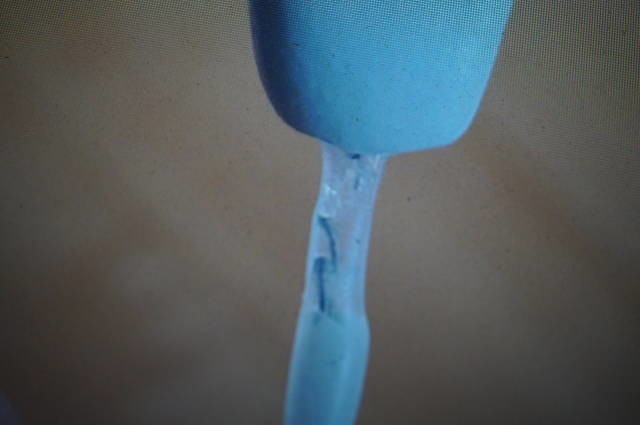
In an entry published in October 2022, Mr. Okada temporarily suspended six-line supports and the wire-filled tube assemblies. Further reports involved loosening resin on a support cable and a wire connection coming free from another assembly. These problems had appeared relatively soon after use began.
Mr. Okada explained that early failures had reached the point where he no longer wanted to continue those sales. He offered refunds to buyers who objected to the products’ risks.
(Source: ok-lab's diary, published October 2022)
https://ok-lab.hatenablog.com/entry/2022/10/01/122944
Chipless wire breakage after two days brought a temporary angle limit
In an entry published in December 2024, a customer reported that a 120-degree chipless device broke after 2 days, exposing wire. The customer reported some pain but no bleeding. Mr. Okada suspected damage introduced while forming its curve.
He offered a refund or replacement and temporarily limited finished curves to 90 degrees. The customer chose replacement; the diary does not record how the replacement performed. Mr. Okada advised concerned buyers to wait for wire supplied with its curve already formed.
(Source: ok-lab's diary, published December 2024)
https://ok-lab.hatenablog.com/entry/2024/12/14/122948
The maker's answer to wire breakage
The maker increasingly designed for a connection to survive one wire failure, while treating damage as a reason for replacement.
Nylon backup thread was intended to keep broken wire connections together
In an entry published in September 2019, Mr. Okada described nylon backup thread (a separate connection intended to remain after metal failure). It was embedded between the ceramic chips because he expected the stainless wire eventually to break. The nylon was intended to keep the chips joined if that happened.
He also acknowledged that broken metal could damage the backup thread. Mr. Okada therefore asked buyers to request thread replacement after a wire break.
(Source: ok-lab's diary, published September 2019)
https://ok-lab.hatenablog.com/entry/2019/09/28/140637
A historical stainless wire design received an explicit replacement interval
In an entry published in October 2021, Mr. Okada compared arrangements using 0.3 mm wire. He reported that twisted wire resisted bending and breakage better than parallel strands, but still expected eventual failure.
For the wire-linked arrangement discussed there, he proposed replacement after 10 uses or approximately 100 hours of accumulated use. Mr. Okada called for earlier replacement if pronounced bends developed.
(Source: ok-lab's diary, published October 2021)
https://ok-lab.hatenablog.com/entry/2021/10/23/125707
Broken wire marked the end of a covered assembly's service life
In an entry published in August 2022, Mr. Okada described wire inside silicone tubing, a flexible covering intended to contain broken ends. He treated wire failure as the product’s end of life. Factory replacement of these wire-filled tubes generally was unavailable because separating the firmly bonded parts could damage the chip.
The same restriction covered four-line and six-line supports, changing the earlier replacement position. Mr. Okada asked customers to regard a broken wire as the end of these assemblies’ service life.
(Source: ok-lab's diary, published August 2022)
https://ok-lab.hatenablog.com/entry/2022/08/06/123150
Repeated chipless wire breakage shifted the design toward backup support
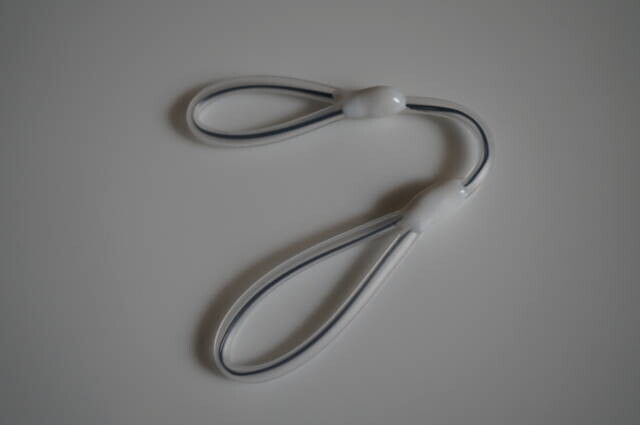
In an entry published in March 2025, Mr. Okada said 4 customers had reported chipless wire breakage. He acknowledged that supplier-made curves could not guarantee an unbreakable product. His revised approach used 2 wires, intending the remaining wire to preserve the shape if one failed.
He particularly recommended this arrangement to buyers who had previously experienced breakage. Mr. Okada said the product should be discarded once either wire broke.
(Source: ok-lab's diary, published March 2025)
https://ok-lab.hatenablog.com/entry/2025/03/08/123016
If you see blood in your urine, even a small amount or for the first time, do not wait and see. See a urologist right away.
If you suddenly cannot urinate, or the device cannot be removed, do not try to fix it yourself. Go to a medical facility, including emergency care, immediately.
How wire breakage changed over time
| Published | What the diary said then |
|---|---|
| Jan 2021 | A 0.5 mm stainless connection included parallel nylon backup; durability remained unknown. |
| Apr 2022 | Mr. Okada rejected 0.3 mm titanium after finding it broke more easily than stainless. |
| Oct 2022 | A new floating-wire design added tubing, thicker resin, and roughly 1 mm resin spacing. |
| Jan 2023 | The maker shifted toward tubes with replaceable wire, avoiding direct attachment to chips. |
| Jan 2023 | A wire-free jointed design launched after a floating-wire device failed within approximately 3 weeks. |
| Mar 2024 | A ceramic-pair prototype used 0.6 mm nickel–titanium wire beneath a 2.5 mm tube. |
| Oct 2024 | Nitinol, a nickel–titanium alloy for flexible connections, replaced the older core in a prototype. |
| Apr 2025 | Added nylon backup across the main loop connection cost ¥1,000, (about $6 at ¥156 = $1, rate as of 2026-09-04) tax excluded. |
| Nov 2025 | A jointed prototype paired nylon with nitinol, aiming to contain breaks between resin sections. |
| Jun 2026 | A proposed 0.15 mm wire connection included rubber intended to keep components joined after failure. |
OK Prostate Chip products related to wire breakage
The current list includes components from a documented wire-connection request, without confirming availability of that historical custom assembly.
Products that appear in these entries
| Product (official name) | Price incl. tax | Relation to this topic |
|---|---|---|
| Short stainless ring chip (OKプロステートチップ ステンレスリング ショートタイプ) | ¥3,300 (about $21 at ¥156 = $1, rate as of 2026-09-04) | April 2021: a customer requested this chip with added stainless wire connecting it to a screw auxiliary chip. |
| Screw auxiliary chip (スクリュー型補助チップ追加オプション) | ¥3,300 (about $21 at ¥156 = $1, rate as of 2026-09-04) | April 2021: this auxiliary appeared in that connection request, for which OK Lab quoted additional wire-attachment charges. |
(Source: ok-lab's diary, published April 2021)
https://ok-lab.hatenablog.com/entry/2021/04/10/125809
Products the diary mentioned as alternatives
The diary names no alternative.
For the historical custom wire assemblies, ceramic connection prototypes, and chipless designs discussed here: No matching product can be confirmed on the current list.
Common worries about wire breakage
The diary records early failures and differing repair decisions, including cases where the cause remained unknown.
"Can wire breakage occur during the first use?"
In an entry published in July 2022, a customer reported pain, severe bending, and protruding wire in a four-line support. The customer had stopped using it and asked whether this was unusual wear. Mr. Okada replied that extreme loading could produce this condition in 1 use.
The customer also asked about changing to the upgraded six-line design. He said cable replacement was possible then; the diary does not record whether this customer’s replacement was completed. Mr. Okada cautioned that six-line designs could still expose wire under extreme loading.
(Source: ok-lab's diary, published July 2022)
https://ok-lab.hatenablog.com/entry/2022/07/09/123142
"Would thicker metal prevent chipless wire breakage?"
In an entry published in February 2025, a customer reported chipless wire breakage after 2 weeks and asked about stronger wire. OK Lab could not explain the failure and could not immediately supply a thicker version. The customer initially preferred an identical replacement.
Staff warned that the same design could fail again, so the customer accepted a refund. Mr. Okada then sought supplier-made curves and decided to continue developing the device. He asked buyers to wait for the revised wire.
(Source: ok-lab's diary, published February 2025)
https://ok-lab.hatenablog.com/entry/2025/02/08/122932
"Does chipless wire breakage qualify for a free replacement?"
An entry published in May 2025 described an older chipless device breaking at its 90-degree bend during cleaning. The customer asked for a replacement. OK Lab declined because too much time had passed since shipment, and the customer accepted that response.
Staff said supplier-curved wire was being used by then, but breakage remained possible over prolonged use. Their reply cautioned that this change did not provide replacement coverage indefinitely.
(Source: ok-lab's diary, published May 2025)
https://ok-lab.hatenablog.com/entry/2025/05/31/122940
Buying from outside Japan
OK Lab ships internationally to countries covered by Japan Post's EMS courier service. Overseas orders are paid in advance by PayPal. Each order carries a ¥400 (about $3 at ¥156 = $1, rate as of 2026-09-04) handling fee, and EMS shipping is charged on top. These terms come from OK Lab's official sales-terms page (written here as plain text, not a link: ok-lab.net/docs/law), checked on September 7, 2026; confirm them on the official store before you order, because they can change.
Summary of this article
| What you wanted to know | The answer |
|---|---|
| What is the main concern? | Wire has broken in connections, covered cables, and chipless devices. |
| What is the product? | A urethral device made and sold by OK Lab in Japan. |
| What do the key terms mean? | They describe wire materials, supporting cables, and backup connections intended to retain joined parts. |
| What failures were reported? | Cases included early breakage, exposed wire, and a chip that reached the bladder. |
| What did the maker change? | He introduced backup threads, replacement limits, protected connections, and paired wires. |
| How did development continue? | Later prototypes used nickel–titanium wire and additional connections intended to remain after failure. |
| What related products are currently listed? | The short stainless ring chip and screw auxiliary chip each cost ¥3,300 (about $21 at ¥156 = $1, rate as of 2026-09-04) including tax. |
| What about lifespan and replacement? | Early failure was possible; repair and refund decisions depended on the design and elapsed time. |
| How do overseas orders work? | Advance PayPal payment, EMS shipping, and a ¥400 (about $3 at ¥156 = $1, rate as of 2026-09-04) handling fee apply under the stated terms. |
| What does this article establish? | The diary documents failures and responses; Mr. Okada ultimately rejected promises of unbreakable wire. |
Source: ok-lab's diary (Okada Comfortable Life Laboratory). The original entries are in Japanese; quotations on this page are translated. Photos and videos are on the original entries.
This article is a summary of the maker's development diary. The product is not a medical device and no result is guaranteed. If anything feels wrong or worries you, see a doctor. Prices, specifications and cautions change, so confirm the latest information on the official blog and the official site. Questions about ordering and shipping go to the seller.