![Is my resin chip cracking or peeling? | Damage is reported, and causes vary [OK Prostate Chip]](/img/a/T0353/eyecatch.svg)
This page is based on entries from "ok-lab's diary" (https://ok-lab.hatenablog.com/), the Japanese development diary written by Mr. Okada, founder of OK Lab, a small company in Japan (Okada Comfortable Life Laboratory). Only the entries about "resin chip cracking and peeling" are summarized here, in order of publication. Past prices and sizes are as written at the time. Current prices come from the official product list (retrieved September 4, 2026). Quotations are translated from Japanese.
Note: This page is a personal reading log by someone with no connection to the maker or the seller. It reflects the source entries as of their publication dates and makes no guarantee of accuracy or safety. The product is not a medical device; talk to a doctor about any health decision. Check the official site for current information. This page contains advertising.
In short
- The diary records peeling coatings, broken resin bodies, and detached attachments, including one report involving blood in urine.
- The maker introduced reinforcement, offered repairs or refunds, and advised stopping use when certain reinforced connections developed cracks.
- Related models remain on the current list, while the latest recorded fracture investigation left its proposed cause uncertain.
If you see blood in your urine, even a small amount or for the first time, do not wait and see. See a urologist right away.
If you suddenly cannot urinate, or the device cannot be removed, do not try to fix it yourself. Go to a medical facility, including emergency care, immediately.
About this product

The OK Prostate Chip is a small device that is placed in the urethra (the urine passage) so that it acts on the prostate; the maker sells it in several shapes, sizes and materials. It is made and sold by OK Lab (Okada Comfortable Life Laboratory), a small company in Japan, through its own online store, and prices are in Japanese yen (JPY).
The maker's development diary, "ok-lab's diary", is written in Japanese. This page is an English summary of it, and every quotation is translated.
OK Lab ships internationally, so readers outside Japan can order (see "Buying from outside Japan" below). Product names on this page are plain-English descriptions. The official Japanese product name is shown once in the product table so you can find the same item in the store.
Before you read: key terms
| Term | Plain-English meaning |
|---|---|
| Epoxy resin | A material that hardens, used for chip bodies, coatings, and connections between parts. |
| Retrieval thread | A thread attached to the chip so that the device can be removed. |
| Loop connection | A tied thread attachment intended to keep the thread connected to the chip. |
| Reinforcement | Added material or a supporting connection intended to make separation or breakage less likely. |
What happens: resin chip cracking and peeling
The OK Prostate Chip is a small device placed in the urethra (the urine passage) to act on the prostate. Resin forms some chip bodies and also secures threads or covers connections to other parts. On glass chips discussed in early entries, resin holds a retrieval thread (a thread intended for removal) against the chip. The reports below concern damaged coatings, broken bodies, and attachments separating from the main device.
Resin peeling persisted after linked glass chips received thicker coatings
An entry published in February 2018 describes two reports of resin peeling from linked glass chips. Mr. Okada suspected that forces acting on their connecting thread could lift the coating. He reported gradually increasing coating thickness on shipments that month.
For affected January shipments, he offered replacement after receiving photographs, but excluded another replacement if peeling happened again. He acknowledged that thicker resin could still break under force. Mr. Okada cautioned that this response could not completely overcome the design's limitations.
(Source: ok-lab's diary, published February 2018)
https://ok-lab.hatenablog.com/entry/20180214/1518601774
Resin chip cracking raised doubts about the workshop's hardening time
An entry published in May 2018 reports a custom chip whose thread detached during use immediately after delivery. The customer described using force comparable to that used with a familiar long chip. Mr. Okada suspected the epoxy resin (the coating material) had not hardened sufficiently.
His usual estimate of 5 days to practical strength depended on warmer workshop conditions; he suspected colder, wetter weather had delayed hardening. The diary does not record this customer's removal outcome in that entry. Mr. Okada concluded that the workshop needed longer hardening time when conditions were unstable.
(Source: ok-lab's diary, published May 2018)
https://ok-lab.hatenablog.com/entry/20180510/1525959878
Cracked resin chip reports exposed uncertainty about attached wire loads
An entry published in January 2023 describes a custom wired semi-long resin chip found broken inside a storage bag. The customer clarified that the break was discovered after heat cleaning and asked whether cleaning or another cause explained it. Staff could not determine whether pressure had acted on the chip.
The manufacturer suspected the attached wire might have pressed the chip against the bag. Mr. Okada thought attachments could increase forces on a chip, but did not establish what happened in this case. He cautioned that custom wire attachments carried risks and apologized for not warning about them earlier.
(Source: ok-lab's diary, published January 2023)
https://ok-lab.hatenablog.com/entry/2023/01/14/122952
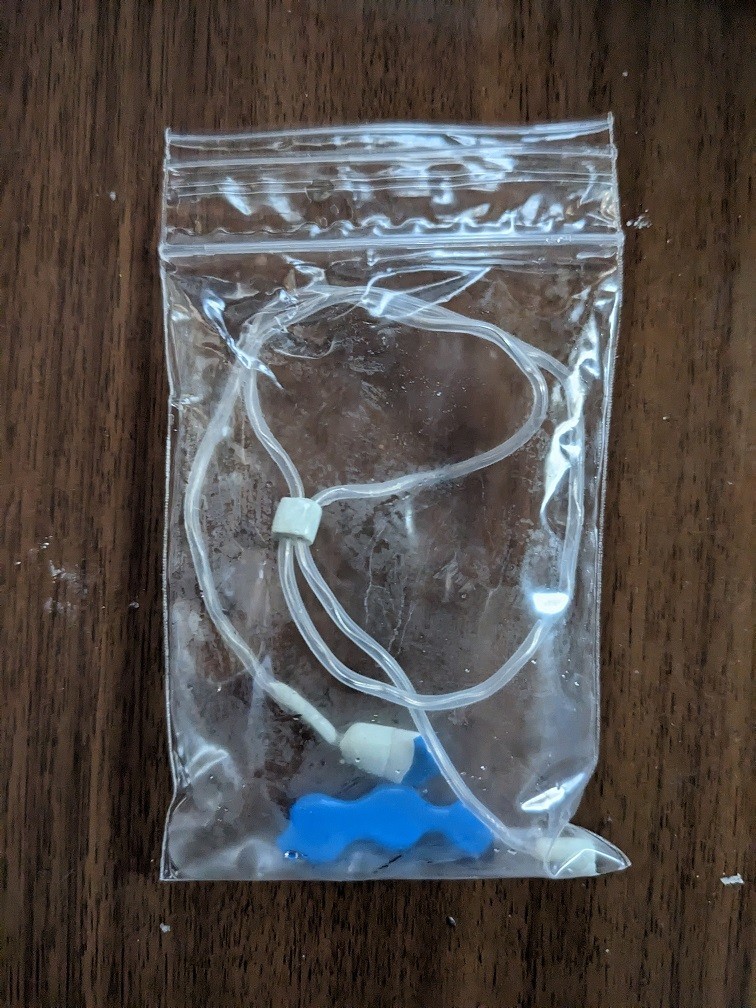
Resin chip cracking left a screw attachment behind during one reported incident
An entry published in June 2025 shares a customer's report that a screw attachment on a flexible tail cracked and separated. The customer reported blood in urine and an attachment remaining inside before passing 2–3 hours later. The same customer subsequently found cracks in other attachments purchased around the same time.
Mr. Okada suspected separation where two resin pieces had been bonded together, rather than establishing aging as the cause. He thought other parts made with similar joints might also be affected. Mr. Okada asked owners to check these attachments for damage.
(Source: ok-lab's diary, published June 2025)
https://ok-lab.hatenablog.com/entry/2025/06/07/122954
Resin chip cracking prompted a refund while its cause remained uncertain
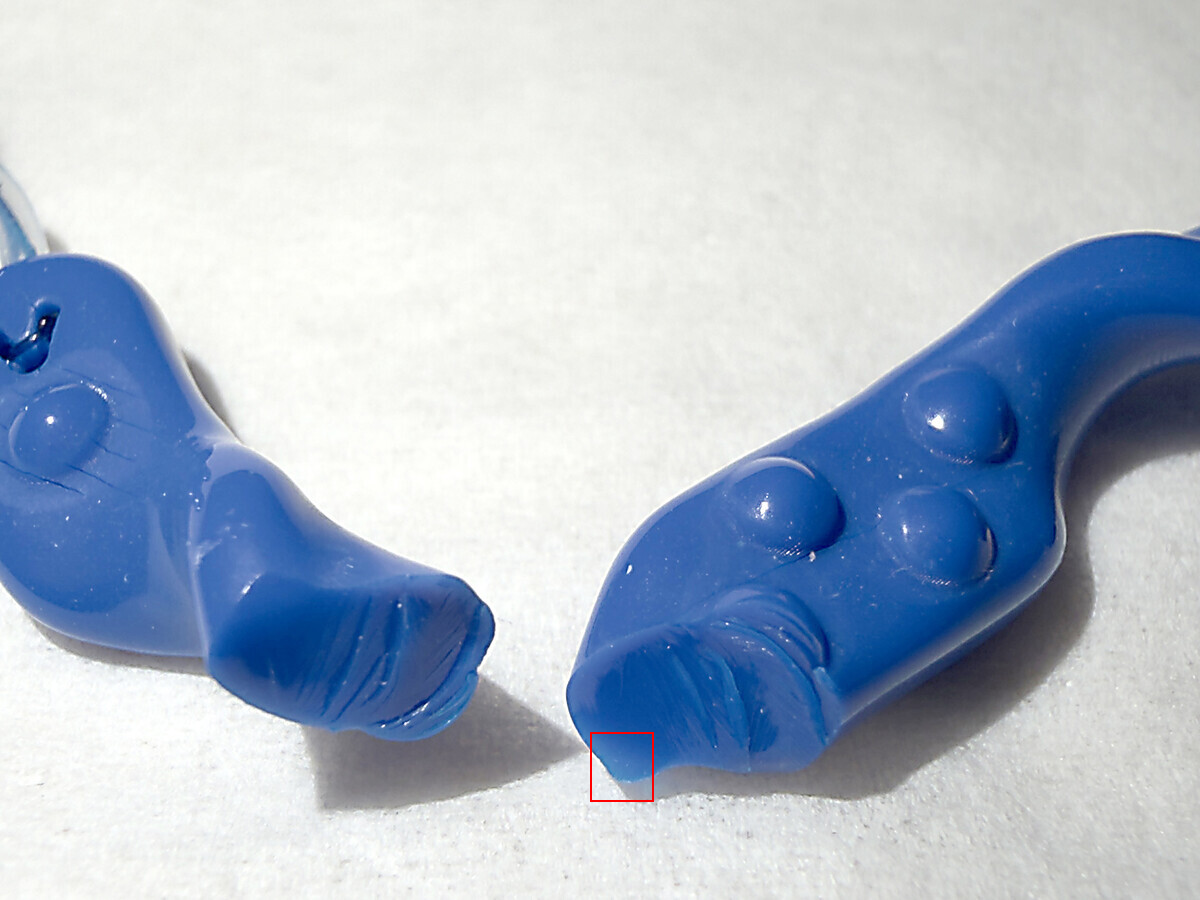
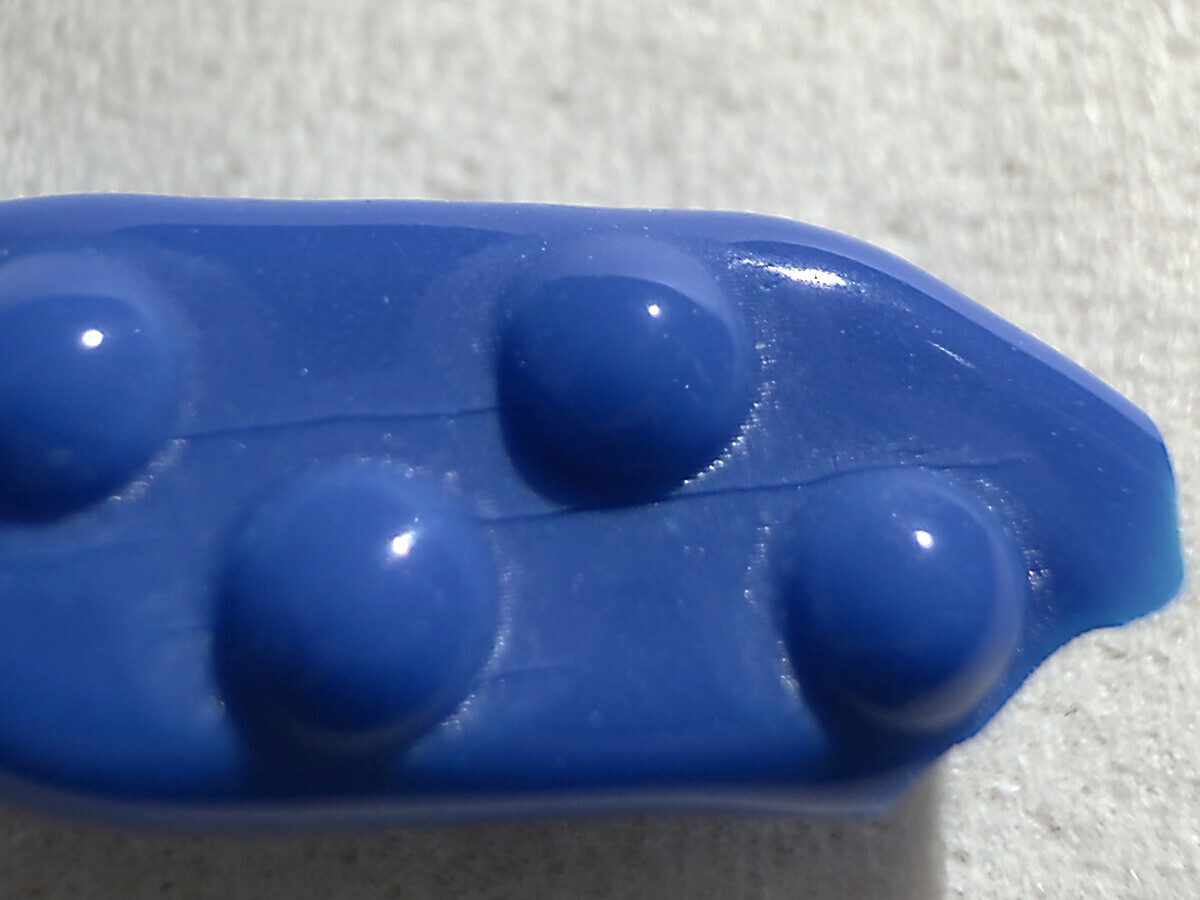
Entries published in June 2026 describe a broken second-generation resin chip (Zoro), followed by photographs showing numerous cracks. Staff initially found no apparent problem with the reported cleaning method; Mr. Okada suspected uneven heating. The customer disputed overheating and suspected weak bonds between printed layers; staff offered a refund because replacement stock was unavailable.
In July 2026, the manufacturer examined the returned chip and considered excessive force very unlikely. The manufacturer favored uneven heating as the explanation, although Mr. Okada acknowledged that this remained uncertain. Mr. Okada asked other owners to report similar damage.
(Source: ok-lab's diary, published June 2026)
https://ok-lab.hatenablog.com/entry/2026/06/13/122909
(Source: ok-lab's diary, published June 2026)
https://ok-lab.hatenablog.com/entry/2026/06/27/122906
(Source: ok-lab's diary, published July 2026)
https://ok-lab.hatenablog.com/entry/2026/07/04/122918
The maker's answer to resin chip cracking and peeling
The diary describes several responses, including connection changes, paid repairs, inspection offers, and warnings about visible cracks.
Resin peeling led to a paid thread replacement service for glass chips
An entry published in April 2018 introduced thread replacement after a customer asked whether detached resin could be repaired. The published charge was ¥1,000 (about $6 at ¥156 = $1, rate as of 2026-09-04) excluding tax per chip for a new thread connection on glass.
Because the chips were handmade, Mr. Okada said a new order could not reproduce a favorite shape exactly. The diary does not record how this customer's repair performed afterward. Mr. Okada suggested the service for glass chips whose threads had come away.
(Source: ok-lab's diary, published April 2018)
https://ok-lab.hatenablog.com/entry/20180407/1523090115
Resin peeling prompted mechanical reinforcement without an absolute safety guarantee
In an entry published in June 2018, Mr. Okada described loop connections (tied thread attachments) and reinforcement (added material supporting the connection). His aim was to hold the connection mechanically instead of depending entirely on resin sticking to glass.
During work on one returned chip, he found that the thread remained attached even after most resin was gone. He limited that observation to the tested chip. Mr. Okada cautioned that variations between handmade pieces prevented an absolute safety guarantee.
(Source: ok-lab's diary, published June 2018)
https://ok-lab.hatenablog.com/entry/20180616/1529136608
Resin chip cracking remains a concern around reinforced wire connections
In an entry published in June 2024, a customer asked whether thin sections of a resin chip connected to springy wire could break. Mr. Okada described a connection with a flexible inner layer and a hard outer coating. He thought the inner layer might prevent immediate separation if the outside cracked.
He also acknowledged that sufficiently strong forces could break either the coating or the chip. Mr. Okada advised stopping use if cracks appeared in the epoxy.
(Source: ok-lab's diary, published June 2024)
https://ok-lab.hatenablog.com/entry/2024/06/15/123132
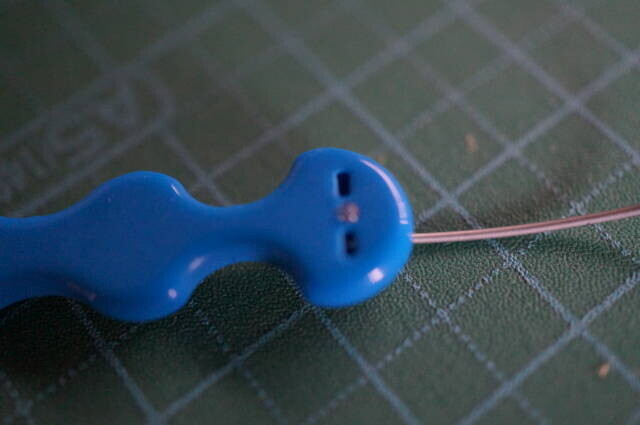
Resin coating peeling on reinforced ceramic chips prompted an inspection offer
In an entry published in June 2026, a customer reported peeling on a reinforced, twisted ceramic chip after two uses. The coating had opened enough to expose underlying adhesive and parts of the wire. Staff said reinforcement had changed to include rubber bonding and resin, but could not judge usability from the description.
Mr. Okada explained that thicker coverage over every uneven area would enlarge the chip. The diary does not record the completed assessment. Staff proposed return for inspection, followed by repair if they found a condition affecting use.
(Source: ok-lab's diary, published June 2026)
https://ok-lab.hatenablog.com/entry/2026/06/20/122903
If you see blood in your urine, even a small amount or for the first time, do not wait and see. See a urologist right away.
If you suddenly cannot urinate, or the device cannot be removed, do not try to fix it yourself. Go to a medical facility, including emergency care, immediately.
How resin chip cracking and peeling changed over time
| Published | What the diary said then |
|---|---|
| Feb 2018 | Thicker coatings followed peeling reports on linked glass chips. |
| May 2018 | Loop connections addressed thread detachment; resin peeling remained unresolved. |
| Feb 2019 | Experimental reinforcement added about 5 days to production. |
| Jan 2020 | Sales of a linked ceramic design were suspended after a cracked connection. |
| Feb 2020 | A revised linked design had a flexible connection; equivalent sensations were uncertain. |
| Oct 2022 | Six-wire and wire-loop retention designs had sales suspended after further failures. |
| Jan 2023 | A wired resin chip broke; pressure from its attachment was suspected. |
| Jun 2025 | A detached resin screw attachment remained inside temporarily; its bonded joint was questioned. |
| Jun 2026 | A fractured second-generation resin chip received an initial-defect refund offer. |
| Jul 2026 | Manufacturer inspection favored uneven heating, without establishing a certain cause. |
OK Prostate Chip products related to resin chip cracking and peeling
The current list includes models named in complaints about resin damage.
Products that appear in these entries
| Product (official name) | Price incl. tax | Relation to this topic |
|---|---|---|
| Semi-long glass chip (OKプロステートチップ ガラス素材セミロングタイプ) | ¥4,400 (about $28 at ¥156 = $1, rate as of 2026-09-04) | In May 2018, a customer reported lifting resin and received a refund offer. |
| Long ceramic model (OKプロステートチップ 陶器素材ロング勾玉タイプ) | ¥7,700 (about $49 at ¥156 = $1, rate as of 2026-09-04) | In October 2019, raised resin and subsequent ceramic breakage prompted a replacement request and refund offer. |
| Second-generation resin chip (OKプロステートチップ 凶悪ゾロ(第二世代生体適合樹脂)) | ¥6,600 (about $42 at ¥156 = $1, rate as of 2026-09-04) | In June 2026, a fractured chip prompted a refund offer and examination by its manufacturer. |
(Source: ok-lab's diary, published May 2018)
https://ok-lab.hatenablog.com/entry/20180524/1527153380
(Source: ok-lab's diary, published October 2019)
https://ok-lab.hatenablog.com/entry/2019/10/05/141806
(Source: ok-lab's diary, published June 2026)
https://ok-lab.hatenablog.com/entry/2026/06/13/122909
(Source: ok-lab's diary, published June 2026)
https://ok-lab.hatenablog.com/entry/2026/06/27/122906
Products the diary mentioned as alternatives
The diary names no alternative.
The complete historical wired, reinforced, and flexible-tail configurations discussed above: No matching product can be confirmed on the current list.
The earlier linked ceramic design had sales suspended in January 2020. The six-wire and wire-loop retention designs had sales suspended in October 2022.
(Source: ok-lab's diary, published January 2020)
https://ok-lab.hatenablog.com/entry/2020/01/11/151714
(Source: ok-lab's diary, published October 2022)
https://ok-lab.hatenablog.com/entry/2022/10/01/122944
Common worries about resin chip cracking and peeling
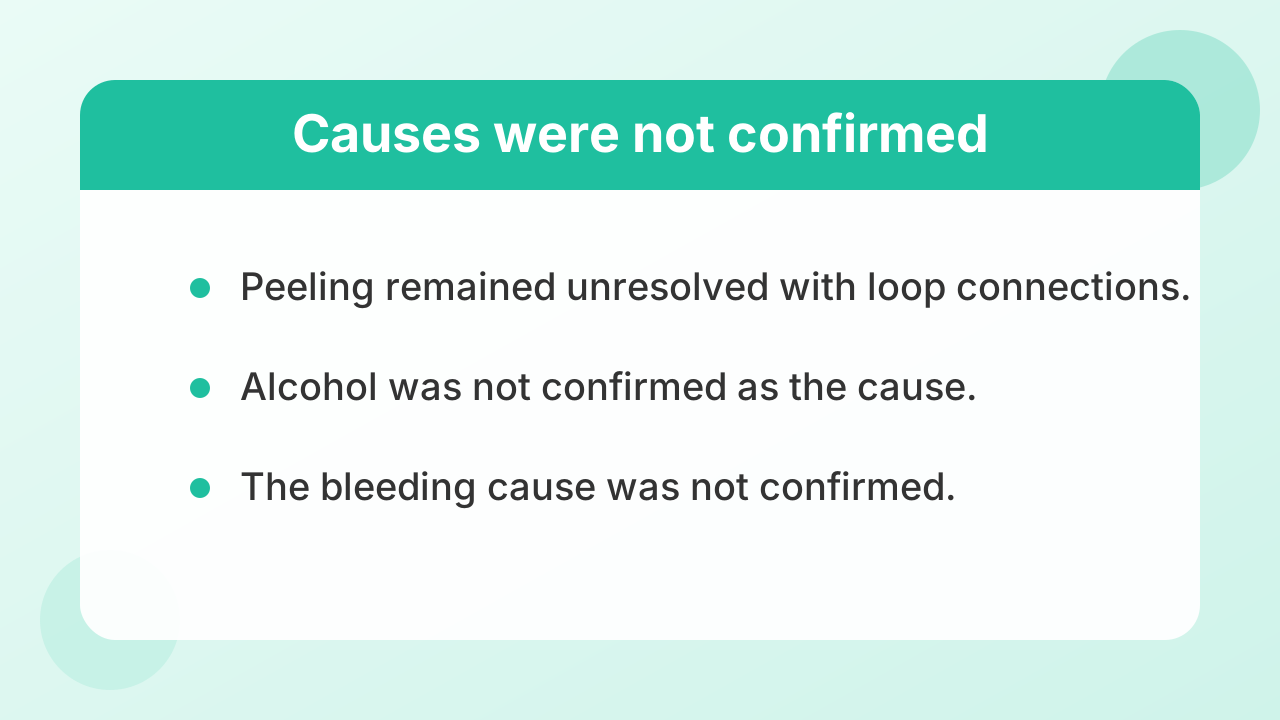
Customer questions led to case-specific replies, including admissions that the cause or condition could not be determined.
"Can I keep using a chip with resin peeling?"
In an entry published in May 2018, a customer asked whether a semi-long glass chip remained usable with resin lifting near its thread. The customer could see a gap between the resin and glass and feared thread detachment. Mr. Okada acknowledged other reports and said further work was needed.
At that point, he believed loop connections addressed complete thread detachment, while peeling remained unresolved. The diary does not record whether this customer's refund was completed. Mr. Okada proposed returning the affected product for a refund.
(Source: ok-lab's diary, published May 2018)
https://ok-lab.hatenablog.com/entry/20180524/1527153380
"Can alcohol cause resin chip cracking?"
In an entry published in May 2019, a customer reported a chipped tip on a previously remade linked resin chip. The customer asked whether alcohol disinfection was responsible. Mr. Okada said this was his first report of that particular damage and could not infer a cause.
The diary does not record whether the chip was returned or repaired. Mr. Okada offered a resin repair if the customer sent it back.
(Source: ok-lab's diary, published May 2019)
https://ok-lab.hatenablog.com/entry/2019/05/25/144939
"Was resin peeling responsible for this reported bleeding?"
In an entry published in October 2019, a customer requested a replacement long ceramic model after reporting raised resin, bleeding, and later ceramic breakage. Mr. Okada doubted the customer's explanation for the bleeding and said he would consult the ceramic maker about the reported material defect.
The diary does not record a confirmed cause of the bleeding or whether the refund was completed. Mr. Okada offered a refund because he could not make a replacement meeting the customer's request.
(Source: ok-lab's diary, published October 2019)
https://ok-lab.hatenablog.com/entry/2019/10/05/141806
Buying from outside Japan

OK Lab ships internationally to countries covered by Japan Post's EMS courier service. Overseas orders are paid in advance by PayPal. Each order carries a ¥400 (about $3 at ¥156 = $1, rate as of 2026-09-04) handling fee, and EMS shipping is charged on top. These terms come from OK Lab's official sales-terms page (written here as plain text, not a link: ok-lab.net/docs/law), checked on September 7, 2026; confirm them on the official store before you order, because they can change.
Summary of this article
| What you wanted to know | The answer |
|---|---|
| What is the short answer? | Peeling, cracking, and detached attachments appear in the diary; causes vary or remain uncertain. |
| What is the product? | A device made by OK Lab in Japan and placed in the urethra to act on the prostate. |
| Which terms matter? | Resin, retrieval threads, loop connections, and reinforcement describe different parts of these failures and responses. |
| What happened in the reports? | Damage affected coatings, complete resin bodies, and attached parts. |
| What did the maker offer? | Connection changes, repairs, inspection, refunds, and warnings about visible cracks. |
| What changed over time? | Designs were reinforced, some sales were suspended, and later failures prompted further investigation. |
| Which current products appear? | The table identifies related glass, ceramic, and second-generation resin models with current yen prices. |
| Were customers given definite causes? | Several replies explicitly left the cause or condition unresolved. |
| How do overseas purchases work? | Advance PayPal payment, a ¥400 (about $3 at ¥156 = $1, rate as of 2026-09-04) handling fee, and additional EMS shipping apply under the stated terms. |
| What does the overall record establish? | Damage is documented; the diary does not establish one explanation covering every case. |
Source: ok-lab's diary (Okada Comfortable Life Laboratory). The original entries are in Japanese; quotations on this page are translated. Photos and videos are on the original entries.
This article is a summary of the maker's development diary. The product is not a medical device and no result is guaranteed. If anything feels wrong or worries you, see a doctor. Prices, specifications and cautions change, so confirm the latest information on the official blog and the official site. Questions about ordering and shipping go to the seller.