![What does bladder stimulation feel like? | The diary reports changing sensations and pressure problems [OK Prostate Chip]](/img/a/T0007/eyecatch.svg)
This page is based on entries from "ok-lab's diary" (https://ok-lab.hatenablog.com/), the Japanese development diary written by Mr. Okada, founder of OK Lab, a small company in Japan (Okada Comfortable Life Laboratory). Only the entries about "bladder and seminal vesicle sensations" are summarized here, in order of publication. Past prices and sizes are as written at the time. Current prices come from the official product list (retrieved September 4, 2026). Quotations are translated from Japanese.
Note: This page is a personal reading log by someone with no connection to the maker or the seller. It reflects the source entries as of their publication dates and makes no guarantee of accuracy or safety. The product is not a medical device; talk to a doctor about any health decision. Check the official site for current information. This page contains advertising.
In short
Bladder stimulation felt different across diary reports; Mr. Okada's explanations remain hypotheses.
Mr. Okada favored designs that reduced pressure, while recording stability problems and a painful vibration trial.
The latest customer redesign has no reported outcome; a related short ceramic component remains on the current list.
If you see blood in your urine, even a small amount or for the first time, do not wait and see. See a urologist right away. If you suddenly cannot urinate, or the device cannot be removed, do not try to fix it yourself. Go to a medical facility, including emergency care, immediately.
About this product
The OK Prostate Chip is a small device that is placed in the urethra (the urine passage) so that it acts on the prostate; the maker sells it in several shapes, sizes and materials. It is made and sold by OK Lab (Okada Comfortable Life Laboratory), a small company in Japan, through its own online store, and prices are in Japanese yen (JPY).
The maker's development diary, "ok-lab's diary", is written in Japanese. This page is an English summary of it, and every quotation is translated. OK Lab ships internationally, so readers outside Japan can order (see "Buying from outside Japan" below).
Product names on this page are plain-English descriptions. The official Japanese product name is shown once in the product table so you can find the same item in the store.
Before you read: key terms
| Term | Plain-English meaning |
|---|---|
| Urethra | The urine passage; the device occupies part of this passage to act on the prostate. |
| Prostate | The chip's target around part of the urine passage. Its biological function: The diary does not explain this. |
| Bladder | The structure holding urine; experimental tips and loops were intended to stimulate its inner wall. |
| Seminal vesicles | Paired structures Mr. Okada describes outside the bladder. Their biological function: The diary does not explain this. |
| Internal and external urinary sphincters | Named structures along the urine passage, used as chip-position landmarks. Their biological functions: The diary does not explain this. |
| Elastic connecting wire | Springy titanium–nickel alloy wire used to join chips and provide pressure. |
| Bladder loop | A flexible loop intended to expand inside the bladder and stimulate its wall. |
| Stopper | A supporting part intended to help keep a chip in position. |
| Ejaculation | Sexual release, discussed as a possible response to stimulation. Its biological role: The diary does not explain this. |
What happens: bladder stimulation sensations
The OK Prostate Chip is a small device placed in the urethra (urine passage) to press on the prostate. The entries discuss longer designs and flexible loops extending into the bladder, intended by the maker to stimulate that area. Mr. Okada also suspects pressure near the seminal vesicles (paired structures outside the bladder) contributes to certain feelings. His explanation comes from personal trials and anatomical reading, alongside customer reports about particular designs.
A bladder stimulation prototype moved unexpectedly in Mr. Okada's trial
In an entry published in March 2024, Mr. Okada tested ceramic chips joined by elastic wire (a springy titanium–nickel connection). He proposed that the wire could press the bladder's inner wall, but reported unexpected movement during his own trial. The chip moved at least 3 cm toward the bladder with almost no force, according to his account.
He thought the unusually slippery assembly might be unsuitable for staying in one fixed position. Mr. Okada considered it better suited to brief sessions because its position could change easily.
(Source: ok-lab's diary, published March 2024)
https://ok-lab.hatenablog.com/entry/2024/03/16/123023
Mr. Okada linked some bladder sensations to nearby seminal vesicles
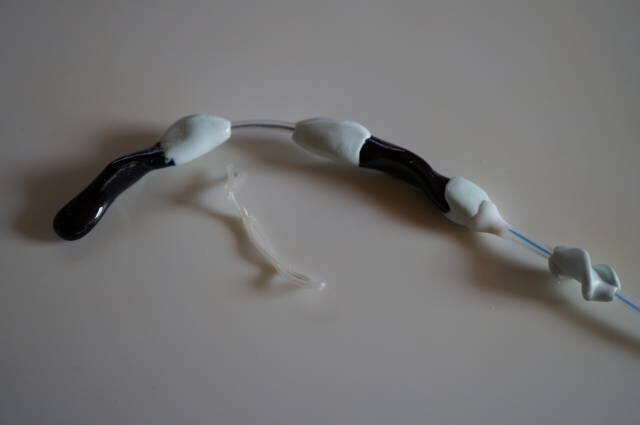
In an entry published in May 2024, Mr. Okada reported fading sensation as a spring-linked pair (Yajirobee) extended farther into the bladder. He attributed the stronger sensation nearer the bladder entrance to the area around the seminal vesicles. He located that area 1–2 cm from the internal urinary sphincter (his inner reference point near the bladder).
In the same entry's personal update, he proposed that this stimulation explained much of the intense sensation and possible triggering of ejaculation (sexual release). That was his interpretation of his own trials. He considered the strongest pressure-producing shape unsuitable for prolonged placement.
(Source: ok-lab's diary, published May 2024)
https://ok-lab.hatenablog.com/entry/2024/05/04/122911
Mr. Okada reported severe pain during experimental seminal vesicle stimulation
In an entry published in May 2024, Mr. Okada described severe pain during an experimental vibrator trial aimed at the seminal vesicles. He described 90% of the sensation as pain and found the accompanying pleasure difficult to understand. He reported a sudden change in his heartbeat after about 5–10 minutes and stopped the vibration.
He continued to report strong pressure sensations after the vibration had stopped. The diary does not record a medical assessment of the episode. Mr. Okada said he did not intend to activate that prototype again because of his heart's poor condition.
(Source: ok-lab's diary, published May 2024)
https://ok-lab.hatenablog.com/entry/2024/05/11/122910
Mr. Okada's broken chipless device came out during urination
In an entry published in December 2024, Mr. Okada described testing a deliberately broken wire-based device (Chipless). He initially reported little discomfort after a brief, mild pain. After an overnight trial, the device came out during urination the following morning.
He thought the broken wire had failed to hold the tube's curve, allowing it to straighten. Mr. Okada said he did not want to repeat the test with the broken device.
(Source: ok-lab's diary, published December 2024)
https://ok-lab.hatenablog.com/entry/2024/12/14/122948
Bladder loop sensations varied even when the maker repeated similar movements
In another entry published in December 2024, Mr. Okada described changing sensations with a bladder loop (a flexible wire loop). He sometimes described a lingering feeling like the moments before sexual release during ordinary movement. At other times, the same movement produced no noticeable sensation. Mr. Okada advised attention to physical condition and state of mind, which he thought influenced these responses.
(Source: ok-lab's diary, published December 2024)
https://ok-lab.hatenablog.com/entry/2024/12/21/122903
The maker's answer to bladder stimulation sensations
Mr. Okada's responses focused on reducing pressure and redesigning unstable parts, while some prototypes still faced production limits.
Mr. Okada favored flatter paired chips for gentler bladder stimulation
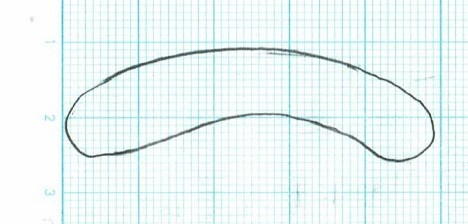
In an entry published in May 2024, Mr. Okada contrasted paired-chip shapes that produced lighter or stronger pressure. He described flatter components as more stable and less stimulating near the seminal vesicles. For the spring-linked pair, the connection cost was additional to the prices of both chips.
The published surcharges were ¥3,000 (about $19 at ¥156 = $1, rate as of 2026-09-04) excluding tax for bare wire and ¥4,000 (about $26 at ¥156 = $1, rate as of 2026-09-04) excluding tax for a covered connection. Mr. Okada warned that stronger pressure might have unknown health consequences.
(Source: ok-lab's diary, published May 2024)
https://ok-lab.hatenablog.com/entry/2024/05/04/122911
A seminal vesicle stimulation prototype faced unresolved production problems
In an entry published in May 2024, Mr. Okada described a separate construction problem with the experimental vibrator. An earlier reversed paired-chip design had proved too long to reach its intended position. The replacement used motor, prostate, and rear sections each 9mm wide.
Making one prototype took about 5 days, and he had not found an efficient production method. The available internal cable was 25cm long, which he thought might be insufficient for some customers. Mr. Okada said sales could not begin without a more practical way to make it.
(Source: ok-lab's diary, published May 2024)
https://ok-lab.hatenablog.com/entry/2024/05/11/122910
Mr. Okada's early bladder loop trial revealed a stability problem
In an entry published in November 2024, Mr. Okada tested a flexible loop intended to expand inside the bladder. He reported a strong sensation from the soft silicone loop, but movement and changes in penis length disturbed its position. The trial used a twisted ceramic chip behind the loop.
The published loop surcharge was ¥2,000 (about $13 at ¥156 = $1, rate as of 2026-09-04) excluding tax, added to the existing price of a chip with a silicone-covered wire connection. Only the fifth-version custom rear chip and the short or medium-length twisted chips were compatible, according to that entry. Mr. Okada cautioned that this design offered little expectation of stable placement.
(Source: ok-lab's diary, published November 2024)
https://ok-lab.hatenablog.com/entry/2024/11/02/122858
A softer bladder loop followed an oversized design that moved outward
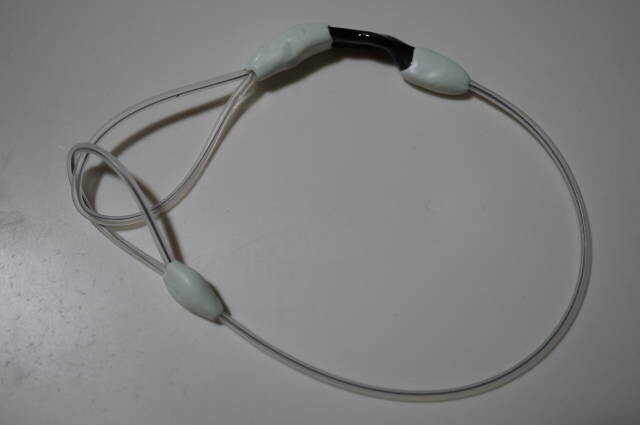
In an entry published in June 2025, Mr. Okada revisited a large loop made with 0.3mm wire. He reported that bladder contractions pushed it into the urine passage, making it unsuitable for prolonged placement. His new 0.2mm wire prototype had a leading 12 cm loop that, he reported, expanded inside the bladder.
A 12 cm loop cost ¥4,000 (about $26 at ¥156 = $1, rate as of 2026-09-04) excluding tax, and the described 12x3 arrangement cost ¥12,000 (about $77 at ¥156 = $1, rate as of 2026-09-04) excluding tax. Those are prices published in June 2025. Mr. Okada favored the larger leading loop because he believed it pressed less strongly against the bladder wall than a smaller one.
(Source: ok-lab's diary, published June 2025)
https://ok-lab.hatenablog.com/entry/2025/06/28/122915
If you see blood in your urine, even a small amount or for the first time, do not wait and see. See a urologist right away. If you suddenly cannot urinate, or the device cannot be removed, do not try to fix it yourself. Go to a medical facility, including emergency care, immediately.
How bladder stimulation sensations changed over time
| Published | What the diary said then |
|---|---|
| Mar 2020 | Mr. Okada speculated that the front chip could press the bladder wall. |
| Nov 2020 | Mr. Okada withdrew his earlier proposal about the custom design's name. |
| Feb 2024 | A customer reported improved sensitivity and stability with a long, bulged chip. |
| Mar 2024 | Sales awaited tests of wire breakage and cracking at the connections. |
| May 2024 | A covered wire connection added at least 1mm of thickness. |
| Nov 2024 | The loop prototype supported only chips with connections at both ends. |
| Dec 2024 | Mr. Okada's preferred sensation occurred about 30 minutes after urination. |
| Jun 2025 | A customer praised a custom design with enlarged petals and bladder loop. |
| Jun 2025 | Manufacturing limited each loop to 12 cm. |
| Jul 2026 | A separate custom design answered a customer's complaint about excessive pressure. |
OK Prostate Chip products related to bladder stimulation sensations
The short ceramic chip appears as a component of a historical custom pair.
Products that appear in these entries
| Product (official name) | Price incl. tax | Relation to this topic |
|---|---|---|
| Short ceramic chip (OKプロステートチップ 陶器素材ショートタイプ) | ¥3,300 (about $21 at ¥156 = $1, rate as of 2026-09-04) | In May 2024, Mr. Okada described this component behind a fourth-version custom front chip in a spring-linked pair. |
The short ceramic chip is listed in OK Lab's own online store.
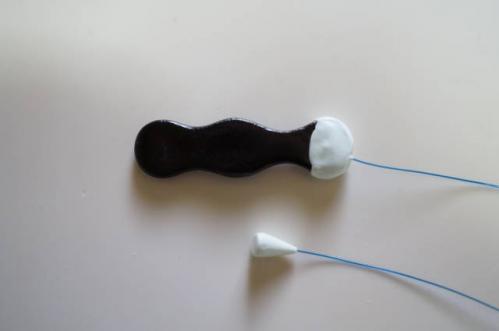
(Source: ok-lab's diary, published May 2024)
https://ok-lab.hatenablog.com/entry/2024/05/04/122911
Products the diary mentioned as alternatives
The diary names no alternative.
The other designs discussed here include custom linked chips, wire-based builds, bristled designs, and a vibrator prototype. No matching product can be confirmed on the current list.
Common worries about bladder stimulation sensations
The reader requests concern added support, the reason for longer chips, and pressure from a short custom design.
"Can a bladder stimulation chip include an extra support?"
In an entry published in March 2020, a customer wanted a spare custom chip with an added screw-shaped support. Mr. Okada asked whether something had gone wrong; the customer said the aim was to have a spare. He suspected that the combined supports would leave the front chip inside the bladder, pressing its wall outward.
He wondered whether that might produce a pleasant sensation. The diary does not record how the added support felt in use. Mr. Okada suggested keeping a spare because replacing a broken or lost chip could take time.
(Source: ok-lab's diary, published March 2020)
https://ok-lab.hatenablog.com/entry/2020/03/14/141804
"Why would a longer chip change bladder stimulation sensations?"
In an entry published in November 2020, a customer questioned why a chip much longer than the prostate seemed more effective. The customer wanted a smooth front piece that transferred pressure to the second chip while limiting strain on the bladder wall. Mr. Okada accepted the plain-ended custom design and thought its smoother shape improved safety inside the bladder.
The diary does not record whether this version delivered the customer's expected sensation. Mr. Okada's concern was pressure on delicate structures around the bladder, so his preference was for the less demanding shape.
(Source: ok-lab's diary, published November 2020)
https://ok-lab.hatenablog.com/entry/2020/11/21/130647
"Can bladder stimulation feel good while the stopper feels uncomfortable?"
In an entry published in July 2026, a customer wanted a short bristled custom chip (Short Gejigeji) redesigned despite liking its sensations. The customer reported extremely high pressure at the external urinary sphincter (the outer location named in the diary). The request was for more space between the chip's rear and its stopper (a supporting part).
The customer also wanted to preserve the original design's pleasant bladder stimulation while reducing pressure near the inner sphincter. Mr. Okada showed a newly made separate design in his reply. The diary does not record how that revised build felt in use.
(Source: ok-lab's diary, published July 2026)
https://ok-lab.hatenablog.com/entry/2026/07/25/123012
Buying from outside Japan
OK Lab ships internationally to countries covered by Japan Post's EMS courier service. Overseas orders are paid in advance by PayPal.
Each order carries a ¥400 (about $3 at ¥156 = $1, rate as of 2026-09-04) handling fee, and EMS shipping is charged on top. These terms come from OK Lab's official sales-terms page (written here as plain text, not a link: ok-lab.net/docs/law), checked on September 7, 2026; confirm them on the official store before you order, because they can change.
Summary of this article
| What you wanted to know | The answer |
|---|---|
| What is the short answer? | The diary reports variable sensations and tentative explanations, alongside pressure and stability problems. |
| Who makes the device? | OK Lab is a small Japanese company; its device acts from inside the urine passage. |
| What do the unfamiliar terms mean? | They identify structures and device parts; several biological functions are not explained in the diary. |
| What did the trials reveal? | Mr. Okada recorded changing sensations, unintended movement, and a painful vibration trial. |
| How did the maker respond? | He explored gentler shapes and softer loops, while acknowledging construction limits. |
| What changed over time? | The entries move from paired-chip theories to loop experiments and later customer requests about pressure. |
| Which current product appears here? | The short ceramic chip appears as one component, with its current price in the product table. |
| Did customer requests settle the concerns? | The latest revised custom build has no reported user outcome. |
| Can customers outside Japan order? | The stated terms use EMS shipping, advance PayPal payment, and separate handling and shipping charges. |
Source: ok-lab's diary (Okada Comfortable Life Laboratory). The original entries are in Japanese; quotations on this page are translated. Photos and videos are on the original entries.
This article is a summary of the maker's development diary. The product is not a medical device and no result is guaranteed. If anything feels wrong or worries you, see a doctor. Prices, specifications and cautions change, so confirm the latest information on the official blog and the official site. Questions about ordering and shipping go to the seller.