![What is a spiral prostate chip? | Its design changed, and testing remains limited [OK Prostate Chip]](/img/a/T0549/eyecatch.svg)
This page is based on entries from "ok-lab's diary" (https://ok-lab.hatenablog.com/), the Japanese development diary written by Mr. Okada, founder of OK Lab, a small company in Japan (Okada Comfortable Life Laboratory). Only the entries about "spiral and DNA-shaped prostate chips" are summarized here, in order of publication. Past prices and sizes are as written at the time. Current prices come from the official product list (retrieved September 4, 2026). Quotations are translated from Japanese.
Note: This page is a personal reading log by someone with no connection to the maker or the seller. It reflects the source entries as of their publication dates and makes no guarantee of accuracy or safety. The product is not a medical device; talk to a doctor about any health decision. Check the official site for current information. This page contains advertising.
In short
The spiral shape changed from a titanium proposal to wire prototypes, with limited reports about how they felt.
Mr. Okada changed wire thickness, support, and size to address problems encountered during development.
No matching spiral product can be confirmed on the supplied current list.
About this product

The OK Prostate Chip is a small device that is placed in the urethra (the urine passage) so that it acts on the prostate; the maker sells it in several shapes, sizes and materials. It is made and sold by OK Lab (Okada Comfortable Life Laboratory), a small company in Japan, through its own online store, and prices are in Japanese yen (JPY). The maker's development diary, "ok-lab's diary", is written in Japanese. This page is an English summary of it, and every quotation is translated. OK Lab ships internationally, so readers outside Japan can order (see "Buying from outside Japan" below). Product names on this page are plain-English descriptions. The official Japanese product name is shown once in the product table so you can find the same item in the store.
Before you read: key terms
| Term | Plain-English meaning |
|---|---|
| Urethra | The urine passage, where the device sits so that it can act on the prostate. |
| Helix | A twisting shape; these designs use it to form the part intended to press against tissue. |
| Nitinol | The wire material used for the spirals and their supports. The diary does not explain this. |
| Shaft | The supporting structure along the device; it holds the spiral section. |
| Horn | The diary's name for a stiff support used to hold the spiral in shape. |
| Semilong | A chip size category used as the reference for the smaller spiral design. |
| Bulbar urethra | A named section of the urine passage where an additional loop or spiral was intended to improve stability. |
| Hybrid | A supported spiral combined with a bulbar urethral loop, intended by Mr. Okada to stay in place better. |
| Apple stopper | An optional accessory connected to the thread. Its specific purpose: The diary does not explain this. |
| Adjustable-stop attachment | An attachment requested for a separate chip in the inward-movement case; Mr. Okada expected less pain from that arrangement. |
What happens: spiral prostate chips
The OK Prostate Chip is a small device placed in the urethra (the urine passage) to act on the prostate. In these entries, spiral chips use a helix (a twisting, DNA-like shape) intended to press against tissue inside that passage. The diary moves from a proposed titanium design to wire versions, including compact spirals positioned at the prostate section. Mr. Okada reports changes in material, size, support, and his own experience while testing the designs.
The first spiral prostate chip drawing left shape and strength unresolved
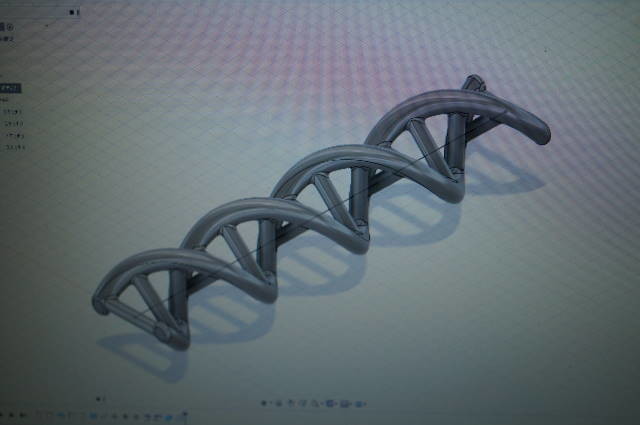
In an entry published in July 2021, the chip designer supplied an initial drawing following a suggestion for a DNA-shaped titanium chip. It measured 7 mm wide and 33 mm long, with outer tubes of 1.5 mm and an inner tube of 1 mm. The designer said strength requirements prevented thinner tubes.
According to the designer, titanium was already near its strength limit, while resin could reproduce the shape without providing practical strength. The diary does not record a usable product resulting from this proposal. The designer thought the end shape needed revision for insertion; Mr. Okada disagreed, considering that size insertable.
(Source: ok-lab's diary, published July 2021)
https://ok-lab.hatenablog.com/entry/2021/07/10/125840
The micro spiral prostate chip trial left comparisons of sensation unfinished
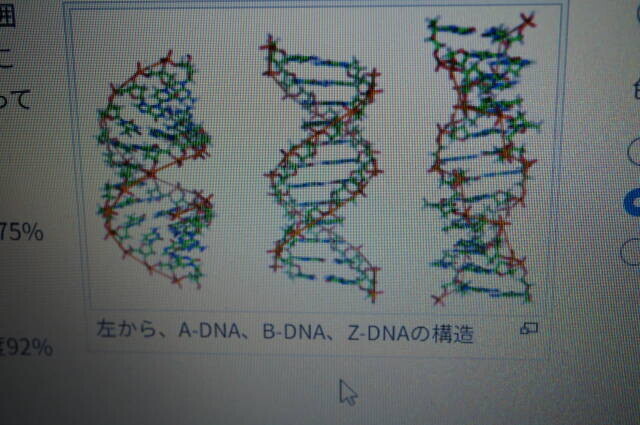
In an entry published in June 2026, Mr. Okada presented a micro helix made from extremely fine nitinol (the wire material). He described its loose curves as the first DNA-like form he had managed to produce. He reported keeping it in place for about 2 hours, but symptoms he described as heart failure prevented detailed comparisons.
He therefore could not closely compare its sensation with his other micro wire designs. The entry leaves open whether its curves felt different or less irritating. Mr. Okada considered the appearance worthwhile even if later comparisons found little difference.
(Source: ok-lab's diary, published June 2026)
https://ok-lab.hatenablog.com/entry/2026/06/27/122906
Micro spiral prostate chip prices depended on shaft length and helix size
In an entry published in June 2026, Mr. Okada priced the shaft (the supporting structure) separately from the helix, with tax excluded. A shaft up to 25 cm cost ¥3,000 (about $19 at ¥156 = $1, rate as of 2026-09-04); one up to 35 cm cost ¥4,000 (about $26 at ¥156 = $1, rate as of 2026-09-04).
A pair of spiral elements within a 20 mm interval cost ¥1,500 (about $10 at ¥156 = $1, rate as of 2026-09-04). His listed helix prices were ¥3,000 (about $19 at ¥156 = $1, rate as of 2026-09-04) for 40 mm, ¥4,500 (about $29 at ¥156 = $1, rate as of 2026-09-04) for 60 mm, and ¥6,000 (about $38 at ¥156 = $1, rate as of 2026-09-04) for 80 mm. The 120 mm example contained 6 pairs, priced at ¥9,000 (about $58 at ¥156 = $1, rate as of 2026-09-04) for that section. Mr. Okada's quotation therefore treated shaft length and the requested spiral section as separate choices.
(Source: ok-lab's diary, published June 2026)
https://ok-lab.hatenablog.com/entry/2026/06/27/122906
The supported spiral prostate chip remained experimental after an interrupted trial
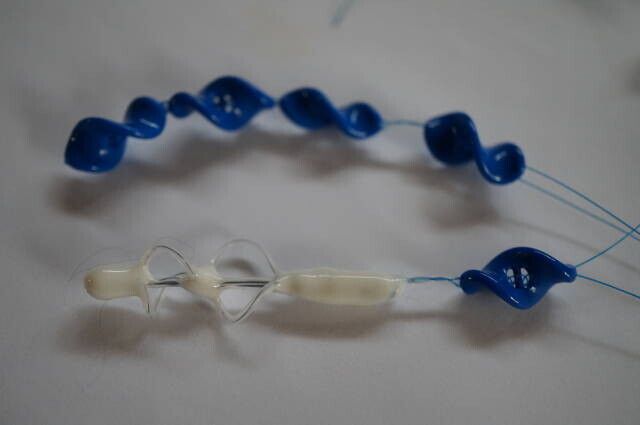
In an entry published in July 2026, Mr. Okada reported that a 0.15 mm spiral overwhelmed the micro design's soft shaft. He concluded that it needed a horn (a stiff supporting core), using doubled 0.3 mm wire. Only 1 supported prototype existed at publication, and its specifications remained undecided.
During his trial, he reported what he called acute heart failure within minutes, with recovery taking about 1 hour. He described this reaction as specific to himself. Mr. Okada planned to confirm repeatable production before setting specifications and beginning sales.
(Source: ok-lab's diary, published July 2026)
https://ok-lab.hatenablog.com/entry/2026/07/04/122918
The compact spiral prostate chip reduced size without fully preventing displacement
In an entry published in July 2026, Mr. Okada reported a smaller prototype in his semilong (compact chip) size category. It used 0.1 mm wire, measured 10-13 mm across the spiral, and had an overall length of about 40-45 mm. He found its burden similar to a standard semilong M and reported no problems during longer periods in place.
He considered the difficulty of placement similar to that size category. He thought stability had improved, although urination could still push it out. Mr. Okada proposed an additional supporting section beyond the prostate area to improve how it stayed in place.
(Source: ok-lab's diary, published July 2026)
https://ok-lab.hatenablog.com/entry/2026/07/18/122919
A compact spiral prostate chip request received an itemized quotation
In an entry published in August 2026, a customer requested a compact spiral chip with an additional spiral and 90° bend. The additional section was for the bulbar urethra (another named section of the urine passage), with a 25 cm thread requested.
Mr. Okada quoted ¥4,950 (about $32 at ¥156 = $1, rate as of 2026-09-04) for the prostate section, ¥4,950 (about $32 at ¥156 = $1, rate as of 2026-09-04) for the other spiral, and ¥1,100 (about $7 at ¥156 = $1, rate as of 2026-09-04) for thread. The entry presented the build as the first request for this compact design. The diary does not record how it felt to the customer.
(Source: ok-lab's diary, published August 2026)
https://ok-lab.hatenablog.com/entry/2026/08/01/122916
The maker's answer to spiral prostate chips
Mr. Okada pursued finer wire, added support, and smaller shapes, with different purposes for each change.
Finer spiral prostate chip wire reflected Mr. Okada's hopes for softer contact
In an entry published in June 2026, Mr. Okada specified helix-forming wire in 0.04 mm and 0.05 mm sizes. Prototype spacing ranged from 15 mm to 30 mm. He planned roughly 20 mm intervals for products offered for sale. Mr. Okada included the thicker option because he thought the curved shape made contact with the lining somewhat softer.
(Source: ok-lab's diary, published June 2026)
https://ok-lab.hatenablog.com/entry/2026/06/27/122906
Hybrid spiral prostate chip designs used an added loop for stability
In an entry published in July 2026, Mr. Okada described a hybrid (a supported spiral paired with a bulbar urethral loop). He reserved that name for the version with this particular loop. Its basic structure comprised an approximately 20 mm front support, 30 mm spiral, and 20 mm rear connection.
The ¥6,000 (about $38 at ¥156 = $1, rate as of 2026-09-04) base used 0.15 mm spiral wire inside 1 mm tubing; that price excluded tax. Listed additions were thread at ¥1,000, (about $6 at ¥156 = $1, rate as of 2026-09-04) or an apple stopper (a thread accessory) or bulbar loop at ¥4,000 (about $26 at ¥156 = $1, rate as of 2026-09-04) each, tax excluded. Mr. Okada proposed the added loop to improve how the device stayed in place.
(Source: ok-lab's diary, published July 2026)
https://ok-lab.hatenablog.com/entry/2026/07/11/122904
Compact spiral prostate chip options included limited bends and lower prices
In an entry published in July 2026, Mr. Okada described a second compact spiral section for the bulbar urethra. Bend options were 90° and 105°; 120° and 150° were unavailable because he found them too difficult to make. He described the right-angle prototype as close to his earlier loop designs in its ability to stay in place.
The compact prostate section cost ¥4,500 (about $29 at ¥156 = $1, rate as of 2026-09-04), down from ¥6,000 (about $38 at ¥156 = $1, rate as of 2026-09-04) for the earlier supported section, tax excluded. The version with both spiral sections cost ¥9,000 (about $58 at ¥156 = $1, rate as of 2026-09-04), with thread adding ¥1,000, (about $6 at ¥156 = $1, rate as of 2026-09-04) tax excluded. Mr. Okada proposed the additional spiral as a way to improve stability while keeping the device small.
(Source: ok-lab's diary, published July 2026)
https://ok-lab.hatenablog.com/entry/2026/07/18/122919
How spiral prostate chips changed over time
| Published | What the diary said then |
|---|---|
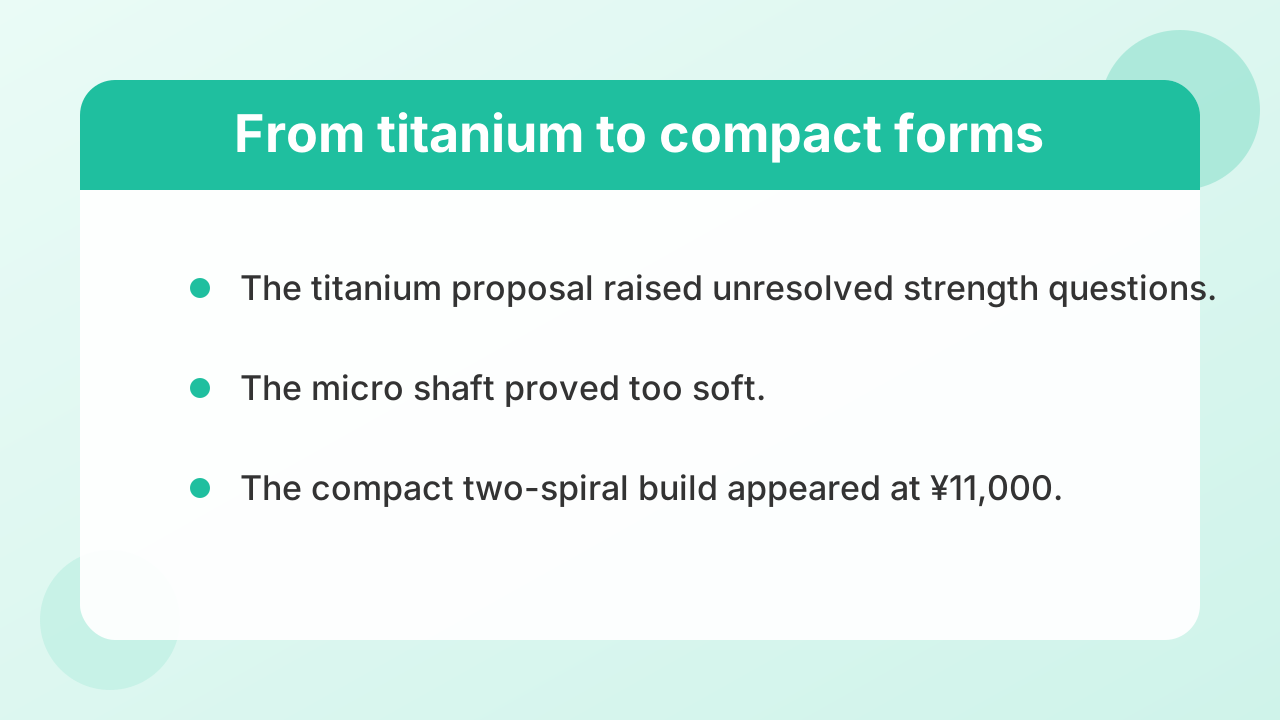
| Jul 2021 | The titanium proposal raised unresolved questions about end shape and strength. |
| Jun 2026 | A fine-wire helix appeared, but the maker's symptoms limited comparisons. |
| Jul 2026 | The micro shaft proved too soft for the thicker spiral. |
| Jul 2026 | A hybrid combined the supported spiral with a bulbar urethral loop. |
| Jul 2026 | A smaller spiral followed the earlier prototype's difficult trial. |
| Jul 2026 | Compact versions offered restricted bend choices and lower component prices. |
| Aug 2026 | A customer considered the flexible design after painful inward movement with another arrangement. |
| Aug 2026 | The compact two-spiral build appeared at ¥11,000 (about $70 at ¥156 = $1, rate as of 2026-09-04) in an order breakdown. |
The diary does not say what the current state is.
OK Prostate Chip products related to spiral prostate chips
The related adjustable-stop order contains items on the current product list.
Products that appear in these entries
| Product (official name) | Price incl. tax | Relation to this topic |
|---|---|---|
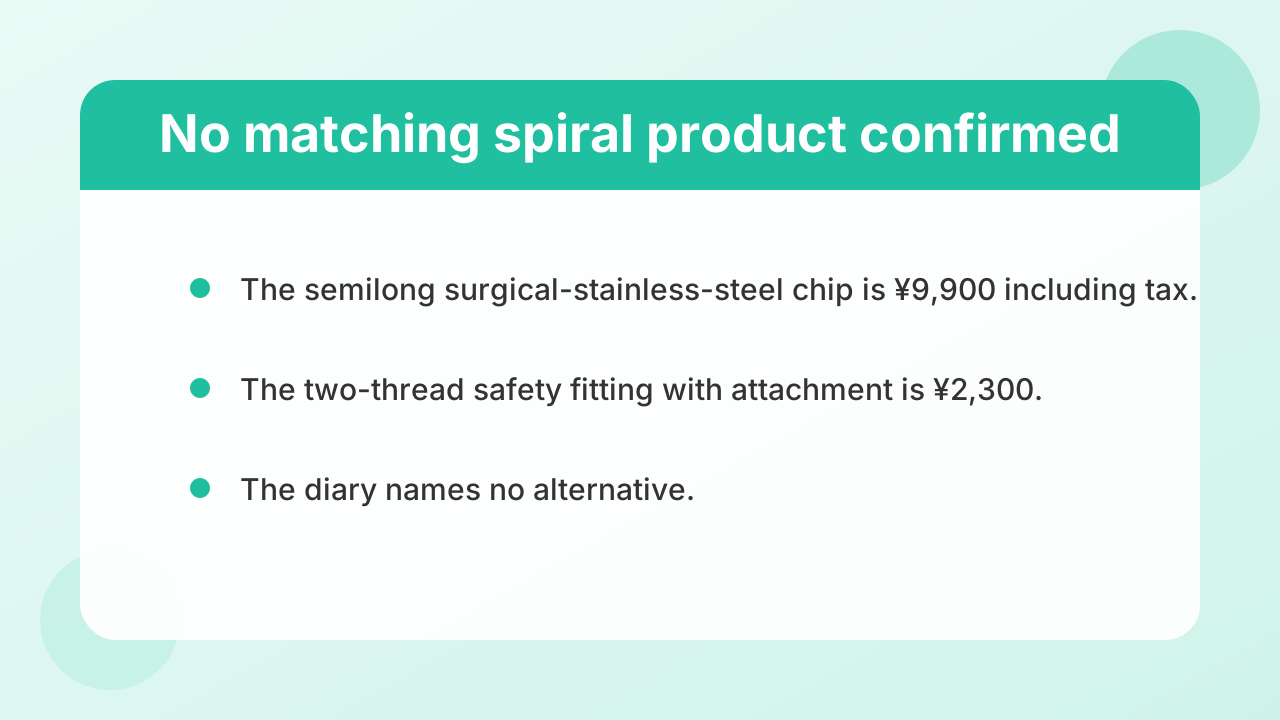
| Semilong surgical-stainless-steel chip (OKプロステートチップ セミロングタイプ(サージカルステンレス)) | ¥9,900 (about $63 at ¥156 = $1, rate as of 2026-09-04) | An August 2026 customer requested this chip with adjustable stops alongside a compact spiral chip after describing painful inward movement. |
| Two-thread safety fitting, attachment included (二本糸用セーフティチップ(第二世代生体適合樹脂)接続オプション込み) | ¥2,300 (about $15 at ¥156 = $1, rate as of 2026-09-04) | The August 2026 order listed this fitting with the separate adjustable-stop assembly requested alongside the spiral chip. |
(Source: ok-lab's diary, published August 2026)
https://ok-lab.hatenablog.com/entry/2026/08/15/122912
Products the diary mentioned as alternatives
The diary names no alternative.
Spiral prototypes and custom assemblies: No matching product can be confirmed on the current list.
Common worries about spiral prostate chips
The recorded questions concern appearance, repeatability, and painful inward movement, with no customer result recorded for the pain concern.
"Would a DNA-shaped prostate chip do anything different?"
In an entry published in July 2021, a customer suggested a titanium chip shaped like DNA. The chip designer replied that its function would differ little from existing screw or twist shapes. Mr. Okada accepted that comparison but still valued the appearance.
The entry records an initial design image, rather than a report of somebody using that proposal. Mr. Okada asked the designer to consider developing the shape if it proved possible. He linked further development to interest from potential buyers.
(Source: ok-lab's diary, published July 2021)
https://ok-lab.hatenablog.com/entry/2021/07/10/125840
"Could a spiral prostate chip prototype be made again?"
In an entry published in July 2026, a customer requested a copy of the supported spiral prototype on a 30 cm shaft. Mr. Okada accepted, despite uncertainty about reproducing its shape. His first attempt differed from the earlier prototype; he then made 3 spiral sections and confirmed that similar pieces were possible.
The requested build used one continuous shaft, without an extension joint. The diary does not record how that customer's finished device felt in use. Mr. Okada proposed finer extensions for future builds because he expected a thinner shaft to be less burdensome over time.
(Source: ok-lab's diary, published July 2026)
https://ok-lab.hatenablog.com/entry/2026/07/11/122904
"Could a spiral prostate chip reduce pain from inward movement?"
In an entry published in August 2026, a customer described painful inward movement and wondered whether a flexible bend would help. The customer requested a compact spiral chip and a separate stainless-steel chip with an adjustable-stop attachment (a fitting with movable stops).
An August 2026 order breakdown listed the stainless-steel chip and the two-thread safety fitting for that separate assembly. The diary does not record whether either design reduced that customer's pain. Mr. Okada suggested the requested designs might be less painful than the stopper arrangement the customer described.
(Source: ok-lab's diary, published August 2026)
https://ok-lab.hatenablog.com/entry/2026/08/08/122906
(Source: ok-lab's diary, published August 2026)
https://ok-lab.hatenablog.com/entry/2026/08/15/122912
Buying from outside Japan

OK Lab ships internationally to countries covered by Japan Post's EMS courier service. Overseas orders are paid in advance by PayPal. Each order carries a ¥400 (about $3 at ¥156 = $1, rate as of 2026-09-04) handling fee, and EMS shipping is charged on top. These terms come from OK Lab's official sales-terms page (written here as plain text, not a link: ok-lab.net/docs/law), checked on September 7, 2026; confirm them on the official store before you order, because they can change.
Summary of this article
| What you wanted to know | The answer |
|---|---|
| What is the short answer? | The spiral label covers changing designs with limited accounts of how they felt. |
| What is the base product? | A device from a small Japanese company, intended to act on the prostate from inside the urine passage. |
| What do the design terms mean? | A helix describes the twisting shape; shafts, horns, and loops describe its supporting parts. |
| What happened during testing? | Mr. Okada reported interrupted trials, followed by a smaller prototype he found easier to tolerate. |
| What did the maker change? | Wire thickness, support, size, and the additional section intended to improve stability. |
| How did the design develop? | It moved from a titanium drawing to micro wire, supported, hybrid, and compact forms. |
| What appears on the current list? | Items from the related adjustable-stop order; no matching named spiral product can be confirmed. |
| What did customers ask? | Whether the shape offered something different, whether prototypes were reproducible, and whether flexibility might reduce pain. |
| How are overseas purchases handled? | Advance PayPal payment, a handling fee, and additional EMS shipping charges under the stated overseas terms. |
Source: ok-lab's diary (Okada Comfortable Life Laboratory). The original entries are in Japanese; quotations on this page are translated. Photos and videos are on the original entries.
This article is a summary of the maker's development diary. The product is not a medical device and no result is guaranteed. If anything feels wrong or worries you, see a doctor. Prices, specifications and cautions change, so confirm the latest information on the official blog and the official site. Questions about ordering and shipping go to the seller.