![Is the OK Prostate Chip safe? | Normal tests did not establish safety [OK Prostate Chip]](/img/a/T0385/eyecatch.svg)
This page is based on entries from "ok-lab's diary" (https://ok-lab.hatenablog.com/), the Japanese development diary written by Mr. Okada, founder of OK Lab, a small company in Japan (Okada Comfortable Life Laboratory). Only the entries about "safety reports and proposed checks" are summarized here, in order of publication. Past prices and sizes are as written at the time. Current prices come from the official product list (retrieved September 4, 2026). Quotations are translated from Japanese.
Note: This page is a personal reading log by someone with no connection to the maker or the seller. It reflects the source entries as of their publication dates and makes no guarantee of accuracy or safety. The product is not a medical device; talk to a doctor about any health decision. Check the official site for current information. This page contains advertising.
In short
- The diary records normal tests alongside injuries, difficult removal, and broken devices.
- Mr. Okada reports changes and testing, but a doctor rejected his claim that safety was proved.
- Second-generation resin is now listed, but the diary does not establish safety for every user.
If you see blood in your urine, even a small amount or for the first time, do not wait and see. See a urologist right away. If you suddenly cannot urinate, or the device cannot be removed, do not try to fix it yourself. Go to a medical facility, including emergency care, immediately.
About this product

The OK Prostate Chip is a small device that is placed in the urethra (the urine passage) so that it acts on the prostate; the maker sells it in several shapes, sizes and materials. It is made and sold by OK Lab (Okada Comfortable Life Laboratory), a small company in Japan, through its own online store, and prices are in Japanese yen (JPY). The maker's development diary, "ok-lab's diary", is written in Japanese. This page is an English summary of it, and every quotation is translated. OK Lab ships internationally, so readers outside Japan can order (see "Buying from outside Japan" below). Product names on this page are plain-English descriptions. The official Japanese product name is shown once in the product table so you can find the same item in the store.
Before you read: key terms
| Term | Plain-English meaning |
|---|---|
| Urethra | The urine passage, where the chip acts on the prostate. |
| Urethritis | Inflammation of the urine passage; a diagnosis explaining symptoms. |
| Electrode | An electrically active chip component, used for stimulation. |
| Radiographic testing | X-ray inspection, proposed to find hidden cracks inside ceramic chips. |
| Acrylic resin | The original plastic material used to form resin chips. |
| Autoclave | A steam sterilizer, discussed for germ control and material testing. |
| Mesh stopper | A barrier attached to the wire, intended to limit movement toward the bladder. |
What happens: OK Prostate Chip safety
The OK Prostate Chip is a small device placed inside the urethra to act on the prostate. Safety checks in these entries concern both the person's body and the device's materials, including surfaces and attachment points inside the urine passage. The diary describes medical examinations, reports of injury, and tests intended to reveal problems before a design reaches customers, alongside unresolved questions about what those checks establish.
A urine test followed fever, leaving chip safety unresolved
In a November 2017 entry, Mr. Okada reports a 37.2°C fever and a diagnosis of urethritis (inflammation of the urine passage). Testing found increased white blood cells but no bacteria; he says the doctor could not determine whether the chip caused it.
He arranged further urine tests to investigate any connection with the device. Mr. Okada says he followed the doctor's advice to pause use until recovery.
(Source: ok-lab's diary, published November 2017)
https://ok-lab.hatenablog.com/entry/20171129/1511963864
Normal examination results did not prove OK Prostate Chip safety
In a February 2018 entry, Mr. Okada reports a normal examination after 3 months, despite unusual difficulty removing and replacing a chip. His doctor explicitly rejected the suggestion that this established safety. In the same entry, Mr. Okada describes a hollow two-chip prototype that became difficult to remove.
He suspected its outer surface dried and stuck to the urethral wall while urine flowed through the hollow center. He ruled out selling hollow chips until the drying problem was resolved.
(Source: ok-lab's diary, published February 2018)
https://ok-lab.hatenablog.com/entry/20180228/1519809422
An electrode chip safety report included pain lasting nearly a day
In a March 2019 entry, a customer reported pain after using an electrode chip (a chip with an electrically active part). Stimulation lasted 40 minutes or less, followed by nearly a day of pain. Mr. Okada initially expressed concern about burns or other injury.
The same customer's follow-up described about 30 minutes of weaker stimulation and almost no pain afterward. Mr. Okada treated the customer's previous electrical stimulation elsewhere on the body as reassurance about safety. The diary does not record a medical assessment of this customer's pain.
(Source: ok-lab's diary, published March 2019)
https://ok-lab.hatenablog.com/entry/2019/03/09/150813
Rough ceramic chip safety concerns included fever and diagnosed injury
In a June 2019 entry, Mr. Okada reports a 37.5°C fever and diagnosed urethral injury while testing a rough ceramic chip. He says the doctor examined its surface and told him it was dangerous. Mr. Okada cautioned against copying the rough-ceramic experiment.
(Source: ok-lab's diary, published June 2019)
https://ok-lab.hatenablog.com/entry/2019/06/15/144142
A stuck chip raised concern about another sea-slug design
In a December 2019 entry, a customer considering a modified sea-slug chip reported an earlier problem with version 2. Its recessed section caught inside, and forced removal caused bleeding. Mr. Okada had offered modified version 3 after the requested standard version sold out.
He tested the alternative himself and reported insertion difficulty but no other problem. The diary does not record how that design felt for this customer. Mr. Okada also offered the choice of waiting 4–5 weeks for the requested version.
(Source: ok-lab's diary, published December 2019)
https://ok-lab.hatenablog.com/entry/2019/12/07/162608
Movement into the bladder prompted further chip safety testing
In a March 2024 entry, Mr. Okada reports that a chip on wire bent about 90 degrees moved toward his bladder. After about 5 hours, the whole chip was inside the bladder. He proposed a mesh stopper (a barrier intended to limit inward movement) in response.
In an April 2024 entry, he clarified that the stopper's success came from his own tests. He acknowledged it might pass farther inside someone with a wider urethra.
(Source: ok-lab's diary, published March 2024)
https://ok-lab.hatenablog.com/entry/2024/03/30/122958
(Source: ok-lab's diary, published April 2024)
https://ok-lab.hatenablog.com/entry/2024/04/13/123053
A broken wire changed the maker's chip safety limits
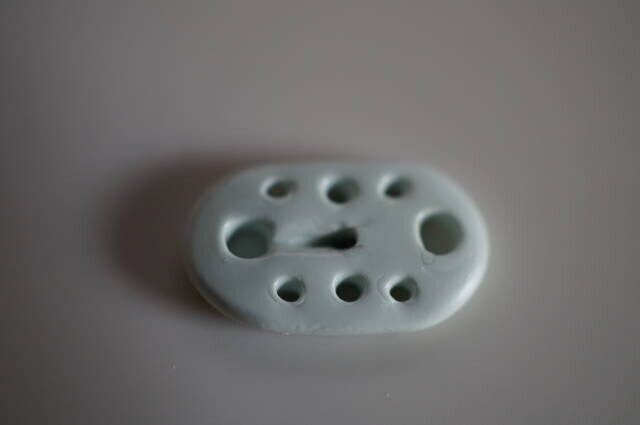
In a December 2024 entry, a customer reported that a 120-degree wire-loop device broke internally after 2 days, leaving wire protruding. The customer felt pain but reported no bleeding. The maker acknowledged a manufacturing error and offered a refund or replacement.
The customer chose replacement; the diary does not record its performance. Mr. Okada limited subsequent bends to 90 degrees and said unusually bending wire would be discarded. He advised concerned customers to wait for a future version using wire supplied with its curve already formed.
(Source: ok-lab's diary, published December 2024)
https://ok-lab.hatenablog.com/entry/2024/12/14/122948
Bubbles preceded ceramic chip breakage inside a covered connection
In a September 2025 entry, a customer reported a short twisted ceramic chip breaking inside the resin around its thread connection. They had used it for about 4 months, around 10 times. Bubbles appeared during boiling, before the chip separated under light pressure outside the body.
Mr. Okada suspected an existing crack contained air that escaped when heated. Mr. Okada regarded the reported bubbles as a possible warning sign of concealed breakage.
(Source: ok-lab's diary, published September 2025)
https://ok-lab.hatenablog.com/entry/2025/09/20/122912
The maker's answer to OK Prostate Chip safety
The maker responded with protective covers, material changes, sales restrictions, and proposals for further checks.
Shrinking nylon changed factory processing for chip safety reasons
In a November 2017 entry, Mr. Okada reports that high-pressure steam processing shrank nylon attachment thread. OK Lab changed its final treatment before shipping to boiling only. Glass breakages after the chips were shipped simply sandwiched between sheets of thick paper also prompted a move to small cardboard boxes.
(Source: ok-lab's diary, published November 2017)
https://ok-lab.hatenablog.com/entry/20171129/1511963864
Sharp thread connections prompted rubber covers after chip safety complaints
In an August 2020 entry, a customer reported severe pain from sharp resin around the thread of a sea-slug chip, version 3, revision 2. Mr. Okada arranged a silicone rubber cover; the follow-up published later that month said the irritation was gone. A separate version 4 report warned that similar sharp points could cause pain or bleeding.
He made covers standard, in principle, for version 4 and two-thread chips. He cautioned that adhesion could be weaker on previously used resin and asked for reports of peeling.
(Source: ok-lab's diary, published August 2020)
https://ok-lab.hatenablog.com/entry/2020/08/08/130037
(Source: ok-lab's diary, published August 2020)
https://ok-lab.hatenablog.com/entry/2020/08/15/125150
Proposed X-ray inspection addressed hidden flaws in ceramic chip safety
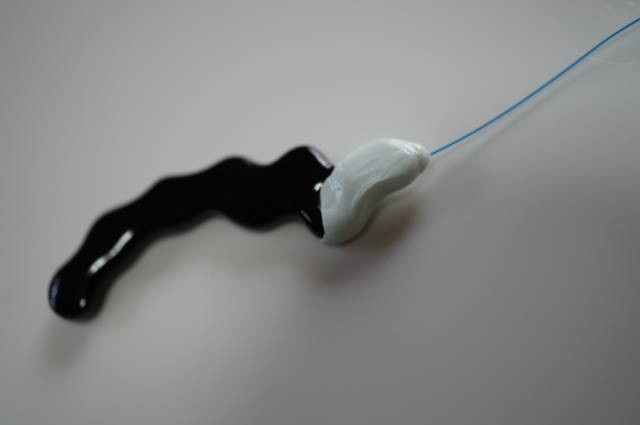
In a January 2021 entry, a customer proposed radiographic testing (X-ray inspection) to find cracks and flaws hidden inside ceramic chips. The customer argued that appearance alone could not confirm consistent internal strength. They said this method could inspect the whole interior and several chips at once.
The diary does not record whether the suggested testing was adopted. Mr. Okada said the proposal seemed too advanced for OK Lab but agreed to study it.
(Source: ok-lab's diary, published January 2021)
https://ok-lab.hatenablog.com/entry/2021/01/02/123619
Original resin safety warnings excluded alcohol and preserved an alternative
In a September 2021 entry, Mr. Okada said the original acrylic resin (the plastic forming those chips) could deteriorate with alcohol. The diary instead favored boiling or non-alcohol disinfectants for that material. For customers limited to alcohol disinfection, he kept the older six-hole stopper available as an alternative.
(Source: ok-lab's diary, published September 2021)
https://ok-lab.hatenablog.com/entry/2021/09/04/125843
Second-generation resin safety changes included alcohol compatibility and greater flexibility
In a November 2024 entry, Mr. Okada announced second-generation resin with alcohol compatibility and slightly greater flexibility. He believed that flexibility made chips less likely to break.
Older-resin chips were to be discontinued when existing stock ran out. Mr. Okada invited inquiries about the initial second-generation semi-long M stock.
(Source: ok-lab's diary, published November 2024)
https://ok-lab.hatenablog.com/entry/2024/11/09/122930
If you see blood in your urine, even a small amount or for the first time, do not wait and see. See a urologist right away. If you suddenly cannot urinate, or the device cannot be removed, do not try to fix it yourself. Go to a medical facility, including emergency care, immediately.
How OK Prostate Chip safety changed over time

| Published | What the diary said then |
|---|---|
| Nov 2017 | Nylon shrinkage changed factory processing; glass breakages changed packaging. |
| Feb 2018 | Normal examination did not establish safety; hollow designs remained withheld. |
| Aug 2020 | Sharp thread connections prompted rubber covers. |
| Jan 2021 | A customer proposed X-ray inspection for hidden ceramic flaws. |
| Sep 2021 | Original acrylic resin carried an alcohol warning. |
| Aug 2022 | Surface roughness and blood in urine prompted a temporary listing suspension. |
| Mar 2024 | A wire-mounted chip moved fully into the bladder during testing. |
| Nov 2024 | Second-generation resin introduced alcohol compatibility; withdrawal of older material was announced. |
| Dec 2024 | A broken custom wire device prompted a temporary bend limit. |
| Sep 2025 | A ceramic chip broke inside its resin-covered connection before use. |
OK Prostate Chip products related to OK Prostate Chip safety
The current list distinguishes the resin generations discussed here.
Products that appear in these entries
| Product (official name) | Price incl. tax | Relation to this topic |
|---|---|---|
| Short twisted ceramic chip (OKプロステートチップ 陶器素材ショートタイプ ツイスト) | ¥4,400 (about $28 at ¥156 = $1, rate as of 2026-09-04) | September 2025: a customer reported breakage inside its covered thread connection. |
| Semi-long resin chip (OKプロステートチップ セミロングタイプ(生体適合樹脂)) | ¥5,500 (about $35 at ¥156 = $1, rate as of 2026-09-04) | January 2023: a buyer asked about heat tolerance of the chip and attachments. |
| Flat-curve semi-long resin chip (OKプロステートチップ フラット面カーブ型 セミロングタイプ(生体適合樹脂)) | ¥6,050 (about $39 at ¥156 = $1, rate as of 2026-09-04) | August 2022: a customer reported roughening and blood in urine. |
| Second-generation semi-long resin chip (OKプロステートチップ セミロングタイプ(第二世代生体適合樹脂)) | ¥6,050 (about $39 at ¥156 = $1, rate as of 2026-09-04) | November 2024: initial stock accompanied the announcement of changed material properties. |
(Source: ok-lab's diary, published September 2025)
https://ok-lab.hatenablog.com/entry/2025/09/20/122912
(Source: ok-lab's diary, published January 2023)
https://ok-lab.hatenablog.com/entry/2023/01/14/122952
(Source: ok-lab's diary, published August 2022)
https://ok-lab.hatenablog.com/entry/2022/08/20/122920
(Source: ok-lab's diary, published November 2024)
https://ok-lab.hatenablog.com/entry/2024/11/09/122930
Products the diary mentioned as alternatives
| Product (official name) | Price incl. tax | Relation to this topic |
|---|---|---|
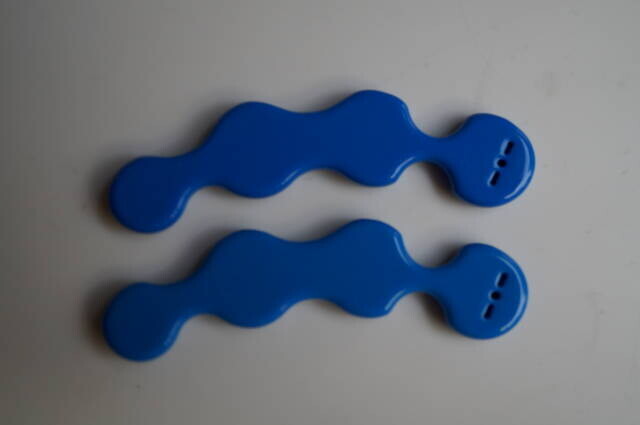
| Six-hole internal stopper (六穴方式オプションチップ(括約筋ストッパーチップ)) | ¥2,200 (about $14 at ¥156 = $1, rate as of 2026-09-04) | September 2021: retained instead of the newer resin stopper for customers limited to alcohol disinfection. |
(Source: ok-lab's diary, published September 2021)
https://ok-lab.hatenablog.com/entry/2021/09/04/125843
Hollow prototypes, rough ceramic chips, sea-slug customs, electrode customs, and tested wire assemblies: No matching product can be confirmed on the current list.
Common worries about OK Prostate Chip safety
Customers asked about missing safety evidence, unexpected roughness, heat tolerance, and sharp electrodes.
"How much evidence would establish OK Prostate Chip safety?"
In an October 2021 entry, a prospective buyer asked about strength and possible urethral injury before buying. Mr. Okada thought evidence on the scale of 1,000 users would be needed before commenting on safety. The customer postponed buying, and Mr. Okada supported careful consideration.
(Source: ok-lab's diary, published October 2021)
https://ok-lab.hatenablog.com/entry/2021/10/02/125825
"Did resin roughness explain blood in urine?"
In an August 2022 entry, a customer asked whether a flat-curve chip remained usable after 3 days of wear left roughness and blood in urine. OK Lab requested its return, arranged a replacement, and temporarily suspended its listing on the online marketplace Amazon. The manufacturer judged the roughness to be deposited material rather than resin erosion, but did not identify it.
The diary does not record medical test results or the replacement's performance. It does not record when the suspended listing resumed. Mr. Okada suggested medical examination and possible analysis of the deposits.
(Source: ok-lab's diary, published August 2022)
https://ok-lab.hatenablog.com/entry/2022/08/20/122920
"Do chip safety tests cover both resin and thread?"
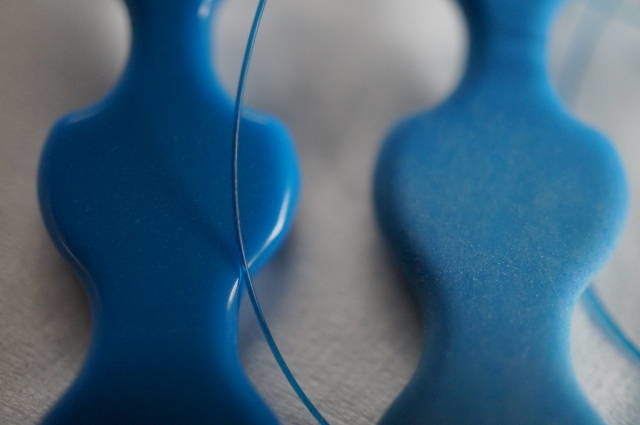
In a January 2023 entry, a first-time buyer asked about an autoclave (a high-pressure steam sterilizer) offering 121°C and 134°C cycles. Staff distinguished the tested resin body from the nylon attachment, which shrinks under heat. Mr. Okada added that silicone-covered nylon still contained the same heat-sensitive fiber.
The diary does not record the buyer's subsequent choice or result. OK Lab therefore classified the assembled nylon-thread product as unsuitable for that processing.
(Source: ok-lab's diary, published January 2023)
https://ok-lab.hatenablog.com/entry/2023/01/14/122952
"What did sharp electrodes mean for chip safety checks?"
In a November 2025 entry, a customer asked about a prickly area between an electrode and its resin cover. Staff offered inspection if an exposed aluminum edge or continuing concern required a return. The customer reported 2 uses without pain or bleeding, but could not confidently judge edge exposure.
Mr. Okada disclosed 2 previous reports of exposed edges and said thicker resin was now applied near cut edges. He acknowledged possible missed defects in handmade items and asked customers to report remaining concerns.
(Source: ok-lab's diary, published November 2025)
https://ok-lab.hatenablog.com/entry/2025/11/15/122921
Buying from outside Japan

OK Lab ships internationally to countries covered by Japan Post's EMS courier service. Overseas orders are paid in advance by PayPal. Each order carries a ¥400 (about $3 at ¥156 = $1, rate as of 2026-09-04) handling fee, and EMS shipping is charged on top. These terms come from OK Lab's official sales-terms page (written here as plain text, not a link: ok-lab.net/docs/law), checked on September 7, 2026; confirm them on the official store before you order, because they can change.
Summary of this article
| What you wanted to know | The answer |
|---|---|
| In short | Normal results did not establish safety. |
| About this product | A Japanese urethral device sold by OK Lab. |
| Key terms | Medical checks and material tests address different questions. |
| What happens | Reports include injury, difficult removal, movement, and breakage. |
| The maker's answer | Changes included covers, material revisions, and restrictions. |
| Changes over time | Individual reports prompted successive responses. |
| Related products | Listed prices distinguish materials and generations. |
| Common worries | Several follow-up outcomes remain unrecorded. |
| Buying internationally | Advance PayPal payment, EMS shipping, and a ¥400 (about $3 at ¥156 = $1, rate as of 2026-09-04) handling fee apply. |
Source: ok-lab's diary (Okada Comfortable Life Laboratory). The original entries are in Japanese; quotations on this page are translated. Photos and videos are on the original entries.
This article is a summary of the maker's development diary. The product is not a medical device and no result is guaranteed. If anything feels wrong or worries you, see a doctor. Prices, specifications and cautions change, so confirm the latest information on the official blog and the official site. Questions about ordering and shipping go to the seller.