![Could the chip cause headaches or heart symptoms? | The diary reports both [OK Prostate Chip]](/img/a/T0345/eyecatch.svg)
This page is based on entries from "ok-lab's diary" (https://ok-lab.hatenablog.com/), the Japanese development diary written by Mr. Okada, founder of OK Lab, a small company in Japan (Okada Comfortable Life Laboratory). Only the entries about "heart failure, headaches, and other whole-body symptoms" are summarized here, in order of publication. Past prices and sizes are as written at the time. Current prices come from the official product list (retrieved September 4, 2026). Quotations are translated from Japanese.
Note: This page is a personal reading log by someone with no connection to the maker or the seller. It reflects the source entries as of their publication dates and makes no guarantee of accuracy or safety. The product is not a medical device; talk to a doctor about any health decision. Check the official site for current information. This page contains advertising.
In short
Mr. Okada reports headaches, chills, irregular heartbeats, and episodes he calls heart failure during or after testing.
His responses included limiting continuous vibration, pausing tests, and withholding a partially exposed motor from sale.
These entries do not establish a current product that prevents these symptoms.
If you see blood in your urine, even a small amount or for the first time, do not wait and see. See a urologist right away. If you suddenly cannot urinate, or the device cannot be removed, do not try to fix it yourself. Go to a medical facility, including emergency care, immediately.
About this product
The OK Prostate Chip is a small device that is placed in the urethra (the urine passage) so that it acts on the prostate; the maker sells it in several shapes, sizes and materials. It is made and sold by OK Lab (Okada Comfortable Life Laboratory), a small company in Japan, through its own online store, and prices are in Japanese yen (JPY). The maker's development diary, "ok-lab's diary", is written in Japanese. This page is an English summary of it, and every quotation is translated. OK Lab ships internationally, so readers outside Japan can order (see "Buying from outside Japan" below). Product names on this page are plain-English descriptions. The official Japanese product name is shown once in the product table so you can find the same item in the store.
Before you read: key terms
| Term | Plain-English meaning |
|---|---|
| Urethra | The urine passage; the chip is placed here to stimulate the prostate. |
| Prostate | The body part targeted by the chip. Its normal function: The diary does not explain this. |
| Electrode | An electrical contact used for stimulation; these entries discuss contacts on chips and skin pads. |
| Control setting | A numbered position used to adjust electrical stimulation. The diary does not provide corresponding electrical measurements. |
| Urethral sound | A rigid instrument used for mechanical stimulation in Mr. Okada's tests. |
| Heart failure | Mr. Okada's label for several episodes of illness, retained here to identify his reports. The diary does not explain this. |
What happens: headaches and heart symptoms
The OK Prostate Chip is a device placed in the urethra (the urine passage) to stimulate the prostate. The entries below concern headaches, nausea, chills, and heart symptoms that Mr. Okada reported during or after personal testing. His tests involved urethral devices, vibration, electrical stimulation, and, separately, genital compression. The term heart failure appears in his accounts; these excerpts do not record a medical diagnosis for each reported episode.
Headaches sometimes persisted after Mr. Okada forgot he was wearing a chip
In an entry published in October 2017, Mr. Okada wrote that prolonged wear could leave him with a headache afterward. He said this happened even when he had stopped noticing the chip. He also described swollen eyes and what he thought resembled fluid around them, linking these sensations to prostate stimulation.
These explanations were his interpretations of his experiences. He reported being told to rest because his irregular heartbeats were worsening, and said he would suspend further intense testing.
(Source: ok-lab's diary, published October 2017)
https://ok-lab.hatenablog.com/entry/20171021/1508561043
An irregular heartbeat interrupted Mr. Okada's combined anal and urethral test
In an entry published in October 2018, Mr. Okada described a combined test involving 3 stimulation sites through anal and urethral devices. He reported a severe irregular heartbeat immediately afterward and said the urethral chip was removed. He also described difficulty with that test and suspected a connection with bleeding, without establishing its cause.
He considered the urethral stimulation especially demanding on him. His stated response was to take a break from testing anal devices.
(Source: ok-lab's diary, published October 2018)
https://ok-lab.hatenablog.com/entry/20181013/1539409481
Mr. Okada reported heart symptoms after testing despite a specialist's reply
In an entry published in May 2019, Mr. Okada recalled an anal electrode test from the previous year. He described the resulting episode as heart failure and said he spent about 3 hours lying down. According to his account, a heart specialist thought low-frequency electrical stimulation was unlikely to affect the heart.
Mr. Okada nevertheless reported another irregular heartbeat during renewed testing, around control setting 2. He said the effects prevented work for about 2 hours, although he did not need to remain in bed. At that time, he concluded that he could no longer test electrodes himself.
(Source: ok-lab's diary, published May 2019)
https://ok-lab.hatenablog.com/entry/2019/05/04/162111
Mr. Okada reported headaches during prolonged use of a ceramic prototype
In an entry published in January 2020, Mr. Okada described proposal 5 of a linked ceramic design as strongly stimulating. He liked its intensity during arousal but reported mild headaches during prolonged ordinary wear. The entry also announced a parallel cable connection, which he presented as an improvement in safety and appearance.
The diary does not record whether that connection change affected the headaches. No matching product can be confirmed on the current list.
(Source: ok-lab's diary, published January 2020)
https://ok-lab.hatenablog.com/entry/2020/01/18/132849
Headaches and nausea preceded the decision against selling an exposed-metal motor
In an entry published in February 2020, Mr. Okada reported nausea and headaches beginning around day 5 of testing a partially exposed motor. He suspected a reaction to the uncovered metal, but the entry records no medical confirmation of that explanation. His temperature checks remained normal, while the symptoms grew worse.
After changing to a fully covered chip, he reported about 6 hours without fever, nausea, or headache. He believed prolonged metal contact might cause headaches or nerve problems in his case. He therefore announced that the partially exposed motor design would not be sold.
(Source: ok-lab's diary, published February 2020)
https://ok-lab.hatenablog.com/entry/2020/02/22/145216
Mr. Okada described eye pressure during tests with stronger stimulation
In an entry published in April 2021, Mr. Okada described a sensation of increased pressure in his eyes during device testing. He associated this with stronger prostate stimulation and also described sensations affecting his head. The account presents his impressions; it does not report an eye-pressure measurement.
He also described urethral discomfort during that week's experiments. His response included a period with a ceramic device that he personally regarded as gentler.
(Source: ok-lab's diary, published April 2021)
https://ok-lab.hatenablog.com/entry/2021/04/10/125809
Chills accompanied Mr. Okada's reported heart symptoms during a rigid-instrument test
In an entry published in June 2023, Mr. Okada described trouble involving an S-shaped urethral sound (a rigid instrument used in his tests). He believed the rigid instrument had extended about halfway into his prostate, farther than intended. He reported chills, difficulty warming up, and an episode he called heart failure.
According to his account, the instrument was difficult to remove, which frightened him. He wrote that the test ended with its removal and that he recovered.
(Source: ok-lab's diary, published June 2023)
https://ok-lab.hatenablog.com/entry/2023/06/03/121955
Mr. Okada reported heart symptoms during a later electrical demonstration
In an entry published in August 2023, Mr. Okada described testing an electrode (an electrical stimulation contact) paired with a skin pad. He reported feeling pulses at setting 1 without what he described as harm. At settings 2-3, however, he reported heart failure and said recovery took about 1 hour after the test stopped.
He compared this with a device containing two metal contacts, reporting abrupt stimulation around setting 5 and a stronger effect on his heart. These personal reports do not establish a safe setting. Despite his own reaction, he considered a skin pad paired with a steel contact gentler for beginners.
(Source: ok-lab's diary, published August 2023)
https://ok-lab.hatenablog.com/entry/2023/08/26/122534
Heart symptoms led Mr. Okada to abandon complete testicular concealment
In an entry published in September 2023, Mr. Okada described a separate experiment involving genital concealment. He reported excessive pressure involving both his already-concealed penis and forcibly compressed testicles. He said an episode he called heart failure developed within several hours.
This account concerned that compression experiment, rather than an isolated chip test. His stated response was to abandon complete concealment of the testicles.
(Source: ok-lab's diary, published September 2023)
https://ok-lab.hatenablog.com/entry/2023/09/16/122723
The maker's answer to headaches and heart symptoms
Mr. Okada described limiting exposure, pausing tests during illness, and changing designs, without establishing a method that prevented symptoms.
Mr. Okada cautioned against prolonged vibration after reporting persistent chills
In an entry published in February 2019, Mr. Okada described feeling cold at bedtime and being unable to warm up. He connected the episode with having kept a vibrating chip running for almost the entire day. He suspected that prolonged vibration and its sudden end had affected his body's regulation of warmth.
His explanation included speculation about hormones; the excerpt does not report a medical finding that confirmed it. His advice was to avoid prolonged continuous use.
(Source: ok-lab's diary, published February 2019)
https://ok-lab.hatenablog.com/entry/2019/02/02/153358
Mr. Okada paused chip testing while fever-related heart symptoms persisted
In an entry published in August 2019, Mr. Okada described seeking medical attention for persistent fever. He reported that urine testing and subsequent blood testing did not identify its cause. He suspected a summer illness and believed the sustained high temperature had burdened his heart.
The entry does not establish the chip as the cause of that illness. Mr. Okada wrote that he was holding off on urethral chip tests because his heart was not doing well.
(Source: ok-lab's diary, published August 2019)
https://ok-lab.hatenablog.com/entry/2019/08/10/125102
Headaches prompted a lower-power suggestion for the custom vibrating chip
In an entry published in March 2020, Mr. Okada introduced a custom vibrating chip with a twisted cable intended to improve stability. He offered it within a ¥3,000 (about $19 at ¥156 = $1, rate as of 2026-09-04) price limit, as published that month, describing this as the series' lowest price level. No matching product can be confirmed on the current list.
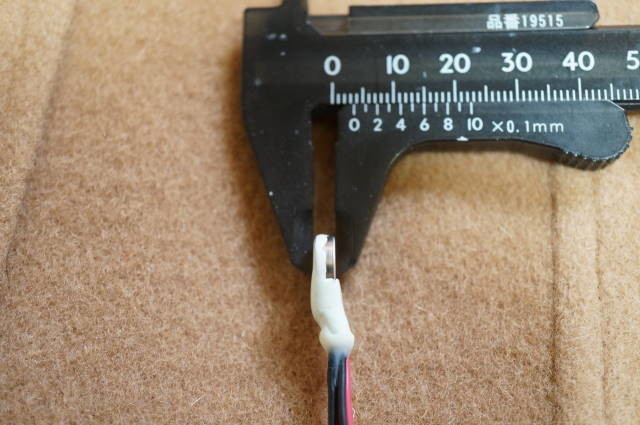
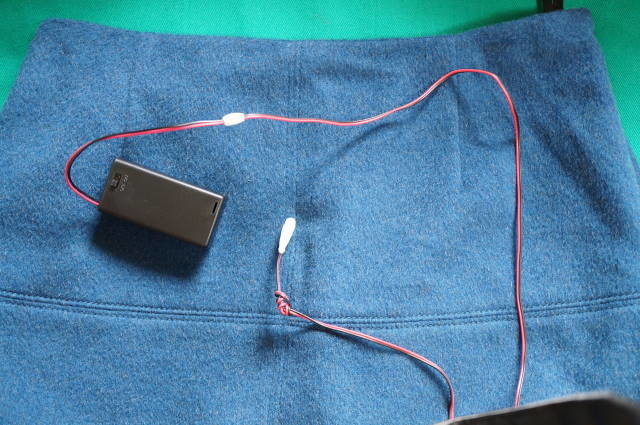
Its 3V switched battery box differed from the base model's 1.5V switchless box. A March 14 update placed the cable's standard twisted section 3.5cm from the body, citing easier handling. Mr. Okada warned of headaches in people sensitive to prostate stimulation and preferred lower voltage during prolonged use.
(Source: ok-lab's diary, published March 2020)
https://ok-lab.hatenablog.com/entry/2020/03/07/152901
If you see blood in your urine, even a small amount or for the first time, do not wait and see. See a urologist right away. If you suddenly cannot urinate, or the device cannot be removed, do not try to fix it yourself. Go to a medical facility, including emergency care, immediately.
How headaches and heart symptoms changed over time
| Published | What the diary said then |
|---|---|
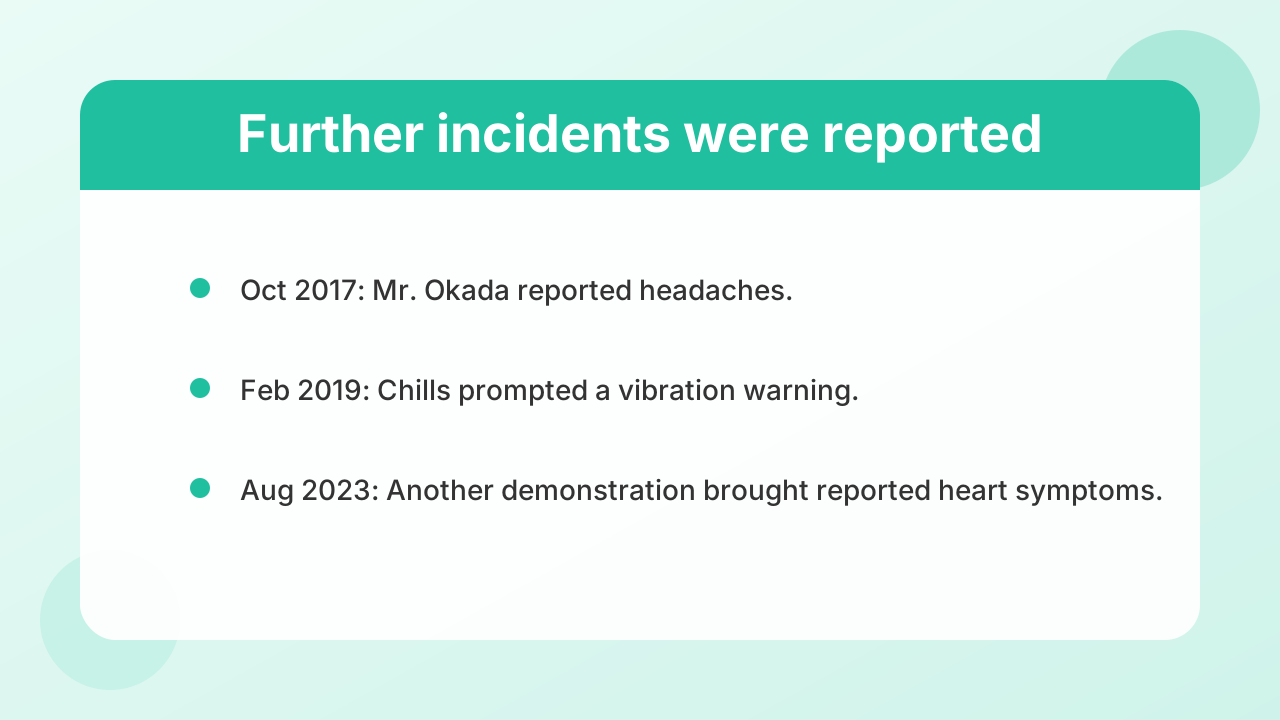
| Oct 2017 | Mr. Okada reported headaches after prolonged wear. |
| Oct 2018 | A combined anal and urethral test ended after an irregular heartbeat. |
| Feb 2019 | Chills prompted a warning against prolonged continuous vibration. |
| May 2019 | Renewed electrical testing brought another reported heart reaction. |
| Jan 2020 | A strongly stimulating ceramic configuration caused headaches in Mr. Okada's account. |
| Feb 2020 | The maker ruled out selling a motor design with exposed metal. |
| Mar 2020 | A custom vibrating model launched with a headache caution. |
| Jun 2023 | A rigid-instrument test brought chills, reported heart symptoms, and difficult removal. |
| Aug 2023 | Another electrical demonstration was followed by reported heart symptoms. |
| Sep 2023 | Mr. Okada abandoned complete testicular concealment after another reported episode. |
The diary does not say what the current state is.
OK Prostate Chip products related to headaches and heart symptoms
No current product is directly tied to this topic.
Common worries about headaches and heart symptoms
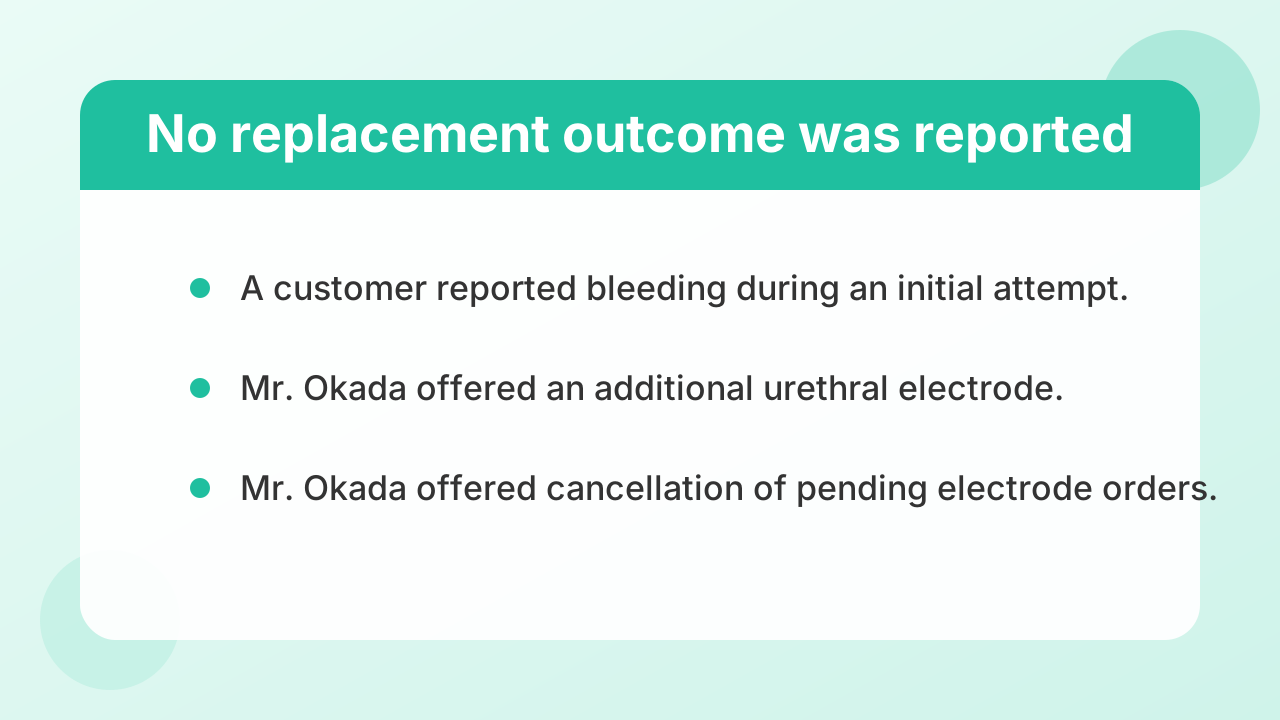
The customer exchange concerns uneven electrical sensation and a requested redesign; it records no successful outcome for the replacement.
"Can my OK Prostate Chip be changed for uneven stimulation?"
In an entry published in May 2019, a customer reported bleeding during an initial attempt with a wired electrode chip. A follow-up in the same exchange described feeling stimulation at the skin pad but none at the chip. The customer wanted an earlier anal and urethral electrode design separated, hoping equal contact sizes would balance sensation.
Mr. Okada offered an additional urethral electrode instead, attributing the uneven sensation to differences in sensitivity between body areas. The diary does not record how that replacement felt in use. For customers worried by the report, Mr. Okada also offered cancellation of pending electrode orders.
(Source: ok-lab's diary, published May 2019)
https://ok-lab.hatenablog.com/entry/2019/05/04/162111
Buying from outside Japan
OK Lab ships internationally to countries covered by Japan Post's EMS courier service. Overseas orders are paid in advance by PayPal. Each order carries a ¥400 (about $3 at ¥156 = $1, rate as of 2026-09-04) handling fee, and EMS shipping is charged on top. These terms come from OK Lab's official sales-terms page (written here as plain text, not a link: ok-lab.net/docs/law), checked on September 7, 2026; confirm them on the official store before you order, because they can change.
Summary of this article
| What you wanted to know | The answer |
|---|---|
| What is the short answer? | The diary contains Mr. Okada's reports of headaches and heart symptoms during or after testing. |
| What is the product? | A urethral device sold by OK Lab in Japan, with prices in Japanese yen. |
| What do the technical terms describe? | The body parts, electrical contacts, and rigid instruments involved in the reported tests. |
| What happened in the cases? | Symptoms appeared during several different experiments; the excerpts do not confirm every proposed cause. |
| What did the maker do? | He described pauses, limits on continuous vibration, and a decision against selling an exposed-metal design. |
| What changed over time? | Later entries added design-specific cautions and further reported incidents. |
| Is a current product established for this worry? | No current product is directly tied to this topic. |
| What did the customer ask? | Whether an electrode design could be changed when sensation differed between contacts. |
| How do overseas orders work? | Advance PayPal payment, a ¥400 (about $3 at ¥156 = $1, rate as of 2026-09-04) handling fee, and additional EMS shipping under the stated terms. |
Source: ok-lab's diary (Okada Comfortable Life Laboratory). The original entries are in Japanese; quotations on this page are translated. Photos and videos are on the original entries.
This article is a summary of the maker's development diary. The product is not a medical device and no result is guaranteed. If anything feels wrong or worries you, see a doctor. Prices, specifications and cautions change, so confirm the latest information on the official blog and the official site. Questions about ordering and shipping go to the seller.