![Bleeding after use? | The maker advises stopping use [OK Prostate Chip]](/img/a/T0337/eyecatch.svg)
This page is based on entries from "ok-lab's diary" (https://ok-lab.hatenablog.com/), the Japanese development diary written by Mr. Okada, founder of OK Lab, a small company in Japan (Okada Comfortable Life Laboratory). Only the entries about "bleeding after use and taking a break" are summarized here, in order of publication. Past prices and sizes are as written at the time. Current prices come from the official product list (retrieved September 4, 2026). Quotations are translated from Japanese.
Note: This page is a personal reading log by someone with no connection to the maker or the seller. It reflects the source entries as of their publication dates and makes no guarantee of accuracy or safety. The product is not a medical device; talk to a doctor about any health decision. Check the official site for current information. This page contains advertising.
In short
- Customers reported blood in urine, dripping blood, and bleeding that returned after a break.
- The maker's July 2021 instructions called for stopping use and at least three days off after bleeding.
- Bleeding still interrupted prototype testing in April 2026; the diary records no confirmed solution for every case.
If you see blood in your urine, even a small amount or for the first time, do not wait and see. See a urologist right away. If you suddenly cannot urinate, or the device cannot be removed, do not try to fix it yourself. Go to a medical facility, including emergency care, immediately.
About this product
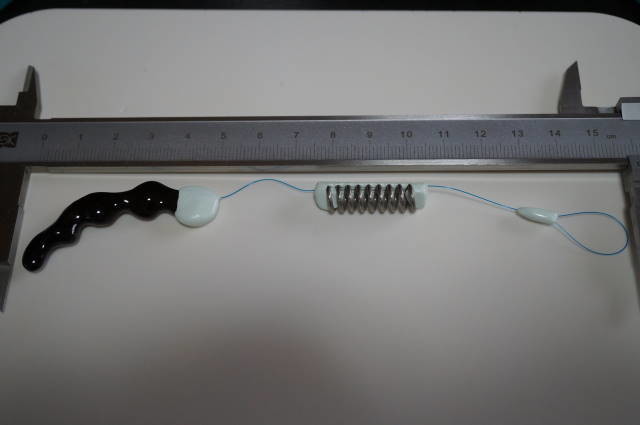
The OK Prostate Chip is a small device that is placed in the urethra (the urine passage) so that it acts on the prostate; the maker sells it in several shapes, sizes and materials. It is made and sold by OK Lab (Okada Comfortable Life Laboratory), a small company in Japan, through its own online store, and prices are in Japanese yen (JPY). The maker's development diary, "ok-lab's diary", is written in Japanese. This page is an English summary of it, and every quotation is translated. OK Lab ships internationally, so readers outside Japan can order (see "Buying from outside Japan" below). Product names on this page are plain-English descriptions. The official Japanese product name is shown once in the product table so you can find the same item in the store.
Before you read: key terms
| Term | Plain-English meaning |
|---|---|
| Urethra | The urine passage; the chip occupies part of this passage near the prostate. |
| Retrieval thread | A cord attached to a chip, intended to help recover it. |
| Internal stopper | An accessory intended to limit inward movement; the April 2022 case shows it did not always prevent this. |
| Antibiotics | Medicines used against bacterial infection; the diary mentions prescriptions after hospital treatment. |
| Retrieval tool | A device intended to recover a chip; the April 2026 entry concerns experimental versions. |
What happens: bleeding after use
The OK Prostate Chip is a small device placed in the urethra, where the maker intends it to act on the prostate. These entries concern blood appearing during or after use, mixed with urine or noticed on the device. Taking a break means a period without chip use, which Mr. Okada discussed as time for the urinary passage to rest. The reports include prolonged wear, suspected friction, a hard thread connection, and hospital treatment when a chip became trapped.
Bleeding after use exposed uncertainty about continuous wear in March 2018
In an entry published in March 2018, a customer reported blood in urine during the second day with a linked resin pair. They asked how to recognize the limit for continuous wear before damage appeared. Mr. Okada said no outward sign established that limit; he wrote that customers commonly discovered damage only after bleeding.
He suspected prolonged contact with dry tissue and also mentioned bleeding reports involving long glass chips. He considered urinary lining injuries relatively quick to heal, estimating days for scrapes; this customer's recovery was not recorded. Mr. Okada's suggested precaution was regular breaks of several hours, allowing time without a chip in the urethra.
(Source: ok-lab's diary, published March 2018)
https://ok-lab.hatenablog.com/entry/20180324/1521875816
Bleeding after use continued despite apparently clear urine in May 2021
In an entry published in May 2021, a customer described dripping blood after wearing a custom ceramic chip with several accessories. Blood covered the assembly, although a subsequent check of urine appeared clear. The customer reported bleeding stopping after approximately 10 minutes of first aid and planned at least 2 weeks without chips.
Mr. Okada suspected tissue had been caught between components, but he did not establish the cause. The report ends with the customer's planned break, without confirmation of complete recovery. Mr. Okada cautioned that unexpected resistance could reflect excessive friction, even when a customer expected the device to move easily.
(Source: ok-lab's diary, published May 2021)
https://ok-lab.hatenablog.com/entry/2021/05/29/125928
Bleeding after use raised questions about the thread connection in June 2021
An entry published in June 2021 describes severe pain and substantial blood in urine with a customized ceramic chip. The customer stopped using it and suspected the hard base of its retrieval thread (the cord intended to help recover the device). Mr. Okada initially suspected friction from the rear section, widened by 2 mm, then acknowledged possible resin hardening around the thread.
He also described a new connection: the thread emerged through a wider hole and could move freely. He said this design lacked the pointed feel of the older connection, but the customer's later recovery was not recorded. Mr. Okada warned against repairs that could damage the retrieval thread.
(Source: ok-lab's diary, published June 2021)
https://ok-lab.hatenablog.com/entry/2021/06/12/125849
Repeated bleeding after use prompted a longer break in October 2021
Mr. Okada reported another bleeding episode in an entry published in October 2021, following an earlier injury involving a wire. He could not distinguish excessive friction from reopening the previous wound. He also wrote that he regularly took medicine that slowed blood clotting and experienced prolonged bleeding from other injuries.
The diary does not record when this particular injury healed. Mr. Okada's stated response was to suspend chip use for approximately one week.
(Source: ok-lab's diary, published October 2021)
https://ok-lab.hatenablog.com/entry/2021/10/09/125823
Bleeding after use accompanied a trapped chip in April 2022
A customer described hospital treatment for a trapped ceramic double-twist chip in an entry published in April 2022. The report included blood in urine, leakage, and severe discomfort after the chip entered the bladder. Hospital staff recovered it and prescribed antibiotics (medicines used against bacterial infection); the customer reported a bill of about ¥8,000 (about $51 at ¥156 = $1, rate as of 2026-09-04).
Mr. Okada questioned whether an internal stopper (an accessory intended to limit inward movement) had made recovery harder in this case. The customer intended to pause chip use, but the entry does not confirm when symptoms ended. Mr. Okada cautioned that this stopper might be unsuitable when it could pass into the bladder.
(Source: ok-lab's diary, published April 2022)
https://ok-lab.hatenablog.com/entry/2022/04/02/123050
The maker's answer to bleeding after use
The diary combines advice about breaks with later written warnings to stop use and consult a doctor.
Suspected causes shaped the maker's bleeding after use reply in March 2019
A beginner asked about bleeding with a homemade resin chip in an entry published in March 2019. The customer had already made an aluminum replacement and wanted to know whether beginners faced particular difficulties. Mr. Okada suggested surface projections, a material causing excessive friction, or excessive size as possible causes.
He expected friction-related bleeding to settle within days, while warning that a cut could reopen. The diary does not record whether the replacement was used or whether either suspected injury was medically assessed. Mr. Okada advised a longer break when a cut was suspected, without specifying a fixed recovery interval.
(Source: ok-lab's diary, published March 2019)
https://ok-lab.hatenablog.com/entry/2019/03/30/160657
Written bleeding after use warnings specified a minimum break in July 2021
In an entry published in July 2021, Mr. Okada presented a written instruction sheet with specific cautions about bleeding. It called for stopping use promptly when discomfort differed from the user's usual sensations. For bleeding, it specified at least 3 days without use.
The document also stated that bleeding which continued could have causes other than the chip. Its stated advice in that situation was consultation with a doctor.
(Source: ok-lab's diary, published July 2021)
https://ok-lab.hatenablog.com/entry/2021/07/24/125923
Bleeding after use halted retrieval prototype testing in April 2026
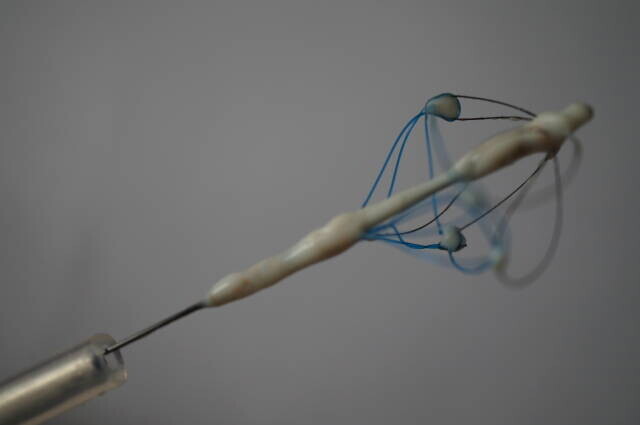
An entry published in April 2026 describes Mr. Okada's experimental retrieval tool (a device intended to recover a chip). Version 11 used 0.1 mm wire with a thin rubber coating. Mr. Okada thought it felt softer than the preceding thread-based design, but reported slight bleeding after repeated tests.
He ordered 0.03 mm and 0.05 mm wire while considering a softer design. The entry records neither completed tests of those replacements nor a confirmed resolution of the bleeding problem. Mr. Okada reported suspending the tests after bleeding appeared.
(Source: ok-lab's diary, published April 2026)
https://ok-lab.hatenablog.com/entry/2026/04/18/122906
If you see blood in your urine, even a small amount or for the first time, do not wait and see. See a urologist right away. If you suddenly cannot urinate, or the device cannot be removed, do not try to fix it yourself. Go to a medical facility, including emergency care, immediately.
How bleeding after use changed over time
| Published | What the diary said then |
|---|---|
| Oct 2017 | Mr. Okada warned that pain and slight bleeding could appear after initially unnoticed injury. |
| Mar 2018 | A continuous-wear question brought advice about regular periods without a chip. |
| Mar 2019 | Suspected cuts prompted a warning about wounds reopening. |
| May 2020 | Mr. Okada declined to give a precise recovery interval. |
| Jun 2021 | A bleeding complaint accompanied discussion of a freer-moving thread connection. |
| Jul 2021 | Written warnings specified a minimum break and medical consultation for continued bleeding. |
| Apr 2022 | Hospital treatment was needed for a trapped chip; antibiotics were prescribed. |
| Aug 2023 | Staff urged early medical assessment when bleeding continued across days. |
| Dec 2024 | A customer reported renewed bleeding despite approximately a month away from use. |
| Apr 2026 | Slight bleeding interrupted retrieval-tool testing; softer wire remained under consideration. |
The diary does not say what the current state is.
OK Prostate Chip products related to bleeding after use
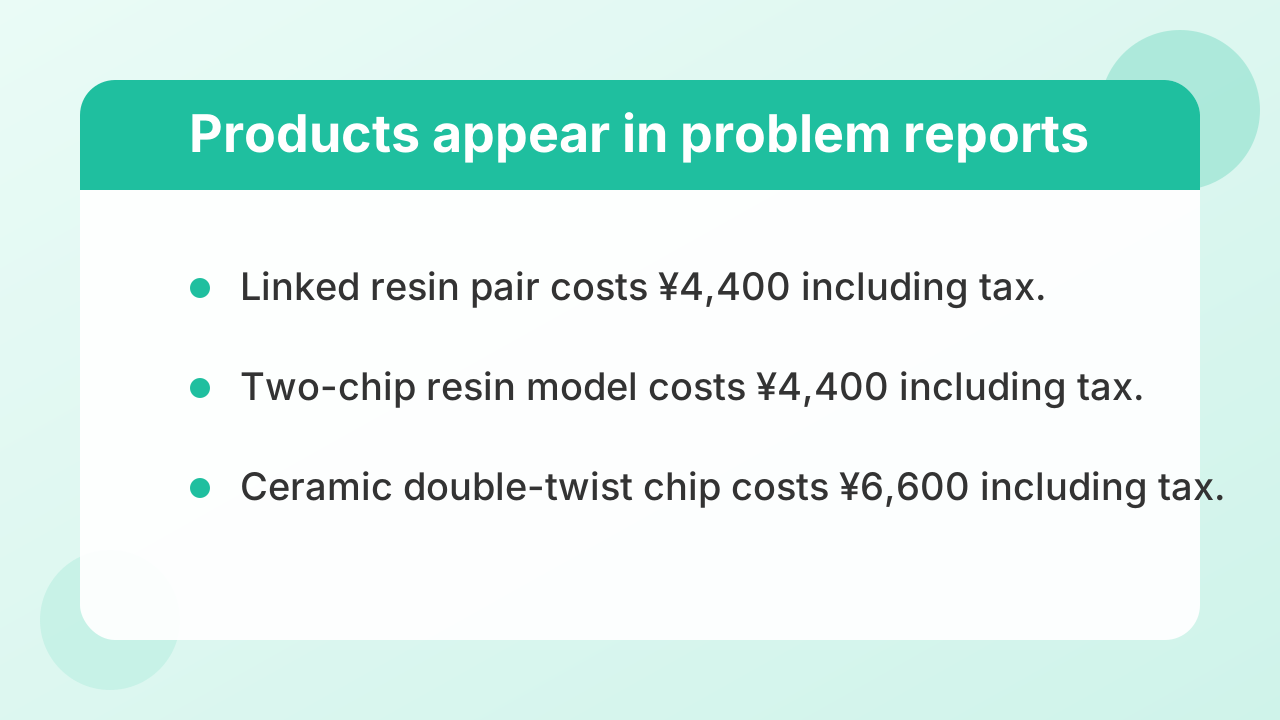
These current products appear in problem reports; their appearance does not establish that they prevent bleeding.
Products that appear in these entries
| Product (official name) | Price incl. tax | Relation to this topic |
|---|---|---|
| Linked resin pair (OKプロステートチップ 樹脂素材2連結タイプ) | ¥4,400 (about $28 at ¥156 = $1, rate as of 2026-09-04) | In March 2018, a customer reported blood in urine during continuous wear. |
| Two-chip resin model (OKプロステートチップ 樹脂素材2チップタイプ) | ¥4,400 (about $28 at ¥156 = $1, rate as of 2026-09-04) | In May 2020, a customer asked about recovery after difficulty and suspected bleeding. |
| Ceramic double-twist chip (OKプロステートチップ 陶器素材覚醒タイプ ダブルツイスト(ラブカチップ)) | ¥6,600 (about $42 at ¥156 = $1, rate as of 2026-09-04) | In April 2022, a customer reported hospital recovery of this chip after bladder entry. |
(Source: ok-lab's diary, published March 2018)
https://ok-lab.hatenablog.com/entry/20180324/1521875816
(Source: ok-lab's diary, published May 2020)
https://ok-lab.hatenablog.com/entry/2020/05/23/132040
(Source: ok-lab's diary, published April 2022)
https://ok-lab.hatenablog.com/entry/2022/04/02/123050
Products the diary mentioned as alternatives
The diary names no alternative.
The entries also describe custom assemblies in May 2021 and June 2021, plus the April 2026 retrieval prototype. No matching product can be confirmed on the current list.
Common worries about bleeding after use
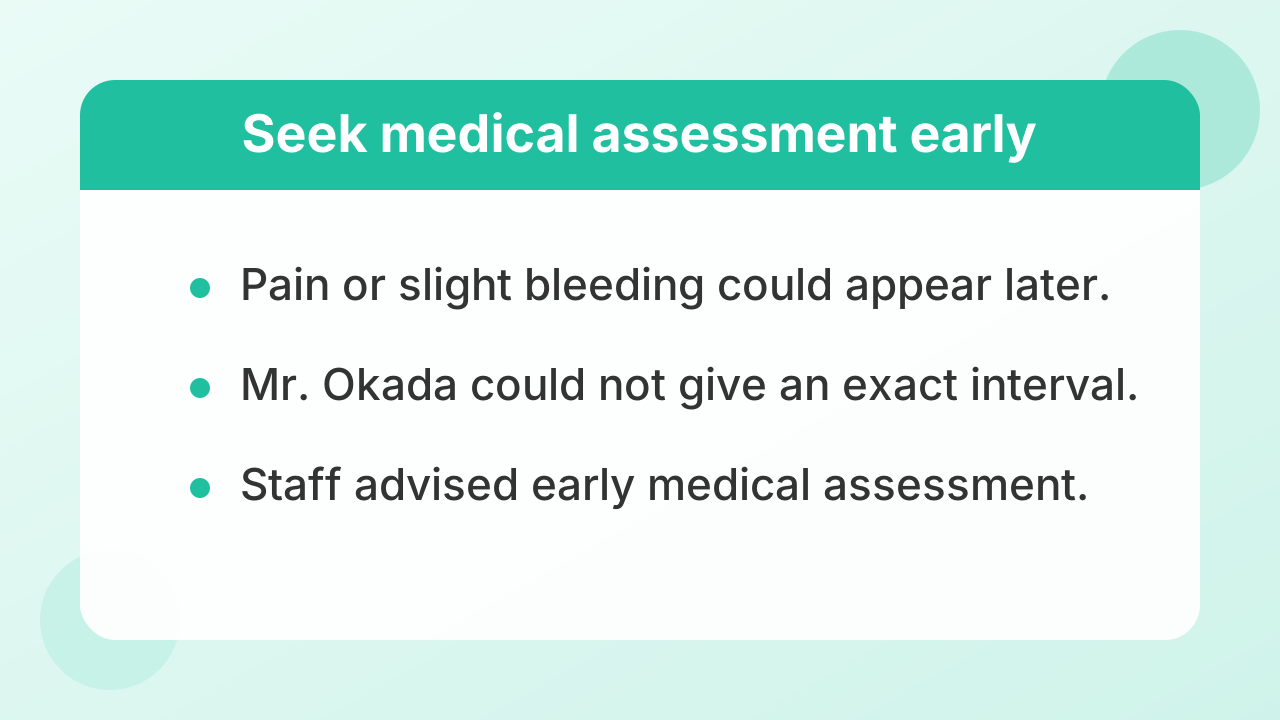
Readers asked about delayed symptoms, recovery time, and bleeding that continued into another day.
"Can bleeding after use start after an initially painless experience?"
In an entry published in October 2017, Mr. Okada addressed concern about injuring the delicate urinary passage. He wrote that an injury might go unnoticed initially, with pain or slight bleeding appearing later. He expected slight oozing to settle within half a day and referred flowing bleeding to an earlier first-aid discussion.
These were his expectations, rather than a documented diagnosis or follow-up for a specific customer. He also stated that no device eliminated friction completely. Mr. Okada advised stopping use if discomfort appeared.
(Source: ok-lab's diary, published October 2017)
https://ok-lab.hatenablog.com/entry/20171026/1508989298
"Does bleeding after use require a week off?"
A customer using the two-chip resin model asked about another attempt after suspected bleeding in an entry published in May 2020. Mr. Okada said he could not give an exact interval, but did not consider a full week necessary unless bleeding was substantial. The customer's later message described use despite remaining pain and a pleasurable result, without confirming that the injury had healed.
When asked about rough contact, Mr. Okada described ceramic and glass as smoother than resin. He did not identify a single best replacement model. His reply emphasized reducing friction, rather than offering a confirmed recovery date for that customer.
(Source: ok-lab's diary, published May 2020)
https://ok-lab.hatenablog.com/entry/2020/05/23/132040
"Does bleeding after use continuing overnight need a doctor?"
In an entry published in August 2023, a customer described severe pain during urination and bleeding continuing into another day. They asked whether it would settle by itself or whether a doctor was needed. Staff said the information was insufficient for judgment and described bleeding across days as unusual in the reports they received.
The customer initially planned a visit, then reported that bleeding stopped on the third day, after taking medicines already at home. The diary does not confirm a medical examination or establish what caused the bleeding to stop. The staff's advice was to seek medical assessment early for safety.
(Source: ok-lab's diary, published August 2023)
https://ok-lab.hatenablog.com/entry/2023/08/05/122956
Buying from outside Japan
OK Lab ships internationally to countries covered by Japan Post's EMS courier service. Overseas orders are paid in advance by PayPal. Each order carries a ¥400 (about $3 at ¥156 = $1, rate as of 2026-09-04) handling fee, and EMS shipping is charged on top. These terms come from OK Lab's official sales-terms page (written here as plain text, not a link: ok-lab.net/docs/law), checked on September 7, 2026; confirm them on the official store before you order, because they can change.
Summary of this article
| What you wanted to know | The answer |
|---|---|
| What is the immediate concern? | The reports include blood in urine, continuing bleeding, and recurrence after a break. |
| What is this product? | A device from Japan's OK Lab, placed in the urethra to act on the prostate. |
| What do the key terms describe? | The urinary passage, chip components, recovery tools, and medicines mentioned in hospital reports. |
| What happened to customers? | Cases ranged from interrupted use to hospital treatment for a trapped chip. |
| What did the maker propose? | Breaks from use, stopping for unusual discomfort, and medical consultation for continuing bleeding. |
| What changed over time? | Individual replies were followed by written warnings; later reports still included bleeding. |
| Which listed products appear? | The resin models cost ¥4,400 (about $28 at ¥156 = $1, rate as of 2026-09-04) each; the ceramic double-twist chip costs ¥6,600, (about $42 at ¥156 = $1, rate as of 2026-09-04) including tax. |
| What did readers ask? | Whether symptoms could appear later, how long recovery took, and whether medical assessment was needed. |
| How do overseas orders work? | Advance PayPal payment, a ¥400 (about $3 at ¥156 = $1, rate as of 2026-09-04) handling fee, and additional EMS shipping. |
Source: ok-lab's diary (Okada Comfortable Life Laboratory). The original entries are in Japanese; quotations on this page are translated. Photos and videos are on the original entries.
This article is a summary of the maker's development diary. The product is not a medical device and no result is guaranteed. If anything feels wrong or worries you, see a doctor. Prices, specifications and cautions change, so confirm the latest information on the official blog and the official site. Questions about ordering and shipping go to the seller.