![Could the chip's shape cause bleeding? | The diary records injuries and suspected causes [OK Prostate Chip]](/img/a/T0338/eyecatch.svg)
This page is based on entries from "ok-lab's diary" (https://ok-lab.hatenablog.com/), the Japanese development diary written by Mr. Okada, founder of OK Lab, a small company in Japan (Okada Comfortable Life Laboratory). Only the entries about "chip shapes reported with bleeding, including Sea Slug designs" are summarized here, in order of publication. Past prices and sizes are as written at the time. Current prices come from the official product list (retrieved September 4, 2026). Quotations are translated from Japanese.
Note: This page is a personal reading log by someone with no connection to the maker or the seller. It reflects the source entries as of their publication dates and makes no guarantee of accuracy or safety. The product is not a medical device; talk to a doctor about any health decision. Check the official site for current information. This page contains advertising.
In short
- The diary records bleeding with ridged, pointed, and long chips, without establishing a single cause.
- Mr. Okada cautions against force and describes changes intended to reduce discomfort.
- The current list prices the ceramic semi-long chip at ¥4,400, (about $28 at ¥156 = $1, rate as of 2026-09-04) including tax.
If you see blood in your urine, even a small amount or for the first time, do not wait and see. See a urologist right away. If you suddenly cannot urinate, or the device cannot be removed, do not try to fix it yourself. Go to a medical facility, including emergency care, immediately.
About this product
The OK Prostate Chip is a small device that is placed in the urethra (the urine passage) so that it acts on the prostate; the maker sells it in several shapes, sizes and materials. It is made and sold by OK Lab (Okada Comfortable Life Laboratory), a small company in Japan, through its own online store, and prices are in Japanese yen (JPY).
The maker's development diary, "ok-lab's diary", is written in Japanese. This page is an English summary of it, and every quotation is translated.
OK Lab ships internationally, so readers outside Japan can order (see "Buying from outside Japan" below). Product names on this page are plain-English descriptions. The official Japanese product name is shown once in the product table so you can find the same item in the store.
Before you read: key terms
| Term | Plain-English meaning |
|---|---|
| Urethra | The urine passage; it carries urine and is where the chip is placed. |
| Stainless rings | Coiled metal parts used in assemblies intended to stay in place. |
| Resin | A material used to cover or join device parts. |
| Retrieval thread | Thread attached to the chip for removal. |
| Paired electrodes | Two chip contacts used for electrical stimulation. |
| Screw-shaped auxiliary chip | An extra screw-shaped piece intended to help hold the main chip in place. |
What happens: chip bleeding
The OK Prostate Chip is a small device placed in the urethra to act on the prostate. This topic concerns shapes that customers connected with bleeding, particularly ridged ceramic chips (Sea Slugs). These sit within the urine passage, and Mr. Okada describes pronounced shapes as intended to help them stay in place. Other reports concern pointed tips, metal rings, and longer assemblies associated with bleeding or difficult removal.
Chip bleeding followed a trapped ceramic model in December 2019
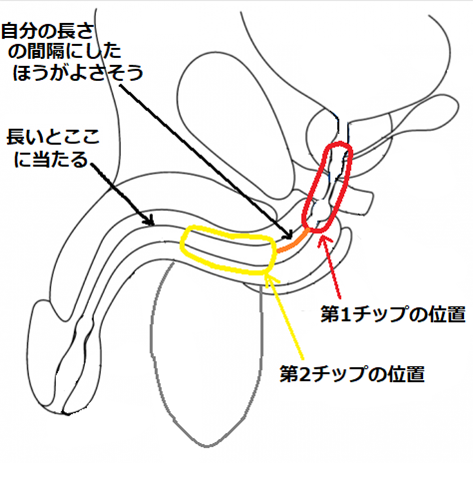
In an entry published in December 2019, a customer sought a ridged ceramic chip (Sea Slug version 3). They said version 2 had been too large, become trapped at an indentation, and caused bleeding during forced removal. With the standard model unavailable, Mr. Okada proposed stronger lower contours at the same overall size.
He reported no problem beyond difficult entry during his own test of the revision. The diary does not record how the revised chip felt to this customer. Mr. Okada offered that revision or a 4–5-week wait for the standard version.
(Source: ok-lab's diary, published December 2019)
https://ok-lab.hatenablog.com/entry/2019/12/07/162608
Chip bleeding also affected a twisted glass model in December 2019
In an entry published in December 2019, a customer described minor bleeding on about 2 occasions with a twisted glass chip (Cobra Twist). They associated both episodes with hurried, forceful handling.
They wondered whether its 90-degree twist produced a sharper contact angle at the tip. Mr. Okada's response does not resolve the customer's question about the cause.
(Source: ok-lab's diary, published December 2019)
https://ok-lab.hatenablog.com/entry/2019/12/21/150646
Chip bleeding followed prolonged wear of stainless rings in March 2021
In an entry published in March 2021, a customer initially praised a twin ridged ceramic chip (Sea Slug version 2). Its stainless rings (coiled metal sections intended to help it stay in place) later became the concern. After 2 days of wear, the customer reported that the metal pressed into the urethral lining and removal caused bleeding.
They requested a redesigned assembly to reduce that pressure. Mr. Okada suspected the 11 mm ring's size and widely spaced coils contributed; the entry records no result from the redesign. He proposed additional resin (a covering and joining material) on the rings.
(Source: ok-lab's diary, published March 2021)
https://ok-lab.hatenablog.com/entry/2021/03/13/130202
Chip bleeding covered an entire assembly in May 2021
In an entry published in May 2021, a customer reported bleeding with a ridged ceramic chip assembly (Sea Slug version 4). Blood coated the main chip and attached parts, followed by blood dripping from the penis. The account says bleeding stopped about 10 minutes into the customer's attempt to control it.
Mr. Okada considered friction and tissue caught between parts as possible explanations. He also wrote that unexpected resistance might reflect increased friction. Mr. Okada cautioned against assuming the chip must fit and forcing it onward.
(Source: ok-lab's diary, published May 2021)
https://ok-lab.hatenablog.com/entry/2021/05/29/125928
Chip bleeding differed between shapes during exercise in July 2021
An entry published in July 2021 describes one customer's comparison of ridged ceramic shapes during strenuous exercise. They reported no bleeding with version 3.1, but bleeding with every urination after using the bumpy version 4. The customer could not tell whether the bumps or the overall shape explained the difference.
They stopped using chips for a time and concluded strenuous exercise with one fitted was unwise. Mr. Okada advised against longer or larger chips during exercise and favored simpler, shorter shapes.
(Source: ok-lab's diary, published July 2021)
https://ok-lab.hatenablog.com/entry/2021/07/03/125851
Chip bleeding returned after a month's break in December 2024
An entry published in December 2024 describes recurring bleeding with paired electrodes (two chip contacts used for electrical stimulation). The customer's first attempt failed; the second brought pain and bleeding. About 1 month later, another attempt initially felt painless, but pain and bleeding appeared after roughly 1 hour.
The customer suspected the second chip's curve loaded the urethra near the penis base. They had initially focused on thickness, then questioned whether length and curvature mattered more. The diary does not record Mr. Okada's assessment or a revised assembly's outcome.
(Source: ok-lab's diary, published December 2024)
https://ok-lab.hatenablog.com/entry/2024/12/07/122832
Chip bleeding prompted retirement of a long stainless model in August 2025
In an entry published in August 2025, a customer retired a custom long stainless chip after what they described as substantial bleeding. The device had initially gone in without apparent difficulty, but urination revealed red blood.
They also reported recurring bleeding with a bumpy semi-long ceramic chip and screw-shaped auxiliary chip (an extra piece intended to help hold position). The customer felt shape mattered, although they remained uncertain about what happened internally. Mr. Okada suggested some chip shapes might strongly irritate the lining.
(Source: ok-lab's diary, published August 2025)
https://ok-lab.hatenablog.com/entry/2025/08/23/122935
The maker's answer to chip bleeding
The maker discusses avoiding force, reviewing returned products, and changing designs, without recording a solution that resolved every case.
Prominent projections prompted a chip bleeding warning in November 2019

An entry published in November 2019 relayed a telephone report of bleeding with the ridged ceramic chip (Sea Slug version 2). Mr. Okada linked the concern to its pronounced projections. The diary does not record the caller's later condition. Mr. Okada cautioned against force during removal.
(Source: ok-lab's diary, published November 2019)
https://ok-lab.hatenablog.com/entry/2019/11/23/162919
Chip bleeding reports preceded proposed changes to a pointed tip
An entry published in March 2022 describes pain and slight bleeding on both of 2 uses of a pointed chip (Devil). The customer asked whether a longer version might become available. Mr. Okada said he might explore more sizes and wanted a softer tip and more curvature.
The entry does not record a completed revision or the customer's experience with one. Mr. Okada warned that the existing pointed design was dangerous.
(Source: ok-lab's diary, published March 2022)
https://ok-lab.hatenablog.com/entry/2022/03/05/123200
A replacement was rejected as the answer to chip bleeding
An entry published in April 2023 describes a customer seeking surface repair after heavy bleeding with a ridged ceramic chip (Sea Slug version 4). Staff first offered inspection followed by repair or replacement. After inspection, they judged the thin coating near the resin joint insufficient to explain bleeding and offered return without changes or a refund.
They said difficult removal was part of the design and that bleeding during forced removal was frequently reported. The diary does not record which option the customer chose. Mr. Okada cautioned against force on the retrieval thread (the attached thread used for removal) when the chip would not come out.
(Source: ok-lab's diary, published April 2023)
https://ok-lab.hatenablog.com/entry/2023/04/22/123057
Rubber cushioning was intended to reduce discomfort amid chip bleeding reports
An entry published in March 2025 reports repeated bleeding blamed on thread exits in a ridged ceramic chip (Sea Slug version 4). The customer requested 2 threads from one location instead of 2 separate exits. Staff explained that rubber cushioning had been added after complaints about discomfort where the thread met the pointed rear.
They considered the extreme rear shape, designed to resist slipping out, a possible explanation for pain and bleeding. The customer deferred the decision about the rubber protection; the diary records no later result in use. Mr. Okada favored keeping the cover and cautioned that separate thread exits might irritate a narrow urethra.
(Source: ok-lab's diary, published March 2025)
https://ok-lab.hatenablog.com/entry/2025/03/22/122906
If you see blood in your urine, even a small amount or for the first time, do not wait and see. See a urologist right away. If you suddenly cannot urinate, or the device cannot be removed, do not try to fix it yourself. Go to a medical facility, including emergency care, immediately.
How chip bleeding changed over time
| Published | What the diary said then |
|---|---|
| Nov 2019 | Pronounced projections prompted a warning against force during removal. |
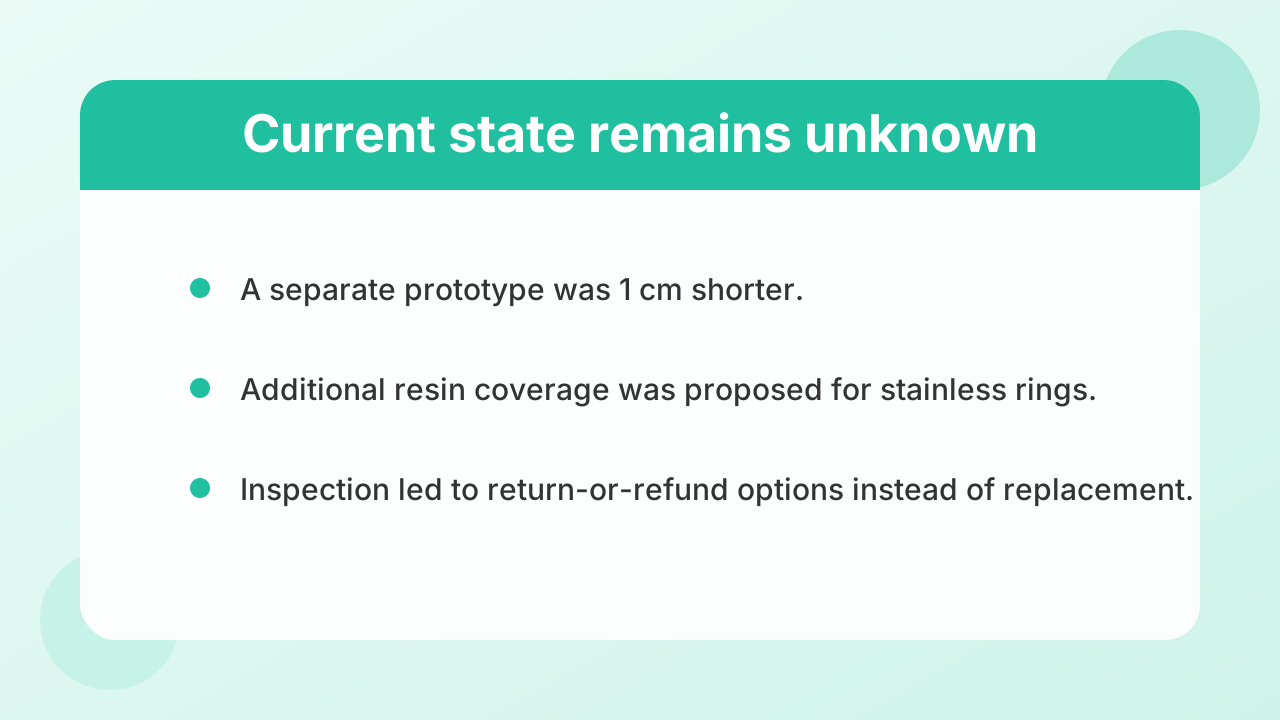
| Dec 2019 | Concern about excessive size prompted a separate prototype 1 cm shorter. |
| Oct 2020 | Mr. Okada suggested large size could increase friction and bleeding. |
| Mar 2021 | Additional resin coverage was proposed for large stainless rings. |
| Jul 2021 | One customer reported different bleeding outcomes with two shapes during exercise. |
| Oct 2021 | Staff described an additional retrieval-thread option for difficult removal. |
| Apr 2023 | Inspection led to return-or-refund options instead of replacement. |
| Dec 2024 | A customer estimated a personal second-chip length limit of 32 mm. |
| Mar 2025 | Staff explained why rubber cushioning had been added at thread connections. |
| Aug 2025 | A customer stopped using a long stainless chip after bleeding. |
The diary does not say what the current state is.
OK Prostate Chip products related to chip bleeding
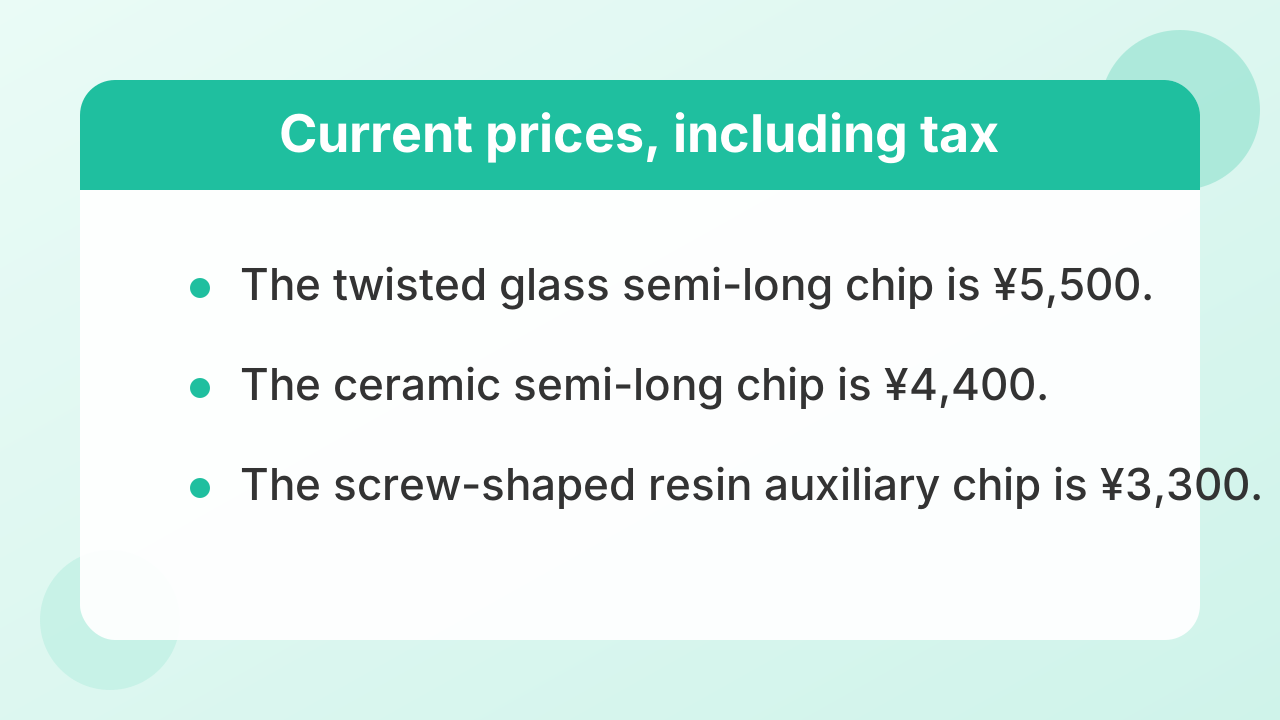
These standard products and parts appear on the current list.
Products that appear in these entries
| Product (official name) | Price incl. tax | Relation to this topic |
|---|---|---|
| Twisted glass semi-long chip (OKプロステートチップ ガラス素材セミロングタイプ コブラツイスト) | ¥5,500 (about $35 at ¥156 = $1, rate as of 2026-09-04) | In December 2019, a customer reported minor bleeding with this twisted glass model. |
| Ceramic semi-long chip (OKプロステートチップ 陶器素材セミロングタイプ) | ¥4,400 (about $28 at ¥156 = $1, rate as of 2026-09-04) | In March 2021, a customer using this standard chip asked about rings because it would not stay in place. |
| Screw-shaped resin auxiliary chip (スクリュー型補助チップ追加オプション(生体適合樹脂)) | ¥3,300 (about $21 at ¥156 = $1, rate as of 2026-09-04) | In March 2025, a customer reporting bleeding requested this part for holding position; staff said it was possible. |
(Source: ok-lab's diary, published December 2019)
https://ok-lab.hatenablog.com/entry/2019/12/21/150646
(Source: ok-lab's diary, published March 2021)
https://ok-lab.hatenablog.com/entry/2021/03/20/130148
(Source: ok-lab's diary, published March 2025)
https://ok-lab.hatenablog.com/entry/2025/03/22/122906
Products the diary mentioned as alternatives
The diary names no alternative.
Custom ridged ceramic chips (Sea Slug), the pointed chip (Devil), the paired-electrode assembly, and the long stainless build: No matching product can be confirmed on the current list.
Common worries about chip bleeding
The replies explain the maker's reasoning, with several later customer outcomes unrecorded.
"Could the rubber cover explain my chip bleeding?"
An entry published in October 2020 describes a customer asking about repair after bleeding with a ridged ceramic chip (Sea Slug version 1). They blamed the rear rubber-covered projection and had already altered it. Mr. Okada thought that soft area was unlikely to cut the lining, while acknowledging that rubbing could still cause bleeding.
He suspected the chip's large size increased friction, but explicitly described this as speculation. The diary does not record whether the repair was completed. Unable to assess the alteration, Mr. Okada offered thread replacement for ¥1,000 (about $6 at ¥156 = $1, rate as of 2026-09-04) excluding tax, as published in October 2020.
(Source: ok-lab's diary, published October 2020)
https://ok-lab.hatenablog.com/entry/2020/10/24/115457
"Could stainless rings cause chip bleeding or become stuck?"
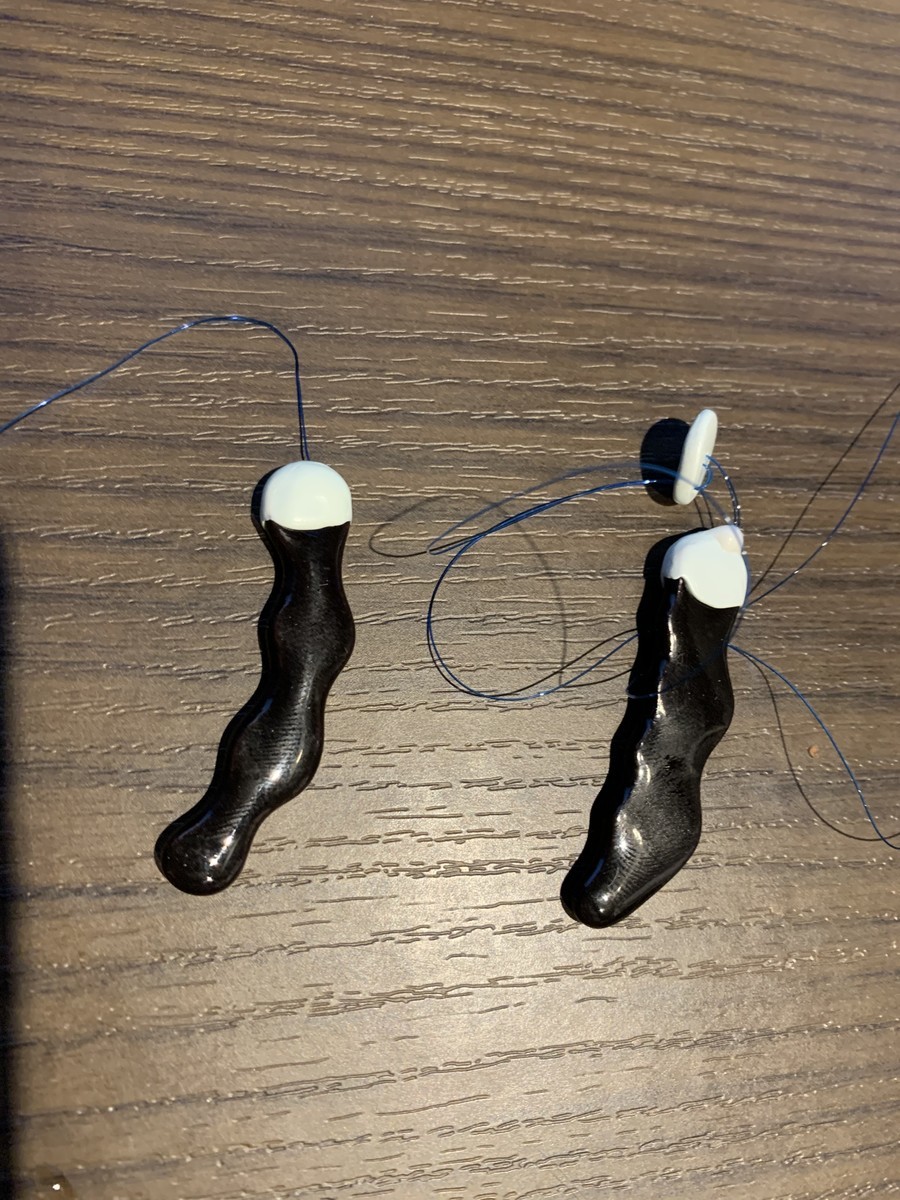
An entry published in March 2021 concerns a customer whose standard ceramic semi-long chip would not stay where they wanted it. They asked whether stainless rings would be difficult to remove, cause bleeding, or become stuck during prolonged wear. Mr. Okada said rings could press into tissue more than ceramic chips and become much harder to remove.
He said they would not become impossible to remove, but also acknowledged his own bleeding experience. The diary does not record what this customer later bought or experienced. Mr. Okada cautioned that staying in place and difficult removal reflected much the same design feature.
(Source: ok-lab's diary, published March 2021)
https://ok-lab.hatenablog.com/entry/2021/03/20/130148
"Could ejaculation explain chip bleeding during removal?"
An entry published in October 2021 describes a customer asking why a ridged ceramic chip (Sea Slug version 4) caused bleeding during every removal. They reported an internal popping sensation and wondered whether ejaculation moved the chip toward the bladder.
Mr. Okada thought prostate contractions might do so, but the entry does not establish where the chip was. The diary does not record whether the customer tried a proposed change or whether bleeding stopped. Mr. Okada cautioned that the popping sensation suggested strain during removal.
(Source: ok-lab's diary, published October 2021)
https://ok-lab.hatenablog.com/entry/2021/10/23/125707
Buying from outside Japan
OK Lab ships internationally to countries covered by Japan Post's EMS courier service. Overseas orders are paid in advance by PayPal. Each order carries a ¥400 (about $3 at ¥156 = $1, rate as of 2026-09-04) handling fee, and EMS shipping is charged on top. These terms come from OK Lab's official sales-terms page (written here as plain text, not a link: ok-lab.net/docs/law), checked on September 7, 2026; confirm them on the official store before you order, because they can change.
Summary of this article
| What you wanted to know | The answer |
|---|---|
| What is the main concern? | Customers reported bleeding with several shapes; the causes were not established. |
| What is this product? | A device placed in the urethra, made by OK Lab in Japan. |
| What are rings and threads for? | Rings help hold position; attached threads are for removal. |
| What happened in the reports? | Bleeding occurred during wear, exercise, or removal, sometimes repeatedly. |
| What did the maker propose? | Warnings, inspections, and design changes. |
| What changed? | Reports expanded to metal parts, electrodes, and thread connections. |
| What can be bought today? | The product table identifies confirmed products and their yen prices. |
| Were customers' worries resolved? | Several outcomes remain unrecorded. |
| How are overseas orders handled? | Advance PayPal payment, a ¥400 (about $3 at ¥156 = $1, rate as of 2026-09-04) handling fee, and additional EMS shipping. |
| What remains unknown? | Several outcomes and current custom specifications. |
Source: ok-lab's diary (Okada Comfortable Life Laboratory). The original entries are in Japanese; quotations on this page are translated. Photos and videos are on the original entries.
This article is a summary of the maker's development diary. The product is not a medical device and no result is guaranteed. If anything feels wrong or worries you, see a doctor. Prices, specifications and cautions change, so confirm the latest information on the official blog and the official site. Questions about ordering and shipping go to the seller.