![Infection after chip use? | The diary records illness requiring hospital care [OK Prostate Chip]](/img/a/T0343/eyecatch.svg)
This page is based on entries from "ok-lab's diary" (https://ok-lab.hatenablog.com/), the Japanese development diary written by Mr. Okada, founder of OK Lab, a small company in Japan (Okada Comfortable Life Laboratory). Only the entries about urinary and prostate inflammation are summarized here, in order of publication. Past prices and sizes are as written at the time. Current prices come from the official product list (retrieved September 4, 2026). Quotations are translated from Japanese.
Note: This page is a personal reading log by someone with no connection to the maker or the seller. It reflects the source entries as of their publication dates and makes no guarantee of accuracy or safety. The product is not a medical device; talk to a doctor about any health decision. Check the official site for current information. This page contains advertising.
In short
The diary records fever, bleeding, and hospital treatment following chip use.
The maker's responses address unsuitable size, contamination concerns, and medical assessment.
The latest case summarized here, published in May 2026, involved hospitalization.
If you see blood in your urine, even a small amount or for the first time, do not wait and see. See a urologist right away.
If you suddenly cannot urinate, or the device cannot be removed, do not try to fix it yourself. Go to a medical facility, including emergency care, immediately.
About this product
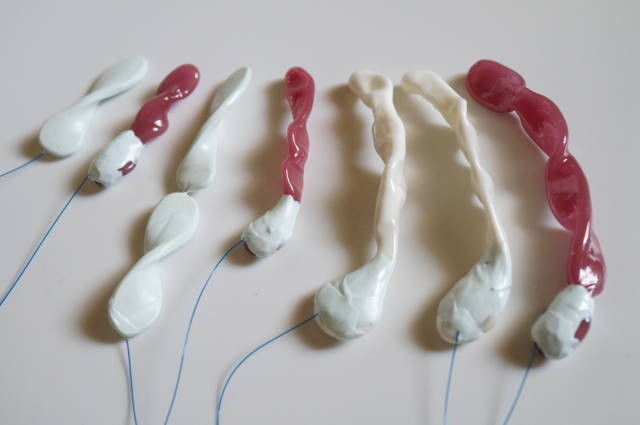
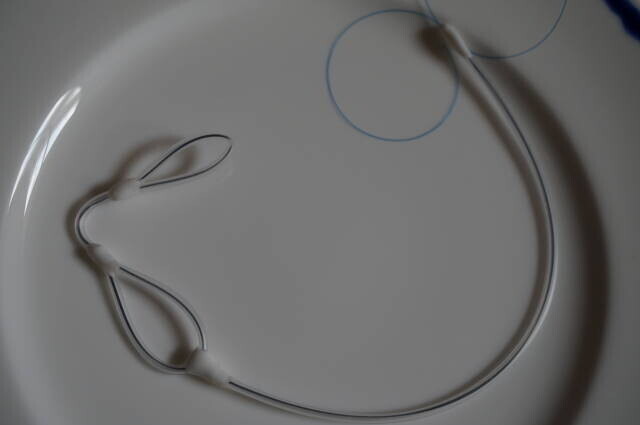
The OK Prostate Chip is a small device that is placed in the urethra (the urine passage) so that it acts on the prostate; the maker sells it in several shapes, sizes and materials. It is made and sold by OK Lab (Okada Comfortable Life Laboratory), a small company in Japan, through its own online store, and prices are in Japanese yen (JPY). The maker's development diary, "ok-lab's diary", is written in Japanese. This page is an English summary of it, and every quotation is translated. OK Lab ships internationally, so readers outside Japan can order (see "Buying from outside Japan" below). Product names on this page are plain-English descriptions. The official Japanese product name is shown once in the product table so you can find the same item in the store.
Before you read: key terms
| Term | Plain-English meaning |
|---|---|
| Urethra | The urine passage; it carries urine and is where the chip is placed. |
| Prostate | The organ the chip is intended to stimulate. The diary does not explain its normal function. |
| Urethritis, cystitis, prostatitis | Diagnostic names for inflammation of the urine passage, bladder, and prostate, respectively; they distinguish the conditions discussed. |
| Retrieval thread | A line attached to the chip, intended to help retrieve it. |
| Sphincter stopper | An additional part near the urine-control muscles, intended to limit chip movement. |
| Electrode chip | A chip connected to an electrical stimulation device, intended to deliver stimulation. |
| Endoscopy | The hospital procedure used to retrieve a trapped chip. The diary does not explain the technique. |
| Flexible urethral sound | A flexible instrument mentioned as an alternative for prostate stimulation through the urine passage. |
What happens: infection after chip use
The OK Prostate Chip is a small device placed inside the urethra to stimulate the prostate. This topic concerns inflammation or suspected infection involving the urine passage, bladder or prostate during or after use. The diary includes customers' requests for help, Mr. Okada's own tests, doctors' reported findings, and changes to parts intended to control movement. Some accounts give a diagnosis; others record symptoms and a suspected explanation without a confirmed cause.
Urethritis was diagnosed despite no bacteria being detected in November 2017
In an entry published in November 2017, Mr. Okada reported a 37.2°C fever and a diagnosis of urethritis (inflammation of the urine passage). He wrote that testing found increased white blood cells but no bacteria, and his doctor could not establish whether the chip was responsible.
He reported recovery after prescribed treatment and a later normal urine test following about 20 days of daily chip testing. Mr. Okada reports that his doctor's advice was to pause chip use until recovery.
(Source: ok-lab's diary, published November 2017)
https://ok-lab.hatenablog.com/entry/20171129/1511963864
Prostatitis followed overnight glass-chip use, fever and bleeding in June 2018
An entry published in June 2018 describes a customer seeking stronger sensations with a single glass chip and Menturm ointment. After overnight placement lasting 6–7 hours, they developed discomfort, a 39°C fever, and blood in their urine. Later examinations led to a diagnosis of acute prostatitis (prostate inflammation), with improving test results after treatment.
The customer suspected prolonged overnight use, among several possible causes. Mr. Okada added a medically knowledgeable reader's warning that ointments could greatly increase infection risk despite claims about killing germs. His added note advised against combining such ointments with chips.
(Source: ok-lab's diary, published June 2018)
https://ok-lab.hatenablog.com/entry/20180609/1528523953
Urethritis reached 39.2°C while an oversized stopper was being tested
In an entry published in June 2018, Mr. Okada reported urethritis with a fever reaching 39.2°C. He initially suspected a cleanliness problem, but his doctor raised prolonged placement of an oversized device as another possible explanation.
The doctor reportedly considered the size excessive for Mr. Okada's urethra. The entry does not record his subsequent recovery. Mr. Okada warned readers about the sudden onset and high fever he had experienced.
(Source: ok-lab's diary, published June 2018)
https://ok-lab.hatenablog.com/entry/20180623/1529741851
Urethritis during twist-chip testing prompted a warning about unsuitable size
In an entry published in August 2018, Mr. Okada described testing an oversized twist chip (Pro Twist) before supplying a similar custom design. He reported developing urethritis, and his doctor repeatedly described the device as an unsuitable foreign object for his particular urethra.
Mr. Okada emphasized that the doctor's judgment concerned his own anatomy. He advised people with ordinary-sized urethras against using that oversized model.
(Source: ok-lab's diary, published August 2018)
https://ok-lab.hatenablog.com/entry/20180804/1533366676
Suspected bladder infection followed bleeding during an electrode-chip trial
In an entry published in May 2019, a customer reported their first trial of an electrode chip (a chip connected to electrical stimulation equipment). They described bleeding during removal and pain when peeing afterward. Later symptoms resembled cystitis (bladder inflammation), according to the customer.
They reported improvement within days after taking antibiotics already at home; the account does not confirm a medical diagnosis. Mr. Okada suggested that a smaller chip might be sufficient for electrical stimulation.
(Source: ok-lab's diary, published May 2019)
https://ok-lab.hatenablog.com/entry/2019/05/25/144939
Urethral inflammation followed an unsuccessful attempt with a 10 mm motor
In an entry published in May 2020, a customer requested help after a ceramic vibrating chip's 10 mm motor section would not fit. They reported 3 days of inflammation about 1 cm toward the body from the base of the penis head. The inflammation had settled when they wrote.
Mr. Okada offered resizing for ¥1,100 (about $7 at ¥156 = $1, rate as of 2026-09-04), or an 8 mm motor replacement for ¥3,300 (about $21 at ¥156 = $1, rate as of 2026-09-04), as published in May 2020. The diary does not record whether either option was taken. He cautioned that durability could not be guaranteed after resizing.
(Source: ok-lab's diary, published May 2020)
https://ok-lab.hatenablog.com/entry/2020/05/02/131505
Prostatitis after two chip uses required repeated hospital visits
An entry published in September 2020 describes a customer who developed acute prostatitis after 2 uses of a ceramic design (Sea Slug ver. 4). They reported a continuing 39°C fever and repeated hospital visits for antibiotics given by infusion. Admission had been discussed if their test results worsened; the customer did not say they were admitted.
They wanted to stop using the chips and requested a return. Mr. Okada declined the return of used products. He also urged prompt medical attention when fever occurred.
(Source: ok-lab's diary, published September 2020)
https://ok-lab.hatenablog.com/entry/2020/09/12/093836
Infection followed hospital removal of a chip stuck in the bladder
A February 2025 entry describes a customer seeking help after a chip (Sea Slug ver. 5) slipped into their bladder. A stopper also slipped inward, an external stopper detached, and the retrieval thread (the line intended for removal) became inaccessible. Staff advised following the treating doctor's decision, and endoscopy (the hospital procedure used to retrieve the chip) succeeded.
The customer reported approximately ¥35,000 (about $224 at ¥156 = $1, rate as of 2026-09-04) in total costs, followed by bacterial infection involving removal wounds, mild fever, and fatigue. Mr. Okada warned against prolonged placement of a 2-chip device's second chip at the prostate because the front chip could slip bladderward. He emphasized that a sphincter stopper (a positioning part near the urine-control muscles) could not guarantee protection against that movement.
(Source: ok-lab's diary, published February 2025)
https://ok-lab.hatenablog.com/entry/2025/02/22/122939
Bleeding preceded fever and hospitalization in the May 2026 report
In an entry published in May 2026, a customer reported bleeding after repeated unsuccessful attempts to position a chip. 2 days later, they developed chills and a 39.4°C fever, with diagnoses of acute inflammation involving the kidney pelvis and prostate. They reported 3 days in hospital receiving antibiotics by infusion, then asked about alternatives.
Mr. Okada described wire and silicone-covered cable options but said he could not determine which product suited this customer. No later trial is recorded. He suggested a flexible urethral sound (a flexible instrument for prostate stimulation), while acknowledging that he had never tested commercially available examples.
(Source: ok-lab's diary, published May 2026)
https://ok-lab.hatenablog.com/entry/2026/05/16/122906
The maker's answer to infection after chip use
The diary records changes to shipment processing, stopper dimensions, and the intended duration of exposed-wire use.
Infection precautions changed after shipment processing caused nylon threads to shrink
In November 2017, Mr. Okada reported that high-pressure sterilization had shrunk the nylon surgical thread used as the retrieval line. The discovery required products to be remade shortly before dispatch.
He said shipment processing had changed to boiling disinfection alone. His accompanying caution concerned the thread shrinkage caused by high-pressure treatment.
(Source: ok-lab's diary, published November 2017)
https://ok-lab.hatenablog.com/entry/20171129/1511963864
Urethritis concerns led to a shorter three-hole stopper in June 2018
In June 2018, Mr. Okada revisited the perforated stopper he had been testing. It measured 17 mm long and 9 mm wide, and he recalled his doctor's concern about excessive size.
He announced a length of approximately 10 mm for the 3-hole stopper positioned before the urine-control muscles. He also suspected inadequate infection precautions around its holes, rather than identifying one confirmed cause. Mr. Okada emphasized cleanliness precautions for that perforated design.
(Source: ok-lab's diary, published June 2018)
https://ok-lab.hatenablog.com/entry/20180630/1530342059
Infection concerns ended continuous use of exposed-wire prototypes in March 2025
In March 2025, Mr. Okada reconsidered a prototype whose wire extended outside the body. He worried that contact with underwear could contaminate the exposed portion, which could subsequently move back inside the urethra.
He abandoned continuous placement for that exposed-wire design. His conclusion restricted that version to brief use.
(Source: ok-lab's diary, published March 2025)
https://ok-lab.hatenablog.com/entry/2025/03/15/122925
If you see blood in your urine, even a small amount or for the first time, do not wait and see. See a urologist right away.
If you suddenly cannot urinate, or the device cannot be removed, do not try to fix it yourself. Go to a medical facility, including emergency care, immediately.
How infection after chip use changed over time
| Published | What the diary said then |
|---|---|
| Oct 2017 | Mr. Okada reported nearly a year of chip testing without bladder or prostate inflammation. |
| Mar 2020 | He reported several yearly urology visits after starting chip tests. |
| Aug 2020 | Rubber end covers were adopted despite his infection concerns about combining materials. |
| Jun 2021 | He raised possible muscle dysfunction or mild urethritis after a customer's sudden leakage. |
| Feb 2022 | He suspected urethritis after chills, but acknowledged that the cause remained uncertain. |
| Jan 2025 | After symptoms persisted, he revised his plan and favored several days without chip use. |
| Jun 2025 | He raised bladder-infection concerns about retained urine during prototype testing. |
OK Prostate Chip products related to infection after chip use
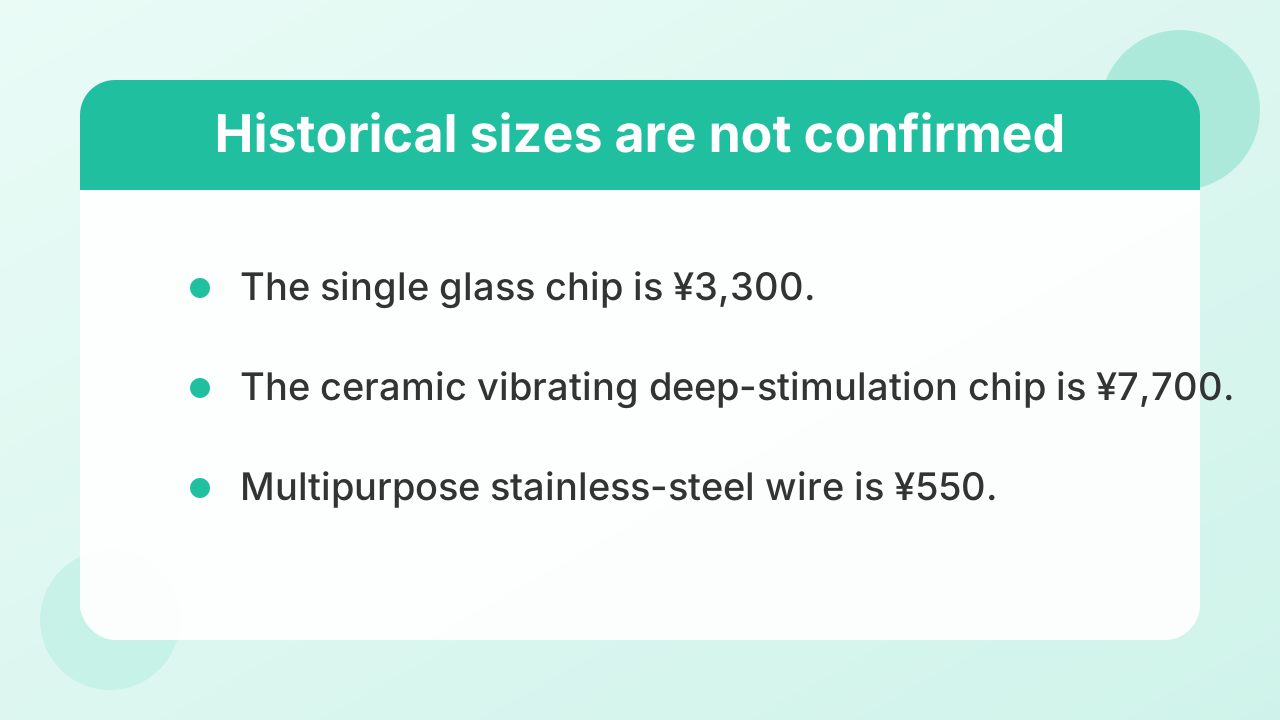
Current listings identify related products, but do not confirm historical sizes or custom configurations.
Products that appear in these entries
| Product (official name) | Price incl. tax | Relation to this topic |
|---|---|---|
| Single glass chip (OKプロステートチップ ガラス素材1チップタイプ) | ¥3,300 (about $21 at ¥156 = $1, rate as of 2026-09-04) | In June 2018, the customer reporting diagnosed prostatitis described the single-chip glass model. |
| Ceramic vibrating deep-stimulation chip (OKプロステート核振チップ 陶器素材覚醒タイプ) | ¥7,700 (about $49 at ¥156 = $1, rate as of 2026-09-04) | In May 2020, this model appeared in the customer's unsuccessful-fit and inflammation report. |
(Source: ok-lab's diary, published June 2018)
https://ok-lab.hatenablog.com/entry/20180609/1528523953
(Source: ok-lab's diary, published May 2020)
https://ok-lab.hatenablog.com/entry/2020/05/02/131505
Products the diary mentioned as alternatives
| Product (official name) | Price incl. tax | Relation to this topic |
|---|---|---|
| Multipurpose stainless-steel wire (多目的ステンレスワイヤー) | ¥550 (about $4 at ¥156 = $1, rate as of 2026-09-04) | In May 2026, Mr. Okada mentioned this for placement difficulty, without establishing its suitability for the customer who had been hospitalized. |
(Source: ok-lab's diary, published May 2026)
https://ok-lab.hatenablog.com/entry/2026/05/16/122906
The oversized twist chip, electrode build, Sea Slug versions, exposed-wire prototype, and custom cable are older or custom configurations. No matching product can be confirmed on the current list.
Common worries about infection after chip use
The reader questions concern causes, embarrassment about seeking care, and whether persistent symptoms can wait.
"Can careful hygiene prevent urethritis after chip use?"
A July 2023 entry describes a customer outside Japan seeking help after using a device bought through the online marketplace Amazon. Despite reporting careful hygiene, they developed pain after 40 minutes of unsuccessful attempts and received a urethritis diagnosis and 1 week of medication. Staff initially suspected unsuitable size, discouraged further use of that device, and recommended canceling a pending vibrating-product order.
After the customer clarified that they had chosen the smallest size, staff considered earlier inflammation among possible explanations. They acknowledged that the correspondence could not establish the cause. Staff advised following the hospital's instructions and asking the examining doctor for clarification.
(Source: ok-lab's diary, published July 2023)
https://ok-lab.hatenablog.com/entry/2023/07/08/122632
"Is embarrassment a reason to delay care for suspected bladder infection?"
In August 2020, a customer described pain after urination and a feeling that urine remained after frequent use of several chips. They suspected bladder infection and asked for help, mentioning embarrassment about attending a clinic.
Mr. Okada described urine testing, and sometimes blood testing, as ways clinicians investigated these symptoms. No follow-up confirms whether this customer attended or received a diagnosis. Mr. Okada encouraged a urology visit rather than continued worry.
(Source: ok-lab's diary, published August 2020)
https://ok-lab.hatenablog.com/entry/2020/08/08/130037
"Should bleeding and painful urination wait for suspected infection to settle?"
In August 2023, a customer reported severe pain when peeing and continuing bleeding after combining an electrode chip with another sex toy. They asked whether the symptoms would settle or required a doctor. Staff said they could not determine what was happening from the message.
The customer planned to attend, then reported that bleeding stopped after 3 days, following medicines already at home. The follow-up does not confirm a medical examination or diagnosis. Staff's advice was to seek prompt medical assessment.
(Source: ok-lab's diary, published August 2023)
https://ok-lab.hatenablog.com/entry/2023/08/05/122956
Buying from outside Japan
OK Lab ships internationally to countries covered by Japan Post's EMS courier service. Overseas orders are paid in advance by PayPal. Each order carries a ¥400 (about $3 at ¥156 = $1, rate as of 2026-09-04) handling fee, and EMS shipping is charged on top. These terms come from OK Lab's official sales-terms page (written here as plain text, not a link: ok-lab.net/docs/law), checked on September 7, 2026; confirm them on the official store before you order, because they can change.
Summary of this article
| What you wanted to know | The answer |
|---|---|
| What is the short answer? | The diary includes illness requiring hospital treatment. |
| What is the product? | A urethral device made by OK Lab in Japan. |
| What do the terms mean? | They distinguish affected organs, diagnoses, and device parts. |
| What happened in the cases? | Outcomes ranged from reported recovery to hospital procedures and admission. |
| What did the maker change? | Shipment processing, stopper dimensions, and exposed-wire use limits. |
| How did the account develop? | Later entries added problems, design changes, and cautions. |
| Which products relate to these reports? | The tables distinguish current listings from older configurations. |
| What worried customers? | Hygiene, symptoms, seeking care, and whether to continue. |
| How do overseas purchases work? | Advance PayPal payment, a handling fee, and additional EMS shipping. |
Source: ok-lab's diary (Okada Comfortable Life Laboratory). The original entries are in Japanese; quotations on this page are translated. Photos and videos are on the original entries.
This article is a summary of the maker's development diary. The product is not a medical device and no result is guaranteed. If anything feels wrong or worries you, see a doctor. Prices, specifications and cautions change, so confirm the latest information on the official blog and the official site. Questions about ordering and shipping go to the seller.