![Bleeding after use? | The maker suspects friction; blood needs medical attention [OK Prostate Chip]](/img/a/T0336/eyecatch.svg)
This page is based on entries from "ok-lab's diary" (https://ok-lab.hatenablog.com/), the Japanese development diary written by Mr. Okada, founder of OK Lab, a small company in Japan (Okada Comfortable Life Laboratory). Only the entries about "bleeding after use" are summarized here, in order of publication. Past prices and sizes are as written at the time. Current prices come from the official product list (retrieved September 4, 2026). Quotations are translated from Japanese.
Note: This page is a personal reading log by someone with no connection to the maker or the seller. It reflects the source entries as of their publication dates and makes no guarantee of accuracy or safety. The product is not a medical device; talk to a doctor about any health decision. Check the official site for current information. This page contains advertising.
In short
The diary records bleeding, injuries, and hospital treatment after chip use.
Mr. Okada suspects friction (rubbing against tissue) and force, but also acknowledges possible cuts and infection.
Current products include models involved in complaints; the material records another hospitalization in May 2026.
If you see blood in your urine, even a small amount or for the first time, do not wait and see. See a urologist right away. If you suddenly cannot urinate, or the device cannot be removed, do not try to fix it yourself. Go to a medical facility, including emergency care, immediately.
About this product
The OK Prostate Chip is a small device that is placed in the urethra (the urine passage) so that it acts on the prostate; the maker sells it in several shapes, sizes and materials. It is made and sold by OK Lab (Okada Comfortable Life Laboratory), a small company in Japan, through its own online store, and prices are in Japanese yen (JPY). The maker's development diary, "ok-lab's diary", is written in Japanese. This page is an English summary of it, and every quotation is translated. OK Lab ships internationally, so readers outside Japan can order (see "Buying from outside Japan" below). Product names on this page are plain-English descriptions. The official Japanese product name is shown once in the product table so you can find the same item in the store.
Before you read: key terms
| Term | Plain-English meaning |
|---|---|
| Urethra | The urine passage, which carries urine and is where the chip is placed. |
| Friction | Rubbing between surfaces; here, contact between the device and tissue during movement. |
| Epoxy resin | Hardening material used to form chips and attach parts. |
| Urinary sphincter | A muscle around the urine passage that controls urine flow. |
| Urologist | A doctor consulted for urinary bleeding, pain, or a trapped chip. |
| Retrieval thread | Thread attached to a chip for removal. |
| Auxiliary screw chip | A screw-shaped extra part intended to maintain positioning. |
| Stopper | An added part intended to limit inward movement of the chip or thread. |
| Endoscopic removal | A medical retrieval procedure. The diary does not explain this. |
| Electrode chip | A chip intended to provide electrical stimulation. |
What happens: bleeding after use
The OK Prostate Chip is a small device placed inside the urethra to stimulate the prostate. This topic concerns blood noticed during use, afterward in urine or semen, or on the device itself. Mr. Okada repeatedly discusses friction (rubbing between surfaces), force, and contact with the lining of the urine passage. The entries also describe trapped devices, damaged parts, and infections; his explanation varies with the report.
Bleeding after use appeared during early tests with oversized chips
In an entry published in October 2017, Mr. Okada reported urethral tears while testing oversized chips. He could not wear a chip for several days during recovery.
In a later October 2017 entry, he warned that forcing a chip against friction could produce pain afterward. Mr. Okada advised against using scratched chips.
(Source: ok-lab's diary, published October 2017)
https://ok-lab.hatenablog.com/entry/20171004/1507126713
(Source: ok-lab's diary, published October 2017)
https://ok-lab.hatenablog.com/entry/20171019/1508375473
Bleeding after use delayed an anal prototype's planned launch indefinitely
In an entry published in October 2018, Mr. Okada reported bleeding after forceful removal of an anal prototype worn for over 12 hours. The bleeding in this case was rectal. He postponed sales indefinitely while the cause remained unresolved.
In a later October 2018 entry, he attributed the first episode to forceful dry removal and a second episode to exposed wire. He reported no further bleeding that week. His warning concerned forceful friction against dry tissue.
(Source: ok-lab's diary, published October 2018)
https://ok-lab.hatenablog.com/entry/20181013/1539409481
(Source: ok-lab's diary, published October 2018)
https://ok-lab.hatenablog.com/entry/20181020/1540018080
Urethral injury after use prompted medical advice against rough ceramic chips
In an entry published in June 2019, Mr. Okada reported a 37.5°C fever after testing a rough ceramic chip. He wrote that a urologist diagnosed urethral injury.
The doctor examined the chip and told him to stop using it. Mr. Okada also warned others against copying this dangerous test.
(Source: ok-lab's diary, published June 2019)
https://ok-lab.hatenablog.com/entry/2019/06/15/144142
Bleeding after use led to a refund offer for ceramic damage
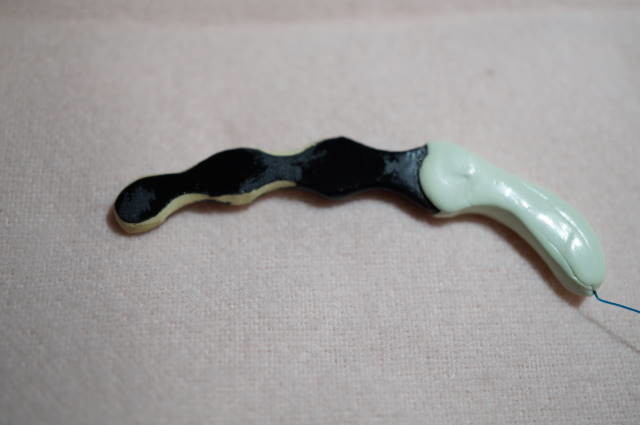
An entry published in October 2019 records a complaint about a long ceramic chip with a curved tail. The customer reported raised epoxy resin (an adhesive attaching parts) catching near a urinary sphincter (a muscle controlling urine flow). Bleeding followed further force, and the ceramic later broke during an attempted repair.
They requested a replacement without the raised resin. Mr. Okada questioned their explanation and could not supply the requested replacement. He offered a refund; the diary does not record whether the customer accepted it.
(Source: ok-lab's diary, published October 2019)
https://ok-lab.hatenablog.com/entry/2019/10/05/141806
Continuing bleeding after use raised concern about tissue trapped between chips
In an entry published in May 2021, a customer reported bleeding with a sea-slug-shaped custom chip and several attached parts. They described repeated repositioning, blood covering the assembly, and bleeding that resumed after apparently stopping.
Mr. Okada suspected tissue trapped between chips had been cut, explaining why bleeding continued. The diary does not record the customer's recovery. Mr. Okada cautioned against forcing a chip that had stopped advancing.
(Source: ok-lab's diary, published May 2021)
https://ok-lab.hatenablog.com/entry/2021/05/29/125928
A chip stuck backward required hospital removal despite accessible threads
In an entry published in August 2022, a small Zorro chip and auxiliary screw chip (an extra positioning part) became trapped. A doctor reportedly found the main chip reversed 180 degrees; repeated pulling had worsened inflammation. Endoscopic removal (a hospital retrieval procedure) succeeded, and the customer's billed share was approximately ¥23,000 (about $147 at ¥156 = $1, rate as of 2026-09-04).
The customer later decided to stop using chips. Mr. Okada proposed improving the connection design. He endorsed the customer's prompt decision to seek emergency care.
(Source: ok-lab's diary, published August 2022)
https://ok-lab.hatenablog.com/entry/2022/08/27/123001
A chip stuck despite zero spacing also caused bleeding
In an entry published in January 2023, a customer reported a long Zorro chip becoming stuck despite a 0 mm connection. Forceful pulling caused pain and bleeding, they reported; by day 3, sensations around the chip had changed. The report later describes removal, 2 days of high fever, and recovery.
Mr. Okada suspected the large auxiliary screw had turned sideways and trapped the retrieval thread (the thread attached for removal). The diary does not record a confirmed cause. Mr. Okada cautioned against trying to rush a stuck chip's removal.
(Source: ok-lab's diary, published January 2023)
https://ok-lab.hatenablog.com/entry/2023/01/07/123115
A chip stuck inside the bladder led to surgery and infection
In an entry published in February 2025, a customer's sea-slug-shaped chip, stopper (an inward-travel barrier), and thread reportedly slipped into the bladder. They asked about avoiding their scheduled operation. OK Lab's staff could not suggest a reliable self-retrieval method and supported following the doctor's plan.
The customer later reported successful removal, a ¥25,000 (about $160 at ¥156 = $1, rate as of 2026-09-04) operation charge, and total costs of about ¥35,000 (about $224 at ¥156 = $1, rate as of 2026-09-04). They reported infection after the removal injury, with mild fever and fatigue. Mr. Okada emphasized that a stopper does not guarantee protection against a chip slipping into the bladder.
(Source: ok-lab's diary, published February 2025)
https://ok-lab.hatenablog.com/entry/2025/02/22/122939
Bleeding after use preceded fever and hospitalization in the latest report
In an entry published in May 2026, a 65-year-old customer described repeated unsuccessful attempts to position a chip. Bleeding followed; 2 days later, chills developed, and their temperature reached 39.4°C. They reported acute inflammation of the kidney's urine-collecting area and prostate, 3 days in hospital, and discharge after treatment.
Afterward, they asked about another product or stopping chip use. Mr. Okada suggested other devices but said he could not determine what suited this customer. He cautioned that he could not properly advise on another company's flexible devices he had never tried.
(Source: ok-lab's diary, published May 2026)
https://ok-lab.hatenablog.com/entry/2026/05/16/122906
The maker's answer to bleeding after use
Mr. Okada's explanations focus on surface defects, force, and prolonged friction.
Bleeding after use prompted questions about homemade chip surfaces and size
An entry published in March 2019 contains a beginner's question after bleeding with a homemade resin chip. They had made an aluminum replacement and wanted advice for beginners.
Mr. Okada identified three possibilities: a raised surface defect, excessive friction from the material, or a chip that was too large. The diary does not record whether the replacement was used successfully. His advice emphasized surface condition before further use.
(Source: ok-lab's diary, published March 2019)
https://ok-lab.hatenablog.com/entry/2019/03/30/160657
Bleeding after use brought a warning about force in either direction
In an entry published in January 2020, a customer reported pink bleeding after first use of an unnamed chip. Mr. Okada attributed this to force during insertion or removal. His reply discussed lubrication and removal timing, but the diary does not record the customer's subsequent condition. His advice was to avoid force when a chip resisted movement.
(Source: ok-lab's diary, published January 2020)
https://ok-lab.hatenablog.com/entry/2020/01/18/132849
Bleeding after use led the maker to question prolonged friction
An entry published in February 2020 records a customer's question about blood in semen and lingering urinary pain. The customer suspected the retrieval thread after repeated position adjustments.
Mr. Okada said he had not personally experienced thread-related bleeding and could not rule it out. He believed friction was the more likely explanation, with larger chips creating more friction in his experience. His advice was to limit prolonged, continuous friction with larger chips.
(Source: ok-lab's diary, published February 2020)
https://ok-lab.hatenablog.com/entry/2020/02/22/145216
Bleeding after use led Mr. Okada back to looped wire tips
In an entry published in April 2026, Mr. Okada reconsidered bleeding during retrieval-prototype tests. He suspected a 0.4 mm wire tip might have penetrated its rubber covering.
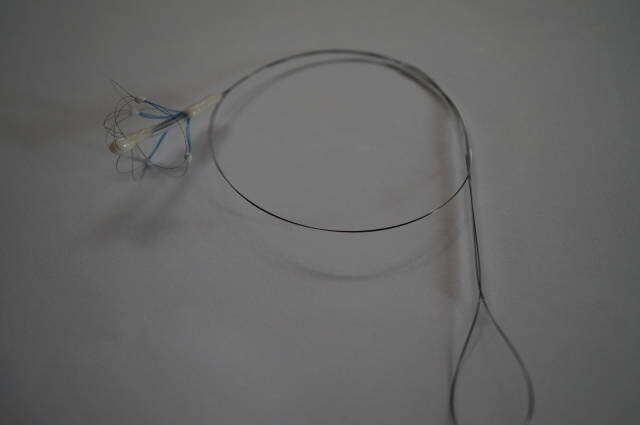
The revised prototype had a doubled 0.15 mm wire shaft and a 0.05 mm wire net. The diary does not record a successful customer retrieval with this version. Mr. Okada's stated design precaution was to restore looped wire tips.
(Source: ok-lab's diary, published April 2026)
https://ok-lab.hatenablog.com/entry/2026/04/25/122914
If you see blood in your urine, even a small amount or for the first time, do not wait and see. See a urologist right away. If you suddenly cannot urinate, or the device cannot be removed, do not try to fix it yourself. Go to a medical facility, including emergency care, immediately.
How bleeding after use changed over time
| Published | What the diary said then |
|---|---|
| Oct 2017 | Mr. Okada warned that lubrication could wash away during urination. |
| Jan 2018 | Mr. Okada discouraged resin polishing because he believed it introduced microscopic scratches. |
| Nov 2019 | Mr. Okada suspected pressure injury after bleeding with a sharply curved connected chip. |
| Jun 2021 | A new connection allowed thread movement; Mr. Okada said this eliminated its sharp feel. |
| Sep 2025 | A custom chip's flexible attachment fractured; the customer reported discomfort and bleeding. |
| Jan 2026 | Mr. Okada reported slight bleeding while testing an experimental flexible chip. |
OK Prostate Chip products related to bleeding after use
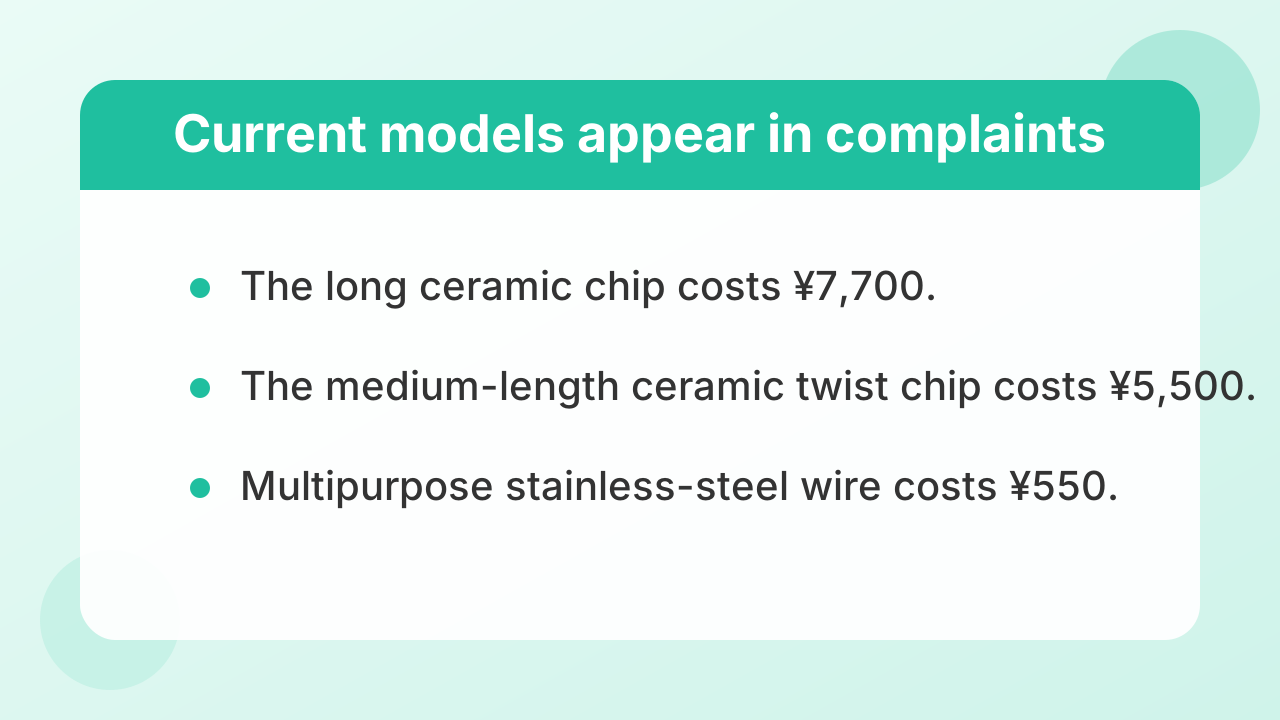
The current list includes models involved in complaints and a wire mentioned as an alternative.
Products that appear in these entries
| Product (official name) | Price incl. tax | Relation to this topic |
|---|---|---|
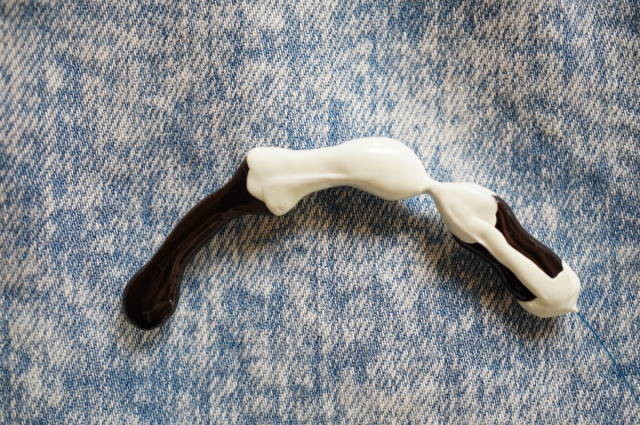
| Long ceramic chip with a curved tail (OKプロステートチップ 陶器素材ロング勾玉タイプ) | ¥7,700 (about $49 at ¥156 = $1, rate as of 2026-09-04) | In October 2019, this model featured in the bleeding complaint that prompted a refund offer. |
| Medium-length ceramic twist chip (OKプロステートチップ 陶器素材セミロングタイプ コブラツイスト) | ¥5,500 (about $35 at ¥156 = $1, rate as of 2026-09-04) | In October 2020, a customer reported a blood clot while using this model with a homemade stopper. |
(Source: ok-lab's diary, published October 2019)
https://ok-lab.hatenablog.com/entry/2019/10/05/141806
(Source: ok-lab's diary, published October 2020)
https://ok-lab.hatenablog.com/entry/2020/10/17/121023
Products the diary mentioned as alternatives
| Product (official name) | Price incl. tax | Relation to this topic |
|---|---|---|
| Multipurpose stainless-steel wire (多目的ステンレスワイヤー) | ¥550 (about $4 at ¥156 = $1, rate as of 2026-09-04) | In May 2026, Mr. Okada mentioned this alternative to manual positioning but could not determine what suited the hospitalized customer. |
(Source: ok-lab's diary, published May 2026)
https://ok-lab.hatenablog.com/entry/2026/05/16/122906
Historical items include oversized test chips, rough ceramic, anal prototypes, curved connected chips, sea-slug customs, Zorro assemblies, and retrieval or flexible prototypes. No matching product can be confirmed on the current list.
Common worries about bleeding after use
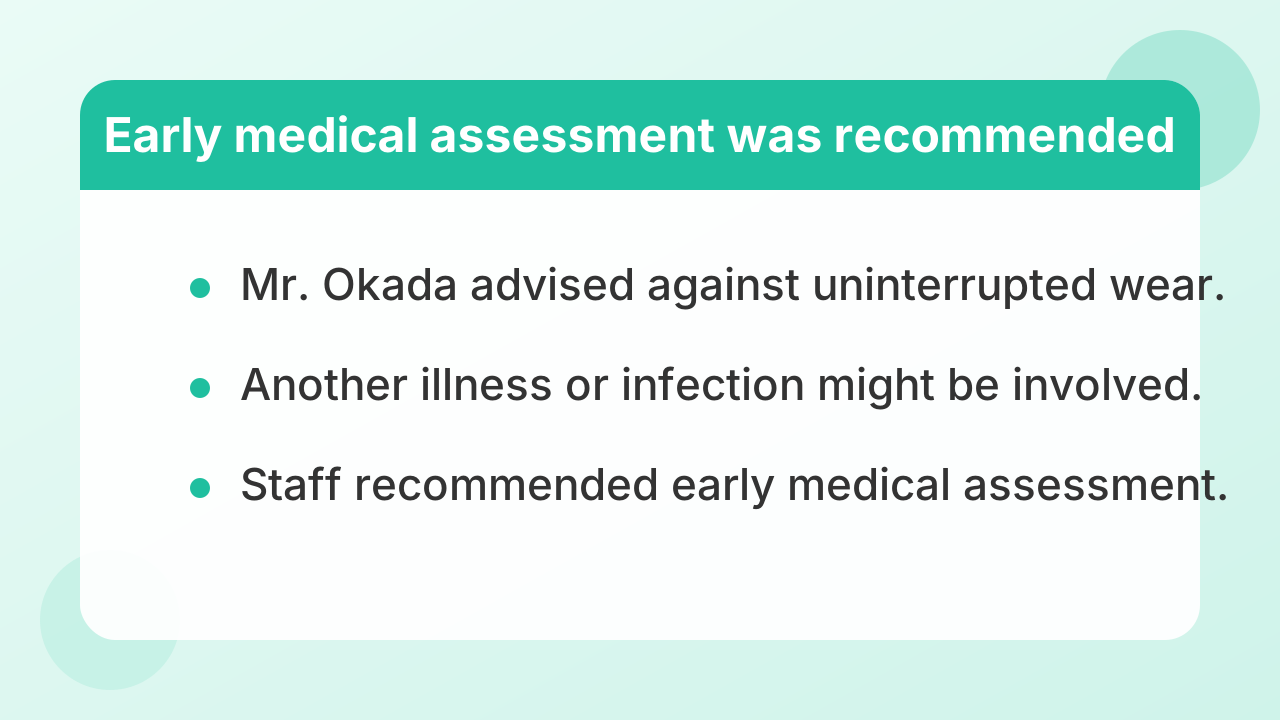
The questions concern wear limits, possible causes, and whether medical assessment is needed.
"Can bleeding after use reveal the limit for continuous wear?"
In an entry published in March 2018, a customer asked how to recognize the continuous-wear limit for a resin chip pair. They reported blood in urine the afternoon after beginning use around noon the previous day.
Mr. Okada said no external sign established that limit. He suspected prolonged contact with dry tissue, while admitting he lacked comparable personal experience with extended resin-chip wear. His advice was to avoid uninterrupted wear and allow time without the device.
(Source: ok-lab's diary, published March 2018)
https://ok-lab.hatenablog.com/entry/20180324/1521875816
"Could blood clots after chip use mean another illness?"
In an entry published in October 2020, a customer asked how long to rest after passing a clot. They had used a medium-length ceramic twist chip with a homemade stopper. A later urine test found blood and white blood cells.
Mr. Okada said clots differed from the friction bleeding he recognized, and another illness or infection might be involved. The diary does not record a medical diagnosis or recovery. Mr. Okada advised seeing a urologist, since rest alone might not address an infection.
(Source: ok-lab's diary, published October 2020)
https://ok-lab.hatenablog.com/entry/2020/10/17/121023
"Will bleeding after use stop without a doctor's visit?"
In an entry published in August 2023, a customer asked whether persistent bleeding required a doctor. They reported severe urinary pain after vigorous dildo use with an electrode chip (a chip for electrical stimulation) still in place.
Bleeding continued for 3 days, then stopped on the morning they had planned to seek care. The diary does not record whether that visit happened. OK Lab's staff said the information was insufficient to judge the problem and recommended early medical assessment.
(Source: ok-lab's diary, published August 2023)
https://ok-lab.hatenablog.com/entry/2023/08/05/122956
Buying from outside Japan
OK Lab ships internationally to countries covered by Japan Post's EMS courier service. Overseas orders are paid in advance by PayPal. Each order carries a ¥400 (about $3 at ¥156 = $1, rate as of 2026-09-04) handling fee, and EMS shipping is charged on top. These terms come from OK Lab's official sales-terms page (written here as plain text, not a link: ok-lab.net/docs/law), checked on September 7, 2026; confirm them on the official store before you order, because they can change.
Summary of this article
| What you wanted to know | The answer |
|---|---|
| The short answer | Friction is the maker's hypothesis; injuries and infections also appear. |
| About the product | A urethral device from Japan intended for prostate stimulation. |
| Key terms | Parts, anatomy, and medical retrieval terminology. |
| What happens | Reports include injuries, trapped devices, and hospitalization. |
| The maker's answer | His replies address surfaces, force, and prolonged friction. |
| Changes over time | Further incidents accompanied connection and prototype changes. |
| Related products | Two ceramic models and a proposed wire alternative. |
| Common worries | Wear limits, clots, and medical assessment. |
| Overseas purchases | Advance PayPal payment, EMS shipping, and the stated ¥400 (about $3 at ¥156 = $1, rate as of 2026-09-04) handling fee. |
Source: ok-lab's diary (Okada Comfortable Life Laboratory). The original entries are in Japanese; quotations on this page are translated. Photos and videos are on the original entries.
This article is a summary of the maker's development diary. The product is not a medical device and no result is guaranteed. If anything feels wrong or worries you, see a doctor. Prices, specifications and cautions change, so confirm the latest information on the official blog and the official site. Questions about ordering and shipping go to the seller.