![Can I change USB controllers? | Yes, but compatibility has limits [OK Prostate Chip]](/img/a/T0257/eyecatch.svg)
This page is based on entries from "ok-lab's diary" (https://ok-lab.hatenablog.com/), the Japanese development diary written by Mr. Okada, founder of OK Lab, a small company in Japan (Okada Comfortable Life Laboratory). Only the entries about "USB connections and changing controllers" are summarized here, in order of publication. Past prices and sizes are as written at the time. Current prices come from the official product list (retrieved September 4, 2026). Quotations are translated from Japanese.
Note: This page is a personal reading log by someone with no connection to the maker or the seller. It reflects the source entries as of their publication dates and makes no guarantee of accuracy or safety. The product is not a medical device; talk to a doctor about any health decision. Check the official site for current information. This page contains advertising.
In short
USB fittings allow controller changes, but matching connectors do not guarantee that a motor will work.
Mr. Okada offered cable corrections and special connectors to address specific problems.
USB fitting work remains on the current list; several historical controller versions and custom assemblies have no confirmed match.
About this product
The OK Prostate Chip is a small device that is placed in the urethra (the urine passage) so that it acts on the prostate; the maker sells it in several shapes, sizes and materials. It is made and sold by OK Lab (Okada Comfortable Life Laboratory), a small company in Japan, through its own online store, and prices are in Japanese yen (JPY).
The maker's development diary, "ok-lab's diary", is written in Japanese. This page is an English summary of it, and every quotation is translated. OK Lab ships internationally, so readers outside Japan can order (see "Buying from outside Japan" below).
Product names on this page are plain-English descriptions. The official Japanese product name is shown once in the product table so you can find the same item in the store.
Before you read: key terms
| Term | Plain-English meaning |
|---|---|
| Urethra | The urine passage; the chip sits within it to act on the prostate. |
| USB connector | A detachable cable fitting used to link the vibrating chip with a controller or power supply. |
| Mini plug | The maker's earlier small cable connector, intended for changing controllers. |
| Controller | A box that supplies and controls power for the vibration motor. |
| Bluetooth controller | The diary's controller operated through a phone app, used to control vibration. |
| Polarity | The positive and negative electrical connections; their arrangement determines whether the discussed motor runs. |
| Boil-resistant USB connector | The maker's special fitting intended to tolerate boiling heat while allowing separation from the controller. |
| Electrode | An electrically connected part intended to provide electrical stimulation. |
| Snap-button connection | A small detachable electrical contact used as an alternative cable ending for electrodes. |
| Splitter cable | A cable that divides one controller's output between two vibrating chips. |
What happens: USB controller compatibility
The OK Prostate Chip is a small device placed in the urethra to act on the prostate. Its vibrating versions receive power through a cable from a controller (a box that supplies and controls motor power). USB connectors (detachable cable fittings) allow different controllers to serve the same chip. The connector sits outside the body, between the chip's cable and its controller or power source.
Mini plugs allowed controller swaps without replacing the vibrating chip
In an entry published in August 2019, Mr. Okada introduced mini plugs (small detachable cable connectors) for changing controllers. Reinforced drone connectors reduced the handwork, which he said halved the plug price. Planned charges were ¥1,000 (about $6 at ¥156 = $1, rate as of 2026-09-04) excluding tax on the chip side and ¥1,000 (about $6 at ¥156 = $1, rate as of 2026-09-04) excluding tax on the controller or battery-box side.
Future controller choices would no longer require another chip, according to Mr. Okada. He proposed the plug option for owners wanting separate chip and controller purchases.
(Source: ok-lab's diary, published August 2019)
https://ok-lab.hatenablog.com/entry/2019/08/03/145816
USB connections became cheaper than mini plugs in November 2019
In an entry published in November 2019, the USB option cost ¥500 (about $3 at ¥156 = $1, rate as of 2026-09-04) excluding tax and replaced the supplied controller. A later November 2019 entry quoted ¥500 (about $3 at ¥156 = $1, rate as of 2026-09-04) per end, or ¥1,000 (about $6 at ¥156 = $1, rate as of 2026-09-04) per pair, excluding tax, for fittings on OK Lab's cables. It also quoted ¥1,000 (about $6 at ¥156 = $1, rate as of 2026-09-04) excluding tax for converting an existing vibrating chip, while new-chip USB fittings became free without the standard controller.
USB required no exterior shaping, which Mr. Okada said made it half the mini-plug price. Mr. Okada therefore recommended USB connections for future orders.
(Source: ok-lab's diary, published November 2019)
https://ok-lab.hatenablog.com/entry/2019/11/23/162919
(Source: ok-lab's diary, published November 2019)
https://ok-lab.hatenablog.com/entry/2019/11/30/164020
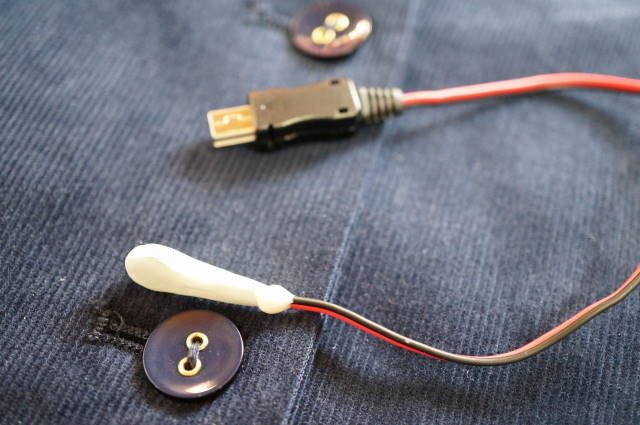
USB rechargeable controllers required a chip fitted with a connector
In an entry published in December 2019, Mr. Okada introduced a 4.5V USB rechargeable controller. With its USB socket, it cost ¥2,500 (about $16 at ¥156 = $1, rate as of 2026-09-04) excluding tax; uncertain parts supplies meant initial sales were by custom order. The diary reported charging times of 60–90 minutes.
Reported running times were 5 hours with an 8mm motor and 3 hours with a 10mm motor. Direct connection without USB was not offered for this controller. Mr. Okada specified a USB-equipped vibrating chip for anyone ordering it.
(Source: ok-lab's diary, published December 2019)
https://ok-lab.hatenablog.com/entry/2019/12/07/162608
Bluetooth USB controllers supported only the 8mm motor in January 2022
In an entry published in January 2022, a customer requested a separate Bluetooth controller (a controller operated through a phone app). Mr. Okada initially requested time, then changed his plan to offer controllers separately. His tests supported only the 8mm motor; the 10mm motor did not run but remained undamaged.
The 6mm motor broke when connected, and Mr. Okada said he did not know why. The diary does not record whether that customer's purchase was completed. Mr. Okada warned against that 6mm combination.
(Source: ok-lab's diary, published January 2022)
https://ok-lab.hatenablog.com/entry/2022/01/22/123342
Snap-button connections replaced bulky USB plans for fine cables in August 2023
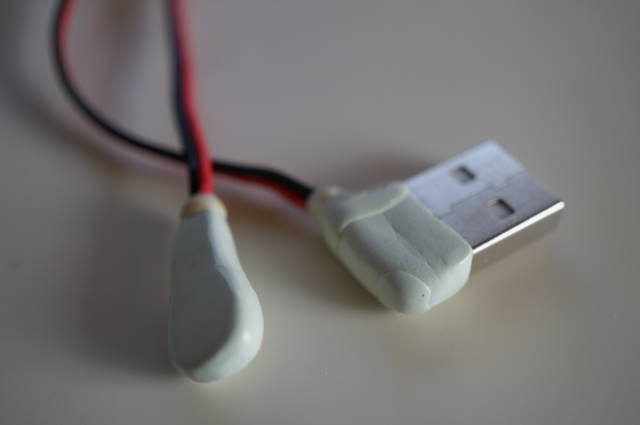
An entry published in August 2023 proposed fine wires twisted with nylon thread for vibrating chips and electrodes (parts providing electrical stimulation). That design required a waterproof USB connector at the cable end and added ¥4,000 (about $26 at ¥156 = $1, rate as of 2026-09-04) excluding tax to the existing chip price. Mr. Okada lacked long-term test results and thought electrical failure might occur sooner than with the older cable.
A later August 2023 entry said the USB connector felt disproportionately large beside the fine cable. Mr. Okada switched the stainless-steel electrode plan to snap-button connections (small detachable electrical contacts), leaving sales of the USB arrangement undecided. He favored snap buttons for that thin cable.
(Source: ok-lab's diary, published August 2023)
https://ok-lab.hatenablog.com/entry/2023/08/19/123214
(Source: ok-lab's diary, published August 2023)
https://ok-lab.hatenablog.com/entry/2023/08/26/122534
Boil-resistant USB connections separated an electrode from its ordinary plug in May 2026
An entry published in May 2026 concerned an electrode customer worried about cable breakage. Staff rejected the requested loop made from power cables, saying that structure strained them. They proposed a separate silicone-covered wire loop for holding the chip in place, and Mr. Okada made an electrode version.
Mr. Okada had no boil-resistant electrode plug, so his build placed a heat-tolerant USB connector before a separate plug. He thought the design reduced cable strain; the diary records no customer durability report. The maker recommended the separate wire-loop structure for this request.
(Source: ok-lab's diary, published May 2026)
https://ok-lab.hatenablog.com/entry/2026/05/16/122906
The maker's answer to USB controller compatibility
The maker addressed shared power, incorrect wiring, and heat damage with different cable designs and services.
USB splitter cables let one controller power two vibrating chips
An entry published in December 2019 introduced a splitter cable (a cable dividing one controller's output between two vibrating chips). It used three Type-A USB connectors and cost ¥1,500 (about $10 at ¥156 = $1, rate as of 2026-09-04) excluding tax.
The diary said both chips operated together, while each branch remained detachable. Mr. Okada favored Type-A connections because he found them easier to handle than mini USB.
(Source: ok-lab's diary, published December 2019)
https://ok-lab.hatenablog.com/entry/2019/12/07/162608
USB motor failures prompted correction of previously supplied controller cables
In an entry published in February 2020, Mr. Okada found that a new motor would not run with reversed polarity (swapped positive and negative connections). Older motors had worked either way, so some previously shipped USB controller cables might have been wired backwards. Mr. Okada said new motor shipments received an operating test before dispatch.
The diary does not record how many earlier cables were affected. Mr. Okada asked affected customers to return only the white controller-side connector cable for correction.
(Source: ok-lab's diary, published February 2020)
https://ok-lab.hatenablog.com/entry/2020/02/22/145216
Boil-resistant USB connectors addressed plastic deformation without a safety guarantee
In an entry published in January 2022, Mr. Okada reported deformation of ordinary USB plastic covers after prolonged exposure to 100°C water. His prototype used a protective resin covering at the cable joint and cost ¥1,000 (about $6 at ¥156 = $1, rate as of 2026-09-04) excluding tax. He also reported that separately tested metal and internal plastic parts showed no deformation at 120°C.
The diary explicitly offered no durability or safety guarantee for the connector. Mr. Okada proposed this special USB fitting for the heat problem affecting ordinary covers.
(Source: ok-lab's diary, published January 2022)
https://ok-lab.hatenablog.com/entry/2022/01/15/124252
How USB controller compatibility changed over time
| Published | What the diary said then |
|---|---|
| Aug 2019 | Mini plugs made one vibrating chip usable with different controllers. |
| Nov 2019 | R-1 compatibility plans paused because its dedicated cable was required. |
| Nov 2019 | New-chip USB fittings became free when the standard controller was omitted. |
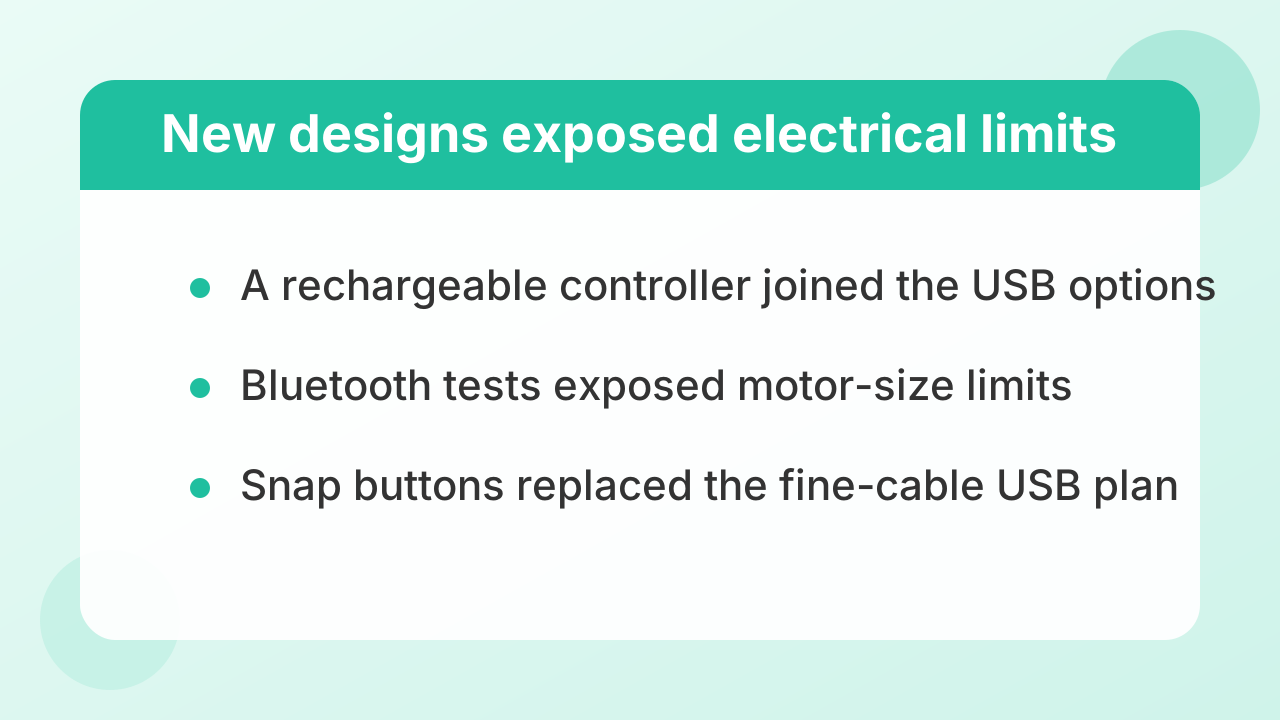
| Dec 2019 | A rechargeable controller joined the USB options. |
| Feb 2020 | Reversed wiring could stop the new motor despite a matching USB connector. |
| Jan 2022 | Heat deformation prompted a specially covered USB connector. |
| Jan 2022 | Bluetooth tests exposed motor-size limits, including damage to the smallest tested motor. |
| Aug 2023 | Fine-cable plans required a waterproof USB termination. |
| Aug 2023 | Snap buttons replaced the fine-cable USB plan; selling that USB arrangement remained undecided. |
| May 2026 | An electrode used heat-tolerant USB between its cable and an ordinary plug. |
OK Prostate Chip products related to USB controller compatibility
The current list confirms USB fitting work and the base chip below, without confirming every historical custom specification.
Products that appear in these entries
| Product (official name) | Price incl. tax | Relation to this topic |
|---|---|---|
| USB connector fitting (USB端子付け加工(核振チップオプション)) | ¥550 (about $4 at ¥156 = $1, rate as of 2026-09-04) | In January 2020, this option appeared in the order that prompted a chip-side fitting refund. |
| Medium-length ceramic vibrating chip (OKプロステート核振チップ 陶器素材セミロングタイプ) | ¥6,600 (about $42 at ¥156 = $1, rate as of 2026-09-04) | In January 2020, a customer ordered this chip with USB connections for a rechargeable controller. |
USB connector fitting is listed in OK Lab's own online store.
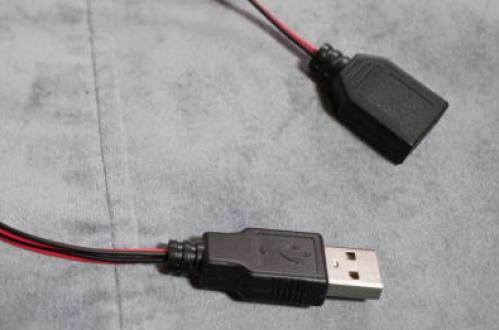
(Source: ok-lab's diary, published January 2020)
https://ok-lab.hatenablog.com/entry/2020/01/25/150127
Products the diary mentioned as alternatives
The diary names no alternative.
Historical mini plugs, special USB connectors, splitter cables, rechargeable and Bluetooth controller versions, fine-cable assemblies, and the May 2026 custom electrode:
No matching product can be confirmed on the current list.
Common worries about USB controller compatibility
The diary's replies depended on the existing chip, controller, and cable.
"Will USB connections make my R-1 controller compatible?"
In an entry published in November 2019, a customer wanted a vibrating chip to work with the RENDS R-1 controller. The corrected entry paused the planned compatible-product launch because operation required its dedicated cable. In a later November 2019 entry, Mr. Okada reported success with a prototype retaining the cable's parts that identify the attachment.
His test ran for 4 hours without reported problems, and the customer's order then entered production. The diary does not record that customer's experience with the completed setup. Mr. Okada advised that the dedicated attachment cable was needed alongside the controller.
(Source: ok-lab's diary, published November 2019)
https://ok-lab.hatenablog.com/entry/2019/11/23/162919
(Source: ok-lab's diary, published November 2019)
https://ok-lab.hatenablog.com/entry/2019/11/30/164020
"Do USB fittings cost extra on a new chip?"
In an entry published in January 2020, a customer ordering a medium-length ceramic vibrating chip paid for USB work on both sides. Mr. Okada's reply said the new chip's connector was free because it replaced the usual controller connection. Only the controller-side USB charge applied, and a ¥550 (about $4 at ¥156 = $1, rate as of 2026-09-04) refund was announced.
The diary does not record whether the refund was completed. Mr. Okada advised paying only for the controller-side USB fitting on that new-chip order.
(Source: ok-lab's diary, published January 2020)
https://ok-lab.hatenablog.com/entry/2020/01/25/150127
"Can USB power support remote control of the vibrating chip?"
In an entry published in November 2021, a customer proposed remote switching through a phone-controlled electrical outlet. Mr. Okada described compatibility between a 100V–5V power adapter's USB-A socket and the vibrating chip's USB-A plug. His answer concerned power supplied through the adapter.
The entry references an order but does not record a completed remote-control test. Mr. Okada cautioned that changing the adapter's input voltage would not adjust vibration strength.
(Source: ok-lab's diary, published November 2021)
https://ok-lab.hatenablog.com/entry/2021/11/06/125812
Buying from outside Japan
OK Lab ships internationally to countries covered by Japan Post's EMS courier service. Overseas orders are paid in advance by PayPal.
Each order carries a ¥400 (about $3 at ¥156 = $1, rate as of 2026-09-04) handling fee, and EMS shipping is charged on top. These terms come from OK Lab's official sales-terms page (written here as plain text, not a link: ok-lab.net/docs/law), checked on September 7, 2026; confirm them on the official store before you order, because they can change.
Summary of this article
| What you wanted to know | The answer |
|---|---|
| What is the short answer? | Controllers can be interchangeable, with specific compatibility limits. |
| What is the product? | A urethral device made by a small company in Japan. |
| What do the connector terms mean? | They describe cable fittings, power controls, and electrical connections. |
| What happened as connectors changed? | Mini plugs led to USB options, followed by specialized fittings and snap buttons. |
| What measures did the maker offer? | Splitter cables, wiring corrections, and a heat-tolerant connector. |
| How did the approach change over time? | New designs exposed electrical limits and practical problems with connector size and heat. |
| Which related products are listed today? | USB fitting work and the medium-length ceramic vibrating chip. |
| What did customer questions establish? | Dedicated cables, order details, and power arrangements mattered. |
| How are overseas purchases handled? | Advance PayPal payment, EMS shipping, and a handling fee. |
Source: ok-lab's diary (Okada Comfortable Life Laboratory). The original entries are in Japanese; quotations on this page are translated. Photos and videos are on the original entries.
This article is a summary of the maker's development diary. The product is not a medical device and no result is guaranteed. If anything feels wrong or worries you, see a doctor. Prices, specifications and cautions change, so confirm the latest information on the official blog and the official site. Questions about ordering and shipping go to the seller.