![How long does the Bluetooth controller last? | The motor and setting matter [OK Prostate Chip]](/img/a/T0255/eyecatch.svg)
This page is based on entries from "ok-lab's diary" (https://ok-lab.hatenablog.com/), the Japanese development diary written by Mr. Okada, founder of OK Lab, a small company in Japan (Okada Comfortable Life Laboratory). Only the entries about "Bluetooth controller battery life" are summarized here, in order of publication. Past prices and sizes are as written at the time. Current prices come from the official product list (retrieved September 4, 2026). Quotations are translated from Japanese.
Note: This page is a personal reading log by someone with no connection to the maker or the seller. It reflects the source entries as of their publication dates and makes no guarantee of accuracy or safety. The product is not a medical device; talk to a doctor about any health decision. Check the official site for current information. This page contains advertising.
In short
- Reported Bluetooth battery life varied with the motor, vibration strength, and control mode.
- Mr. Okada favored low-strength Bluetooth control for compatible motors and warned that it damaged 6 mm motors.
- Historical Bluetooth controller: No matching product can be confirmed on the current list.
About this product
The OK Prostate Chip is a small device that is placed in the urethra (the urine passage) so that it acts on the prostate; the maker sells it in several shapes, sizes and materials. It is made and sold by OK Lab (Okada Comfortable Life Laboratory), a small company in Japan, through its own online store, and prices are in Japanese yen (JPY). The maker's development diary, "ok-lab's diary", is written in Japanese. This page is an English summary of it, and every quotation is translated. OK Lab ships internationally, so readers outside Japan can order (see "Buying from outside Japan" below). Product names on this page are plain-English descriptions. The official Japanese product name is shown once in the product table so you can find the same item in the store.
Before you read: key terms
| Term | Plain-English meaning |
|---|---|
| Bluetooth controller | A control unit with a wireless phone connection, used to power and control the vibrating chip. |
| Motor | The component that produces vibration; its size affected which controller worked in these tests. |
| Manual mode | Control through the unit's own switch, used to select vibration without the phone app. |
| Satisfyer app | Phone or tablet software used to control vibration, including patterns linked to music and surrounding sounds. |
| Wearable controller | A control unit supported on the body; the January prototype placed it behind the testicles. |
| USB output | The connector format a customer requested for linking the controller to chips they already owned. |
| Heartbeat mode | An app setting for a heartbeat-shaped vibration pattern, described by Mr. Okada in June 2022. |
What happens: Bluetooth controller battery life
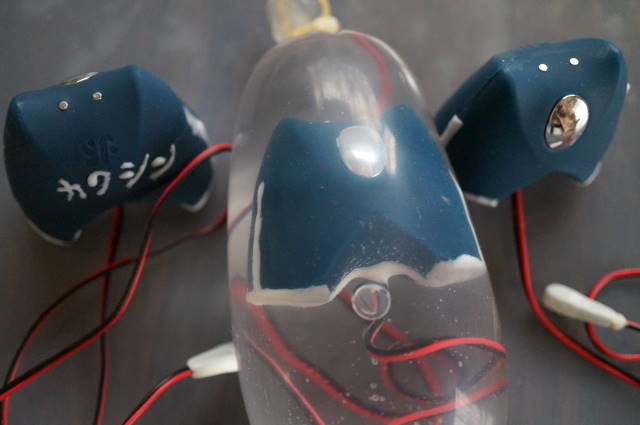
The OK Prostate Chip is a small device placed in the urethra to act on the prostate. Its Bluetooth controller (a control unit with a wireless phone connection) powers the vibrating chip through a cable. OK Lab adapted a German-made rechargeable vibrator to provide this control unit for its own vibrating chips. The January 2022 wearable prototype supported the controller behind the testicles, with the chip inside the urethra.
The December Bluetooth controller launched with waterproofing and separate component prices
In an entry published in December 2021, Mr. Okada introduced a controller adapted from a German-made vibrator described as fully waterproof. He reported that both controller and chip remained waterproof during a 24-hour continuous underwater test. The pictured vibrating chip and Bluetooth controller package cost ¥15,000 (about $96 at ¥156 = $1, rate as of 2026-09-04) excluding tax as published that month.
Adding the Bluetooth controller to a vibrating-chip purchase cost ¥12,000 (about $77 at ¥156 = $1, rate as of 2026-09-04) excluding tax. A semi-long ceramic vibrating version carried an additional ¥3,000 (about $19 at ¥156 = $1, rate as of 2026-09-04) ceramic-chip charge. Mr. Okada particularly recommended the Satisfyer app (phone or tablet software for controlling vibration) for access to the controller's additional functions.
(Source: ok-lab's diary, published December 2021)
https://ok-lab.hatenablog.com/entry/2021/12/18/123756
The January wearable Bluetooth controller needed a different kind of support
In an entry published in January 2022, Mr. Okada described a wearable controller adapted from a German-made vibrating penis ring. A wearable controller (a control unit supported on the body) was his proposed way to keep the electronics with the user. He considered the original ring unsuitable for continuous wear because its fit depended on changes in the penis.
His prototype combined silicone and adjustable stocking fabric in its support ring, with the controller behind the testicles. A stretch-fabric penis sleeve also appeared as a cable-support accessory in this prototype. Mr. Okada invited suggestions for future uses of the wearable version.
(Source: ok-lab's diary, published January 2022)
https://ok-lab.hatenablog.com/entry/2022/01/01/124134
January Bluetooth battery life figures depended on which motor was running
In an entry published in January 2022, Mr. Okada reported that a full charge took about 60 minutes. The original motor (the component producing vibration) exhausted the battery in 30–60 minutes in manual mode (control through the unit's switch). With the chip's 8 mm motor, manual operation lasted about 3–6 hours, depending on the mode.
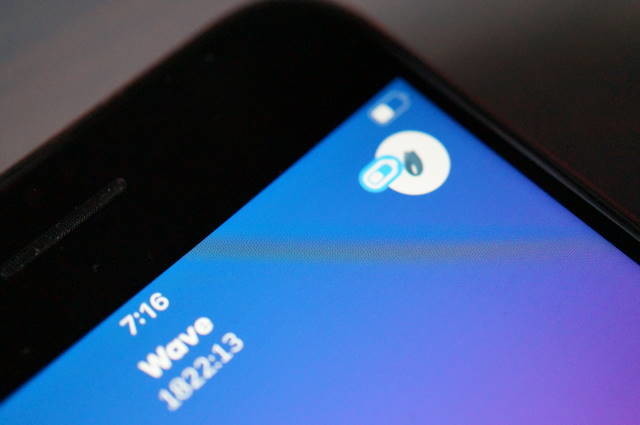
He reported more than 50 hours of continuous operation with extremely weak, phone-controlled vibration. His app photograph showed 1,822 minutes elapsed and approximately half the vibrator's battery remaining. He also wrote that a Bluetooth disconnection reset the elapsed-time counter.
(Source: ok-lab's diary, published January 2022)
https://ok-lab.hatenablog.com/entry/2022/01/08/123729
The February wearable Bluetooth controller was still awaiting a redesigned support
In an entry published in February 2022, Mr. Okada reconsidered the wearable design he had intended to sell. He wanted both the Bluetooth controller and a cheaper controller without Bluetooth to share a wearable approach. He therefore planned a fundamental change to the attachment method and a corresponding change in the controller's design. Mr. Okada asked prospective buyers to allow more time for both wearable versions.
(Source: ok-lab's diary, published February 2022)
https://ok-lab.hatenablog.com/entry/2022/02/19/123621
June Bluetooth app changes added Heartbeat while controller production remained difficult
In an entry published in June 2022, Mr. Okada reported finding a changed vibration menu after restarting the Satisfyer app. It included Heartbeat mode (an app setting for a heartbeat-shaped vibration pattern). He described that pattern as matching the waveform of a heart tracing.
He also reported breaking Bluetooth controllers several times because of mistakes during manufacture. He wrote that these failures had made him reluctant to build more controllers. The new app mode renewed his intention to make the adapted controllers and start selling them.
(Source: ok-lab's diary, published June 2022)
https://ok-lab.hatenablog.com/entry/2022/06/11/123420
The maker's answer to Bluetooth controller battery life
Mr. Okada favored very weak Bluetooth-controlled vibration where the motor was compatible, while explicitly excluding damaging combinations.
Bluetooth app functions extended beyond built-in controller vibration patterns
In the December 2021 entry, Mr. Okada described the free Satisfyer app and its controls. He identified iPhone and iPad support, while the controller itself offered 10 manual vibration modes. The app allowed vibration to be controlled and saved, with links to music or surrounding sounds.
It also provided a timer and remote control by another person. Mr. Okada strongly favored the app for access to those functions.
(Source: ok-lab's diary, published December 2021)
https://ok-lab.hatenablog.com/entry/2021/12/18/123756
Bluetooth controller compatibility stopped at the tested 8 mm motors
In the January 2022 entry, Mr. Okada reported that the adopted German Bluetooth controller worked only with his 8 mm motors. The 10 mm motor did not run, although he reported no damage to it. The 6 mm motor failed after being connected and used once.
He wrote that he did not understand why the smaller motor broke. Mr. Okada specifically warned about the damaging combination of this Bluetooth controller and the 6 mm motor.
(Source: ok-lab's diary, published January 2022)
https://ok-lab.hatenablog.com/entry/2022/01/22/123342
Bluetooth control was excluded from the six-motor prototype's battery tests
In an entry published in May 2022, Mr. Okada described rapid battery depletion with a prototype using six 6 mm motors. Its AAA-battery controller needed replacement batteries after about 3 hours, while a rechargeable controller lasted less than 1 hour. Mr. Okada ruled out the Bluetooth controller for this prototype because it damaged the 6 mm motors.
(Source: ok-lab's diary, published May 2022)
https://ok-lab.hatenablog.com/entry/2022/05/28/123218
Bluetooth battery life reached about ten hours with three compatible motors
The May 2022 entry also described Mr. Okada's test of a different prototype with three motors each measuring slightly over 8 mm. This build worked with the Bluetooth controller. He reported approximately 10 hours of continuous operation at minimum vibration strength.
According to his account, the other controllers would not run it at low strength and quickly exhausted their batteries at ordinary strength. Mr. Okada therefore favored Bluetooth control for the compatible multiple-motor setup he was testing.
(Source: ok-lab's diary, published May 2022)
https://ok-lab.hatenablog.com/entry/2022/05/28/123218
How Bluetooth controller battery life changed over time
| Published | What the diary said then |
|---|---|
| Dec 2021 | A waterproof rechargeable controller introduced app-based vibration control. |
| Jan 2022 | A body-supported prototype combined silicone and stocking fabric. |
| Jan 2022 | Battery tests separated original-motor, chip-motor, and extremely weak phone-controlled operation. |
| Jan 2022 | Standalone sales were planned; incompatible motors either failed to run or broke. |
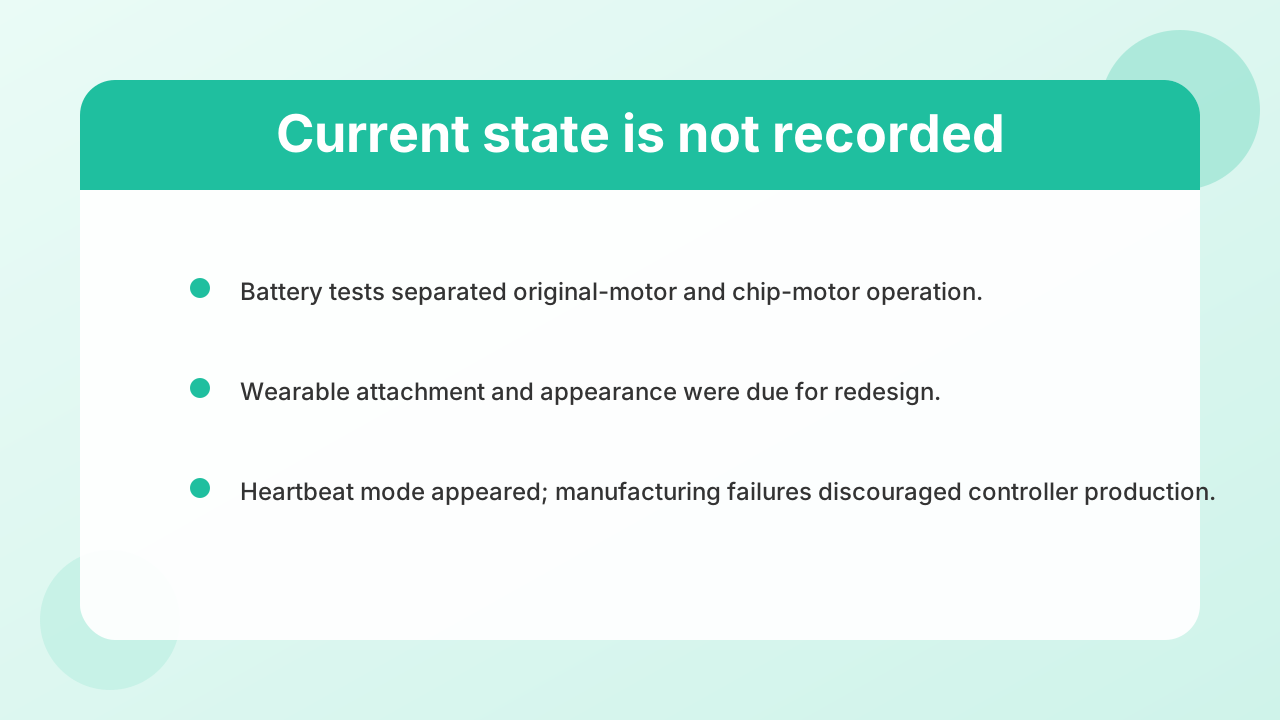
| Feb 2022 | Wearable attachment and appearance were due for redesign. |
| May 2022 | A compatible multiple-motor prototype ran at very low strength using Bluetooth control. |
| Jun 2022 | Heartbeat mode appeared; manufacturing failures had discouraged controller production. |
The diary does not say what the current state is.
OK Prostate Chip products related to Bluetooth controller battery life
The current list includes the fabric sleeve used as an accessory in the wearable prototype.
Products that appear in these entries
| Product (official name) | Price incl. tax | Relation to this topic |
|---|---|---|
| Stretch-fabric penis sleeve (ペニスレギンス) | ¥630 (about $4 at ¥156 = $1, rate as of 2026-09-04) | In January 2022, this sleeve appeared as a cable-support accessory in Mr. Okada's wearable Bluetooth prototype. |
The stretch-fabric penis sleeve is listed in OK Lab's own online store.
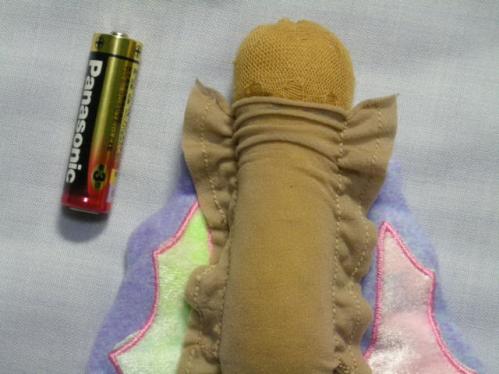
(Source: ok-lab's diary, published January 2022)
https://ok-lab.hatenablog.com/entry/2022/01/01/124134
Products the diary mentioned as alternatives
The diary names no alternative.
Historical Bluetooth controller packages, wearable builds, and multiple-motor prototypes:
No matching product can be confirmed on the current list.
Common worries about Bluetooth controller battery life
A customer who already owned vibrating chips asked for a standalone controller with a connector for those chips.
"Can I buy a Bluetooth controller for my existing chips?"
In an entry published in January 2022, a customer requested controller-only sales with USB output (a connector for their existing chips). They already owned several vibrating chips and wanted music-controlled vibration. Mr. Okada initially asked for time to consider the request, then announced that standalone controllers would become the standard offering.
He explained that preserving waterproofing had led him to think only about an integrated chip-and-controller package. He proposed trying simpler manufacture without waterproofing, which might lower the price, but gave no revised amount. The diary does not record whether the requested USB version was delivered or how it worked for this customer.
(Source: ok-lab's diary, published January 2022)
https://ok-lab.hatenablog.com/entry/2022/01/22/123342
Buying from outside Japan
OK Lab ships internationally to countries covered by Japan Post's EMS courier service. Overseas orders are paid in advance by PayPal. Each order carries a ¥400 (about $3 at ¥156 = $1, rate as of 2026-09-04) handling fee, and EMS shipping is charged on top. These terms come from OK Lab's official sales-terms page (written here as plain text, not a link: ok-lab.net/docs/law), checked on September 7, 2026; confirm them on the official store before you order, because they can change.
Summary of this article
| What you wanted to know | The answer |
|---|---|
| What is the main battery-life finding? | Runtime depended on the motor and vibration setting in Mr. Okada's tests. |
| What is the base product? | A urethral device made by OK Lab in Japan, with prices listed in Japanese yen. |
| What do the control terms mean? | Manual mode uses the unit's switch; the app provides phone-based vibration control. |
| What did the development entries establish? | Charging time, runtime, waterproof testing, and wearable plans were reported for particular historical builds. |
| What was the maker's response? | He favored weak vibration with compatible motors and warned about combinations that damaged smaller motors. |
| How did the plans change? | An integrated waterproof build led to standalone-sales plans, wearable redesigns, and further app functions. |
| Which related item is on the current list? | The fabric sleeve used with the wearable prototype is listed at ¥630 (about $4 at ¥156 = $1, rate as of 2026-09-04) including tax. |
| Did the existing-chip customer's request have a recorded outcome? | Standalone sales were announced, but delivery of the requested USB version was not recorded. |
| How are overseas purchases handled? | Advance PayPal payment, a ¥400 (about $3 at ¥156 = $1, rate as of 2026-09-04) handling fee, and additional EMS shipping charges. |
Source: ok-lab's diary (Okada Comfortable Life Laboratory). The original entries are in Japanese; quotations on this page are translated. Photos and videos are on the original entries.
This article is a summary of the maker's development diary. The product is not a medical device and no result is guaranteed. If anything feels wrong or worries you, see a doctor. Prices, specifications and cautions change, so confirm the latest information on the official blog and the official site. Questions about ordering and shipping go to the seller.