![Can one controller run two vibrating chips? | The maker offered a USB splitter cable [OK Prostate Chip]](/img/a/T0251/eyecatch.svg)
This page is based on entries from "ok-lab's diary" (https://ok-lab.hatenablog.com/), the Japanese development diary written by Mr. Okada, founder of OK Lab, a small company in Japan (Okada Comfortable Life Laboratory). Only the entries about "twin vibrating chips and USB splitter cables" are summarized here, in order of publication. Past prices and sizes are as written at the time. Current prices come from the official product list (retrieved September 4, 2026). Quotations are translated from Japanese.
Note: This page is a personal reading log by someone with no connection to the maker or the seller. It reflects the source entries as of their publication dates and makes no guarantee of accuracy or safety. The product is not a medical device; talk to a doctor about any health decision. Check the official site for current information. This page contains advertising.
In short
- The maker's USB splitter cable supplied two vibrating chips from one controller, starting both together.
- Mr. Okada offered USB conversion, with charges depending on the equipment and whether the chip was newly purchased.
- The current list includes the plain motor chip and USB fitting option; historical twin configurations need separate confirmation.
About this product
The OK Prostate Chip is a small device that is placed in the urethra (the urine passage) so that it acts on the prostate; the maker sells it in several shapes, sizes and materials. It is made and sold by OK Lab (Okada Comfortable Life Laboratory), a small company in Japan, through its own online store, and prices are in Japanese yen (JPY). The maker's development diary, "ok-lab's diary", is written in Japanese. This page is an English summary of it, and every quotation is translated. OK Lab ships internationally, so readers outside Japan can order (see "Buying from outside Japan" below). Product names on this page are plain-English descriptions. The official Japanese product name is shown once in the product table so you can find the same item in the store.
Before you read: key terms
| Term | Plain-English meaning |
|---|---|
| Vibrating chip | A chip containing a motor that produces vibration. |
| Plain motor chip | The motor-only chip discussed in these entries, used as a vibration unit. |
| Controller | The unit governing vibration; the diary compares several controllers connected to the same kind of chip. |
| USB splitter cable | A branching electrical lead that supplies two vibration units from one controller. |
| USB-A | The USB connector type specified for the splitter and the controller socket discussed in the diary. |
| Miniature plug | A small cable connector used to link the chip and controller before the maker recommended USB connections. |
| Twin-motor prototype | An experimental chip developed to increase vibration while keeping nearly the same width as the plain motor chip. |
| Screw-shaped support | An additional part requested with a custom resin chip. The diary does not explain its purpose here. |
What happens: using two vibrating chips
The OK Prostate Chip is a device placed in the urethra, the urine passage, to act on the prostate. The vibrating versions contain motors, while a USB splitter cable (a branching electrical lead) supplies two units from one controller. The controller (the unit governing vibration) connects to the cable, which feeds both connected chips together. Mr. Okada discusses prostate-area use and a separate vibration unit for another body area, including nipples.
USB connections let the maker exchange each vibration head separately
An entry published in November 2019 describes a converted twin vibrator with egg-shaped and lip-shaped vibration heads. Its rechargeable controller offered 20 vibration modes, and either head could be replaced independently.
Mr. Okada also tried replacing both heads with vibrating chips, demonstrating a configuration containing two chip units. Because extensive custom connector work could become costly, he proposed investigating a lower-priced standard twin set.
(Source: ok-lab's diary, published November 2019)
https://ok-lab.hatenablog.com/entry/2019/11/30/164020
USB connection tests produced varying vibration strengths across several controllers
In the same entry published in November 2019, Mr. Okada compared several controllers during his prototype experiments. He described the usual 3V electronic controller as weaker than rechargeable models operating at 4.5V or above. A separate 4.5V controller also seemed slightly weaker than the rechargeable controller in his comparison.
His basic controller produced what he described as the strongest vibration at 6V; a 3V pink vibrator was listed but not tested. Mr. Okada excluded equipment with substantially different operating voltages from his proposed shared-controller approach.
(Source: ok-lab's diary, published November 2019)
https://ok-lab.hatenablog.com/entry/2019/11/30/164020
The USB splitter cable started both connected chips together
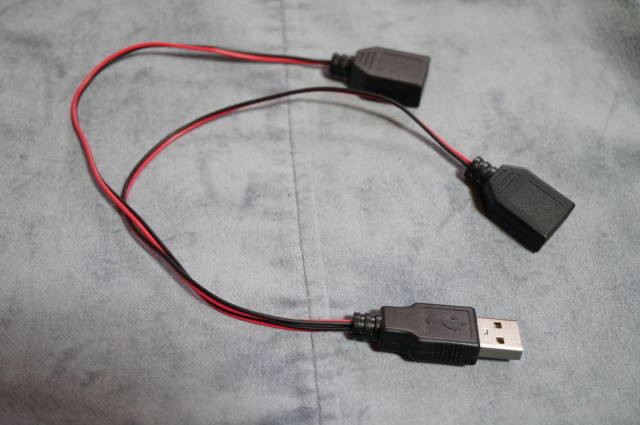
In an entry published in December 2019, Mr. Okada announced the splitter cable's launch with USB-A connectors (the connector type specified for this cable). The cable supplied both chips simultaneously; the single-chip configuration described in the entry had one USB branch disconnected.
Its launch price was ¥1,500 (about $10 at ¥156 = $1, rate as of 2026-09-04) tax excluded, based on 3 USB connectors priced at ¥500 (about $3 at ¥156 = $1, rate as of 2026-09-04) tax excluded each. For contrasting vibration, Mr. Okada suggested pairing a 10mm motor with an 8mm motor.
(Source: ok-lab's diary, published December 2019)
https://ok-lab.hatenablog.com/entry/2019/12/07/162608
A USB connection charge prompted a refund for a new chip
In an entry published in January 2020, a customer ordered a plain motor chip (the motor-only vibration unit) and a twin splitter cable. The customer had also paid for a USB fitting on the new chip.
Mr. Okada replied that replacing the new chip's battery connection with USB carried no charge, and announced a ¥550 (about $4 at ¥156 = $1, rate as of 2026-09-04) refund through PayPal, an online payment service. The diary does not record whether the refund was completed or how this customer's twin arrangement performed. Mr. Okada's reply identified the new chip's connector charge as the unnecessary purchase.
(Source: ok-lab's diary, published January 2020)
https://ok-lab.hatenablog.com/entry/2020/01/11/151714
The maker's answer to using two vibrating chips
Mr. Okada offered USB connections and branching, with different charges for new chips, existing equipment and products supplied by customers.
USB connection charges were lower than miniature plug charges
In an entry published in November 2019, USB fitting on the company's own cables cost ¥500 (about $3 at ¥156 = $1, rate as of 2026-09-04) tax excluded per connector. A male-and-female connector pair cost ¥1,000 (about $6 at ¥156 = $1, rate as of 2026-09-04) tax excluded.
A miniature plug (the smaller cable connector discussed in the entry) cost ¥1,000 (about $6 at ¥156 = $1, rate as of 2026-09-04) tax excluded each, making the stated USB connector price half as much. Mr. Okada attributed the difference to the additional resin work required for miniature plugs. He therefore recommended USB connections in place of miniature plugs.
(Source: ok-lab's diary, published November 2019)
https://ok-lab.hatenablog.com/entry/2019/11/30/164020
A new USB connection came without the standard controller
The entry published in November 2019 distinguished new purchases from conversions of chips customers already owned. A newly purchased vibrating chip could have a USB connector fitted without a connection fee, but its standard controller was omitted. The same specification on a new plain motor chip excluded the battery box.
Converting an existing vibrating chip cost ¥1,000 (about $6 at ¥156 = $1, rate as of 2026-09-04) tax excluded for the male-and-female connector pair. Fitting USB to the electronic-controller option carried an additional ¥500 (about $3 at ¥156 = $1, rate as of 2026-09-04) tax-excluded charge. Mr. Okada asked customers requesting the new-chip specification to identify it in their order message.
(Source: ok-lab's diary, published November 2019)
https://ok-lab.hatenablog.com/entry/2019/11/30/164020
Outside products carried higher USB connection charges and connection concerns
In the entry published in November 2019, USB fitting on another manufacturer's vibrator cost ¥1,000 (about $6 at ¥156 = $1, rate as of 2026-09-04) tax excluded per connector. That rate also covered customer-supplied vibrators sent to the company, with Mr. Okada citing differences in cable construction.
Mr. Okada reported finding connection faults quite frequently when dismantling controllers. Customer-supplied controllers received cable connection work without the reinforcement included in the company's own electronic-controller option. He suggested supplying an electronic controller as a potentially cheaper alternative to buying that option, while explaining this difference in service.
(Source: ok-lab's diary, published November 2019)
https://ok-lab.hatenablog.com/entry/2019/11/30/164020
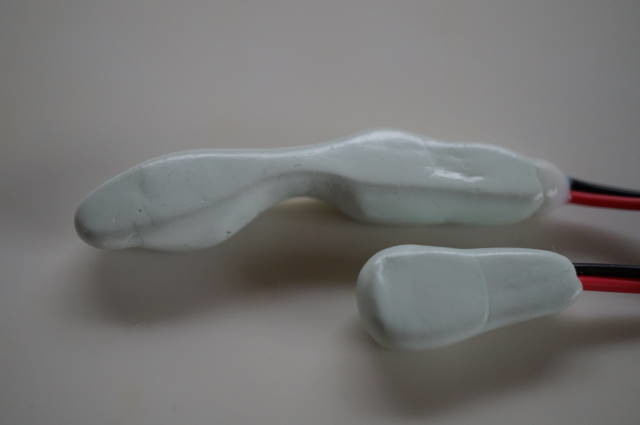
The twin-motor prototype increased output while retaining nearly the same width
In an entry published in December 2021, Mr. Okada introduced a twin-motor prototype (an experimental chip intended to increase vibration). He reported nearly the same width as the plain motor chip and twice its vibration. The entry priced the plain motor chip at ¥3,000 (about $19 at ¥156 = $1, rate as of 2026-09-04) tax excluded and the twin prototype at ¥6,000 (about $38 at ¥156 = $1, rate as of 2026-09-04) tax excluded.
Mr. Okada explained that smartphone control could reduce vibration almost to zero. For that form of control, he proposed the higher maximum output to provide additional range.
(Source: ok-lab's diary, published December 2021)
https://ok-lab.hatenablog.com/entry/2021/12/25/123556
How using two vibrating chips changed over time
| Published | What the diary said then |
|---|---|
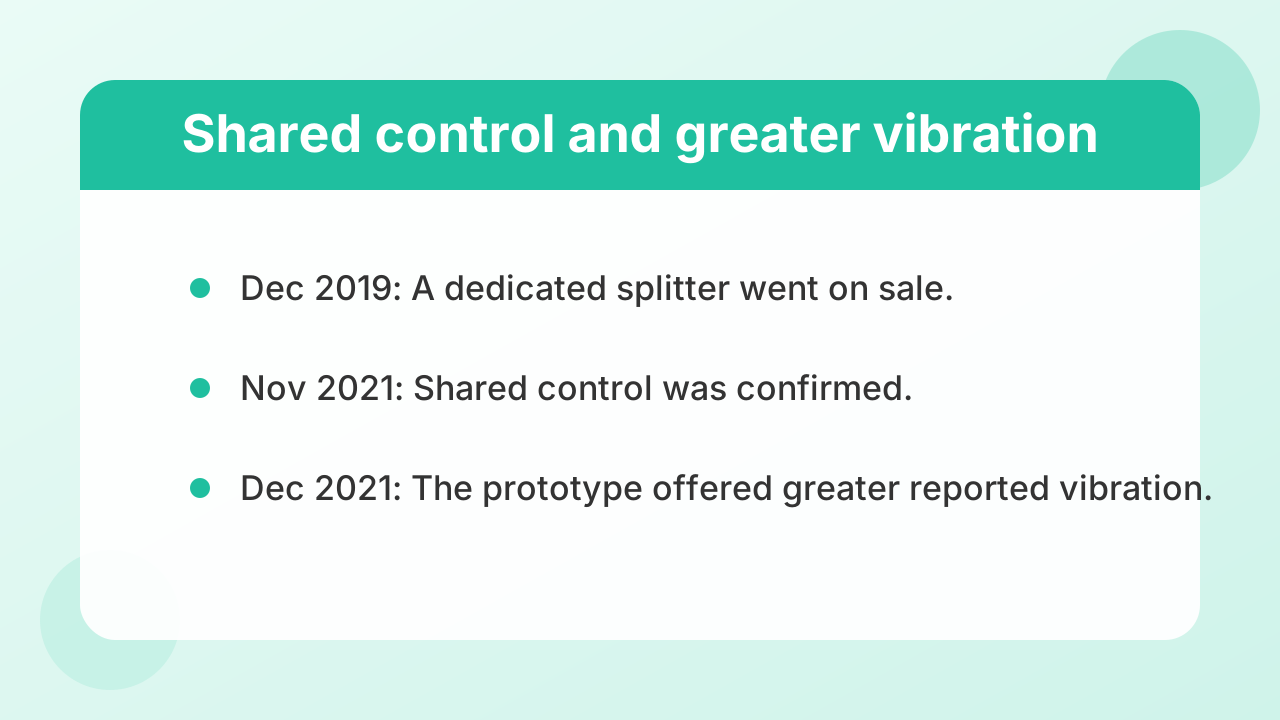
| Nov 2019 | Prototype USB connections allowed vibration heads and controllers to be exchanged. |
| Dec 2019 | A dedicated splitter cable went on sale for simultaneous operation. |
| Jan 2020 | An unnecessary new-chip connector charge prompted a refund announcement. |
| Jan 2020 | A custom resin body was clarified as additional to the motor-only chip's price. |
| Nov 2021 | Shared control was confirmed; repeated branching remained a theoretical expansion. |
| Dec 2021 | A twin-motor prototype offered greater reported vibration without much additional width. |
The diary does not say what the current state is.
OK Prostate Chip products related to using two vibrating chips
The current product list prices the plain motor chip and USB connector fitting separately.
Products that appear in these entries
| Product (official name) | Price incl. tax | Relation to this topic |
|---|---|---|
| Plain motor chip (OKプロステート核振チップ プレーン(胎児チップ)) | ¥3,300 (about $21 at ¥156 = $1, rate as of 2026-09-04) | In January 2020, this chip appeared in the splitter order that prompted clarification of the new-chip USB charge. |
| USB connector fitting option (USB端子付け加工(核振チップオプション)) | ¥550 (about $4 at ¥156 = $1, rate as of 2026-09-04) | In January 2020, a customer purchased this option for a twin arrangement and paid unnecessarily for the new chip's connector. |
The plain motor chip is listed in OK Lab's own online store.

The USB connector fitting option is listed in OK Lab's own online store.
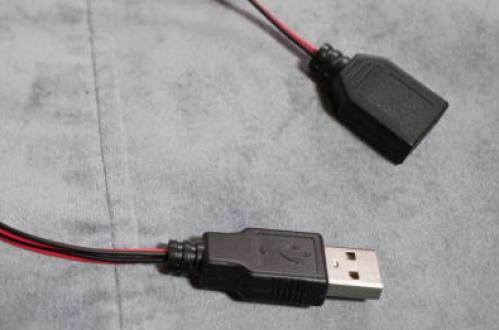
(Source: ok-lab's diary, published January 2020)
https://ok-lab.hatenablog.com/entry/2020/01/11/151714
Products the diary mentioned as alternatives
The diary names no alternative.
For the historical twin splitter cable, converted twin-controller prototype, custom short resin build and twin-motor prototype: No matching product can be confirmed on the current list.
Common worries about using two vibrating chips
The customer questions concern conversion charges, the distinction between chip designs, and whether one controller connection can supply two units.
"Can an outside controller receive a USB connection?"
In an entry published in January 2020, a customer asked about converting a purchased 6V controller with 10 vibration modes. Mr. Okada quoted ¥1,100 (about $7 at ¥156 = $1, rate as of 2026-09-04) per end for 2 ends, giving ¥2,200 (about $14 at ¥156 = $1, rate as of 2026-09-04), plus a ¥400 (about $3 at ¥156 = $1, rate as of 2026-09-04) handling fee.
He also reported testing that controller, describing vibration comparable to roughly 6V operation at maximum and 3V at reduced output. The diary does not record this customer's later experience with the converted controller. Mr. Okada offered to accept the controller for the quoted conversion service.
(Source: ok-lab's diary, published January 2020)
https://ok-lab.hatenablog.com/entry/2020/01/11/151714
"Is a new chip's USB connection free?"
In an entry published in January 2020, a customer asked this while requesting a custom short resin chip with a motor and screw-shaped support. Mr. Okada confirmed free USB fitting on a new chip, while explaining that converting an existing chip remained chargeable. He also clarified that the requested resin-bodied design differed from the motor-only product.
The quoted custom resin chip cost ¥4,000 (about $26 at ¥156 = $1, rate as of 2026-09-04) tax excluded, with the support adding ¥3,000 (about $19 at ¥156 = $1, rate as of 2026-09-04) tax excluded; the resin body accounted for an additional ¥1,000 (about $6 at ¥156 = $1, rate as of 2026-09-04). The diary does not record whether this custom order was completed. Mr. Okada's reply directed the customer to the custom design's stated price, rather than the plain motor chip's price.
(Source: ok-lab's diary, published January 2020)
https://ok-lab.hatenablog.com/entry/2020/01/25/150127
"Can one USB connection power two plain motor chips?"
In an entry published in November 2021, a customer requested simultaneous vibration from two plain motor chips for external nipple stimulation. The request specified one USB-A socket (the receiving connector on the controller connection). Mr. Okada confirmed that this was possible with an additional USB branching part.
He described repeated branching as theoretically allowing any number of chips, while cable bulk limited each individual splitter to two branches. The diary does not record a completed system or a tested maximum number of chips for this request. Mr. Okada offered a quotation with the USB branching part as the only addition.
(Source: ok-lab's diary, published November 2021)
https://ok-lab.hatenablog.com/entry/2021/11/20/125643
Buying from outside Japan
OK Lab ships internationally to countries covered by Japan Post's EMS courier service. Overseas orders are paid in advance by PayPal. Each order carries a ¥400 (about $3 at ¥156 = $1, rate as of 2026-09-04) handling fee, and EMS shipping is charged on top. These terms come from OK Lab's official sales-terms page (written here as plain text, not a link: ok-lab.net/docs/law), checked on September 7, 2026; confirm them on the official store before you order, because they can change.
Summary of this article
| What you wanted to know | The answer |
|---|---|
| What is the short answer? | The maker described a splitter supplying two vibrating chips together. |
| What is the underlying product? | A device made by OK Lab in Japan for placement in the urethra. |
| What do the connection terms mean? | The controller governs vibration; the splitter distributes its output to two connected units. |
| What happened in the early examples? | Prototype combinations led to a dedicated splitter and clarification of connector charges. |
| What did the maker offer? | USB conversion services, branching parts and a later experimental twin-motor chip. |
| What changed over time? | The entries moved from interchangeable components to branching requests and increased prototype output. |
| Which related products are currently listed? | The plain motor chip and USB connector fitting option have current list prices. |
| What did customers ask? | Whether conversions cost extra and whether one connection could operate two chips. |
| How are overseas purchases handled? | Advance PayPal payment, a handling fee and additional EMS shipping, subject to the store's current terms. |
Source: ok-lab's diary (Okada Comfortable Life Laboratory). The original entries are in Japanese; quotations on this page are translated. Photos and videos are on the original entries.
This article is a summary of the maker's development diary. The product is not a medical device and no result is guaranteed. If anything feels wrong or worries you, see a doctor. Prices, specifications and cautions change, so confirm the latest information on the official blog and the official site. Questions about ordering and shipping go to the seller.