![Which batteries work, and how long do they last? | It depends on the motor and controller [OK Prostate Chip]](/img/a/T0256/eyecatch.svg)
This page is based on entries from "ok-lab's diary" (https://ok-lab.hatenablog.com/), the Japanese development diary written by Mr. Okada, founder of OK Lab, a small company in Japan (Okada Comfortable Life Laboratory). Only the entries about "battery types, battery life, and dead batteries" are summarized here, in order of publication. Past prices and sizes are as written at the time. Current prices come from the official product list (retrieved September 4, 2026). Quotations are translated from Japanese.
Note: This page is a personal reading log by someone with no connection to the maker or the seller. It reflects the source entries as of their publication dates and makes no guarantee of accuracy or safety. The product is not a medical device; talk to a doctor about any health decision. Check the official site for current information. This page contains advertising.
In short
- Battery life varied by motor, controller, battery type, and vibration strength in the diary’s tests.
- Mr. Okada’s advice depended on the hardware and included warnings about reversed batteries.
- Current listings include controller change options and USB connector fitting.
About this product

The OK Prostate Chip is a small device that is placed in the urethra (the urine passage) so that it acts on the prostate; the maker sells it in several shapes, sizes and materials. It is made and sold by OK Lab (Okada Comfortable Life Laboratory), a small company in Japan, through its own online store, and prices are in Japanese yen (JPY). The maker's development diary, "ok-lab's diary", is written in Japanese. This page is an English summary of it, and every quotation is translated. OK Lab ships internationally, so readers outside Japan can order (see "Buying from outside Japan" below). Product names on this page are plain-English descriptions. The official Japanese product name is shown once in the product table so you can find the same item in the store.
Before you read: key terms
| Term | Plain-English meaning |
|---|---|
| Vibrating chip | A motor-equipped chip intended to add vibration near the prostate. |
| Manganese and alkaline batteries | Battery types used as motor power sources; the March 2019 report described different rates of weakening. |
| Voltage | A power-source reading, reported in volts, used to explain motor speed and stopping. |
| IC controller | An electronic control unit used to select vibration patterns. |
| Low-tech controller | A direct battery-powered control used to run motors at different voltage settings. |
| Dummy battery | A part described as a 0 V battery, used for lower-voltage battery-box configurations. |
| USB connector | A connection used between chips and controllers, and for charging the rechargeable controller; the female connector is a socket. |
| AA, AAA, D | Battery sizes used to power the controllers and battery boxes described here. |
What happens: OK Prostate Chip battery life
The OK Prostate Chip is a small device placed in the urethra (the urine passage) to act on the prostate. The vibrating versions discussed here contain motors, with cables linking them to a controller or battery box. These external power supplies provide electricity for vibration while the chip sits inside the body. The diary describes pocket-carried battery boxes and cable connections, including USB connectors (connections between the chip and controller).
Early battery life reports counted days with only intermittent vibration
In an entry published in January 2019, Mr. Okada reported about 3 days from a trial manganese battery. Discarded batteries previously used in remote controls still provided about 2 days in his tests. Vibration was on for roughly 1/3 of the time the chip remained in place.
He reported operation at 1 V, while saying ordinary appliances stopped around 1.4–1.35 V. He also wrote that falling voltage (the battery reading in volts) reduced motor speed. Mr. Okada favored modest vibration rather than forceful shaking.
(Source: ok-lab's diary, published January 2019)
https://ok-lab.hatenablog.com/entry/20190119/1547879323
A customer linked weak vibration to manganese batteries losing voltage
In an entry published in March 2019, a customer reported that a vibrating chip felt less intense after its first use. The customer suggested both familiarity and battery voltage loss as explanations. Their report described rapidly weakening manganese batteries and longer-lasting sensation with alkaline batteries. Mr. Okada acknowledged battery voltage loss as another explanation for fading vibration.
(Source: ok-lab's diary, published March 2019)
https://ok-lab.hatenablog.com/entry/2019/03/02/151104
A depleted battery powered one chip but failed with three motors
In an entry published in April 2019, a customer requested three motors in a custom aluminum-covered chip. Mr. Okada’s team completed the build, but its motors would not run on a partly depleted battery. The same battery had just powered a different long vibrating chip; repeated controller changes did not solve the problem. Mr. Okada ultimately identified insufficient battery voltage, rather than controller failure, in that test.
(Source: ok-lab's diary, published April 2019)
https://ok-lab.hatenablog.com/entry/2019/04/06/151323
Low-battery restarts were attributed to vibration reaching the motor
In entries published in July 2019, Mr. Okada reported motors stopping near 1.3 V. He used the low-tech controller (a direct battery-powered control) in 1.5 V mode and observed restarts after slight vibration. His later July entry attributed restarting to vibration reaching the motor, while still reporting that rested batteries recovered. Mr. Okada also noted that some motors restarted much less readily than others.
(Source: ok-lab's diary, published July 2019)
https://ok-lab.hatenablog.com/entry/2019/07/13/150108
(Source: ok-lab's diary, published July 2019)
https://ok-lab.hatenablog.com/entry/2019/07/20/151609
The rechargeable controller’s stated battery life depended on its motor
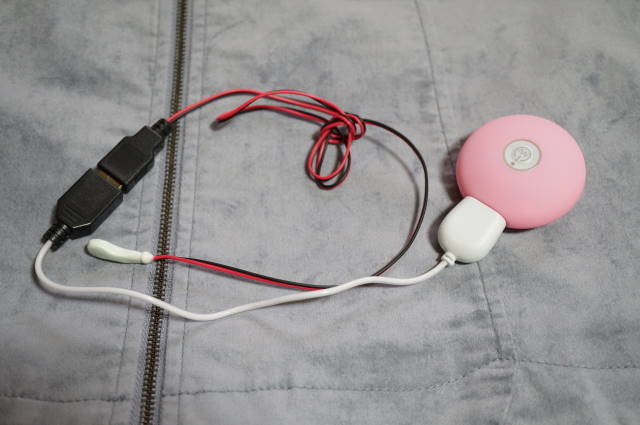
In an entry published in December 2019, Mr. Okada introduced a 4.5 V USB-rechargeable controller. The announced price was ¥2,500 (about $16 at ¥156 = $1, rate as of 2026-09-04) excluding tax, including a female USB connector (a socket for the matching plug). The stated charging time was 60–90 minutes.
For continuous running, he listed 5 hours with an 8 mm motor, 3 hours with a 10 mm motor, and about 2 hours with both. Initial availability was by custom order because he was unsure of a steady parts supply. Mr. Okada specified a USB-equipped chip because this controller lacked his direct-connection service.
(Source: ok-lab's diary, published December 2019)
https://ok-lab.hatenablog.com/entry/2019/12/07/162608
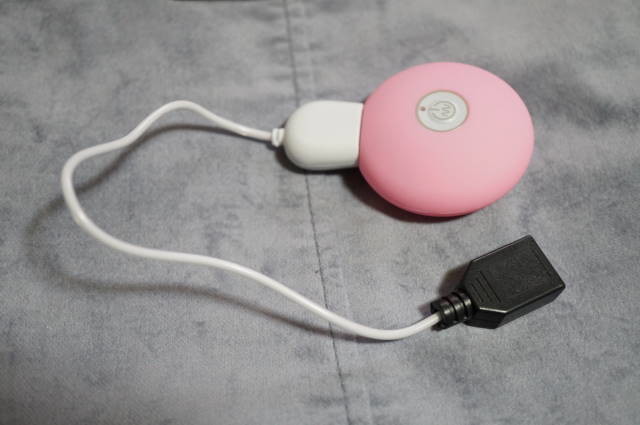
A portable battery pack delivered over 24 hours in testing
In an entry published in February 2020, Mr. Okada ended a durability test of the new 10 mm motor without finding deterioration. A fully charged portable battery pack had supported more than 24 hours of continuous running. He reported no sign of the motor stopping before he ended the test. Mr. Okada said subsequent orders for 10 mm vibrating chips would receive the new motor.
(Source: ok-lab's diary, published February 2020)
https://ok-lab.hatenablog.com/entry/2020/02/29/155031
A six-motor test recorded rechargeable battery life under one hour
In an entry published in May 2022, Mr. Okada reported rapid battery depletion with a custom chain of six 6 mm motors. His AAA-powered IC controller (an electronic unit for selecting vibration patterns) lasted about 3 hours. The USB-rechargeable controller lasted under 1 hour, while a separate supply using two D batteries lasted about 24 hours.
(Source: ok-lab's diary, published May 2022)
https://ok-lab.hatenablog.com/entry/2022/05/28/123218
The maker's answer to OK Prostate Chip battery life
Mr. Okada linked battery choices to the particular motor and warned about reversed batteries and interrupted charging.
Reversed batteries brought malfunction and heating warnings for IC controllers
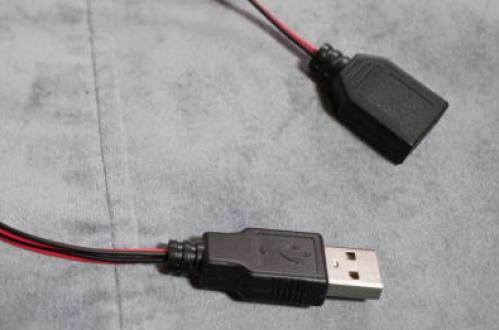
In an entry published in February 2019, Mr. Okada described the first shipment of a vibrating chip with an IC controller. He warned that reversed positive and negative battery orientation could cause malfunction or heating. AAA batteries were not included with either the original controller or OK Lab’s version. Mr. Okada told purchasers they would need to obtain those batteries separately.
(Source: ok-lab's diary, published February 2019)
https://ok-lab.hatenablog.com/entry/2019/02/23/142754
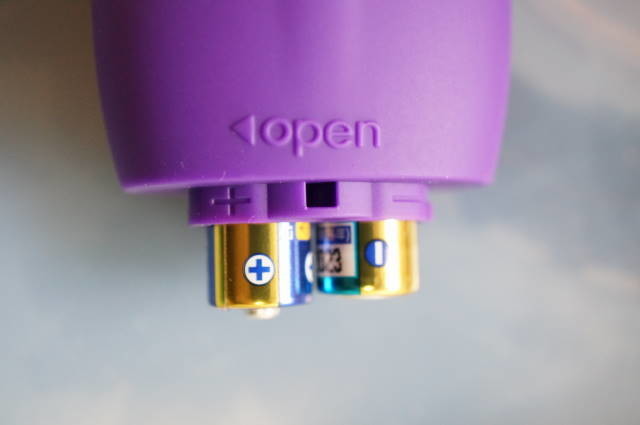
Larger batteries supported the maker’s aim of sustained weak vibration
In an entry published in August 2019, Mr. Okada favored a 1.5 V D-size manganese battery for sustained, very weak vibration. His test alternated 2 batteries on different days, and he reported almost complete recovery after a full day’s rest. He wrote that they were still running well after 3 weeks.
His AA battery boxes had 3 V, 4.5 V, and 6 V versions, with lower-voltage options using 0 V dummy batteries (parts for lower-voltage configurations). Mr. Okada recommended 1.5 V for this particular low-vibration aim.
(Source: ok-lab's diary, published August 2019)
https://ok-lab.hatenablog.com/entry/2019/08/03/145816
Computer sleep could interrupt charging before the battery was full
In an entry published in January 2020, Mr. Okada warned that computer sleep could interrupt charging of the USB-rechargeable controller. He noted that visually similar controllers from different suppliers had differed in function. His explanation applied to the version he was supplying then. Mr. Okada cautioned that stopped flashing did not necessarily mean the battery was fully charged.
(Source: ok-lab's diary, published January 2020)
https://ok-lab.hatenablog.com/entry/2020/01/04/155235
How OK Prostate Chip battery life changed over time
| Published | What the diary said then |
|---|---|
| Jan 2019 | Early tests reported operation even with batteries discarded from other devices. |
| Apr 2019 | A three-motor build exposed voltage limits that a different chip had not. |
| Jul 2019 | Restarting was attributed to vibration reaching the motor. |
| Aug 2019 | Battery boxes were planned at ¥500 (about $3 at ¥156 = $1, rate as of 2026-09-04) each, excluding tax. |
| Aug 2019 | Miniature chip with dedicated box: ¥3,000 (about $19 at ¥156 = $1, rate as of 2026-09-04) excluding tax; batteries excluded. |
| Dec 2019 | A higher-voltage rechargeable controller became available by custom order. |
| Feb 2020 | The newer motor prompted advice favoring rechargeable power. |
| May 2022 | A six-motor chain sharply increased battery demands. |
| Dec 2023 | A customer’s nonworking controller ran after a change to alkaline batteries. |
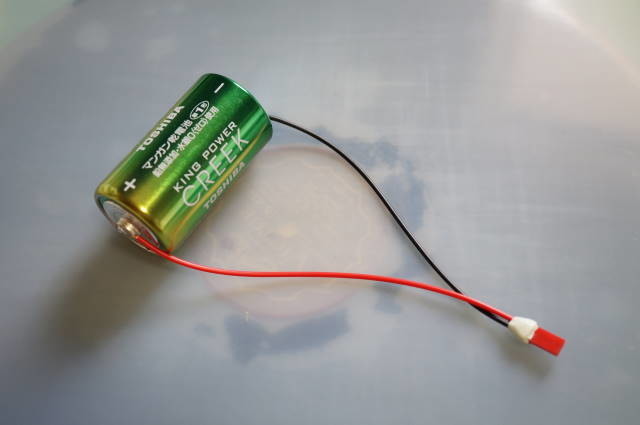
OK Prostate Chip products related to OK Prostate Chip battery life
The current list includes controller changes and a connector fitting option discussed in these entries.
Products that appear in these entries
| Product (official name) | Price incl. tax | Relation to this topic |
|---|---|---|
| IC controller change option (ICコントローラに変更(核振チップオプション)) | ¥2,200 (about $14 at ¥156 = $1, rate as of 2026-09-04) | The February 2019 entry warned about reversed batteries in the IC controller. |
| Low-tech controller change option (ローテクコントローラに変更(核振チップオプション)) | ¥1,100 (about $7 at ¥156 = $1, rate as of 2026-09-04) | The July 2019 battery tests used the low-tech controller’s low-voltage mode. |
| USB connector fitting option (USB端子付け加工(核振チップオプション)) | ¥550 (about $4 at ¥156 = $1, rate as of 2026-09-04) | The December 2019 rechargeable-controller announcement specified a USB connection on the chip. |
The IC controller change option is listed in OK Lab’s own online store.

The low-tech controller change option is also listed there.
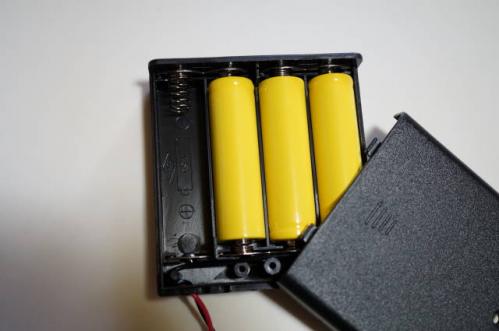
The USB connector fitting option is listed there.
(Source: ok-lab's diary, published February 2019)
https://ok-lab.hatenablog.com/entry/2019/02/23/142754
(Source: ok-lab's diary, published July 2019)
https://ok-lab.hatenablog.com/entry/2019/07/13/150108
(Source: ok-lab's diary, published December 2019)
https://ok-lab.hatenablog.com/entry/2019/12/07/162608
Products the diary mentioned as alternatives
The diary names no alternative.
The custom aluminum-covered three-motor chip and six-motor chain are historical builds. No matching product can be confirmed on the current list.
The diary also describes a USB-rechargeable controller and historical miniature motor-only chip builds. No matching product can be confirmed on the current list.
Common worries about OK Prostate Chip battery life
The reader exchanges concerned weak vibration, a newer motor’s battery demands, and a controller that would not start.
"Why were old batteries suggested for the miniature chip?"
In an entry published in August 2019, a customer asked to buy the miniature motor-only chip discussed the previous month. Mr. Okada first replied that development was continuing and sales were expected soon. The entry then announced a miniature motor-only chip (fetal chip) with its own battery box.
Its 1.5 V supply was chosen for weak vibration; Mr. Okada said a fresh battery could still feel too strong. The diary does not record whether this customer completed the purchase. For this particular design, Mr. Okada suggested already-used batteries to obtain weaker vibration.
(Source: ok-lab's diary, published August 2019)
https://ok-lab.hatenablog.com/entry/2019/08/24/125858
"Why was a rechargeable controller suggested for the newer motor?"
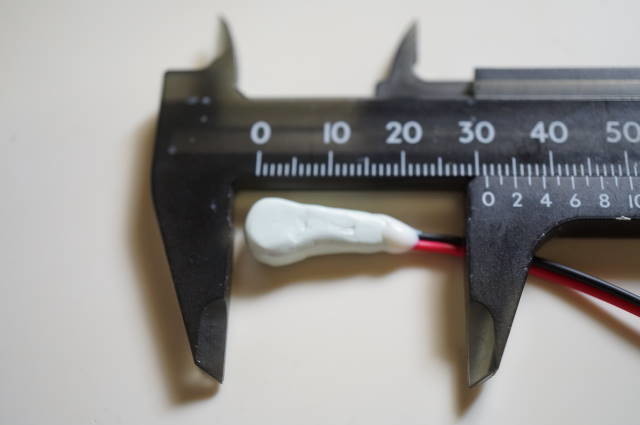
In an entry published in February 2020, a customer requested a miniature vibrating chip with two controllers. Mr. Okada first described the pictured rechargeable and low-tech controllers, while suggesting two IC controllers.
The customer accepted the quoted newer 10 mm motor and rechargeable controllers; the diary does not record later performance. Mr. Okada reported stopping at about 2.8 V or below, whereas earlier motors still ran around 1.5 V. He therefore recommended rechargeable power for that newer motor because disposable batteries would need frequent replacement.
(Source: ok-lab's diary, published February 2020)
https://ok-lab.hatenablog.com/entry/2020/02/15/144151
"Why wouldn’t the controller run on Eneloop batteries?"
In an entry published in December 2023, a customer reported a nonworking controller, although OK Lab said it had passed testing before shipment. Staff identified inadequate battery power or circuit damage after reversed battery orientation as possible causes.
The customer reported successful operation with alkaline batteries and attributed the earlier failure with Eneloop-brand batteries to insufficient voltage. The entry does not identify the motor in this exchange. OK Lab offered to inspect the controller if the suggested causes did not explain the fault.
(Source: ok-lab's diary, published December 2023)
https://ok-lab.hatenablog.com/entry/2023/12/30/122243
Buying from outside Japan

OK Lab ships internationally to countries covered by Japan Post's EMS courier service. Overseas orders are paid in advance by PayPal. Each order carries a ¥400 (about $3 at ¥156 = $1, rate as of 2026-09-04) handling fee, and EMS shipping is charged on top. These terms come from OK Lab's official sales-terms page (written here as plain text, not a link: ok-lab.net/docs/law), checked on September 7, 2026; confirm them on the official store before you order, because they can change.
Summary of this article
| What you wanted to know | The answer |
|---|---|
| What is the short answer? | Battery performance depended on the motor, controller, and power source. |
| What is this product? | A urethral device made by OK Lab in Japan; these entries concern vibrating versions. |
| What do the terms mean? | Controllers select vibration patterns or supply power; voltage helps explain stopping and slowing. |
| How long did batteries last? | The diary records different results for intermittent vibration, continuous tests, and multiple motors. |
| What did the maker advise? | Battery choice depended on the motor; orientation and incomplete charging also mattered. |
| What changed over time? | Power options expanded, while newer motors and larger builds brought different demands. |
| Which related products are currently listed? | Controller change options and USB connector fitting, priced in Japanese yen above. |
| What did readers ask? | Why weaker batteries were suggested, why rechargeable power was preferred, and why a controller failed. |
| How can someone order outside Japan? | Advance PayPal payment, a ¥400 (about $3 at ¥156 = $1, rate as of 2026-09-04) handling fee, and additional Japan Post EMS shipping charges apply. |
Source: ok-lab's diary (Okada Comfortable Life Laboratory). The original entries are in Japanese; quotations on this page are translated. Photos and videos are on the original entries.
This article is a summary of the maker's development diary. The product is not a medical device and no result is guaranteed. If anything feels wrong or worries you, see a doctor. Prices, specifications and cautions change, so confirm the latest information on the official blog and the official site. Questions about ordering and shipping go to the seller.