![Why does the motor get hot or stop working? | Heat tolerance and reliability vary [OK Prostate Chip]](/img/a/T0247/eyecatch.svg)
This page is based on entries from "ok-lab's diary" (https://ok-lab.hatenablog.com/), the Japanese development diary written by Mr. Okada, founder of OK Lab, a small company in Japan (Okada Comfortable Life Laboratory). Only the entries about motor heat resistance, water resistance, defects, and differences between units are summarized here, in order of publication. Past prices and sizes are as written at the time. Current prices come from the official product list (retrieved September 4, 2026). Quotations are translated from Japanese.
Note: This page is a personal reading log by someone with no connection to the maker or the seller. It reflects the source entries as of their publication dates and makes no guarantee of accuracy or safety. The product is not a medical device; talk to a doctor about any health decision. Check the official site for current information. This page contains advertising.
In short
- The diary records overheating, intermittent stopping, and differences between individual motors.
- Mr. Okada describes stronger construction, early-fault replacement, and warnings against higher voltages.
- The glass semi-long vibrating chip remains listed, while later entries still describe uneven motor reliability.
About this product
The OK Prostate Chip is a small device that is placed in the urethra (the urine passage) so that it acts on the prostate; the maker sells it in several shapes, sizes and materials. It is made and sold by OK Lab (Okada Comfortable Life Laboratory), a small company in Japan, through its own online store, and prices are in Japanese yen (JPY). The maker's development diary, "ok-lab's diary", is written in Japanese. This page is an English summary of it, and every quotation is translated. OK Lab ships internationally, so readers outside Japan can order (see "Buying from outside Japan" below). Product names on this page are plain-English descriptions. The official Japanese product name is shown once in the product table so you can find the same item in the store.
Before you read: key terms
| Term | Plain-English meaning |
|---|---|
| Motor | The component that produces vibration in a vibrating chip. |
| Controller | The external electrical unit used to control the motor's vibration. |
| Resin | Material placed around the motor or connections for reinforcement, insulation, and water protection. |
| Rated voltage | The specified supply level, used to distinguish normal operation from higher-voltage tests. |
| USB connector | A plug connection used to join a chip's cable and controller. |
| Operating temperature range | The stated working temperature limits used to describe a motor's performance. |
| Storage temperature range | The stated temperature limits for keeping the motor while it is not operating. |
What happens: motor overheating and stopping
The OK Prostate Chip is a small device placed in the urethra, the urine passage, to act on the prostate. In the vibrating versions, a motor produces vibration from within the chip, with a cable connecting it to an external controller. The diary discusses protection around that motor and its electrical connections because the vibrating chip is intended for an internal, wet environment. Its accounts cover heat exposure, unexpected stopping, and differences between individual components.
Motor failure concerns began with fragile connections and replacement costs
In an entry published in January 2019, Mr. Okada traced 2 test failures to unstable connections between wires and motors. He reported that some factory connections detached with barely any contact.
He said fixing a connection inside resin could not overcome an attachment that was already unreliable. He advised considering a purchase only with an expectation of regular ¥3,000 (about $19 at ¥156 = $1, rate as of 2026-09-04) replacements, as published in January 2019.
(Source: ok-lab's diary, published January 2019)
https://ok-lab.hatenablog.com/entry/20190105/1546673405
Motor overheating tests led Mr. Okada to warn against prolonged 6V use
In an entry published in June 2019, Mr. Okada reported a 6V test reaching about 65°C after approximately 5 minutes in air. According to his account, the temperature did not rise further during 10 hours of continuous running.
He speculated that the vibration exceeded what the brain could process and might cause emotional instability. His conclusion was that prolonged 6V use could be dangerous.
(Source: ok-lab's diary, published June 2019)
https://ok-lab.hatenablog.com/entry/2019/06/29/143536
A customer's 9V test prompted an explicit motor overheating warning
In an entry published in August 2019, a customer described a custom three-motor chip ordered for stronger vibration. The customer found little change from the earlier shape, then tested a 9V controller. Continuous vibration reportedly made the chip feel hot enough to burn.
The customer reported no peeling or motor failure after about 5 hours at maximum 9V. Mr. Okada suspected heat injury to the urethra, although the entry records no medical assessment. He explicitly warned against 9V operation.
(Source: ok-lab's diary, published August 2019)
https://ok-lab.hatenablog.com/entry/2019/08/10/125102
Another motor failure report brought a warning about supplies above 5V
In an entry published in November 2021, a customer's glass semi-long vibrating chip stopped after operation at 3V–6V. The customer then asked about ordering a custom three-motor model. Mr. Okada said he did not know why the original motor had failed.
He planned to discuss the new request the following week; this entry does not record a completed order. He said all the motors produced substantial heat above 5V. He warned about overheating and cited earlier reports of failures at 6V or higher.
(Source: ok-lab's diary, published November 2021)
https://ok-lab.hatenablog.com/entry/2021/11/13/123751
An 8mm motor variation arrived thicker and reportedly stronger
In an entry published in March 2022, Mr. Okada described receiving different motors despite ordering the previous specification. The new 8mm component was about 0.6mm thicker, and he reported stronger vibration.
He still had the older motors in stock and said those remained the default at that time. For buyers wanting the stronger version, he advised specifying that preference when ordering.
(Source: ok-lab's diary, published March 2022)
https://ok-lab.hatenablog.com/entry/2022/03/05/123200
Motor stopping returned after a period with few reported faults
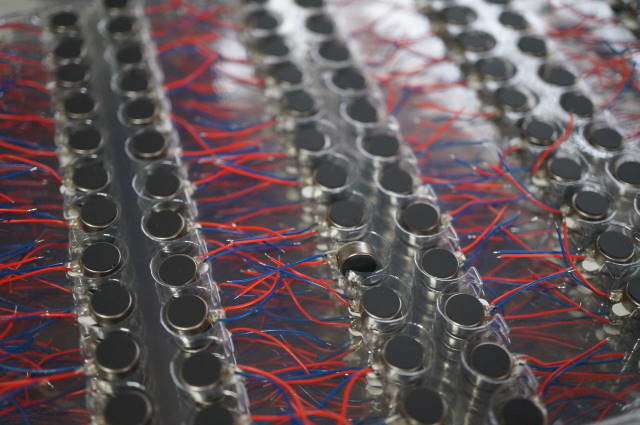
An October 2024 entry reported about 4 initial faults over roughly 6 months, including 2 involving motors' stopping positions. One customer wanted help after vibration stopped despite battery changes. The returned product worked during brief checks, stopped overnight, and later ran again without an identified cause.
OK Lab sent a new unit and kept the returned product intact for investigation. Mr. Okada could not reproduce the stoppage during subsequent checks. For this customer's fault, OK Lab's initial advice had been to return the product for examination.
(Source: ok-lab's diary, published October 2024)
https://ok-lab.hatenablog.com/entry/2024/10/05/122923
The maker's answer to motor overheating and stopping
Mr. Okada described stronger construction, examination of returned products, and limits on heat exposure and replacement coverage.
Motor reliability work shifted toward reinforcement before final chip assembly
In an entry published in January 2019, Mr. Okada acknowledged responsibility for preparing ordinary motors for the chip's intended environment. He noted their original roles as parts for phones and robots.
He began reinforcing each motor with resin (protective material around the component) and testing it before chip assembly. He advised buyers that the revised process required approximately 2 weeks of production time.
(Source: ok-lab's diary, published January 2019)
https://ok-lab.hatenablog.com/entry/20190112/1547275441
Water resistance claims did not extend to washing the controller
In an entry published in March 2019, a customer asked whether the vibrating chip could withstand cleaning used for non-vibrating chips. Mr. Okada's reply distinguished the chip and cable from the controller, mentioning an approximately 30-second heat-exposure limit.
He warned that heated cookware could damage the cable and that steam could affect the controller. He described his answer as experience-based and advised against washing or boiling the controller.
(Source: ok-lab's diary, published March 2019)
https://ok-lab.hatenablog.com/entry/2019/03/02/151104
Motor heat resistance specifications described one newly tested component
In an entry published in February 2020, Mr. Okada supplied specifications for a new motor. Its operating temperature range (stated working limits) was -40 to 125 °C; its storage temperature range (limits while stored) was -65 to 150 °C.
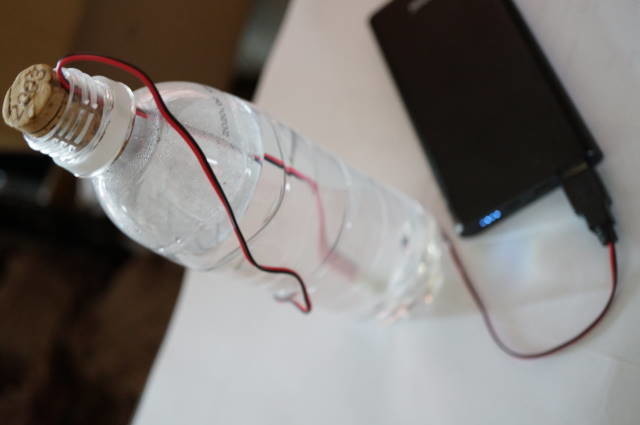
He also described a water-bottle test assessing resistance to water and repeated knocks. He recommended the new motor based on its specifications and his testing.
(Source: ok-lab's diary, published February 2020)
https://ok-lab.hatenablog.com/entry/2020/02/22/145216
Reversed controller wiring could explain why the new motor would not start
An entry published in February 2020 identified potentially reversed wiring in previously shipped controllers with USB connectors (plugs joining chip cables and controllers). The older motors had operated regardless of the electrical connection's direction, masking the problem.
The new motor exposed the mismatch because it did not operate with the reversed connection. Mr. Okada offered to correct affected connector wiring after its return.
(Source: ok-lab's diary, published February 2020)
https://ok-lab.hatenablog.com/entry/2020/02/22/145216
Water-resistant motors with exposed metal were ruled out for sale
An entry published in February 2020 described Mr. Okada's test of a partly covered motor. He reported nausea and headaches beginning after about 5 days, with symptoms worsening afterward.
He suspected harm from the exposed metal, but did not establish the cause. He therefore ruled out selling vibrating chips with exposed motor metal.
(Source: ok-lab's diary, published February 2020)
https://ok-lab.hatenablog.com/entry/2020/02/22/145216
Early motor failure qualified for replacement under March 2020 terms
In an entry published in March 2020, a customer sought help for vibration that stopped after about 2 minutes but returned the following day. Mr. Okada accepted the report as an initial fault, although he could not identify its cause.
He described previously encountered problems as unreliable cable connections and motors unable to restart from certain stopping positions. His stated remedy was motor replacement for initial faults arising within approximately 2 weeks of delivery.
(Source: ok-lab's diary, published March 2020)
https://ok-lab.hatenablog.com/entry/2020/03/21/143802
By May 2022, motor failure replacement had a shorter initial window
In an entry published in May 2022, a customer asked about vibration disappearing during controller mode changes. Mr. Okada said intermittent faults could escape checks before shipping.
He explained that replacing an embedded motor involved substantial work, even when the component itself was inexpensive. He offered initial-fault replacement within about 1 week of purchase, while stating that later failures would incur the regular replacement charge.
(Source: ok-lab's diary, published May 2022)
https://ok-lab.hatenablog.com/entry/2022/05/21/124217
How motor overheating and stopping changed over time
| Published | What the diary said then |
|---|---|
| Jan 2019 | Separate motor reinforcement and testing became part of production. |
| Jul 2019 | Mr. Okada attributed restarting to external vibration, with differences between motors. |
| Feb 2020 | A new motor exposed reversed wiring in some older controllers. |
| Mar 2020 | Initial-fault replacement terms covered roughly two weeks after delivery. |
| Nov 2020 | Intermittent failure prompted a plan for approximately 100 switching tests before shipping. |
| May 2022 | Replacement terms distinguished first-week faults from chargeable failures after use. |
| Dec 2023 | Mr. Okada reported about two years without motor defects unrelated to his connection work. |
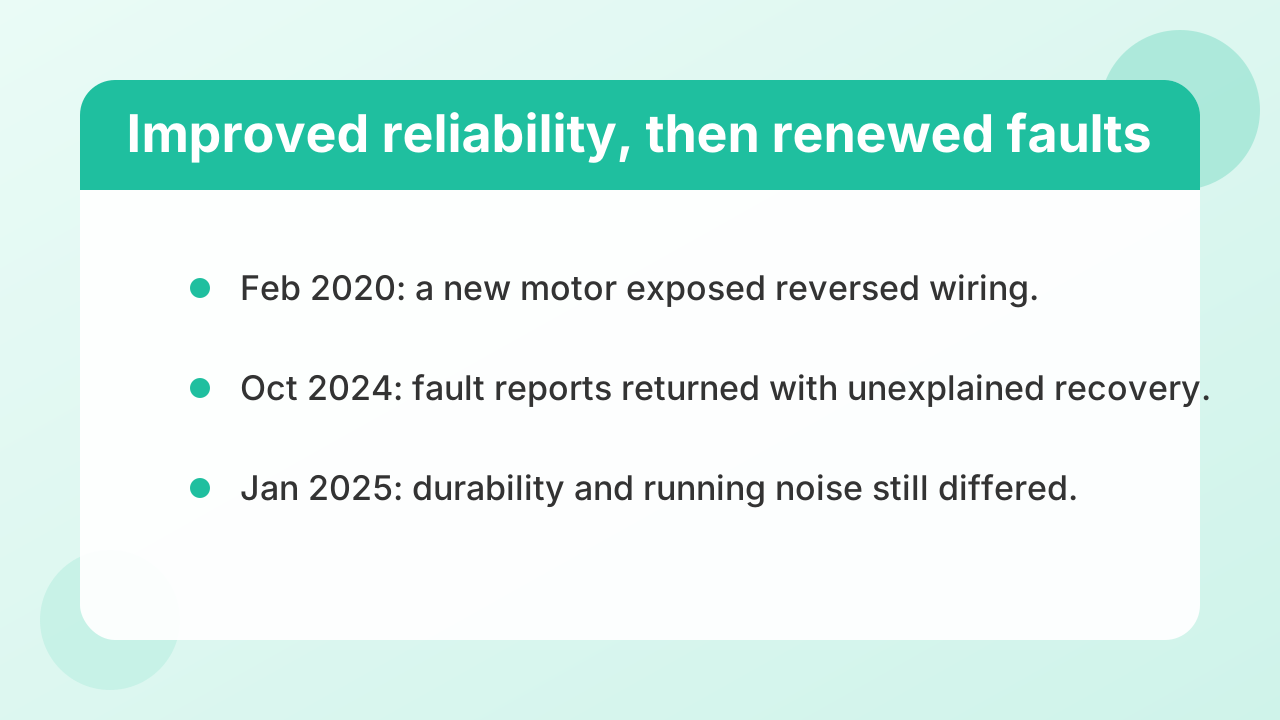
| Oct 2024 | Fault reports returned, including stopping followed by unexplained recovery. |
| Jan 2025 | Mr. Okada still reported variation in durability and running noise. |
OK Prostate Chip products related to motor overheating and stopping
The glass semi-long vibrating chip appears in a failure report and remains on the supplied current product list.
Products that appear in these entries
| Product (official name) | Price incl. tax | Relation to this topic |
|---|---|---|
| Glass semi-long vibrating chip (OKプロステート核振チップ ガラス素材セミロングタイプ) | ¥6,600 (about $42 at ¥156 = $1, rate as of 2026-09-04) | The November 2021 entry describes this model stopping after a customer's higher-voltage use. |
The glass semi-long vibrating chip is listed in OK Lab's own online store.
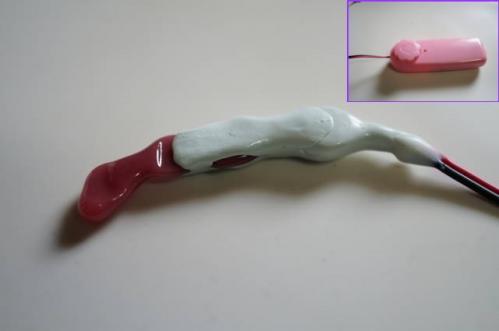
(Source: ok-lab's diary, published November 2021)
https://ok-lab.hatenablog.com/entry/2021/11/13/123751
Products the diary mentioned as alternatives
The diary names no alternative.
Custom three-motor builds: No matching product can be confirmed on the current list.
Common worries about motor overheating and stopping
Customer questions concerned failures, heat tolerance, controller symptoms, and whether motor size could predict vibration strength.
"Does motor failure after 6V use qualify for replacement?"
In an entry published in August 2019, a customer sought repair for a stopped 8mm glass semi-long vibrating chip. The customer also wanted a thinner cable. Mr. Okada said cable replacement was possible, but expected it to require replacing the motor too.
He classified 6V operation as outside the rated voltage (normal specified supply level), and did not promise coverage for such failures. The diary does not record whether the repair was completed. He nevertheless offered replacement for an initial motor defect.
(Source: ok-lab's diary, published August 2019)
https://ok-lab.hatenablog.com/entry/2019/08/24/125858
"Are 8mm and 10mm motors equally heat resistant?"
In an entry published in September 2021, Mr. Okada recalled a caller asking about heat treatment of vibrating chips. He said 10mm motors kept running at 100°C, whereas 8mm motors stopped around 80°C and restarted after cooling. The diary does not record what the caller did after receiving this answer.
(Source: ok-lab's diary, published September 2021)
https://ok-lab.hatenablog.com/entry/2021/09/25/125720
"Does a lit controller rule out motor failure?"
In an entry published in April 2022, a customer reported a lit controller but no vibration, although another power source worked. Staff initially explained that starting power requirements differed between motors. The customer then reported continued stopping even at maximum output, especially during patterns containing pauses.
Mr. Okada consequently suspected the motor, rather than assuming the controller was responsible. The diary does not record the final diagnosis. He requested a return so OK Lab could identify which part was faulty.
(Source: ok-lab's diary, published April 2022)
https://ok-lab.hatenablog.com/entry/2022/04/02/123050
"Can motor size guarantee predictable vibration strength?"
In an entry published in January 2025, a customer wanted predictable vibration from a small custom chip. Staff could not confirm motor speeds, and Mr. Okada said his strength comparisons were subjective. He reported considerable differences in motor durability and running noise.
After answering the questions, he declined the custom order because he lacked confidence in meeting the customer's expectations. He instead suggested a simple standard vibrating product in the ¥3,000 (about $19 at ¥156 = $1, rate as of 2026-09-04) class as a way to assess performance.
(Source: ok-lab's diary, published January 2025)
https://ok-lab.hatenablog.com/entry/2025/01/25/122940
Buying from outside Japan
OK Lab ships internationally to countries covered by Japan Post's EMS courier service. Overseas orders are paid in advance by PayPal. Each order carries a ¥400 (about $3 at ¥156 = $1, rate as of 2026-09-04) handling fee, and EMS shipping is charged on top. These terms come from OK Lab's official sales-terms page (written here as plain text, not a link: ok-lab.net/docs/law), checked on September 7, 2026; confirm them on the official store before you order, because they can change.
Summary of this article
| What you wanted to know | The answer |
|---|---|
| What is the short answer? | The diary records overheating and uneven motor reliability. |
| What is the product? | A urethral device made by OK Lab in Japan. |
| What do the technical terms mean? | They distinguish motor protection, electrical supply, connections, and temperature specifications. |
| What problems occurred? | Loose connections, heat, failed starts, and unexplained stopping appeared in dated reports. |
| What did the maker offer? | Construction changes, examination of returns, and historically limited initial-fault replacement. |
| How did reports change? | Improved reliability was followed by renewed fault reports. |
| Which related product is listed? | The glass semi-long vibrating chip costs ¥6,600 (about $42 at ¥156 = $1, rate as of 2026-09-04) including tax on the supplied list. |
| What concerned customers? | Heat tolerance, repair eligibility, controller symptoms, and predictable vibration. |
| How do overseas purchases work? | Advance PayPal payment, a ¥400 (about $3 at ¥156 = $1, rate as of 2026-09-04) handling fee, and additional EMS shipping. |
| What connects these findings? | The diary treats motor behavior, construction, and replacement terms as separate concerns. |
Source: ok-lab's diary (Okada Comfortable Life Laboratory). The original entries are in Japanese; quotations on this page are translated. Photos and videos are on the original entries.
This article is a summary of the maker's development diary. The product is not a medical device and no result is guaranteed. If anything feels wrong or worries you, see a doctor. Prices, specifications and cautions change, so confirm the latest information on the official blog and the official site. Questions about ordering and shipping go to the seller.