![White buildup on your chip? | Cleaning reports exist, but safety questions remain [OK Prostate Chip]](/img/a/T0893/eyecatch.svg)
This page is based on entries from "ok-lab's diary" (https://ok-lab.hatenablog.com/), the Japanese development diary written by Mr. Okada, founder of OK Lab, a small company in Japan (Okada Comfortable Life Laboratory). Only the entries about "white buildup on a urethral chip" are summarized here, in order of publication. Past prices and sizes are as written at the time. Current prices come from the official product list (retrieved September 4, 2026). Quotations are translated from Japanese.
Note: This page is a personal reading log by someone with no connection to the maker or the seller. It reflects the source entries as of their publication dates and makes no guarantee of accuracy or safety. The product is not a medical device; talk to a doctor about any health decision. Check the official site for current information. This page contains advertising.
In short
Solid deposits can leave a chip rough, and one customer reported blood in their urine.
The diary discusses cleaning chemicals, coating damage, and medical assessment, without establishing a universally safe cleaning method.
Current listings include related resin chips, but do not specify the historical M and L size options.
If you see blood in your urine, even a small amount or for the first time, do not wait and see. See a urologist right away. If you suddenly cannot urinate, or the device cannot be removed, do not try to fix it yourself. Go to a medical facility, including emergency care, immediately.
About this product

The OK Prostate Chip is a small device that is placed in the urethra (the urine passage) so that it acts on the prostate; the maker sells it in several shapes, sizes and materials. It is made and sold by OK Lab (Okada Comfortable Life Laboratory), a small company in Japan, through its own online store, and prices are in Japanese yen (JPY). The maker's development diary, "ok-lab's diary", is written in Japanese. This page is an English summary of it, and every quotation is translated. OK Lab ships internationally, so readers outside Japan can order (see "Buying from outside Japan" below). Product names on this page are plain-English descriptions. The official Japanese product name is shown once in the product table so you can find the same item in the store.
Before you read: key terms
| Term | Plain-English meaning |
|---|---|
| Urethra | The urine passage; the chip sits within this passage to act on the prostate. |
| Resin | Material used to make or coat chips; these entries discuss both surface deposits and coating damage. |
| Citric acid | A substance discussed in household cleaning and lemon-juice reports as a possible deposit remover. |
| Sodium sesquicarbonate | A cleaning substance tested against white deposits; its compatibility with the chip's resin had not been tested. |
| Weak base | A chemical category invoked when discussing cleaner compatibility. The diary does not explain this. |
| Auxiliary chip | An accompanying chip attached to the main device; its particular purpose here: The diary does not explain this. |
| M and L | Size labels used in the historical flat curved chip reports to distinguish the versions compared. |
What happens: white buildup on a urethral chip
The OK Prostate Chip is a device placed in the urethra (the urine passage) to act on the prostate. The white buildup discussed here is unwanted solid material on the chip's surface after it has remained inside the body. It has no described purpose, and the cleaning reports concern deposits on the device. Customers asked about roughness, possible material damage, and whether an affected chip remained usable.
White buildup appeared on returned chips after prolonged placement
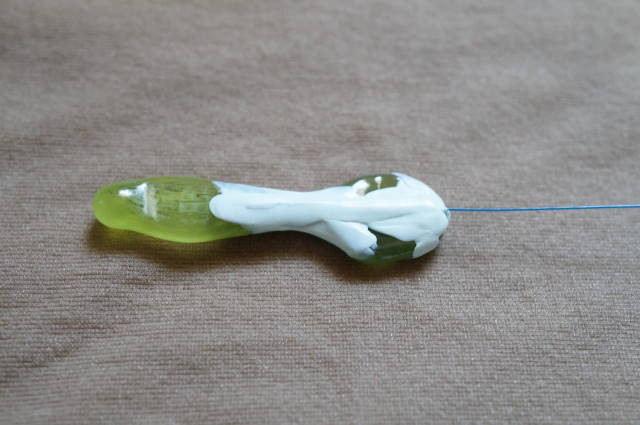
In an entry published in April 2018, Mr. Okada described solid material on chips returned to the company. He associated this buildup with prolonged placement in the urethra. His comparison was with deposits on other devices left in urine passages, rather than a verified identification of the material.
The entry did not identify a particular chip model or measure how quickly deposits developed. His cleaning comments came from personal experience, and later entries revised that advice. Mr. Okada also cautioned that the chip's resin coating could peel.
(Source: ok-lab's diary, published April 2018)
https://ok-lab.hatenablog.com/entry/20180421/1524299808
Rough white buildup prompted a return, investigation, and replacement
In an entry published in August 2022, a customer reported blood in their urine and a rough chip surface after 3 days. They asked whether the flat curved resin chip had deteriorated and whether it remained usable. OK Lab initially allowed for a manufacturing defect and requested its return for investigation and replacement.
After inspection, the manufacturer judged the removable rough layer to be deposited material rather than erosion of the chip. A replacement was sent, but the diary does not record how that replacement performed. Mr. Okada advised considering medical tests because this amount of buildup within 3 days was unfamiliar to him.
(Source: ok-lab's diary, published August 2022)
https://ok-lab.hatenablog.com/entry/2022/08/20/122920
White buildup also appeared on a studded resin chip
In a separate entry published in August 2022, a contributor reported white material on a long studded resin chip (Long Zoro). Deposits had appeared on its first day, especially around the bumps and curved areas. The attached flat auxiliary chip (an accompanying chip connected to the main device) had stayed clean.
The contributor suspected that deposits could affect any chip made from this resin, rather than this shape alone. Their subsequent cleaning experiment raised a question about compatibility between the cleaner and the chip material. The manufacturer advised presenting cleaning claims with a warning that different deposits might respond differently.
(Source: ok-lab's diary, published August 2022)
https://ok-lab.hatenablog.com/entry/2022/08/27/123001
White buildup stopped after a size change in one report
In an entry published in May 2023, a customer wanted to keep using a flat curved chip despite earlier deposits. The M size developed buildup within 3 days, while the L remained clean after 10 days, according to their report. They also reported smoother urination with the longer chip.
The customer proposed that the earlier size had left urine pooled around the chip. Mr. Okada suspected that a chip shorter than the prostate might restrict urine flow, while noting differences in urine composition. He suggested that a longer chip might help someone with a persistent feeling of incomplete emptying.
(Source: ok-lab's diary, published May 2023)
https://ok-lab.hatenablog.com/entry/2023/05/06/123024
The maker's answer to white buildup on a urethral chip
The diary reports possible cleaning approaches, but also records coating damage, untested compatibility, and advice to seek medical assessment.
White buildup cleaning reports included a warning about peeling resin
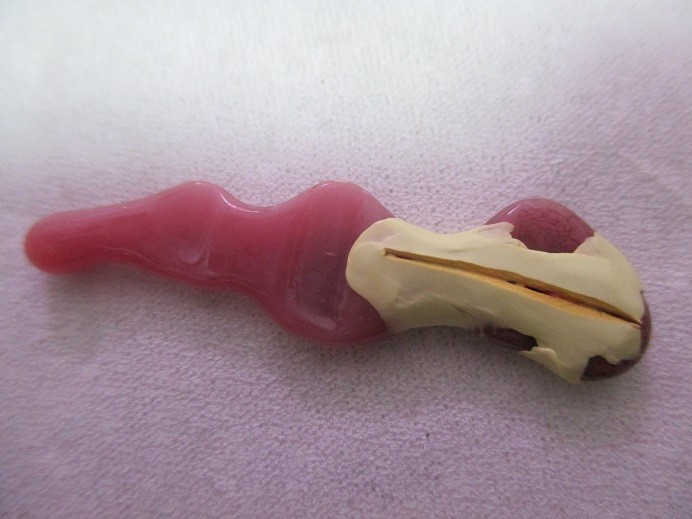
In an entry published in May 2018, Mr. Okada reproduced a contributor's report about deposits on glass chips. The report described lemon juice and gentle cleaning as effective against the solid material. It also warned that forceful rubbing could cause the resin coating to peel.
The contributor believed citric acid (a substance discussed as a cleaner) explained the result. They doubted that saliva could remove stone-like deposits formed during prolonged placement. Mr. Okada presented the report for reference, including its caution about damage to resin.
(Source: ok-lab's diary, published May 2018)
https://ok-lab.hatenablog.com/entry/20180511/1526036007
Sodium sesquicarbonate reduced white buildup in one contributor's informal test
In an entry published in August 2022, a contributor described sodium sesquicarbonate (a cleaning substance) as helpful against white deposits. They reported that the material became more brittle and that a visible amount came away. The test involved deposits the contributor had deliberately allowed to accumulate.
Some buildup remained after that experiment. The manufacturer cautioned that not every crystal found in urine would respond to this type of cleaner. They advised including that limitation whenever the cleaning claim was shared.
(Source: ok-lab's diary, published August 2022)
https://ok-lab.hatenablog.com/entry/2022/08/27/123001
Citric acid reports replaced earlier saliva-based advice about white buildup
In the same August 2022 entry, the contributor followed up on the remaining deposits after trying citric acid. They reported that this substance also removed white material. Mr. Okada welcomed the result and referred to citric acid's use in household cleaning.
The diary does not record a controlled safety test of this treatment on the chip. Mr. Okada also revisited his early saliva-based suggestion and acknowledged advice against it. The diary's revised advice favored citric acid and rejected licking as a cleaning method.
(Source: ok-lab's diary, published August 2022)
https://ok-lab.hatenablog.com/entry/2022/08/27/123001
If you see blood in your urine, even a small amount or for the first time, do not wait and see. See a urologist right away. If you suddenly cannot urinate, or the device cannot be removed, do not try to fix it yourself. Go to a medical facility, including emergency care, immediately.
How white buildup on a urethral chip changed over time

| Published | What the diary said then |
|---|---|
| Apr 2018 | Mr. Okada associated solid deposits on returned chips with prolonged placement. |
| May 2018 | A cleaning report added a warning about resin peeling. |
| Aug 2022 | The manufacturer announced a precautionary halt to its flat curved chip marketplace listing. |
| Aug 2022 | A contributor reported cleaner results; the manufacturer disclosed that resin compatibility remained untested. |
| May 2023 | A customer's size comparison prompted a new hypothesis about urine flow and deposits. |
OK Prostate Chip products related to white buildup on a urethral chip
The reports discuss flat curved chips in M and L sizes and a standard semi-long resin chip in M size.
The August 2022 listing halt concerned Amazon, an online marketplace; it did not establish permanent discontinuation. The current product list gives no size options, so the historical M and L labels do not confirm today's choices.
Products that appear in these entries
| Product (official name) | Price incl. tax | Relation to this topic |
|---|---|---|
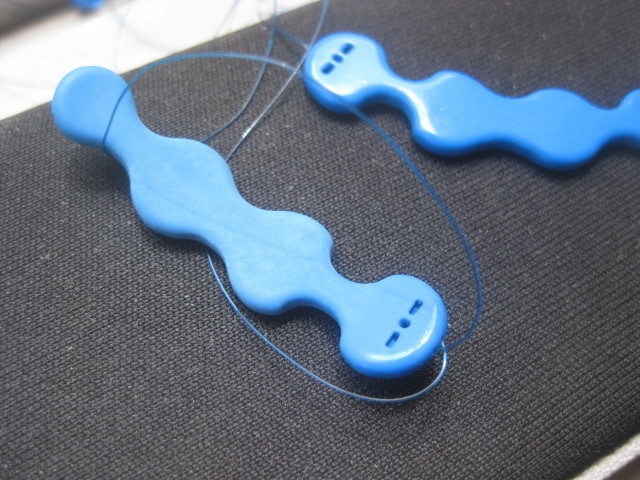
| Flat curved resin chip (OKプロステートチップ フラット面カーブ型 セミロングタイプ(生体適合樹脂)) | ¥6,050 (about $39 at ¥156 = $1, rate as of 2026-09-04) | In August 2022, this was the chip involved in the rough-surface report and subsequent manufacturer investigation. |
| Standard semi-long resin chip (OKプロステートチップ セミロングタイプ(生体適合樹脂)) | ¥5,500 (about $35 at ¥156 = $1, rate as of 2026-09-04) | In August 2022, the customer reported no corresponding surface problem with their standard semi-long resin chip. |
The flat curved resin chip is sold through the company's own online store.
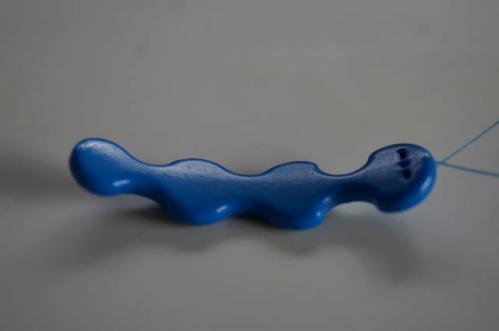
The standard semi-long resin chip is sold through the company's own online store.

(Source: ok-lab's diary, published August 2022)
https://ok-lab.hatenablog.com/entry/2022/08/20/122920
Products the diary mentioned as alternatives
The diary names no alternative.
Long studded resin chip (Long Zoro): No matching product can be confirmed on the current list.
Common worries about white buildup on a urethral chip
The questions concerned material damage, cleaner compatibility, possible reuse, and the source of the deposits.
"Does white buildup mean the chip's resin is breaking down?"
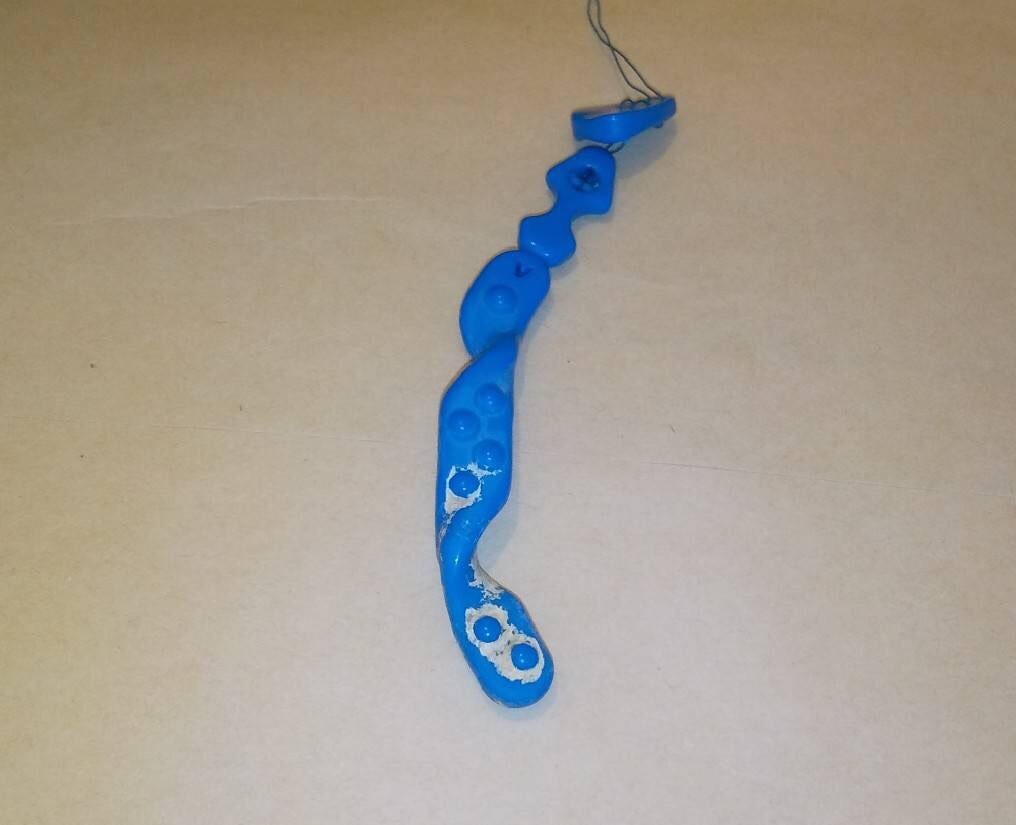
An entry published in August 2022 records a customer's concern that the flat curved chip had deteriorated. They wondered whether residual alcohol could explain the rough surface. The manufacturer reported sparkling reflections, white powder, and a surface layer that could come away during examination.
Those observations supported its view that something had collected on the chip; the composition itself was not tested. Mr. Okada advised considering medical tests if the unusually rapid buildup caused concern.
(Source: ok-lab's diary, published August 2022)
https://ok-lab.hatenablog.com/entry/2022/08/20/122920
"Could white buildup cleaner damage the resin?"
In an entry published in August 2022, the contributor specifically questioned the cleaner's compatibility with the resin. They had not checked a material specification sheet. The manufacturer described sodium sesquicarbonate as a weak base (a chemical category) and thought it probably compatible with the resin.
However, it explicitly said that compatibility had not been tested. The manufacturer advised including its warning that different urinary crystals would not all respond to this cleaner.
(Source: ok-lab's diary, published August 2022)
https://ok-lab.hatenablog.com/entry/2022/08/27/123001
"Can a chip with white buildup be used again?"
In an entry published in August 2022, the customer asked whether a restored glossy surface would make the chip usable again. Their message followed unsuccessful cleaning efforts at home and the manufacturer's report that the rough material could come away. The diary does not record an explicit reply confirming that the affected chip was safe for reuse.
Mr. Okada said he intended to return the examined chip and asked for feedback about the replacement. He also suggested medical assessment of the unusually heavy deposit.
(Source: ok-lab's diary, published August 2022)
https://ok-lab.hatenablog.com/entry/2022/08/20/122920
"Could white buildup come from lubricant rather than urine?"
In an entry published in August 2022, the customer questioned whether urine, semen, or lubricant could explain the changed surface. The company's reply left all of those possibilities unresolved. It had not tested what the deposited material contained.
The customer also raised concerns about hydration and an underlying tendency to form stones. No test result in that entry established any of those explanations. Mr. Okada suggested that a hospital might analyze the deposit and advised assessment if there were concerns.
(Source: ok-lab's diary, published August 2022)
https://ok-lab.hatenablog.com/entry/2022/08/20/122920
Buying from outside Japan

OK Lab ships internationally to countries covered by Japan Post's EMS courier service. Overseas orders are paid in advance by PayPal. Each order carries a ¥400 (about $3 at ¥156 = $1, rate as of 2026-09-04) handling fee, and EMS shipping is charged on top. These terms come from OK Lab's official sales-terms page (written here as plain text, not a link: ok-lab.net/docs/law), checked on September 7, 2026; confirm them on the official store before you order, because they can change.
Summary of this article
| What you wanted to know | The answer |
|---|---|
| What is the short answer? | The diary reports removable deposits, alongside unresolved questions about their cause and cleaning safety. |
| What is the product? | A urethral device made and sold by OK Lab in Japan, with prices in Japanese yen. |
| What do the cleaning terms mean? | Citric acid and sodium sesquicarbonate are substances discussed in deposit-removal reports. |
| What happened in the cases? | Reports describe surface buildup, a manufacturer investigation, and a customer's later comparison of chip sizes. |
| What was the maker's response? | The diary shared cleaning reports, cautioned about material damage, and suggested medical assessment for unexplained heavy deposits. |
| What changed over time? | Early cleaning advice was revised, chemical compatibility remained uncertain, and a later report raised a urine-flow hypothesis. |
| Which current products appear? | The flat curved resin chip costs ¥6,050 (about $39 at ¥156 = $1, rate as of 2026-09-04); the standard semi-long resin chip costs ¥5,500, (about $35 at ¥156 = $1, rate as of 2026-09-04) both including tax. |
| Were the customers' questions resolved? | The deposit's composition and an explicit assurance about reuse were not recorded in the investigated case. |
| How can overseas customers order? | The stated terms use advance PayPal payment, a ¥400 (about $3 at ¥156 = $1, rate as of 2026-09-04) handling fee, and additional EMS shipping charges. |
Source: ok-lab's diary (Okada Comfortable Life Laboratory). The original entries are in Japanese; quotations on this page are translated. Photos and videos are on the original entries.
This article is a summary of the maker's development diary. The product is not a medical device and no result is guaranteed. If anything feels wrong or worries you, see a doctor. Prices, specifications and cautions change, so confirm the latest information on the official blog and the official site. Questions about ordering and shipping go to the seller.