![Can bleach safely clean a prostate chip? | The diary leaves long-term durability untested [OK Prostate Chip]](/img/a/T0891/eyecatch.svg)
This page is based on entries from "ok-lab's diary" (https://ok-lab.hatenablog.com/), the Japanese development diary written by Mr. Okada, founder of OK Lab, a small company in Japan (Okada Comfortable Life Laboratory). Only the entries about "cleaning a prostate chip with bleach" are summarized here, in order of publication. Past prices and sizes are as written at the time. Current prices come from the official product list (retrieved September 4, 2026). Quotations are translated from Japanese.
Note: This page is a personal reading log by someone with no connection to the maker or the seller. It reflects the source entries as of their publication dates and makes no guarantee of accuracy or safety. The product is not a medical device; talk to a doctor about any health decision. Check the official site for current information. This page contains advertising.
In short
- The diary describes bleach cleaning in several contexts without establishing safety for every chip or material.
- Mr. Okada reports bleach treatment during repairs and favors a new condom over reuse.
- The current list includes the ceramic models discussed in a June 2019 repair case.
About this product

The OK Prostate Chip is a small device that is placed in the urethra (the urine passage) so that it acts on the prostate; the maker sells it in several shapes, sizes and materials. It is made and sold by OK Lab (Okada Comfortable Life Laboratory), a small company in Japan, through its own online store, and prices are in Japanese yen (JPY). The maker's development diary, "ok-lab's diary", is written in Japanese. This page is an English summary of it, and every quotation is translated. OK Lab ships internationally, so readers outside Japan can order (see "Buying from outside Japan" below). Product names on this page are plain-English descriptions. The official Japanese product name is shown once in the product table so you can find the same item in the store.
Before you read: key terms
| Term | Plain-English meaning |
|---|---|
| Urethra | The urine passage, where the device is placed; the June 2019 complaint concerns discomfort there. |
| Chlorine bleach | A cleaning agent discussed for residue removal and for treating returned items before repair. |
| Epoxy | A resin that hardens, used to cover chip ends and thread connections in the June 2019 account. |
| Nylon thread | A strand connected to the chip. Its purpose is not described in these extracts: The diary does not explain this. |
| Silicone rubber | A soft material proposed for a thread connection to address sharpness; Mr. Okada also mentions cleaning concerns. |
| Autoclave sterilization | A treatment named for used chips and thread-replacement work. The diary does not explain this. |
What happens: cleaning a prostate chip with bleach
The OK Prostate Chip is a device placed inside the urethra (the urine passage), as described in the June 2019 entry. Bleach cleaning here means chlorine-based treatment discussed for residue, returned products, and repair work. The entries cover different materials, including epoxy (a resin material), ceramic chips with attached threads, and a separate discussion of condoms. Their cleaning passages concern objects outside the body; none describes applying bleach inside the urine passage.
Mr. Okada's bleach cleaning report left long-term durability untested
In an entry published in October 2018, Mr. Okada described replacing alcohol wiping with bleach cleaning for fecal residue. He reported complete residue removal and described epoxy as resistant to chemicals, with no deterioration observed at that point. The paragraph does not identify an exact product or a specific part of the body.
Mr. Okada also said he had not tested resistance to nightly exposure over 1 year. The later supplied entries do not report a completed test answering that durability question. He suggested a gentler cleaning agent might exist, without naming an alternative.
(Source: ok-lab's diary, published October 2018)
https://ok-lab.hatenablog.com/entry/20181005/1538740535
Sharp ceramic joints led to a repair offer involving bleach cleaning
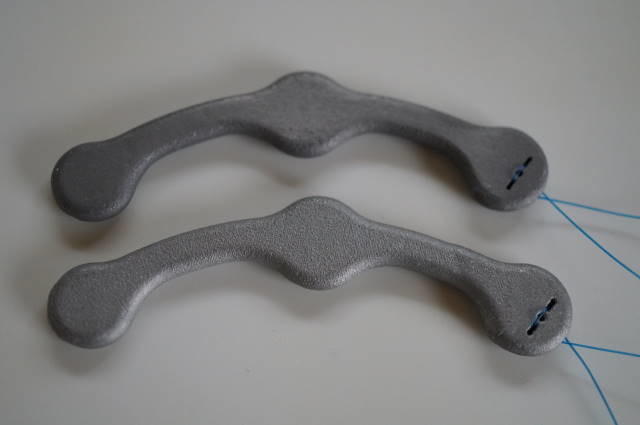
In an entry published in June 2019, a customer reported painful thread joints on M-size examples of two ceramic models. The complaint concerned the ceramic stimulation chip and the short curved ceramic chip, each with a sharp projection at its thread connection. Mr. Okada said he had noticed this feature during development but had considered it acceptable before the complaint.
He initially offered to round the joints; after receiving the items, he proposed silicone rubber (a soft material) at the connection. The diary records that changed repair plan, but does not record how the repaired chips felt in use. Mr. Okada advised returning the affected products so he could address the joint shape.
(Source: ok-lab's diary, published June 2019)
https://ok-lab.hatenablog.com/entry/2019/06/29/143536
Bleach cleaning preceded workshop tests that failed to reproduce a motor fault
In an entry published in March 2020, Mr. Okada recalled an earlier vibrating-chip repair that remained difficult to diagnose. That customer had returned the item twice because the reported problem persisted after its first visit to the workshop. Mr. Okada described bleach treatment before strength testing and an 80-degree heat test, which did not reproduce the fault.
Continuous vibration later stopped at about 40h, which he suspected reflected the motor's lifespan. No matching product can be confirmed on the current list. His general repair advice in that entry was to return a unit that no longer worked.
(Source: ok-lab's diary, published March 2020)
https://ok-lab.hatenablog.com/entry/2020/03/21/143802
A prototype return mentioned bleach cleaning before the surface was finished
In an entry published in September 2021, the diary describes an unpolished stainless-steel prototype with a notably rough surface. It had arrived alongside a titanium prototype; the account describes the steel item as distinctly heavier. The account reports bleach cleaning in connection with returning the used prototype, without identifying it as a finished retail product.
The diary does not record how the prototype felt after polishing. No matching product can be confirmed on the current list. The stated plan was a return to the maker for polishing.
(Source: ok-lab's diary, published September 2021)
https://ok-lab.hatenablog.com/entry/2021/09/11/125735
The maker's answer to cleaning a prostate chip with bleach

Mr. Okada's replies address particular materials and repair jobs, with limits on what had been tested.
A new condom remained Mr. Okada's preference despite his bleach cleaning comments
In an entry published in October 2018, Mr. Okada discussed whether a condom could be reused. He thought rubber could tolerate bleach, adding that rubber gloves reportedly resisted even undiluted bleach. He cited that reported resistance when explaining why he thought bleaching a condom might be possible.
Mr. Okada said his own tests had shown no problem, while also expecting the condom to tear eventually. His suggestion that some reuse might be possible was tentative. He described a new condom for every use as the safest and cleanest choice.
(Source: ok-lab's diary, published October 2018)
https://ok-lab.hatenablog.com/entry/20181027/1540618195
Thread shrinkage in sterilizing equipment prompted bleach cleaning for ceramic repairs
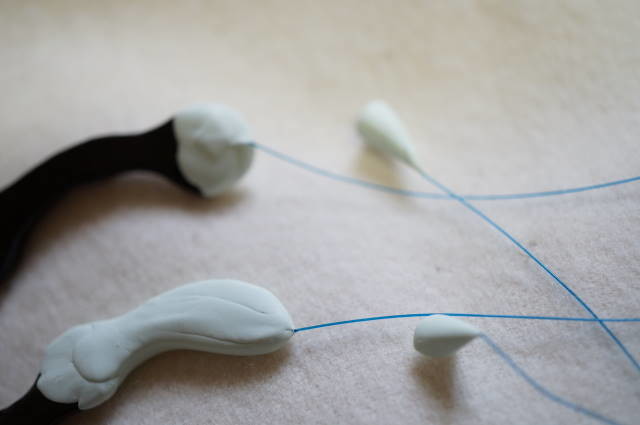
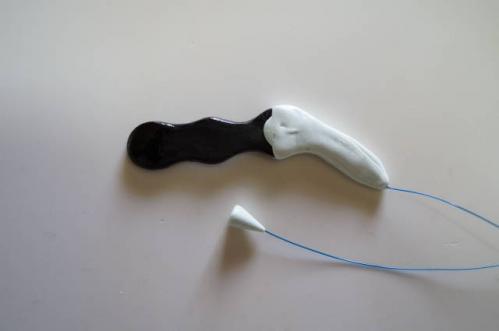
In June 2019, Mr. Okada said sterilizing equipment would shrink nylon threads (strands attached to the ceramic chips). He therefore described bleach treatment as his planned preparation for repair, with the existing thread remaining part of the product. His explanation concerned that particular repair job and its thread connection.
He also said ceramic chips had resin covering their rear ends, unlike earlier glass versions. Adding silicone rubber could complicate cleaning and retain odors, according to his reply. For customers concerned about joint sharpness, Mr. Okada offered the rubber connection on request.
(Source: ok-lab's diary, published June 2019)
https://ok-lab.hatenablog.com/entry/2019/06/29/143536
Thread replacement work involved bleach cleaning and sterilization in September 2021
In September 2021, Mr. Okada described bleach cleaning and autoclave sterilization (a sterilizing treatment) for items sent for thread replacement. He raised his own repair practice while discussing the return of the used stainless-steel prototype. His comment was an apology to the prototype's maker for returning an item after use.
The entry does not identify the materials or exact models of the items sent for those thread replacements. It names the treatment without explaining the equipment or providing evidence of a completed safety assessment. Mr. Okada describes his own handling of returned items; the passage gives no separate recommendation covering all current models.
(Source: ok-lab's diary, published September 2021)
https://ok-lab.hatenablog.com/entry/2021/09/11/125735
How cleaning a prostate chip with bleach changed over time

| Published | What the diary said then |
|---|---|
| Oct 2018 | Mr. Okada reported residue removal but acknowledged missing long-term durability testing. |
| Oct 2018 | A condom discussion favored a new item despite tentative comments about reuse. |
| Jun 2019 | Thread shrinkage influenced the proposed cleaning approach for returned ceramic chips. |
| Mar 2020 | Bleach-treated workshop returns still presented difficulties reproducing intermittent motor faults. |
| Sep 2021 | Mr. Okada described bleach cleaning and autoclave sterilization during thread-replacement work. |
The diary does not say what the current state is.
OK Prostate Chip products related to cleaning a prostate chip with bleach
The current list contains the ceramic models involved in the June 2019 complaint.
Products that appear in these entries
| Product (official name) | Price incl. tax | Relation to this topic |
|---|---|---|
| Ceramic stimulation chip (OKプロステートチップ 陶器素材覚醒タイプ) | ¥5,500 (about $35 at ¥156 = $1, rate as of 2026-09-04) | In June 2019, an M-size example prompted a thread-joint complaint and Mr. Okada's explanation of cleaning before repair. |
| Short curved ceramic chip (OKプロステートチップ 陶器素材ショート勾玉タイプ) | ¥4,400 (about $28 at ¥156 = $1, rate as of 2026-09-04) | In June 2019, an M-size example was returned over a sharp joint, alongside the maker's discussion of repair preparation. |
The supplied current list gives no size options. It therefore does not confirm availability of the historical M sizes.
The ceramic stimulation chip is sold through OK Lab's own online store.

The short curved ceramic chip is sold through OK Lab's own online store.
(Source: ok-lab's diary, published June 2019)
https://ok-lab.hatenablog.com/entry/2019/06/29/143536
Products the diary mentioned as alternatives
The diary names no alternative.
June 2019 rubber-joint customization: No matching product can be confirmed on the current list.
Common worries about cleaning a prostate chip with bleach

(The material contains no questions from readers about bleach cleaning.)
Buying from outside Japan

OK Lab ships internationally to countries covered by Japan Post's EMS courier service. Overseas orders are paid in advance by PayPal. Each order carries a ¥400 (about $3 at ¥156 = $1, rate as of 2026-09-04) handling fee, and EMS shipping is charged on top. These terms come from OK Lab's official sales-terms page (written here as plain text, not a link: ok-lab.net/docs/law), checked on September 7, 2026; confirm them on the official store before you order, because they can change.
Summary of this article
| What you wanted to know | The answer |
|---|---|
| What is the short answer? | The diary reports bleach use, while leaving material durability and current cleaning practice incompletely documented. |
| What is the product? | A small urethral device made and sold by OK Lab in Japan, with prices in JPY. |
| Which terms matter? | The entries discuss bleach, epoxy, thread connections, silicone rubber, and autoclave sterilization. |
| What happened in the entries? | Residue cleaning, a ceramic repair, motor testing, and a prototype return involved different circumstances. |
| What did Mr. Okada say? | His replies addressed material tolerance and workshop handling; his condom discussion favored a new item. |
| What changed over time? | The supplied entries progress from 2018 cleaning remarks to 2021 thread-replacement practice. |
| Which current products appear? | The ceramic stimulation chip and short curved ceramic chip match the models in the June 2019 complaint. |
| Were bleach-cleaning questions recorded? | No reader question about bleach cleaning appears in the supplied passages. |
| How do overseas orders work? | The stated terms specify advance PayPal payment, a ¥400 (about $3 at ¥156 = $1, rate as of 2026-09-04) handling fee, and additional EMS shipping. |
Source: ok-lab's diary (Okada Comfortable Life Laboratory). The original entries are in Japanese; quotations on this page are translated. Photos and videos are on the original entries.
This article is a summary of the maker's development diary. The product is not a medical device and no result is guaranteed. If anything feels wrong or worries you, see a doctor. Prices, specifications and cautions change, so confirm the latest information on the official blog and the official site. Questions about ordering and shipping go to the seller.