![Can I autoclave my prostate chip? | The maker excludes chips with nylon thread [OK Prostate Chip]](/img/a/T0888/eyecatch.svg)
This page is based on entries from "ok-lab's diary" (https://ok-lab.hatenablog.com/), the Japanese development diary written by Mr. Okada, founder of OK Lab, a small company in Japan (Okada Comfortable Life Laboratory). Only the entries about "autoclave sterilization" are summarized here, in order of publication. Past prices and sizes are as written at the time. Current prices come from the official product list (retrieved September 4, 2026). Quotations are translated from Japanese.
Note: This page is a personal reading log by someone with no connection to the maker or the seller. It reflects the source entries as of their publication dates and makes no guarantee of accuracy or safety. The product is not a medical device; talk to a doctor about any health decision. Check the official site for current information. This page contains advertising.
In short
- The maker reports that autoclave heat shrinks the nylon thread attached to chips.
- OK Lab declined autoclave compatibility for nylon-threaded chips despite reporting successful tests on chip bodies.
- Later entries describe component tests and suspected heat-related breakage without establishing whole-device autoclave compatibility.
About this product
The OK Prostate Chip is a small device that is placed in the urethra (the urine passage) so that it acts on the prostate; the maker sells it in several shapes, sizes and materials. It is made and sold by OK Lab (Okada Comfortable Life Laboratory), a small company in Japan, through its own online store, and prices are in Japanese yen (JPY). The maker's development diary, "ok-lab's diary", is written in Japanese. This page is an English summary of it, and every quotation is translated. OK Lab ships internationally, so readers outside Japan can order (see "Buying from outside Japan" below). Product names on this page are plain-English descriptions. The official Japanese product name is shown once in the product table so you can find the same item in the store.
Before you read: key terms
| Term | Plain-English meaning |
|---|---|
| Autoclave | A machine using high-pressure steam; the diary describes its use for sterilization and testing resistance to heat. |
| Urethra | The urine passage, where the chip is placed to act on the prostate. |
| Nylon thread | Thread attached to chips, including for connecting several chips together; the maker reports that autoclave heat shrinks it. |
| USB connector | An electrical plug connecting the chip cable and controller, allowing the controller to be detached. |
| Epoxy | A resin used around the connector’s wire joint; the January 2022 entry discusses its resistance to heat. |
| Auxiliary cable | An additional cable in a support assembly; the June 2022 entries discuss covering wires and controlling bending. |
| Heat stress | Strain associated with heating; the fabricator used this explanation when discussing possible crack growth. |
| Silicone-and-nylon cord | A cord containing nylon, discussed alongside the chip’s thread; the maker also ruled it out for autoclaving. |
What happens: autoclave sterilization
The OK Prostate Chip is a small device placed in the urethra (the urine passage) to act on the prostate. An autoclave (a machine using high-pressure steam for sterilization) appears in the diary as workshop equipment for returned devices and heat tests. It treats equipment outside the body, and the entries discuss chip bodies, attached thread, and electrical parts separately. Mr. Okada’s reported findings differ between those components.
Autoclave sterilization made small returned-chip repairs require complete thread replacement
In an entry published in April 2018, Mr. Okada described a returned resin chip whose first chip had lost its thread. The customer wanted the attachment repaired, and the diary describes the repair being carried out. Mr. Okada said the original resin attachment could not be recreated, so the repair used a surface attachment resembling that on glass chips.
He also explained that returned devices immediately received about 40 minutes of high-pressure steam treatment because they entered a product-making workspace. That treatment shrank the existing thread. Mr. Okada’s stated policy therefore required complete thread replacement, even when the original repair request was small.
(Source: ok-lab's diary, published April 2018)
https://ok-lab.hatenablog.com/entry/20180421/1524299808
Mr. Okada reported no damage during prolonged autoclave sterilization testing
In an entry published in August 2021, Mr. Okada described testing a semi-long chip at its designer’s request. He reported more than 10 hours of continuous steam heating at 120°C, with no problem observed. He identified prolonged heating in moisture as a test of the chip’s durability.
Mr. Okada contrasted this result with epoxy (a resin), which he said could soften slightly at 120°C. He reported no such change in the tested chip. The entry describes his test observations, without giving an autoclave compatibility statement for its attached thread.
(Source: ok-lab's diary, published August 2021)
https://ok-lab.hatenablog.com/entry/2021/08/28/125823
Autoclave sterilization also formed part of an unfinished steel prototype’s return
In an entry published in September 2021, Mr. Okada described an unfinished stainless-steel prototype that its fabricator wanted returned for polishing. Mr. Okada reported returning it after personal testing. Autoclave sterilization and chlorine treatment formed part of his handling of that used prototype.
He said customer devices received the same sanitation treatment when returned for thread replacement. This account concerned a prototype returning to its fabricator for further work; it did not announce a finished product.
(Source: ok-lab's diary, published September 2021)
https://ok-lab.hatenablog.com/entry/2021/09/11/125735
Autoclave sterilization tests examined connector parts after ordinary covers deformed
In January 2022, Mr. Okada described a weakness in a standard USB connector (an electrical plug connecting the chip cable and controller). Its outer plastic cover deformed after prolonged exposure to water at 100°C. He reported no deformation when the metal and internal resin base underwent separate autoclave tests at 120°C.
His special male connector used epoxy around the wire joint and cost ¥1,000 (about $6 at ¥156 = $1, rate as of 2026-09-04) excluding tax, as published that month. He described this as the standard connector’s ¥500 (about $3 at ¥156 = $1, rate as of 2026-09-04) excluding tax price plus a ¥500 (about $3 at ¥156 = $1, rate as of 2026-09-04) processing charge. Mr. Okada offered no guarantee of durability or safety for the special connector.
(Source: ok-lab's diary, published January 2022)
https://ok-lab.hatenablog.com/entry/2022/01/15/124252
Autoclave sterilization tests exceeded the thin auxiliary cable’s stated heat rating
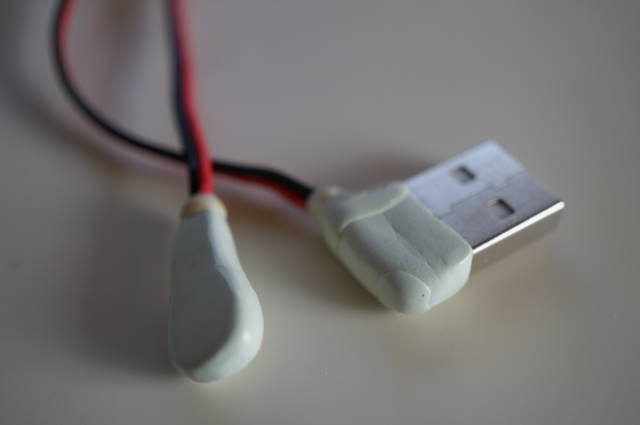
In an entry published earlier in June 2022, Mr. Okada discussed an auxiliary cable (an additional cable in the device’s support assembly). He was developing a support arrangement intended to cover wires and restrict unwanted bending. He reported that the additional cable appeared to withstand both boiling and high-pressure steam in his heat tests.
A later June 2022 entry reported a supplier inquiry about the thin auxiliary cable used in the six-line support. Its official heat rating was 105°C, while Mr. Okada reported no apparent problem during his own 120°C autoclave test. He presented the higher-temperature result as his own observation.
(Source: ok-lab's diary, published June 2022)
https://ok-lab.hatenablog.com/entry/2022/06/04/123036
(Source: ok-lab's diary, published June 2022)
https://ok-lab.hatenablog.com/entry/2022/06/18/123201
The maker's answer to autoclave sterilization
The maker’s responses addressed thread shrinkage, workshop repair costs, and uneven heating without giving blanket approval for assembled chips.
Nylon shrinkage led Mr. Okada to abandon autoclave sterilization before shipping
In an entry published in November 2017, Mr. Okada reported discovering that high-pressure sterilization shrank the nylon thread used on his chips. He noticed the problem immediately before dispatch and had to remake items for multiple customers. He explained that his earlier personal tests had not alerted him to the shortening.
The diary says outgoing products then received boiling treatment only. Mr. Okada believed ordinary boiling appeared not to cause the same thread shrinkage. He therefore advised against high-pressure sterilization because of its effect on the thread.
(Source: ok-lab's diary, published November 2017)
https://ok-lab.hatenablog.com/entry/20171129/1511963864
Autoclave sterilization work contributed to charges for each connected chip
In an entry published in September 2021, Mr. Okada revised repair charges for chips whose thread was not bonded into resin. He had previously announced thread replacement at ¥500 (about $3 at ¥156 = $1, rate as of 2026-09-04) excluding tax for that category. The revised charge was ¥500 (about $3 at ¥156 = $1, rate as of 2026-09-04) excluding tax per connected chip.
His example involved five chips and included 30 minutes of autoclave treatment among the workshop tasks. He said the hands-on work, particularly handling the thread connections, made a single flat charge uneconomic. Mr. Okada suggested limiting the paid replacement request to the leading chip to reduce the service expense.
(Source: ok-lab's diary, published September 2021)
https://ok-lab.hatenablog.com/entry/2021/09/25/125720
Uneven heating remained a concern despite reported autoclave sterilization tolerance
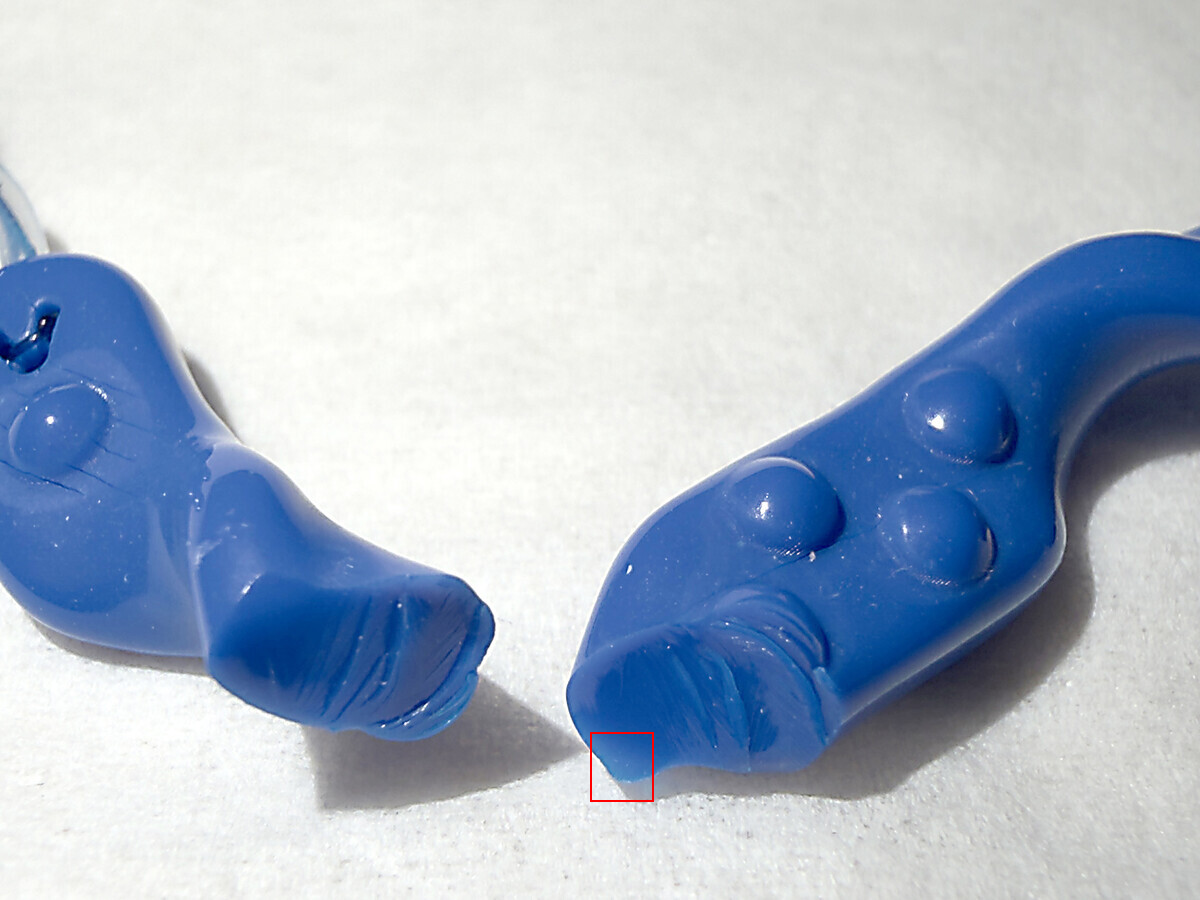
In an entry published in July 2026, the fabricator described inspecting a broken chip, nicknamed the Blue Chip. They found numerous fine cracks parallel to its layers, resembling those seen after long use. They reported that a glass container’s inner base could exceed 100°C, with an upper limit of 115°C, when touching a heated, water-filled pan.
The fabricator suspected heat stress (strain associated with heating) from hot-glass contact had extended a crack until the chip broke. They believed the chip tolerated uniform autoclave heating but could fail under uneven heating. Mr. Okada treated the explanation as tentative and favored heating in water with movement, reducing concentrated contact with hot surfaces.
(Source: ok-lab's diary, published July 2026)
https://ok-lab.hatenablog.com/entry/2026/07/04/122918
How autoclave sterilization changed over time
| Published | What the diary said then |
|---|---|
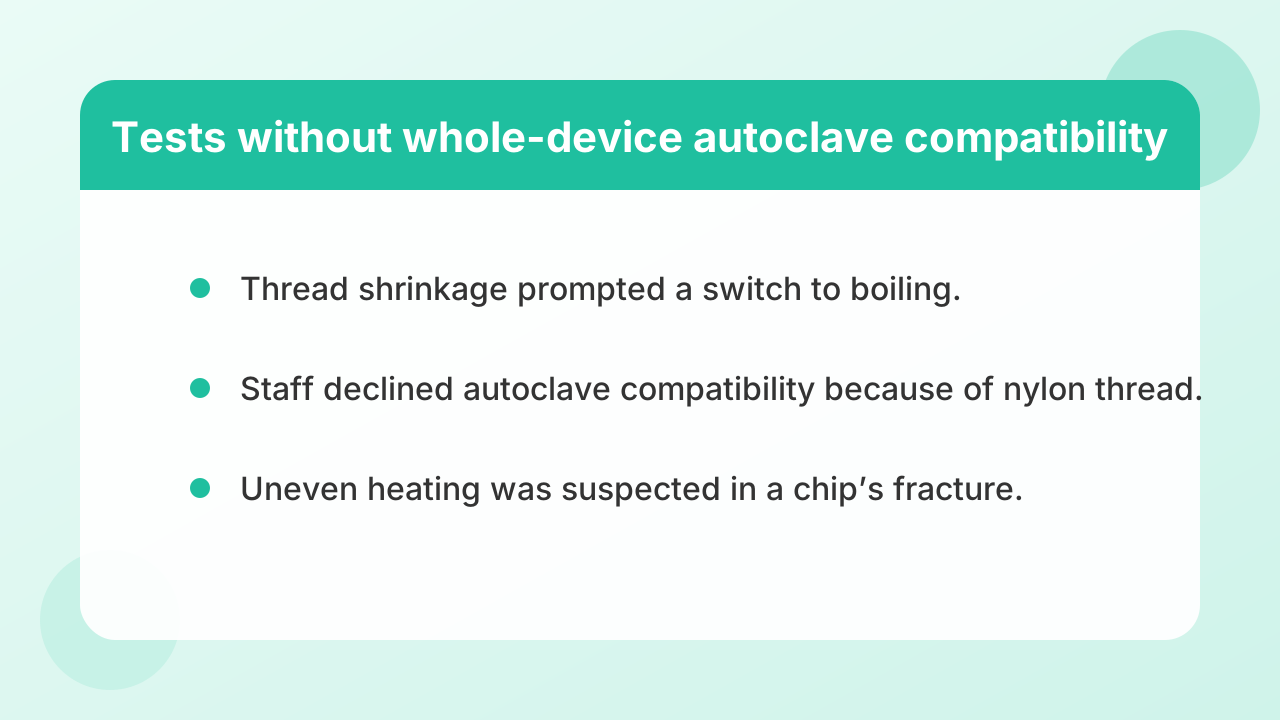
| Nov 2017 | Thread shrinkage prompted remakes and a switch to boiling before dispatch. |
| Apr 2018 | Workshop treatment meant returned devices needed complete thread replacement. |
| Mar 2019 | Accepted repairs were limited to glass-chip thread or motor-unit replacement. |
| Aug 2021 | Mr. Okada reported no problem during prolonged steam testing of a semi-long chip. |
| Sep 2021 | Certain thread-replacement fees changed to a charge per connected chip. |
| Jan 2022 | A special connector addressed cover deformation, without durability or safety guarantees. |
| Jun 2022 | The thin cable’s supplier rating was lower than Mr. Okada’s reported test temperature. |
| Jan 2023 | Staff declined autoclave compatibility because the assembled product contained nylon thread. |
| Jul 2026 | The fabricator suspected uneven heating contributed to a chip’s fracture. |
OK Prostate Chip products related to autoclave sterilization
The semi-long resin chip appears in a direct autoclave inquiry and is on the supplied current product list.
Products that appear in these entries
| Product (official name) | Price incl. tax | Relation to this topic |
|---|---|---|
| Semi-long resin chip (OKプロステートチップ セミロングタイプ(生体適合樹脂)) | ¥5,500 (about $35 at ¥156 = $1, rate as of 2026-09-04) | A January 2023 first-time buyer asked about autoclaving this model; staff declined compatibility because of its nylon thread. |
The semi-long resin chip is listed in OK Lab’s own online store.

(Source: ok-lab's diary, published January 2023)
https://ok-lab.hatenablog.com/entry/2023/01/14/122952
Products the diary mentioned as alternatives
The diary names no alternative.
Historical items discussed here include the semi-long test chip, unfinished steel prototype, special connector, support-cable builds, and the Blue Chip. No matching product can be confirmed on the current list.
Common worries about autoclave sterilization
The reader requests concern thread repairs, the limits of workshop services, and whether an assembled chip can withstand autoclave heat.
"Does autoclave sterilization affect a simple thread repair?"
A separate April 2018 repair request concerned a customer who had cut the thread and wanted it reattached. This was distinct from the customer whose first chip had lost its thread.
The request appeared alongside Mr. Okada’s explanation that returned items received immediate treatment because they entered the production workspace. The diary does not record how this customer’s chip performed after repair. Mr. Okada’s stated policy was complete thread replacement, even for an otherwise small repair.
(Source: ok-lab's diary, published April 2018)
https://ok-lab.hatenablog.com/entry/20180421/1524299808
"Does autoclave sterilization mean OK Lab will reshape my chip?"
In March 2019, a customer asked whether an oversized motorized chip could be reshaped because its rear section would not fit. Mr. Okada refused reshaping after use and limited workshop repairs to replacing glass chips’ nylon thread or motor unit. He said returned assemblies underwent autoclaving, with only the glass retained and all other parts discarded.
Published charges were ¥1,000 (about $6 at ¥156 = $1, rate as of 2026-09-04) excluding tax for nylon-thread replacement and ¥3,000 (about $19 at ¥156 = $1, rate as of 2026-09-04) excluding tax for motor-unit replacement. The diary does not record whether this customer accepted the proposed alternative. Mr. Okada offered an 8 mm motor-unit replacement as the only workshop response available for that request.
(Source: ok-lab's diary, published March 2019)
https://ok-lab.hatenablog.com/entry/2019/03/09/150813
"Is autoclave sterilization possible at 121°C or 134°C?"
In January 2023, a first-time buyer of the semi-long resin chip asked about autoclave settings of 121°C and 134°C. The customer wanted to reduce anxiety before trying the product. OK Lab’s staff replied that the chip body was not the obstacle, but heating would shrink its nylon thread.
Mr. Okada added that lengthy chip-body tests had shown no problem, while the silicone-and-nylon cord also contained unsuitable nylon. The diary does not record whether the customer proceeded with the proposed treatment or how the chip felt in use. Staff therefore classified the assembled product as unsuitable for autoclave sterilization.
(Source: ok-lab's diary, published January 2023)
https://ok-lab.hatenablog.com/entry/2023/01/14/122952
Buying from outside Japan
OK Lab ships internationally to countries covered by Japan Post's EMS courier service. Overseas orders are paid in advance by PayPal. Each order carries a ¥400 (about $3 at ¥156 = $1, rate as of 2026-09-04) handling fee, and EMS shipping is charged on top. These terms come from OK Lab's official sales-terms page (written here as plain text, not a link: ok-lab.net/docs/law), checked on September 7, 2026; confirm them on the official store before you order, because they can change.
Summary of this article
| What you wanted to know | The answer |
|---|---|
| What is the short answer? | The maker declined autoclave compatibility for chips with nylon thread. |
| What is the product? | A small urethral device made and sold by OK Lab in Japan. |
| What do the key terms describe? | The steam-treatment machine, attached thread, electrical connections, and materials discussed in the diary. |
| What happened during testing and repairs? | Reported results differed between thread, chip bodies, connector parts, and support cables. |
| How did the maker respond? | Shipping treatment, repair policies, and service charges changed; uneven heating later became a concern. |
| What changed over time? | Early thread shrinkage was followed by component tests, a compatibility refusal, and a fracture investigation. |
| Which current product appears directly? | The semi-long resin chip, listed at ¥5,500 (about $35 at ¥156 = $1, rate as of 2026-09-04) including tax. |
| What did customers ask? | They asked about thread repairs, reshaping, and autoclaving an assembled chip. |
| How are overseas purchases handled? | Advance PayPal payment, a ¥400 (about $3 at ¥156 = $1, rate as of 2026-09-04) handling fee, and additional EMS shipping charges. |
| What does this account establish? | The diary reports component-specific findings and the maker’s responses, including limits and unresolved outcomes. |
Source: ok-lab's diary (Okada Comfortable Life Laboratory). The original entries are in Japanese; quotations on this page are translated. Photos and videos are on the original entries.
This article is a summary of the maker's development diary. The product is not a medical device and no result is guaranteed. If anything feels wrong or worries you, see a doctor. Prices, specifications and cautions change, so confirm the latest information on the official blog and the official site. Questions about ordering and shipping go to the seller.