![Can I boil my OK Prostate Chip? | The material and attached parts matter [OK Prostate Chip]](/img/a/T0882/eyecatch.svg)
This page is based on entries from "ok-lab's diary" (https://ok-lab.hatenablog.com/), the Japanese development diary written by Mr. Okada, founder of OK Lab, a small company in Japan (Okada Comfortable Life Laboratory). Only the entries about "boiling disinfection" are summarized here, in order of publication. Past prices and sizes are as written at the time. Current prices come from the official product list (retrieved September 4, 2026). Quotations are translated from Japanese.
Note: This page is a personal reading log by someone with no connection to the maker or the seller. It reflects the source entries as of their publication dates and makes no guarantee of accuracy or safety. The product is not a medical device; talk to a doctor about any health decision. Check the official site for current information. This page contains advertising.
In short
- Boiling-related damage in these entries involved cords, retrieval threads, glass, and resin chips.
- Mr. Okada's advice changes with the material, connected parts, and heating conditions.
- The latest entry, published in July 2026, examines uneven heating after a resin chip broke.
About this product
The OK Prostate Chip is a small device that is placed in the urethra (the urine passage) so that it acts on the prostate; the maker sells it in several shapes, sizes and materials. It is made and sold by OK Lab (Okada Comfortable Life Laboratory), a small company in Japan, through its own online store, and prices are in Japanese yen (JPY). The maker's development diary, "ok-lab's diary", is written in Japanese. This page is an English summary of it, and every quotation is translated. OK Lab ships internationally, so readers outside Japan can order (see "Buying from outside Japan" below). Product names on this page are plain-English descriptions. The official Japanese product name is shown once in the product table so you can find the same item in the store.
Before you read: key terms
| Term | Plain-English meaning |
|---|---|
| Urethra | The urine passage; the chip is placed inside it to act on the prostate. |
| Boiling disinfection | Heating in water as part of the maker's approach to cleaning chip parts. |
| Controller | The vibrating chip's motor-control unit; it controls operation and remains connected unless the assembly has a detachable connection. |
| Connector | An electrical join used to separate the vibrating chip from its controller. |
| Retrieval thread | Thread attached to a chip for retrieval; the diary discusses heat damage and fading. |
| Silicone and epoxy resin | Materials used in coverings, connections, or chip parts; their roles depend on the particular construction. |
| Polypropylene bag | A plastic pouch used as a container during heating in the January 2023 case. |
| USB connector | An electrical connection discussed for separating chip and controller; the diary does not explain the standard. |
| Sheath | An outer sleeve surrounding a moving wire; it forms part of the custom assembly discussed in May 2026. |
What happens: boiling an OK Prostate Chip
The OK Prostate Chip is a small device placed inside the urethra, the urine passage, to act on the prostate. In these entries, boiling disinfection means heating chip parts in water as part of the maker's approach to cleaning. The discussion concerns the chip outside the body, together with attached threads, cables, tubes, or connectors. The entries distinguish these parts from the electronic controller, which Mr. Okada says cannot be boiled.
Early boiling disinfection tests concerned prototypes still awaiting durability checks
In an entry published in December 2018, Mr. Okada described early vibrating prototypes whose attached battery boxes complicated hot-water cleaning. He reported no immediate problems with brief heat exposure of the part intended for the urethra.
In an entry published in January 2019, he described two weeks of repeated testing without feeling concerned about use. These were his observations about prototype durability and his own experience. Mr. Okada had cautioned that longer durability testing was needed before releasing the urethral version.
(Source: ok-lab's diary, published December 2018)
https://ok-lab.hatenablog.com/entry/20181215/1544857573
(Source: ok-lab's diary, published January 2019)
https://ok-lab.hatenablog.com/entry/20190119/1547879323
A waterproof connector changed boiling disinfection options for vibrating chips
In an entry published in April 2019, Mr. Okada described a custom connector intended to separate a vibrating chip from its controller. The chip-side connector (a detachable electrical join) was fully waterproof; the controller-side connection was not designed to that standard.
The connector used silicone and epoxy resin (covering and bonding materials), plus metal. Mr. Okada reported no apparent problems after about 10 minutes of boiling the connector and motor-equipped chip. His proposed prices were ¥2,000 (about $13 at ¥156 = $1, rate as of 2026-09-04) excluding tax per connector and ¥4,000 (about $26 at ¥156 = $1, rate as of 2026-09-04) excluding tax for the pair, as published that month. He proposed this detachable arrangement because the controller itself remained unsuitable for boiling.
(Source: ok-lab's diary, published April 2019)
https://ok-lab.hatenablog.com/entry/2019/04/06/151323
Microwave boiling disinfection remained untested on chips in April 2021
In an entry published in April 2021, a titanium maker proposed microwave boiling disinfection for people concerned about privacy at home. The proposal involved an egg-cooking appliance with a shielded space for the chip.
Mr. Okada reported a successful test with eggs, but he had not tested a chip in the appliance. He deferred a formal report until future chip testing showed no problems.
(Source: ok-lab's diary, published April 2021)
https://ok-lab.hatenablog.com/entry/2021/04/24/125721
Boiling damage left a glass chip unsuitable for thread replacement
In an entry published in September 2021, a customer asked whether a glass chip could be repaired after a pan boiled dry. At least 10 minutes of dry heating had left the thread badly degraded and the resin discolored. Staff initially offered thread replacement at ¥1,100 (about $7 at ¥156 = $1, rate as of 2026-09-04), plus a ¥400 (about $3 at ¥156 = $1, rate as of 2026-09-04) handling fee, with the amount dependent on attached options.
A follow-up confirmed cracks in the glass, making thread replacement impossible. Staff advised against using the heat-damaged thread because heating had changed it.
(Source: ok-lab's diary, published September 2021)
https://ok-lab.hatenablog.com/entry/2021/09/18/130132
A resin chip's boiling damage prompted a closer heat investigation
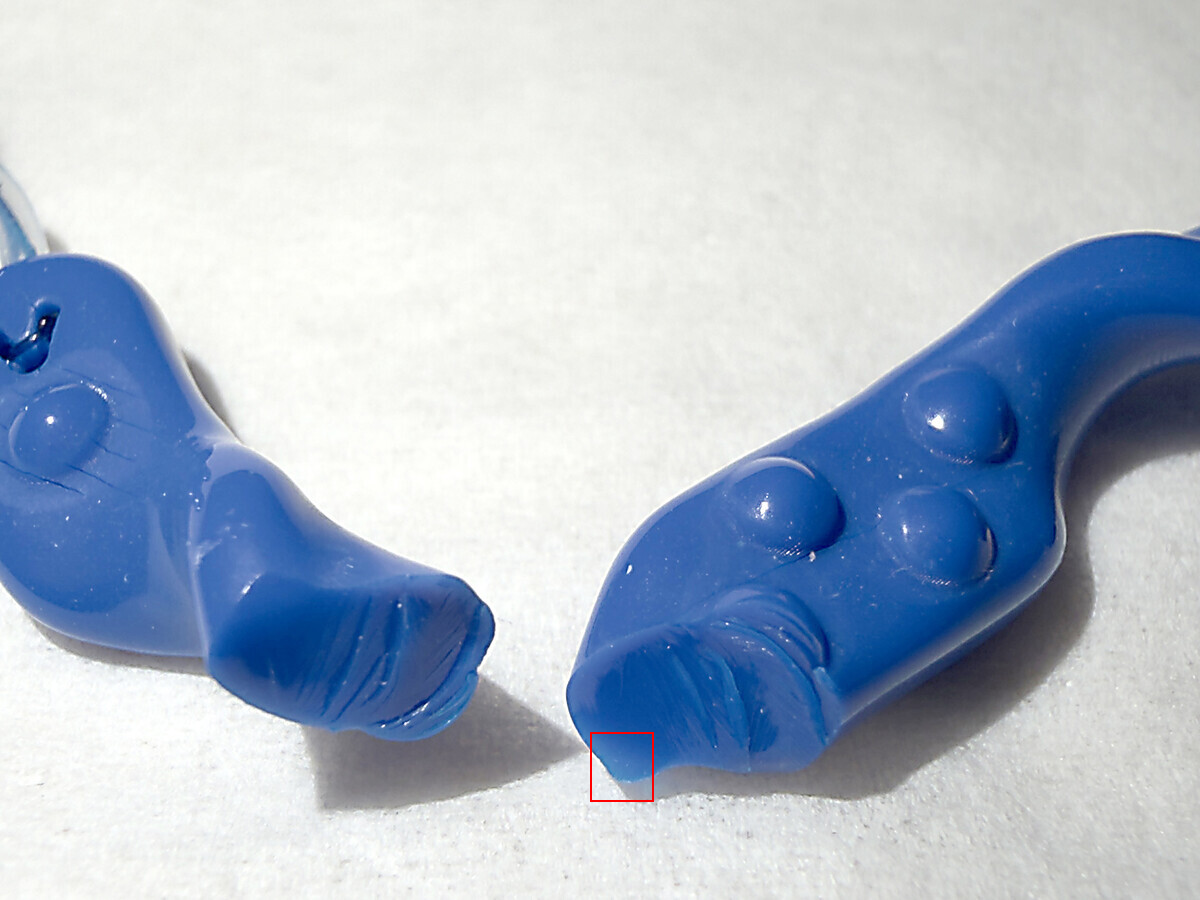
In an entry published in June 2026, a customer reported a second-generation resin chip breaking after about 10 minutes of boiling. It had been inside a small glass container, and the customer wanted an explanation. Staff initially saw no obvious problem with the described cleaning; Mr. Okada suspected concentrated heat.
In the July 2026 follow-up, the production specialist reported the container's inner base exceeded 100 degrees, reaching up to 115 degrees. The specialist suspected uneven heating caused the break, while Mr. Okada acknowledged uncertainty about that explanation. Mr. Okada favored enough surrounding water for gentle movement, with attention to avoiding concentrated heat from the container.
(Source: ok-lab's diary, published June 2026)
https://ok-lab.hatenablog.com/entry/2026/06/13/122909
(Source: ok-lab's diary, published July 2026)
https://ok-lab.hatenablog.com/entry/2026/07/04/122918
The maker's answer to boiling an OK Prostate Chip
The maker's replies distinguish electrical protection, pressure on attached parts, and cleaning inside unsealed structures.
Boiling disinfection advice excluded the vibrating chip's electronic controller
In an entry published in March 2019, a customer asked how cleaning should differ for a chip containing electronics. Mr. Okada said the controller (the motor's control unit) could neither be washed nor boiled; he described alcohol wiping instead. His historical limit of about 30 seconds concerned the cord and chip in previously boiled water, with active heating excluded.
He warned that a cord touching a heated pan could be damaged, and that steam could harm the controller. The diary does not record how the customer's later cleaning routine worked. Mr. Okada advised protecting the electrical components, explicitly describing his answer as advice drawn from experience.
(Source: ok-lab's diary, published March 2019)
https://ok-lab.hatenablog.com/entry/2019/03/02/151104
Boiling damage concerns expanded to pressure from attached wires
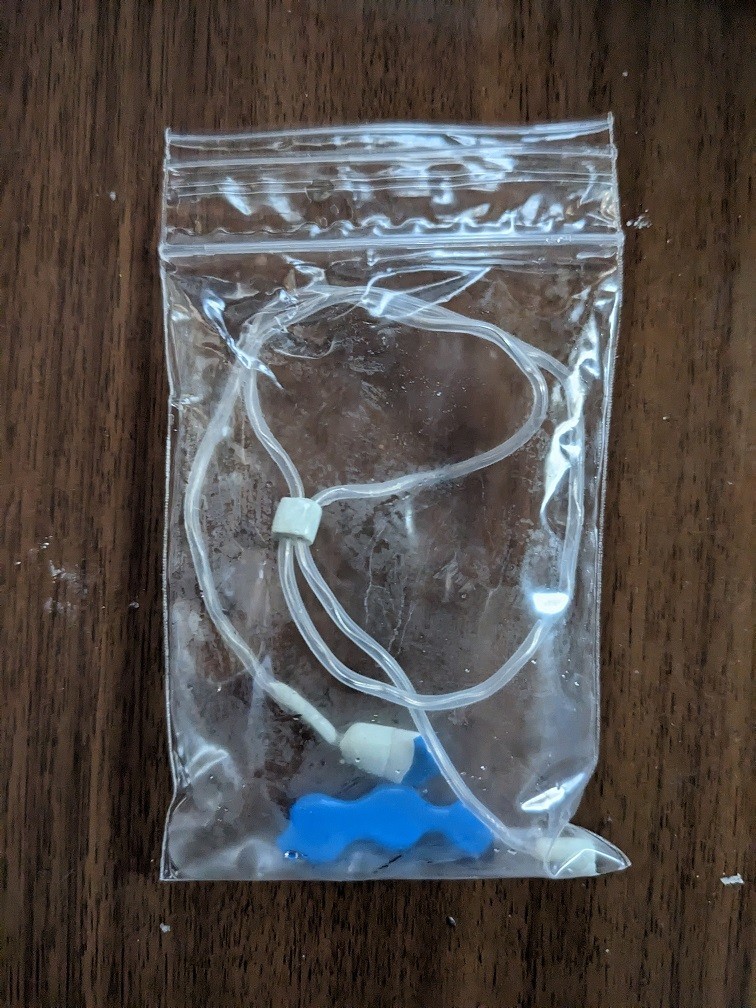
In an entry published in January 2023, a customer reported a semi-long resin chip breaking inside a polypropylene bag (a plastic pouch). The customer clarified that the break was discovered afterward, following 15 minutes in a hot-water bath. Staff could not establish the cause; the production specialist suspected pressure involving the attached wire and confined bag.
Mr. Okada said wires and cables could place greater loads on a chip than it would face alone. He apologized for not having warned earlier about the added risks of custom attachments. The specialist favored a larger bag with more room, while Mr. Okada recommended less vigorous heating during prolonged boiling.
(Source: ok-lab's diary, published January 2023)
https://ok-lab.hatenablog.com/entry/2023/01/14/122952
Boiling disinfection remained essential to the maker for an unsealed sheath
In an entry published in May 2026, a customer requested a custom assembly containing linked screw-shaped chips. Staff first said the requested connection was difficult, then described a different construction.
Mr. Okada explained that the screw sections had sealed thread holes, but the moving-wire sheath (an outer sleeve) could not be sealed. Water could pass through that sleeve, making its interior part of the cleaning concern. He therefore considered boiling disinfection necessary for this construction, despite the sealed screw sections.
(Source: ok-lab's diary, published May 2026)
https://ok-lab.hatenablog.com/entry/2026/05/09/122904
How boiling an OK Prostate Chip changed over time
| Published | What the diary said then |
|---|---|
| Dec 2018 | An attached battery box complicated cleaning of an early vibrating prototype. |
| Mar 2019 | Mr. Okada excluded controllers from washing and boiling. |
| Apr 2019 | A waterproof custom connector allowed separation from the controller. |
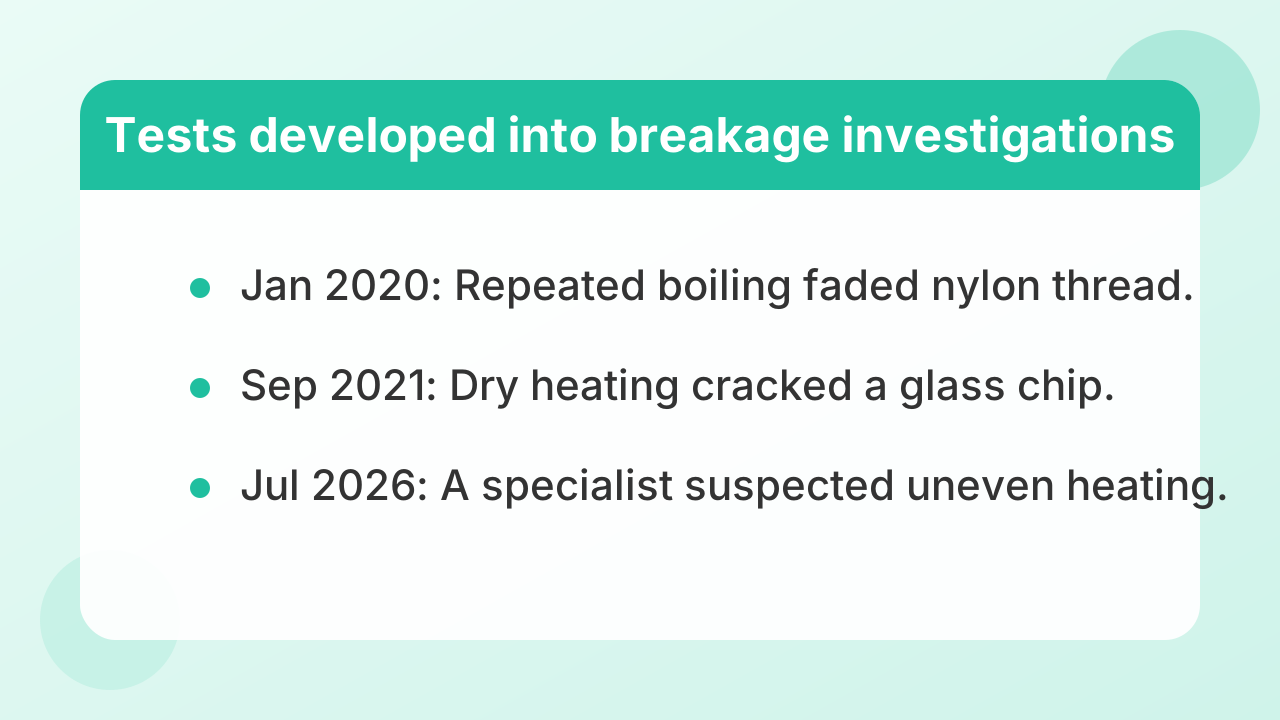
| Jan 2020 | Repeated boiling faded nylon thread; Mr. Okada suspected substantial strength loss. |
| Apr 2021 | Mr. Okada had tested the microwave cooker only with eggs. |
| Sep 2021 | Dry heating damaged thread, discolored resin, and cracked a glass chip. |
| Feb 2022 | A heat-resistant USB terminal was introduced after concerns about ordinary covers deforming. |
| Aug 2022 | A customer's boiling test left silicone tubing's resistance and stickiness essentially unchanged. |
| Jan 2023 | A broken wired assembly prompted concern about pressure and movement during heating. |
| Jul 2026 | A specialist suspected uneven heating after examining a broken second-generation resin chip. |
OK Prostate Chip products related to boiling an OK Prostate Chip
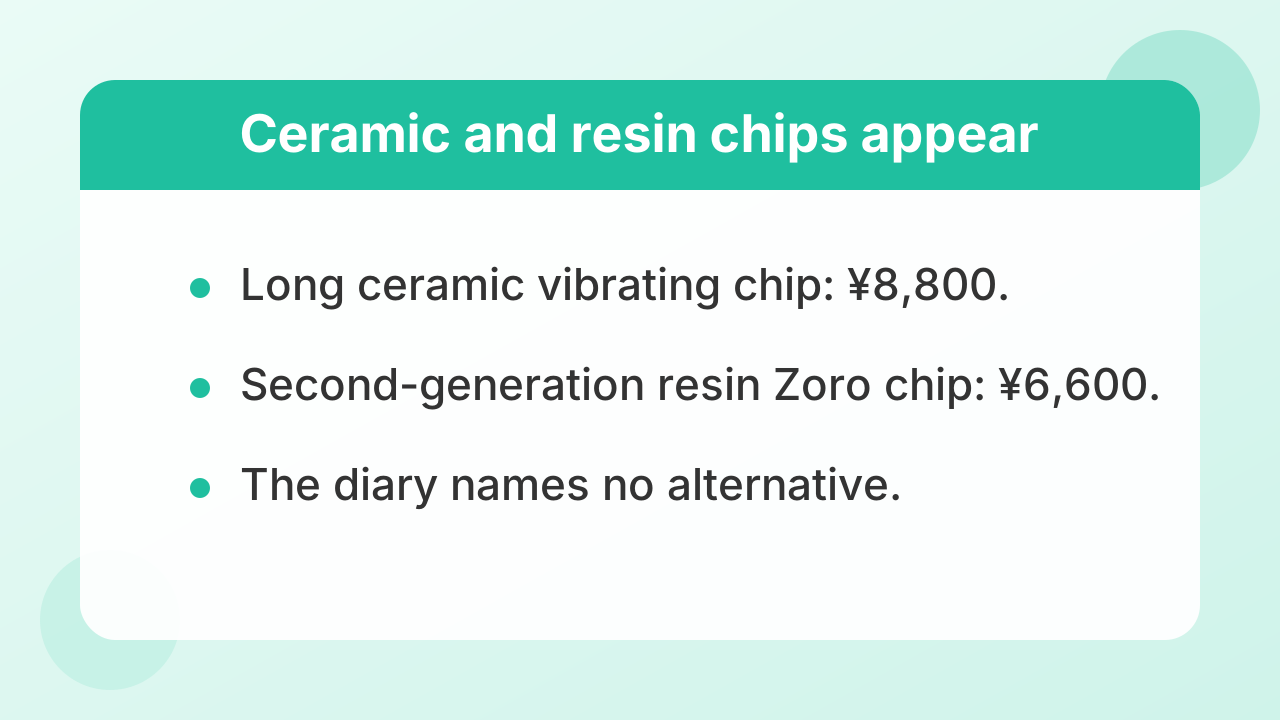
The current list includes the ceramic vibrating model and second-generation resin model discussed in these cleaning-related cases.
Products that appear in these entries
| Product (official name) | Price incl. tax | Relation to this topic |
|---|---|---|
| Long ceramic vibrating chip (OKプロステート核振チップ 陶器素材ロングタイプ) | ¥8,800 (about $56 at ¥156 = $1, rate as of 2026-09-04) | In February 2022, a prospective buyer asked how its connected controller affected boiling disinfection. |
| Second-generation resin Zoro chip (OKプロステートチップ 凶悪ゾロ(第二世代生体適合樹脂)) | ¥6,600 (about $42 at ¥156 = $1, rate as of 2026-09-04) | In June 2026, this model appeared in the breakage report investigated further in July 2026. |
The long ceramic vibrating chip is listed in OK Lab's own online store.
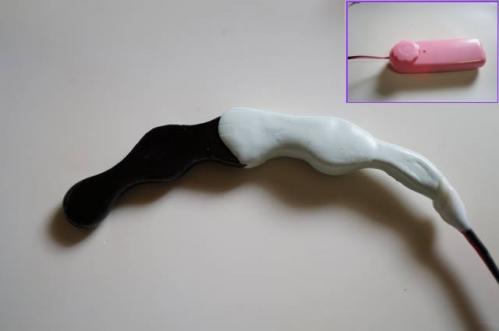
The second-generation resin Zoro chip is listed in OK Lab's own online store.

(Source: ok-lab's diary, published February 2022)
https://ok-lab.hatenablog.com/entry/2022/02/26/123231
(Source: ok-lab's diary, published June 2026)
https://ok-lab.hatenablog.com/entry/2026/06/13/122909
(Source: ok-lab's diary, published July 2026)
https://ok-lab.hatenablog.com/entry/2026/07/04/122918
Products the diary mentioned as alternatives
The diary names no alternative.
The historical items also include early prototypes, a custom waterproof connector, a heat-resistant USB terminal, and custom wire-equipped resin and twin-screw assemblies. No matching product can be confirmed on the current list.
Common worries about boiling an OK Prostate Chip
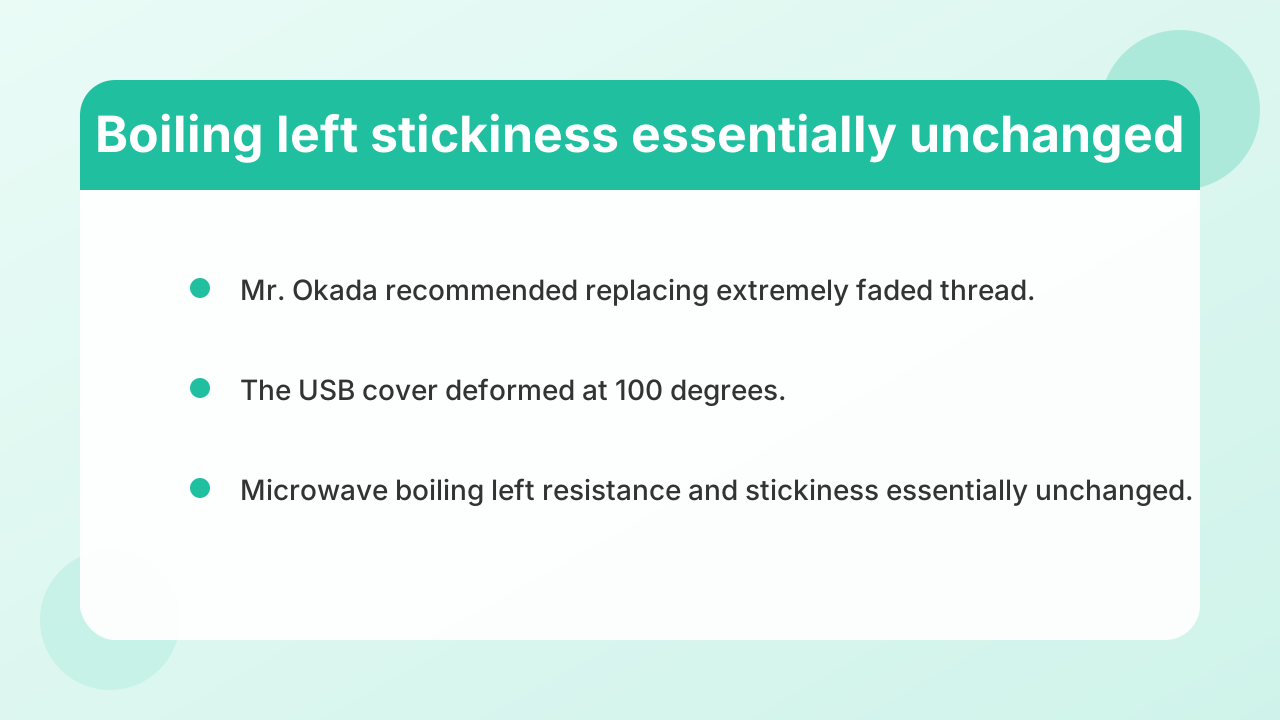
Customer questions distinguish thread deterioration, electrical compatibility, and persistent surface resistance.
"Does repeated boiling disinfection weaken the retrieval thread?"
In an entry published in January 2020, a customer's storage question led Mr. Okada to describe his prolonged boiling tests. Nylon retrieval thread (thread used to retrieve a chip) had become almost transparent after roughly six months of daily boiling. It had not snapped in his pulling tests, but he believed its strength had fallen substantially.
His storage preference was a dry place away from sunlight. The diary does not record whether the customer's storage problem was resolved. Mr. Okada discouraged prolonged repeated boiling, favored it only before use, and recommended replacing extremely faded thread.
(Source: ok-lab's diary, published January 2020)
https://ok-lab.hatenablog.com/entry/2020/01/11/151714
"Does boiling disinfection require a detachable controller?"
In an entry published in February 2022, a customer considering the long ceramic vibrating chip asked whether its controller could be separated. Mr. Okada explained that the standard assembly remained connected, even with the requested stiffer cord. He tentatively estimated about 60 degrees as the controller's heat tolerance and warned about exposure to steam and heat.
The standard chip-side USB connector (an electrical connection) had a cover that deformed at 100 degrees, he wrote. The diary does not record whether this customer's order was completed. Mr. Okada recommended a newly released, heat-resistant connection as an alternative allowing separation of chip and controller.
(Source: ok-lab's diary, published February 2022)
https://ok-lab.hatenablog.com/entry/2022/02/26/123231
"Will boiling disinfection stop silicone tubing feeling sticky?"
In an entry published in August 2022, a customer asked whether boiling might reduce silicone tubing's sticky feel. Staff thought boiling might affect surface cleanliness, but could not identify the cause of the resistance. They considered boiling essential because, in their view, there was no other way to clean inside that tube.
The customer subsequently reported that about 3 minutes of microwave boiling left the resistance and slight stickiness essentially unchanged. Mr. Okada distinguished newer sealed 2mm tube constructions from tubes containing thread, whose interiors he considered difficult to clean. He still favored occasional boiling for the sealed version because he thought contamination could predate assembly.
(Source: ok-lab's diary, published August 2022)
https://ok-lab.hatenablog.com/entry/2022/08/20/122920
Buying from outside Japan
OK Lab ships internationally to countries covered by Japan Post's EMS courier service. Overseas orders are paid in advance by PayPal. Each order carries a ¥400 (about $3 at ¥156 = $1, rate as of 2026-09-04) handling fee, and EMS shipping is charged on top. These terms come from OK Lab's official sales-terms page (written here as plain text, not a link: ok-lab.net/docs/law), checked on September 7, 2026; confirm them on the official store before you order, because they can change.
Summary of this article
| What you wanted to know | The answer |
|---|---|
| What is the short answer? | The maker's boiling advice depends on materials, attached parts, and heating conditions. |
| What is the product? | A Japanese-made device placed in the urethra to act on the prostate. |
| Which terms matter? | Controllers, connectors, retrieval threads, bags, and sheaths describe different parts or cleaning arrangements. |
| What happened in the reported cases? | Heat damaged threads, glass, and resin; later investigation examined uneven heating. |
| What did the maker suggest? | His replies addressed electrical protection, mechanical stress, and unsealed interiors. |
| How did the discussion change? | Early prototype tests developed into component-specific replies and investigations of breakage. |
| Which current products appear? | The long ceramic vibrating chip and second-generation resin Zoro chip. |
| What did customers ask? | Whether boiling affects thread strength, controllers, and sticky tubing. |
| How does overseas buying work? | Advance PayPal payment, a ¥400 (about $3 at ¥156 = $1, rate as of 2026-09-04) handling fee, and additional EMS shipping charges. |
Source: ok-lab's diary (Okada Comfortable Life Laboratory). The original entries are in Japanese; quotations on this page are translated. Photos and videos are on the original entries.
This article is a summary of the maker's development diary. The product is not a medical device and no result is guaranteed. If anything feels wrong or worries you, see a doctor. Prices, specifications and cautions change, so confirm the latest information on the official blog and the official site. Questions about ordering and shipping go to the seller.