![Can I repair or modify my vibrating chip? | Internal repairs can be difficult [OK Prostate Chip]](/img/a/T0878/eyecatch.svg)
This page is based on entries from "ok-lab's diary" (https://ok-lab.hatenablog.com/), the Japanese development diary written by Mr. Okada, founder of OK Lab, a small company in Japan (Okada Comfortable Life Laboratory). Only the entries about "electrical modifications and self-repair" are summarized here, in order of publication. Past prices and sizes are as written at the time. Current prices come from the official product list (retrieved September 4, 2026). Quotations are translated from Japanese.
This article is about vibrating chip repair and modifications, and summarizes reported problems, the maker's repairs, replacement parts, and limits. It also covers changes over time, related products, and buying from outside Japan.
Note: This page is a personal reading log by someone with no connection to the maker or the seller. It reflects the source entries as of their publication dates and makes no guarantee of accuracy or safety. The product is not a medical device; talk to a doctor about any health decision. Check the official site for current information. This page contains advertising.
In short
Controller faults and breaks inside the chip required different repair responses in the diary.
Mr. Okada offered some repairs but described internal motor-wire repairs as difficult.
The USB connector option is on the current product list at ¥550 (about $4 at ¥156 = $1, rate as of 2026-09-04) including tax.
If you see blood in your urine, even a small amount or for the first time, do not wait and see. See a urologist right away. If you suddenly cannot urinate, or the device cannot be removed, do not try to fix it yourself. Go to a medical facility, including emergency care, immediately.
About this product
The OK Prostate Chip is a small device that is placed in the urethra (the urine passage) so that it acts on the prostate; the maker sells it in several shapes, sizes and materials. It is made and sold by OK Lab (Okada Comfortable Life Laboratory), a small company in Japan, through its own online store, and prices are in Japanese yen (JPY). The maker's development diary, "ok-lab's diary", is written in Japanese. This page is an English summary of it, and every quotation is translated. OK Lab ships internationally, so readers outside Japan can order (see "Buying from outside Japan" below). Product names on this page are plain-English descriptions. The official Japanese product name is shown once in the product table so you can find the same item in the store.
Before you read: key terms
| Term | Plain-English meaning |
|---|---|
| Electrode | A metal contact on the experimental chip, intended to carry electrical stimulation. |
| Controller | An external unit used to control the motor's vibration. |
| IC controller | The diary's term for a controller offering several vibration patterns for the chip's motor. |
| USB connector | A detachable electrical connection used here between chips, controllers, motors, and power supplies. |
| Resin | Material covering and reinforcing motor-wire connections, or forming a separate motor casing. |
| Short circuit | The diary does not explain this. |
What happens: vibrating chip repair
The OK Prostate Chip is a small device placed in the urethra to act on the prostate. These entries cover motor-driven chips and a separate rectal prototype with electrodes (metal contacts intended to carry electrical current). Their cables connect to external controls or an electrical stimulation unit. The repair questions concern broken connections, weak vibration, damaged battery covers, and whether individual electrical parts can be replaced.
Electrical stimulation problems stopped chip development despite one customer's report of an improved prototype
In an entry published in December 2018, a customer reported prickling from the electrode-equipped rectal prototype. Mr. Okada suspected the electrode material and initially stopped development because he could not investigate materials adequately. The customer disagreed and suspected the relative electrode areas.
A follow-up from that customer reported that the previous prickling disappeared with a revised lower electrode measuring 18mm wide. Mr. Okada still considered prickling possible under other conditions and paused general supply of electrode-equipped chips for the time being. He said custom manufacture to supplied instructions remained possible.
(Source: ok-lab's diary, published December 2018)
https://ok-lab.hatenablog.com/entry/20181215/1544857573
Vibrating chip modifications produced stronger vibration in one customer's June 2019 report
In an entry published in June 2019, a customer described a controller change on a three-motor chip. The customer reported much stronger vibration afterward. Mr. Okada associated the change with 3V versus 4.5V.
This was a report about that customer's modified setup. The diary does not record a long-term durability result for the modification. Mr. Okada framed such experimentation as the customer's own responsibility.
(Source: ok-lab's diary, published June 2019)
https://ok-lab.hatenablog.com/entry/2019/06/22/123034
Controller repair restored operation after an early broken connection
In an entry published in August 2019, a customer's chip stopped after 1 or 2 uses because of a broken controller connection. The customer reported restoring operation through an electrical repair, and Mr. Okada apologized for the faulty connection.
He listed simple controller-wire repairs at ¥500 (about $3 at ¥156 = $1, rate as of 2026-09-04) excluding tax and repairs involving damaged control electronics at ¥2,000 (about $13 at ¥156 = $1, rate as of 2026-09-04). His example of electronic damage involved reversed battery connections. He offered free repair for early wire failures after 1 or 2 uses.
(Source: ok-lab's diary, published August 2019)
https://ok-lab.hatenablog.com/entry/2019/08/17/132641
Chip repair looked more feasible with the blue prototype's separate motor casing
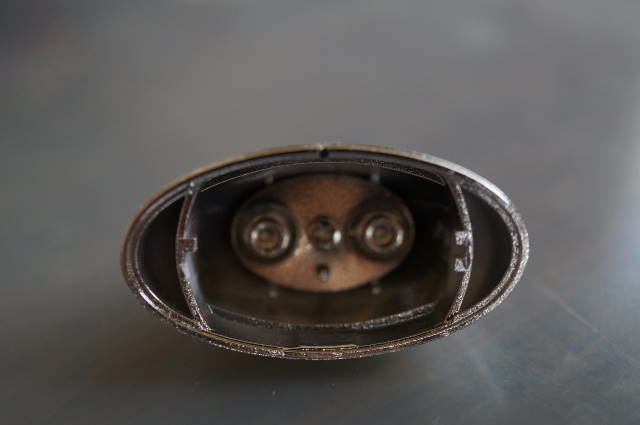
In an entry published in November 2021, Mr. Okada examined a blue-chip prototype with a 4mm cylindrical motor in a separate casing. Resin (the casing material) surrounded the motor differently from the closely bonded construction of earlier chips. He reported that the prototype still worked after being taken apart.
For the earlier construction, he said opening the assembly broke connections and repair required motor replacement. He described customer cable replacement with the new construction as a possibility.
(Source: ok-lab's diary, published November 2021)
https://ok-lab.hatenablog.com/entry/2021/11/20/125643
A broken battery cover led to an offer of replacement parts for repair
In an entry published in March 2022, a customer asked about repair because the controller's battery cover opened during operation. Mr. Okada suspected a broken retaining tab and described the tabs as a recurring design weakness. He said defective covers found before shipment were replaced.
His proposed remedies were tape support for the cover or a replacement lid, with a warning that another lid could also break. The diary does not record whether this customer received a replacement. Mr. Okada asked the customer to contact him again if they wanted the lid sent.
(Source: ok-lab's diary, published March 2022)
https://ok-lab.hatenablog.com/entry/2022/03/05/123200
The maker's answer to vibrating chip repair
Mr. Okada developed detachable connections while retaining limits on electrical work and internal repairs.
Mr. Okada limited electrical stimulation requests for the chip because he could not confirm compatibility
In an entry published in December 2018, Mr. Okada warned that fluid inside the rectum could change current between the prototype's electrodes. He raised a possible short circuit (not explained in the diary) when enema fluid was present. He declined requests from people without experience of the stimulation unit, warning that the amount of electricity could be life-threatening.
He also refused modifications to the stimulation unit's own terminals. For customers handling external connections themselves, he offered a chip with wires extending from its rear. He said he could not judge compatibility with stimulation equipment and emphasized caution over the current.
(Source: ok-lab's diary, published December 2018)
https://ok-lab.hatenablog.com/entry/20181208/1544250742
Detachable connectors reduced costs for vibrating chip modifications and component replacement
In an entry published in August 2019, Mr. Okada described connectors based on small drone components, with added resin reinforcement. He said avoiding the earlier detailed terminal-making work allowed him to halve the supply price. The proposed prices, excluding tax, were ¥1,000 (about $6 at ¥156 = $1, rate as of 2026-09-04) for a chip-side plug, ¥1,000 (about $6 at ¥156 = $1, rate as of 2026-09-04) for a controller-side plug, and ¥500 (about $3 at ¥156 = $1, rate as of 2026-09-04) per battery box.
The plugs made the controller and battery arrangements separately replaceable. Mr. Okada presented this approach as a way to accommodate later controller additions without buying another chip body.
(Source: ok-lab's diary, published August 2019)
https://ok-lab.hatenablog.com/entry/2019/08/03/145816
USB connectors brought lower fitting charges for vibrating chip modifications
In an entry published in November 2019, Mr. Okada favored USB connectors (detachable electrical connections between components) over his earlier small plugs. For his company's products, fitting charges were ¥500 (about $3 at ¥156 = $1, rate as of 2026-09-04) per connector or ¥1,000 (about $6 at ¥156 = $1, rate as of 2026-09-04) for a pair, excluding tax.
Conversion of an already-purchased chip cost ¥1,000 (about $6 at ¥156 = $1, rate as of 2026-09-04) for the pair; a chip-side connection on a new purchase was free, without the standard controller. The IC controller (a controller offering programmed vibration patterns) required an additional ¥500 (about $3 at ¥156 = $1, rate as of 2026-09-04) connection charge, excluding tax. Mr. Okada recommended USB connections because they needed less outer finishing and cost less than his small plugs.
(Source: ok-lab's diary, published November 2019)
https://ok-lab.hatenablog.com/entry/2019/11/30/164020
A modular motor system introduced separately priced parts for chip controller replacement
In an entry published in April 2023, Mr. Okada described a separate motor system developed because existing equipment did not meet his needs. Its basic set comprised a three-battery box, a 120-mode controller, and a cylindrical motor, priced at ¥5,000 (about $32 at ¥156 = $1, rate as of 2026-09-04) excluding tax. A 2m extension cost ¥1,000 (about $6 at ¥156 = $1, rate as of 2026-09-04), a USB branch cable ¥1,500 (about $10 at ¥156 = $1, rate as of 2026-09-04), and a USB-equipped egg-shaped motor ¥1,000 (about $6 at ¥156 = $1, rate as of 2026-09-04), all excluding tax.
He described replaceable motors and connections that allowed more than one motor in the system. His stated requirements included fine control over vibration strength and a choice of battery or USB power.
(Source: ok-lab's diary, published April 2023)
https://ok-lab.hatenablog.com/entry/2023/04/29/123107
If you see blood in your urine, even a small amount or for the first time, do not wait and see. See a urologist right away. If you suddenly cannot urinate, or the device cannot be removed, do not try to fix it yourself. Go to a medical facility, including emergency care, immediately.
How vibrating chip repair changed over time
| Published | What the diary said then |
|---|---|
| Dec 2018 | Mr. Okada made an electrode prototype; the stimulation unit had not arrived for testing. |
| Feb 2019 | Mr. Okada allowed modifications outside the chip body. |
| Mar 2019 | A customer linked weakening vibration to declining battery voltage. |
| Aug 2019 | A tiny watch-battery experiment stopped after about five minutes. |
| Nov 2019 | A motor failure prompted consideration of a lower maximum voltage. |
| Feb 2020 | A custom chip with two powered cables was completed. |
| Nov 2021 | Separate motor housing suggested possible customer cable replacement. |
| Mar 2022 | A battery-cover complaint brought an offer of a replacement lid. |
| Apr 2023 | A separate motor system combined interchangeable parts and multiple power choices. |
The diary does not say what the current state is.
OK Prostate Chip products related to vibrating chip repair
The USB connector option appears in the repair correspondence and remains on the current product list.
Products featured in these repair entries
| Product (official name) | Price incl. tax | Relation to this topic |
|---|---|---|
| USB connector fitting option (USB端子付け加工(核振チップオプション)) | ¥550 (about $4 at ¥156 = $1, rate as of 2026-09-04) | February 2020: this option appeared in repair correspondence leading to a custom chip with two powered cables. |
The USB connector fitting option is listed in OK Lab's own online store.
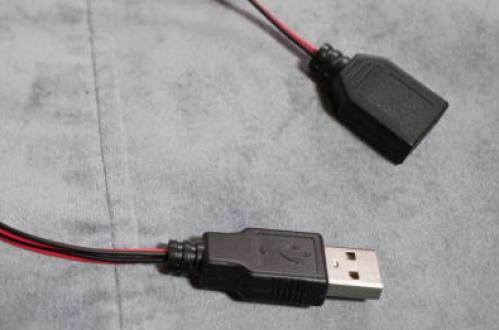
(Source: ok-lab's diary, published February 2020)
https://ok-lab.hatenablog.com/entry/2020/02/08/151653
Alternative products mentioned in the diary's repair entries
The diary names no alternative.
Electrode-equipped custom chip, blue-chip prototype, and April 2023 motor system: No matching product can be confirmed on the current list.
Common worries about vibrating chip repair
The diary's replies distinguish electrode problems, motor-voltage questions, and breaks inside the chip.
"Could electrical stimulation electrodes be added to a rectal chip?"
In an entry published in December 2018, a customer requested a custom electrode-equipped rectal chip after repeated homemade attempts. They reported that treatment pads lacked durability and carried stimulation poorly through the moist lining inside the body. Their account associated exposed electrode widths of 1cm or less with severe pain and favored widths of 1cm–1.5cm.
They also associated overly wide electrodes with weaker stimulation. Mr. Okada initially made acceptance conditional on testing whether the materials could be combined. His prototype was made, but the entry records no electrical test because the stimulation unit had not arrived.
(Source: ok-lab's diary, published December 2018)
https://ok-lab.hatenablog.com/entry/20181208/1544250742
"How much voltage could the vibrating chip motor tolerate?"
In an entry published in November 2019, Mr. Okada answered a customer's question about motor-voltage tolerance. He stated a 3V rating and reported his own continuous-operation tests at 6V.
His reply also mentioned a separate customer's failure after 10 minutes at 6V. He said that failed unit had been replaced as an initial defect. He warned that repeated reports could lead him to consider a 4.5V maximum.
(Source: ok-lab's diary, published November 2019)
https://ok-lab.hatenablog.com/entry/2019/11/02/132358
"Is chip repair possible after another break near its base?"
In an entry published in February 2020, a customer asked about self-repair after another break near a previously repaired chip's base. Mr. Okada doubted success: tiny motor wires could tear further during work, and thick factory resin obstructed a direct motor connection.
He rejected the customer's requested cable position as structurally impossible, then offered a different arrangement with two powered cables. The customer accepted, and Mr. Okada reported making the chip with a USB connector on each cable.
The diary does not record whether the original damaged chip was repaired again. Mr. Okada cautioned that extra external cables would not address breaks in the motor's own thin wires.
(Source: ok-lab's diary, published February 2020)
https://ok-lab.hatenablog.com/entry/2020/02/08/151653
Buying from outside Japan
OK Lab ships internationally to countries covered by Japan Post's EMS courier service. Overseas orders are paid in advance by PayPal. Each order carries a ¥400 (about $3 at ¥156 = $1, rate as of 2026-09-04) handling fee, and EMS shipping is charged on top. These terms come from OK Lab's official sales-terms page (written here as plain text, not a link: ok-lab.net/docs/law), checked on September 7, 2026; confirm them on the official store before you order, because they can change.
Summary of this article
| What you wanted to know | The answer |
|---|---|
| In short: can a fault be repaired? | The diary distinguishes controller repairs from difficult internal motor-wire faults. |
| About this product: what is it? | A device made by OK Lab in Japan; the motor-driven versions produce vibration. |
| Key terms: which parts are discussed? | Electrodes carry electrical stimulation; controllers govern motors; connectors join external components. |
| What happens when parts fail? | Reported problems included broken connections, prickling from electrodes, and an opening battery cover. |
| What did the maker offer? | Repairs, connector changes, and selected replacement parts, subject to the limits described in each entry. |
| What changed over time? | Later designs explored detachable connections and a separate motor casing. |
| Which related option is listed today? | USB connector fitting is listed at ¥550 (about $4 at ¥156 = $1, rate as of 2026-09-04) including tax. |
| What do the common worries reveal? | Mr. Okada reported voltage-related failure and difficulty repairing fragile internal wires. |
| How does international buying work? | The stated terms use PayPal, EMS shipping, and a ¥400 (about $3 at ¥156 = $1, rate as of 2026-09-04) handling fee. |
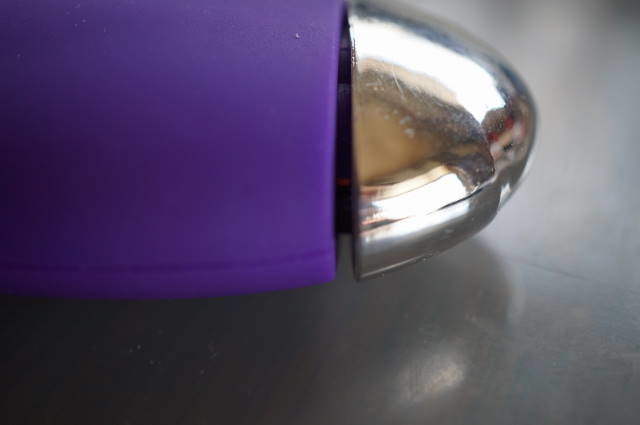
Source: ok-lab's diary (Okada Comfortable Life Laboratory). The original entries are in Japanese; quotations on this page are translated. Photos and videos are on the original entries.
This article is a summary of the maker's development diary. The product is not a medical device and no result is guaranteed. If anything feels wrong or worries you, see a doctor. Prices, specifications and cautions change, so confirm the latest information on the official blog and the official site. Questions about ordering and shipping go to the seller.