![Can a doctor help with a stuck chip? | Photos and samples helped explain past cases [OK Prostate Chip]](/img/a/T0785/eyecatch.svg)
This page is based on entries from "ok-lab's diary" (https://ok-lab.hatenablog.com/), the Japanese development diary written by Mr. Okada, founder of OK Lab, a small company in Japan (Okada Comfortable Life Laboratory). Only the entries about bringing samples and finding a doctor for chip removal are summarized here, in order of publication. Past prices and sizes are as written at the time. Current prices come from the official product list (retrieved September 4, 2026). Quotations are translated from Japanese.
Note: This page is a personal reading log by someone with no connection to the maker or the seller. It reflects the source entries as of their publication dates and makes no guarantee of accuracy or safety. The product is not a medical device; talk to a doctor about any health decision. Check the official site for current information. This page contains advertising.
In short
- A photograph or spare sample helped doctors understand stuck devices in the reported cases.
- OK Lab advised medical assessment, clear device information, and possible doctor introductions with the information provider's permission.
- The latest report, from February 2025, includes complications and a hospital's warning that it would refuse repeat treatment.
If you see blood in your urine, even a small amount or for the first time, do not wait and see. See a urologist right away.
If you suddenly cannot urinate, or the device cannot be removed, do not try to fix it yourself. Go to a medical facility, including emergency care, immediately.
About this product

The OK Prostate Chip is a small device that is placed in the urethra (the urine passage) so that it acts on the prostate; the maker sells it in several shapes, sizes and materials. It is made and sold by OK Lab (Okada Comfortable Life Laboratory), a small company in Japan, through its own online store, and prices are in Japanese yen (JPY). The maker's development diary, "ok-lab's diary", is written in Japanese. This page is an English summary of it, and every quotation is translated. OK Lab ships internationally, so readers outside Japan can order (see "Buying from outside Japan" below). Product names on this page are plain-English descriptions. The official Japanese product name is shown once in the product table so you can find the same item in the store.
Before you read: key terms
| Term | Plain-English meaning |
|---|---|
| Urethra | The urine passage, where the maker intends the chip to sit and act on the prostate. |
| Sample | A spare physical device brought to help a doctor understand the device involved in an accident. |
| Retrieval thread | Thread attached to a chip for recovery; its position and condition mattered in these hospital reports. |
| Endoscope | An instrument used for internal examination and chip removal in these reports. The diary does not explain its construction. |
| Forceps | A medical gripping instrument used to recover the broken chip in the March 2024 report. |
| General anesthesia | The diary does not explain this. It formed part of some hospital plans for removal. |
| Mesh stopper | A mesh attachment intended to limit inward movement. Staff described its folding structure when discussing information for a doctor. |
| Antibiotics | Medicines prescribed after removal injuries. The diary does not explain their action. |
| CT scan and X-ray | The diary does not explain this. Both appear among examinations billed in the February 2025 report. |
| Doctor introduction | Sharing a doctor's contact information to help someone seek care; OK Lab's offer depended on permission. |
What happens: stuck chip removal
The OK Prostate Chip is a small device placed in the urethra (the urine passage) to act on the prostate. Here, stuck chip removal means seeking medical help when the device or its attached parts cannot be recovered. The diary describes cases involving the urethra and bladder, with photographs or a spare device helping explain the problem to a doctor. It also records a conditional offer to share information about a doctor.
A sample helped plan successful stuck chip removal in December 2021
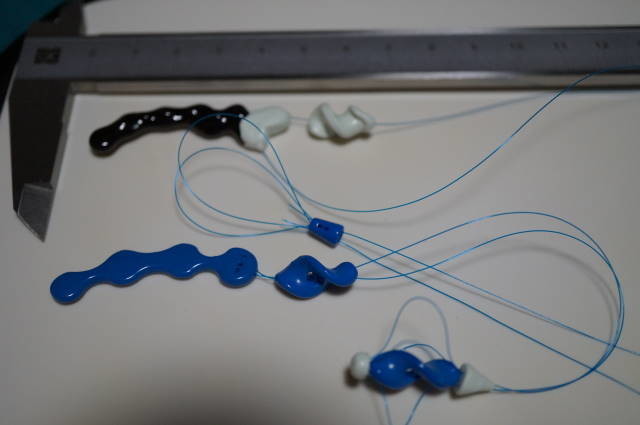
In an entry published in December 2021, a customer asked for help after a custom chip moved into the bladder. The customer later sought care after noticing pus, taking a spare cage-style twin-chip device as a sample. According to the customer, the doctor consulted that sample and successfully recovered the chip by grasping its retrieval thread (the attached recovery thread).
The bladder examination and removal took about 10 minutes, and treatment cost more than ¥30,000 (about $192 at ¥156 = $1, rate as of 2026-09-04) because it was classed as surgery. No matching product can be confirmed on the current list. Staff advised medical assessment as the safer option if the customer lacked confidence in resolving the problem.
(Source: ok-lab's diary, published December 2021)
https://ok-lab.hatenablog.com/entry/2021/12/25/123556
A bent attachment required medical stuck chip removal in December 2022
In an entry published in December 2022, a bent screw-shaped attachment overlapped a chip's rear end, creating a width of about 15 mm. The customer abandoned self-removal, bringing photographs and a matching four-point twisted sample to explain the V-shaped fold. The doctor removed the device without cutting its cable, judging that breaking the thread would make recovery harder.
Removal left a slight urethral injury; the customer reported 1 week of antibiotics (medicine prescribed after the injury) and ¥1,760 (about $11 at ¥156 = $1, rate as of 2026-09-04) under Japan's National Health Insurance. No matching product can be confirmed on the current list. Staff had advised medical assessment because they considered the customer's proposed cable-cutting approach risky.
(Source: ok-lab's diary, published December 2022)
https://ok-lab.hatenablog.com/entry/2022/12/24/122944
The fifth hospital completed stuck chip removal after differing assessments in March 2024
In an entry published in March 2024, a customer needed a ceramic chip, broken in half, removed after it fell into the bladder. Well-known large hospitals reportedly said open abdominal surgery was the only option. A university hospital considered removal without abdominal surgery possible, but proposed general anesthesia, scheduling surgery for the middle of the following month.
The customer reported successful removal with forceps (a medical gripping instrument) at the 5th hospital. Mr. Okada wrote that his experimental recovery tool was still unreliable and could not yet provide safe removal. He invited readers to ask the customer questions about the experience of finding a doctor.
(Source: ok-lab's diary, published March 2024)
https://ok-lab.hatenablog.com/entry/2024/03/23/122837
Stuck chip removal required admission in the May–June 2024 case
In an entry published in May 2024, a customer sought help after the thread broke on another company's stainless-steel chip. The chip measured 10 mm wide and 30 mm long; the first hospital removed it using an endoscope (an instrument for internal examination). In the confirmed follow-up published in June 2024, the same customer reported general anesthesia and a 2-night, 3-day hospital stay.
The cost was ¥110,000 (about $704 at ¥156 = $1, rate as of 2026-09-04) with insurance, following admission to a general hospital on the day of assessment. Mr. Okada wrote that this was his first report of endoscopic removal involving both hospitalization and general anesthesia. He advised discussing treatment preferences with the doctor, while stressing that OK Lab could not judge which procedure was appropriate.
(Source: ok-lab's diary, published May 2024)
https://ok-lab.hatenablog.com/entry/2024/05/25/122919
(Source: ok-lab's diary, published June 2024)
https://ok-lab.hatenablog.com/entry/2024/06/01/123036
Stuck chip removal succeeded but complications followed in February 2025
In an entry published in February 2025, a customer sought help after a linked chip and mesh stopper disappeared into the bladder. The customer reported that all 35 cm of thread had disappeared inward and had not reappeared after about 4 attempts to urinate. Removal later succeeded, costing ¥25,000 (about $160 at ¥156 = $1, rate as of 2026-09-04) for surgery and about ¥35,000 (about $224 at ¥156 = $1, rate as of 2026-09-04) including CT scans, X-rays, the first consultation, and antibiotics.
The hospital said it did not normally remove foreign objects and would refuse another such visit. The customer also reported a bacterial infection following a bleeding injury during removal, with a mild fever and fatigue. Staff advised following the treating doctor's proposed endoscopic treatment.
(Source: ok-lab's diary, published February 2025)
https://ok-lab.hatenablog.com/entry/2025/02/22/122939
The maker's answer to stuck chip removal
The maker's replies emphasized explaining the actual device, seeking medical assessment, and treating doctor introductions as conditional information.
Stuck chip photographs could explain unfamiliar parts to the treating doctor
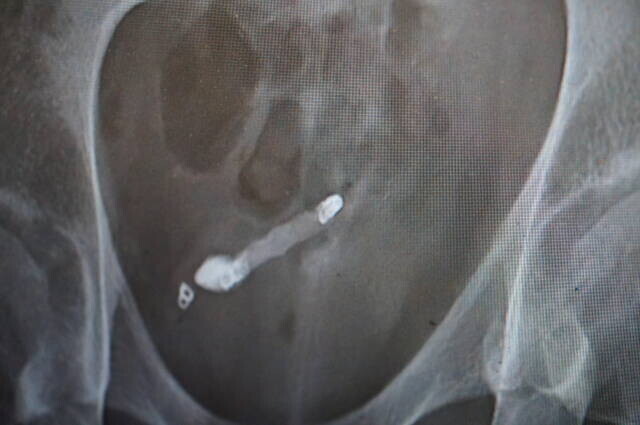
In the entry published in February 2025, staff recommended showing the treating clinician photographs of the actual device. They thought the mesh stopper (a folding attachment intended to limit inward movement) might complicate removal if its structure was misunderstood. Their reply specifically highlighted that the stopper could fold down easily.
Staff also thought the device's silicone-tube tail might be easier for a doctor to grip than slippery ceramic or thin thread. That was their assessment of the construction; the follow-up does not establish whether the clinician used the suggested photograph. Their advice was to provide the image and explain the stopper's folding structure to the treating clinician.
(Source: ok-lab's diary, published February 2025)
https://ok-lab.hatenablog.com/entry/2025/02/22/122939
Stuck chip removal referrals depended on permission and offered no treatment guarantee
In the entry published in June 2024, Mr. Okada said OK Lab might introduce a doctor identified through an earlier customer's experience. The offer applied when someone was dissatisfied with a hospital's assessment, and depended on obtaining permission from the person who supplied the information. It was a possible doctor introduction (sharing contact information), with no promise that the same treatment would suit another case.
Mr. Okada explicitly said the company could provide information but could not determine which hospital's treatment was correct. He also acknowledged that the suggested doctor might still consider abdominal surgery necessary if removal with forceps failed. His advice was to contact OK Lab about the available information if the hospital's explanation remained unsatisfactory.
(Source: ok-lab's diary, published June 2024)
https://ok-lab.hatenablog.com/entry/2024/06/01/123036
An existing doctor relationship was suggested for future stuck chip problems
In the entry published in December 2022, Mr. Okada suggested that an existing relationship with a local urologist could ease access during future trouble. He thought existing medical records could help a patient reach the doctor, although treatment or referral would still depend on that doctor's judgment.
He also acknowledged that approaching an unfamiliar clinic firmly would not suit everyone, and mentioned emergency care as another route. His suggested preparation was an honest discussion of device use with a local doctor during care.
(Source: ok-lab's diary, published December 2022)
https://ok-lab.hatenablog.com/entry/2022/12/24/122944
If you see blood in your urine, even a small amount or for the first time, do not wait and see. See a urologist right away.
If you suddenly cannot urinate, or the device cannot be removed, do not try to fix it yourself. Go to a medical facility, including emergency care, immediately.
How stuck chip removal changed over time

| Published | What the diary said then |
|---|---|
| Dec 2021 | A physical sample helped a doctor understand the device and complete removal. |
| Dec 2022 | A clinic treated a first-time patient; the customer later reported normal recovery. |
| Mar 2024 | After differing hospital assessments, the fifth hospital removed a broken ceramic chip. |
| May 2024 | Doctor information was held in reserve; successful treatment made an introduction unnecessary. |
| Jun 2024 | A follow-up disclosed hospitalization; OK Lab offered introductions subject to permission. |
| Feb 2025 | Successful removal was followed by reported infection and a warning against returning. |
The diary does not say what the current state is.
OK Prostate Chip products related to stuck chip removal

No current product is directly tied to this topic.
Common worries about stuck chip removal
"Could waiting resolve a stuck chip within one week?"
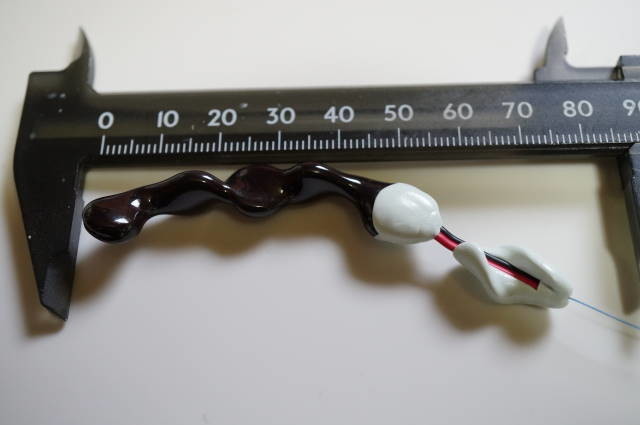
In the entry published in December 2021, the customer asked whether the device might emerge within 1 week. Staff offered speculative suggestions, but the diary records no successful recovery at home. The customer feared being scolded, yet described a doctor who responded calmly and said he had encountered similar situations.
After treatment, the customer regretted the delay and reported spending 4 days unable to focus on other things. Staff's advice was that consulting a doctor was safer when the customer did not feel able to resolve the problem.
(Source: ok-lab's diary, published December 2021)
https://ok-lab.hatenablog.com/entry/2021/12/25/123556
"Would cutting the cable help with stuck chip removal?"
In the entry published in December 2022, the customer asked whether cutting the exposed cable could solve the problem. Staff initially considered the idea theoretically possible, but their test produced prickly wire ends that they thought could injure the urethra. They also expressed concern about cutting near the urinary opening.
The customer's later account said clear explanations helped during the first visit to a clinic with several doctors. The customer had identified 2 clinics that advertised surgery and received care at the first. Staff advised a doctor's assessment because they considered the proposed home approach risky.
(Source: ok-lab's diary, published December 2022)
https://ok-lab.hatenablog.com/entry/2022/12/24/122944
"Could larger stoppers prevent another stuck chip emergency?"
In the entry published in February 2025, the customer asked whether a wider stopper could be made after previous parts had passed inward. Staff said they could consider a specified size within their manufacturing limits, but could not determine what size would work for that customer. The diary does not record whether a replacement was ordered or how it performed.
Mr. Okada attributed inward movement partly to the relative length and weight of the connected sections. He warned that a stopper did not guarantee prevention of movement into the bladder. For the immediate incident, staff advised following the treating doctor's plan.
(Source: ok-lab's diary, published February 2025)
https://ok-lab.hatenablog.com/entry/2025/02/22/122939
Buying from outside Japan

OK Lab ships internationally to countries covered by Japan Post's EMS courier service. Overseas orders are paid in advance by PayPal. Each order carries a ¥400 (about $3 at ¥156 = $1, rate as of 2026-09-04) handling fee, and EMS shipping is charged on top. These terms come from OK Lab's official sales-terms page (written here as plain text, not a link: ok-lab.net/docs/law), checked on September 7, 2026; confirm them on the official store before you order, because they can change.
Summary of this article
| What you wanted to know | The answer |
|---|---|
| What is the short answer? | Samples and photographs helped explain past cases; medical treatment and hospital acceptance varied. |
| What is the product? | A device sold by OK Lab in Japan for placement in the urethra; store prices use Japanese yen. |
| What do the key terms mean? | Samples explain construction; retrieval threads and stoppers are device parts discussed in the hospital reports. |
| What happened to customers? | The reported devices were removed, but some cases involved injury, infection, hospitalization, or several hospital visits. |
| What did the maker suggest? | Clear device information, medical assessment, and possible doctor introductions with the information provider's permission. |
| What changed over time? | Reports progressed from sample-assisted explanations to conditional introductions and later accounts of complications and refusal. |
| Is there a current product for this topic? | No current product is directly tied to this topic. |
| Did customers receive guarantees? | Staff could not identify a stopper size that would reliably solve the February 2025 customer's problem. |
| How does overseas buying work? | Advance PayPal payment, a ¥400 (about $3 at ¥156 = $1, rate as of 2026-09-04) handling fee, and additional EMS shipping, subject to the stated sales terms. |
| What does this article establish? | The diary records individual experiences with explaining devices and finding care, with different outcomes and costs. |
Source: ok-lab's diary (Okada Comfortable Life Laboratory). The original entries are in Japanese; quotations on this page are translated. Photos and videos are on the original entries.
This article is a summary of the maker's development diary. The product is not a medical device and no result is guaranteed. If anything feels wrong or worries you, see a doctor. Prices, specifications and cautions change, so confirm the latest information on the official blog and the official site. Questions about ordering and shipping go to the seller.