![Can a prostate chip cause fever? | Serious illness has been reported [OK Prostate Chip]](/img/a/T0764/eyecatch.svg)
This page is based on entries from "ok-lab's diary" (https://ok-lab.hatenablog.com/), the Japanese development diary written by Mr. Okada, founder of OK Lab, a small company in Japan (Okada Comfortable Life Laboratory). Only the entries about "fever and infection risk" are summarized here, in order of publication. Past prices and sizes are as written at the time. Current prices come from the official product list (retrieved September 4, 2026). Quotations are translated from Japanese.
Note: This page is a personal reading log by someone with no connection to the maker or the seller. It reflects the source entries as of their publication dates and makes no guarantee of accuracy or safety. The product is not a medical device; talk to a doctor about any health decision. Check the official site for current information. This page contains advertising.
In short
The diary records fever after chip use, including illnesses requiring hospital treatment.
Mr. Okada urges medical assessment for fever and publishes cautions about ointments and chip size.
The latest case, published in May 2026, describes hospitalization after bleeding and fever.
If you see blood in your urine, even a small amount or for the first time, do not wait and see. See a urologist right away. If you suddenly cannot urinate, or the device cannot be removed, do not try to fix it yourself. Go to a medical facility, including emergency care, immediately.
About this product
The OK Prostate Chip is a small device that is placed in the urethra (the urine passage) so that it acts on the prostate; the maker sells it in several shapes, sizes and materials. It is made and sold by OK Lab (Okada Comfortable Life Laboratory), a small company in Japan, through its own online store, and prices are in Japanese yen (JPY). The maker's development diary, "ok-lab's diary", is written in Japanese. This page is an English summary of it, and every quotation is translated. OK Lab ships internationally, so readers outside Japan can order (see "Buying from outside Japan" below). Product names on this page are plain-English descriptions. The official Japanese product name is shown once in the product table so you can find the same item in the store.
Before you read: key terms
| Term | Plain-English meaning |
|---|---|
| Urethra | The urine passage; it carries urine and is where the chip is placed. |
| Prostate | The body part the chip is intended to stimulate. The diary does not explain this. |
| Urethritis | Inflammation of the urine passage; the diagnosis used in Mr. Okada's reported examinations. |
| Prostatitis | Prostate inflammation; the diagnosis used in several customer reports. |
| White blood cells | Cells counted during the reported urine and blood tests to help assess illness. |
| Antibiotics | Medicines prescribed to treat the illnesses described; Cravit and Flomox are names appearing in these reports. |
| Nylon thread | The cord attached to the chip, used to connect or retrieve it. |
| High-pressure sterilization | A treatment intended to sterilize the product before shipping; Mr. Okada reported that it shortened nylon thread. |
| Bacteremia | Bacteria in the blood; the term identifies a condition Mr. Okada wondered whether chip-related bleeding could cause. |
| Kidney pelvis | A body part named in the May 2026 diagnosis. The diary does not explain this. |
What happens: fever after chip use
The OK Prostate Chip is a small device placed inside the urethra to stimulate the prostate. The maker describes a device positioned near the prostate, with only its thread extending outside the body. These entries discuss fever, urinary inflammation, and infection concerns following use or testing, including illnesses needing hospital care. The accounts do not establish that every reported fever came from the chip.
Fever after chip use led to a diagnosis despite no detected bacteria
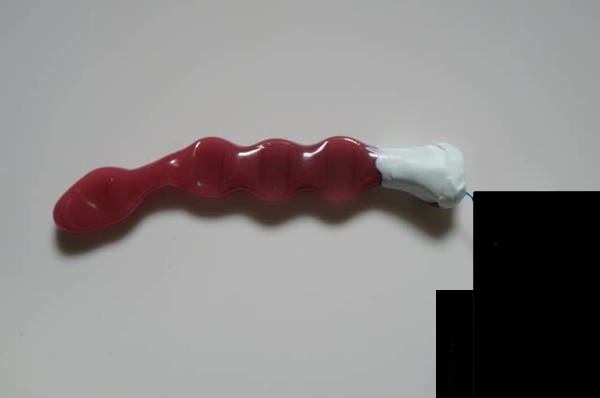
In an entry published in November 2017, Mr. Okada reports chills on November 6 and a 37.2°C temperature the following morning. On November 7, his doctor diagnosed urethritis (inflammation of the urine passage), without establishing whether the chip caused it. Tests showed raised white blood cells (cells counted in his urine test), but no bacteria.
Mr. Okada reports 4 days of Cravit (an antibiotic medicine), fever relief within half a day, and confirmation of recovery after 4 days. A November 29 urine test was normal after approximately 20 days of daily chip testing. Mr. Okada writes that he followed the doctor's request to suspend chip use until recovery.
(Source: ok-lab's diary, published November 2017)
https://ok-lab.hatenablog.com/entry/20171129/1511963864
A customer's fever after chip use developed alongside blood in urine
An entry published in June 2018 describes a customer's overnight use in May of a single-chip glass model with ointment to intensify sensation. Discomfort appeared after 2 days; by day 4, the customer reported 39°C fever, headache, and blood detected in urine. On day 11, dull prostate pain, painful urination, and a low fever brought further specialist treatment.
By day 16, improving blood and urine tests accompanied a diagnosis of acute prostatitis (prostate inflammation). The customer suspected overnight use, excessive stimulation, hygiene problems, or ointment irritation; the diary does not establish which explanation was correct. Mr. Okada later added advice against using such ointments with the chip.
(Source: ok-lab's diary, published June 2018)
https://ok-lab.hatenablog.com/entry/20180609/1528523953
A doctor questioned chip size when assessing fever after chip use
In an entry published in June 2018, Mr. Okada reports sudden urethritis with fever reaching 39.2°C. His doctor prescribed Flomox (an antibiotic medicine), instead of Cravit. Mr. Okada suggested that his cleaning practices might explain the illness, and the doctor initially agreed this was possible.
The doctor then judged a new chip sample too large and suggested prolonged placement might be responsible. The diary does not record the outcome of the planned follow-up examination. Mr. Okada reports the doctor's caution that the urine passage could stretch but was normally much smaller.
(Source: ok-lab's diary, published June 2018)
https://ok-lab.hatenablog.com/entry/20180623/1529741851
Suspected fever after chip use remained unexplained despite normal test results
In an entry published in August 2019, Mr. Okada describes seeking assessment because he suspected another urinary illness. He reported a 38°C fever on August 4, rising to 39°C after roughly an hour of work. His urine results were normal, prompting investigation of a possible cause outside the urethra.
Blood tests also showed normal white blood cells, and the cause remained unknown. Mr. Okada offered a summer cold as his own possible explanation. He writes that ongoing illness led him to pause chip testing.
(Source: ok-lab's diary, published August 2019)
https://ok-lab.hatenablog.com/entry/2019/08/10/125102
An oversized chip preceded inflammation in Mr. Okada's infection risk account
In an entry published in November 2019, Mr. Okada recalls developing urethritis after testing an exceptionally large chip. He says his doctor had described that chip as simply a foreign object in his urethra.
Mr. Okada reports that diminished sensation persisted for a time afterward. The diary does not record how long that loss of sensation lasted. No matching product can be confirmed on the current list.
(Source: ok-lab's diary, published November 2019)
https://ok-lab.hatenablog.com/entry/2019/11/02/132358
A customer associated fever after chip use with injury and misjudged thread length
In an entry published in January 2020, a customer recalls injury and fever involving an earlier resin model with 2 linked chips. The customer attributed the problem to misjudging thread length and reported that the chip had slipped too far inside.
The same message praised a later ceramic device, but it did not explain treatment or recovery from the earlier injury. Mr. Okada's reply welcomed the later feedback without providing an assessment of that fever.
(Source: ok-lab's diary, published January 2020)
https://ok-lab.hatenablog.com/entry/2020/01/04/155235
The maker's answer to fever after chip use
The diary records manufacturing changes and medical cautions, alongside Mr. Okada's own opinions about infection.
Pressure treatment changed after an infection risk precaution shortened nylon thread
In an entry published in November 2017, Mr. Okada describes a manufacturing change prompted by unexpected thread shrinkage. High-pressure sterilization (a treatment intended to sterilize the product) had shortened the nylon thread (the chip's attached cord). He reports finding the problem shortly before shipment and remaking affected items.
He changed the final treatment before shipping to boiling alone. The diary does not say what the current state is. Mr. Okada advised against the pressure treatment because it shortened the thread.
(Source: ok-lab's diary, published November 2017)
https://ok-lab.hatenablog.com/entry/20171129/1511963864
An ointment warning challenged assumptions about infection risk and germ-killing claims
An addition to the entry published in June 2018 attributes an ointment warning to someone described as having medical knowledge. The warning concerned ointments used with the chip, including products marketed as killing germs.
According to that contributor, such claims did not establish medical-level protection, and combining these ointments with a chip greatly increased infection risk. Mr. Okada published the contributor's advice against combining these ointments with the chip.
(Source: ok-lab's diary, published June 2018)
https://ok-lab.hatenablog.com/entry/20180609/1528523953
Pandemic advice on infection risk departed from Mr. Okada's usual position
In an entry published in March 2020, Mr. Okada says prostate inflammation had occurred roughly once every 5 years before chip testing. After testing began, he reports needing specialist care several times a year. He describes routine care as urine testing followed by doctor-prescribed antibiotics.
Fearing pandemic disruption, he promoted personal antibiotic stockpiles and self-treatment as an emergency response. Those proposals were his views about threatened access to care. He also opposed casual antibiotic use and said treatment decisions should normally follow a doctor's judgment.
(Source: ok-lab's diary, published March 2020)
https://ok-lab.hatenablog.com/entry/2020/03/28/144043
Bleeding after use raised a suspected bloodstream concern for Mr. Okada
In an entry published in November 2020, Mr. Okada considers bacteremia (bacteria in the blood) after reading about bleeding during dental treatment. He speculates that chip-related bleeding could also allow this to happen.
The diary does not record a confirmed case of bacteremia caused by a chip in this entry. He writes that avoiding bleeding had become a priority for his own chip use.
(Source: ok-lab's diary, published November 2020)
https://ok-lab.hatenablog.com/entry/2020/11/07/121125
If you see blood in your urine, even a small amount or for the first time, do not wait and see. See a urologist right away. If you suddenly cannot urinate, or the device cannot be removed, do not try to fix it yourself. Go to a medical facility, including emergency care, immediately.
How fever after chip use changed over time
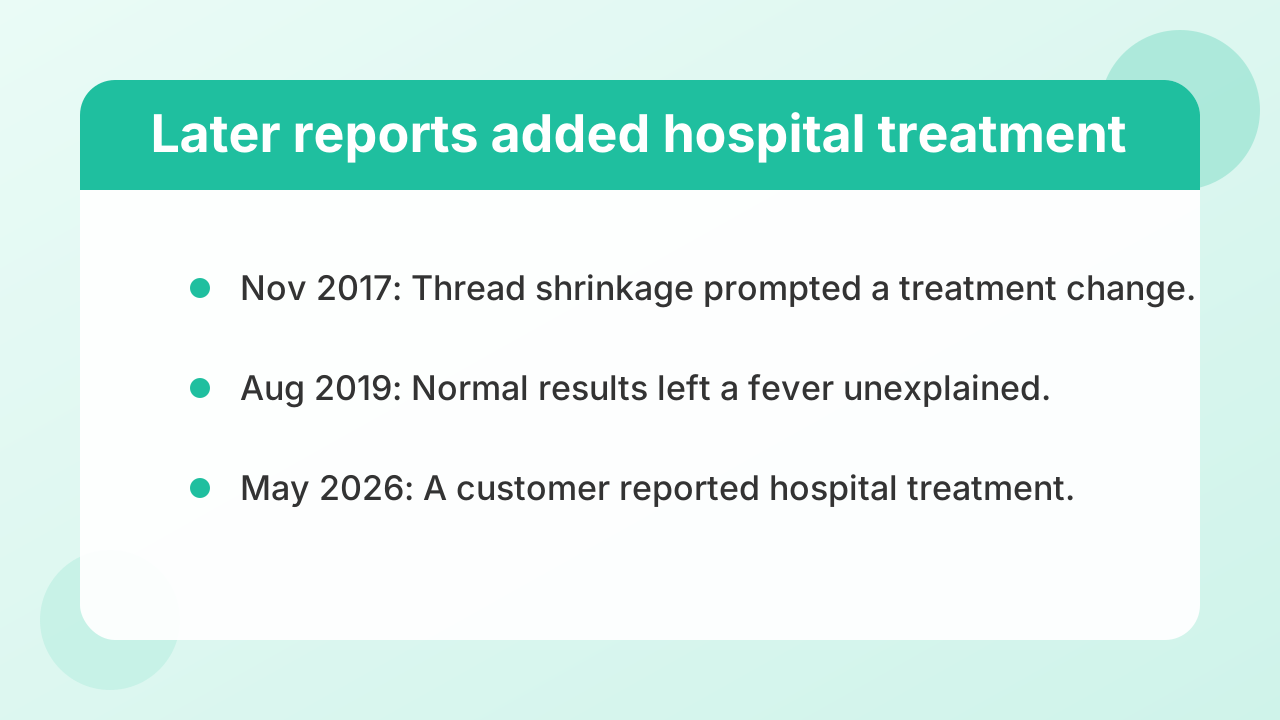
| Published | What the diary said then |
|---|---|
| Oct 2017 | Mr. Okada described earlier prostate inflammation investigated after persistent low fever. |
| Nov 2017 | Thread shrinkage prompted a change in treatment before shipping. |
| Jun 2018 | A customer reported prostate inflammation after overnight use with ointment. |
| Jun 2018 | A doctor questioned whether a large sample placed excessive strain on the urethra. |
| Aug 2019 | Normal urine and blood results left a fever unexplained. |
| Nov 2019 | Discomfort continued despite apparent recovery from inflammation, prompting a pause in use. |
| Mar 2020 | Pandemic fears changed Mr. Okada's position on managing illness. |
| Sep 2020 | Recurrent prostate inflammation prompted a customer to request a return. |
| Jan 2023 | A stuck-device report added pain, bleeding, and subsequent high fever. |
| May 2026 | A customer reported hospital treatment following repeated attempts, bleeding, and fever. |
OK Prostate Chip products related to fever after chip use
No current product is directly tied to this topic.
Common worries about fever after chip use
Readers asked about refunds, a stuck chip, and continuing after hospital treatment.
"Does fever after chip use qualify for a refund?"
An entry published in September 2020 records prostate discomfort and recurrent acute prostatitis after 2 uses of a version 4 sea-slug-shaped chip. The customer described persistent 39°C fever, several days of clinic visits for antibiotic drips, and blood-test results that nearly triggered admission. The customer planned to stop using chips and requested a return, which Mr. Okada refused under the used-product policy.
The diary does not record the customer's eventual recovery. No matching product can be confirmed on the current list. Mr. Okada urged a visit to a urinary specialist for fever and also mentioned early antibiotic treatment.
(Source: ok-lab's diary, published September 2020)
https://ok-lab.hatenablog.com/entry/2020/09/12/093836
"Could a rotating attachment explain my stuck chip and fever?"
A customer in an entry published in January 2023 asked whether a rounded screw-shaped attachment could rotate and trap a long chip. Attempts to retrieve the stuck device caused pain and bleeding; after eventual removal, the customer reported about 2 days of high fever. The customer later reported recovery, but the diary does not record a medical explanation for the fever.
Mr. Okada suspected that the attachment tilted and its connecting thread became trapped; this remained his interpretation. No matching product can be confirmed on the current list. His design suggestions focused on connections he thought less likely to tangle.
(Source: ok-lab's diary, published January 2023)
https://ok-lab.hatenablog.com/entry/2023/01/07/123115
"Should I abandon chips following bleeding after use and hospitalization?"
In an entry published in May 2026, a 65-year-old customer asked whether to abandon the chip after repeated unsuccessful placement attempts. The customer reported bleeding at the urethral opening after repeated attempts, followed 2 days later by chills, shaking, and 39.4°C fever. The reported diagnoses were acute inflammation of the kidney pelvis and acute prostatitis, requiring 3 days in hospital with antibiotics given through a drip.
The customer reported discharge before sending the question. Mr. Okada discussed other instruments and altered connections without assessing the customer's infection risk. He acknowledged that he could not determine which product suited this customer.
(Source: ok-lab's diary, published May 2026)
https://ok-lab.hatenablog.com/entry/2026/05/16/122906
Buying from outside Japan
OK Lab ships internationally to countries covered by Japan Post's EMS courier service. Overseas orders are paid in advance by PayPal. Each order carries a ¥400 (about $3 at ¥156 = $1, rate as of 2026-09-04) handling fee, and EMS shipping is charged on top. These terms come from OK Lab's official sales-terms page (written here as plain text, not a link: ok-lab.net/docs/law), checked on September 7, 2026; confirm them on the official store before you order, because they can change.
Summary of this article
| What you wanted to know | The answer |
|---|---|
| What is the short answer? | The diary includes serious illness after use, with differing or uncertain explanations. |
| What is this product? | A urethral device made by OK Lab in Japan, intended to stimulate the prostate. |
| What do the terms mean? | They distinguish the body parts, reported diagnoses, medicines, and manufacturing treatment discussed here. |
| What happened in the reports? | Customers and Mr. Okada described fever, inflammation, injury, and differing medical findings. |
| What did the maker suggest? | His accounts include medical assessment, manufacturing changes, ointment cautions, and personal opinions about treatment. |
| What changed over time? | Later reports added recurrent illness, retrieval trouble, and hospital treatment. |
| Which current product addresses this worry? | No current product is directly tied to this topic. |
| What did customers ask? | Whether returns were possible, attachments could rotate, or continued use made sense after illness. |
| How do overseas purchases work? | Advance PayPal payment, a handling fee, and additional EMS shipping charges apply. |
| What does this summary establish? | These are dated diary reports; explanations and outcomes differ between cases. |
Source: ok-lab's diary (Okada Comfortable Life Laboratory). The original entries are in Japanese; quotations on this page are translated. Photos and videos are on the original entries.
This article is a summary of the maker's development diary. The product is not a medical device and no result is guaranteed. If anything feels wrong or worries you, see a doctor. Prices, specifications and cautions change, so confirm the latest information on the official blog and the official site. Questions about ordering and shipping go to the seller.