![Could my urethra be injured without pain? | The maker warns that signs may appear later [OK Prostate Chip]](/img/a/T0752/eyecatch.svg)
This page is based on entries from "ok-lab's diary" (https://ok-lab.hatenablog.com/), the Japanese development diary written by Mr. Okada, founder of OK Lab, a small company in Japan (Okada Comfortable Life Laboratory). Only the entries about "urethral injury without pain" are summarized here, in order of publication. Past prices and sizes are as written at the time. Current prices come from the official product list (retrieved September 4, 2026). Quotations are translated from Japanese.
Note: This page is a personal reading log by someone with no connection to the maker or the seller. It reflects the source entries as of their publication dates and makes no guarantee of accuracy or safety. The product is not a medical device; talk to a doctor about any health decision. Check the official site for current information. This page contains advertising.
In short
Mr. Okada warns that urethral injury may become apparent through delayed pain or bleeding.
His responses include warnings about friction, electrical stimulation, and relying on sensation.
By May 2026, he had decided against thicker-wire products and planned a thinner prototype.
If you see blood in your urine, even a small amount or for the first time, do not wait and see. See a urologist right away.
If you suddenly cannot urinate, or the device cannot be removed, do not try to fix it yourself. Go to a medical facility, including emergency care, immediately.
About this product
The OK Prostate Chip is a small device that is placed in the urethra (the urine passage) so that it acts on the prostate; the maker sells it in several shapes, sizes and materials. It is made and sold by OK Lab (Okada Comfortable Life Laboratory), a small company in Japan, through its own online store, and prices are in Japanese yen (JPY).
The maker's development diary, "ok-lab's diary", is written in Japanese. This page is an English summary of it, and every quotation is translated. OK Lab ships internationally, so readers outside Japan can order (see "Buying from outside Japan" below).
Product names on this page are plain-English descriptions. The official Japanese product name is shown once in the product table so you can find the same item in the store.
Before you read: key terms
| Term | Plain-English meaning |
|---|---|
| Urethra | The urine passage; it is also where the maker describes the chip acting on surrounding tissue. |
| Prostate | The body structure targeted by chip pressure; the diary does not explain its normal function. |
| Retrieval thread | A thread attached to a chip, intended for retrieving it. |
| Electrode chip | A chip carrying electrical contacts, intended to provide electrical stimulation. |
| Connector | The part joining chips; the development entries compare materials for this connection. |
| Surgical thread | Thread used for stitches; Mr. Okada also considered it for joining ceramic chips. |
| Sphincter | A muscle controlling an opening; Mr. Okada describes the internal urethral sphincter as operating without conscious control. |
What happens: urethral injury without pain
The OK Prostate Chip is a small device placed in the urethra, which Mr. Okada describes as applying pressure toward the prostate. This topic concerns his warning that discomfort may not clearly reveal what a device is doing to the tissue around it. Across these entries, he discusses friction, electrical stimulation, damaged wires, and pressure near the muscles that open and close parts of the passage. His concern is that an injury may not be recognized when it happens.
No urethral pain could conceal friction damage, Mr. Okada warned
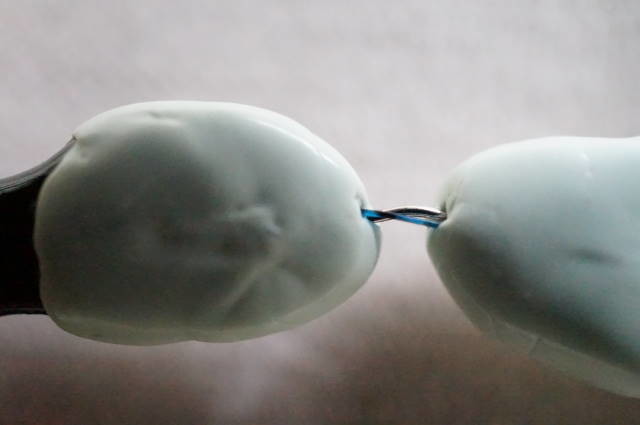
In an entry published in October 2017, Mr. Okada explained that chip friction could damage the urethral wall without an obvious immediate warning. He considered sensation there too limited to show how much rubbing was occurring. His discussion distinguished surface roughness from what a person could feel during use.
He also wrote that tiny surface defects could escape notice when examined with a finger. Mr. Okada advised against using any chip with even a small surface defect.
(Source: ok-lab's diary, published October 2017)
https://ok-lab.hatenablog.com/entry/20171019/1508375473
Thread reinforcement left Mr. Okada concerned about urethral injury without pain
In an entry published in May 2018, Mr. Okada discussed strengthening the attachment of the retrieval thread (the thread intended to retrieve a chip). Reports had described either the thread coming loose alone or pieces of resin coming away with it.
He was considering thicker resin over the thread attachment, but also raised a separate concern about the force reaching the body. His warning was that a strong pull could injure the urethra without being recognized until bleeding appeared.
(Source: ok-lab's diary, published May 2018)
https://ok-lab.hatenablog.com/entry/20180515/1526348315
Urethral burns without pain worried Mr. Okada after electrical stimulation
In an entry published in March 2019, a customer described nearly a day of pain after electrical stimulation lasting less than 40 minutes. The customer had used an electrode chip (a chip carrying electrical contacts for stimulation) and reported no bleeding. Mr. Okada questioned whether injury had occurred, and the customer later reported little pain after another trial.
He subsequently wrote that the customer's previous experience with electrical stimulation elsewhere had reassured him. No matching product can be confirmed on the current list. His original caution concerned burns that might not be obvious from urethral sensation.
(Source: ok-lab's diary, published March 2019)
https://ok-lab.hatenablog.com/entry/2019/03/09/150813
Brief tests could not compare the risk of painless urethral damage
In an entry published in October 2019, Mr. Okada compared connectors (parts joining chips) during development of a linked ceramic design. He abandoned a stainless-steel connection after repeated bending concentrated damage in a short section and caused breakage. Fishing line performed well in strength testing, but he then considered surgical thread (thread used for stitches).
He wrote that brief urethral tests could not distinguish the tissue impact, while a separate friction comparison favored surgical thread. No matching product can be confirmed on the current list. His proposed choice was several surgical threads together, with further strength testing before production.
(Source: ok-lab's diary, published October 2019)
https://ok-lab.hatenablog.com/entry/2019/10/12/125944
A protruding wire raised concerns about urethral injury without pain
In an entry published in April 2022, Mr. Okada described tests involving broken wires in a support cord. He found an obviously protruding wire afterward, yet had felt tightness rather than a sharp prick inside the urethra. The diary does not record a medical assessment of any injury from that test. Mr. Okada advised against relying on sensation to judge what was happening inside.
(Source: ok-lab's diary, published April 2022)
https://ok-lab.hatenablog.com/entry/2022/04/02/123050
Reduced sensation complicated Mr. Okada's assessment of painless urethral damage
In an entry published in March 2024, Mr. Okada described reduced sensation at the internal urethral sphincter (a muscle he says operates without conscious control). He could no longer recognize a chip passing through or stretching it, and wondered whether paralysis explained the change. He also described a chip becoming impossible to retrieve during repeated tests as moisture diminished.
He suspected dryness explained most reports of chips that could not be removed, with anxiety and stress further reducing moisture. The diary does not record a confirmed cause for his loss of sensation. His warning concerned strain on the internal sphincter that could go unnoticed.
(Source: ok-lab's diary, published March 2024)
https://ok-lab.hatenablog.com/entry/2024/03/02/123027
Strong vibration raised further concerns about urethral injury without pain
In an entry published in February 2026, Mr. Okada compared vibration from the motor and ceramic tip of a flexible vibrating prototype. He found the tip's vibration stronger in a separate sensory comparison, although the difference was hard to recognize inside the urethra. He regarded the thin connection as a way to reduce pressure on a sphincter.
No matching product can be confirmed on the current list. Mr. Okada cautioned that strong vibration, especially prolonged bladder vibration, might be harmful.
(Source: ok-lab's diary, published February 2026)
https://ok-lab.hatenablog.com/entry/2026/02/14/121602
The maker's answer to urethral injury without pain
Mr. Okada's responses progressed from warnings about friction to rejecting particular uses and designs.
Possible urethral burns without pain prompted advice to stop electrical use
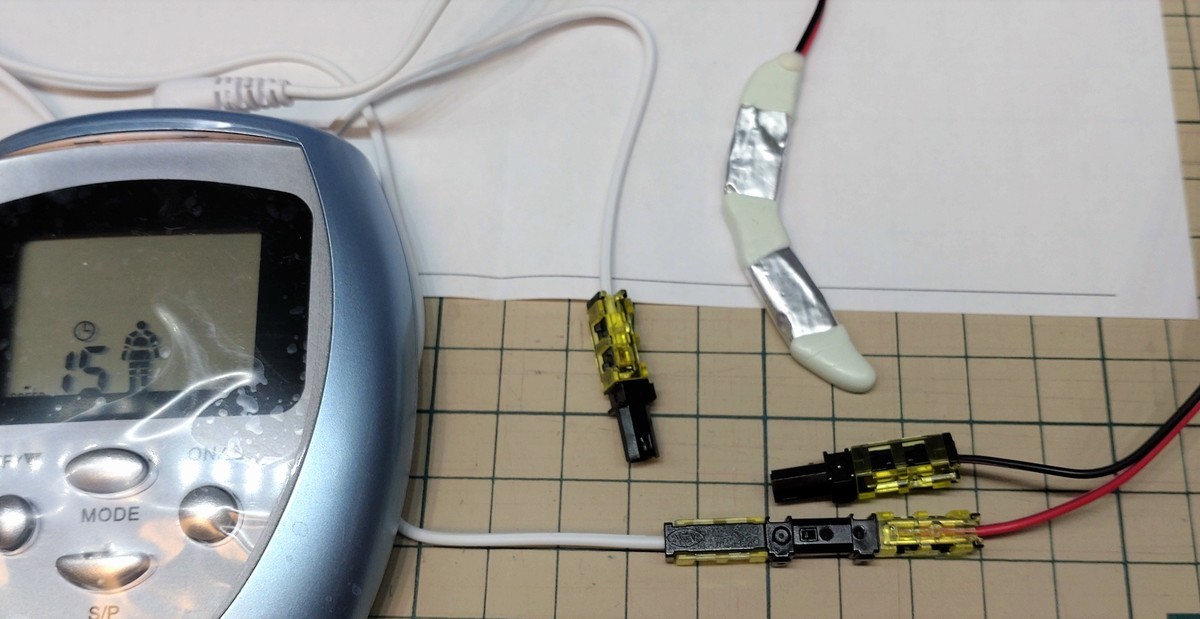
In an entry published in April 2022, a customer reported overwhelming stimulation from a custom electrical chip. Even power setting 1 limited the customer to 3 minutes, and an electrical sensation lingered after the session. The customer reported feeling normal the following day.
Mr. Okada nevertheless suspected injury and worried that burns inside the urethra could remain unseen. The diary does not record whether this customer followed his request. Mr. Okada asked this customer to stop using that electrical stimulator with the chip.
(Source: ok-lab's diary, published April 2022)
https://ok-lab.hatenablog.com/entry/2022/04/02/123050
Concern about painless urethral damage changed the standard set's contents
A urethral sound (a long instrument used in earlier penis-tucking designs) was central to an entry published in March 2023. Mr. Okada wrote that this instrument could strain the urethra, depending on how it was used. He warned that genital pain might become noticeable only after injury had occurred.
He excluded the sound from the standard 3-piece set because he considered it much harder to use and different in safety. The stated exclusion concerned the set's standard contents. He urged caution about sounds while he continued considering their materials, shapes, and safety.
(Source: ok-lab's diary, published March 2023)
https://ok-lab.hatenablog.com/entry/2023/03/25/122614
Concern about urethral injury without pain ruled out thicker wires
In an entry published in May 2026, Mr. Okada compared prototypes made with 0.05mm, 0.075mm, and 0.1mm wire. He reported gentler sensation with thinner wire, but suspected thicker wire overburdened the lining even without bleeding. He worried that limited pain and poor visibility could encourage excessive stimulation.
He decided against making the thicker-wire products and planned a 0.03mm prototype. No matching product can be confirmed on the current list. His stated policy was to offer only designs he considered safe, even if their sensation was milder.
(Source: ok-lab's diary, published May 2026)
https://ok-lab.hatenablog.com/entry/2026/05/09/122904
If you see blood in your urine, even a small amount or for the first time, do not wait and see. See a urologist right away.
If you suddenly cannot urinate, or the device cannot be removed, do not try to fix it yourself. Go to a medical facility, including emergency care, immediately.
How urethral injury without pain changed over time
| Published | What the diary said then |
|---|---|
| Oct 2017 | Mr. Okada linked unnoticed tissue damage to chip friction. |
| Mar 2018 | A customer reported bleeding after continuous wear; no externally visible safe limit was given. |
| May 2018 | Thread-strengthening work included a warning about injury from forceful pulling. |
| Mar 2019 | An electrical-chip report prompted concern about burns despite no reported bleeding. |
| Oct 2019 | Connector development shifted toward multiple surgical threads after strength and friction comparisons. |
| May 2020 | Closer spring loops remained unresolved because of tissue-contact concerns and weak resin. |
| Apr 2022 | Mr. Okada asked a customer to stop an electrical setup over possible hidden injury. |
| Mar 2023 | The standard 3-piece set excluded the sound because of difficulty and safety concerns. |
| Mar 2024 | Mr. Okada reported diminished sensation and suspected dryness in retrieval problems. |
| May 2026 | He rejected thicker-wire products and planned a 0.03mm prototype. |
OK Prostate Chip products related to urethral injury without pain
No current product is directly tied to this topic.
Common worries about urethral injury without pain
The diary's questions concerned unnoticed injury, continuous wear, and whether a gentler design could reduce harm.
"Could urethral injury without pain become painful later?"
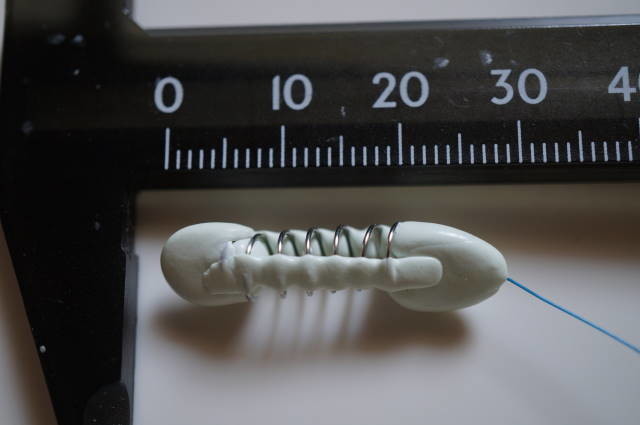
In an entry published in October 2017, a reader worried about damage to delicate tissue inside the urethra. Mr. Okada agreed that an injury might not be noticed immediately, with pain or slight bleeding appearing afterward. He described glass as gentler in friction, but also said no instrument was entirely free of friction.
The diary does not record whether this reader later used a chip or experienced injury. Mr. Okada advised stopping use if discomfort occurred, including with glass.
(Source: ok-lab's diary, published October 2017)
https://ok-lab.hatenablog.com/entry/20171026/1508989298
"How can I recognize urethral injury without pain during continuous wear?"
In an entry published in March 2018, a customer asked how to recognize the limit for continuous wear of a linked resin chip. They reported blood in their urine on the second afternoon, after wearing it from midday the previous day until after midday. Mr. Okada said no external sign established that limit; he wrote that users commonly recognized damage only through bleeding.
Separately, he cited bleeding reports involving glass chips, a dry urethra, and sustained pressure against a sphincter. He suspected prolonged contact with dry tissue could increase friction and damage. Mr. Okada's proposed precaution was a break from continuous wear, without an externally measurable safe limit.
(Source: ok-lab's diary, published March 2018)
https://ok-lab.hatenablog.com/entry/20180324/1521875816
"Could tighter spring loops reduce urethral injury without pain?"
In an entry published in May 2020, a reader asked whether tighter spring loops could reduce pressure on the urethral lining. Mr. Okada suspected the spring section could cause excessive stimulation that he had not readily recognized during testing. He thought closer loops might help but could also trap tissue.
He found that the existing resin construction broke under strong bending. No matching product can be confirmed on the current list. His response was continued development, with tissue contact and strength still unresolved.
(Source: ok-lab's diary, published May 2020)
https://ok-lab.hatenablog.com/entry/2020/05/23/132040
Buying from outside Japan
OK Lab ships internationally to countries covered by Japan Post's EMS courier service. Overseas orders are paid in advance by PayPal.
Each order carries a ¥400 (about $3 at ¥156 = $1, rate as of 2026-09-04) handling fee, and EMS shipping is charged on top. These terms come from OK Lab's official sales-terms page (written here as plain text, not a link: ok-lab.net/docs/law), checked on September 7, 2026; confirm them on the official store before you order, because they can change.
Summary of this article
| What you wanted to know | The answer |
|---|---|
| What is the main concern? | Mr. Okada describes injuries becoming apparent through delayed pain or bleeding. |
| What is this product? | A device sold by OK Lab in Japan, intended to act on the prostate from the urethra. |
| What do the key terms mean? | The urethra is the urine passage; connectors join chips, while retrieval threads serve retrieval. |
| What happened in development and customer reports? | The concerns involved friction, electrical stimulation, damaged wires, reduced sensation, and vibration. |
| How did the maker respond? | He advised stopping one electrical setup and excluded particular instruments or designs. |
| What changed over time? | His warnings later affected the contents of a set and his wire-prototype plans. |
| Is a current product directly tied to this concern? | No current product is directly tied to this topic. |
| What did readers ask? | Questions addressed delayed symptoms, continuous wear, and whether tighter spring loops could reduce tissue pressure. |
| How do overseas purchases work? | Advance PayPal payment, a ¥400 (about $3 at ¥156 = $1, rate as of 2026-09-04) handling fee, and additional EMS shipping charges. |
| What limit did the diary establish? | Mr. Okada gave no externally measurable safe limit for continuous wear. |
Source: ok-lab's diary (Okada Comfortable Life Laboratory). The original entries are in Japanese; quotations on this page are translated. Photos and videos are on the original entries.
This article is a summary of the maker's development diary. The product is not a medical device and no result is guaranteed. If anything feels wrong or worries you, see a doctor. Prices, specifications and cautions change, so confirm the latest information on the official blog and the official site. Questions about ordering and shipping go to the seller.