![How much does movable chip processing cost? | January 2026 quotes: ¥4,400 or ¥5,500 extra [OK Prostate Chip]](/img/a/T0313/eyecatch.svg)
This page is based on entries from "ok-lab's diary" (https://ok-lab.hatenablog.com/), the Japanese development diary written by Mr. Okada, founder of OK Lab, a small company in Japan (Okada Comfortable Life Laboratory). Only the entries about "movable and Yajirobee connection prices" are summarized here, in order of publication. Past prices and sizes are as written at the time. Current prices come from the official product list (retrieved September 4, 2026). Quotations are translated from Japanese.
Note: This page is a personal reading log by someone with no connection to the maker or the seller. It reflects the source entries as of their publication dates and makes no guarantee of accuracy or safety. The product is not a medical device; talk to a doctor about any health decision. Check the official site for current information. This page contains advertising.
In short
Movable processing and connections between two chips carried additional charges beyond the underlying chip prices.
Mr. Okada priced these additions by connection design, chip type, and separate components.
The current list includes base chips, but no separately named movable-processing option.
About this product

The OK Prostate Chip is a small device that is placed in the urethra (the urine passage) so that it acts on the prostate; the maker sells it in several shapes, sizes and materials. It is made and sold by OK Lab (Okada Comfortable Life Laboratory), a small company in Japan, through its own online store, and prices are in Japanese yen (JPY). The maker's development diary, "ok-lab's diary", is written in Japanese. This page is an English summary of it, and every quotation is translated. OK Lab ships internationally, so readers outside Japan can order (see "Buying from outside Japan" below). Product names on this page are plain-English descriptions. The official Japanese product name is shown once in the product table so you can find the same item in the store.
Before you read: key terms
| Term | Plain-English meaning |
|---|---|
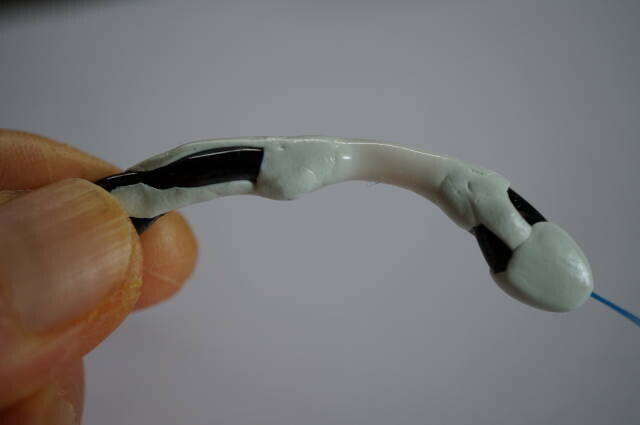
| Movable processing | A flexible joint within a ceramic chip, or between a chip and motor, allowing connected sections to bend. |
| Yajirobee connection | A curved wire link joining the rear ends of two chips to form a paired device. |
| Dual chip | Two ceramic chips connected through a joint assembly so the combined device can bend. |
| Nitinol | Shape-memory wire used to support flexible connections and hold their shape. |
| Jointed unit | A resin-covered segment in a flexible shaft; the maker developed these shafts to assist placement. |
| Modular jointed chip | An assembly with separate chip, shaft, and stopper sections, intended to allow different combinations of parts. |
| Heart-shaped stopper | A wire-loop component intended to hold the modular assembly in place. |
| Screw-shaped auxiliary chip | An additional chip behind the main chip; Mr. Okada describes its friction as helping the device stay in place. |
What happens: movable chip costs
The OK Prostate Chip is a small device placed in the urethra, the urine passage, to act on the prostate. Movable processing (a flexible joint) allows sections of a ceramic chip, or a chip and vibration motor, to bend relative to each other. A Yajirobee connection (a curved wire link) joins the rear ends of two chips. These connections form part of the device placed in the urethra.
Yajirobee connection prices depended on whether the wire had a cover
An entry published in May 2024 set out separate charges for connections between two chips. Both chip prices were payable, plus ¥3,000 (about $19 at ¥156 = $1, rate as of 2026-09-04) excluding tax for bare wire or ¥4,000 (about $26 at ¥156 = $1, rate as of 2026-09-04) excluding tax for a tube-covered connection.
Mr. Okada described the possible combinations as open-ended and offered to consider requested designs within practical limits. For customers seeking a thinner connection, he recommended bare wire.
(Source: ok-lab's diary, published May 2024)
https://ok-lab.hatenablog.com/entry/2024/05/04/122911
Jointed chip prices separated connector charges from shafts and stoppers
In an entry published in December 2025, Mr. Okada introduced a modular jointed chip (an assembly of separate parts). It separated the chip-and-joint section, straight shaft, and heart-shaped stopper (a wire-loop component intended to hold the assembly).
The chip section added ¥2,000 (about $13 at ¥156 = $1, rate as of 2026-09-04) plus ¥500 (about $3 at ¥156 = $1, rate as of 2026-09-04) per joint, excluding tax, to the chip price; standard joints were roughly 10 mm long. Straight shafts cost ¥2,000 (about $13 at ¥156 = $1, rate as of 2026-09-04) up to 100 mm, ¥3,000 (about $19 at ¥156 = $1, rate as of 2026-09-04) up to 150 mm, or ¥4,000 (about $26 at ¥156 = $1, rate as of 2026-09-04) up to 200 mm, all excluding tax.
Heart-shaped stoppers cost ¥3,000 (about $19 at ¥156 = $1, rate as of 2026-09-04) for four layers or ¥2,500 (about $16 at ¥156 = $1, rate as of 2026-09-04) for two layers, excluding tax. Mr. Okada recommended the four-layer stopper, reporting that the two-layer design was more likely to slip out.
(Source: ok-lab's diary, published December 2025)
https://ok-lab.hatenablog.com/entry/2025/12/13/122917
Dual-chip prices covered joints plus attachments to both ceramic pieces
In an entry published in January 2026, Mr. Okada presented a dual chip (two ceramic chips connected through a flexible joint assembly). Its additional charge was ¥6,000 (about $38 at ¥156 = $1, rate as of 2026-09-04) excluding tax, on top of both chip prices.
The breakdown was 4 joints at ¥3,000, (about $19 at ¥156 = $1, rate as of 2026-09-04) first-chip attachment at ¥1,000, (about $6 at ¥156 = $1, rate as of 2026-09-04) and second-chip attachment at ¥2,000, (about $13 at ¥156 = $1, rate as of 2026-09-04) all excluding tax. The target bend was about 90 degrees, although Mr. Okada reported variation linked to drying and setting.
He generally preferred matching chip shapes but said different ceramic chips could also be connected. He warned that limited production capacity could extend delivery times.
(Source: ok-lab's diary, published January 2026)
https://ok-lab.hatenablog.com/entry/2026/01/10/122922
Movable chip prices varied by ceramic shape when processing launched
In an entry published in January 2026, Mr. Okada introduced a joint with a 15 mm gap between ceramic sections. That gap contained 5 mm of resin at each end and 5 mm of rubber in the middle.
Standard bends were approximately 30 to 45 degrees, with around 90 degrees possible on request. Eligible shapes without bumps included short, medium-length, extended, long, and double-twist ceramic chips, plus sea-slug shapes except version 4.
Processing cost ¥4,000 (about $26 at ¥156 = $1, rate as of 2026-09-04) excluding tax for short, medium-length, and medium-length sea-slug chips. Extended, long, double-twist, and sea-slug version 3 revision 2 chips carried a ¥5,000 (about $32 at ¥156 = $1, rate as of 2026-09-04) processing charge excluding tax.
(Source: ok-lab's diary, published January 2026)
https://ok-lab.hatenablog.com/entry/2026/01/17/122907
Vibrating movable chip prices added processing charges to existing motorized models
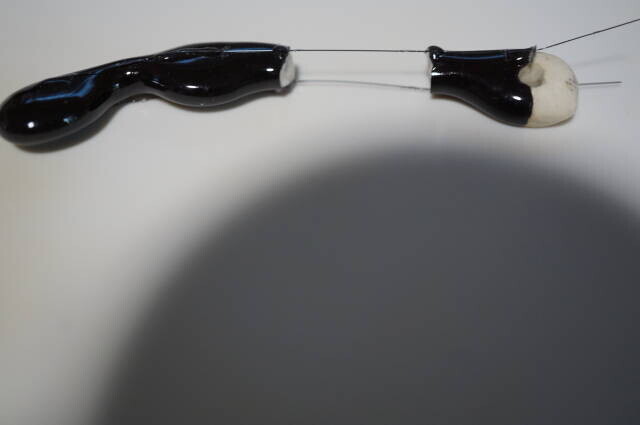
In an entry published in February 2026, Mr. Okada introduced movable connections for vibrating ceramic chips. Processing added ¥4,000 (about $26 at ¥156 = $1, rate as of 2026-09-04) excluding tax for short and medium-length ceramic chips, or ¥5,000 (about $32 at ¥156 = $1, rate as of 2026-09-04) excluding tax for extended and long ones, to the vibrating chip price.
The stated motor options were 8 mm or 10 mm; Mr. Okada excluded 6 mm motors because he questioned the connection's reliability. Connection diameter was normally about 5 mm, with roughly 3 mm possible; spacing between chip and motor ranged from about 15 mm to 30 mm.
Mr. Okada described the flexible connection as allowing more choice of bend and spacing. He cautioned that strong or prolonged bladder vibration might be unhealthy.
(Source: ok-lab's diary, published February 2026)
https://ok-lab.hatenablog.com/entry/2026/02/14/121602
The maker's answer to movable chip costs
Mr. Okada answered requests with separate processing quotes and changes to the connection design.
Movable chip quotes showed separate small and large processing charges
An entry published in January 2026 quoted a small movable-processing charge of ¥4,400 (about $28 at ¥156 = $1, rate as of 2026-09-04) and a large charge of ¥5,500 (about $35 at ¥156 = $1, rate as of 2026-09-04). The small quote concerned a medium-length ceramic chip; the large quote concerned an extended ceramic chip.
The underlying chips were separately priced at ¥4,400 (about $28 at ¥156 = $1, rate as of 2026-09-04) and ¥5,500, (about $35 at ¥156 = $1, rate as of 2026-09-04) respectively. Only the extended chip was shown because the medium-length version was still being made.
A later entry published in January 2026 confirmed that the medium-length chip had shipped, although Mr. Okada said its accompanying photograph was incorrect. The diary does not record the customer's experience with that completed order.
(Source: ok-lab's diary, published January 2026)
https://ok-lab.hatenablog.com/entry/2026/01/24/122909
(Source: ok-lab's diary, published January 2026)
https://ok-lab.hatenablog.com/entry/2026/01/31/122917
Movable chip prototypes addressed a customer's concern about rubber contact
In an entry published in January 2026, Mr. Okada revisited a request for a long, narrow chip. The customer had also said that silicone did not suit their skin.
His proposed answer was a medium-length ceramic prototype with raised resin areas beside the 5 mm rubber joint. He intended the resin to reduce rubber contact with the tissue lining the urethra.
The diary does not record whether this prototype resolved the customer's concern. Mr. Okada presented the design as a possible response to concerns about rubber contact.
(Source: ok-lab's diary, published January 2026)
https://ok-lab.hatenablog.com/entry/2026/01/24/122909
More flexible movable chips retained the original processing prices
In an entry published in February 2026, Mr. Okada reported customers struggling with placement and retrieval because the original movable joint was stiff. He developed a more flexible prototype with covered wire and a thinner rubber layer.
Mr. Okada reported that it bent beyond 180 degrees and backwards, with less resistance in his test. He said its ability to stay in place changed little, while the sensation decreased.
The more flexible version and an extra-long variant both retained the original movable-processing prices, excluding tax. He presented the more flexible joint as his response to complaints about stiffness.
(Source: ok-lab's diary, published February 2026)
https://ok-lab.hatenablog.com/entry/2026/02/07/122919
How movable chip costs changed over time
| Published | What the diary said then |
|---|---|
| Mar 2023 | An 18 cm jointed section was priced at ¥6,600 (about $42 at ¥156 = $1, rate as of 2026-09-04). |
| May 2024 | Tube covering made the connection more than 1 mm thicker than bare wire. |
| Nov 2025 | Adding a screw to a jointed unit cost ¥1,000 (about $6 at ¥156 = $1, rate as of 2026-09-04) excluding tax. |
| Dec 2025 | Extra fastening tubes addressed detachment concerns without changing the published prices. |
| Jan 2026 | Earliest dual-chip delivery was approximately two weeks, allowing for manufacture and drying. |
| Jan 2026 | Mr. Okada reported easier placement as the new joint followed urethral curves. |
| Feb 2026 | Extra-long prototype: 30 mm gap, 20 mm rubber section, approximately 30 degrees at rest. |
| Aug 2026 | Nine jointed units were quoted at ¥4,950 (about $32 at ¥156 = $1, rate as of 2026-09-04); the base shaft cost ¥1,650 (about $11 at ¥156 = $1, rate as of 2026-09-04). |
The diary does not say what the current state is.
OK Prostate Chip products related to movable chip costs
The current list identifies base chips; the historical custom-processing charges were separate.
Products that appear in these entries
| Product (official name) | Price incl. tax | Relation to this topic |
|---|---|---|
| Medium-length ceramic chip (OKプロステートチップ 陶器素材セミロングタイプ) | ¥4,400 (about $28 at ¥156 = $1, rate as of 2026-09-04) | In January 2026, this base chip was priced separately from the small movable-processing charge. |
| Extended ceramic chip (OKプロステートチップ 陶器素材覚醒タイプ) | ¥5,500 (about $35 at ¥156 = $1, rate as of 2026-09-04) | In January 2026, this base chip appeared in a quote with the large movable-processing charge. |
| Short twisted ceramic chip (OKプロステートチップ 陶器素材ショートタイプ ツイスト) | ¥4,400 (about $28 at ¥156 = $1, rate as of 2026-09-04) | In March 2026, a request for movable processing on this chip led to a difficult but completed prototype. |
(Source: ok-lab's diary, published January 2026)
https://ok-lab.hatenablog.com/entry/2026/01/24/122909
(Source: ok-lab's diary, published March 2026)
https://ok-lab.hatenablog.com/entry/2026/03/14/122910
Products the diary mentioned as alternatives
The diary names no alternative.
Custom movable processing, Yajirobee connections, modular jointed assemblies, and dual-chip builds: No matching product can be confirmed on the current list.
In an entry published in January 2026, Mr. Okada said an earlier thread-linked glass pair had been discontinued. He attributed the withdrawal to problems with the connecting threads becoming tangled.
(Source: ok-lab's diary, published January 2026)
https://ok-lab.hatenablog.com/entry/2026/01/10/122922
Common worries about movable chip costs
The replies show that a quoted connection charge depended on the requested design and its manufacturing limits.
"Does the Yajirobee connection price include both resin chips?"
In an entry published in November 2025, a customer asked for two second-generation resin chips to be joined. Mr. Okada proposed a Yajirobee connection and quoted ¥4,400 (about $28 at ¥156 = $1, rate as of 2026-09-04) for a 3 cm tube-covered link.
Both chip prices, a thread hole, and separate thread assemblies appeared as additional items in the quote. The diary does not record whether this quoted order was completed.
(Source: ok-lab's diary, published November 2025)
https://ok-lab.hatenablog.com/entry/2025/11/29/122908
"Is the older movable chip connection still available?"
In an entry published in January 2026, a customer requested an older curved connector behind a screw-shaped auxiliary chip (an additional chip). OK Lab called that soft-nylon format effectively discontinued because it was unstable, shed rubber, and could not reliably hold a specified angle.
The reply offered rubber-coated thread without a specified angle, or a possible design reinforced with nitinol (shape-memory wire). Mr. Okada then made a wire-reinforced prototype; the customer's final choice is not recorded.
The added charge was ¥3,000 (about $19 at ¥156 = $1, rate as of 2026-09-04) excluding tax, above the price of a chip with ordinary thread and a screw-shaped auxiliary chip. The reply asked the customer to confirm which specification they wanted.
(Source: ok-lab's diary, published January 2026)
https://ok-lab.hatenablog.com/entry/2026/01/24/122909
"Can a short twisted chip have movable processing?"
In an entry published in March 2026, a customer requested movable processing for a short twisted ceramic chip. Staff initially replied that the work normally covered only untwisted chips without bumps.
They offered to attempt a prototype if the customer accepted additional time. No answer had arrived when Mr. Okada proceeded with a trial, which he successfully completed despite the awkward shape.
The prototype required extra factory shaping of the cut surfaces, which Mr. Okada described as difficult. He said he was willing to attempt difficult requests.
(Source: ok-lab's diary, published March 2026)
https://ok-lab.hatenablog.com/entry/2026/03/14/122910
Buying from outside Japan

OK Lab ships internationally to countries covered by Japan Post's EMS courier service. Overseas orders are paid in advance by PayPal. Each order carries a ¥400 (about $3 at ¥156 = $1, rate as of 2026-09-04) handling fee, and EMS shipping is charged on top. These terms come from OK Lab's official sales-terms page (written here as plain text, not a link: ok-lab.net/docs/law), checked on September 7, 2026; confirm them on the official store before you order, because they can change.
Summary of this article
| What you wanted to know | The answer |
|---|---|
| What is the main pricing rule? | Processing and connections were additional to the underlying chip prices. |
| What is the OK Prostate Chip? | A device made by OK Lab in Japan for placement in the urethra. |
| What do the connection names mean? | Movable joints allow bending; Yajirobee links connect two chips; modular assemblies separate components. |
| What determined historical charges? | Chip shape, connection covering, joints, and attachment work affected the quoted price. |
| How did Mr. Okada respond to concerns? | He developed different joint designs and quoted processing separately. |
| Did specifications remain unchanged? | The diary records changes to flexibility, length, fastening, and manufacturing options. |
| What does the current list confirm? | Base-product names and prices, without separately named custom-processing options. |
| Could every requested design be supplied? | Some older connections were discontinued; a difficult twisted-chip request led to a prototype. |
| How are overseas orders handled? | Advance PayPal payment, a handling fee, and separate EMS shipping charges apply. |
| What does a processing quote cover? | The specified additional work, with the base chip or chips priced separately. |
Source: ok-lab's diary (Okada Comfortable Life Laboratory). The original entries are in Japanese; quotations on this page are translated. Photos and videos are on the original entries.
This article is a summary of the maker's development diary. The product is not a medical device and no result is guaranteed. If anything feels wrong or worries you, see a doctor. Prices, specifications and cautions change, so confirm the latest information on the official blog and the official site. Questions about ordering and shipping go to the seller.