![How much does joining two prostate chips cost? | The connection design determines the extra charge [OK Prostate Chip]](/img/a/T0309/eyecatch.svg)
This page is based on entries from "ok-lab's diary" (https://ok-lab.hatenablog.com/), the Japanese development diary written by Mr. Okada, founder of OK Lab, a small company in Japan (Okada Comfortable Life Laboratory). Only the entries about double-chip and twin connection fees are summarized here, in order of publication. Past prices and sizes are as written at the time. Current prices come from the official product list (retrieved September 4, 2026). Quotations are translated from Japanese.
Note: This page is a personal reading log by someone with no connection to the maker or the seller. It reflects the source entries as of their publication dates and makes no guarantee of accuracy or safety. The product is not a medical device; talk to a doctor about any health decision. Check the official site for current information. This page contains advertising.
In short
Joining charges depend on whether chips are stacked, connected by wire, or linked through flexible joints.
The maker changed connection designs after reports of loose threads, excessive thickness, and broken joints.
The current list includes ceramic base chips, while the latest diary distinguishes redesigned connections from discontinued thread-only doubles.
If you see blood in your urine, even a small amount or for the first time, do not wait and see. See a urologist right away.
If you suddenly cannot urinate, or the device cannot be removed, do not try to fix it yourself. Go to a medical facility, including emergency care, immediately.
About this product
The OK Prostate Chip is a small device that is placed in the urethra (the urine passage) so that it acts on the prostate; the maker sells it in several shapes, sizes and materials. It is made and sold by OK Lab (Okada Comfortable Life Laboratory), a small company in Japan, through its own online store, and prices are in Japanese yen (JPY).
The maker's development diary, "ok-lab's diary", is written in Japanese. This page is an English summary of it, and every quotation is translated.
OK Lab ships internationally, so readers outside Japan can order (see "Buying from outside Japan" below). Product names on this page are plain-English descriptions. The official Japanese product name is shown once in the product table so you can find the same item in the store.
Before you read: key terms
| Term | Plain-English meaning |
|---|---|
| Double connection | Two chips joined in sequence to make a longer assembly. |
| Twin connection | Two chips stacked together to increase thickness. |
| Retrieval thread | A thread attached to a chip for removal. |
| Epoxy resin | An adhesive used to secure threads and cover connections between chips. |
| Price-adjustment item | An extra payment entry in the maker's store, used to collect quoted custom charges. |
| Shape-memory wire / nitinol | Wire used in later flexible connections and reinforcement to keep components joined. |
| Wire reinforcement | Wire attached along ceramic chips, intended to keep pieces connected if the ceramic cracks. |
What happens: prostate chip connection costs
The OK Prostate Chip is a small device placed in the urethra, the urine passage, to act on the prostate. A double connection joins two chips in sequence, while a twin joins two chips in a stacked arrangement. The diary discusses both as ways to change the combined device's shape and dimensions. The connecting work sits between the chips, and its price varies with the materials, joint design, and additional processing.
Early chip connections changed after retrieval threads pulled free
In an entry published in January 2018, Mr. Okada described failures involving retrieval threads (threads attached for removal) secured to glass with silicone. He wrote that strong force could overcome the silicone-to-thread bond, allowing the thread to pull free.
The attachment had changed to epoxy resin (the adhesive securing the thread). He believed the revised attachment would hold unless the thread itself was damaged, but acknowledged that unexpected thread breakage remained possible.
(Source: ok-lab's diary, published January 2018)
https://ok-lab.hatenablog.com/entry/20180111/1515662782
A rigid double-chip connection raised concerns about prolonged wear
In an entry published in October 2019, Mr. Okada linked rigid connecting sections to strain on the muscles around the urinary passage during prolonged wear. He described this concern with both stainless-steel and nylon connections.
His revised wire-connected pair (Rei) had an epoxy covering over the connecting section. For the second chip, Mr. Okada generally recommended the short shape, while allowing some curved shapes through custom orders.
(Source: ok-lab's diary, published October 2019)
https://ok-lab.hatenablog.com/entry/2019/10/26/145539
Ceramic twin connection pricing added a separate joining fee
In an entry published in February 2021, a customer wanted a thicker ceramic assembly, prompting Mr. Okada to make stacked prototypes. His short-chip example was ¥3,000 (about $19 at ¥156 = $1, rate as of 2026-09-04) × 2 + ¥1,000 (about $6 at ¥156 = $1, rate as of 2026-09-04) = ¥7,000 (about $45 at ¥156 = $1, rate as of 2026-09-04), excluding tax.
The planned thickness was roughly twice the single chip's thickness plus 1mm, including a gap of about 1mm for urine. Mr. Okada specified a separate thread for each chip, with at least two threads, to retain independent attachments if the resin cracked.
(Source: ok-lab's diary, published February 2021)
https://ok-lab.hatenablog.com/entry/2021/02/20/130830
Twin connection charges appeared as an extra payment item
In an entry published in April 2022, a customer requested a twin made from two textured, medium-length ceramic chips. OK Lab recorded a separate joining charge of ¥1,100 (about $7 at ¥156 = $1, rate as of 2026-09-04).
Payment used a price-adjustment item (an extra payment entry) in the company's own online store. The entry records the charge but does not describe how the finished twin felt in use.
(Source: ok-lab's diary, published April 2022)
https://ok-lab.hatenablog.com/entry/2022/04/09/123458
A thinner tube increased the chip connection processing charge
In an entry published in August 2022, Mr. Okada changed the connecting tube from 3mm to 2mm outside diameter. He explained that the thinner connection required more reinforcement and additional manufacturing work.
The revised reinforced tube-joint charge was ¥2,000 (about $13 at ¥156 = $1, rate as of 2026-09-04) for ceramic chips and ¥2,500 (about $16 at ¥156 = $1, rate as of 2026-09-04) for blue resin chips, excluding tax. Mr. Okada directed customers to these revised prices because the construction had changed.
(Source: ok-lab's diary, published August 2022)
https://ok-lab.hatenablog.com/entry/2022/08/13/122909
Steel twin connection work did not include filling every gap
In an entry published in October 2023, a customer reported that a medium-length stainless-steel twin in size S would not fit. The returned assembly measured 9.6mm thick, with some widths exceeding 10mm depending on the measuring angle.
Mr. Okada made it narrower, but the entry does not record whether the customer could subsequently use it. He also addressed a request to fill the spaces between its chips for cleaning. The existing ¥1,000 (about $6 at ¥156 = $1, rate as of 2026-09-04) twin charge did not cover that work; he offered gap filling for an additional ¥2,000 (about $13 at ¥156 = $1, rate as of 2026-09-04) excluding tax.
(Source: ok-lab's diary, published October 2023)
https://ok-lab.hatenablog.com/entry/2023/10/21/123054
Shape-memory chip connection prices separated wire from its cover
In an entry published in April 2024, Mr. Okada presented a double connected with shape-memory wire (wire used for the flexible connection). He reported that this prototype stayed in place during urination better than an earlier version with a gentler connecting angle.
The quotation was both chip prices plus ¥3,000 (about $19 at ¥156 = $1, rate as of 2026-09-04) for connection work, with ¥1,000 (about $6 at ¥156 = $1, rate as of 2026-09-04) extra for a tube cover, excluding tax. Mr. Okada limited the second chip to specified ceramic designs and offered wire lengths of 3cm, 4cm, or 5cm.
(Source: ok-lab's diary, published April 2024)
https://ok-lab.hatenablog.com/entry/2024/04/20/122856
Four flexible joints brought a different double-chip connection price
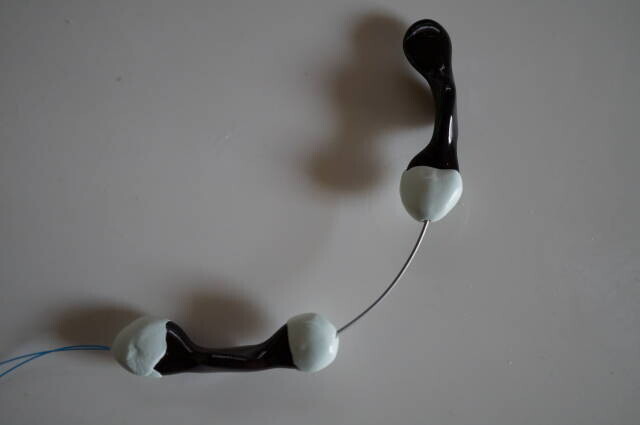
In an entry published in January 2026, Mr. Okada introduced a ceramic double with four flexible joints between its chips. He quoted both chip prices plus ¥6,000 (about $38 at ¥156 = $1, rate as of 2026-09-04) excluding tax.
The published breakdown was ¥3,000 (about $19 at ¥156 = $1, rate as of 2026-09-04) for the joint section, ¥1,000 (about $6 at ¥156 = $1, rate as of 2026-09-04) for attachment to the first chip, and ¥2,000 (about $13 at ¥156 = $1, rate as of 2026-09-04) for attachment to the second. Mr. Okada suggested smaller ceramic combinations as potentially easier options than the large prototypes, including a short twisted chip paired with a medium-length chip.
(Source: ok-lab's diary, published January 2026)
https://ok-lab.hatenablog.com/entry/2026/01/10/122922
A redesigned double-chip connection followed reports of broken joints
In an entry published in January 2026, Mr. Okada said broken connections had prompted a roughly 45-degree limit on earlier flexible doubles. The redesigned ceramic double (Umiushi 5) replaced the connection's cord with nitinol, the shape-memory wire used in the new joint.
The published surcharge was ¥4,000 (about $26 at ¥156 = $1, rate as of 2026-09-04) excluding tax: ¥2,000 (about $13 at ¥156 = $1, rate as of 2026-09-04) for wire reinforcement and ¥2,000 (about $13 at ¥156 = $1, rate as of 2026-09-04) for joining. Wire reinforcement meant attachments along the ceramic chips, intended to keep cracked pieces connected. A version without full reinforcement cost ¥3,000 (about $19 at ¥156 = $1, rate as of 2026-09-04) excluding tax, but Mr. Okada made full reinforcement the standard specification.
(Source: ok-lab's diary, published January 2026)
https://ok-lab.hatenablog.com/entry/2026/01/31/122917
The maker's answer to prostate chip connection costs
The diary separates chip prices, preparation work, and joining charges according to the construction requested.
Internal ring-chip connections added preparation costs for each component
In an entry published in March 2021, a customer asked about moving reinforcement inside stainless-steel ring chips. Mr. Okada produced prototypes, but explained that reliable internal attachment required enough space for the resin.
He limited this construction to rings at least 5.6mm in outside diameter. The additional internal-connection charge was ¥500 (about $3 at ¥156 = $1, rate as of 2026-09-04) excluding tax per chip, separate from the other connection work.
(Source: ok-lab's diary, published March 2021)
https://ok-lab.hatenablog.com/entry/2021/03/13/130202
Ceramic chip connections could require specially prepared components first
In an entry published in July 2022, Mr. Okada described ceramic chips specially made for connection at both ends. Their price was the corresponding ordinary chip price plus ¥1,000 (about $6 at ¥156 = $1, rate as of 2026-09-04) excluding tax, reflecting the difficulty of making the additional holes.
Rubber joining between chips carried another ¥1,000 (about $6 at ¥156 = $1, rate as of 2026-09-04) excluding tax charge. Mr. Okada allowed any ceramic chip at the front, but identified a limited selection prepared for the following position.
(Source: ok-lab's diary, published July 2022)
https://ok-lab.hatenablog.com/entry/2022/07/23/123014
An integrated stopper package included one particular chip connection
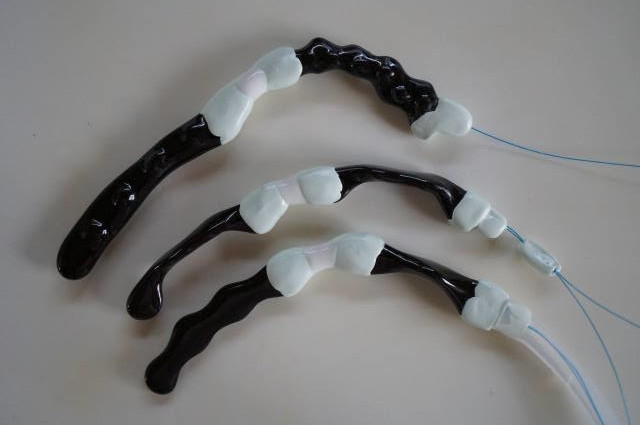
In an entry published in October 2025, Mr. Okada described a main chip joined to a screw-shaped auxiliary chip with an integrated stopper. The stopper was intended to help hold the assembly in position.
The stopper cost ¥2,000 (about $13 at ¥156 = $1, rate as of 2026-09-04) excluding tax, and this particular connection between the main chip and screw was included without an additional charge. Mr. Okada declined requests for that connection alone, explaining that its construction depended on the stopper's attachment.
(Source: ok-lab's diary, published October 2025)
https://ok-lab.hatenablog.com/entry/2025/10/11/123003
If you see blood in your urine, even a small amount or for the first time, do not wait and see. See a urologist right away.
If you suddenly cannot urinate, or the device cannot be removed, do not try to fix it yourself. Go to a medical facility, including emergency care, immediately.
How prostate chip connection costs changed over time
| Published | What the diary said then |
|---|---|
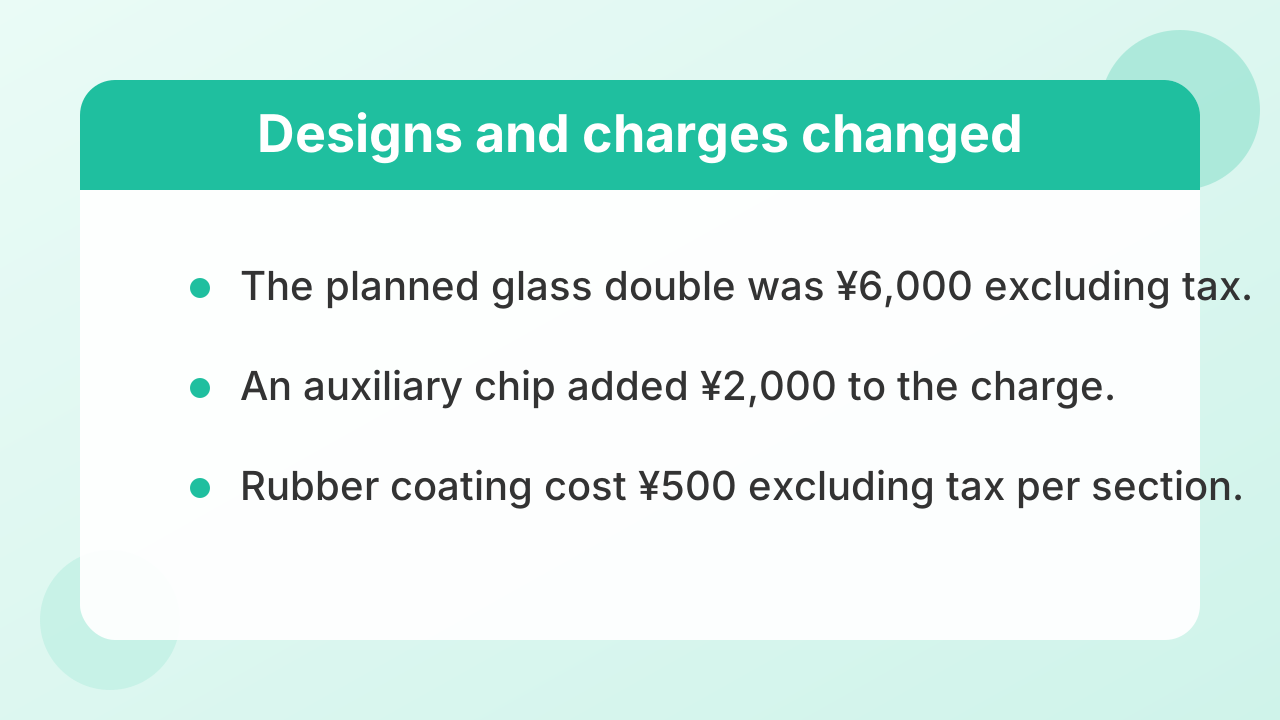
| Jan 2018 | A glass short-chip double was planned at ¥6,000 (about $38 at ¥156 = $1, rate as of 2026-09-04) excluding tax. |
| Feb 2018 | An additional auxiliary chip added ¥2,000 (about $13 at ¥156 = $1, rate as of 2026-09-04) to the ordinary double-chip charge. |
| Mar 2021 | Wire-core connections required rubber coating, priced at ¥500 (about $3 at ¥156 = $1, rate as of 2026-09-04) excluding tax per connecting section. |
| Sep 2023 | Stainless-steel twins could combine different chip types. |
| Aug 2024 | A non-electrical stainless-steel double was quoted at both chip prices plus ¥4,000 (about $26 at ¥156 = $1, rate as of 2026-09-04) excluding tax. |
| Jan 2026 | The four-joint double required approximately two weeks at minimum after ordering. |
| Jan 2026 | New side attachments kept the connection close to the ceramic chips' own thickness. |
| Aug 2026 | Two-thread chip attachments were required for the proposed custom safety-connector arrangement. |
OK Prostate Chip products related to prostate chip connection costs
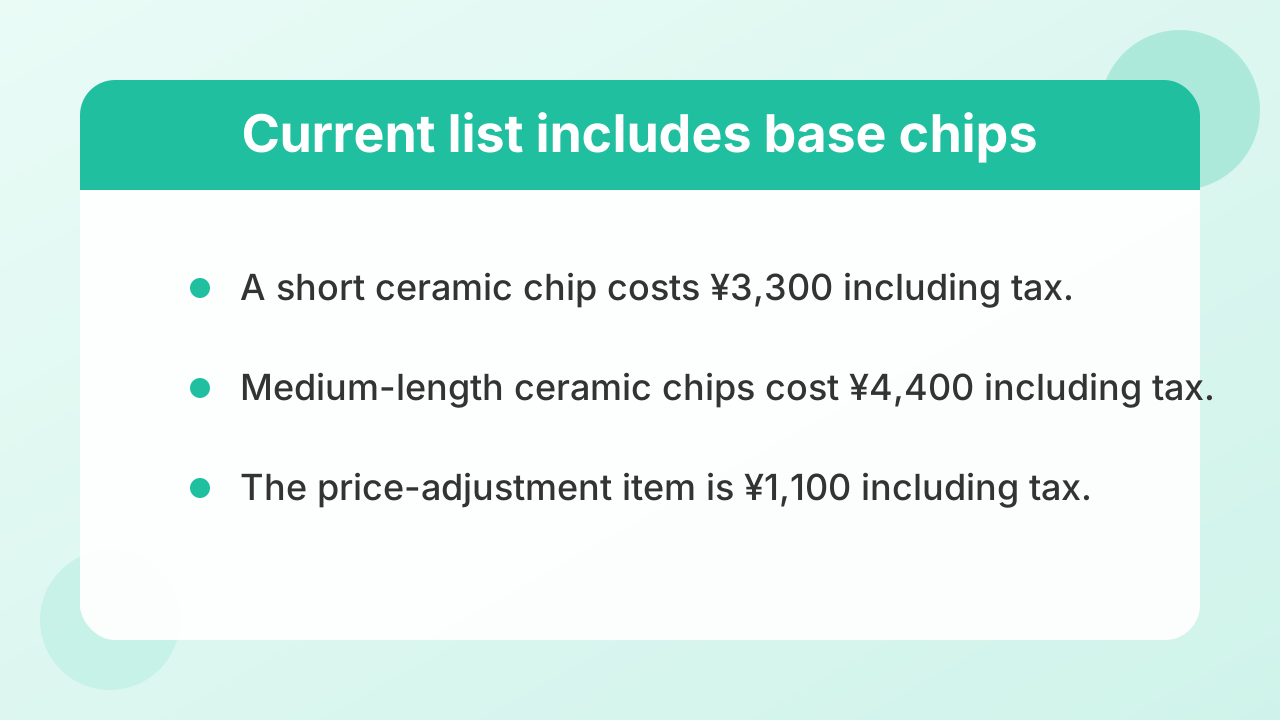
The current list includes base chips and payment items that appear in these entries.
Products that appear in these entries
| Product (official name) | Price incl. tax | Relation to this topic |
|---|---|---|
| Short ceramic chip (OKプロステートチップ 陶器素材ショートタイプ) | ¥3,300 (about $21 at ¥156 = $1, rate as of 2026-09-04) | February 2021 used short ceramic chips in a stacked twin prototype. |
| Medium-length ceramic chip (OKプロステートチップ 陶器素材セミロングタイプ) | ¥4,400 (about $28 at ¥156 = $1, rate as of 2026-09-04) | April 2022 recorded two ordered chips as the basis for a custom textured twin. |
| Price-adjustment item (差額調整) | ¥1,100 (about $7 at ¥156 = $1, rate as of 2026-09-04) | April 2022 used this payment item to collect the separate twin connection charge. |
| Screw-shaped auxiliary chip (スクリュー型補助チップ追加オプション) | ¥3,300 (about $21 at ¥156 = $1, rate as of 2026-09-04) | April 2022 used two auxiliary chips for a requested cable-connected pair. |
(Source: ok-lab's diary, published February 2021)
https://ok-lab.hatenablog.com/entry/2021/02/20/130830
(Source: ok-lab's diary, published April 2022)
https://ok-lab.hatenablog.com/entry/2022/04/09/123458
(Source: ok-lab's diary, published April 2022)
https://ok-lab.hatenablog.com/entry/2022/04/30/123451
Products the diary mentioned as alternatives
| Product (official name) | Price incl. tax | Relation to this topic |
|---|---|---|
| Short twisted ceramic chip (OKプロステートチップ 陶器素材ショートタイプ ツイスト) | ¥4,400 (about $28 at ¥156 = $1, rate as of 2026-09-04) | January 2026 suggested this with a medium-length ceramic chip as a potentially easier combination than the large jointed prototypes. |
(Source: ok-lab's diary, published January 2026)
https://ok-lab.hatenablog.com/entry/2026/01/10/122922
For the complete custom twins and jointed double assemblies discussed here: No matching product can be confirmed on the current list.
Common worries about prostate chip connection costs
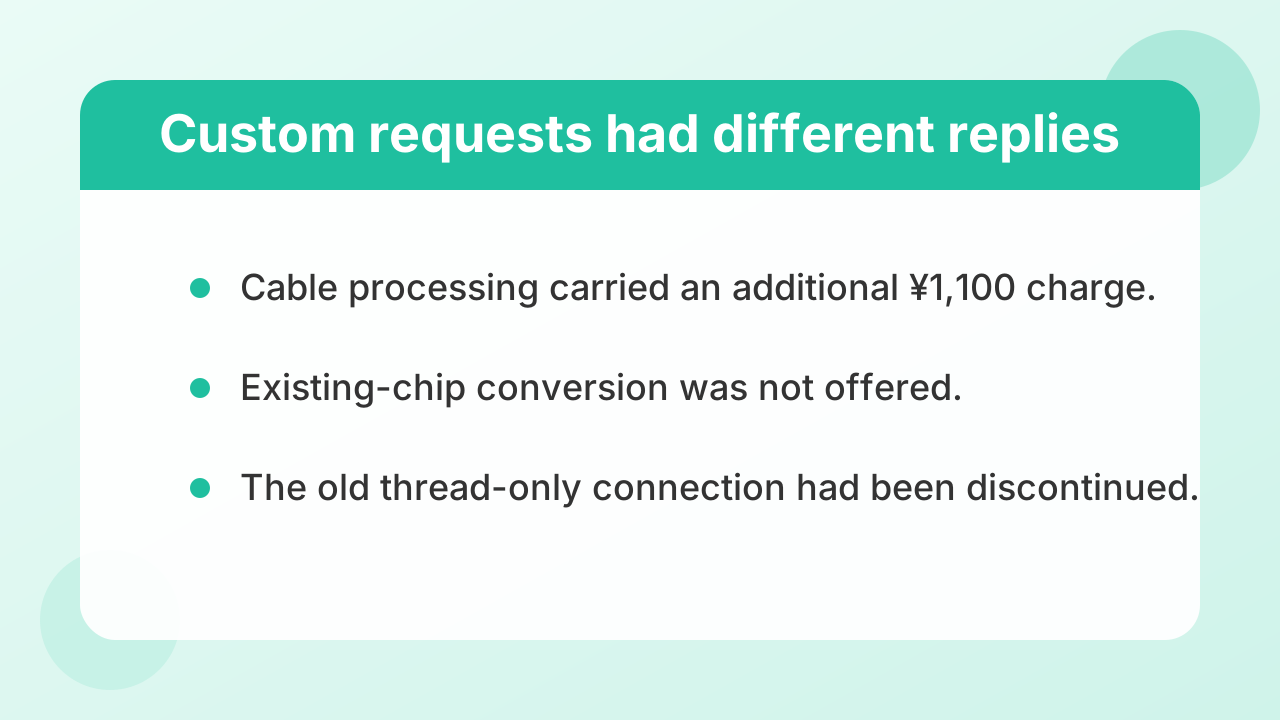
Reader questions concerned cheaper materials, different connections, existing chips, and exceptions to discontinued designs.
"Did resin lower the double-chip cost compared with glass?"
In an entry published in January 2018, a customer asked whether contact between the glass chips could cause breakage and injury. Mr. Okada could not guarantee against breakage and presented a resin double as an alternative.
Its planned price comprised resin chips at ¥1,000 (about $6 at ¥156 = $1, rate as of 2026-09-04) × 2 and thread attachments at ¥1,000 (about $6 at ¥156 = $1, rate as of 2026-09-04) × 2, totaling ¥4,000 (about $26 at ¥156 = $1, rate as of 2026-09-04) excluding tax. He specified a 2mm gap and recommended the resin option for customers concerned about glass breakage.
(Source: ok-lab's diary, published January 2018)
https://ok-lab.hatenablog.com/entry/20180121/1516504265
"Can a chip connection use cable instead of thread?"
In an entry published in April 2022, a customer asked whether screw-shaped auxiliary chips could have custom dimensions and a cable or wire connection. OK Lab accepted the request for a pair with a 30mm cable connection.
Its reply specified that thread would accompany the cable, with an additional processing charge of ¥1,100 (about $7 at ¥156 = $1, rate as of 2026-09-04). The diary records payment but does not report whether the finished pair resolved the customer's discomfort.
(Source: ok-lab's diary, published April 2022)
https://ok-lab.hatenablog.com/entry/2022/04/30/123451
"Does the chip connection charge cover adapting an existing chip?"
In an entry published in August 2022, a customer proposed using a safety connector to attach a tube to previously purchased chips. OK Lab first explained that its earlier attempt at this idea had not worked.
After a revised proposal, staff acknowledged that a bonded arrangement might be possible, but said they were not offering an existing-chip conversion service. For a new order, they considered direct tube attachment less costly than adding the proposed intermediate connector.
(Source: ok-lab's diary, published August 2022)
https://ok-lab.hatenablog.com/entry/2022/08/20/122920
"Can a thread-only double-chip connection still be ordered?"
In an entry published in August 2026, a customer requested two chips joined closely with thread. OK Lab explained that the old short thread-only connection had been discontinued after chips folded together and threads became tangled inside the urethra.
Staff initially warned against the proposal, then accepted further consideration after the customer acknowledged the risk. Mr. Okada showed a safety-connector prototype, quoting the connector's thread-attached selling price plus ¥1,000 (about $6 at ¥156 = $1, rate as of 2026-09-04) excluding tax for joining. The diary does not record delivery or subsequent use. Mr. Okada still described the arrangement as unsuitable for the regular product range.
(Source: ok-lab's diary, published August 2026)
https://ok-lab.hatenablog.com/entry/2026/08/22/122905
Buying from outside Japan
OK Lab ships internationally to countries covered by Japan Post's EMS courier service. Overseas orders are paid in advance by PayPal. Each order carries a ¥400 (about $3 at ¥156 = $1, rate as of 2026-09-04) handling fee, and EMS shipping is charged on top. These terms come from OK Lab's official sales-terms page (written here as plain text, not a link: ok-lab.net/docs/law), checked on September 7, 2026; confirm them on the official store before you order, because they can change.
Summary of this article
| What you wanted to know | The answer |
|---|---|
| What is the short answer? | Connection design determines the additional charge. |
| What is the product? | A urethral device made by OK Lab in Japan. |
| What do double and twin mean? | Doubles join chips in sequence; twins stack them. |
| Why do quotations differ? | Materials, preparation, reinforcement, and joint construction differ. |
| How did the maker price the work? | Some quotations separated preparation, joining, covers, and chip prices. |
| What changed over time? | Attachment failures and other problems prompted revised designs and charges. |
| Which prices are current? | The product table uses the supplied current list; diary quotations remain dated. |
| What about unusual requests? | Replies ranged from refusal to conditional custom acceptance. |
| How are overseas orders handled? | Advance PayPal payment, a handling fee, and additional EMS shipping. |
| What does this summary establish? | The entries document different connection services, rather than one universal joining price. |
Source: ok-lab's diary (Okada Comfortable Life Laboratory). The original entries are in Japanese; quotations on this page are translated. Photos and videos are on the original entries.
This article is a summary of the maker's development diary. The product is not a medical device and no result is guaranteed. If anything feels wrong or worries you, see a doctor. Prices, specifications and cautions change, so confirm the latest information on the official blog and the official site. Questions about ordering and shipping go to the seller.