![Can my broken prostate chip be repaired? | Some repairs are possible; others require replacement [OK Prostate Chip]](/img/a/T0319/eyecatch.svg)
This page is based on entries from "ok-lab's diary" (https://ok-lab.hatenablog.com/), the Japanese development diary written by Mr. Okada, founder of OK Lab, a small company in Japan (Okada Comfortable Life Laboratory). Only the entries about "what can and cannot be repaired" are summarized here, in order of publication. Past prices and sizes are as written at the time. Current prices come from the official product list (retrieved September 4, 2026). Quotations are translated from Japanese.
Note: This page is a personal reading log by someone with no connection to the maker or the seller. It reflects the source entries as of their publication dates and makes no guarantee of accuracy or safety. The product is not a medical device; talk to a doctor about any health decision. Check the official site for current information. This page contains advertising.
In short
- Repair possibilities depend on the damaged part, its material, and how it was attached.
- The maker has offered repairs, replacement parts, or refunds when rebuilding would not resolve the problem.
- A ceramic model discussed below remains listed; the latest repair reply still requires assessment of the damage.
If you see blood in your urine, even a small amount or for the first time, do not wait and see. See a urologist right away.
If you suddenly cannot urinate, or the device cannot be removed, do not try to fix it yourself. Go to a medical facility, including emergency care, immediately.
About this product

The OK Prostate Chip is a small device that is placed in the urethra (the urine passage) so that it acts on the prostate; the maker sells it in several shapes, sizes and materials. It is made and sold by OK Lab (Okada Comfortable Life Laboratory), a small company in Japan, through its own online store, and prices are in Japanese yen (JPY). The maker's development diary, "ok-lab's diary", is written in Japanese. This page is an English summary of it, and every quotation is translated. OK Lab ships internationally, so readers outside Japan can order (see "Buying from outside Japan" below). Product names on this page are plain-English descriptions. The official Japanese product name is shown once in the product table so you can find the same item in the store.
Before you read: key terms
| Term | Plain-English meaning |
|---|---|
| Urethra | The urine passage, where the chip is placed. |
| Retrieval thread | A line attached to the chip, intended for withdrawal. |
| Resin | A material used to secure connections and cover or reinforce parts. |
| Motor | The small electrical unit that produces vibration. |
| Controller | The electrical unit used to control vibration. |
| 4-wire / 6-wire attachment | Wire-and-cable supports intended to help hold a chip in position. |
| Wire-in-tube connection | Wire inside silicone tubing, used to support and position a chip. |
| Silicone-covered nylon | Nylon thread enclosed in silicone tubing, used as the chip's connecting line. |
What happens: prostate chip repair
The OK Prostate Chip is a device placed in the urethra (the urine passage) to press on the prostate. Repairs concern its retrieval thread (the line intended for withdrawal), its body, and electrical parts on vibrating models. The diary describes damaged connections, broken surfaces, and failed cables, with different repair limits for each material. When a repair could not address the problem, some replies offered a replacement, refund, or changed connection.
Glass chip repair began with a paid thread replacement service
In an entry published in April 2018, a customer asked about repair after the thread attachment began separating. Mr. Okada introduced a glass-chip thread replacement service at ¥1,000 (about $6 at ¥156 = $1, rate as of 2026-09-04) excluding tax per chip. He explained that handmade replacements could not reproduce a favorite chip exactly, and suggested this service when the glass remained intact.
(Source: ok-lab's diary, published April 2018)
https://ok-lab.hatenablog.com/entry/20180407/1523090115
Resin chip repair required a different kind of thread attachment
In another entry published in April 2018, a customer returned a resin chip after its thread detached. Mr. Okada said the original connection embedded in resin (the material securing the thread) could not be recreated. His available repair was a surface attachment like the connection used for glass chips, which he reports completing.
(Source: ok-lab's diary, published April 2018)
https://ok-lab.hatenablog.com/entry/20180421/1524299808
Rough resin repair could leave the same snag behind
In an entry published in June 2018, a customer reported pain and occasional bleeding from a raised resin edge. Mr. Okada suspected thicker coatings, introduced against thread detachment and peeling, might contribute. He said a local repair was unavailable: the entire thread assembly would need replacement. Even then, he could not promise that the replacement would be free of another snag.
(Source: ok-lab's diary, published June 2018)
https://ok-lab.hatenablog.com/entry/20180630/1530342059
Chip resizing was refused, but a replacement motor was offered
In an entry published in March 2019, a customer asked whether an oversized vibrating chip could be reshaped. Mr. Okada refused reshaping after the chip had been used. He quoted glass-chip thread replacement at ¥1,000 (about $6 at ¥156 = $1, rate as of 2026-09-04) excluding tax, and motor replacement at ¥3,000 (about $19 at ¥156 = $1, rate as of 2026-09-04) excluding tax.
The diary does not record whether this customer accepted the proposed replacement. Mr. Okada offered an 8 mm motor (the vibration-producing unit) as the only change he could provide for that request.
(Source: ok-lab's diary, published March 2019)
https://ok-lab.hatenablog.com/entry/2019/03/09/150813
Motor thinning reduced thickness while leaving long-term durability uncertain
In an entry published in August 2019, a customer found an 8 mm motor assembly too thick. Its resin-covered thickness was approximately 6 mm, a different measurement from the motor's stated size. Mr. Okada accepted the returned unit and reported a finished thickness of 5 mm.
The diary does not record how the altered unit felt afterward. Mr. Okada warned that the thinner covering reduced strength and that long-term durability was not guaranteed.
(Source: ok-lab's diary, published August 2019)
https://ok-lab.hatenablog.com/entry/2019/08/10/125102
An unrepaired broken cable left a chip trapped in the bladder
In an entry published in November 2020, a customer continued using a chip after repeated repairs failed to keep its cable covering attached. The cable broke, leaving the chip trapped. Mr. Okada initially expected it to pass naturally, but medical assessment found it in the bladder.
An initial hospital removal attempt failed. The next-day update reports that the customer subsequently removed it without medical assistance. Mr. Okada regretted not giving a clearer warning and advised against using cables with exposed wires.
(Source: ok-lab's diary, published November 2020)
https://ok-lab.hatenablog.com/entry/2020/11/14/131426
An overheated chip became unsuitable for replacement thread after glass cracked
In an entry published in September 2021, a customer reported at least 10 minutes of accidental heating after the water boiled away. The thread deteriorated and the resin changed color. Staff initially offered thread replacement, but a follow-up reporting cracked glass ruled that out.
The initial quotation was ¥1,100 (about $7 at ¥156 = $1, rate as of 2026-09-04), plus a ¥400 (about $3 at ¥156 = $1, rate as of 2026-09-04) handling fee, with possible differences for attached options. OK Lab's staff advised against using the heat-damaged thread; replacing it could not resolve the cracked glass.
(Source: ok-lab's diary, published September 2021)
https://ok-lab.hatenablog.com/entry/2021/09/18/130132
Broken wire repair could also require replacing the motor
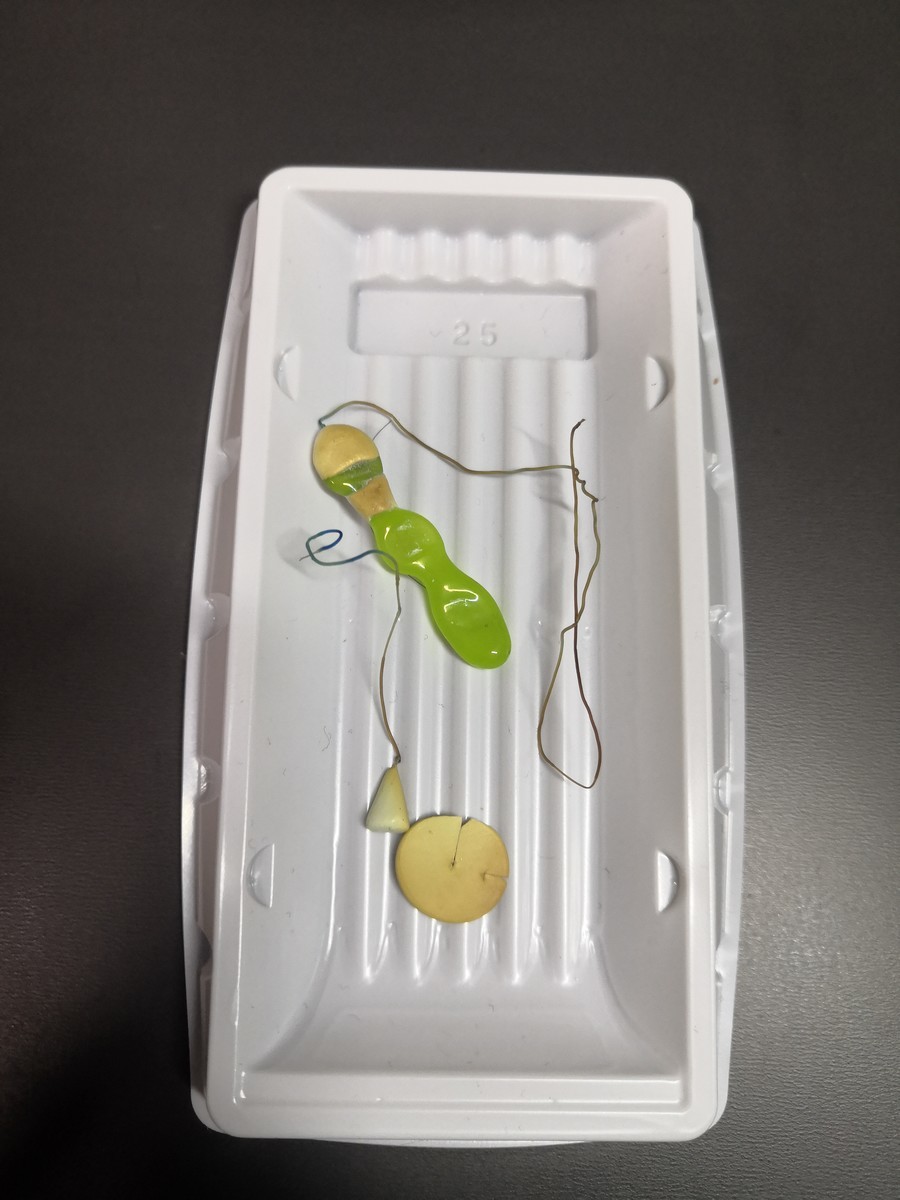
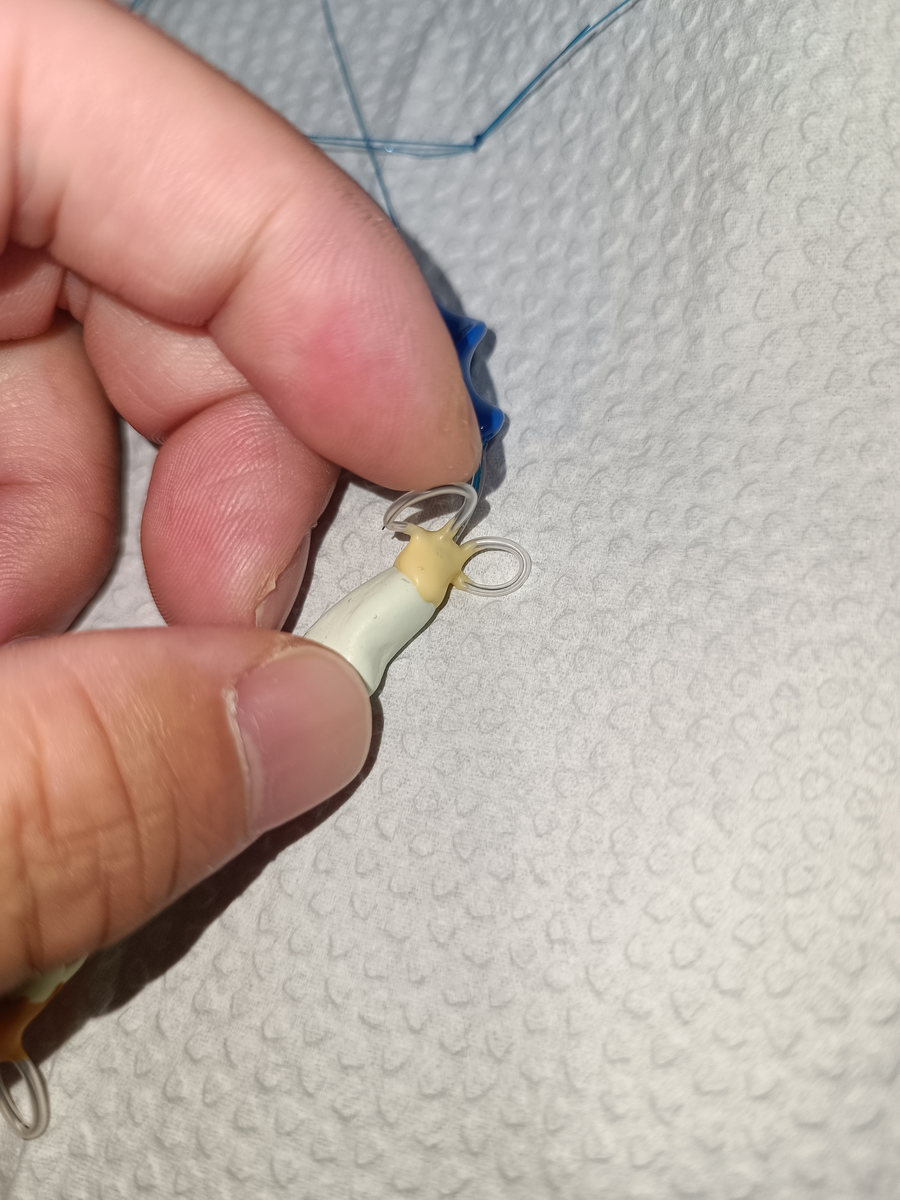
In an entry published in July 2022, a customer reported protruding wire from a 4-wire attachment (a wire-and-cable support). The customer asked about changing to an enhanced 6-wire version. Mr. Okada said neither attachment's wires could themselves be repaired; replacement on a vibrating model also required a new motor.
The diary does not record a completed replacement for this customer. Mr. Okada cautioned that the stronger versions could still develop protruding wire.
(Source: ok-lab's diary, published July 2022)
https://ok-lab.hatenablog.com/entry/2022/07/09/123142
Broken wire reports ended orders for one stainless-steel configuration
In an entry published in September 2022, a customer reported connection failure after 3 uses of a stainless-steel chip. Its wire-in-tube connection used wire inside silicone tubing to support the chip. Staff treated the early breakage as an initial defect.
Mr. Okada then stopped accepting orders for this stainless-steel configuration. He offered different connections for affected orders and previously supplied products, including used ones.
(Source: ok-lab's diary, published September 2022)
https://ok-lab.hatenablog.com/entry/2022/09/24/122837
Chip refund replaced repair when early wire failures remained unexplained
In an entry published in February 2025, a customer requested support after a loop-only device's wire broke. Staff said the cause remained unknown, so repair or remaking would not resolve it. They offered a refund because the product had been shipped recently.
The customer confirmed receiving the refund. Staff directed the customer to future diary announcements for any revised design.
(Source: ok-lab's diary, published February 2025)
https://ok-lab.hatenablog.com/entry/2025/02/15/122943
The maker's answer to prostate chip repair
The diary distinguishes repairable damage from failures that require replacement, a changed design, or a refund.
Cracked glass repair depended on whether damage was local
In an entry published in October 2019, a customer asked about a glass chip whose surface had partly flaked away. Mr. Okada considered a small, isolated defect potentially repairable with resin filling. The filling itself was free, but the associated thread replacement carried a charge. He advised stopping use if the glass showed signs of cracking more widely.
(Source: ok-lab's diary, published October 2019)
https://ok-lab.hatenablog.com/entry/2019/10/12/125944
Wire replacement restrictions narrowed the standard service to nylon thread
In an entry published in August 2022, Mr. Okada said wire-in-tube, 4-wire, and 6-wire replacements would generally no longer be accepted. He explained that separating their bonded connections could break the chip itself. The standard replacement service was therefore limited to ordinary nylon thread. He invited individual inquiries about specially valued or modified chips, without promising acceptance.
(Source: ok-lab's diary, published August 2022)
https://ok-lab.hatenablog.com/entry/2022/08/06/123150
Chip refund became the response as early failures suspended sales
In an entry published in October 2022, a customer rejected a free wire-in-tube repair and requested a different stainless-steel chip. OK Lab declined that product change and offered a refund instead. Following further early failures, Mr. Okada temporarily suspended both the historical 6-wire and wire-in-tube ranges. He offered refunds to owners who objected to the risks of those products.
(Source: ok-lab's diary, published October 2022)
https://ok-lab.hatenablog.com/entry/2022/10/01/122944
Integrated stopper repair concerns led to a changed attachment design
In an entry published in November 2025, a customer found protruding wire after experiencing bleeding with an integrated stopper. Mr. Okada initially offered a refund because remaking it could reproduce the same failure. Later in the entry, he reported changing the design so its thread was bonded to the ceramic body. He asked customers to report further detachment.
(Source: ok-lab's diary, published November 2025)
https://ok-lab.hatenablog.com/entry/2025/11/29/122908
If you see blood in your urine, even a small amount or for the first time, do not wait and see. See a urologist right away.
If you suddenly cannot urinate, or the device cannot be removed, do not try to fix it yourself. Go to a medical facility, including emergency care, immediately.
How prostate chip repair changed over time

| Published | What the diary said then |
|---|---|
| Mar 2019 | Version 2 upgrades cost ¥3,000 (about $19 at ¥156 = $1, rate as of 2026-09-04) excluding tax; nylon thread cost extra. |
| Aug 2019 | Thinner electrical leads required replacement of the motor as well. |
| Feb 2020 | A recurring fault prompted a motor replacement offer despite successful workshop tests. |
| Nov 2022 | Additional parts required replacing the silicone-covered nylon tube, rather than altering the existing tube. |
| Mar 2025 | Mr. Okada advised double-wire designs after breakage, with disposal once a wire broke. |
| Sep 2025 | A recently shipped custom chip qualified for reattachment of a broken wire projection. |
OK Prostate Chip products related to prostate chip repair
The four-point twisted long ceramic chip remains listed and appears in a documented repair case.
Products that appear in these entries
| Product (official name) | Price incl. tax | Relation to this topic |
|---|---|---|
| Four-point twisted long ceramic chip (OKプロステートチップ 陶器素材ロングタイプ 4点ツイスト) | ¥7,700 (about $49 at ¥156 = $1, rate as of 2026-09-04) | In July 2024, a customer asked about repair after this model broke during an earthquake. |
(Source: ok-lab's diary, published July 2024)
https://ok-lab.hatenablog.com/entry/2024/07/13/123018
Products the diary mentioned as alternatives
The diary names no alternative.
For the historical upgrades, wire assemblies, loop-only devices, integrated stopper, and specially reinforced configurations described here:
No matching product can be confirmed on the current list.
Common worries about prostate chip repair
"How much did broken cable repair cost?"
In an entry published in May 2019, a vibrating-chip owner asked about a fault near the motor. Mr. Okada offered free initial-defect repair if the failure was within the resin-covered part. Cable reconnection cost ¥1,080 (about $7 at ¥156 = $1, rate as of 2026-09-04); damage within 3 cm of the chip required motor-and-cable replacement at ¥3,240 (about $21 at ¥156 = $1, rate as of 2026-09-04).
An electronic controller (the vibration control unit) cost ¥2,160 (about $14 at ¥156 = $1, rate as of 2026-09-04) to replace; a basic battery box cost ¥1,080 (about $7 at ¥156 = $1, rate as of 2026-09-04). The diary does not record this customer's eventual repair. Mr. Okada's response made the available service depend on where the fault occurred.
(Source: ok-lab's diary, published May 2019)
https://ok-lab.hatenablog.com/entry/2019/05/18/150144
"Can cracked ceramic be repaired without changing its size?"
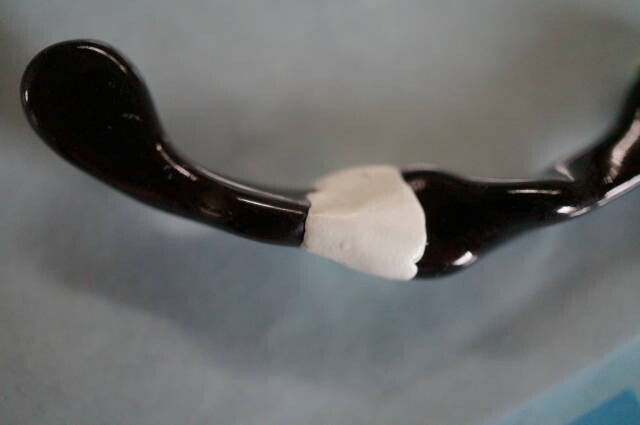
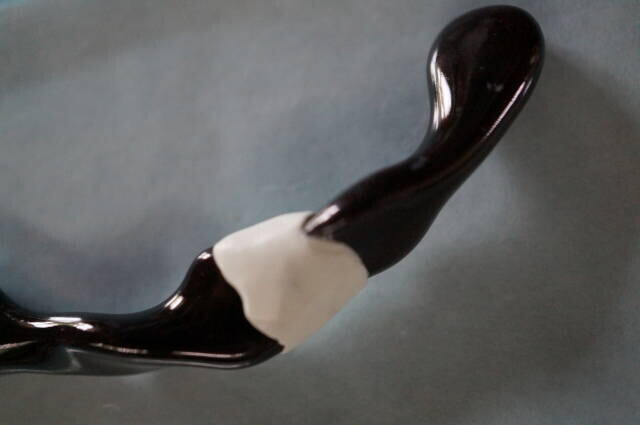
In an entry published in July 2024, a customer asked about a twisted ceramic chip broken in an earthquake. Staff said repair might be possible, depending on the break, but reinforcement would increase thickness and alter its appearance. Mr. Okada reports attempting the repair.
Staff offered this repair free as an earthquake-related exception, provided the damage was repairable. They cautioned that strength after repair could not be guaranteed.
(Source: ok-lab's diary, published July 2024)
https://ok-lab.hatenablog.com/entry/2024/07/13/123018
"Does peeling coating qualify for chip repair or replacement?"
In an entry published in June 2026, a customer reported peeling reinforcement on a twisted ceramic chip after 2 uses. The customer asked whether it remained usable or qualified for replacement. Staff could not judge its condition from the message alone.
They explained that the reinforcement now combined resin and rubber. The diary does not record an inspection result. OK Lab offered assessment and repair if the condition interfered with use.
(Source: ok-lab's diary, published June 2026)
https://ok-lab.hatenablog.com/entry/2026/06/20/122903
Buying from outside Japan

OK Lab ships internationally to countries covered by Japan Post's EMS courier service. Overseas orders are paid in advance by PayPal. Each order carries a ¥400 (about $3 at ¥156 = $1, rate as of 2026-09-04) handling fee, and EMS shipping is charged on top. These terms come from OK Lab's official sales-terms page (written here as plain text, not a link: ok-lab.net/docs/law), checked on September 7, 2026; confirm them on the official store before you order, because they can change.
Summary of this article
| What you wanted to know | The answer |
|---|---|
| What is the short answer? | Repair depends on the part, material, and damage. |
| What is this product? | A urethral device made and sold by OK Lab in Japan. |
| Which parts matter? | The chip body, connecting thread or wire, motor, cable, and controller. |
| What happened in reported cases? | Some repairs worked mechanically; other damage led to rejection, replacement, or refunds. |
| What did the maker offer? | Different responses for isolated defects, broken attachments, and recurring design failures. |
| Did repair policies change? | Yes; dated offers ranged from upgrades to replacement restrictions and refunds. |
| What current product appears here? | The four-point twisted long ceramic chip, listed at ¥7,700 (about $49 at ¥156 = $1, rate as of 2026-09-04) including tax. |
| What determines repair cost or acceptance? | The fault's location and whether repair changes the chip's shape or strength. |
| Can customers outside Japan order? | Yes, under the stated PayPal and EMS terms, with handling and shipping charges. |
| What does the overall record establish? | A repair offer applies to its recorded case; later replies sometimes impose different limits. |
Source: ok-lab's diary (Okada Comfortable Life Laboratory). The original entries are in Japanese; quotations on this page are translated. Photos and videos are on the original entries.
This article is a summary of the maker's development diary. The product is not a medical device and no result is guaranteed. If anything feels wrong or worries you, see a doctor. Prices, specifications and cautions change, so confirm the latest information on the official blog and the official site. Questions about ordering and shipping go to the seller.