![How much does replacing the thread cost? | Fees depend on the chip and attached parts [OK Prostate Chip]](/img/a/T0317/eyecatch.svg)
This page is based on entries from "ok-lab's diary" (https://ok-lab.hatenablog.com/), the Japanese development diary written by Mr. Okada, founder of OK Lab, a small company in Japan (Okada Comfortable Life Laboratory). Only the entries about thread replacement cost are summarized here, in order of publication. Past prices and sizes are as written at the time. Current prices come from the official product list (retrieved September 4, 2026). Quotations are translated from Japanese.
Note: This page is a personal reading log by someone with no connection to the maker or the seller. It reflects the source entries as of their publication dates and makes no guarantee of accuracy or safety. The product is not a medical device; talk to a doctor about any health decision. Check the official site for current information. This page contains advertising.
In short
- Thread replacement charges varied with the material, attachment design, and number of connected chips.
- The maker offered paid replacement, but damage sometimes made repair impossible.
- The supplied current product list does not establish today's repair fees.
If you see blood in your urine, even a small amount or for the first time, do not wait and see. See a urologist right away.
If you suddenly cannot urinate, or the device cannot be removed, do not try to fix it yourself. Go to a medical facility, including emergency care, immediately.
About this product

The OK Prostate Chip is a small device that is placed in the urethra (the urine passage) so that it acts on the prostate; the maker sells it in several shapes, sizes and materials. It is made and sold by OK Lab (Okada Comfortable Life Laboratory), a small company in Japan, through its own online store, and prices are in Japanese yen (JPY). The maker's development diary, "ok-lab's diary", is written in Japanese. This page is an English summary of it, and every quotation is translated. OK Lab ships internationally, so readers outside Japan can order (see "Buying from outside Japan" below). Product names on this page are plain-English descriptions. The official Japanese product name is shown once in the product table so you can find the same item in the store.
Before you read: key terms
| Term | Plain-English meaning |
|---|---|
| Urethra | The urine passage, where the maker describes placing the device to act on the prostate. |
| Retrieval thread | Thread attached to the device, intended to provide a means of retrieval. |
| Safety chip | A small part on the thread, described as sitting away from the prostate and bladder; its precise function is not explained. |
| Auxiliary chip | An additional connected chip, intended to help hold the assembly in position. |
| Attachment resin | Material used to secure thread to a chip; older resin bodies also had thread embedded during molding. |
| Biocompatible resin | The maker's name for a resin material used to form newer chip bodies. |
| Rubber-coated link | A connection between chips, intended to provide a bend and some spring. |
What happens: thread replacement cost
The OK Prostate Chip is a small device placed in the urethra (the urine passage) to act on the prostate. A retrieval thread (the thread attached for removal) connects to the device, sometimes alongside smaller parts intended to help hold it in place. The diary discusses charges for replacing that thread, changing its length, and rebuilding connections between the main chip and attached parts.
Glass thread replacement cost started at ¥1,000 (about $6 at ¥156 = $1, rate as of 2026-09-04) excluding tax per chip
In an entry published in April 2018, a customer asked about repair after the thread attachment separated from a glass chip. Mr. Okada introduced reattachment at ¥1,000 (about $6 at ¥156 = $1, rate as of 2026-09-04) excluding tax per chip. He explained that handmade replacements could not reproduce an existing chip exactly, even when custom ordered. For a glass chip whose thread had detached, he recommended the replacement service.
(Source: ok-lab's diary, published April 2018)
https://ok-lab.hatenablog.com/entry/20180407/1523090115
A trapped glass chip prompted a paid thread replacement request
In an entry published in May 2018, a customer requested a thread-length change from 20 cm to 25 cm. After 6–7 hours of use, the single-chip glass device reportedly turned halfway around inside the urethra. Its safety chip (a small part on the thread) also moved inside, leaving the customer unable to retrieve the device.
The customer reported eventually getting the device out. The diary does not record whether the requested thread replacement was completed. Mr. Okada offered replacement for ¥1,080 (about $7 at ¥156 = $1, rate as of 2026-09-04) and asked for the product to be returned.
(Source: ok-lab's diary, published May 2018)
https://ok-lab.hatenablog.com/entry/20180505/1525509161
Older molded resin limited the scope of thread replacement
In an entry published in February 2019, a customer asked about repair after another thread attachment began separating. Mr. Okada said glass chips allowed complete thread replacement, while older resin chips generally did not. Their thread was embedded when the body was molded.
He initially suggested customer-led repair, then reconsidered and developed a reinforced attachment. He said the additional manufacturing work would increase the attachment charge, without naming a price. His revised proposal was to evaluate the reinforced version before offering it for sale.
(Source: ok-lab's diary, published February 2019)
https://ok-lab.hatenablog.com/entry/2019/02/02/153358
Two threads did not increase the existing thread replacement cost
In an entry published in April 2019, Mr. Okada responded to two thread-breakage reports by introducing a two-thread system. It applied to orders placed from that publication date, excluding the motorized chip range. Existing products could also receive two threads for the same replacement price as one.
However, the two-thread arrangement did not include a safety chip. Mr. Okada asked customers to state their preference for two threads when ordering.
(Source: ok-lab's diary, published April 2019)
https://ok-lab.hatenablog.com/entry/2019/04/27/153239
Fixed parts could increase the basic thread replacement cost
In an entry published in January 2020, a customer asked whether thread reattachment was available. Mr. Okada quoted ¥1,100 (about $7 at ¥156 = $1, rate as of 2026-09-04) for a standalone reattachment. He distinguished this from threads carrying an auxiliary chip (an additional chip intended to help hold the assembly in place) or other fixed parts. He advised contacting OK Lab about these arrangements because additional charges might apply.
(Source: ok-lab's diary, published January 2020)
https://ok-lab.hatenablog.com/entry/2020/01/11/151714
A broken rubber link could require more than thread replacement
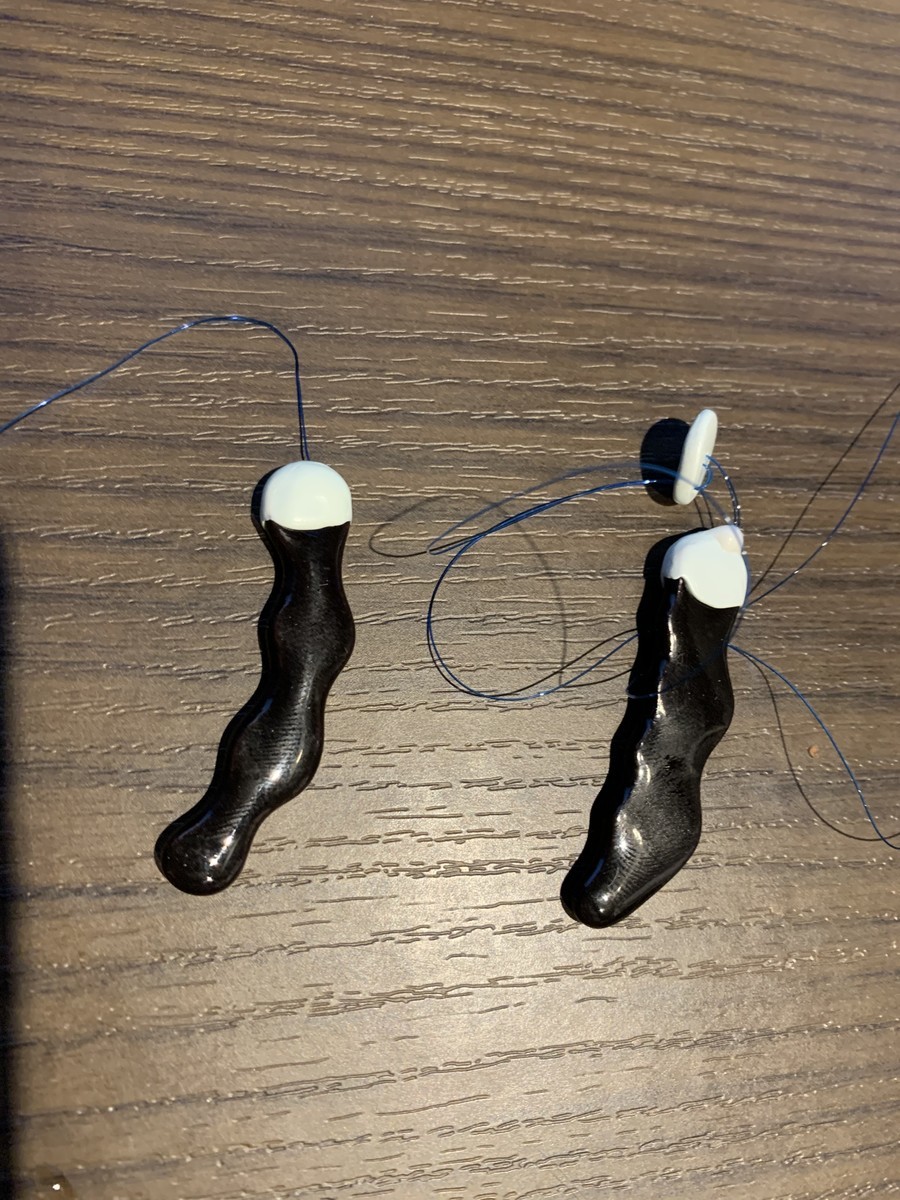
In an entry published in December 2020, a customer requested a more durable connection after a custom assembly's rubber-coated link broke. This link joined the main chip to a screw-shaped auxiliary chip and provided bend and spring. Mr. Okada suspected weakness at a join created during manufacturing.
He declined free repair but quoted ¥1,100 (about $7 at ¥156 = $1, rate as of 2026-09-04) for bend work if the existing rubber could be removed successfully. Otherwise, rebuilding the thread connection and bend, including the auxiliary parts, would cost ¥5,500 (about $35 at ¥156 = $1, rate as of 2026-09-04). Mr. Okada offered these paid options and said he would consider improvements to the link's internal support.
(Source: ok-lab's diary, published December 2020)
https://ok-lab.hatenablog.com/entry/2020/12/19/132929
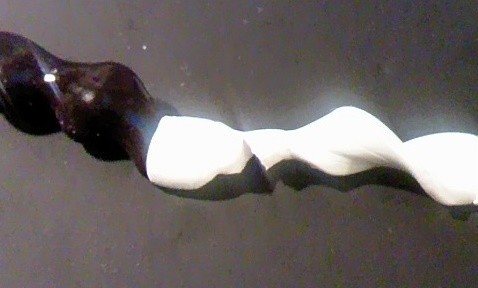
A new attachment design reduced the expected thread replacement cost
In an entry published in June 2021, Mr. Okada described a new internal-hole structure that secured thread without attachment resin. Attachment resin is the material previously used to bond the thread in place. He said replacement could proceed immediately after the returned chip's sterilization, without waiting for that resin to cure.
He estimated a fee around half the previous price, specifically for the 3D-designed titanium and biocompatible-resin products. Biocompatible resin is the maker's label for the resin material in those newer bodies. Mr. Okada recommended periodic thread replacement because, he wrote, the thread deteriorates with disinfection.
(Source: ok-lab's diary, published June 2021)
https://ok-lab.hatenablog.com/entry/2021/06/12/125849
Cracked glass ruled out an initially quoted thread replacement
In an entry published in September 2021, a customer asked whether replacement could salvage a glass chip after a pan boiled dry. The thread had deteriorated, and the attachment resin had changed color. OK Lab staff initially quoted ¥1,100 (about $7 at ¥156 = $1, rate as of 2026-09-04) plus a ¥400 (about $3 at ¥156 = $1, rate as of 2026-09-04) handling fee, with postage paid by the customer and possible charges for attached options.
A follow-up established that the glass itself had cracked. The diary then stated that thread replacement was no longer possible for that chip. Staff advised against using the heat-damaged thread because heating had altered its material.
(Source: ok-lab's diary, published September 2021)
https://ok-lab.hatenablog.com/entry/2021/09/18/130132
Connected chip count became part of the thread replacement cost
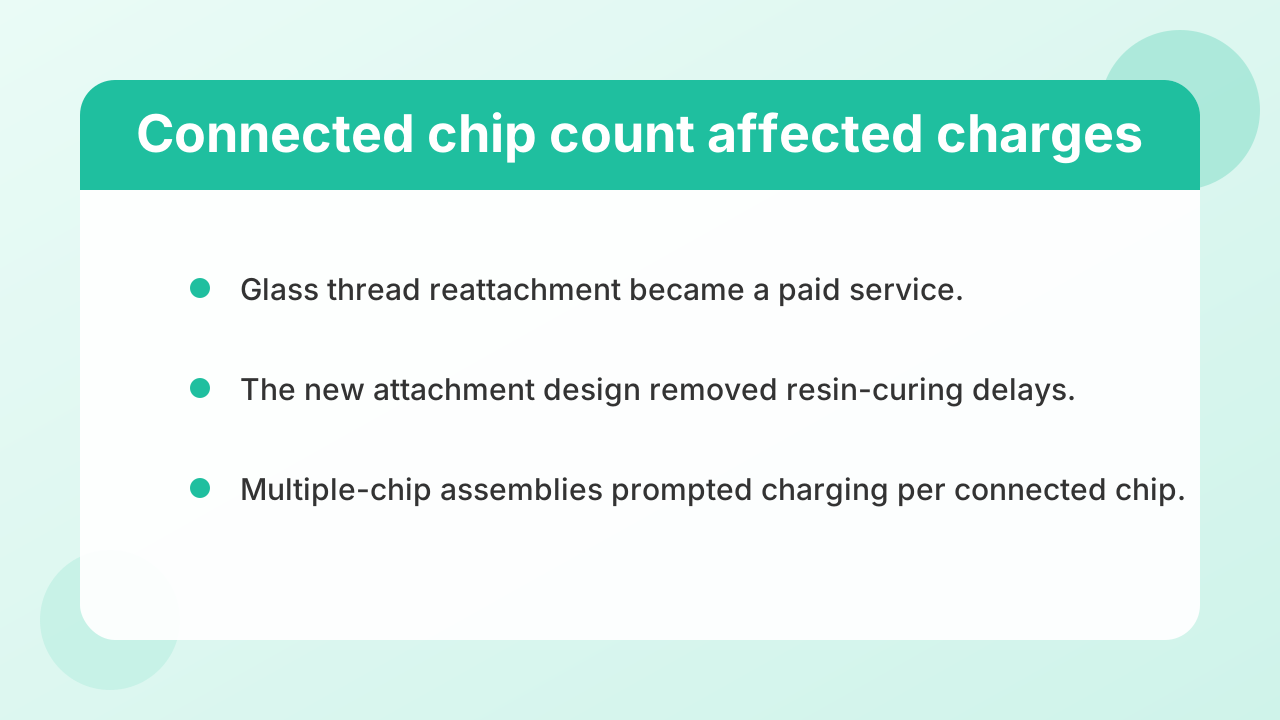
In another entry published in September 2021, Mr. Okada revised pricing for chips whose threads were not bonded with resin. The charge became ¥500 (about $3 at ¥156 = $1, rate as of 2026-09-04) excluding tax for each connected chip. He explained that assemblies containing several chips required more hands-on work than the earlier flat charge allowed. He offered replacement limited to the main chip as a way to reduce the work charged.
(Source: ok-lab's diary, published September 2021)
https://ok-lab.hatenablog.com/entry/2021/09/25/125720
Stainless steel received its own higher thread replacement cost
In an entry published in July 2023, Mr. Okada set stainless-steel thread replacement at ¥1,000 (about $6 at ¥156 = $1, rate as of 2026-09-04) excluding tax per chip. He described difficulty passing thread through the metal's internal holes, even after production improvements. He also listed a four-thread option at an additional ¥2,750 (about $18 at ¥156 = $1, rate as of 2026-09-04). Mr. Okada presented that option as worth considering because he expected the heavier chips to place greater demands on the thread.
(Source: ok-lab's diary, published July 2023)
https://ok-lab.hatenablog.com/entry/2023/07/08/122632
The maker's answer to thread replacement cost
The maker's quotes depended on the condition of the chip and the work involved in its attachment.
Localized glass damage could add no charge beyond thread replacement
In an entry published in October 2019, a glass-chip owner asked about repair after part of the surface flaked away. Mr. Okada offered localized surface repair without an additional charge, alongside paid thread replacement. He did not give a numerical thread fee in that reply. He limited the offer to small, localized damage and advised stopping use if broader cracking appeared.
(Source: ok-lab's diary, published October 2019)
https://ok-lab.hatenablog.com/entry/2019/10/12/125944
A longer thread request still required checking attached parts
In an entry published in February 2020, a customer asked about changing a thread from 25 cm to around 30 cm. The customer reported that the safety chip moved inside during an erection and caused discomfort. Mr. Okada quoted ¥1,000 (about $6 at ¥156 = $1, rate as of 2026-09-04) excluding tax, with additional charges for threads carrying auxiliary chips. He offered paid thread replacement in response to the length problem.
(Source: ok-lab's diary, published February 2020)
https://ok-lab.hatenablog.com/entry/2020/02/01/151232
An altered attachment received a thread replacement quote without diagnosis
In an entry published in October 2020, a customer reported bleeding and asked about repairing an altered thread attachment. Mr. Okada said he could not assess how the attachment had been changed. He suggested friction as a possible explanation for the bleeding, expressly acknowledging that his explanation could be wrong. For the attachment itself, he offered paid thread replacement at ¥1,000 (about $6 at ¥156 = $1, rate as of 2026-09-04) excluding tax.
(Source: ok-lab's diary, published October 2020)
https://ok-lab.hatenablog.com/entry/2020/10/24/115457
If you see blood in your urine, even a small amount or for the first time, do not wait and see. See a urologist right away.
If you suddenly cannot urinate, or the device cannot be removed, do not try to fix it yourself. Go to a medical facility, including emergency care, immediately.
How thread replacement cost changed over time
| Published | What the diary said then |
|---|---|
| Apr 2018 | Glass thread reattachment became a paid service. |
| Jan 2019 | Long glass assembly: ¥5,000 (about $32 at ¥156 = $1, rate as of 2026-09-04) chip + ¥1,000 (about $6 at ¥156 = $1, rate as of 2026-09-04) attachment; ¥6,000 (about $38 at ¥156 = $1, rate as of 2026-09-04) total, all excluding tax. |
| Feb 2019 | Proposed reinforcement added about five manufacturing days and an unspecified increase in labor charges. |
| Apr 2019 | Completed, unshipped products required a repair fee for conversion to two threads. |
| Oct 2019 | Glass repairs required replacement of thread affected by the maker's sterilization process. |
| Jun 2021 | The new attachment design removed resin-curing delays. |
| Sep 2021 | Multiple-chip assemblies prompted charging per connected chip. |
| Oct 2021 | Three-chip thread and wire replacement quoted at ¥3,000 (about $19 at ¥156 = $1, rate as of 2026-09-04) excluding tax. |
| Jul 2023 | Stainless sales initially used reservations because thread attachment remained difficult. |
| Dec 2023 | Reassembly was offered while new purchases were put on hold. |
The diary does not say what the current state is.
OK Prostate Chip products related to thread replacement cost
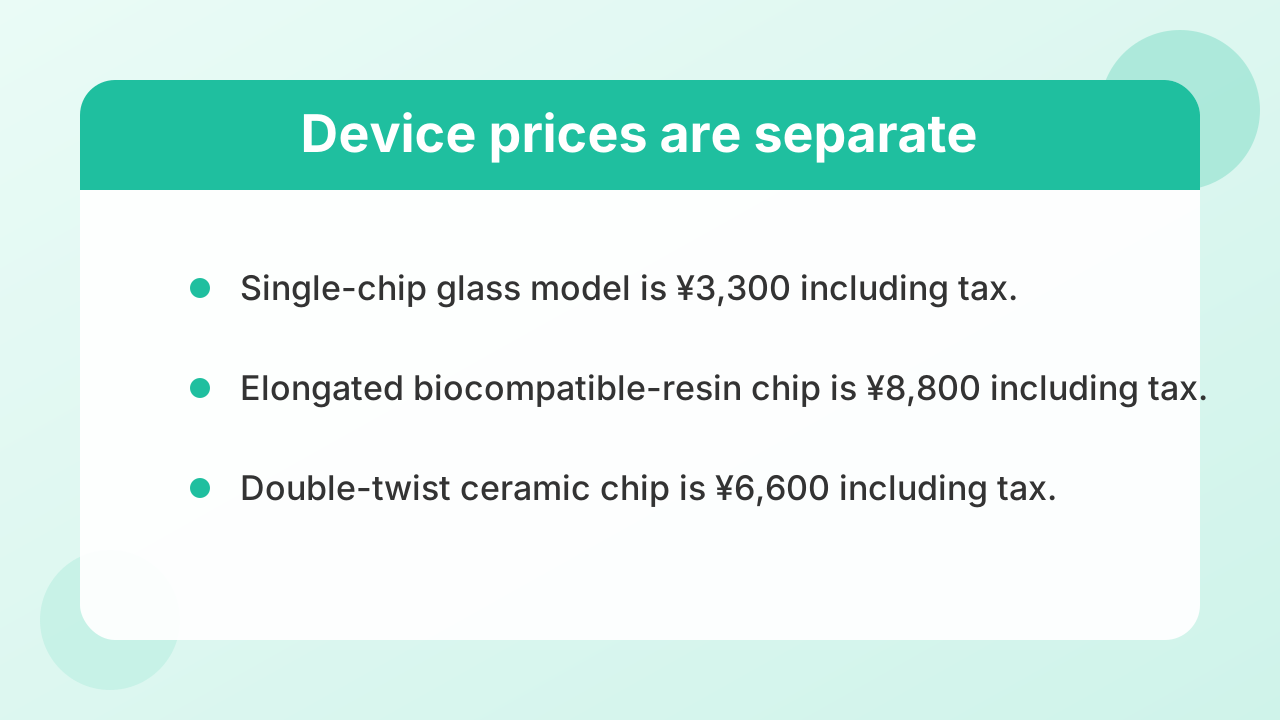
These current device prices are separate from the historical repair quotes above.
Products that appear in these entries
| Product (official name) | Price incl. tax | Relation to this topic |
|---|---|---|
| Single-chip glass model (OKプロステートチップ ガラス素材1チップタイプ) | ¥3,300 (about $21 at ¥156 = $1, rate as of 2026-09-04) | April 2018: its owner requested a longer thread and received a paid replacement quote. |
| Elongated biocompatible-resin chip (OKプロステートチップ 覚醒タイプ(生体適合樹脂)) | ¥8,800 (about $56 at ¥156 = $1, rate as of 2026-09-04) | December 2023: its buyer's new order was held while staff discussed paid reassembly of existing chips. |
| Double-twist ceramic chip (OKプロステートチップ 陶器素材覚醒タイプ ダブルツイスト(ラブカチップ)) | ¥6,600 (about $42 at ¥156 = $1, rate as of 2026-09-04) | December 2023: this was the other new chip in the same consultation about connected parts and reassembly. |
(Source: ok-lab's diary, published April 2018)
https://ok-lab.hatenablog.com/entry/20180414/1523697398
(Source: ok-lab's diary, published December 2023)
https://ok-lab.hatenablog.com/entry/2023/12/23/122035
Products the diary mentioned as alternatives
The diary names no alternative.
The December 2020 repair involved a custom assembly with a rubber-coated connection. No matching product can be confirmed on the current list.
Common worries about thread replacement cost
"What was the thread replacement cost for a shorter-than-needed thread?"
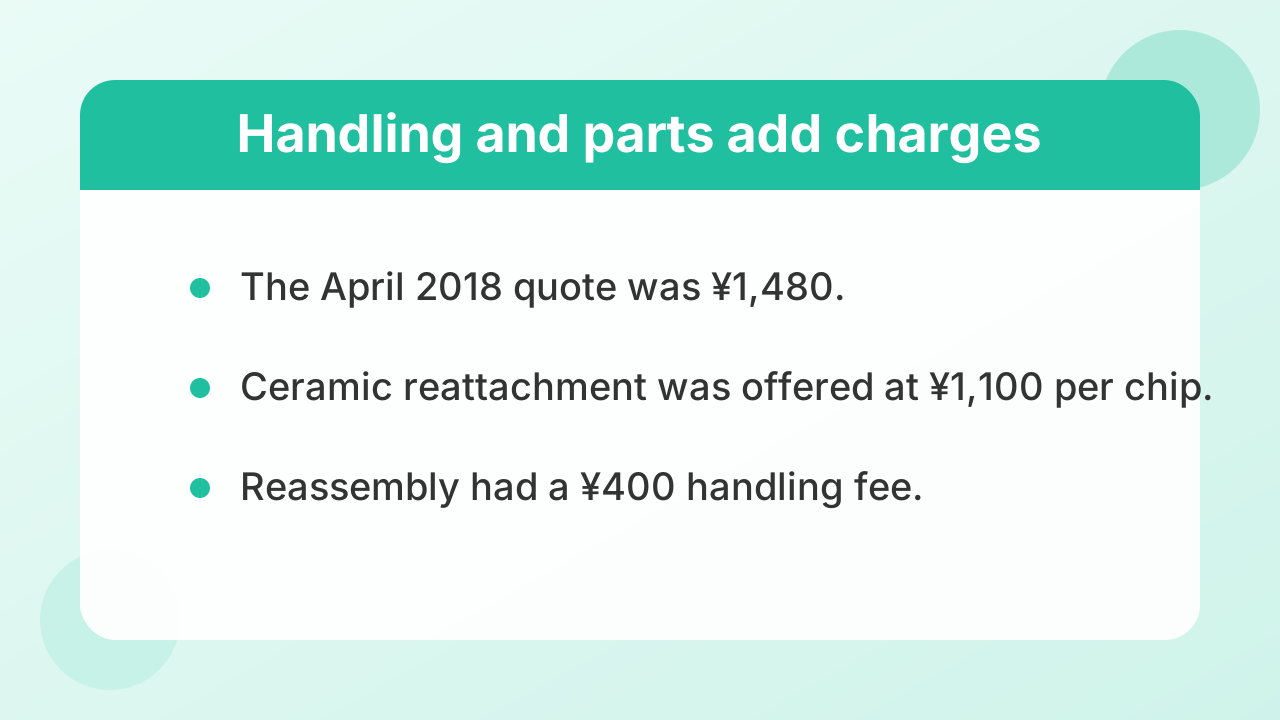
In an entry published in April 2018, a single-chip glass owner asked whether paid replacement was available for a thread that felt too short. Mr. Okada first suggested a temporary extension, then offered replacement if that remained inconvenient. His quote was ¥1,080 (about $7 at ¥156 = $1, rate as of 2026-09-04) plus ¥400 (about $3 at ¥156 = $1, rate as of 2026-09-04) for packing and dispatch, totaling ¥1,480 (about $9 at ¥156 = $1, rate as of 2026-09-04), as stated in the entry.
The diary does not record whether that repair went ahead. Mr. Okada asked the customer to specify the required thread length.
(Source: ok-lab's diary, published April 2018)
https://ok-lab.hatenablog.com/entry/20180414/1523697398
"Could thread replacement include a smaller ceramic attachment?"
In an entry published in May 2020, a customer asked whether ceramic chips could have a smaller rear end after experiencing fit problems. Mr. Okada offered thread reattachment for ¥1,100 (about $7 at ¥156 = $1, rate as of 2026-09-04) per chip, with a different attachment design. He estimated reductions of about 0.5 mm in both rear thickness and width.
The customer deferred the work because returning the products was inconvenient at the time. Mr. Okada cautioned that the proposed attachment could have lower strength.
(Source: ok-lab's diary, published May 2020)
https://ok-lab.hatenablog.com/entry/2020/05/02/131505
"What was the thread replacement cost for rebuilding connected chips?"
In an entry published in December 2023, a customer asked about supporting parts after placing an order for longer chips. Staff offered reassembly of existing biocompatible-resin chips at connected chip count × ¥550, (about $4 at ¥156 = $1, rate as of 2026-09-04) plus a ¥400 (about $3 at ¥156 = $1, rate as of 2026-09-04) handling fee. They initially understood the customer's concern as discomfort from closely spaced chips and held the new order, with a refund also offered.
The customer clarified that the discomfort occurred during insertion, rather than while the assembly remained in place. Mr. Okada acknowledged that his own experience differed and did not establish that the proposed spacing change would solve this customer's problem. Staff proposed reconsidering the new purchase after discussing the existing assembly.
(Source: ok-lab's diary, published December 2023)
https://ok-lab.hatenablog.com/entry/2023/12/23/122035
Buying from outside Japan

OK Lab ships internationally to countries covered by Japan Post's EMS courier service. Overseas orders are paid in advance by PayPal. Each order carries a ¥400 (about $3 at ¥156 = $1, rate as of 2026-09-04) handling fee, and EMS shipping is charged on top. These terms come from OK Lab's official sales-terms page (written here as plain text, not a link: ok-lab.net/docs/law), checked on September 7, 2026; confirm them on the official store before you order, because they can change.
Summary of this article
| What you wanted to know | The answer |
|---|---|
| In short: is there one replacement fee? | Historical charges depended on construction and connected parts. |
| About this product: who makes it? | OK Lab, a small company in Japan, sells the urethral device in Japanese yen. |
| Key terms: what is being replaced? | The retrieval thread and, where necessary, its connections to attached chips. |
| What happens: what affected the price? | Material, attachment design, chip count, and damage changed the available service. |
| The maker's answer: could everything be repaired? | Some work was offered for a fee; cracked glass could rule out replacement. |
| Changes over time: what was the main shift? | New attachment designs introduced lower charges, followed by pricing per connected chip. |
| Related products: are listed prices repair charges? | No; the product table shows current device prices from the supplied list. |
| Common worries: what could add to the charge? | Handling, additional connected parts, or rebuilding a damaged connection. |
| Buying outside Japan: how are orders handled? | Advance PayPal payment, a handling fee, and separate EMS shipping charges. |
Source: ok-lab's diary (Okada Comfortable Life Laboratory). The original entries are in Japanese; quotations on this page are translated. Photos and videos are on the original entries.
This article is a summary of the maker's development diary. The product is not a medical device and no result is guaranteed. If anything feels wrong or worries you, see a doctor. Prices, specifications and cautions change, so confirm the latest information on the official blog and the official site. Questions about ordering and shipping go to the seller.