![How much does the OK Prostate Chip cost? | Material and construction both matter [OK Prostate Chip]](/img/a/T0289/eyecatch.svg)
This page is based on entries from "ok-lab's diary" (https://ok-lab.hatenablog.com/), the Japanese development diary written by Mr. Okada, founder of OK Lab, a small company in Japan (Okada Comfortable Life Laboratory). Only the entries about "device prices by material: glass, resin and ceramic" are summarized here, in order of publication. Past prices and sizes are as written at the time. Current prices come from the official product list (retrieved September 4, 2026). Quotations are translated from Japanese.
Note: This page is a personal reading log by someone with no connection to the maker or the seller. It reflects the source entries as of their publication dates and makes no guarantee of accuracy or safety. The product is not a medical device; talk to a doctor about any health decision. Check the official site for current information. This page contains advertising.
In short
- Chip prices depend on material, shape, and whether thread or vibration equipment is included.
- Mr. Okada priced bodies separately from attachments and later introduced a more expensive resin generation.
- The current list includes glass, ceramic, and both biocompatible resin generations; historical quotes are dated below.
About this product
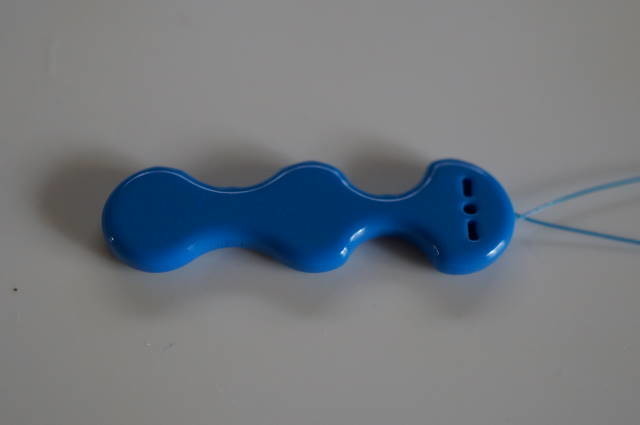
The OK Prostate Chip is a small device that is placed in the urethra (the urine passage) so that it acts on the prostate; the maker sells it in several shapes, sizes and materials. It is made and sold by OK Lab (Okada Comfortable Life Laboratory), a small company in Japan, through its own online store, and prices are in Japanese yen (JPY). The maker's development diary, "ok-lab's diary", is written in Japanese. This page is an English summary of it, and every quotation is translated. OK Lab ships internationally, so readers outside Japan can order (see "Buying from outside Japan" below). Product names on this page are plain-English descriptions. The official Japanese product name is shown once in the product table so you can find the same item in the store.
Before you read: key terms
| Term | Plain-English meaning |
|---|---|
| Urethra | The urine passage, through which urine leaves the body; the chip is placed inside it. |
| Chip body | The solid glass, resin, or ceramic component that forms the device acting on the prostate. |
| Thread attachment | The connection of a retrieval thread to the chip; this work can carry a separate charge. |
| Biocompatible resin | Resin the maker describes as compatible with body tissue, used to manufacture chip bodies. |
| Adhesion | Sticking to the urethral lining; this term identifies a material-contact concern discussed in the diary. |
What happens: OK Prostate Chip prices
The OK Prostate Chip is a small device placed in the urethra (the urine passage) to act on the prostate. Glass, resin, and ceramic form the chip body, the solid part placed inside that passage. Diary prices separate this body from attached thread or vibration equipment, which contribute to the finished product's cost. Later versions use biocompatible resin (resin the maker describes as compatible with body tissue), including a second-generation material.
Early chip prices separated the main body from supporting parts
In an entry published in October 2017, the main resin chip cost ¥1,000 (about $6 at ¥156 = $1, rate as of 2026-09-04); the glass version cost ¥2,000 (about $13 at ¥156 = $1, rate as of 2026-09-04), excluding tax. The auxiliary resin chip was ¥1,000 (about $6 at ¥156 = $1, rate as of 2026-09-04) excluding tax. These were labeled part A, the main chip, and part B, the auxiliary chip.
Thread attachment cost ¥1,000 (about $6 at ¥156 = $1, rate as of 2026-09-04) per part excluding tax, including the thread. Mr. Okada discouraged continued use of the cheapest trial item and asked buyers to confirm final prices in the company's own online store.
(Source: ok-lab's diary, published October 2017)
https://ok-lab.hatenablog.com/entry/20171020/1508465071
Resin chip prices were restated after reports of peeling
In an entry published in February 2018, Mr. Okada recalled 2 reports of resin peeling discussed in the previous installment. The diary does not record those customers' subsequent outcomes in this paragraph.
The same entry quoted an additional ¥2,000 (about $13 at ¥156 = $1, rate as of 2026-09-04) for an auxiliary chip on a connected pair. For payment by bank transfer, the stated extra charge was ¥2,160 (about $14 at ¥156 = $1, rate as of 2026-09-04). Mr. Okada asked customers to allow extra time for custom orders and warned that technically difficult requests could be declined.
(Source: ok-lab's diary, published February 2018)
https://ok-lab.hatenablog.com/entry/20180221/1519195742
Resin chip prices started from the cost of glass equivalents
An entry published in February 2019 set resin body prices at the glass equivalent minus ¥1,000 (about $6 at ¥156 = $1, rate as of 2026-09-04), excluding tax. Short bodies were ¥1,000 (about $6 at ¥156 = $1, rate as of 2026-09-04), semi-long bodies ¥2,000 (about $13 at ¥156 = $1, rate as of 2026-09-04), and extended bodies ¥3,000 (about $19 at ¥156 = $1, rate as of 2026-09-04), all excluding tax.
Thread attachment and vibration equipment carried separate charges. Mr. Okada proposed this schedule as resin production expanded beyond short chips.
(Source: ok-lab's diary, published February 2019)
https://ok-lab.hatenablog.com/entry/2019/02/09/152257
Ceramic chip prices distinguished ordinary shapes from curved-tail versions
An entry published in June 2019 gave planned ceramic prices: ¥3,000 (about $19 at ¥156 = $1, rate as of 2026-09-04) for short, ¥4,000 (about $26 at ¥156 = $1, rate as of 2026-09-04) for semi-long, and ¥5,000 (about $32 at ¥156 = $1, rate as of 2026-09-04) for extended chips. Curved-tail versions were ¥4,000 (about $26 at ¥156 = $1, rate as of 2026-09-04), ¥5,000 (about $32 at ¥156 = $1, rate as of 2026-09-04), and ¥6,000 (about $38 at ¥156 = $1, rate as of 2026-09-04), respectively.
That price paragraph did not specify whether tax was included. In the accompanying customer exchange, Mr. Okada advised waiting for the planned ceramic semi-long release.
(Source: ok-lab's diary, published June 2019)
https://ok-lab.hatenablog.com/entry/2019/06/01/155432
Later resin chip prices explicitly included the thread charge
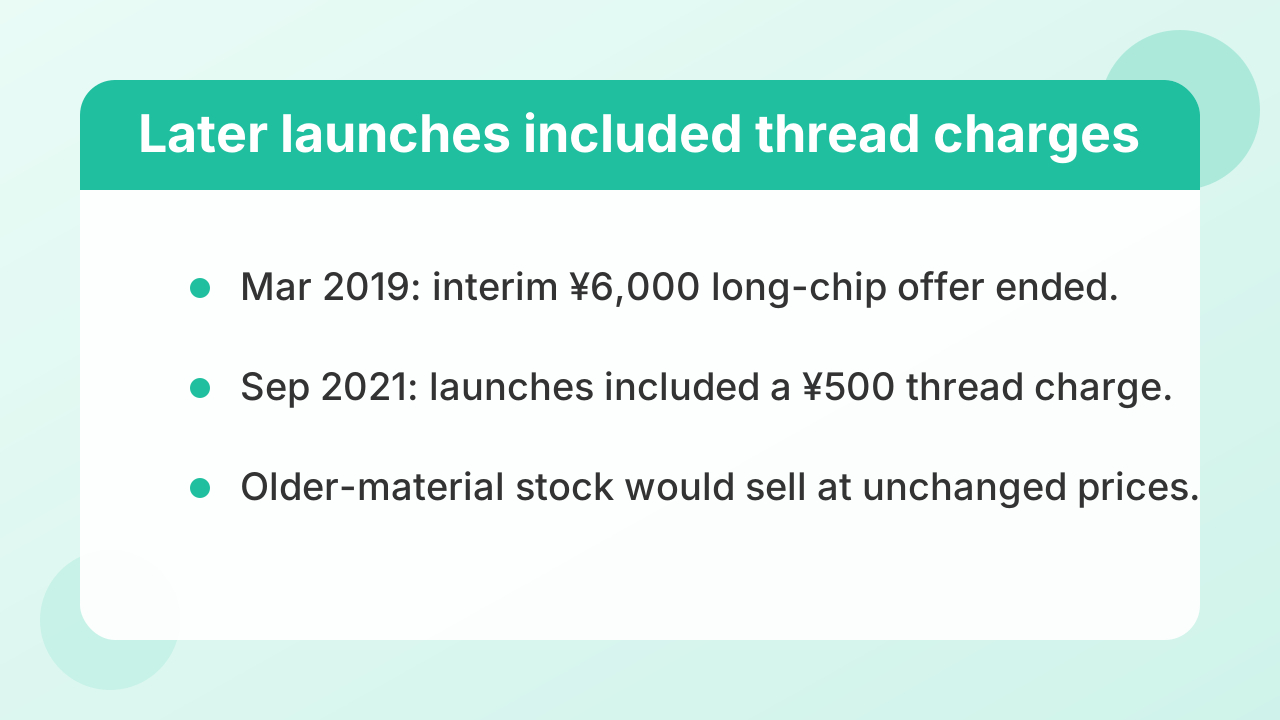
An entry published in September 2021 announced short resin chips at ¥4,000 (about $26 at ¥156 = $1, rate as of 2026-09-04) excluding tax and semi-long chips at ¥5,000 (about $32 at ¥156 = $1, rate as of 2026-09-04) excluding tax. Both prices included ¥500 (about $3 at ¥156 = $1, rate as of 2026-09-04) for thread.
A later September 2021 entry announced extended chips at ¥8,000 (about $51 at ¥156 = $1, rate as of 2026-09-04) excluding tax and long chips at ¥7,500 (about $48 at ¥156 = $1, rate as of 2026-09-04) excluding tax. Each also included a ¥500 (about $3 at ¥156 = $1, rate as of 2026-09-04) thread charge. These launches completed the planned range of 4 standard shapes, all specified for two threads.
(Source: ok-lab's diary, published September 2021)
https://ok-lab.hatenablog.com/entry/2021/09/04/125843
(Source: ok-lab's diary, published September 2021)
https://ok-lab.hatenablog.com/entry/2021/09/11/125735
Second-generation resin chip prices rose across the announced shape range
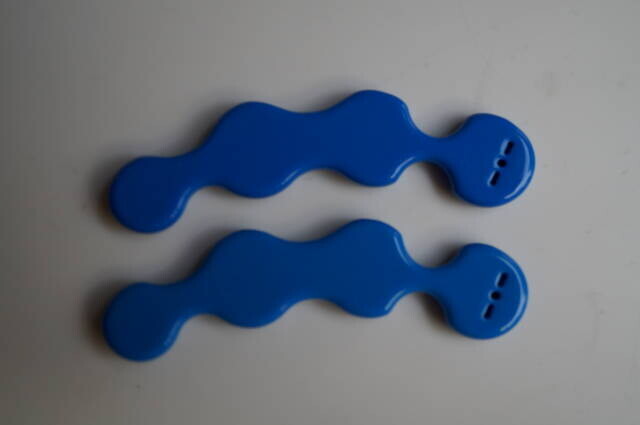
An entry published in November 2024 announced second-generation resin prices, including tax. Short models were ¥4,950 (about $32 at ¥156 = $1, rate as of 2026-09-04); short twists and semi-long models were ¥6,050 (about $39 at ¥156 = $1, rate as of 2026-09-04). The flat-curved semi-long model was ¥6,600, (about $42 at ¥156 = $1, rate as of 2026-09-04) extended models ¥9,900, (about $63 at ¥156 = $1, rate as of 2026-09-04) and long models ¥9,350 (about $60 at ¥156 = $1, rate as of 2026-09-04).
Standard resin chips nicknamed Zoro were ¥6,600 (about $42 at ¥156 = $1, rate as of 2026-09-04) in S, M, and L; the long version was ¥9,350 (about $60 at ¥156 = $1, rate as of 2026-09-04). The formal launch was planned for 2025. Mr. Okada said the company's own online store would begin selling incoming stock before that launch.
(Source: ok-lab's diary, published November 2024)
https://ok-lab.hatenablog.com/entry/2024/11/09/122930
The maker's answer to OK Prostate Chip prices
Mr. Okada explained attachment charges, manufacturing costs, and the planned transition between resin generations.
Glass chip prices separated body costs from replacement vibration equipment
In an entry published in January 2019, Mr. Okada explained pricing for the proposed vibrating glass long chip. The glass body was ¥5,000 (about $32 at ¥156 = $1, rate as of 2026-09-04), and motor-cable attachment was ¥3,000 (about $19 at ¥156 = $1, rate as of 2026-09-04), giving his stated ¥8,000 (about $51 at ¥156 = $1, rate as of 2026-09-04) total, all excluding tax.
Thread replacement on the non-vibrating model cost ¥1,000 (about $6 at ¥156 = $1, rate as of 2026-09-04) excluding tax. For a chip that stopped vibrating, Mr. Okada offered a replacement motor and cable for ¥3,000 (about $19 at ¥156 = $1, rate as of 2026-09-04) excluding tax.
(Source: ok-lab's diary, published January 2019)
https://ok-lab.hatenablog.com/entry/20190105/1546673405
New resin chip prices reflected outside manufacturing costs and shape
In an entry published in July 2021, Mr. Okada explained that a manufacturing collaborator would supply the new biocompatible resin chips. His initial short-chip quote was ¥3,500 (about $22 at ¥156 = $1, rate as of 2026-09-04) for the body plus ¥500 (about $3 at ¥156 = $1, rate as of 2026-09-04) for thread attachment, excluding tax.
He said body prices would increase roughly with volume, using the short chip as the starting point. Twisted shapes could cost more than flat shapes of equal volume because they occupied more manufacturing space. Mr. Okada based selling prices on the collaborator's costs and margins for both businesses.
(Source: ok-lab's diary, published July 2021)
https://ok-lab.hatenablog.com/entry/2021/07/10/125840
Higher resin chip prices accompanied a material change and stock phaseout
In an entry published in November 2024, Mr. Okada described the new resin as compatible with alcohol disinfection. He said it was slightly more flexible and thought this made it less likely to break.
He reported more than a year of prototype testing without particular problems. Older-material chips would retain their prices and be sold separately until existing stock ran out, when sales would stop.
Only the second-generation semi-long M was in stock at publication. Mr. Okada invited interested customers to contact the company about that batch.
(Source: ok-lab's diary, published November 2024)
https://ok-lab.hatenablog.com/entry/2024/11/09/122930
How OK Prostate Chip prices changed over time
| Published | What the diary said then |
|---|---|
| Oct 2017 | Initial prices separated main chips, auxiliary chips, and thread attachment. |
| Jan 2018 | Connected resin alternative announced following a question about glass breakage. |
| Apr 2018 | Semi-long launch planned: ¥3,000 (about $19 at ¥156 = $1, rate as of 2026-09-04) body-only or ¥4,000 (about $26 at ¥156 = $1, rate as of 2026-09-04) with thread, excluding tax. |
| Mar 2019 | Interim ¥6,000 (about $38 at ¥156 = $1, rate as of 2026-09-04) long-chip offer ended; standard glass body was ¥5,000, (about $32 at ¥156 = $1, rate as of 2026-09-04) excluding tax. |
| Jun 2019 | Ceramic price plans distinguished ordinary chips from curved-tail versions. |
| Jul 2021 | New resin body pricing reflected manufacturing volume and shape. |
| Sep 2021 | Extended and long resin launches explicitly included a ¥500 (about $3 at ¥156 = $1, rate as of 2026-09-04) thread charge. |
| Dec 2021 | Flat-curved semi-long chips launched in S, M, and L at ¥5,500 (about $35 at ¥156 = $1, rate as of 2026-09-04) excluding tax. |
| Nov 2024 | New resin prices announced; older-material stock would sell at unchanged prices until exhausted. |
OK Prostate Chip products related to OK Prostate Chip prices
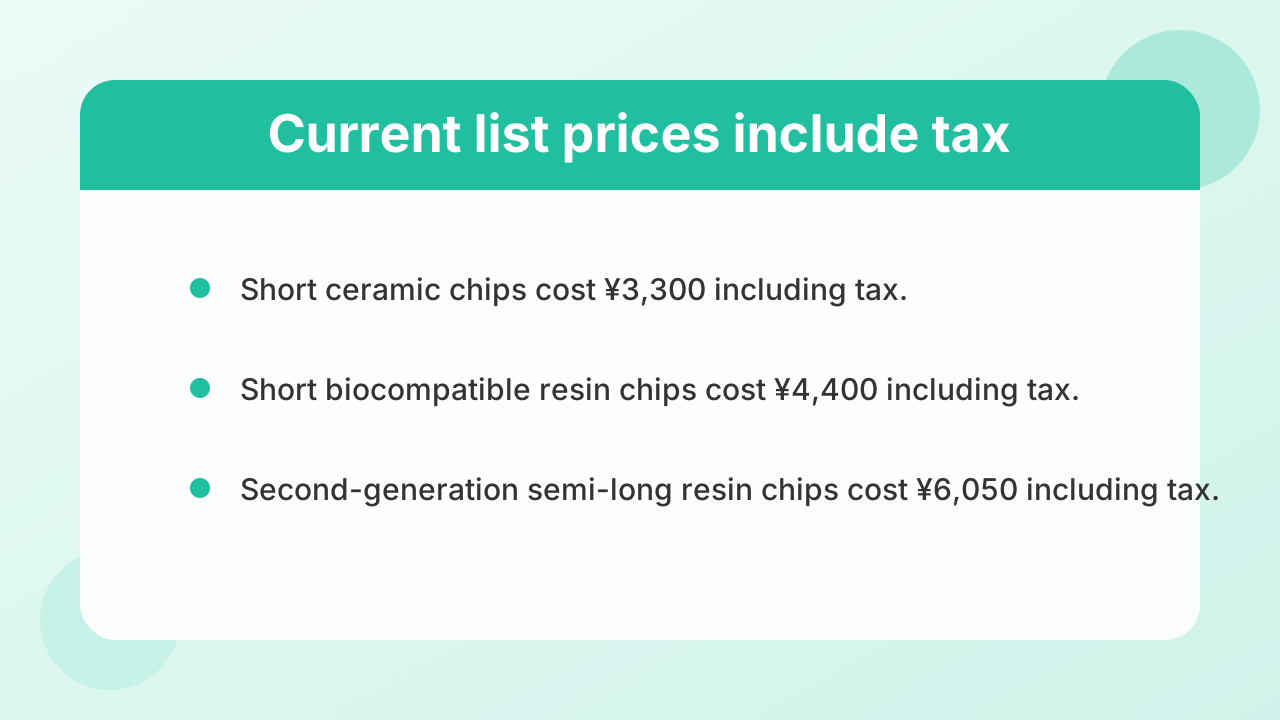
These current list prices include tax and identify the listed material or resin generation.
Products that appear in these entries
| Product (official name) | Price incl. tax | Relation to this topic |
|---|---|---|
| Connected glass pair (OKプロステートチップ ガラス素材2連結タイプ) | ¥6,600 (about $42 at ¥156 = $1, rate as of 2026-09-04) | January 2018 discussed a customer's concern about breakage where these glass chips touch. |
| Short ceramic chip (OKプロステートチップ 陶器素材ショートタイプ) | ¥3,300 (about $21 at ¥156 = $1, rate as of 2026-09-04) | June 2019 gave this shape a distinct planned ceramic price. |
| Short biocompatible resin chip (OKプロステートチップ ショートタイプ(生体適合樹脂)) | ¥4,400 (about $28 at ¥156 = $1, rate as of 2026-09-04) | September 2021 announced its launch with thread included in the quoted price. |
| Second-generation semi-long resin chip (OKプロステートチップ セミロングタイプ(第二世代生体適合樹脂)) | ¥6,050 (about $39 at ¥156 = $1, rate as of 2026-09-04) | November 2024 reported the first batch and announced the new material's price. |
| Second-generation extended resin chip (OKプロステートチップ 覚醒タイプ(第二世代生体適合樹脂)) | ¥9,900 (about $63 at ¥156 = $1, rate as of 2026-09-04) | November 2024 assigned this shape a higher price during the material change. |
| Second-generation flat-curved semi-long resin chip (OKプロステートチップ フラット面カーブ型 セミロングタイプ(第二世代生体適合樹脂)) | ¥6,600 (about $42 at ¥156 = $1, rate as of 2026-09-04) | November 2024 announced a separate price for this curved shape. |
| Second-generation short twisted resin chip (OKプロステートチップ ショートタイプ ツイスト(第二世代生体適合樹脂)) | ¥6,050 (about $39 at ¥156 = $1, rate as of 2026-09-04) | November 2024 priced short twisted models separately from ordinary short models. |
| Second-generation standard resin chip, Zoro (OKプロステートチップ 凶悪ゾロ(第二世代生体適合樹脂)) | ¥6,600 (about $42 at ¥156 = $1, rate as of 2026-09-04) | November 2024 announced new-material pricing for this named model. |
| Second-generation long resin chip, Zoro (OKプロステートチップ ロング凶悪ゾロ(第二世代生体適合樹脂)) | ¥9,350 (about $60 at ¥156 = $1, rate as of 2026-09-04) | November 2024 gave the long variant its own new-material price. |
The short ceramic chip is listed in OK Lab's own online store.
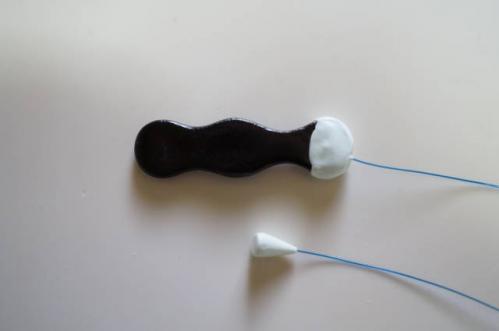
(Source: ok-lab's diary, published January 2018)
https://ok-lab.hatenablog.com/entry/20180121/1516504265
(Source: ok-lab's diary, published June 2019)
https://ok-lab.hatenablog.com/entry/2019/06/01/155432
(Source: ok-lab's diary, published September 2021)
https://ok-lab.hatenablog.com/entry/2021/09/04/125843
(Source: ok-lab's diary, published November 2024)
https://ok-lab.hatenablog.com/entry/2024/11/09/122930
Products the diary mentioned as alternatives
| Product (official name) | Price incl. tax | Relation to this topic |
|---|---|---|
| Connected resin pair (OKプロステートチップ 樹脂素材2連結タイプ) | ¥4,400 (about $28 at ¥156 = $1, rate as of 2026-09-04) | January 2018 offered this for glass-breakage worries, with Mr. Okada's recommendation limited to short use. |
| Semi-long ceramic chip (OKプロステートチップ 陶器素材セミロングタイプ) | ¥4,400 (about $28 at ¥156 = $1, rate as of 2026-09-04) | June 2019 advised waiting for this release instead of ordering the requested resin semi-long chip. |
The connected resin pair is listed in OK Lab's own online store.
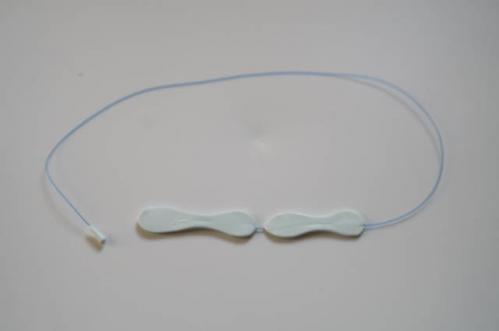
(Source: ok-lab's diary, published January 2018)
https://ok-lab.hatenablog.com/entry/20180121/1516504265
(Source: ok-lab's diary, published June 2019)
https://ok-lab.hatenablog.com/entry/2019/06/01/155432
Historical resin semi-long and extended bodies, and the custom threadless resin screw chip: No matching product can be confirmed on the current list.
Announced second-generation short and ordinary long resin chips: No matching product can be confirmed on the current list.
Common worries about OK Prostate Chip prices
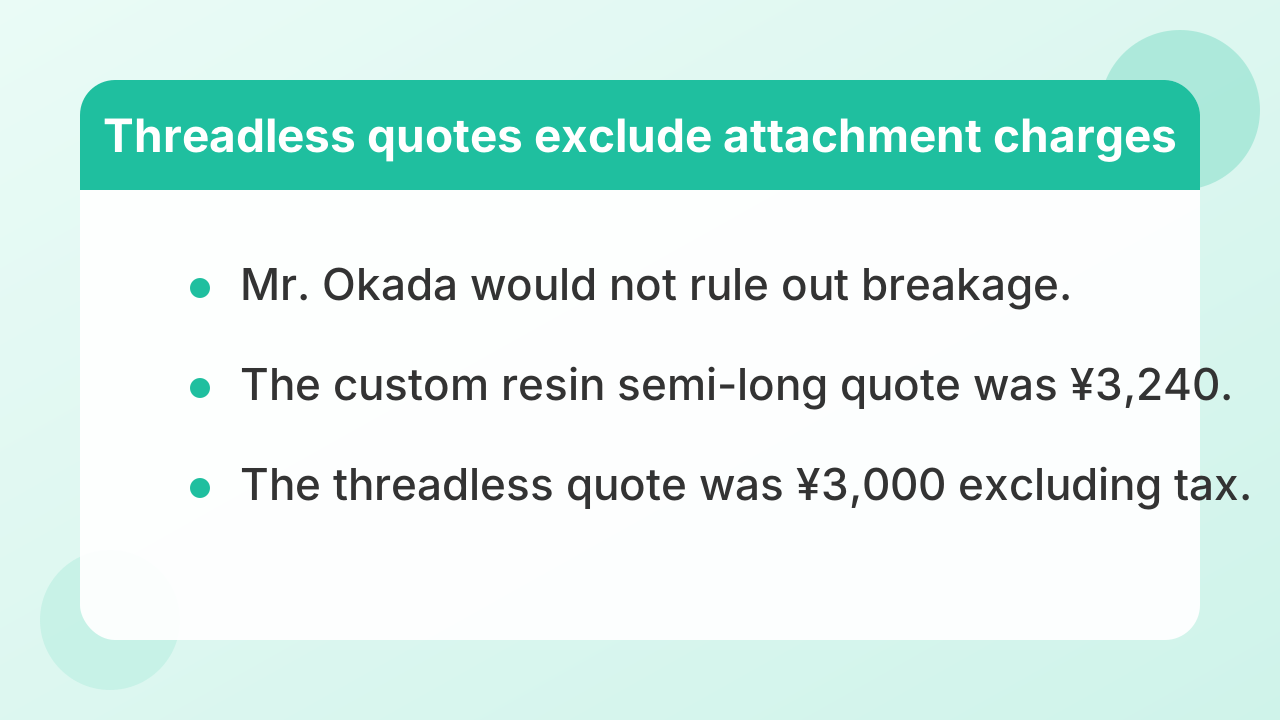
The customer questions concerned glass breakage, a custom resin quote, and the price without embedded thread.
"Can connected glass chips break where the pieces touch?"
In an entry published in January 2018, a customer asked whether contact between connected glass chips could cause breakage and injury. Mr. Okada reported no problems in his own use but would not rule out breakage.
The planned resin pair was ¥4,000 (about $26 at ¥156 = $1, rate as of 2026-09-04) excluding tax, comprising 2 chips at ¥1,000 (about $6 at ¥156 = $1, rate as of 2026-09-04) each and 2 thread connections at ¥1,000 (about $6 at ¥156 = $1, rate as of 2026-09-04) each. The diary does not record whether this customer bought that alternative. Mr. Okada recommended the resin pair for people seeking short-term use.
(Source: ok-lab's diary, published January 2018)
https://ok-lab.hatenablog.com/entry/20180121/1516504265
"Could resin chip prices cover a custom semi-long model?"
An entry published in June 2019 records a customer's request for a resin semi-long chip because glass felt worrying. Mr. Okada said he could make it for ¥3,240 (about $21 at ¥156 = $1, rate as of 2026-09-04), describing resin prices as the glass price minus ¥1,080 (about $7 at ¥156 = $1, rate as of 2026-09-04).
He wrote that adhesion (sticking to the urethral lining) could occur after about half a day or longer. His reply claimed that short use posed no problem; the diary does not record this customer's experience with the proposed resin chip. His advice was to wait for the ceramic semi-long release expected that month.
(Source: ok-lab's diary, published June 2019)
https://ok-lab.hatenablog.com/entry/2019/06/01/155432
"How much did a resin chip without thread cost?"
Later in the June 2019 exchange, the same customer requested a screw-shaped resin chip without embedded thread. The requested dimensions were 35 mm long and 10 mm wide.
Mr. Okada quoted ¥3,000 (about $19 at ¥156 = $1, rate as of 2026-09-04) excluding tax, because the ¥1,000 (about $6 at ¥156 = $1, rate as of 2026-09-04) excluding tax thread-attachment charge did not apply. The diary does not record whether this order was completed.
(Source: ok-lab's diary, published June 2019)
https://ok-lab.hatenablog.com/entry/2019/06/01/155432
Buying from outside Japan
OK Lab ships internationally to countries covered by Japan Post's EMS courier service. Overseas orders are paid in advance by PayPal. Each order carries a ¥400 (about $3 at ¥156 = $1, rate as of 2026-09-04) handling fee, and EMS shipping is charged on top. These terms come from OK Lab's official sales-terms page (written here as plain text, not a link: ok-lab.net/docs/law), checked on September 7, 2026; confirm them on the official store before you order, because they can change.
Summary of this article
| What you wanted to know | The answer |
|---|---|
| What is the short answer? | Material, shape, attachments, and resin generation all affect the listed price. |
| What is this product? | A urethral device made and sold by OK Lab in Japan. |
| What do the price terms mean? | A body-only quote can exclude thread attachment or vibration equipment. |
| What happened to prices? | The diary records separate material prices and later resin-generation increases. |
| How did the maker explain costs? | Through attachment charges, outside manufacturing costs, shape, and the material transition. |
| What changed over time? | New shapes appeared, an interim offer ended, and older resin stock entered a planned phaseout. |
| What is listed currently? | The product tables give tax-inclusive prices from the September 2026 list. |
| What did customers ask? | About glass breakage, custom resin availability, and omitting the thread charge. |
| How do overseas purchases work? | Advance PayPal payment, a ¥400 (about $3 at ¥156 = $1, rate as of 2026-09-04) handling fee, and additional EMS shipping. |
| What does this summary establish? | Historical quotes and current product-list prices refer to their stated dates and configurations. |
Source: ok-lab's diary (Okada Comfortable Life Laboratory). The original entries are in Japanese; quotations on this page are translated. Photos and videos are on the original entries.
This article is a summary of the maker's development diary. The product is not a medical device and no result is guaranteed. If anything feels wrong or worries you, see a doctor. Prices, specifications and cautions change, so confirm the latest information on the official blog and the official site. Questions about ordering and shipping go to the seller.