![Can a prostate chip stay in while tucking? | The diary records limits and repeated redesigns [OK Prostate Chip]](/img/a/T0199/eyecatch.svg)
This page is based on entries from "ok-lab's diary" (https://ok-lab.hatenablog.com/), the Japanese development diary written by Mr. Okada, founder of OK Lab, a small company in Japan (Okada Comfortable Life Laboratory). Only the entries about "keeping a prostate chip in while tucking" are summarized here, in order of publication. Past prices and sizes are as written at the time. Current prices come from the official product list (retrieved September 4, 2026). Quotations are translated from Japanese.
Note: This page is a personal reading log by someone with no connection to the maker or the seller. It reflects the source entries as of their publication dates and makes no guarantee of accuracy or safety. The product is not a medical device; talk to a doctor about any health decision. Check the official site for current information. This page contains advertising.
In short
- Tucking trials revealed chip movement, discomfort, and problems with urination.
- Mr. Okada revised the restraints and warned against keeping long chips in the bladder for extended periods.
- The external support set remains listed; later custom designs have no confirmed matching listing.
If you see blood in your urine, even a small amount or for the first time, do not wait and see. See a urologist right away. If you suddenly cannot urinate, or the device cannot be removed, do not try to fix it yourself. Go to a medical facility, including emergency care, immediately.
About this product
The OK Prostate Chip is a small device that is placed in the urethra (the urine passage) so that it acts on the prostate; the maker sells it in several shapes, sizes and materials. It is made and sold by OK Lab (Okada Comfortable Life Laboratory), a small company in Japan, through its own online store, and prices are in Japanese yen (JPY). The maker's development diary, "ok-lab's diary", is written in Japanese. This page is an English summary of it, and every quotation is translated. OK Lab ships internationally, so readers outside Japan can order (see "Buying from outside Japan" below). Product names on this page are plain-English descriptions. The official Japanese product name is shown once in the product table so you can find the same item in the store.
Before you read: key terms
| Term | Plain-English meaning |
|---|---|
| Urethra | The urine passage; it carries urine and contains the chip during use. |
| Tucking | Holding the penis inward beneath clothing or a plate for concealment. |
| Girdle | Firm shaping underwear used in the diary's early trials to maintain pressure. |
| Glans | The head of the penis; these external restraints use it as a contact point. |
| Floating-wire cable | A chip connection with enclosed wires, intended to retain bends. |
| Urethral sound | An internal support insert for tucking; the diary discusses rigid and flexible versions. |
| Fabric tent | Stretch cloth over a plate opening, intended to restrain the glans. |
| Key-ring attachment | Doubled cable intended to resist movement; the locking version adds a bulge. |
| Retrieval thread | Nylon thread intended to help retrieve the chip assembly. |
What happens: keeping a prostate chip in while tucking
The OK Prostate Chip is a small device placed in the urethra so that it acts on the prostate. Here, tucking means holding the penis pressed inward while a chip remains in the urine passage. The diary describes external pressure from a girdle (firm shaping underwear) or support plate, followed by designs with stretch fabric over the glans (the penis head). Mr. Okada explored these arrangements to maintain concealment and change the pressure he felt around the prostate.
Flexible cables changed the options for tucking with a prostate chip
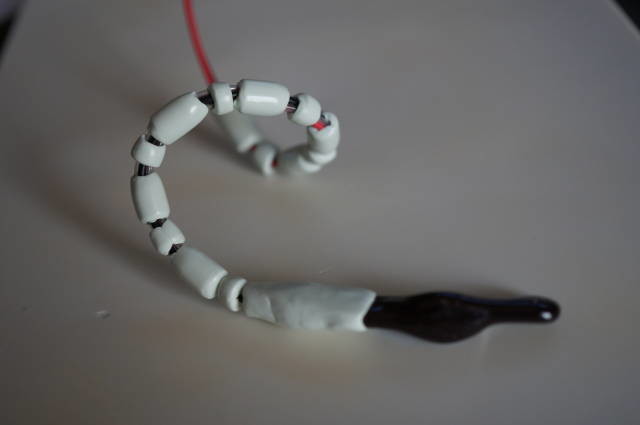
In an entry published in October 2022, Mr. Okada introduced a floating-wire cable (a bendable connection containing wires inside tubes). It retained multidirectional bends, which he considered suited to tucking. Published prices, excluding tax, were ¥6,000 (about $38 at ¥156 = $1, rate as of 2026-09-04) through 10cm, plus ¥500 (about $3 at ¥156 = $1, rate as of 2026-09-04) per additional 1cm; 20cm cost ¥11,000 (about $70 at ¥156 = $1, rate as of 2026-09-04).
The earlier 6-wire design had been discontinued, although a request acknowledging its problems was accepted. Mr. Okada advised people with safety concerns against purchasing it.
(Source: ok-lab's diary, published October 2022)
https://ok-lab.hatenablog.com/entry/2022/10/15/123011
Girdle pressure ended Mr. Okada's early tucking trial
In an entry published in October 2022, Mr. Okada said his body could no longer tolerate the strong girdle pressure. He linked this limit to his existing heart failure and stopped that approach. His replacement prototype concentrated pressure locally through a silicone-tube belt.
Connecting the chip assembly directly to the garment made placement difficult, leaving the prototype unfinished. He reconsidered length after finding the earlier cable excessively bent. Mr. Okada tentatively favored a floating-wire section no longer than about 7cm for this particular design.
(Source: ok-lab's diary, published October 2022)
https://ok-lab.hatenablog.com/entry/2022/10/22/122828
Stable tucking did not remove the maker's concern about bladder placement
In an entry published in November 2022, a customer reported using a custom linked chip with an external restraint. The customer reported stable wear and satisfactory urination but uncertainty about the chip's position in the bladder. Mr. Okada had already expressed concern, but the customer had chosen to proceed. Mr. Okada said he had advised against leaving a long chip in the bladder for an extended period.
(Source: ok-lab's diary, published November 2022)
https://ok-lab.hatenablog.com/entry/2022/11/05/122757
Urine collection during tucking introduced a risk of backflow
In an entry published in April 2023, Mr. Okada described an external urine-collection prototype based on the three-piece external support set. He reported urinating through its tube without undressing. However, he said a loose silicone ring near the glans could allow the collection condom to swell and urine to flow backward.
Published accessory prices were ¥500 (about $3 at ¥156 = $1, rate as of 2026-09-04) excluding tax for 2 silicone rings and ¥500 (about $3 at ¥156 = $1, rate as of 2026-09-04) excluding tax for the split-ended tube with stopper. Mr. Okada cautioned that his sample sizes would not fit everyone and offered separately quoted custom sizes.
(Source: ok-lab's diary, published April 2023)
https://ok-lab.hatenablog.com/entry/2023/04/08/122508
A tucking mesh prototype was abandoned because urine scattered
In an entry published in June 2023, Mr. Okada withdrew the mesh cover introduced the previous week. He said contact between the mesh and urine outlet split the stream and caused splashing. Its replacement ring also moved when the urethral sound (an internal support insert) moved during his overnight trial.
He therefore questioned whether that ring could work effectively with a sound. Mr. Okada suggested a narrower plate opening for that combination, without reporting a successful follow-up in this entry.
(Source: ok-lab's diary, published June 2023)
https://ok-lab.hatenablog.com/entry/2023/06/17/123116
Fabric-tent tucking lost its proposed opening because the glans could protrude
In an entry published in July 2024, Mr. Okada revised the fabric tent (stretch cloth covering the plate opening). He abandoned the previous week's proposed slit because the glans might emerge through it. His revised policy was to provide no hole or slit for the time being.
He also separated this development from experiments involving a urethral chip. Mr. Okada wanted the garment developed independently before considering chip combinations again.
(Source: ok-lab's diary, published July 2024)
https://ok-lab.hatenablog.com/entry/2024/07/13/123018
Fabric ties replaced tube belts in the revised tucking underwear
In an entry published in July 2024, Mr. Okada discontinued the tube-belt version after finding the all-swimwear-fabric design more comfortable. The revised format consisted of separate tie-side underwear and a ceramic plate. The published price was ¥6,000 (about $38 at ¥156 = $1, rate as of 2026-09-04) excluding tax for each.
The free-size underwear had a stated waist length of 1 meter and stretch above 200%. Mr. Okada suggested purchasing spare underwear separately for changes between washes.
(Source: ok-lab's diary, published July 2024)
https://ok-lab.hatenablog.com/entry/2024/07/20/123059
A key-ring attachment held during Mr. Okada's initial tucking trial
In an entry published in August 2024, Mr. Okada revisited a customer's request for retention near the glans, which staff had initially declined. He developed a key-ring attachment (a doubled-cable loop intended to resist chip movement). During his initial day-long tucked trial, he reported that it stayed inside even during urination.
The published surcharge was ¥2,000 (about $13 at ¥156 = $1, rate as of 2026-09-04) through 10cm, plus ¥500 (about $3 at ¥156 = $1, rate as of 2026-09-04) per additional 5cm, excluding tax, above the ordinary chip price. Mr. Okada favored shorter attachments for fully internal wear.
(Source: ok-lab's diary, published August 2024)
https://ok-lab.hatenablog.com/entry/2024/08/17/122842
Stronger retention left unanswered questions about tucking with the locking loop
In an entry published in August 2024, Mr. Okada introduced a locking-loop attachment with an additional curved bulge. He reported a firmer hold, while raising the possibility of problems from prolonged continuous wear. The published surcharge was ¥3,000 (about $19 at ¥156 = $1, rate as of 2026-09-04) through 10cm, plus ¥500 (about $3 at ¥156 = $1, rate as of 2026-09-04) per additional 5cm, excluding tax, above the ordinary chip price.
In a follow-up published in August 2024, he reported unchanged positioning across a week of daytime trials; the earlier loop sometimes shifted. This was not continuous wear: he had concerns about overnight use because the locking design felt stronger. Mr. Okada had cautioned that initial testing was too limited for an active recommendation.
(Source: ok-lab's diary, published August 2024)
https://ok-lab.hatenablog.com/entry/2024/08/24/122906
(Source: ok-lab's diary, published August 2024)
https://ok-lab.hatenablog.com/entry/2024/08/31/122909
The maker's answer to keeping a prostate chip in while tucking
Mr. Okada repeatedly revised the external restraints, while leaving limits on fit and prolonged chip wear unresolved.
Adhesive film offered another connection for tucking with an external plate
In an entry published in September 2023, Mr. Okada proposed waterproof film as a connection between glans skin and the external plate. His trial used film 0.007mm thick, which he described as flexible and barely noticeable. This followed his difficulties keeping the glans centered with earlier restraint designs. Mr. Okada's proposal explicitly excluded the area around the urine opening.
(Source: ok-lab's diary, published September 2023)
https://ok-lab.hatenablog.com/entry/2023/09/16/122723
Plate-opening size remained important after fabric-tent tucking became possible
In an entry published in July 2024, Mr. Okada distinguished the plate opening's fit from the fabric's restraining role. He wrote that pressure from the fabric made the glans spread sideways. In his experience, a closely fitting opening felt more restrictive than a roomier one. Mr. Okada suggested comparing plate openings because he found that their size changed the sensation.
(Source: ok-lab's diary, published July 2024)
https://ok-lab.hatenablog.com/entry/2024/07/20/123059
Absorbent liners addressed a new problem with fabric-tent tucking
In an entry published in September 2024, Mr. Okada described secretions collecting at one fixed spot on the fabric tent. He previously used a glans pad to protect underwear; his later plastic-wrap arrangement could overflow. An adhesive liner then prevented the tent fabric from stretching properly.
He developed a nonadhesive arrangement and added plate stops because fabric and ties could come loose during liner changes. He also announced that future shipments would include a sample liner. Mr. Okada favored a liner arrangement that preserved the tent's stretch.
(Source: ok-lab's diary, published September 2024)
https://ok-lab.hatenablog.com/entry/2024/09/14/123119
If you see blood in your urine, even a small amount or for the first time, do not wait and see. See a urologist right away. If you suddenly cannot urinate, or the device cannot be removed, do not try to fix it yourself. Go to a medical facility, including emergency care, immediately.
How keeping a prostate chip in while tucking changed over time
| Published | What the diary said then |
|---|---|
| Oct 2022 | A multidirectional floating-wire cable appeared after the earlier design's discontinuation. |
| Oct 2022 | Strong girdle pressure became intolerable for Mr. Okada. |
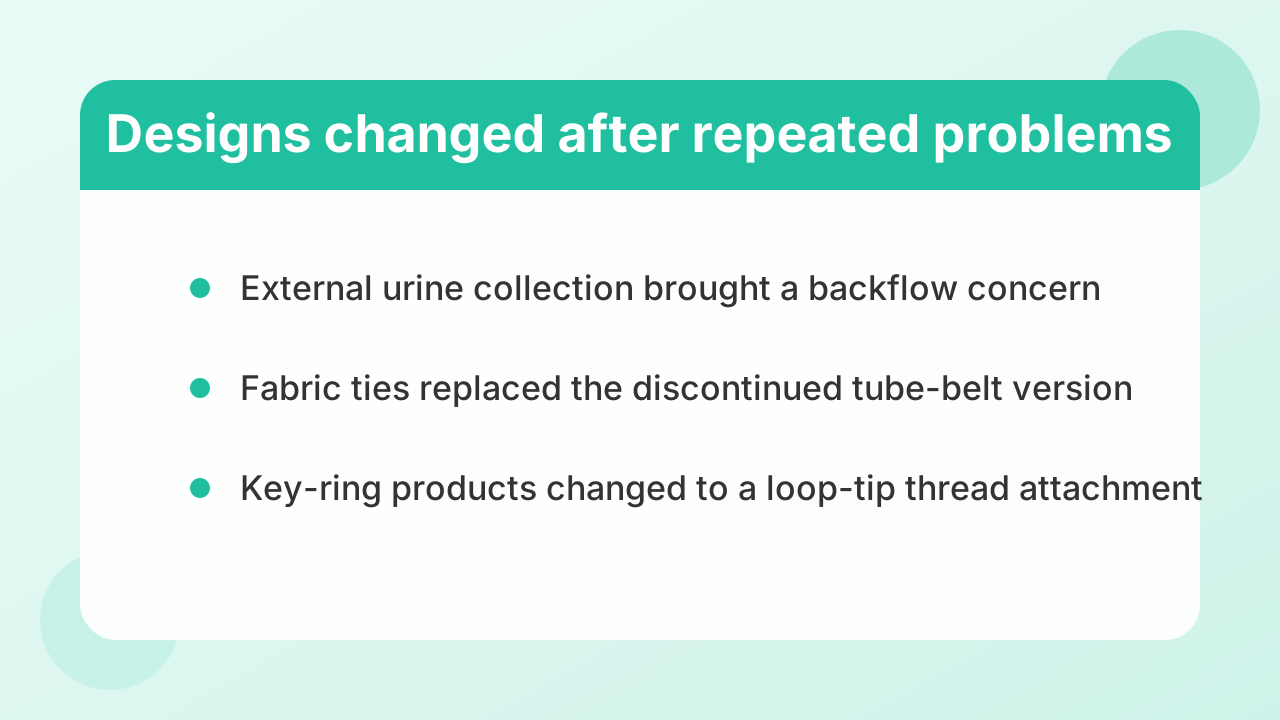
| Apr 2023 | External urine collection brought a backflow concern. |
| Jun 2023 | The mesh cover was abandoned because it scattered urine. |
| Sep 2023 | Adhesive film became another proposed connection between skin and plate. |
| Jul 2024 | The tent's proposed slit was dropped because the glans could protrude. |
| Jul 2024 | Fabric ties replaced the discontinued tube-belt version. |
| Aug 2024 | All key-ring products changed to a loop-tip thread attachment. |
| Sep 2024 | Plate stops addressed fabric and ties loosening during liner changes. |
OK Prostate Chip products related to keeping a prostate chip in while tucking
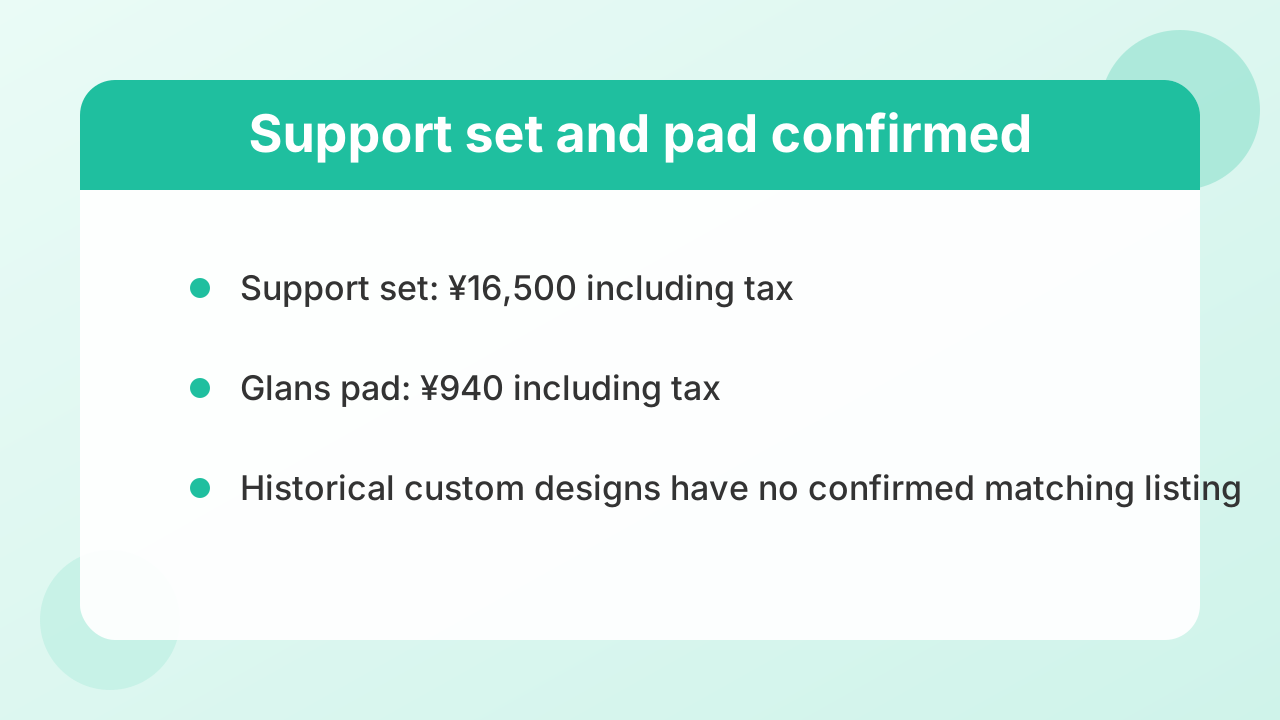
The current list confirms the external support set and glans pad mentioned in these accounts.
Products that appear in these entries
| Product (official name) | Price incl. tax | Relation to this topic |
|---|---|---|
| Three-piece external support set (エイン・デ・フラット3点セット) | ¥16,500 (about $106 at ¥156 = $1, rate as of 2026-09-04) | April 2023 named this set as the base for the external urine-collection prototype. |
| Glans pad (美亀パッド) | ¥940 (about $6 at ¥156 = $1, rate as of 2026-09-04) | September 2024 recalled Mr. Okada's earlier use of this pad to protect underwear from secretions. |
(Source: ok-lab's diary, published April 2023)
https://ok-lab.hatenablog.com/entry/2023/04/08/122508
(Source: ok-lab's diary, published September 2024)
https://ok-lab.hatenablog.com/entry/2024/09/14/123119
Products the diary mentioned as alternatives
The diary names no alternative.
Historical custom designs: floating-wire cable, linked chip, drainage accessories, wide-hole plate, fabric-tent underwear, and loop attachments. No matching product can be confirmed on the current list.
Discontinued items were the earlier 6-wire cable and tube-belt underwear. The mesh cover was an abandoned prototype.
Common worries about keeping a prostate chip in while tucking
"Why did tucking with a urethral sound hurt?"
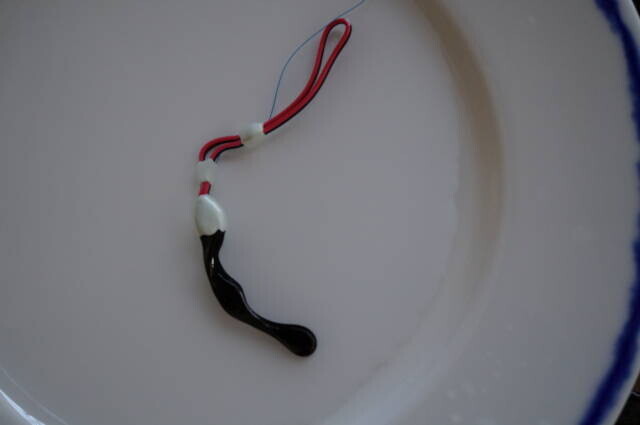
In an entry published in June 2023, a customer reported better stability with a wide-hole plate but continued internal bending. A trial involving a steel urethral sound caused pain severe enough to prevent continued pressure. Mr. Okada said individual differences might matter and acknowledged that he could not give a definite answer.
The diary does not record whether the customer's discomfort was resolved. Mr. Okada suggested partial rather than complete tucking as a possibility.
(Source: ok-lab's diary, published June 2023)
https://ok-lab.hatenablog.com/entry/2023/06/10/123053
"Does tucking with a prostate chip require rigid inserts?"
In entries published in May 2023, a reader asked how the plate worked, then questioned discomfort and whether an ordinary threaded chip was possible. After viewing Mr. Okada's explanation, the reader reported better understanding, without describing a completed chip trial. Mr. Okada said a threaded chip was possible but described rigid S-shaped inserts as more difficult.
He doubted a 12mm-wide chip would fit with a 2cm plate opening, tentatively suggesting 25mm for larger chips. Mr. Okada strongly favored the wide-hole plate because he found glans positioning easier.
(Source: ok-lab's diary, published May 2023)
https://ok-lab.hatenablog.com/entry/2023/05/06/123024
(Source: ok-lab's diary, published May 2023)
https://ok-lab.hatenablog.com/entry/2023/05/13/123004
"Can tucking with a prostate chip prevent bladder migration?"
In an entry published in August 2024, a customer asked about migration after previous chips had entered the bladder. Staff thought the locking loop less likely to pass inward than a screw-shaped piece. The customer requested a slightly larger loop, and staff agreed.
Mr. Okada changed all key-ring products so the nylon retrieval thread (intended to help retrieve the device) emerged from the loop tip. He reported shipping pending orders with that change; the customer's later experience is not recorded. OK Lab's staff cautioned that the loop could not guarantee protection against bladder migration.
(Source: ok-lab's diary, published August 2024)
https://ok-lab.hatenablog.com/entry/2024/08/31/122909
Buying from outside Japan
OK Lab ships internationally to countries covered by Japan Post's EMS courier service. Overseas orders are paid in advance by PayPal. Each order carries a ¥400 (about $3 at ¥156 = $1, rate as of 2026-09-04) handling fee, and EMS shipping is charged on top. These terms come from OK Lab's official sales-terms page (written here as plain text, not a link: ok-lab.net/docs/law), checked on September 7, 2026; confirm them on the official store before you order, because they can change.
Summary of this article
| What you wanted to know | The answer |
|---|---|
| In short: does the chip stay put? | Retention varied; the locking loop carried no guarantee against bladder migration. |
| About the product | A urethral device made by OK Lab in Japan, sold in Japanese yen. |
| Key terms | Garments and plates restrain; cables and loops connect to the chip. |
| What happens during tucking? | Pressure, urine-flow, and fit problems prompted redesigns. |
| The maker's answer | Film, fabric, plate sizes, and liners addressed different problems. |
| What changed over time? | Designs changed between October 2022 and September 2024. |
| Which products are listed today? | Support set: ¥16,500 (about $106 at ¥156 = $1, rate as of 2026-09-04); glans pad: ¥940, (about $6 at ¥156 = $1, rate as of 2026-09-04) including tax. |
| Common worries | Pain, rigid-insert fit, and bladder migration remained concerns in customer exchanges. |
| Buying outside Japan | Advance PayPal payment, a ¥400 (about $3 at ¥156 = $1, rate as of 2026-09-04) handling fee, and additional EMS shipping. |
Source: ok-lab's diary (Okada Comfortable Life Laboratory). The original entries are in Japanese; quotations on this page are translated. Photos and videos are on the original entries.
This article is a summary of the maker's development diary. The product is not a medical device and no result is guaranteed. If anything feels wrong or worries you, see a doctor. Prices, specifications and cautions change, so confirm the latest information on the official blog and the official site. Questions about ordering and shipping go to the seller.