![What should I know before using a vibrating prostate chip? | Stronger is not always better [OK Prostate Chip]](/img/a/T0191/eyecatch.svg)
This page is based on entries from "ok-lab's diary" (https://ok-lab.hatenablog.com/), the Japanese development diary written by Mr. Okada, founder of OK Lab, a small company in Japan (Okada Comfortable Life Laboratory). Only the entries about vibrating prostate chip use are summarized here, in order of publication. Past prices and sizes are as written at the time. Current prices come from the official product list (retrieved September 4, 2026). Quotations are translated from Japanese.
Note: This page is a personal reading log by someone with no connection to the maker or the seller. It reflects the source entries as of their publication dates and makes no guarantee of accuracy or safety. The product is not a medical device; talk to a doctor about any health decision. Check the official site for current information. This page contains advertising.
In short
Vibration can feel faint or intense; the diary also records injury, unwanted movement, overheating, and equipment failures.
Mr. Okada warns against excessive voltage and bladder vibration, while proposing supports for unwanted movement.
The current list includes vibrating chips and accessories, but does not confirm every historical custom design.
If you see blood in your urine, even a small amount or for the first time, do not wait and see. See a urologist right away. If you suddenly cannot urinate, or the device cannot be removed, do not try to fix it yourself. Go to a medical facility, including emergency care, immediately.
About this product

The OK Prostate Chip is a small device that is placed in the urethra (the urine passage) so that it acts on the prostate; the maker sells it in several shapes, sizes and materials. It is made and sold by OK Lab (Okada Comfortable Life Laboratory), a small company in Japan, through its own online store, and prices are in Japanese yen (JPY). The maker's development diary, "ok-lab's diary", is written in Japanese. This page is an English summary of it, and every quotation is translated. OK Lab ships internationally, so readers outside Japan can order (see "Buying from outside Japan" below). Product names on this page are plain-English descriptions. The official Japanese product name is shown once in the product table so you can find the same item in the store.
Before you read: key terms
| Term | Plain-English meaning |
|---|---|
| Urethra | The urine passage, where the chip is placed to act on the prostate. |
| Vibrating chip | A chip containing or connected to a motor, intended to provide vibration around the prostate. |
| Inner urinary sphincter | The muscle at the bladder boundary; Mr. Okada describes its role in releasing urine. |
| Controller | The device supplying the motor and controlling its vibration. |
| USB connector | A connection between chip and controller; its shape alone did not establish compatibility. |
| Parallel-cable stopper | A part on the cable intended to limit unwanted chip movement. |
| Screw-shaped support | An additional spiral-shaped chip intended to help the main device stay in place. |
| Bluetooth controller | The phone-linked controller discussed in the diary, used to control vibration. |
| Shape-memory wire | Flexible connecting wire that returns toward its original shape and can transmit vibration. |
What happens: vibrating prostate chip use
The OK Prostate Chip is a small device placed in the urethra (the urine passage) to act on the prostate. A vibrating chip adds a tiny motor, either within the assembly or connected to its tip, to provide mechanical stimulation. The diary describes models with motors near the prostate, alongside experiments involving the bladder and other parts of the urethra. A controller (the device supplying and controlling vibration) connects through a cable.
Early vibrating prostate chip claims focused on reduced sticking
In December 2018, Mr. Okada claimed vibration prevented sticking between the device and the urethral lining. He also described easier retrieval of larger chips, based on his own experience. The same entry says he could stop noticing continuous vibration after about 30 minutes.
(Source: ok-lab's diary, published December 2018)
https://ok-lab.hatenablog.com/entry/20181222/1545459719
An early vibrating prostate chip caused injury despite adjustable strength
In an entry published in April 2019, a customer reported that an early vibrating chip felt harsh rather than pleasurable. Adjusting its strength had not resolved this, and the customer described injury, strong stinging, and pain without further stimulation. The customer reported recovery within 1 day.
Mr. Okada replied that production had already moved to version 2. He said the injury report was unexpected.
(Source: ok-lab's diary, published April 2019)
https://ok-lab.hatenablog.com/entry/2019/04/20/144337
Repeated vibrating prostate chip use preceded loss of bladder control
In June 2019, a customer described repeated use of a 3-motor custom chip and worsening control when the urge to urinate arrived. The customer could sometimes hold urine for only 10–20 seconds, disrupting shopping and driving. The diary does not record whether bladder control recovered.
Mr. Okada offered a hypothesis involving the inner urinary sphincter (the muscle at the bladder boundary). He warned that keeping this muscle stretched for long periods might contribute to urinary problems.
(Source: ok-lab's diary, published June 2019)
https://ok-lab.hatenablog.com/entry/2019/06/08/144200
Excessive vibrating prostate chip voltage prompted an explicit heat warning
In August 2019, a customer testing a custom multi-motor chip reported that continuous 9V vibration became hot enough to feel close to burning. Mr. Okada suspected heat damage to the urethra. He rejected 9V use outright.
(Source: ok-lab's diary, published August 2019)
https://ok-lab.hatenablog.com/entry/2019/08/10/125102
Vibrating prostate chip compatibility required more than matching connectors
In November 2019, a customer asked whether a third-party R-1 controller could work with a vibrating chip. The corrected entry says its dedicated recognition cable was necessary, so the planned compatible-product launch was put on hold. A USB connector (the connection between chip and controller) alone was insufficient.
A later November 2019 entry reports normal patterns during about 4 hours of testing with the recognition component retained. Mr. Okada accepted the request, with the dedicated cable required in his revised proposal.
(Source: ok-lab's diary, published November 2019)
https://ok-lab.hatenablog.com/entry/2019/11/23/162919
(Source: ok-lab's diary, published November 2019)
https://ok-lab.hatenablog.com/entry/2019/11/30/164020
A custom vibrating prostate chip passed tests without resolving fit concerns
In June 2020, Mr. Okada reported completed strength and water-resistance tests on a custom chip using a motor with back-and-forth movement. The assembly also continued vibrating during a test in water at 100 degrees. His personal trial involved the spare motor without the attached tip, and he reported severe pain during entry.
The pictured assembly was intended for delivery. He remained unsure whether the complete pictured assembly would fit him.
(Source: ok-lab's diary, published June 2020)
https://ok-lab.hatenablog.com/entry/2020/06/20/125330
Vibrating prostate chip testing stopped after Mr. Okada reported heart trouble
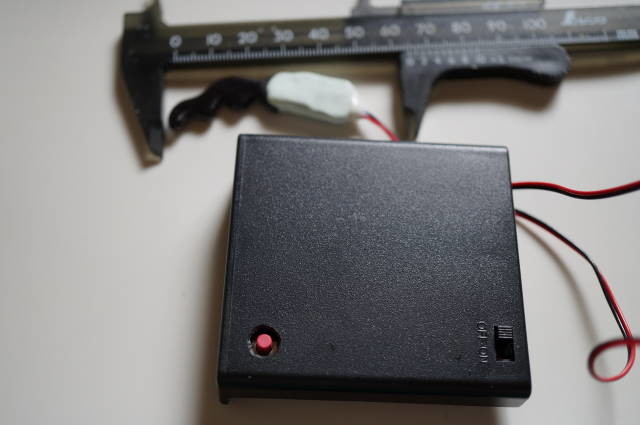
In May 2024, Mr. Okada described testing a bladder-mounted prototype intended to stimulate structures beside the bladder. After about 5–10 minutes, he reported a sudden disturbance in his heartbeat and stopped the vibration. He already had serious heart problems. He decided against further vibration because he feared another episode of heart failure.
(Source: ok-lab's diary, published May 2024)
https://ok-lab.hatenablog.com/entry/2024/05/11/122910
Vibrating prostate chip repair changed one customer's explanation for weak sensation
In September 2024, a customer reported clearer vibration after repair of a jointed bladder-mounted model. Previously, the customer had wondered whether the body location simply made vibration difficult to feel. After repair, the customer reported no problems during the uses described. Mr. Okada considered a wire fault present from manufacture a plausible explanation.
(Source: ok-lab's diary, published September 2024)
https://ok-lab.hatenablog.com/entry/2024/09/21/122907
A flexible vibrating prostate chip raised concerns about prolonged bladder vibration
In February 2026, Mr. Okada introduced a flexible connection using shape-memory wire (wire that bends and returns toward its original shape). The design was limited to ceramic tips and 8mm or 10mm motors. Proposed motor-to-tip spacing was about 15mm–30mm, with a standard connection diameter around 5mm.
Mr. Okada reported stronger movement at the ceramic tip than at the motor. He cautioned that strong, prolonged bladder vibration might be harmful.
(Source: ok-lab's diary, published February 2026)
https://ok-lab.hatenablog.com/entry/2026/02/14/121602
The maker's answer to vibrating prostate chip use
The maker's replies address power, unwanted movement, compatibility, and faults, with cautions that changed as problems emerged.
Vibrating prostate chip voltage advice became more cautious over time
In February 2019, Mr. Okada estimated motor tolerance around 4V and an operating temperature around 60 degrees. He said a motor stopped by hot water could restart after cooling. In November 2019, he stated a 3V motor rating and reported his own continuous-operation tests at 6V.
That November entry also records replacement after a customer's motor failed following 10 minutes at 6V. By November 2021, Mr. Okada warned about substantial heating above 5V and reported failures at 6V or more.
(Source: ok-lab's diary, published February 2019)
https://ok-lab.hatenablog.com/entry/2019/02/09/152257
(Source: ok-lab's diary, published November 2019)
https://ok-lab.hatenablog.com/entry/2019/11/02/132358
(Source: ok-lab's diary, published November 2021)
https://ok-lab.hatenablog.com/entry/2021/11/13/123751
Vibrating prostate chip movement led to proposals for extra supports
In February 2020, a customer sought a different shape because a semi-long vibrating chip moved outward or toward the bladder. Mr. Okada thought vibrating devices moved more readily than ordinary chips. The diary does not record whether replacement resolved the movement.
His proposals included a parallel-cable stopper (a cable-mounted part intended to limit travel). He also suggested a screw-shaped support (an additional chip intended to resist movement), while qualifying its ability to prevent bladder entry.
(Source: ok-lab's diary, published February 2020)
https://ok-lab.hatenablog.com/entry/2020/02/08/151653
A Bluetooth vibrating prostate chip controller damaged the smallest motors
In February 2022, Mr. Okada reported failure after connecting a 6mm motor to a Bluetooth controller (the phone-linked control device). He reported similar losses from earlier mistaken connections. Mr. Okada advised customers considering that controller against choosing 6mm motors.
(Source: ok-lab's diary, published February 2022)
https://ok-lab.hatenablog.com/entry/2022/02/12/123441
A vibrating prostate chip cable fault required investigation before repair
In July 2022, a customer's custom assembly stopped working during its 2nd use. Inspection confirmed an intermittent connection near the middle of its 20cm reinforced cable, rather than at the motor connection. Mr. Okada was considering a repair method; the entry does not record a completed repair.
(Source: ok-lab's diary, published July 2022)
https://ok-lab.hatenablog.com/entry/2022/07/30/122933
Vibrating prostate chip strength did not predict comfort in later testing
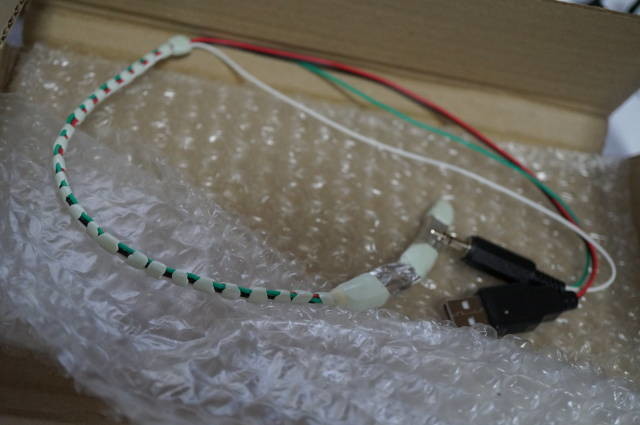
In February 2026, Mr. Okada described a bare-wire prototype offering 0.3mm or 0.4mm connecting wires. With a 12-level controller, he found settings around 5–6 more perceptible than stronger vibration. He warned that the exposed-wire design was unsuitable for people with metal allergies.
(Source: ok-lab's diary, published February 2026)
https://ok-lab.hatenablog.com/entry/2026/02/21/122935
If you see blood in your urine, even a small amount or for the first time, do not wait and see. See a urologist right away. If you suddenly cannot urinate, or the device cannot be removed, do not try to fix it yourself. Go to a medical facility, including emergency care, immediately.
How vibrating prostate chip use changed over time
| Published | What the diary said then |
|---|---|
| Jan 2019 | Mr. Okada reported operation even with a 1-volt battery. |
| Feb 2019 | He favored glass for conveying subtle changes from programmed vibration. |
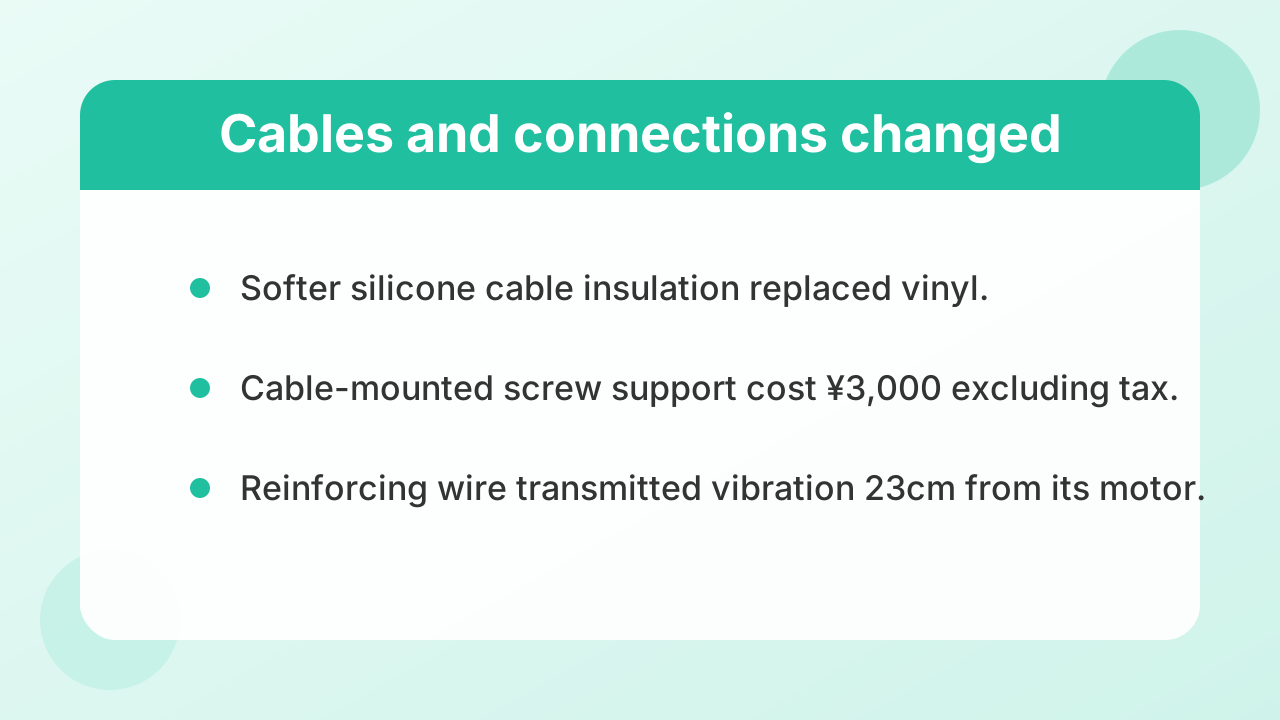
| Mar 2019 | Softer silicone cable insulation replaced vinyl, with thicker copper inside. |
| Aug 2019 | A small motor-only design was announced at ¥3,000 (about $19 at ¥156 = $1, rate as of 2026-09-04) excluding tax, without a battery. |
| Nov 2019 | New-chip USB termination became free, without the standard controller. |
| Dec 2019 | Cable-mounted screw support cost ¥3,000 (about $19 at ¥156 = $1, rate as of 2026-09-04) excluding tax; later fitting was unavailable. |
| Feb 2020 | A new motor's finished width exceeded 11mm; finished thickness exceeded 4.5mm. |
| May 2022 | Reinforcing wire transmitted vibration to a chip 23cm from its motor. |
| Aug 2023 | A softer cable localized vibration, but Mr. Okada anticipated earlier electrical failure. |
| Feb 2026 | Bare-wire surcharges before tax: up to 10cm ¥5,000 (about $32 at ¥156 = $1, rate as of 2026-09-04); 15cm ¥6,000 (about $38 at ¥156 = $1, rate as of 2026-09-04); 20cm ¥8,000 (about $51 at ¥156 = $1, rate as of 2026-09-04). |
OK Prostate Chip products related to vibrating prostate chip use
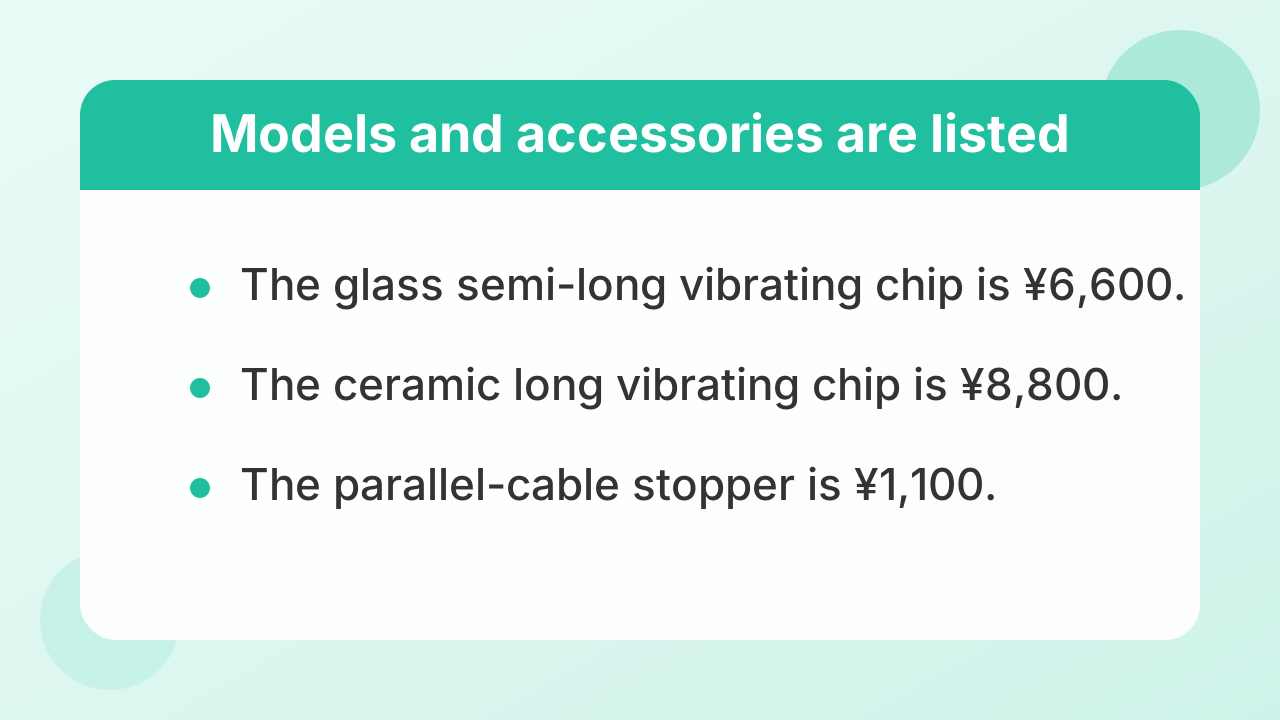
The current list includes models and support accessories discussed in these entries.
Products that appear in these entries
| Product (official name) | Price incl. tax | Relation to this topic |
|---|---|---|
| Glass semi-long vibrating chip (OKプロステート核振チップ ガラス素材セミロングタイプ) | ¥6,600 (about $42 at ¥156 = $1, rate as of 2026-09-04) | A November 2021 customer reported motor failure during use with a variable power supply. |
| Ceramic long vibrating chip (OKプロステート核振チップ 陶器素材ロングタイプ) | ¥8,800 (about $56 at ¥156 = $1, rate as of 2026-09-04) | A February 2022 reader questioned how this model's listed length included the cable connection. |
(Source: ok-lab's diary, published November 2021)
https://ok-lab.hatenablog.com/entry/2021/11/13/123751
(Source: ok-lab's diary, published February 2022)
https://ok-lab.hatenablog.com/entry/2022/02/26/123231
Products the diary mentioned as alternatives
| Product (official name) | Price incl. tax | Relation to this topic |
|---|---|---|
| Plain motor-only vibrating chip (OKプロステート核振チップ プレーン(胎児チップ)) | ¥3,300 (about $21 at ¥156 = $1, rate as of 2026-09-04) | In February 2020, Mr. Okada favored this cheaper option when vibration alone mattered instead of a shaped ceramic tip. |
| Parallel-cable stopper (平行ケーブル用ストッパー追加(オプション)) | ¥1,100 (about $7 at ¥156 = $1, rate as of 2026-09-04) | In February 2020, Mr. Okada proposed this accessory to address unwanted movement toward the bladder. |
| Screw-shaped support option (スクリュー型補助チップ追加オプション) | ¥3,300 (about $21 at ¥156 = $1, rate as of 2026-09-04) | In February 2020, Mr. Okada suggested this support for unwanted movement, with reservations about its stopping function. |
(Source: ok-lab's diary, published February 2020)
https://ok-lab.hatenablog.com/entry/2020/02/08/151653
(Source: ok-lab's diary, published February 2020)
https://ok-lab.hatenablog.com/entry/2020/02/15/144151
Early versions, multi-motor builds, jointed bladder-mounted models, flexible designs, bare-wire prototypes, and stiff-cable options are discussed here. No matching product can be confirmed on the current list.
Common worries about vibrating prostate chip use
Readers asked about absent sensation, bladder movement, confusing dimensions, and cable stiffness.
"Will a vibrating prostate chip help when nothing feels different?"
In December 2018, a customer reported no pleasure and difficulty knowing where an ordinary chip was located. Mr. Okada emphasized individual differences and what he considered learned awareness of prostate sensation. The entry does not record whether this customer later tried vibration. He suggested that vibration might help make the device's presence easier to notice.
(Source: ok-lab's diary, published December 2018)
https://ok-lab.hatenablog.com/entry/20181222/1545459719
"Can a vibrating prostate chip cable still enter the bladder?"
In February 2022, a customer questioned the need for movement restraints, believing the cable and connector prevented complete loss inside. Staff replied that the risk seemed lower than with thread, but cable tangling inside the bladder remained possible. They considered a stopper potentially helpful against unintended movement.
Mr. Okada described unpleasant sensations depending on the device's bladder location. He advised against bladder vibration.
(Source: ok-lab's diary, published February 2022)
https://ok-lab.hatenablog.com/entry/2022/02/12/123441
"Why does a vibrating prostate chip length include extra millimeters?"
In February 2022, a reader asked why the ceramic long vibrating model listed both 62mm and 62+15mm. Mr. Okada explained that the additional approximately 15mm represented the transition between motor and cable. He said this section had become somewhat shorter as manufacturing improved.
(Source: ok-lab's diary, published February 2022)
https://ok-lab.hatenablog.com/entry/2022/02/26/123231
"Would a stiffer vibrating prostate chip cable be easier?"
In February 2022, a reader asked about a custom stiff cable for easier control. Mr. Okada quoted ¥500 (about $3 at ¥156 = $1, rate as of 2026-09-04) excluding tax per 10cm; that option did not itself provide a detachable controller. He generally advised against it because its stiffness made handling inconvenient.
(Source: ok-lab's diary, published February 2022)
https://ok-lab.hatenablog.com/entry/2022/02/26/123231
Buying from outside Japan

OK Lab ships internationally to countries covered by Japan Post's EMS courier service. Overseas orders are paid in advance by PayPal. Each order carries a ¥400 (about $3 at ¥156 = $1, rate as of 2026-09-04) handling fee, and EMS shipping is charged on top. These terms come from OK Lab's official sales-terms page (written here as plain text, not a link: ok-lab.net/docs/law), checked on September 7, 2026; confirm them on the official store before you order, because they can change.
Summary of this article
| What you wanted to know | The answer |
|---|---|
| In short | Sensation varies; the diary also documents harm and mechanical faults. |
| About the product | A urethral device made and sold by a small Japanese company. |
| Key terms | Motors, controllers, cables, and supports have different roles. |
| What happens | Reports include injury, heat, urinary changes, compatibility problems, and repair outcomes. |
| The maker's answer | His proposals address power, movement, component compatibility, and troubleshooting. |
| Changes over time | Motors, cables, connections, and historical charges evolved across the dated entries. |
| Related products | Current listed prices are separate from historical custom specifications and prices. |
| Common worries | A cable does not eliminate bladder-entry concerns; dimensions and stiffness also need clarification. |
| Buying outside Japan | Advance PayPal payment, a ¥400 (about $3 at ¥156 = $1, rate as of 2026-09-04) handling fee, and additional EMS shipping apply. |
Source: ok-lab's diary (Okada Comfortable Life Laboratory). The original entries are in Japanese; quotations on this page are translated. Photos and videos are on the original entries.
This article is a summary of the maker's development diary. The product is not a medical device and no result is guaranteed. If anything feels wrong or worries you, see a doctor. Prices, specifications and cautions change, so confirm the latest information on the official blog and the official site. Questions about ordering and shipping go to the seller.