![Can I leave a prostate chip in during everyday life? | Reports include injuries and design changes [OK Prostate Chip]](/img/a/T0175/eyecatch.svg)
This page is based on entries from "ok-lab's diary" (https://ok-lab.hatenablog.com/), the Japanese development diary written by Mr. Okada, founder of OK Lab, a small company in Japan (Okada Comfortable Life Laboratory). Only the entries about "leaving a prostate chip in during daily life" are summarized here, in order of publication. Past prices and sizes are as written at the time. Current prices come from the official product list (retrieved September 4, 2026). Quotations are translated from Japanese.
Note: This page is a personal reading log by someone with no connection to the maker or the seller. It reflects the source entries as of their publication dates and makes no guarantee of accuracy or safety. The product is not a medical device; talk to a doctor about any health decision. Check the official site for current information. This page contains advertising.
In short
Customers described everyday activities with a chip retained, but entries also record expulsion, pain, bleeding, and damaged devices.
Mr. Okada proposed supports and design changes, while warning about cracks and unintended movement into the bladder.
Some discussed products remain listed; several historical custom builds and wire prototypes have no confirmed current match.
If you see blood in your urine, even a small amount or for the first time, do not wait and see. See a urologist right away. If you suddenly cannot urinate, or the device cannot be removed, do not try to fix it yourself. Go to a medical facility, including emergency care, immediately.
About this product

The OK Prostate Chip is a small device that is placed in the urethra (the urine passage) so that it acts on the prostate; the maker sells it in several shapes, sizes and materials. It is made and sold by OK Lab (Okada Comfortable Life Laboratory), a small company in Japan, through its own online store, and prices are in Japanese yen (JPY).
The maker's development diary, "ok-lab's diary", is written in Japanese. This page is an English summary of it, and every quotation is translated. OK Lab ships internationally, so readers outside Japan can order (see "Buying from outside Japan" below).
Product names on this page are plain-English descriptions. The official Japanese product name is shown once in the product table so you can find the same item in the store.
Before you read: key terms
| Term | Plain-English meaning |
|---|---|
| Urethra | The urine passage; it carries urine and is where the base chip is placed. |
| Retrieval thread | A thread attached to the chip, intended to help retrieve it. |
| Stopper chip | An added piece intended to limit unwanted movement of the device or its thread. |
| Resin | Plastic used for chip bodies and connections; the diary distinguishes different materials. |
| Chipless device | A covered wire structure intended to provide retention and stimulation without a solid chip body. |
| Shape-memory wire | Springy metal wire used to form flexible supporting loops. |
What happens: leaving a prostate chip in
The OK Prostate Chip is a small device placed inside the urethra to act on the prostate. Leaving it in means retaining the device during activities such as work, walking, or driving. The diary describes this as a way to maintain stimulation without constant attention to the device. It also records changes in sensation during movement, expulsion during urination, damaged surfaces, and injuries.
Daily wear ended with sudden expulsion for a beginner during October 2017
In an entry published in October 2017, a beginner on the staff described about 30 minutes of ordinary activity with occasional prickling. When they urinated, all the chips suddenly came out.
The staff member caught the retrieval thread’s end before the chips fell into the toilet. The diary urged particular caution about urination.
(Source: ok-lab's diary, published October 2017)
https://ok-lab.hatenablog.com/entry/20171019/1508375473
Daily wear claims extended to separate rectal designs during August 2018
In an entry published in August 2018, Mr. Okada introduced separate devices for stimulation through the rectum. He claimed these could remain inside during everyday activities without additional lubricant.
Length-specified custom builds cost ¥6,000 (about $38 at ¥156 = $1, rate as of 2026-09-04) tax excluded, as published that month. Custom twisted versions cost ¥7,000 (about $45 at ¥156 = $1, rate as of 2026-09-04) or ¥6,000 (about $38 at ¥156 = $1, rate as of 2026-09-04), both tax excluded; he offered custom lengths and curves for individual fit.
(Source: ok-lab's diary, published August 2018)
https://ok-lab.hatenablog.com/entry/20180825/1535182626
Daily wear concealed a cracked glass chip during September 2018
In an entry published in September 2018, a customer reported finding a crack after approximately one week of continuous wear. A roughly 0.2mm step at the crack had apparently scratched the urethra without visible bleeding.
The customer changed devices and reported that stinging had subsided after two days. Mr. Okada acknowledged that prevention was uncertain and advised inspection before each use, excluding cracked chips from use.
(Source: ok-lab's diary, published September 2018)
https://ok-lab.hatenablog.com/entry/20180922/1537592180
A separate October 2019 complaint described bleeding during insertion and a ceramic core that broke during attempted repair
In an entry published in October 2019, a customer requested a replacement long ceramic comma-shaped chip after bleeding and a broken core. Mr. Okada questioned whether the resin connection caused the bleeding and proposed consulting the ceramic maker.
He said he could not make the requested replacement and offered a refund. The diary does not record whether that refund was completed.
(Source: ok-lab's diary, published October 2019)
https://ok-lab.hatenablog.com/entry/2019/10/05/141806
Daily wear involved reported heart symptoms during December 2019 motor testing
In an entry published in December 2019, Mr. Okada described testing a vibrating chip with a screw-shaped support. He wrote that motor stimulation seemed to trigger heart-failure symptoms while his health was poor.
He reported switching the motor off after approximately 3 hours. The diary does not record a medical assessment confirming that connection.
(Source: ok-lab's diary, published December 2019)
https://ok-lab.hatenablog.com/entry/2019/12/21/150646
Daily wear prompted a surface investigation following bleeding during August 2022
In an entry published in August 2022, a customer asked whether a flat-curve resin chip remained usable after 3 days of continuous wear. They reported blood in their urine and a dull, rough front surface.
The manufacturer concluded that white material had accumulated on the surface; its composition remained untested. During the investigation, the online marketplace Amazon’s listing was suspended, and OK Lab sent a replacement.
The diary does not record how the replacement performed. Mr. Okada suggested medical assessment of the unusual deposit.
(Source: ok-lab's diary, published August 2022)
https://ok-lab.hatenablog.com/entry/2022/08/20/122920
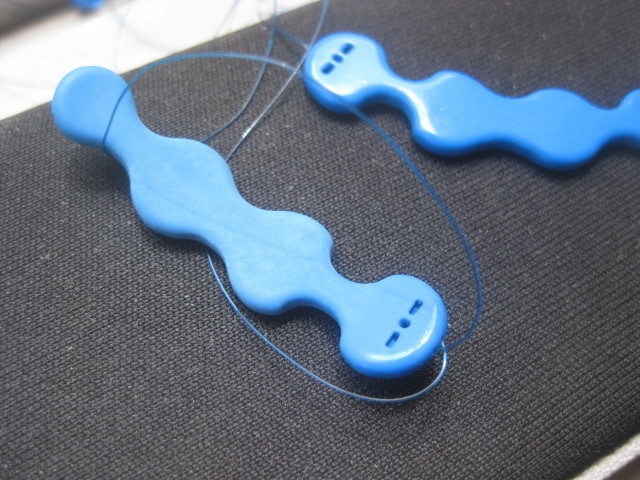
Daily wear development introduced flexible loops during November 2024
In an entry published in November 2024, Mr. Okada described a chipless device using flexible loops for retention. It used 0.3mm shape-memory wire (springy metal wire) and silicone tubing with an outside diameter of 2.5mm.
The published price was ¥6,000 (about $38 at ¥156 = $1, rate as of 2026-09-04) tax excluded. He reported initial prickling that diminished later, while warning that custom lengths and angles were only approximate.
(Source: ok-lab's diary, published November 2024)
https://ok-lab.hatenablog.com/entry/2024/11/23/123015
Daily wear tests exposed contamination concerns and excessive stimulation during March 2025
In an entry published in March 2025, Mr. Okada rejected continuous wear for a prototype with wire exposed outside the body. He believed clothing contamination could travel back into the urethra. A contained 9cm prototype initially felt better.
He then reported heart failure during sleep, which he attributed to excessive stimulation from clothing pressing its long wire shaft. A shorter rear extension subsequently gave gentler stimulation in his tests. He restricted the exposed-wire version to short use.
(Source: ok-lab's diary, published March 2025)
https://ok-lab.hatenablog.com/entry/2025/03/15/122925
The maker's answer to leaving a prostate chip in
Mr. Okada’s responses addressed unwanted movement and troublesome connections, with different measures for different problems.
Daily wear retention questions led to a screw-shaped support proposal during December 2019
In an entry published in December 2019, a customer asked about options or lubricant changes to prevent accidental expulsion. Mr. Okada said he lacked lubricant knowledge.
He associated longer shapes and pronounced bumps with less accidental expulsion. The diary does not record whether this customer’s retention problem improved. For expulsion during urination, he proposed a screw-shaped auxiliary chip (an added support piece).
(Source: ok-lab's diary, published December 2019)
https://ok-lab.hatenablog.com/entry/2019/12/14/151232
Daily wear planning brought a warning about bladder migration during February 2020
In an entry published in February 2020, a prospective buyer wanted stronger stimulation during several days of everyday wear. Mr. Okada warned that prolonged use could involve unexpected movement into the bladder.
The buyer ordered a medium-length ceramic twist chip and left the stopper size to the maker. The diary does not record their experience using it. Mr. Okada suggested longer retrieval threads and external stopper chips, favoring those over enlarging the small safety piece.
(Source: ok-lab's diary, published February 2020)
https://ok-lab.hatenablog.com/entry/2020/02/15/144151
Daily wear complaints prompted rubber covers on thread connections during August 2020
In an entry published in August 2020, a Version 4 customer praised the chip but reported sharp resin around its thread. They feared pain or bleeding if that sharpness went unnoticed.
Mr. Okada acknowledged that earlier complaints about painful thread connections had received insufficient attention. Following repeated reports, he announced rubber covers as the general specification for Version 4 and two-thread chips.
(Source: ok-lab's diary, published August 2020)
https://ok-lab.hatenablog.com/entry/2020/08/08/130037
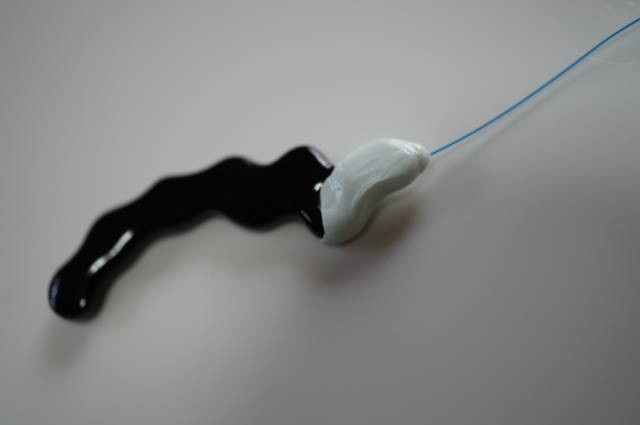
If you see blood in your urine, even a small amount or for the first time, do not wait and see. See a urologist right away. If you suddenly cannot urinate, or the device cannot be removed, do not try to fix it yourself. Go to a medical facility, including emergency care, immediately.
How leaving a prostate chip in changed over time

| Published | What the diary said then |
|---|---|
| Jan 2018 | Mr. Okada warned that linked chips exceeding 5cm could easily reach the bladder. |
| Jan 2019 | A lightly triggered vibration switch could activate during posture changes. |
| Jul 2019 | A stalled motor could restart unexpectedly during ordinary movement. |
| Mar 2022 | Mr. Okada reported that stimulation during movement reduced his work efficiency. |
| Nov 2022 | Mr. Okada discouraged prolonged bladder placement despite a customer’s reassuring 22-hour report. |
| Jan 2023 | An exposed-wire prototype pressed sharply against the urethra during posture changes. |
| Dec 2024 | Mr. Okada reported little activity-related discomfort while driving with the chipless device. |
| Oct 2025 | Mr. Okada found a smaller prototype unexpectedly responsive during walking and stair use. |
OK Prostate Chip products related to leaving a prostate chip in
The current list includes products discussed in both favorable reports and complaints.
Products that appear in these entries
| Product (official name) | Price incl. tax | Relation to this topic |
|---|---|---|
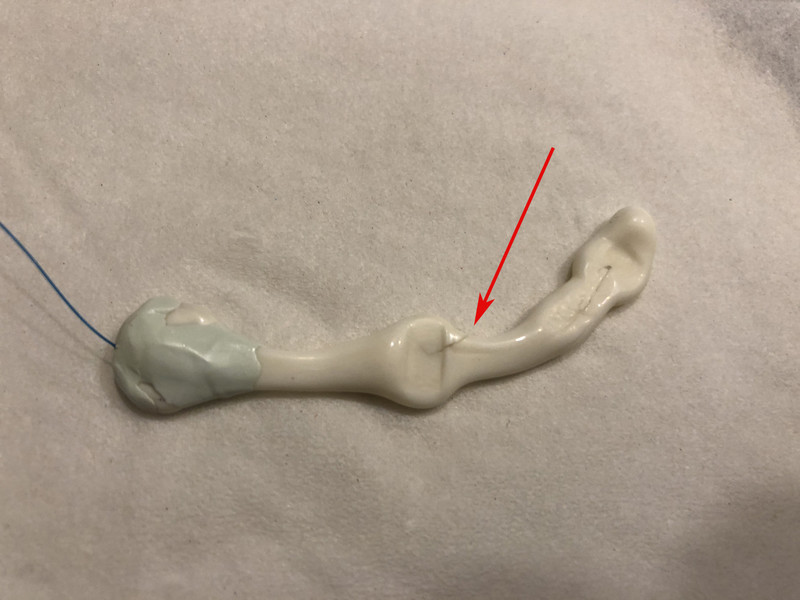
| Waisted glass chip (OKプロステート覚醒チップ) | ¥5,500 (about $35 at ¥156 = $1, rate as of 2026-09-04) | A September 2018 customer reported cracking after continuous wear. |
| Long ceramic comma-shaped chip (OKプロステートチップ 陶器素材ロング勾玉タイプ) | ¥7,700 (about $49 at ¥156 = $1, rate as of 2026-09-04) | An October 2019 customer requested replacement after bleeding and a broken core. |
| Medium-length ceramic twist chip (OKプロステートチップ 陶器素材セミロングタイプ コブラツイスト) | ¥5,500 (about $35 at ¥156 = $1, rate as of 2026-09-04) | A February 2020 buyer chose it while discussing prolonged wear and bladder migration. |
| Medium-length ceramic chip (OKプロステートチップ 陶器素材セミロングタイプ) | ¥4,400 (about $28 at ¥156 = $1, rate as of 2026-09-04) | A February 2020 owner asked about repeated movement into the bladder. |
| Flat-curve resin chip (OKプロステートチップ フラット面カーブ型 セミロングタイプ(生体適合樹脂)) | ¥6,050 (about $39 at ¥156 = $1, rate as of 2026-09-04) | An August 2022 customer reported roughness and blood in their urine after continuous wear. |
| Medium-length resin chip (OKプロステートチップ セミロングタイプ(生体適合樹脂)) | ¥5,500 (about $35 at ¥156 = $1, rate as of 2026-09-04) | A January 2025 customer asked about painful urination after buying it for daily wear. |
(Source: ok-lab's diary, published September 2018)
https://ok-lab.hatenablog.com/entry/20180922/1537592180
(Source: ok-lab's diary, published October 2019)
https://ok-lab.hatenablog.com/entry/2019/10/05/141806
(Source: ok-lab's diary, published February 2020)
https://ok-lab.hatenablog.com/entry/2020/02/15/144151
(Source: ok-lab's diary, published August 2022)
https://ok-lab.hatenablog.com/entry/2022/08/20/122920
(Source: ok-lab's diary, published January 2025)
https://ok-lab.hatenablog.com/entry/2025/01/11/122910
Products the diary mentioned as alternatives
| Product (official name) | Price incl. tax | Relation to this topic |
|---|---|---|
| Screw-shaped auxiliary chip option (スクリュー型補助チップ追加オプション) | ¥3,300 (about $21 at ¥156 = $1, rate as of 2026-09-04) | In December 2019, Mr. Okada proposed this support for a customer whose chip tended to come out. |
(Source: ok-lab's diary, published December 2019)
https://ok-lab.hatenablog.com/entry/2019/12/14/151232
Historical custom rectal builds, Version 4, and the chipless and other wire prototypes discussed above:
No matching product can be confirmed on the current list.
Common worries about leaving a prostate chip in

The diary’s replies address unwanted movement, bleeding during sex, and painful urination as separate concerns.
"Does daily wear mean the chip will stay put?"
In an entry published in February 2020, a medium-length ceramic chip owner asked why it kept slipping into the bladder. They had mistaken its settled position for the intended prostate location.
The diary does not record whether the proposed measures solved this customer’s problem. Mr. Okada suggested a stopper or screw support, but warned that the screw’s stopping function could be lost if displaced farther inward.
(Source: ok-lab's diary, published February 2020)
https://ok-lab.hatenablog.com/entry/2020/02/15/144151
"Is sex possible while leaving a prostate chip in?"
In an entry published in February 2023, a customer asked whether intercourse was possible with the chip retained. Mr. Okada thought condom use could prevent interference for the partner, but acknowledged repeated reports of bleeding during ejaculation.
He suspected prostate contractions played a part; the diary does not record this customer’s subsequent experience. Mr. Okada left the decision to the customer rather than giving an unconditional assurance.
(Source: ok-lab's diary, published February 2023)
https://ok-lab.hatenablog.com/entry/2023/02/18/122910
"Can leaving a prostate chip in make urination painful?"
An entry published in January 2025 describes a customer who bought a medium-length resin chip after reading about daily wear. They asked whether painful urination would resolve with familiarity. Staff considered such pain unusual and suggested possible urethral injury.
The customer later reported that pain had stopped after additional lubricant. The diary does not record an examination confirming the cause. Staff had advised a pause to let the irritated area rest.
(Source: ok-lab's diary, published January 2025)
https://ok-lab.hatenablog.com/entry/2025/01/11/122910
Buying from outside Japan

OK Lab ships internationally to countries covered by Japan Post's EMS courier service. Overseas orders are paid in advance by PayPal. Each order carries a ¥400 (about $3 at ¥156 = $1, rate as of 2026-09-04) handling fee, and EMS shipping is charged on top. These terms come from OK Lab's official sales-terms page (written here as plain text, not a link: ok-lab.net/docs/law), checked on September 7, 2026; confirm them on the official store before you order, because they can change.
Summary of this article
| What you wanted to know | The answer |
|---|---|
| What is the short answer? | Everyday activity appears in reports alongside pain, expulsion, bleeding, and damage. |
| What is this product? | A urethral device made by OK Lab in Japan. |
| What do the terms mean? | Threads, stoppers, and flexible loops serve different retrieval or retention purposes. |
| What happened during daily wear? | Experiences ranged from little awareness to injuries and reported heart symptoms. |
| What did the maker propose? | Different supports, longer threads, inspections, and covered thread connections. |
| What changed over time? | New retention designs appeared, while movement and discomfort remained development concerns. |
| Which products are listed today? | Several discussed glass, ceramic, and resin chips, plus the screw support option. |
| What did readers ask? | Whether chips stay put, whether sex is possible, and whether urination can hurt. |
| How do overseas orders work? | Advance PayPal payment, a ¥400 (about $3 at ¥156 = $1, rate as of 2026-09-04) handling fee, and additional EMS shipping. |
Source: ok-lab's diary (Okada Comfortable Life Laboratory). The original entries are in Japanese; quotations on this page are translated. Photos and videos are on the original entries.
This article is a summary of the maker's development diary. The product is not a medical device and no result is guaranteed. If anything feels wrong or worries you, see a doctor. Prices, specifications and cautions change, so confirm the latest information on the official blog and the official site. Questions about ordering and shipping go to the seller.